
Differential Privacy in Blockchain Identity: Balancing Data Utility and Confidentiality Concerns

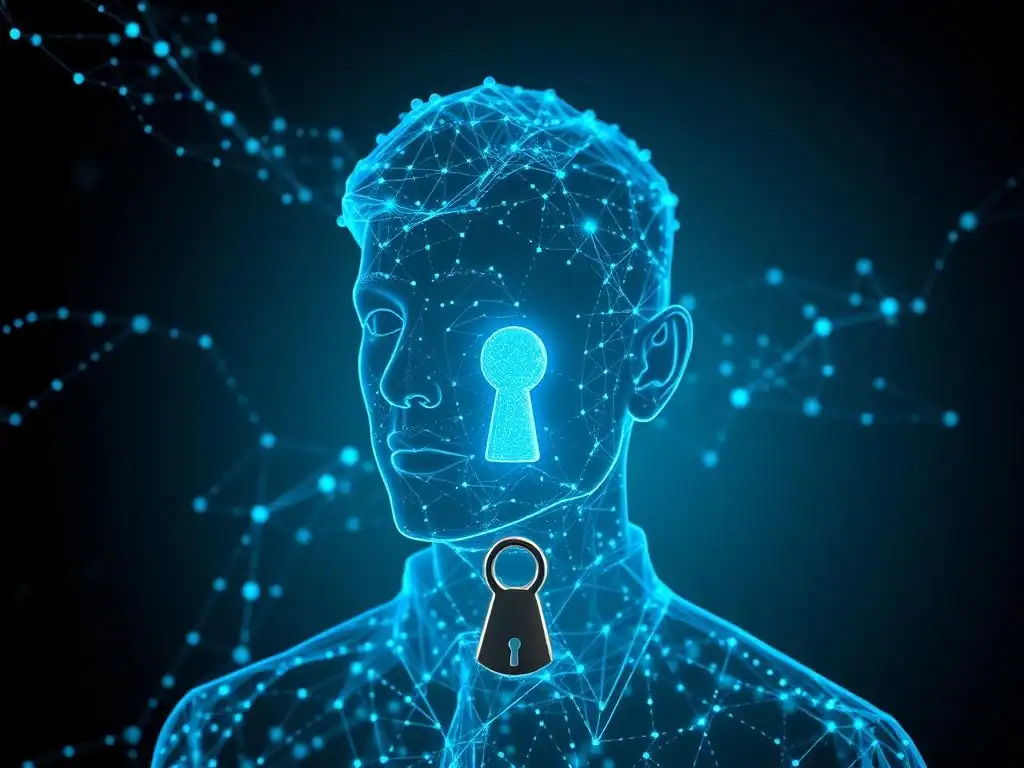
Welcome to Blockchain Trends, your go-to source for uncovering the revolutionary applications of blockchain technology. In a world increasingly reliant on digital identities, questions of data security and user privacy loom large. This month, we delve into the fascinating realm of blockchain identity differential privacy. How can we leverage the power of blockchain to create secure and verifiable identities while safeguarding sensitive information?
Join us as we explore the innovative techniques and challenges surrounding this crucial intersection of technology and ethics, and discover how differential privacy can unlock a new era of trust in decentralized systems. Curious to learn more? Read on!
- Introduction: The Need for Differential Privacy in Blockchain Identity Management
-
Frequently Asked Questions
- How does differential privacy enhance blockchain identity systems?
- What are the key challenges in implementing differential privacy on a blockchain?
- How does differential privacy differ from other privacy-enhancing technologies used in blockchain?
- What are some potential use cases for differential privacy in blockchain identity beyond KYC/AML?
- How does regulation affect the adoption of differential privacy in blockchain identity solutions?
- Final Reflection: Navigating the Privacy Frontier in Blockchain Identity
- Unlock Blockchain's Potential: Secure Your Identity Today!
Introduction: The Need for Differential Privacy in Blockchain Identity Management
Blockchain Identity: A Paradigm Shift in Digital Identification
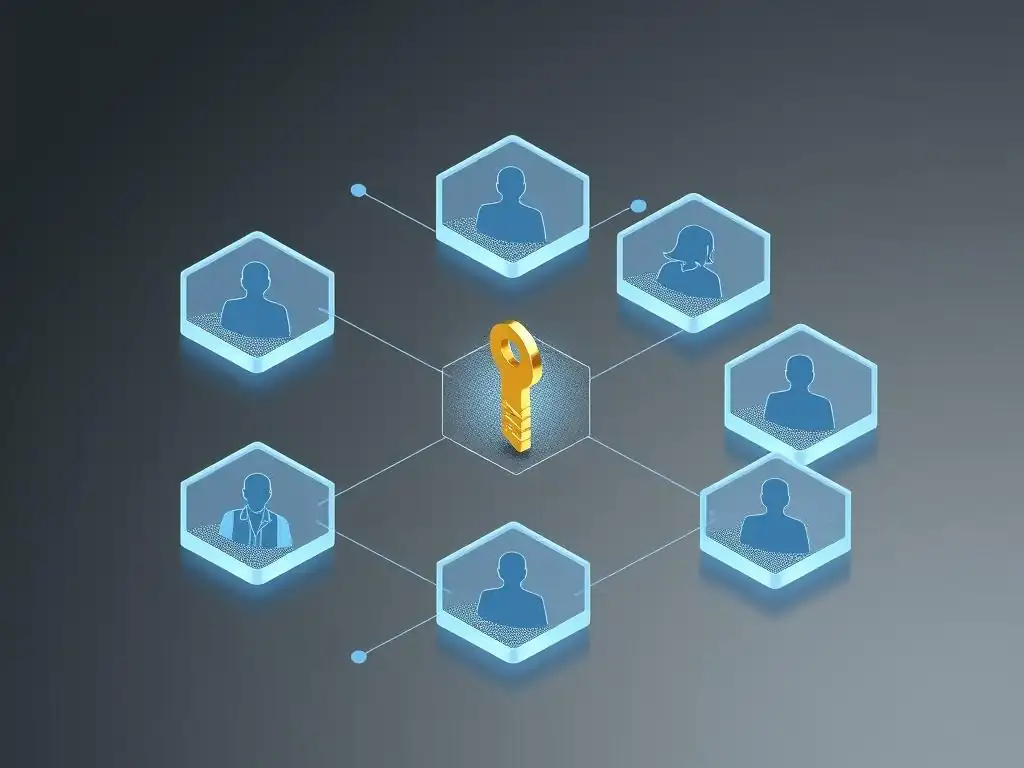
Traditional digital identity systems often rely on centralized authorities, creating single points of failure and raising significant concerns about data control and security. Blockchain technology offers a revolutionary alternative, proposing decentralized identity (DID) solutions where users have greater ownership and control over their personal data. This paradigm shift leverages the inherent properties of blockchain, such as immutability and transparency, to create verifiable, tamper-proof digital identities.
For instance, projects are developing DID frameworks that allow individuals to selectively disclose attributes of their identity, rather than sharing monolithic profiles, enhancing user autonomy in the digital realm. The potential impact is vast, ranging from secure online logins and financial transactions to verified credentials and access to services, fundamentally altering how we interact digitally.
The move towards blockchain identity is driven by the desire to mitigate risks associated with centralized databases, which are prime targets for cyberattacks, leading to massive data breaches affecting millions of users annually. A single breach can expose sensitive information like names, addresses, birth dates, and even financial details. Blockchain-based systems aim to distribute this risk and empower users.
Instead of storing sensitive data directly on the chain, DID models often use the blockchain as a secure anchor for pointers or hashes, while the actual data resides off-chain in user-controlled wallets or storage, accessible only with explicit user consent. This architecture, while promising, introduces new complexities, particularly concerning the aggregation and analysis of data derived from these identities, where privacy can still be compromised if not carefully managed.
The Growing Importance of Privacy in Decentralized Identity Systems
While blockchain identity solutions offer enhanced security and user control compared to traditional systems, they are not inherently immune to privacy challenges. The transparency of public blockchains, while beneficial for verification, can inadvertently expose patterns of behavior or link pseudonymous identifiers if transactions or interactions are analyzed. Even in systems where sensitive data is stored off-chain, metadata, transaction histories, and the relationships between different identity attributes can reveal private information through sophisticated analysis techniques.
As blockchain identity adoption grows, the sheer volume of data generated will increase the potential for deanonymization attacks, where seemingly innocuous pieces of information are combined to identify individuals. This necessitates a proactive approach to privacy, moving beyond simple pseudonymity.
The global push for stronger data protection regulations, such as the European Union's General Data Protection Regulation (GDPR) and California's Consumer Privacy Act (CCPA), underscores the critical need for privacy-preserving mechanisms in any digital identity system, including those built on blockchain. These regulations mandate principles like data minimization, purpose limitation, and the right to erasure, which can be challenging to fully implement in immutable blockchain environments without careful design. Users expect their digital identities to be secure and private.
Failing to adequately address privacy concerns in blockchain identity solutions will hinder their widespread adoption and could lead to significant compliance issues for organizations deploying them. Therefore, integrating robust privacy techniques is not just a technical challenge but a legal and ethical imperative for the future of decentralized identity.
Differential Privacy: A Promising Solution for Protecting Blockchain Identity Data
Amidst the complex landscape of blockchain identity and its inherent privacy trade-offs, differential privacy emerges as a compelling technique to balance data utility with confidentiality. Unlike simple anonymization, which can often be reversed, differential privacy provides a strong, mathematical guarantee about the privacy of individual data points within a dataset.
It works by introducing carefully calibrated noise to data before it is shared or analyzed, ensuring that the presence or absence of any single individual's data does not significantly affect the output of a query or analysis. This property makes it extremely difficult for an attacker, even with auxiliary information, to infer whether a specific individual's data was included in the dataset.
Applying differential privacy to blockchain identity contexts means that aggregate insights or statistics about identity usage, behaviors, or attributes can be derived without compromising the privacy of any individual user's identity data. For instance, a service provider using a blockchain identity system might want to understand demographic trends among its users or analyze service usage patterns. By applying differential privacy, they could perform these analyses on aggregated data that has been perturbed with noise, gaining valuable insights while providing a quantifiable privacy guarantee to their users.
This approach directly addresses the core dilemma of data utility versus privacy in blockchain identity, offering a pathway to leverage the rich data generated by decentralized identity systems responsibly and ethically. Differential privacy stands out as a powerful tool for enhancing the privacy posture of blockchain identity differential privacy solutions, fostering greater trust and enabling compliance in an increasingly data-sensitive world.
Frequently Asked Questions
How does differential privacy enhance blockchain identity systems?
Differential privacy adds mathematical noise to data, ensuring that individual contributions are protected from identification. This allows for useful aggregate analysis while maintaining confidentiality.
What are the key challenges in implementing differential privacy on a blockchain?
Implementing differential privacy on a blockchain involves balancing data utility with the level of privacy protection. Determining the optimal amount of noise and managing computation costs are crucial.
How does differential privacy differ from other privacy-enhancing technologies used in blockchain?
Unlike techniques like zero-knowledge proofs, differential privacy doesn't hide the data entirely. Instead, it introduces controlled randomness to limit the information leakage while enabling statistical analysis.
What are some potential use cases for differential privacy in blockchain identity beyond KYC/AML?
Beyond KYC/AML, differential privacy can facilitate secure data sharing for research, protect voter anonymity in blockchain-based voting systems, and enable privacy-preserving analytics in supply chain management.
How does regulation affect the adoption of differential privacy in blockchain identity solutions?
Clear regulatory frameworks are crucial for standardizing differential privacy practices. Regulations must balance the need for data protection with the desire for innovation and data accessibility in the blockchain space.
The exploration of differential privacy within blockchain identity systems reveals a critical juncture in technological advancement. The tension between data utility and confidentiality concerns is not merely a theoretical debate, but a practical challenge shaping the future of digital identity. As blockchain technology permeates various sectors, from finance to healthcare, the need to safeguard individual privacy while leveraging the benefits of decentralized systems becomes paramount. The insights presented here underscore the urgency of adopting robust privacy-enhancing technologies like differential privacy to ensure responsible and ethical data handling.
The ongoing quest to reconcile transparency with privacy has profoundly influenced the cultural and social landscape. The ability to control one's digital identity and data is increasingly recognized as a fundamental right, and the implementation of differential privacy in blockchain systems represents a significant step towards realizing this vision. Privacy is not an option, and it shouldn't come with a price tag; it's a fundamental requirement.
- Sundar Pichai. This quote encapsulates the essence of our responsibility to develop and deploy technologies that prioritize individual autonomy and data security.
As we stand at the cusp of a new era of digital identity, let us reflect on the lessons learned from this exploration. Consider how you can advocate for privacy-preserving technologies in your own spheres of influence. Embrace the challenge of balancing innovation with ethical considerations, and strive to create a future where data utility and confidentiality coexist harmoniously. The future of blockchain identity, and indeed the broader digital landscape, depends on our collective commitment to safeguarding privacy and empowering individuals.
Unlock Blockchain's Potential: Secure Your Identity Today!
Thank you for exploring the role of differential privacy in protecting blockchain identities. We hope you've gained a clearer understanding of how to balance data utility with the essential need for confidentiality. Now, it's time to apply that knowledge.
Here are some ways to get started:
- Implement a small-scale differential privacy technique within a personal blockchain project to see firsthand how it impacts data usefulness and privacy protection. Practical experience like this is incredibly valuable.
- Review recent research on advanced differential privacy methods and share your insights with the Blockchain Trends community to help us stay at the forefront of innovation.
- Engage in discussions about the ethical considerations of using differential privacy in blockchain identity systems with your peers and colleagues. Promoting awareness is crucial for responsible implementation.
How will you help create a more secure and private blockchain environment? Share your thoughts in the comments below!
Leave a Reply