
Exploring the Technology Behind SSI: Blockchain, Cryptography, and More


Welcome to Blockchain Trends, your guide to understanding the revolutionary impact of blockchain beyond the hype. Dive into the transformative potential of decentralized technologies, from reshaping finance to revolutionizing industries.
Are you ready to unlock the power of self-sovereign identity? Our latest exploration delves deep into the technology behind blockchain-based self-sovereign identity, revealing how cryptography and distributed ledgers are creating a more secure and empowering future for digital identities. Discover the core components and emerging trends that are shaping this crucial advancement. What possibilities await as individuals regain control of their data? Read on to find out!
Exploring the Technology Behind SSI: Blockchain, Cryptography, and More
- Introduction to Blockchain-Based Self-Sovereign Identity (SSI)
- Key Technological Components of SSI
- The Technical Architecture of a Blockchain-Based SSI System
- Advantages of Using Blockchain for Self-Sovereign Identity
- Challenges and Considerations for Implementing Blockchain-Based SSI
- The Future of Blockchain and SSI: Emerging Trends and Innovations
- Conclusion: Blockchain Driving the Future of Digital Identity with SSI
-
Frequently Asked Questions
- What role does blockchain play in Blockchain-based Self-Sovereign Identity (SSI)?
- How does cryptography contribute to the security of Blockchain-based SSI?
- Beyond cryptocurrencies, what are some real-world applications of Blockchain-based SSI?
- What are the primary benefits of using Blockchain-based SSI compared to traditional identity systems?
- What are some regulatory considerations surrounding the implementation of Blockchain-based SSI?
- Final Reflection: Embracing the Future of Digital Autonomy
- Empower Yourself: Dive Deeper into the World of SSI!
Introduction to Blockchain-Based Self-Sovereign Identity (SSI)
What is Self-Sovereign Identity (SSI)? Empowering Individuals with Digital Control
Self-Sovereign Identity (SSI) represents a paradigm shift in how digital identities are managed. Unlike traditional identity systems where identity data is controlled by centralized entities like governments, corporations, or social media platforms, SSI puts the individual back in control of their digital identity. This means individuals can manage their own identifiers, authenticate themselves, and control who has access to their personal information, when, and for what purpose.
The core principle is that identity should be portable, persistent, and verifiable without requiring a central authority to intermediate every interaction. This empowers individuals to assert their identity claims directly, fostering trust and reducing reliance on potentially vulnerable third parties.
This model moves away from the prevalent federated or siloed identity systems where users often have multiple digital identities tied to specific service providers (e.g., a Google login, a Facebook login). In contrast, SSI aims for a unified yet decentralized approach where an individual's identity is not fragmented across various databases. This shift is crucial in an era of escalating data breaches and privacy concerns.
For example, a major data breach involving a centralized identity provider could expose sensitive information for millions of users simultaneously. A robust blockchainbased selfsovereign identity system mitigates this risk by distributing control and minimizing the amount of sensitive data stored in any single location.
The Role of Blockchain in SSI: A Decentralized Foundation for Identity Management
Blockchain technology provides a foundational layer well-suited for implementing self-sovereign identity principles. At its heart, a blockchain is a distributed, immutable ledger that can record transactions or data entries in a way that is transparent and tamper-evident across a network of computers. For SSI, this means that records related to identity, such as the existence of a decentralized identifier (DID) or the issuance of a verifiable credential (VC), can be anchored on a shared, secure ledger that is not controlled by any single entity. This decentralization removes the single point of failure inherent in traditional identity systems.
The use of blockchain technology in self-sovereign identity systems ensures that the core identity layer is resilient and censorship-resistant. While sensitive personal data is not typically stored directly on the blockchain due to privacy concerns and storage limitations, the blockchain acts as a public, shared infrastructure for verifying the integrity and existence of identity components. For instance, a DID document, which describes how to resolve and authenticate a DID, might have its hash or a pointer registered on a blockchain.
This allows anyone to cryptographically verify that the DID document has not been tampered with since it was registered, providing a trusted root for identity operations. This decentralized foundation is essential for building trust in a blockchainbased selfsovereign identity framework.
Key Technological Components of SSI
Blockchain Technology and Distributed Ledger Technology (DLT) in SSI
Blockchain and Distributed Ledger Technology (DLT) serve as a fundamental infrastructure layer for many self-sovereign identity implementations. They provide a shared, secure, and potentially immutable record of identity-related events or anchors. While some SSI solutions use public blockchains, others opt for permissioned ledgers or other forms of DLT depending on the specific requirements for privacy, governance, and transaction throughput. The ledger acts as a trust anchor, allowing participants in the SSI ecosystem (individuals, issuers, verifiers) to rely on the integrity and availability of key identity information, such as DID registration or revocation status, without needing a central authority.
The selection of the specific DLT is critical for a blockchainbased selfsovereign identity solution. Public, permissionless blockchains like Bitcoin or Ethereum (though often with layer 2 solutions for scalability) offer high decentralization and censorship resistance but can face challenges with transaction costs and speed for frequent identity updates.
Permissioned ledgers, used in platforms like Hyperledger Fabric or R3 Corda, offer better scalability, privacy (transactions visible only to participants), and predictable costs, making them suitable for enterprise or consortium-based SSI deployments where participants are known and regulated. The choice impacts the overall performance, governance model, and trust assumptions of the SSI system.
Immutability and Transparency: Core Benefits of Blockchain for Identity
The immutability property of blockchain ensures that once data is recorded on the ledger and a block is added to the chain, it is exceptionally difficult or practically impossible to alter or delete that information retroactively. In the context of blockchainbased selfsovereign identity, this means that the history of identity-related transactions, such as the registration of a DID or the anchoring of a verifiable credential's status, is permanently recorded. This provides a high degree of integrity and auditability, ensuring that no single party can unilaterally erase or rewrite the history of an identity's interactions on the ledger.
Transparency, while potentially configurable in permissioned ledgers, often means that transaction records are visible to relevant parties or, in public blockchains, to anyone. For SSI, this doesn't mean personal data is public. Instead, it means the process and status of identity components (like DID registration) can be publicly verified.
For example, if a credential issuer revokes a verifiable credential, that revocation event might be recorded on the ledger. A verifier can then check the public ledger to confirm the current status of that credential without needing to directly query the issuer in real-time, increasing efficiency and trust in the verification process within the blockchainbased selfsovereign identity ecosystem.
Different Blockchain Types for SSI: Permissioned vs. Permissionless
The choice between permissioned and permissionless blockchain architectures significantly impacts the design and deployment of blockchainbased selfsovereign identity systems. Permissionless blockchains, such as public instances of Ethereum or Bitcoin (via anchoring mechanisms), allow anyone to participate in the network, validate transactions, and contribute to consensus. This offers maximum decentralization and censorship resistance, which aligns strongly with the core principles of SSI. However, they can suffer from lower transaction throughput, higher costs (gas fees), and potential privacy concerns regarding transaction metadata visibility.
Permissioned blockchains, like those built on Hyperledger Fabric or Corda, restrict participation to a known set of entities. These are often used in enterprise or consortium settings. They typically offer higher transaction speeds (potentially thousands of transactions per second compared to perhaps 15-30 for public Ethereum before upgrades), lower costs, and enhanced transaction privacy as data is shared only among authorized participants.
While less decentralized than public chains, they can be suitable for SSI use cases within regulated industries or specific enterprise ecosystems where governance and performance requirements are paramount. Many SSI solutions are exploring hybrid approaches or layer 2 scaling solutions to balance decentralization, privacy, and performance.
Cryptography: Securing and Protecting SSI Data
Cryptography is the bedrock upon which the security and privacy of self-sovereign identity systems are built. It provides the tools necessary to create secure digital identities, verify the authenticity of claims, and protect sensitive data. At its core, cryptography enables individuals to prove they control their identity without necessarily revealing the underlying personal information. It ensures that credentials cannot be forged, that communications between parties are secure, and that the integrity of identity data is maintained throughout its lifecycle within a blockchainbased selfsovereign identity framework.
Various cryptographic techniques are employed in SSI. Asymmetric cryptography, using public and private key pairs, is fundamental for creating digital signatures and establishing secure communication channels. Hashing functions are used to create unique fingerprints of data, essential for anchoring information on a blockchain without storing the data itself. Advanced techniques like Zero-Knowledge Proofs (ZKPs) are increasingly being integrated to allow individuals to prove they possess certain attributes (e.g., "over 18") without revealing the specific value of that attribute (e.g., their date of birth), significantly enhancing privacy in blockchainbased selfsovereign identity interactions.
Public Key Infrastructure (PKI) and Digital Signatures in SSI
Public Key Infrastructure (PKI) concepts, particularly the use of public and private key pairs, are central to how self-sovereign identity functions. Each individual or entity in an SSI system generates their own pair of cryptographic keys.
The private key is kept secret and used to create digital signatures, while the public key is shared and used by others to verify those signatures. When an identity holder presents a verifiable credential, the issuer's private key is used to sign the credential, and the verifier uses the issuer's public key to confirm that the credential was indeed issued by that specific entity and has not been altered since signing.
Digital signatures provide non-repudiation, ensuring that an issuer cannot later deny having issued a specific credential, and they guarantee the integrity of the credential's data. In a blockchainbased selfsovereign identity system, the public keys or references to them are often associated with Decentralized Identifiers (DIDs) and anchored on the ledger, providing a decentralized trust anchor for verifying signatures. This eliminates the need for a centralized Certificate Authority (CA) that is characteristic of traditional PKI, aligning with the decentralized ethos of SSI.
Zero-Knowledge Proofs (ZKPs): Enhancing Privacy in Self-Sovereign Identity Systems
Zero-Knowledge Proofs (ZKPs) are a powerful cryptographic tool that can significantly enhance privacy within blockchainbased selfsovereign identity solutions. A ZKP allows one party (the prover) to prove to another party (the verifier) that a certain statement is true, without revealing any information beyond the validity of the statement itself. For example, a user could prove they are over the age of 21 without disclosing their exact date of birth, or prove they are a resident of a specific country without revealing their full address.
Integrating ZKPs into SSI verifiable credentials allows for selective disclosure and privacy-preserving verification. Instead of sharing a full credential containing sensitive data, the identity holder can use a ZKP to generate a proof about a specific attribute within the credential. This proof, which reveals nothing about the underlying data, can then be shared with a verifier who can cryptographically confirm its validity. This capability is crucial for promoting user adoption of blockchainbased selfsovereign identity by addressing privacy concerns often associated with digital identity systems and data sharing.
Decentralized Identifiers (DIDs): The Cornerstone of SSI
Decentralized Identifiers (DIDs) are a core component of blockchainbased selfsovereign identity architectures. A DID is a new type of identifier designed to enable verifiable, decentralized digital identity. Unlike traditional usernames or email addresses which are managed by centralized entities, DIDs are registered and controlled directly by the entity they identify (a person, organization, or thing) without requiring permission from any central registry. They are designed to be persistent and globally unique.
Each DID is associated with a DID document, a set of data describing how to use that specific DID. The DID document typically contains cryptographic public keys, service endpoints (like communication addresses), and other metadata necessary for interacting with the identity represented by the DID.
The DID document itself is often stored in a decentralized data store, and its existence or a cryptographically secure reference to it (like a hash) is registered on a decentralized ledger, such as a blockchain. This ensures that the DID and its associated information are discoverable and verifiable in a decentralized manner, forming the basis of blockchainbased selfsovereign identity.
Understanding DID Structure and Resolution
A Decentralized Identifier (DID) has a specific structure, typically starting with the prefix did:, followed by the method name (specifying the DID method, e.g., did:ion, did:ethr, did:indy), and then a method-specific identifier. For example, did:ethr:0xf3beac30c498d9cf3407f37aab42afcae27cb98d is a DID using the ethr method on the Ethereum blockchain. The method defines how the DID is created, resolved, and updated.
DID resolution is the process of taking a DID and retrieving its corresponding DID document. This process is dependent on the specific DID method used. For a blockchainbased selfsovereign identity system using a blockchain method, resolving a DID might involve querying the specified blockchain ledger to find the record associated with that DID and retrieving the location or content of the DID document. This decentralized resolution process, defined by the DID method specification, ensures that relying parties can independently verify the identity's associated information without needing a centralized directory service.
The W3C DID Standard and its Importance
The World Wide Web Consortium (W3C) Decentralized Identifiers (DIDs) v1.0 standard is a crucial development for the interoperability and widespread adoption of blockchainbased selfsovereign identity. This standard provides a formal specification for the structure of DIDs and the process of DID resolution, ensuring that different implementations of SSI can work together. It defines the core concepts and requirements for DID methods, allowing for a diverse ecosystem of decentralized identifiers that can interoperate.
Adherence to the W3C DID standard is vital because it promotes compatibility between different SSI platforms and applications. Without a common standard, an identity created on one SSI system might not be verifiable or usable on another. By providing a universal framework, the W3C standard enables a more open and interconnected digital identity landscape, fostering innovation and making blockchainbased selfsovereign identity solutions more practical for real-world use cases across different sectors and organizations.
Verifiable Credentials (VCs): Enabling Secure and Trusted Data Sharing
Verifiable Credentials (VCs) are digital equivalents of physical credentials like passports, driver's licenses, or university degrees. They are tamper-evident and cryptographically verifiable, allowing individuals to prove specific claims about themselves (e.g., "I am over 18," "I have a degree in Computer Science," "I am an employee of Company X"). VCs are issued by trusted entities (Issuers) and can be presented by the identity holder to relying parties (Verifiers) for verification.
The power of VCs in a blockchainbased selfsovereign identity framework lies in their structure and the underlying cryptography. A VC typically contains claims about a subject, metadata about the issuer and the issuance, and a cryptographic signature from the issuer. The identity holder stores these VCs securely, usually in a digital wallet.
When proof is required, the holder selects the relevant VCs (or derivations using ZKPs) and presents them to the verifier. The verifier uses the issuer's public key (often discoverable via the issuer's DID and its DID document anchored on a blockchain) to cryptographically verify the signature and check the credential's status (e.g., revocation status on the ledger), ensuring it is valid and hasn't been tampered with.
How Verifiable Credentials Work in SSI Ecosystems
In a blockchainbased selfsovereign identity ecosystem, the flow of verifiable credentials involves three main parties: the Issuer, the Holder, and the Verifier. The Issuer (e.g., a university, government agency, employer) creates a digital credential containing specific claims about the Holder (e.g., "Holder graduated on Date X"). The Issuer cryptographically signs this credential using their private key and sends it to the Holder.
The Holder receives and stores the VC securely in their digital identity wallet. When the Holder needs to prove a claim (e.g., applying for a job that requires a degree), they present the relevant VC to the Verifier (e.g., the potential employer). The Verifier receives the VC and uses the Issuer's public key (obtained via the Issuer's DID, potentially resolved using a blockchain) to verify the Issuer's signature and the integrity of the credential.
The Verifier may also check the status of the credential on a decentralized ledger (e.g., a revocation registry anchored on a blockchain) to ensure it is still valid. This process allows for trusted, selective sharing of verified information without relying on a central broker, a key aspect of blockchainbased selfsovereign identity.
The W3C Verifiable Credentials Data Model
Similar to DIDs, the World Wide Web Consortium (W3C) has developed the Verifiable Credentials Data Model standard (currently v1.1). This standard defines a common format and processing model for verifiable credentials, promoting interoperability across different SSI implementations and use cases. The standard specifies how claims are structured, how credentials are signed, and how proof is generated and verified.
Adopting the W3C Verifiable Credentials Data Model is essential for building a truly interoperable blockchainbased selfsovereign identity ecosystem. It ensures that a credential issued by one entity using one SSI platform can be understood and verified by another entity using a different platform, as long as both adhere to the standard. This prevents vendor lock-in and facilitates the seamless exchange of verified identity information across various applications and services, from financial services to healthcare and government interactions.
The Technical Architecture of a Blockchain-Based SSI System
Identity Wallets: Secure Storage and Management of Digital Identities
The identity wallet is a critical component in a blockchainbased selfsovereign identity system from the user's perspective. It is a software application (typically on a smartphone or computer) or a hardware device that serves as a secure container for an individual's private keys, DIDs, and verifiable credentials. The wallet empowers the user to manage their digital identity, generate new key pairs, receive and store VCs issued by others, select which VCs or proofs to share, and create presentations for verifiers.
A well-designed identity wallet prioritizes user control and security. It should implement strong cryptographic practices to protect the user's private keys, as losing control of these keys means losing control of their digital identity. Features like secure backup mechanisms, biometric authentication, and intuitive user interfaces are crucial for promoting user adoption and ensuring the security of the user's blockchainbased selfsovereign identity assets. The wallet acts as the user's agent in the decentralized identity network.
Features of a Secure SSI Wallet
A secure blockchainbased selfsovereign identity wallet must incorporate several key features to protect user data and enable effective identity management. Foremost is the secure generation and storage of private keys, often using hardware-level security features or strong encryption. The wallet should support multiple DIDs, allowing users to maintain different identities or personas for various contexts (e.g., work, personal, online).
Other essential features include the ability to receive, store, and organize verifiable credentials, presenting them in a user-friendly manner. Crucially, the wallet must allow users to selectively disclose information from VCs, potentially using Zero-Knowledge Proofs, rather than sharing the entire credential. The wallet should also facilitate the process of responding to verification requests from verifiers and interacting with the underlying decentralized ledger (like a blockchain) for DID resolution or checking credential status without exposing the user to technical complexities.
Examples of SSI Wallets: Trinsic Wallet, Spruce ID
Several organizations and projects are developing identity wallets for blockchainbased selfsovereign identity. Trinsic, a company focused on enterprise SSI solutions, offers a mobile wallet that allows individuals to receive, store, and present verifiable credentials. Their wallet is designed to be user-friendly and integrate with their broader SSI platform, enabling businesses to issue and verify credentials.
Spruce ID is another prominent player in the SSI space, offering developer tools and a reference wallet implementation. Their focus is on building open-source components for decentralized identity, including a wallet that supports W3C standards like DIDs and VCs, and integrates with various blockchain networks and decentralized storage solutions. These examples illustrate the growing ecosystem of tools and applications supporting blockchainbased selfsovereign identity for both developers and end-users.
Issuers and Verifiers: Roles in the SSI Ecosystem
Issuers and Verifiers are fundamental roles within the blockchainbased selfsovereign identity ecosystem, interacting with the identity holder and the decentralized ledger. An Issuer is an entity (an organization, government body, or even an individual) that asserts claims about a subject and packages them into a verifiable credential. Examples include a university issuing a degree credential, a government issuing a driver's license credential, or an employer issuing an employment credential.
Issuers use their private key to cryptographically sign the verifiable credential, binding the claims to the subject and asserting their authenticity. This signature allows any verifier to confirm that the credential originated from that specific issuer and has not been altered. The Issuer's DID and associated public key are typically registered on a decentralized ledger, potentially a blockchain, so that verifiers can discover and trust the public key used for verification. The integrity of the blockchainbased selfsovereign identity system relies heavily on the trustworthiness of the Issuers and the security of their key management.
The Issuer's Role in Creating Verifiable Credentials
The process of creating a verifiable credential by an Issuer involves several steps in a blockchainbased selfsovereign identity system. First, the Issuer gathers the necessary information about the subject (the identity holder) and the claims they want to assert (e.g., identity verification results, educational qualifications, employment details). This data is structured according to the W3C Verifiable Credentials Data Model standard.
Next, the Issuer associates the credential with the subject's DID. They then cryptographically sign the entire credential using their own private key. This signature is crucial for the verifier to later confirm the credential's authenticity and integrity. Finally, the signed verifiable credential is sent to the Holder's identity wallet. The Issuer may also record a reference to the credential or its status (e.g., in a revocation registry) on a decentralized ledger, potentially a blockchain, allowing verifiers to check the credential's validity in the future.
The Verifier's Role in Authenticating Identities
The Verifier is the entity that receives a verifiable credential or a proof derived from it from the Holder and assesses its validity and trustworthiness. Examples of Verifiers include a website requiring identity verification, a bank performing KYC (Know Your Customer) checks, or an airline verifying travel documents. The Verifier's goal is to obtain trusted information about the Holder without necessarily needing to connect to a centralized database or rely on a third-party identity provider.
When a Holder presents a VC or proof in a blockchainbased selfsovereign identity interaction, the Verifier performs several checks. They first verify the Issuer's cryptographic signature on the credential using the Issuer's public key, which is typically resolved using the Issuer's DID (often anchored on a blockchain). They also check if the credential or the Issuer has been revoked by querying the relevant decentralized ledger or registry. If the signature is valid and the credential/issuer is not revoked, the Verifier can trust the claims made in the credential, completing a decentralized verification process.
Identity Hubs and Data Storage Solutions
While blockchain is used as a trust anchor for DIDs and credential status, sensitive personal data and the full content of verifiable credentials are typically not stored directly on the blockchain due to privacy, scalability, and cost concerns. Instead, this data is stored off-chain in secure data stores. Identity Hubs, as proposed in some SSI architectures (like the Decentralized Web Foundation's work), are personal data stores controlled by the individual, designed to store identity-related information securely and privately.
These Identity Hubs can utilize various storage technologies, including decentralized storage networks. The key requirement is that the identity holder maintains control over their data, granting access only when necessary. The blockchain in a blockchainbased selfsovereign identity system might store pointers or hashes referencing data stored in these hubs, or simply the DIDs and public keys needed to establish secure connections to them.
Decentralized Storage Options for SSI Data
Decentralized storage options are increasingly being explored for storing the off-chain components of self-sovereign identity, such as DID documents or the full content of verifiable credentials (though VCs are primarily stored in the user's wallet, backup copies might be stored off-chain). Technologies like IPFS (InterPlanetary File System), Filecoin, or Swarm offer alternatives to centralized cloud storage.
Using decentralized storage aligns with the decentralized principles of blockchainbased selfsovereign identity. It reduces reliance on single storage providers and can potentially enhance data resilience. When using such systems, a hash or content identifier pointing to the data is generated and can be anchored on a blockchain, providing a tamper-evident link between the on-chain identity anchor and the off-chain data. This ensures that while the data itself is not on the ledger, its integrity can be verified using the blockchain.
Ensuring Data Privacy and Security in Identity Hubs
Ensuring the privacy and security of data stored in Identity Hubs or other off-chain storage solutions is paramount for blockchainbased selfsovereign identity. The data must be strongly encrypted, with the encryption keys controlled solely by the identity holder. Access control mechanisms must be robust, allowing the holder to grant granular permissions to specific entities for limited periods or purposes.
While decentralized storage offers distribution, it doesn't automatically guarantee privacy. Encryption is key. Furthermore, the architecture must prevent linking sensitive data points across different interactions or systems unless explicitly authorized by the user. The combination of user-controlled encryption, fine-grained access control, and the privacy-enhancing features of SSI (like selective disclosure and ZKPs) implemented alongside decentralized storage is essential for a secure and privacy-preserving blockchainbased selfsovereign identity system.
Advantages of Using Blockchain for Self-Sovereign Identity
Enhanced Security and Privacy for Individuals
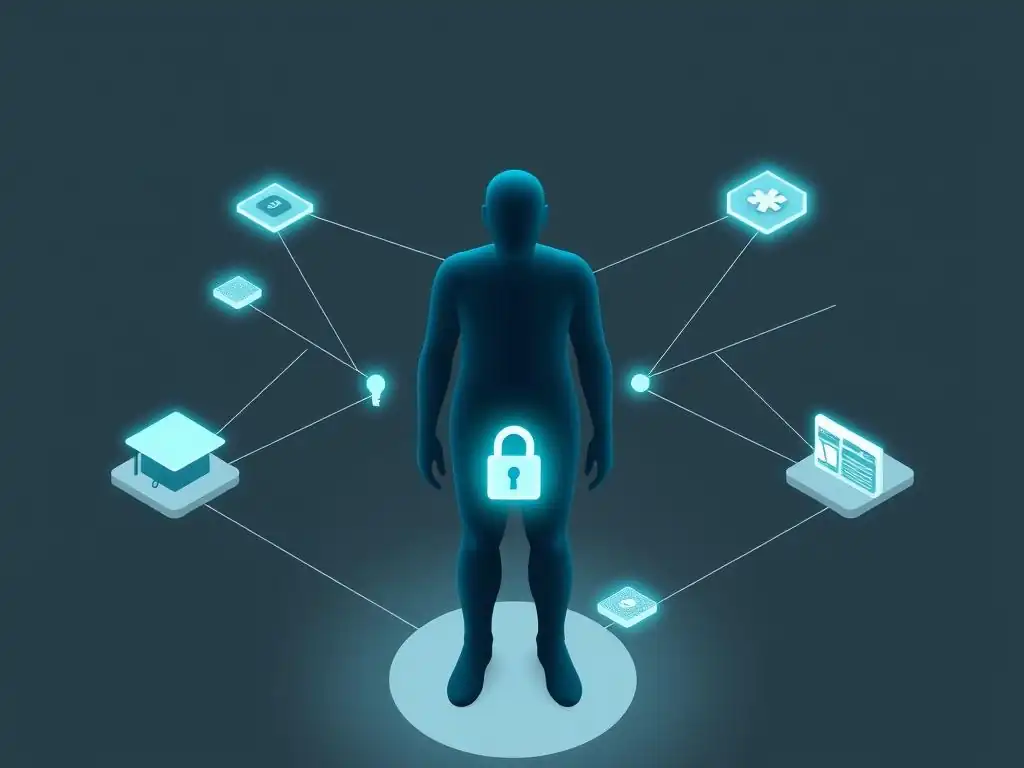
One of the most significant advantages of using blockchain technology for self-sovereign identity is the potential for greatly enhanced security and privacy for individuals compared to traditional centralized models. By decentralizing the control of identity data and using cryptographic principles inherent in blockchain, SSI reduces the attractiveness and vulnerability of single, large honey pots of personal information that are prime targets for cyberattacks. Instead of storing all user data in one place, SSI distributes control and relies on the user's secure wallet and decentralized verifiable credentials.
Furthermore, SSI architecture, enabled by blockchain anchors and cryptography like ZKPs, allows individuals to share only the minimum necessary information when proving a claim. For example, instead of sharing a full government ID containing name, address, date of birth, height, and eye color just to prove age, a user can present a verifiable credential that simply asserts "over 21" via a ZKP. This selective disclosure, underpinned by the verifiable integrity provided by the blockchain, drastically reduces the amount of personal data exposed during transactions, significantly boosting user privacy in blockchainbased selfsovereign identity interactions.
Improved Interoperability and Portability of Identity Data
Blockchainbased selfsovereign identity, particularly when built upon open standards like W3C DIDs and VCs, inherently promotes interoperability and portability of identity data. In current systems, identity information is often siloed within specific service providers (e.g., a bank's KYC data, a university's student records, a social media profile). Moving or using this identity information across different platforms or services is often difficult or impossible, leading to repetitive identity verification processes for users and businesses.
With SSI, an individual's verifiable credentials, issued by various entities, are stored in their personal wallet. Because these credentials adhere to open standards and are verifiable using decentralized methods (like resolving an Issuer's DID on a blockchain), they can be presented and verified across any compatible platform or service. This allows individuals to port their verified identity data seamlessly between different contexts – from opening a bank account to applying for a job or accessing healthcare services – without needing to re-establish trust from scratch, creating a highly portable blockchainbased selfsovereign identity.
Reduced Reliance on Centralized Identity Providers
Traditional digital identity systems heavily rely on centralized identity providers (IdPs), such as government agencies, large tech companies offering single sign-on services, or corporate directories. These centralized entities hold significant power over user identities, acting as intermediaries for authentication and data verification. This creates potential points of control, censorship, and failure. If a centralized IdP is compromised, goes offline, or decides to de-provision an identity, users can lose access to multiple services.
Blockchainbased selfsovereign identity fundamentally shifts this reliance. While Issuers still exist (e.g., a university issuing a degree), the control over the identifier (the DID) and the storage and presentation of credentials rests with the individual. The blockchain serves as a decentralized, public utility for anchoring DIDs and credential status, removing the need for a single, central authority to manage the entire identity lifecycle. This architecture empowers users and reduces the systemic risk associated with centralized control over digital identities.
Cost Savings and Efficiency Gains in Identity Management
Implementing blockchainbased selfsovereign identity solutions can lead to significant cost savings and efficiency gains for both individuals and organizations. For individuals, it reduces the time and effort spent repeatedly proving identity and filling out forms across different services. For organizations, SSI can streamline onboarding processes, reduce the costs associated with identity verification (e.g., manual checks, third-party verification services), and lower the risk and cost associated with storing large volumes of sensitive customer data.
Studies and pilot programs exploring blockchainbased selfsovereign identity have indicated potential reductions in identity verification costs. For instance, estimates for financial institutions suggest potential cost savings of 20-40% in KYC/AML processes by leveraging reusable, verifiable credentials. The efficiency comes from automating verification checks against cryptographically secure credentials and decentralized ledgers, reducing manual intervention and eliminating redundant data collection and storage across multiple departments or organizations.
Challenges and Considerations for Implementing Blockchain-Based SSI
Scalability Issues with Blockchain Technology
One of the primary technical challenges for widespread adoption of blockchainbased selfsovereign identity relates to the inherent scalability limitations of many blockchain networks. Public, permissionless blockchains, while offering high decentralization, often have limited transaction throughput. For example, Bitcoin processes around 7 transactions per second, and public Ethereum processes roughly 15-30 transactions per second (though scaling solutions exist). While identity transactions (like DID registration or credential status updates) may not be as frequent as payment transactions, a global SSI system serving billions of users could generate a substantial volume of on-chain activity that might overwhelm less scalable networks.
Addressing scalability requires careful architectural design. Solutions include using permissioned or consortium blockchains for specific use cases, leveraging Layer 2 scaling solutions on public blockchains (e.g., rollups on Ethereum), or adopting DID methods that minimize on-chain operations by primarily using the blockchain as a root of trust for off-chain data pointers or hashes. The choice depends on balancing the need for decentralization with the performance requirements of a high-volume blockchainbased selfsovereign identity system.
Regulatory Landscape and Compliance Requirements for SSI
The regulatory landscape surrounding digital identity and blockchain technology is still evolving, presenting significant challenges for implementing blockchainbased selfsovereign identity systems. Existing regulations, such as GDPR in Europe or CCPA in California, impose strict requirements on how personal data is collected, processed, and stored, including rights like the "right to be forgotten." SSI's decentralized nature and the immutability of blockchain can sometimes appear to conflict with these regulations, particularly regarding data deletion.
Navigating compliance requires careful design. Sensitive personal data is typically stored off-chain and encrypted, allowing it to be deleted or updated in compliance with regulations, while the blockchain only stores non-sensitive anchors or hashes. Legal interpretations of who is the "data controller" or "data processor" in a decentralized SSI framework can also be complex. Successful deployment of blockchainbased selfsovereign identity necessitates close collaboration with legal experts and regulators to ensure compliance and build trust within existing legal frameworks.
User Adoption and Education for Self-Sovereign Identity
A significant non-technical challenge for blockchainbased selfsovereign identity is user adoption and education. The concept of managing one's own digital identity, securing private keys, and understanding verifiable credentials is fundamentally different from the familiar username/password or social login paradigms. Users need to understand the benefits (privacy, control, security) but also the responsibilities (key management) associated with SSI.
Developing user-friendly identity wallets and intuitive interfaces is crucial. Educational initiatives are needed to explain how blockchainbased selfsovereign identity works, why it's beneficial, and how to use the tools securely. Without broad user understanding and acceptance, even the most technically sound SSI system will struggle to gain traction. The learning curve for managing cryptographic keys remains a barrier that needs to be addressed through improved usability and support systems.
Security Vulnerabilities and Mitigation Strategies
While blockchain and cryptography provide strong security foundations, blockchainbased selfsovereign identity systems are not immune to security vulnerabilities. Risks include the potential for private key compromise (e.g., through phishing, malware, or device loss), vulnerabilities in wallet software, or issues with off-chain data storage security. Furthermore, the integrity of the system relies on the trustworthiness of Issuers and the security of their credential signing processes.
Mitigation strategies are essential. Users must be educated on best practices for securing their devices and private keys, potentially using hardware security modules. Wallet software must undergo rigorous security audits. Issuers need robust key management systems and secure processes for verifying claims before issuing credentials. While the blockchain component itself offers high integrity for anchored data, the overall security of a blockchainbased selfsovereign identity solution depends on the security of all its components and the practices of its users and participants.
The Future of Blockchain and SSI: Emerging Trends and Innovations
Decentralized Finance (DeFi) and SSI Integration
The integration of Decentralized Finance (DeFi) and blockchainbased selfsovereign identity is a significant emerging trend. DeFi platforms offer financial services like lending, borrowing, and trading on decentralized networks, often without requiring traditional identity verification. However, as DeFi matures and seeks broader adoption, particularly involving larger capital flows or interactions with regulated markets, some form of identity or reputation is becoming necessary – but without sacrificing the decentralized ethos.
SSI can provide a privacy-preserving layer for DeFi. Instead of submitting sensitive personal documents to a centralized entity for KYC, users could present verifiable credentials proving they meet certain criteria (e.g., "accredited investor," "resident of a non-sanctioned country") using ZKPs, without revealing their full identity. This allows DeFi platforms to comply with necessary regulations or requirements while maintaining user privacy and control over their identity, creating a more robust and compliant blockchainbased selfsovereign identity layer for decentralized financial services.
The Metaverse and the Role of Self-Sovereign Identity
The concept of the Metaverse envisions persistent, interconnected virtual worlds where users interact, socialize, work, and engage in commerce. A key challenge for the Metaverse is establishing and managing digital identity and reputation in a way that is portable across different virtual environments and controlled by the user. Blockchainbased selfsovereign identity is seen as a potential solution for this challenge.
In the Metaverse, SSI could allow users to carry their digital identity, assets, and verified credentials (e.g., proof of ownership of virtual items, achievements, professional qualifications) seamlessly between different platforms. An avatar could be linked to a user's DID, and their reputation or access rights in one part of the Metaverse could be based on verifiable credentials earned elsewhere. This would create a persistent, user-controlled digital identity that transcends individual platforms, fostering trust and enabling complex interactions in the burgeoning blockchainbased selfsovereign identity-enabled Metaverse.
Developments in Privacy-Enhancing Technologies for SSI
Ongoing developments in privacy-enhancing technologies (PETs) are crucial for advancing blockchainbased selfsovereign identity. While ZKPs are already being integrated, research and development continue to improve their efficiency, reduce computational costs, and expand their applicability to more complex proofs. Other PETs, such as secure multiparty computation (MPC) and homomorphic encryption, could also play a role in allowing computations or verifications to be performed on encrypted identity data without decrypting it.
These advancements aim to further strengthen the privacy guarantees of SSI systems. By enabling more complex proofs and calculations on sensitive attributes without revealing the underlying data, PETs can make blockchainbased selfsovereign identity even more appealing for use cases involving highly sensitive information, such as healthcare records or financial history. Continued innovation in this area is key to realizing the full potential of privacy-preserving digital identity.
Conclusion: Blockchain Driving the Future of Digital Identity with SSI
The Transformative Potential of Blockchain-Based Self-Sovereign Identity
The convergence of self-sovereign identity principles with blockchain and related technologies represents a fundamental shift in the architecture and control of digital identity. By leveraging the decentralized, immutable, and transparent properties of blockchain as a trust anchor, combined with the security of cryptography and the flexibility of standards like DIDs and VCs, blockchainbased selfsovereign identity empowers individuals with unprecedented control over their digital lives. This moves away from outdated, centralized models that have proven vulnerable to data breaches and detrimental to user privacy and autonomy.
The transformative potential of blockchainbased selfsovereign identity extends across numerous sectors. It promises more secure and efficient identity verification for financial services, healthcare, and government. It enables portable and trustworthy digital credentials for education and employment.
It lays the groundwork for new forms of decentralized governance and interaction in online spaces, including the nascent Metaverse. While challenges related to scalability, regulation, and user adoption remain, the foundational technology is in place, and ongoing development continues to refine and expand the capabilities of blockchainbased selfsovereign identity solutions. The future of digital identity is increasingly looking decentralized, user-controlled, and anchored by the power of blockchain.
Frequently Asked Questions
What role does blockchain play in Blockchain-based Self-Sovereign Identity (SSI)?
Blockchain acts as a decentralized ledger to verify identity claims without relying on centralized authorities. It provides immutable records of endorsements and attestations.
How does cryptography contribute to the security of Blockchain-based SSI?
Cryptography enables secure key management and digital signatures, allowing individuals to control their data. It ensures privacy and authenticity of identity credentials.
Beyond cryptocurrencies, what are some real-world applications of Blockchain-based SSI?
Applications include streamlined KYC processes, secure data sharing, and verifiable credentials for education and employment. These improve efficiency and trust.
What are the primary benefits of using Blockchain-based SSI compared to traditional identity systems?
Blockchain-based SSI offers greater control over personal data, enhanced privacy, and reduced reliance on intermediaries. This leads to increased security and autonomy.
What are some regulatory considerations surrounding the implementation of Blockchain-based SSI?
Regulations around data privacy and GDPR compliance are crucial considerations. Interoperability standards and legal frameworks for digital identities are also important.
Okay, here's a final reflection designed to close your article "Exploring the Technology Behind SSI: Blockchain, Cryptography, and More," optimized for the keyword "Blockchain-based self-sovereign identity" and following your requested structure:
Final Reflection: Embracing the Future of Digital Autonomy
The journey through the technological landscape of Self-Sovereign Identity (SSI) reveals a powerful convergence of blockchain, cryptography, and decentralized systems, culminating in a paradigm shift towards true digital ownership and control. The promise of SSI is no longer a futuristic concept; it's a rapidly evolving reality, poised to reshape how we interact with the digital world and reclaim our personal data.
This exploration has illuminated the profound impact of blockchain-based self-sovereign identity on our cultural and social fabric. The ability to control our digital identities, free from centralized authorities, represents a fundamental shift in power, fostering trust and transparency in online interactions. As we navigate an increasingly digital world, the importance of SSI cannot be overstated. Identity is the new perimeter of security, and self-sovereign identity is the key to unlocking a more secure and equitable digital future.
Now, as you close this chapter on understanding the technology behind SSI, consider its implications for your own digital life. What steps can you take to embrace this emerging paradigm? Reflect on the power you hold to shape your digital identity and contribute to a future where data ownership resides with the individual. The future of digital autonomy is within our reach – let us collectively build a more secure, transparent, and empowering digital world, one self-sovereign identity at a time.
Empower Yourself: Dive Deeper into the World of SSI!
Thank you for exploring the fascinating technologies underpinning Self-Sovereign Identity. You've gained a solid understanding of how blockchain technology and cryptography contribute to secure digital identities. Are you ready to take the next step and become an active supporter of SSI?
Here are a few ways you can get involved:
- Commit to securing your own digital identity this week. Explore SSI wallets and start claiming verifiable credentials. This is the most impactful step you can take!
- Deepen your understanding of the cryptographic algorithms discussed in the article. Mastering the underlying math is essential to fully grasp SSI.
- Share this article with your network and initiate conversations about the importance of SSI in shaping the future of digital trust. Let’s work together to build a decentralized digital world!
What is one small, practical action you can take today to begin exploring SSI and regain control of your digital identity? Share your ideas in the comments below!
Leave a Reply