
The Role of SelfSovereign Identity in Combating Online Fraud


Welcome to Blockchain Trends, your guide to understanding the revolutionary impact of blockchain technology! Dive deep into how this powerful tool is reshaping industries beyond cryptocurrency.
Ever wondered how blockchain can help you reclaim control over your digital identity and drastically reduce online fraud? Our latest article, "The Role of SelfSovereign Identity in Combating Online Fraud," explores the cutting-edge world of selfsovereign identity fraud prevention and its potential to revolutionize online security. Intrigued? Discover how this innovative approach can protect you in the digital age. Read on to learn more!
- Introduction: The Growing Threat of Online Fraud and the Need for Enhanced Security
- What is Self-Sovereign Identity (SSI)?
- How Self-Sovereign Identity Fraud Prevention Works
- Benefits of Implementing SSI for Fraud Reduction
-
Use Cases: SSI in Action Against Online Fraud
- SSI for Secure E-commerce Transactions: Preventing Payment Fraud
- Combating Account Takeover Fraud with SSI-Based Authentication
- SSI for KYC/AML Compliance: Streamlining Customer Onboarding and Reducing Regulatory Risk
- Protecting Against Synthetic Identity Fraud with SSI Verification
- Securing Digital Voting Systems with SSI-Enabled Voter Authentication
-
Challenges and Considerations for SSI Adoption
- Interoperability: Ensuring Compatibility Across Different SSI Systems
- User Education and Adoption: Overcoming the Learning Curve
- Regulatory Landscape: Navigating Evolving Legal Frameworks
- Scalability and Performance: Handling Large-Scale Identity Verification
- Integration with Legacy Identity Infrastructure
- The Future of SSI and Online Fraud Prevention
- Conclusion: Embracing SSI for a More Secure Digital Future
-
Frequently Asked Questions
- How does Self-Sovereign Identity (SSI) help prevent online fraud?
- What are the key benefits of using SSI for identity verification?
- How does SSI differ from traditional identity management systems?
- What are some practical applications of SSI in fraud prevention beyond basic identity verification?
- What are the potential challenges to the widespread adoption of SSI for fraud prevention?
- Final Reflection: Embracing Trust in a Digital World
- Unlock Your Identity's Potential: Fight Fraud Today!
Introduction: The Growing Threat of Online Fraud and the Need for Enhanced Security
Understanding the Escalating Landscape of Digital Fraud
The digital realm, while offering unprecedented convenience, has become a fertile ground for malicious activities, with online fraud escalating dramatically year after year. Cybercriminals employ sophisticated tactics ranging from phishing scams and identity theft to account takeovers and synthetic identity fraud. Reports consistently highlight the massive financial impact; for instance, a 2023 report estimated global e-commerce fraud losses to exceed \$48 billion, a significant jump from previous years.
This pervasive threat erodes consumer trust, imposes substantial costs on businesses for detection and remediation, and strains financial institutions and regulatory bodies. The sheer volume and evolving nature of these attacks necessitate a fundamental shift in how digital identities are managed and verified.
The scale of the problem is compounded by the interconnectedness of online services. A single compromised identity can potentially unlock access to multiple accounts across different platforms, creating a domino effect. Fraudsters are constantly adapting their methods, leveraging automation and exploiting vulnerabilities in existing systems. This includes exploiting weak passwords, bypassing multi-factor authentication through social engineering, and creating entirely fabricated identities using stolen personal information. The current environment demands robust and proactive measures beyond traditional security perimeters to effectively counter the multifaceted challenges posed by digital deception and protect individuals and organizations alike.
Why Traditional Identity Management Systems Fall Short
Traditional identity management systems, largely centralized and relying on static identifiers like usernames, passwords, and government-issued IDs, present inherent vulnerabilities that make them susceptible to fraud. These systems typically store vast amounts of sensitive personal data in centralized databases, creating attractive targets for large-scale data breaches. When these databases are compromised, millions of identities can be exposed, fueling subsequent fraudulent activities such as identity theft and account takeover. The "honey pot" nature of centralized data stores makes them high-value targets for cybercriminals seeking to exploit personal information for financial gain or other malicious purposes.
Furthermore, traditional verification processes often involve sharing excessive personal information with multiple third parties, increasing the attack surface. Each time a user creates an account or verifies their identity, they potentially expose sensitive data to another entity, multiplying the points of potential compromise. This model puts the burden of data security primarily on service providers, who may not all possess the same level of security infrastructure or expertise.
The lack of user control over their own data within these systems means individuals are often unaware of how their information is being used or shared, hindering their ability to detect or prevent fraudulent misuse of their identity. This structural weakness underscores the need for a more secure, privacy-preserving, and user-centric approach to digital identity.
Introducing Self-Sovereign Identity (SSI) as a Solution for Fraud Prevention
Self-Sovereign Identity (SSI) emerges as a transformative paradigm shift in digital identity management, offering a promising pathway for Selfsovereign identity fraud prevention. Unlike traditional models where identity is managed by central authorities or service providers, SSI puts individuals in control of their own digital identities.
This decentralized approach leverages technologies like blockchain to anchor identity data and issue verifiable credentials, allowing users to store their identity attributes securely on their own devices and selectively share only the necessary information when required for verification. This fundamental shift from third-party custody to individual ownership significantly reduces the risk associated with centralized data storage.
By empowering users with control and minimizing reliance on vulnerable centralized databases, SSI directly addresses several root causes of online fraud. It makes large-scale data breaches targeting identity information less fruitful for attackers. The ability to prove specific attributes (like being over 18) without revealing the underlying data (like date of birth) through selective disclosure limits the exposure of sensitive information during transactions or interactions.
This drastically reduces the amount of valuable personal data available for fraudsters to steal and exploit, thereby enhancing Selfsovereign identity fraud prevention capabilities. SSI provides a robust framework for establishing trust in the digital realm by ensuring that identity claims are verifiable, tamper-proof, and controlled by the individual.
What is Self-Sovereign Identity (SSI)?
Defining Self-Sovereign Identity: Ownership and Control
Self-Sovereign Identity is a model where an individual is the primary controller of their digital identity. This concept moves away from traditional systems where identity is managed by external entities such as governments, corporations, or social media platforms. Instead, SSI postulates that individuals should have the right and the technical means to own and control their identity data, deciding who they share it with, when, and for what purpose. It's about shifting the power dynamic from institutions to individuals, enabling a user to manage their digital presence and interactions based on verifiable claims about themselves.
This ownership and control manifest through technical architectures that allow individuals to hold their identity data securely on their personal devices, often in a digital wallet. This wallet contains verifiable credentials – digital proofs issued by trusted entities (like a university for a degree or a bank for account ownership) – which the individual can then present to verifiers without needing to go back to the original issuer every time.
The core principle is that the individual is the hub of their identity information, acting as the central point of control and distribution, thereby significantly improving Selfsovereign identity fraud prevention potential by reducing reliance on third parties.
Key Principles of SSI: Decentralization, Privacy, and Security
At its core, SSI is built upon several foundational principles designed to empower the individual and enhance the integrity of digital interactions. Decentralization is paramount; identity data and the mechanisms for verifying credentials are not stored in a single, central database but distributed across a network, often leveraging blockchain technology. This distribution removes the single point of failure that characterizes traditional systems, making them less attractive targets for large-scale attacks aimed at compromising identity data.
Privacy and security are also central tenets. SSI aims to minimize the exposure of personal information through mechanisms like selective disclosure, where only the minimal necessary data is shared to prove a claim. For example, to prove age for accessing age-restricted content, a user might present a credential that only confirms they are "over 18" without revealing their exact birth date.
This "privacy by design" approach significantly reduces the digital footprint left during online interactions, making it harder for fraudsters to collect enough information for identity theft. The use of cryptography ensures that credentials are secure, tamper-proof, and verifiable, underpinning the trustworthiness required for effective Selfsovereign identity fraud prevention.
How SSI Differs from Traditional Centralized Identity Systems
The fundamental difference between SSI and traditional centralized identity systems lies in the locus of control and data storage. In centralized systems, entities like governments (for passports), banks (for financial identity), or online platforms (for user accounts) act as identity providers, holding and managing user data. Users are essentially reliant on these providers to verify their identity and protect their information. This creates silos of identity data, often leading to inconsistent verification processes and significant privacy concerns due to the aggregation of sensitive information.
SSI, conversely, places the individual at the center. The user holds their identity data and verifiable credentials in a digital wallet. While issuers (trusted authorities) still issue credentials, the user manages them and decides when and with whom to share them.
Verification happens directly between the user (presenting a credential) and the verifier (validating it against the issuer's public key or a distributed ledger), without requiring the verifier to access a centralized database of personal information. This distributed model, combined with user control and selective disclosure, offers a more resilient and privacy-respecting framework for Selfsovereign identity fraud prevention compared to the vulnerable, data-hoarding architecture of traditional systems.
How Self-Sovereign Identity Fraud Prevention Works
Verifiable Credentials: The Foundation of SSI-Based Fraud Detection
Verifiable Credentials (VCs) are the cornerstone of Self-Sovereign Identity and the primary mechanism enabling Selfsovereign identity fraud prevention within this framework. A VC is a tamper-evident digital credential that cryptographically binds claims about a subject (an individual or entity) to an issuer (a trusted source like a bank, government, or university). The subject holds the VC and can present it to a verifier, who can cryptographically confirm its authenticity and integrity without needing to contact the issuer in real-time or trust the subject implicitly.
For instance, instead of sharing a physical driver's license (which contains far more information than needed) to prove eligibility for a service, an individual could receive a Verifiable Credential from the issuing authority stating simply that they are licensed to drive or are over a specific age. When presenting this VC digitally, the verifier can cryptographically confirm that the credential was indeed issued by the trusted authority and has not been altered.
This process relies on public-key cryptography, where the issuer signs the credential with their private key, and the verifier uses the issuer's public key (often found on a decentralized ledger) to verify the signature. This secure, digital proof system drastically reduces the ability of fraudsters to forge or tamper with identity attributes, directly supporting Selfsovereign identity fraud prevention efforts.
Selective Disclosure: Minimizing Data Exposure and Enhancing Privacy
Selective disclosure is a critical feature of SSI that significantly enhances user privacy and simultaneously acts as a powerful tool for Selfsovereign identity fraud prevention. This mechanism allows an individual to prove a specific attribute or claim from a Verifiable Credential without revealing all the information contained within that credential.
For example, a traditional identity check might require presenting a passport or utility bill containing name, address, date of birth, and photo. With selective disclosure, a user could prove only their address, or only that they reside in a certain region, or even just that the address provided matches the one on a verified utility bill, without revealing the full document or other personal details.
Technically, selective disclosure is often achieved using cryptographic techniques like Zero-Knowledge Proofs (ZKPs). ZKPs allow one party (the prover, i.e., the user) to prove to another party (the verifier) that a statement is true, without revealing any information beyond the validity of the statement itself. For example, a user could prove they are over 18 using a ZKP on a birth date credential without revealing their actual date of birth.
By minimizing the amount of sensitive personal data shared during transactions and interactions, selective disclosure drastically reduces the attack surface for fraudsters seeking to harvest information for identity theft or synthetic identity creation. This granular control over data sharing is a key differentiator for Selfsovereign identity fraud prevention compared to traditional methods.
Decentralized Identifiers (DIDs): Establishing Trustworthy Digital Identities
Decentralized Identifiers (DIDs) are a new type of identifier that enables verifiable, decentralized digital identities. DIDs are globally unique, persistent identifiers that do not require a centralized registry. Instead, they are typically registered on a decentralized ledger, like a blockchain, or another distributed system. Each DID is associated with a DID Document, which contains cryptographic material (such as public keys), service endpoints (like communication channels), and other information necessary to interact with the entity identified by the DID.
DIDs are crucial for SSI because they provide a stable, verifiable anchor for an individual's digital identity, independent of any single institution. When an issuer issues a Verifiable Credential to a subject, the credential is cryptographically bound to the subject's DID. When a verifier receives a credential, they can use the DID within the credential to look up the corresponding DID Document (often on a distributed ledger) and retrieve the public key needed to verify the issuer's signature on the credential.
This decentralized lookup mechanism ensures that the identity being verified is genuinely linked to the owner of the DID and that the credential is valid and untampered. This chain of trust, anchored by DIDs on a decentralized ledger, is fundamental to establishing trustworthy digital relationships and significantly enhances Selfsovereign identity fraud prevention by providing a robust, non-repudiable link between the identity holder and their verifiable claims.
Benefits of Implementing SSI for Fraud Reduction
Enhanced User Privacy and Control Over Personal Data
One of the most significant benefits of SSI is the dramatic enhancement of user privacy and control over personal data, which directly contributes to Selfsovereign identity fraud prevention. In traditional systems, users relinquish control of their data to numerous third parties, creating privacy risks and making them vulnerable to data breaches. With SSI, the individual holds their data and credentials in a secure digital wallet on their device. They decide precisely which pieces of verifiable information to share and with whom, utilizing selective disclosure to reveal only the minimal necessary attributes.
This granular control means that sensitive personal information, such as full name, address, or date of birth, does not need to be transmitted or stored by every service provider the user interacts with. By limiting the exposure of this data, SSI drastically reduces the amount of information available for fraudsters to steal and exploit for identity theft or account takeover. Users gain transparency into how their identity is used and can revoke access to credentials if needed. This empowerment through privacy and control is a powerful deterrent against various forms of online fraud.
Reduced Risk of Identity Theft and Phishing Attacks
SSI inherently reduces the risk of identity theft and phishing attacks compared to traditional methods. Identity theft often relies on fraudsters obtaining enough personal information to impersonate an individual. Since SSI minimizes the sharing of sensitive data through selective disclosure and eliminates the need for users to create and manage numerous vulnerable usernames and passwords across different sites, the pool of exploitable information is significantly smaller. Phishing attacks frequently aim to trick users into revealing credentials or personal data stored in centralized systems.
With SSI, authentication often relies on presenting cryptographically verifiable credentials from the user's wallet, linked to their DID, rather than typing in usernames and passwords. This credential-based approach is much harder to phish. Even if a fraudster obtains a user's device, accessing the secure wallet typically requires further biometric or cryptographic authentication controlled by the user. The verifiable nature of SSI credentials also makes it harder for fraudsters to use stolen information to create convincing fake identities or credentials, bolstering Selfsovereign identity fraud prevention capabilities against sophisticated impersonation attempts.
Improved Data Security and Reduced Data Breach Vulnerability
SSI architectures significantly improve data security and reduce vulnerability to large-scale data breaches, a major source of information for fraudsters. Traditional systems aggregate vast amounts of user data in centralized databases, making them prime targets. A single successful attack can compromise millions of records, as seen in numerous high-profile breaches impacting major corporations and government agencies. The average cost of a data breach in 2023 was estimated to be \$4.45 million globally, highlighting the financial incentive for attackers.
In contrast, SSI distributes identity data. Users hold their credentials, and while the existence of a DID or the hash of a credential might be recorded on a decentralized ledger, the sensitive personal attributes themselves are not stored there or in vulnerable third-party databases. This distribution eliminates the single, high-value target.
Even if a user's device is compromised, the breach is limited to that individual's credentials, not an entire database of millions. Furthermore, the cryptographic nature of VCs means they are tamper-evident; any alteration would invalidate the credential, making it useless for fraudulent purposes. This architectural resilience is a key component of effective Selfsovereign identity fraud prevention.
Streamlined Identity Verification Processes for Businesses
Implementing SSI can significantly streamline identity verification processes for businesses, leading to faster, more efficient, and more reliable customer onboarding and ongoing verification. Traditional Know Your Customer (KYC) and identity verification procedures are often manual, time-consuming, and costly, involving document uploads and third-party checks. This friction can lead to customer drop-off and still leaves room for fraudulent documents or synthetic identities to slip through.
With SSI, a business (as a verifier) can request specific verifiable credentials from a user's digital wallet. For example, instead of requesting and processing a driver's license and bank statement, they might request a credential from a trusted identity issuer confirming the user's name and address, and another credential from a financial institution confirming bank account ownership. The verification process is largely automated, cryptographic, and instant. This reduces operational costs, improves the user experience, and, crucially, relies on cryptographically proven claims rather than potentially forgeable documents, thereby enhancing Selfsovereign identity fraud prevention during onboarding and transactions.
Cost Savings through Reduced Fraud Losses and Operational Efficiency
The combined benefits of enhanced security, reduced fraud risk, and streamlined processes translate into significant cost savings for businesses adopting SSI for Selfsovereign identity fraud prevention. The direct costs of fraud include financial losses from chargebacks, fraudulent transactions, and the expenses associated with investigating and resolving fraud cases. These costs can be substantial; for example, estimates suggest that for every dollar of fraud, U.S. retailers incur approximately \$3.70 in associated costs.
By reducing the incidence and impact of identity theft, account takeover, and synthetic identity fraud, SSI directly lowers these fraud-related financial losses. Furthermore, the operational efficiency gained through automated, digital identity verification processes reduces manual effort, processing time, and associated labor costs. While there are initial implementation costs for SSI technology, the potential long-term savings from reduced fraud losses, fewer data breaches, and more efficient operations present a compelling business case for adopting Self-Sovereign Identity solutions.
Use Cases: SSI in Action Against Online Fraud
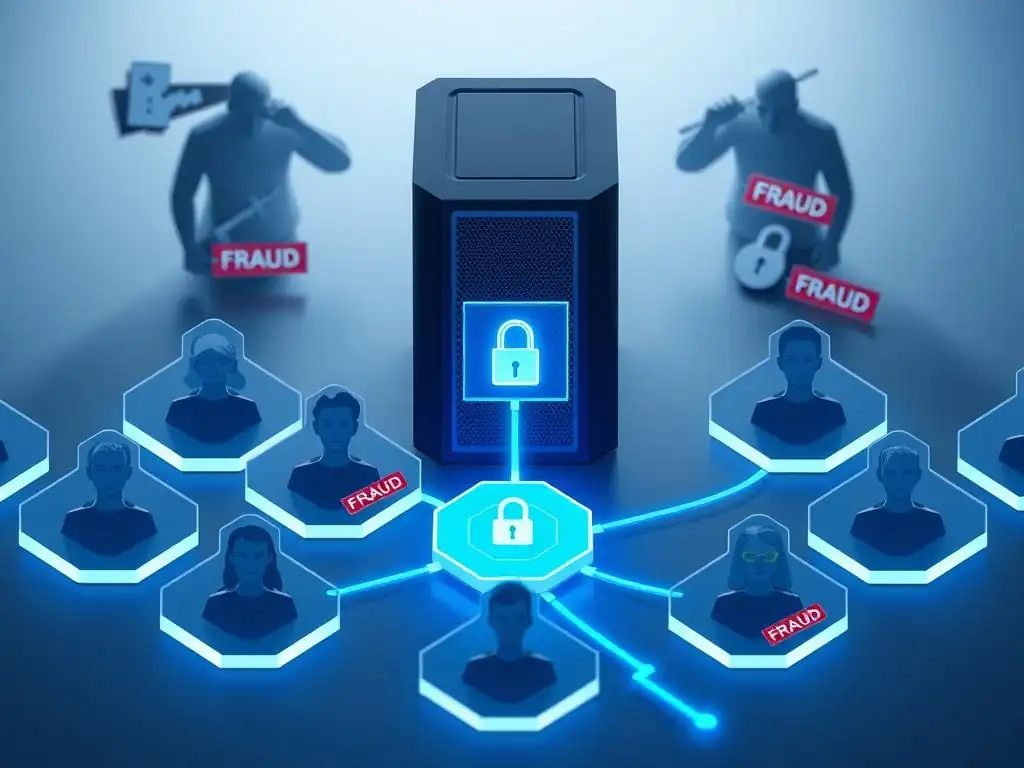
SSI for Secure E-commerce Transactions: Preventing Payment Fraud
E-commerce platforms are major targets for payment fraud, including the use of stolen credit card information and account takeovers. SSI offers a powerful method for enhancing the security of online transactions and boosting Selfsovereign identity fraud prevention in this sector. Instead of relying solely on potentially compromised payment card details and weak passwords, e-commerce sites could integrate SSI to verify the identity of the purchaser.
For example, during checkout, a user could be prompted to present a verifiable credential from their bank confirming ownership of the payment method being used, or a credential from a trusted identity provider confirming their identity and address match the shipping information. This verification happens directly from the user's wallet, without sharing sensitive bank or identity details with the merchant.
This adds an extra layer of cryptographic proof that the person making the purchase is the legitimate owner of the identity and payment method, making it significantly harder for fraudsters using stolen credentials or synthetic identities to complete transactions successfully.
Combating Account Takeover Fraud with SSI-Based Authentication
Account Takeover (ATO) fraud, where a fraudster gains unauthorized access to a user's online account, is a rapidly growing threat, costing businesses billions annually. ATO often results from weak passwords, credential stuffing (using lists of stolen login pairs), or phishing attacks. SSI provides a robust alternative to traditional username/password authentication that significantly improves Selfsovereign identity fraud prevention against ATO.
Instead of logging in with a password, users could authenticate by presenting a verifiable credential issued by the service provider itself or a trusted third party, linked to their DID. This credential acts as a secure, cryptographic key to access the account.
This method is phishing-resistant because the user isn't typing in a password; they are cryptographically signing a challenge or presenting a unique, non-reusable credential from their secure wallet. Furthermore, if a service provider issued a credential to a user after a rigorous initial verification, requiring that credential for future logins ensures that only the legitimate identity holder with access to their SSI wallet can access the account, effectively blocking many common ATO vectors.
SSI for KYC/AML Compliance: Streamlining Customer Onboarding and Reducing Regulatory Risk
Know Your Customer (KYC) and Anti-Money Laundering (AML) regulations require businesses, particularly in finance and banking, to verify the identity of their customers to prevent illicit activities. Traditional KYC processes are often cumbersome for both the user and the business and can still be vulnerable to document forgery or synthetic identities. SSI offers a way to streamline this process while enhancing the reliability of identity verification, thereby improving Selfsovereign identity fraud prevention and reducing regulatory risk.
A user could obtain verifiable credentials from trusted issuers – for example, a government-issued identity credential, a proof of address from a utility company, or a credential from a credit bureau confirming identity details. During onboarding with a new financial institution, the user could selectively share only the specific attributes required by KYC/AML regulations (e.g., proof of identity, proof of address, date of birth) directly from their SSI wallet.
The financial institution can cryptographically verify the authenticity and integrity of these credentials. This process is faster for the user, reduces manual review for the business, and relies on cryptographically verifiable claims from trusted sources, making it significantly harder for fraudsters to onboard using fake or stolen identities.
Protecting Against Synthetic Identity Fraud with SSI Verification
Synthetic identity fraud, where fraudsters combine real and fake information to create entirely new identities, is one of the hardest types of fraud to detect using traditional methods because the identity isn't stolen – it's fabricated. These synthetic identities can be used to open fraudulent accounts, obtain loans, and conduct other illicit activities, often going undetected for long periods. SSI provides a powerful tool for Selfsovereign identity fraud prevention against this type of crime.
SSI relies on verifiable credentials issued by trusted authorities. To obtain a verifiable credential for a core identity attribute, such as a government-issued ID or a confirmed address, an individual must typically undergo a rigorous verification process by the issuing authority. A synthetic identity, lacking a basis in a real person with verifiable ties to legitimate institutions, would struggle to acquire such trusted credentials.
By requiring users to present verifiable credentials from established issuers during account opening or transactions, businesses can make it significantly more difficult for synthetic identities to pass verification checks. The cryptographic link between the DID and the verified claims ensures that the identity presented is anchored in real-world verifiable attributes from trusted sources.
Securing Digital Voting Systems with SSI-Enabled Voter Authentication
Securing digital voting systems against fraud, including voter impersonation and ballot stuffing, is a critical challenge. SSI offers a potential solution for robust voter authentication while preserving privacy. Instead of relying on potentially insecure physical IDs or centralized voter databases vulnerable to manipulation, voters could use SSI.
A trusted authority (e.g., an election commission) could issue a verifiable credential to eligible voters confirming their eligibility to vote in a specific election or precinct, linked to their DID. When voting online, the voter would present this credential from their SSI wallet. The voting system could verify the credential cryptographically to confirm the voter's eligibility and identity without needing to access a centralized voter roll database containing sensitive personal information.
Furthermore, the system could be designed to ensure that the credential can only be used once per election, preventing double voting. This method enhances security, protects voter privacy by minimizing data exposure, and provides a cryptographically verifiable audit trail of authenticated voters, thereby improving Selfsovereign identity fraud prevention in digital elections.
Challenges and Considerations for SSI Adoption
Interoperability: Ensuring Compatibility Across Different SSI Systems
One of the significant challenges in the widespread adoption of SSI for Selfsovereign identity fraud prevention is ensuring interoperability between different SSI systems and implementations. Various frameworks, protocols, and technologies are being developed for SSI (e.g., based on different blockchain networks or decentralized identity standards). For SSI to be truly effective, a verifiable credential issued by one entity using one system must be recognizable and verifiable by another entity using a potentially different system or platform.
Achieving seamless interoperability requires the development and adherence to common standards for DIDs, DID Documents, Verifiable Credentials, and communication protocols. While significant progress is being made by standards bodies like the W3C (World Wide Web Consortium) and the Decentralized Identity Foundation (DIF), ensuring consistent implementation across diverse industries and global regions remains complex. Without strong interoperability, the utility of SSI is limited to closed ecosystems, hindering its potential to provide universal Selfsovereign identity fraud prevention.
User Education and Adoption: Overcoming the Learning Curve
For SSI to achieve mass adoption and effectively contribute to Selfsovereign identity fraud prevention, users need to understand what it is, how it works, and why they should use it. The technical concepts behind SSI, such as DIDs, Verifiable Credentials, digital wallets, and cryptography, can be complex for the average user. Explaining the benefits of privacy, control, and enhanced security in a clear and accessible manner is crucial.
Overcoming the learning curve and encouraging widespread user adoption requires intuitive user interfaces for digital wallets, clear educational resources, and compelling use cases that demonstrate tangible value. Users need to trust the technology and feel comfortable managing their digital identities. Without broad user participation, the network effects necessary for SSI's success in combating fraud across various digital interactions will be limited.
The regulatory landscape surrounding digital identity, data privacy, and the use of technologies like blockchain and SSI is still evolving globally. Navigating these complex and sometimes conflicting legal frameworks presents a challenge for the adoption of SSI for Selfsovereign identity fraud prevention. Regulations like GDPR (General Data Protection Regulation) in Europe or CCPA (California Consumer Privacy Act) in the U.S. emphasize data protection and user rights, which align well with SSI principles.
However, specific requirements regarding data storage, processing, and the definition of legal identity need careful consideration. For example, how does the "right to be forgotten" apply when identity information is anchored on an immutable blockchain? Businesses implementing SSI must ensure compliance with current and future regulations. Collaboration between technology developers, businesses, and regulators is essential to create a clear and supportive legal environment for SSI adoption.
Scalability and Performance: Handling Large-Scale Identity Verification
While the underlying technologies like blockchain have made significant strides in scalability, ensuring that SSI systems can handle the volume and performance requirements of large-scale identity verification remains a consideration. A global SSI system would need to support billions of DIDs, millions of credential issuances daily, and potentially thousands of verifications per second, depending on the use case (e.g., e-commerce during peak periods).
The performance of the underlying decentralized ledger or network used to anchor DIDs and verify credential status (e.g., checking for revocation) is critical. Solutions involving public blockchains need to address transaction speed, cost, and energy consumption. Private or permissioned ledgers might offer better performance but introduce different trust considerations. Ongoing research and development are focused on improving the scalability and efficiency of decentralized identity infrastructure to meet the demands of widespread Selfsovereign identity fraud prevention.
Integration with Legacy Identity Infrastructure
Integrating new SSI systems with existing legacy identity infrastructure presents a practical challenge for businesses. Organizations have invested heavily in current identity management systems, databases, and processes. A complete overhaul is often impractical and costly. Therefore, successful SSI adoption often requires strategies for gradual integration and interoperability with existing systems.
This might involve building bridges between SSI wallets and traditional login systems, or using SSI credentials to enhance existing verification workflows rather than completely replacing them initially. Addressing the technical complexities and potential data migration issues involved in connecting decentralized SSI components with centralized legacy systems is crucial for a smooth transition and broader acceptance of SSI as a viable solution for Selfsovereign identity fraud prevention.
The Future of SSI and Online Fraud Prevention
Emerging Trends in SSI Technology and Standards
The field of SSI is rapidly evolving, driven by ongoing technological advancements and efforts to establish global standards. Emerging trends include the development of more sophisticated zero-knowledge proof algorithms that allow for even more granular and private verification of identity attributes. There is also significant work being done on standardizing the format and exchange of Verifiable Credentials (e.g., W3C VC 2.0) and DID methods to improve interoperability across different platforms and use cases.
Advancements in secure hardware, such as Trusted Execution Environments (TEEs) and secure elements in mobile devices, are being explored to enhance the security of SSI wallets where users store their private keys and credentials. Furthermore, the integration of decentralized identity with other emerging technologies like WebAssembly and edge computing is expected to improve the performance and accessibility of SSI applications. These technological and standardization efforts are laying the groundwork for more robust and widespread Selfsovereign identity fraud prevention solutions.
The Role of Blockchain in Enhancing SSI Security and Transparency
Blockchain technology plays a crucial role in enhancing the security, transparency, and immutability of SSI systems, particularly in the context of Selfsovereign identity fraud prevention. While SSI itself is not synonymous with blockchain (SSI can theoretically be implemented using other distributed ledger technologies), blockchain provides a robust foundation for key SSI components, specifically DIDs and Verifiable Credentials.
Blockchain ledgers can serve as a decentralized, tamper-proof registry for DID documents, ensuring that the public keys and other information associated with a DID are globally discoverable and resistant to manipulation. They can also be used to publish revocation lists for verifiable credentials, allowing verifiers to check the current status of a credential in a transparent and decentralized manner. The inherent security features of blockchain, such as cryptographic hashing, consensus mechanisms, and immutability, provide a high level of trust in the foundational layers of SSI, making it a powerful tool for anchoring verifiable identities and combating fraud.
Predictions for the Widespread Adoption of SSI in the Fight Against Fraud
Predictions suggest that SSI is poised for significant growth and wider adoption across various sectors in the coming years, driven by increasing concerns over data privacy, security, and the escalating costs of online fraud. As standards mature and user-friendly SSI wallet applications become more prevalent, the friction associated with adoption is expected to decrease. Early adoption is likely to continue in areas with high regulatory requirements and significant fraud exposure, such as financial services (for KYC/AML), healthcare (for patient data access), and government services (for digital IDs and voting).
As businesses and individuals recognize the benefits of greater control, privacy, and reduced risk of identity theft and account takeover, the demand for SSI solutions will likely increase. Analysts predict that the global decentralized identity market, which includes SSI, will grow substantially, potentially reaching billions of dollars within the next few years. This widespread adoption, facilitated by technological maturity and regulatory clarity, holds the potential to fundamentally transform how we interact online, creating a more secure and trustworthy digital environment and significantly bolstering global Selfsovereign identity fraud prevention efforts.
Conclusion: Embracing SSI for a More Secure Digital Future
Recap of SSI's Potential in Combating Online Fraud
Online fraud represents a persistent and evolving threat in our increasingly digital world, causing significant financial losses and eroding trust. Traditional identity management systems, with their centralized data stores and reliance on vulnerable authentication methods, have proven inadequate in the face of sophisticated attacks. Self-Sovereign Identity offers a paradigm shift, empowering individuals with control over their digital identities through decentralized identifiers and verifiable credentials.
This approach fundamentally enhances Selfsovereign identity fraud prevention by minimizing sensitive data exposure via selective disclosure, reducing the risk of large-scale data breaches, and providing cryptographically verifiable proof of identity and attributes. SSI offers tangible benefits, including enhanced privacy, reduced risk of identity theft and account takeover, improved data security, streamlined business processes, and substantial cost savings from reduced fraud losses.
Specific use cases demonstrate SSI's practical application in combating fraud across various domains, from securing e-commerce transactions and authenticating users against ATO to streamlining KYC/AML compliance and protecting against synthetic identity fraud. While challenges related to interoperability, user adoption, regulation, scalability, and integration with legacy systems remain, ongoing technological advancements and standardization efforts are paving the way for broader implementation. The foundational role of blockchain in providing a secure and transparent infrastructure further strengthens SSI's potential.
Call to Action: Exploring and Implementing SSI Solutions for Fraud Prevention
Given the compelling benefits and the escalating threat of online fraud, organizations and individuals should actively explore and consider implementing Self-Sovereign Identity solutions for robust Selfsovereign identity fraud prevention. For businesses across sectors, particularly those handling sensitive customer data or high-value transactions, evaluating how SSI can enhance security, improve compliance, and streamline user experiences is a strategic imperative. This involves understanding the technology, assessing potential use cases within their specific context, and piloting SSI solutions to realize their benefits.
Individuals are encouraged to learn about SSI and advocate for its adoption by service providers they interact with. Exploring early SSI wallet applications and understanding how they work is a proactive step towards taking control of one's digital identity and reducing personal vulnerability to fraud. Embracing SSI is not just about adopting a new technology; it's about contributing to a more secure, private, and trustworthy digital ecosystem for everyone.
Future Research Directions in Self-Sovereign Identity
The field of Self-Sovereign Identity is dynamic, and continued research and development are essential to overcome current limitations and unlock its full potential for Selfsovereign identity fraud prevention. Future research directions include further refining cryptographic techniques like Zero-Knowledge Proofs to improve efficiency and broader applicability. Investigating novel consensus mechanisms and decentralized ledger architectures that offer improved scalability and sustainability for global identity systems is crucial.
Research is also needed on user-friendly interfaces and educational methodologies to facilitate mass adoption across diverse demographics and technical proficiencies. Exploring the legal and ethical implications of decentralized identity, including governance models for DID systems and the handling of identity recovery or inheritance, is vital. Finally, ongoing work is required to develop robust frameworks for integrating SSI with emerging technologies like AI and IoT in a secure and privacy-preserving manner, ensuring SSI remains at the forefront of combating future forms of online fraud.
Frequently Asked Questions
How does Self-Sovereign Identity (SSI) help prevent online fraud?
SSI empowers users with control over their digital identities, reducing reliance on centralized authorities. This decentralized approach makes it harder for fraudsters to impersonate individuals or create fake accounts. It also helps prevent identity theft by reducing data breaches.
What are the key benefits of using SSI for identity verification?
SSI provides enhanced security and privacy through cryptographic techniques. It also allows for selective disclosure of information, meaning users only share what's necessary. This reduces the risk of exposing sensitive data to potential fraudsters and improves data minimization.
How does SSI differ from traditional identity management systems?
Traditional systems rely on centralized databases, making them vulnerable to single points of failure and data breaches. SSI, on the other hand, is decentralized, giving users ownership and control. This user-centric approach significantly reduces the risk of mass identity theft.
What are some practical applications of SSI in fraud prevention beyond basic identity verification?
SSI can be used for secure online transactions, digital signatures, and proof of credentials. This helps prevent phishing attacks and other forms of financial fraud. It also facilitates cross-border identity verification, preventing international scams.
What are the potential challenges to the widespread adoption of SSI for fraud prevention?
Challenges include lack of interoperability between different SSI systems and the need for user education. Scalability and regulatory uncertainty also pose obstacles to mass adoption. Overcoming these challenges is essential for realizing SSI's full potential in fraud prevention.
Final Reflection: Embracing Trust in a Digital World
The journey through understanding Self-Sovereign Identity (SSI) and its potential in revolutionizing fraud prevention highlights a critical need in our increasingly digital world. The vulnerabilities exposed by traditional identity systems are no longer sustainable, and the promise of SSI offers a tangible path towards a more secure and trustworthy online experience for everyone.
The impact of SSI extends far beyond mere fraud prevention; it touches upon fundamental rights to privacy and control over one's digital existence. Witnessing the shift towards user-centric identity solutions is not just a technological advancement, but a cultural one, empowering individuals to navigate the digital landscape with confidence and autonomy. Identity is the new perimeter of security,
a sentiment that underscores the urgency and importance of embracing solutions like SSI.
As we conclude, consider the power you hold in shaping the future of digital identity. Embrace the principles of SSI, demand transparency and control from the services you use, and advocate for a world where your identity is truly yours. The future of online trust depends on our collective commitment to building a more secure and sovereign digital world.
Unlock Your Identity's Potential: Fight Fraud Today!
Thank you for exploring how Self-Sovereign Identity is transforming online security and empowering individuals to take control of their digital identities. Now that you understand the significance of this technology, it's time to take action!
Here's how you can contribute to creating a safer digital environment:
- Take Control: Begin researching digital identity wallets that align with your values and security requirements. This is your first step toward owning and managing your personal information securely.
- Explore: Learn more about the technical foundations of Self-Sovereign Identity, including how blockchain technology and cryptography ensure privacy and security. Share your insights with your network!
- Spread Awareness: Talk to friends, family, and colleagues about the benefits of self-sovereign identity. The more people understand its importance, the stronger our collective defenses against online fraud will be.
Are you ready to lead the way toward a future where your digital identity is truly yours and online security is enhanced? Share in the comments how you plan to use self-sovereign identity to protect yourself and others.
Leave a Reply