
Scalability Challenges for Verifiable Credentials on Public Blockchains


Welcome to Blockchain Trends, your compass in the rapidly evolving world of decentralized technology! Beyond the hype of cryptocurrency lies a universe of possibilities, and we're here to explore them.
Ever wondered how to unlock the full potential of blockchain scalability verifiable credentials in the realm of digital identity? Our latest article dives deep into the challenges and potential solutions for implementing verifiable credentials on public blockchains, offering crucial insights into the future of secure and decentralized identity management. Get ready to unravel the complexities and discover the transformative power of blockchain in shaping the future of trust.
- Blockchain Scalability Challenges for Verifiable Credentials
- Public Blockchains: A Foundation for Decentralized VC Management
- Scalability Bottlenecks in Blockchain-Based Verifiable Credentials
- Impact of Scalability Issues on Verifiable Credential Performance
- Exploring Scalability Solutions for Blockchain VCs
- Alternative Blockchain Architectures for Scalable VCs
- Case Studies: Implementing Scalable VC Solutions on Blockchain
- The Future of Blockchain Scalability and Verifiable Credentials
- Conclusion: Achieving Scalable and Efficient Verifiable Credentials on Blockchain
-
Frequently Asked Questions
- What are the primary scalability challenges when using public blockchains for verifiable credentials?
- How does the size of verifiable credentials impact blockchain scalability?
- What are some off-chain solutions for improving the scalability of verifiable credentials on blockchains?
- How might layer-2 solutions, like sidechains or rollups, improve the scalability of verifiable credentials?
- What role does data compression play in addressing scalability issues related to verifiable credentials?
- Final Reflection: Scaling Trust in a Decentralized World
- Unlock the Potential: Your Next Steps with Verifiable Credentials!
Blockchain Scalability Challenges for Verifiable Credentials
Understanding Verifiable Credentials (VCs) and their Benefits
Verifiable Credentials (VCs) represent a significant evolution in digital identity, offering a secure, privacy-preserving, and tamper-evident way to manage personal and professional information. VCs allow individuals and organizations to issue, hold, and verify claims about themselves in a decentralized manner. Instead of relying on a central authority or database, a VC involves three parties: the issuer (e.g., a university issuing a degree), the holder (the student receiving the degree), and the verifier (e.g., an employer checking the degree's validity). This model empowers individuals by giving them control over their data and deciding who they share it with.
The benefits of VCs are substantial, ranging from streamlined processes like job applications and university admissions to secure access control and compliance checks. They reduce the reliance on physical documents and cumbersome manual verification steps. For example, a government could issue a digital driver's license as a VC, which the holder could then share with a rental car company (the verifier) without exposing unnecessary personal details. The underlying technology ensures the credential hasn't been tampered with and was issued by a trusted source, enhancing both security and privacy compared to traditional methods.
The Role of Blockchain in Enhancing VC Security and Trust
Blockchain technology plays a crucial role in bolstering the security and trust framework of Verifiable Credentials. While VCs themselves do not necessarily require a blockchain, integrating them with a decentralized ledger provides key advantages, particularly regarding the integrity and availability of the decentralized identifiers (DIDs) used to identify issuers and holders, and the status of credentials (e.g., revocation). By anchoring DID documents or credential status information onto an immutable blockchain, participants can trust that these foundational elements have not been altered or censored.
The decentralized and immutable nature of blockchain ensures that the public keys and endpoints associated with DIDs are verifiable and resistant to single points of failure or attack. Furthermore, blockchain can serve as a trust anchor for revocation lists or registries, allowing verifiers to cryptographically check if a credential is still valid without needing to query the original issuer directly every time.
This distributed trust mechanism is fundamental to building a robust and resilient ecosystem for verifiable digital identity, significantly enhancing the security and trustworthiness of the VC system, making blockchain scalability for verifiable credentials a critical area of focus.
Why Blockchain Scalability Matters for Widespread VC Adoption
The potential for Verifiable Credentials is vast, envisioning a future where billions of people and countless organizations issue, hold, and verify digital credentials daily for everything from identity proofs and academic records to professional licenses and health status. Achieving this level of adoption necessitates an underlying infrastructure capable of handling immense transaction volumes and data interactions. This is precisely where blockchain scalability becomes a paramount concern for verifiable credentials.
Current public blockchains, while offering decentralization and security, often face limitations in processing high transaction throughput and managing data costs efficiently. If every VC issuance, verification check (if on-chain), or revocation requires a separate, potentially costly, and slow blockchain transaction, the system becomes impractical for mass use. Imagine millions of students needing digital degrees or billions of daily identity checks; the underlying blockchain needs to scale significantly to accommodate such demand reliably and affordably. Without addressing blockchain scalability challenges, the widespread deployment and utility of verifiable credentials on a global scale will remain significantly constrained.
Public Blockchains: A Foundation for Decentralized VC Management
Advantages of Using Public Blockchains for Verifiable Credentials
Leveraging public blockchains like Bitcoin or Ethereum for Verifiable Credentials offers distinct advantages rooted in their core design principles. Paramount among these is decentralization, meaning no single entity controls the network. This prevents censorship and ensures that critical identity infrastructure, such as DID registries or revocation mechanisms, remains available and resistant to unilateral shutdown or manipulation. For instance, anchoring DID documents on a public blockchain ensures that an individual's digital identity anchor is not tied to the uptime or policy of a single company or government.
Furthermore, the immutability of public blockchains provides a high degree of trust in the historical record. Once information, such as a hash representing a credential's state or a DID document update, is confirmed on the chain, it is practically impossible to alter. This provides a strong cryptographic assurance for verifiers that the foundational data they rely on hasn't been tampered with since being recorded. This transparency and auditability, inherent to public ledgers, build confidence among all participants in the VC ecosystem, making them attractive as a trust layer despite the ongoing challenge of blockchain scalability verifiable credentials.
Limitations of Current Public Blockchains for VC Implementation
Despite their advantages, current public blockchains present significant limitations when considering the scale required for widespread Verifiable Credentials adoption. The most prominent issue is transaction throughput. Networks like Bitcoin process roughly 7 transactions per second (tps), while Ethereum's current capacity is around 15-30 tps (though this is improving with Eth2). Compare this to centralized payment networks handling thousands of tps or the potential millions of daily VC operations globally. This limited capacity leads to bottlenecks, particularly during peak network usage.
Another major hurdle is the cost associated with transactions, often referred to as 'gas fees' on platforms like Ethereum. These fees fluctuate based on network congestion and can become prohibitively expensive, especially for operations that might be frequent in a VC system, such as updating a DID document, writing a revocation event, or interacting with smart contracts that manage credential status.
Storing large amounts of data on-chain is also extremely costly and generally impractical for VCs, which often contain significant personal information (though only hashes or pointers are typically stored on-chain, even this incurs cost). These factors highlight the inherent challenges in achieving scalable verifiable credentials on public blockchain infrastructure as it currently exists.
Scalability Bottlenecks in Blockchain-Based Verifiable Credentials
Transaction Throughput Limitations and VC Issuance
The inherent design of many public blockchains, relying on distributed consensus mechanisms, limits the number of transactions they can process per second. This constraint directly impacts the speed and volume at which Verifiable Credentials can be issued and verified. If a university needs to issue thousands of degrees as VCs simultaneously, or a government millions of digital IDs, the underlying blockchain must be able to handle this burst of activity. On a network limited to tens of transactions per second, such large-scale issuance events could take hours or even days, creating significant delays and frustrating users.
Moreover, verification processes, depending on their design (e.g., checking a revocation status on-chain), can also contribute to transaction load. While many VC verification steps happen off-chain, critical trust anchors or status checks might require on-chain interaction. If millions of verifiers are simultaneously checking credential validity, the cumulative transaction volume can quickly overwhelm networks with low throughput. This bottleneck in processing speed is a fundamental challenge to achieving blockchain scalability verifiable credentials at a level necessary for mass adoption.
Storage Costs and On-Chain Data Management for VCs
Storing data on public blockchains is notoriously expensive and generally not designed for large payloads. While the Verifiable Credentials specification promotes off-chain storage of the credential data itself, relying on the blockchain primarily for anchoring DIDs or revocation proofs, even this limited on-chain data management incurs costs. DID documents, which contain public keys and service endpoints necessary for communication and key management, need to be resolvable, often requiring an on-chain anchor that points to off-chain data or includes a hash of the document. Updates to these documents require new transactions and storage space on the chain.
Revocation mechanisms also contribute to storage needs. Common methods involve writing a transaction to a smart contract indicating a credential's status change or adding an entry to a revocation registry stored on or referenced by the blockchain. As the number of issued and potentially revoked credentials grows into the millions or billions, the cumulative cost and storage burden of maintaining these on-chain proofs or registries become substantial. Efficiently managing this data while keeping costs down is a significant hurdle for scalable verifiable credentials.
Smart Contract Complexity and Gas Fees for VC Operations
Many blockchain-based Verifiable Credential systems utilize smart contracts to manage aspects of the VC lifecycle, such as DID registration, credential status updates, or access control policies. The execution of these smart contracts requires computational resources on the blockchain network, which are typically paid for using gas fees. The complexity of the smart contract logic directly impacts the amount of gas consumed by a transaction. More complex operations, like interacting with a large revocation registry or executing intricate verification logic on-chain (though less common), will cost more in gas.
Fluctuating gas prices, driven by overall network demand, add another layer of unpredictability and cost. High network congestion can push gas fees sky-high, making basic VC operations prohibitively expensive for issuers, holders (if they need to interact with the chain), or verifiers. This financial barrier can significantly impede the adoption of blockchain scalability verifiable credentials, particularly in use cases requiring frequent on-chain interactions or involving users in regions where even small transaction costs are significant. Streamlining smart contract logic and minimizing on-chain computation are vital steps in mitigating this challenge.
Impact of Scalability Issues on Verifiable Credential Performance
Delays in VC Issuance and Verification Processes
The scalability bottlenecks discussed directly translate into frustrating delays in the practical use of Verifiable Credentials. During periods of high network activity, limited transaction throughput on public blockchains can lead to significant backlogs. A VC issuance, which might ideally be instantaneous, could be stuck in a transaction queue for minutes or even hours, waiting for confirmation. This is particularly problematic for time-sensitive applications, such as proving identity for immediate access or quickly verifying a professional license during a critical process.
Similarly, verification processes that require an on-chain check (like querying a revocation status) can also be subject to these delays. A verifier attempting to quickly check the validity of a credential might face unacceptable waiting times, disrupting workflows and undermining the efficiency benefits VCs promise. These delays degrade the user experience for both issuers and verifiers and pose a substantial barrier to integrating blockchain-based Verifiable Credentials into mainstream applications where speed and reliability are essential.
Increased Costs for VC Issuers and Verifiers
Scalability issues, particularly related to transaction fees and storage costs, impose significant financial burdens on participants in the VC ecosystem. Issuers, especially large organizations like universities or governments issuing credentials in bulk, face substantial costs if each issuance or related on-chain operation incurs a gas fee. For example, issuing millions of credentials could potentially cost tens or hundreds of thousands of dollars in transaction fees alone on a congested network, making the solution economically unviable.
Verifiers, too, can incur costs if their verification process involves frequent on-chain checks, such as querying a smart contract for revocation status. While off-chain verification is preferred, certain trust assurances might necessitate an on-chain interaction. If these interactions are costly, it disincentivizes verifiers from adopting the system. The high and unpredictable costs stemming from limited blockchain scalability verifiable credentials directly hinder their widespread commercial and public sector deployment.
Reduced User Experience and Adoption Rates
Ultimately, the combination of delays and high costs resulting from scalability limitations negatively impacts the end-user experience and slows down overall adoption rates. Users expecting a seamless digital identity experience will be frustrated by slow issuance times or verification delays. Organizations evaluating VC solutions may be deterred by the unpredictable and potentially high operational costs associated with using public blockchain infrastructure.
A poor user experience acts as a significant barrier to entry. If obtaining or using a Verifiable Credential is slower or more expensive than existing, albeit less secure, methods, users and businesses will be less inclined to switch. Overcoming these performance issues is critical for the promise of blockchain scalability verifiable credentials to be fully realized and for VCs to become a ubiquitous part of the digital landscape. Addressing scalability is not just a technical challenge but a prerequisite for market acceptance and growth.
Exploring Scalability Solutions for Blockchain VCs
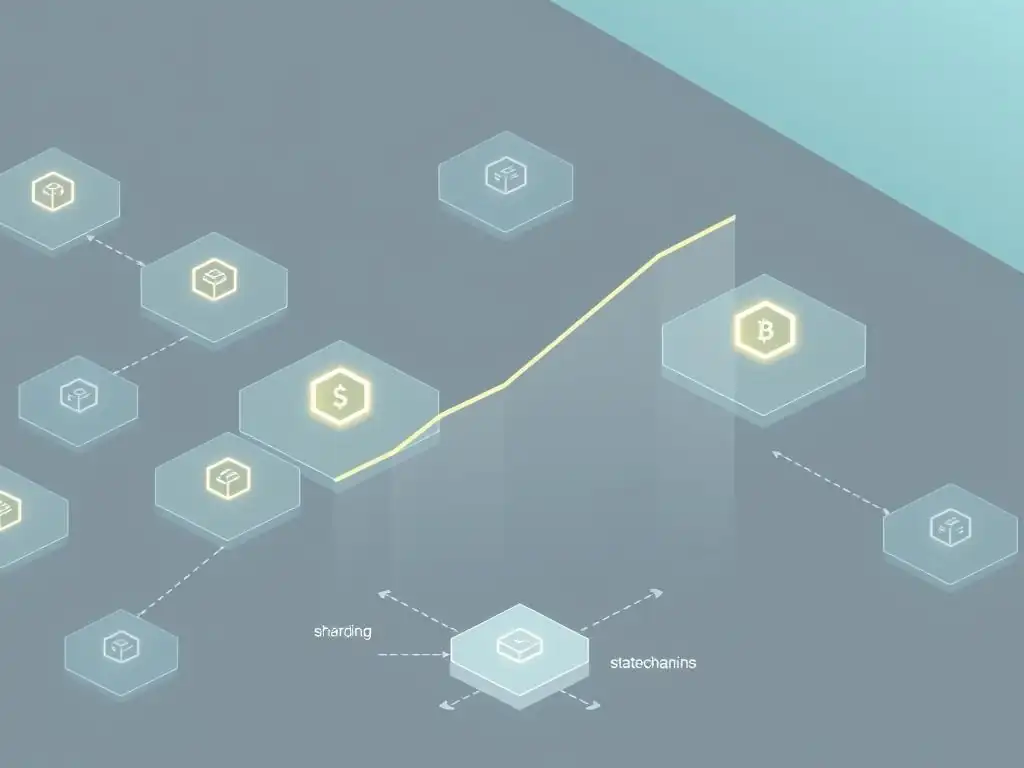
Layer-2 Scaling Solutions for Verifiable Credentials
Layer-2 scaling solutions operate on top of the main blockchain (Layer-1) to handle transactions off-chain, significantly increasing throughput and reducing costs before settling the final state back on Layer-1. These solutions are highly relevant for improving blockchain scalability verifiable credentials. By processing a large volume of VC-related operations off-chain, the burden on the main chain is drastically reduced. This allows for faster processing and lower transaction fees for individual actions.
Examples of Layer-2 solutions include state channels and rollups, each offering different trade-offs in terms of complexity, security, and the types of transactions they are best suited for. Implementing Layer-2 solutions for VC issuance, updates, or even certain types of verification checks can drastically improve the performance and economic viability of blockchain-based identity systems. This approach allows the system to leverage the security and decentralization of the Layer-1 blockchain while achieving the high transaction volumes required for mass adoption.
State Channels for Off-Chain VC Interactions
State channels allow parties to conduct multiple transactions or state updates off-chain within a secure channel, with only the initial setup and final state settlement being recorded on the Layer-1 blockchain. For Verifiable Credentials, state channels could be used for repeated interactions between a holder and a verifier, or between an issuer and holder for managing credential updates or status notifications. For instance, a holder might open a channel with a frequent verifier to quickly share and update proofs derived from VCs without incurring an on-chain transaction for each interaction.
While state channels offer high throughput and low latency once established, they require participants to be online to interact within the channel and are best suited for direct, repeated interactions between a limited number of parties. They are less ideal for broadcasting information or managing global state like a universal revocation registry. However, for specific VC use cases involving frequent, bilateral exchanges, state channels offer a promising path to improving blockchain scalability verifiable credentials by moving interactions off-chain.
Rollups for Batching VC Transactions
Rollups are another prominent Layer-2 technique that executes transactions off-chain but posts compressed transaction data or validity proofs back to the Layer-1 blockchain. This allows a single on-chain transaction to represent hundreds or thousands of off-chain operations. There are different types, such as Optimistic Rollups and ZK-Rollups, which vary in how they ensure the validity of off-chain computations. For Verifiable Credentials, rollups could be used to batch large numbers of VC issuance events, DID document updates, or revocation entries.
For example, an issuer could batch thousands of credential issuances into a single rollup transaction submitted to the Layer-1 chain, drastically reducing the per-issuance cost and increasing the overall issuance throughput. Similarly, updates to a revocation registry could be processed off-chain and periodically rolled up onto the main chain. Rollups are seen as a powerful general-purpose scaling solution that can significantly improve the transaction capacity and reduce costs for various VC-related operations, making scalable verifiable credentials on blockchain platforms more achievable.
Sharding is a database partitioning technique applied to blockchains, dividing the network's state and transaction processing load across multiple smaller, interconnected chains or 'shards'. Each shard processes its own set of transactions and maintains its own portion of the state. This allows the network as a whole to process more transactions in parallel and manage larger amounts of data. For Verifiable Credentials, sharding could potentially improve the scalability of storing and managing on-chain data related to DIDs or credential status.
If a blockchain network is sharded, different shards could be responsible for managing the DID documents or revocation registries for different sets of users or issuers. This distributes the storage and processing load, allowing the system to handle a much larger number of DIDs and credential statuses than a single, non-sharded chain. While sharding adds complexity to network design and cross-shard communication, it is a key strategy for enabling large-scale blockchain scalability verifiable credentials, particularly concerning the storage and accessibility of foundational identity data.
Sidechains and Federated Blockchains for VC Ecosystems
Sidechains are independent blockchains that are pegged to a main blockchain, allowing assets or data to be moved between them. They can have different consensus mechanisms and structures optimized for specific use cases. Federated blockchains are similar but often involve a permissioned set of validators. These architectures offer scalability by offloading transactions and data from the main public chain onto a separate chain designed for higher throughput or lower costs, while still maintaining a connection or anchor to the main chain for security or interoperability.
A sidechain or a federated blockchain could be established specifically for managing Verifiable Credentials within a particular ecosystem, such as an industry consortium or a national identity system. VC issuance, verification logs, and revocation management could occur primarily on this dedicated chain, which is optimized for the required transaction volume and data handling.
Periodically, summaries or proofs of the sidechain's state could be anchored back to a more secure public blockchain like Ethereum or Bitcoin, leveraging their trust properties without inheriting their scalability limitations for daily operations. This hybrid approach can provide a balance between scalability, cost-efficiency, and the security assurances of a public ledger for enabling scalable verifiable credentials.
Optimizing Smart Contract Design for VC Efficiency
Beyond infrastructure-level scaling solutions, optimizing the smart contracts used in blockchain-based VC systems is crucial for improving efficiency and reducing costs. Poorly written or overly complex smart contracts can consume excessive gas, leading to high transaction fees and slow execution times. Careful design can minimize the amount of on-chain computation and storage required for common VC operations.
Strategies include minimizing the data stored directly on-chain (e.g., only storing hashes or pointers), optimizing contract functions to reduce gas consumption per execution, and designing efficient data structures for managing lists or registries (like using Merkle trees for revocation lists). For instance, instead of storing every revocation event individually in a simple array, a contract could manage a Merkle tree where only the root hash is stored on-chain, and verifiers use off-chain proofs to check inclusion. Such optimizations in smart contract design are fundamental to building cost-effective and scalable verifiable credentials systems on blockchain.
Alternative Blockchain Architectures for Scalable VCs
Permissioned Blockchains for Controlled VC Environments
While public blockchains offer maximum decentralization, permissioned blockchains provide an alternative architecture that can be better suited for specific, controlled Verifiable Credential environments where participants are known and trusted. In a permissioned chain, only authorized nodes can participate in the consensus process. This allows for much higher transaction throughput and lower, more predictable costs compared to public chains, as the consensus mechanism can be more efficient (e.g., Proof-of-Authority or certain BFT variants).
For use cases like enterprise supply chains, inter-government data sharing, or consortium-based identity networks, a permissioned blockchain can provide the necessary scalability and performance for managing large volumes of VCs among known entities. While they sacrifice some degree of public decentralization, they can offer sufficient trust and immutability for the specific context and overcome the scalability limitations often faced on public networks. Designing scalable verifiable credentials systems within these controlled environments leverages blockchain's benefits without the public chain's inherent throughput constraints.
Decentralized Storage Solutions for VC Data
Given the high cost and impracticality of storing full Verifiable Credential data directly on-chain, decentralized storage solutions are essential components of a scalable VC architecture. Technologies like IPFS (InterPlanetary File System) or Swarm provide decentralized ways to store and retrieve data off-chain, using content-addressable identifiers. Instead of storing the VC data itself on the blockchain, a hash of the VC is stored on-chain, along with a pointer (like an IPFS hash) to where the encrypted credential data can be found on the decentralized storage network.
This approach drastically reduces the on-chain storage burden and cost, contributing significantly to blockchain scalability verifiable credentials. The blockchain is used as a secure, immutable anchor for the hash and pointer, ensuring the integrity and location reference of the off-chain data, while the decentralized storage layer handles the bulk data storage efficiently. This separation of concerns is critical for building performance-oriented and cost-effective VC systems.
Hybrid Blockchain Approaches for Balancing Scalability and Security
Often, the most practical approach to achieving scalable verifiable credentials involves a hybrid architecture that combines the strengths of different blockchain types and related technologies. This might involve using a public blockchain as a root of trust for anchoring critical data like DID registry updates or major revocation events, while utilizing a permissioned chain or a Layer-2 solution for the high-volume, day-to-day operations like issuing and verifying credentials within a specific ecosystem.
Another hybrid model involves using a public blockchain for global, interoperable identity anchors (DIDs) and a decentralized storage network for credential data, alongside off-chain protocols for privacy-preserving presentation and verification (e.g., Zero-Knowledge Proofs). This allows the system to benefit from the global reach and security of a public ledger where needed, achieve high performance and lower costs for frequent operations off-chain or on a dedicated network, and ensure data privacy through decentralized storage and selective disclosure techniques. Hybrid approaches are seen as a pragmatic way to balance the competing demands of decentralization, security, privacy, and blockchain scalability verifiable credentials.
Case Studies: Implementing Scalable VC Solutions on Blockchain
uPort: Utilizing Identity Hubs and Selective Disclosure
uPort, a project initially developed by ConsenSys, explored using the Ethereum blockchain for decentralized identity, including elements aligned with Verifiable Credentials. A key aspect of their approach to achieving blockchain scalability verifiable credentials involved the concept of "Identity Hubs." Instead of storing all identity data or transaction logs directly on the Ethereum mainnet, uPort utilized off-chain storage mechanisms and protocols, with the blockchain primarily serving as a root of trust for DID registration and key management.
Users' identity data and VCs were managed within these off-chain Identity Hubs, which could be hosted by the user or a trusted service provider. Interactions, such as receiving or presenting credentials, largely happened off-chain. The Ethereum chain was used for foundational operations like resolving a user's DID to find their Identity Hub endpoint or managing recovery keys.
This design significantly reduced the number of required on-chain transactions, thereby improving scalability and reducing costs compared to a model where every VC interaction touched the Layer-1 chain. The focus on selective disclosure and off-chain data management was central to their strategy for scalable verifiable credentials.
Learning Machine: Leveraging Blockcerts and Anchoring to Bitcoin
Learning Machine, now part of Hyland, developed the Blockcerts open standard for issuing and verifying blockchain-based records, particularly academic certificates and professional credentials. Their approach to scalability, especially in early implementations, involved anchoring hashes of batches of credentials onto the Bitcoin blockchain. Bitcoin, while secure and immutable, has very limited transaction throughput (~7 tps) and high transaction costs compared to dedicated platforms.
To overcome these limitations and achieve blockchain scalability verifiable credentials, Blockcerts aggregates hashes of multiple credentials into a single Merkle tree. Only the root hash of this tree is then anchored in a Bitcoin transaction (specifically, within an OP_RETURN output). This allows thousands or even millions of credentials to be validated by checking their inclusion in a batch whose single root hash is immutably recorded on Bitcoin. Verification involves reconstructing the Merkle path off-chain and verifying it against the on-chain root hash. This batching technique is a classic example of using off-chain processing and data aggregation with on-chain anchoring to achieve a degree of scalability for verifiable credentials on a blockchain not originally designed for high transaction volume.
The Future of Blockchain Scalability and Verifiable Credentials
Emerging Technologies for Enhanced VC Scalability
The landscape of blockchain technology is rapidly evolving, with significant research and development focused squarely on improving scalability. Emerging technologies promise to further enhance the feasibility of scalable verifiable credentials. Beyond current Layer-2 solutions like Optimistic and ZK-Rollups, advancements in sharding implementations (e.g., Ethereum 2.0's long-term vision), new consensus mechanisms offering higher throughput (e.g., various Proof-of-Stake or delegated consensus variants), and novel data availability layers are on the horizon.
Zero-Knowledge Proofs (ZKPs) are also becoming increasingly sophisticated. While already used in ZK-Rollups, ZKPs can also be applied within the VC context itself to enable privacy-preserving verification without revealing the underlying credential data. This can reduce the need for certain types of on-chain interactions or data lookups. Furthermore, continued development in decentralized storage solutions, interoperability protocols, and more efficient smart contract languages and virtual machines will collectively contribute to building more performant and cost-effective infrastructure for blockchain scalability verifiable credentials.
The Importance of Standardization and Interoperability
Achieving widespread adoption and realizing the full potential of Verifiable Credentials requires not only technical scalability but also robust standardization and interoperability. Standards like the W3C Verifiable Credentials Data Model and the DID specification are foundational, ensuring that credentials issued on one platform can be understood and verified on others, regardless of the underlying technology stack. However, practical interoperability across different blockchain networks or Layer-2 solutions used for VCs remains a challenge.
Future efforts must focus on developing protocols and gateways that allow VCs and their associated DIDs and status information to be easily portable and verifiable across diverse blockchain ecosystems and off-chain environments. This includes standardizing how DIDs are resolved across different chains, how revocation status is checked consistently, and how Layer-2 interactions relate back to Layer-1 anchors in a uniform manner. True blockchain scalability verifiable credentials depends on a fragmented landscape converging towards common, interoperable standards and implementations.
Overcoming Adoption Barriers for Scalable Blockchain VCs
Beyond the technical challenges of scalability, several other barriers hinder the widespread adoption of blockchain-based Verifiable Credentials. These include regulatory uncertainty in various jurisdictions regarding digital identity and the legal status of blockchain-based credentials, the need for greater user education and intuitive user interfaces (wallets and verifier apps), and establishing trust frameworks and governance models for issuers and verifiers.
Addressing scalability is a necessary but not sufficient condition for mass adoption. Efforts must also focus on creating clear legal guidelines, developing user-friendly tools that abstract away the underlying blockchain complexity, and building robust governance structures that instill confidence in the ecosystem. Collaboration between technical developers, policymakers, businesses, and end-users is essential to navigate these challenges and pave the way for a future where scalable verifiable credentials are a ubiquitous and trusted part of our digital lives.
Conclusion: Achieving Scalable and Efficient Verifiable Credentials on Blockchain
Key Takeaways on Blockchain Scalability and VC Implementation
Implementing Verifiable Credentials on public blockchains offers compelling benefits in terms of security, decentralization, and trust anchoring. However, it also introduces significant challenges, primarily centered around blockchain scalability verifiable credentials. Key bottlenecks include the limited transaction throughput of current Layer-1 networks, the high costs associated with on-chain storage and transaction fees, and the computational burden of smart contract execution. These issues can lead to delays, increased costs, and a poor user experience, hindering mass adoption.
Fortunately, a range of solutions are being actively developed and implemented. Layer-2 scaling techniques like state channels and rollups offer ways to process transactions off-chain efficiently. Sharding and alternative blockchain architectures like permissioned chains and sidechains provide avenues for distributing load and optimizing performance for specific use cases. Furthermore, leveraging decentralized storage and optimizing smart contract design are crucial for reducing on-chain data and computation. Hybrid approaches that combine these techniques often represent the most pragmatic path forward for achieving scalable verifiable credentials.
The Potential of Scalable VCs for Transforming Digital Identity
Overcoming the challenges of blockchain scalability verifiable credentials is critical because the potential benefits of a truly decentralized, secure, and user-centric digital identity system are immense. Scalable VCs can transform how we prove who we are, access services, manage our professional lives, and interact online, granting individuals greater control over their personal information and reducing reliance on centralized databases prone to breaches and censorship.
As blockchain technology matures and scaling solutions become more robust and widely implemented, the vision of billions of people seamlessly issuing, holding, and verifying credentials on a decentralized infrastructure moves closer to reality. Achieving efficient and scalable verifiable credentials on blockchain is not just a technical goal; it is a fundamental step towards building a more trustworthy, equitable, and empowering digital future. Continued innovation, standardization, and collaborative effort across the ecosystem are essential to unlock this transformative potential.
Frequently Asked Questions
What are the primary scalability challenges when using public blockchains for verifiable credentials?
The main challenges revolve around the on-chain storage of credential data and the verification process itself. Public blockchains can be slow and expensive, impacting the efficiency of issuing and verifying credentials.
How does the size of verifiable credentials impact blockchain scalability?
Larger credential sizes directly contribute to increased transaction costs and blockchain bloat. This makes it more difficult and costly to store and process credentials on the blockchain, hindering scalability.
What are some off-chain solutions for improving the scalability of verifiable credentials on blockchains?
Off-chain solutions like Decentralized Identifiers (DIDs) and selective disclosure enable verification without requiring all credential data to be stored on-chain, reducing the load on the blockchain.
How might layer-2 solutions, like sidechains or rollups, improve the scalability of verifiable credentials?
Layer-2 solutions can handle credential issuance and verification off the main blockchain, only anchoring the results on-chain. This significantly reduces the burden on the main chain and improves transaction throughput.
Data compression techniques can reduce the size of verifiable credentials, minimizing the amount of data that needs to be stored or transmitted on the blockchain, thereby improving scalability and reducing costs.
Okay, here's a final reflection tailored for your article "Scalability Challenges for Verifiable Credentials on Public Blockchains," aiming to rank for the keyword "Blockchain scalability verifiable credentials," and following the structure you provided:
Final Reflection: Scaling Trust in a Decentralized World
The exploration of blockchain scalability verifiable credentials reveals a critical juncture in the evolution of digital trust. While the promise of self-sovereign identity and secure data exchange through verifiable credentials is compelling, the limitations imposed by current blockchain scalability solutions present a significant hurdle to widespread adoption. Overcoming these challenges is not merely a technical exercise; it's a fundamental requirement for realizing the full potential of a decentralized and trustworthy digital future.
The ongoing struggle to balance security, decentralization, and scalability underscores the inherent complexities of building robust blockchain applications. This research highlights the urgent need for innovative solutions that can accommodate the growing demand for verifiable credentials without compromising the core principles of blockchain technology. The future of identity lies in empowering individuals with control over their own data, but this vision can only be realized if we can overcome the scalability bottlenecks that currently plague blockchain-based solutions.
As we look ahead, the onus is on researchers, developers, and policymakers to collaborate and forge a path towards scalable and interoperable verifiable credential ecosystems. Consider the implications of a world where individuals seamlessly and securely manage their digital identities across various platforms.
Reflect on how you can contribute to this transformative journey, whether through research, development, advocacy, or simply by staying informed and engaged in the ongoing dialogue surrounding blockchain scalability and verifiable credentials. The future of digital trust is in our hands, and it's up to us to build a foundation that can support a truly decentralized and empowering future.
Unlock the Potential: Your Next Steps with Verifiable Credentials!
Thank you for exploring the complexities of verifiable credentials and the scalability hurdles they face on public blockchains. Now that you're equipped with this knowledge, let's turn insights into action!
Here are some ways you can deepen your understanding and contribute to a more scalable future:
- Explore Advanced Solutions: Investigate innovative Layer-2 technologies specifically designed to improve the scalability of issuing and verifying verifiable credentials. Focus on practical implementations that can be applied today.
- Share Your Knowledge: Discuss this article with your network on social media. Use the hashtag #VerifiableCredentialsScalability to spark conversations about the future of decentralized identity.
- Contribute to the Community: Look for opportunities to participate in open-source projects aimed at enhancing verifiable credential performance on blockchains. Your insights could influence the development of next-generation identity solutions.
What creative approaches do you envision to address the scalability challenges of verifiable credentials on public blockchains? Share your thoughts in the comments below!
Leave a Reply