
Secure and Seamless: The Benefits of Verifiable Credentials on a Blockchain

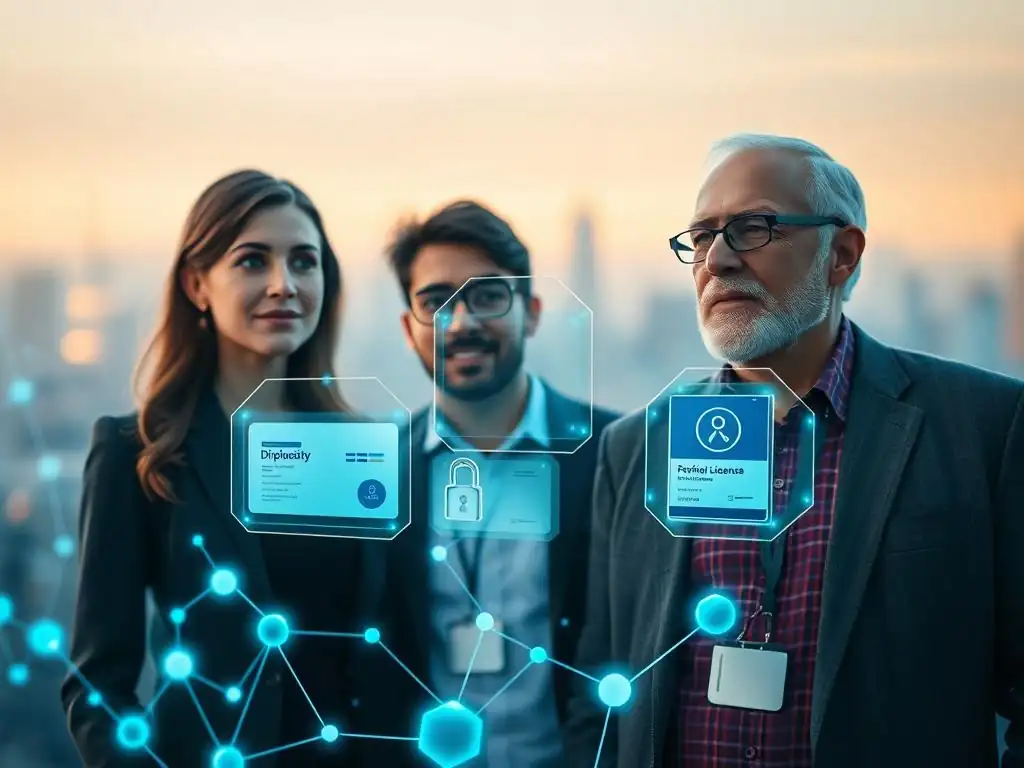
Welcome to Blockchain Trends, where we delve into the revolutionary power of blockchain beyond the hype. Are you ready to unlock a new era of trust and efficiency for your business? Dive in as we explore the groundbreaking potential of blockchain verifiable credentials and uncover the very real benefits businesses are experiencing right now. Curious how these digital credentials can streamline processes and enhance security? Let's begin!
Secure and Seamless: The Benefits of Verifiable Credentials on a Blockchain
- Introduction to Blockchain Verifiable Credentials and Their Impact
- Key Benefits of Blockchain Verifiable Credentials for Organizations
- Real-World Applications of Blockchain Verifiable Credentials
- Overcoming the Challenges of Implementing Blockchain Verifiable Credentials
- The Future of Blockchain Verifiable Credentials: Trends and Predictions
- Conclusion: Embracing the Transformative Potential of Blockchain Credentials for Organizations
-
Frequently Asked Questions
- What are blockchain verifiable credentials, and how do they differ from traditional credentials?
- How can verifiable credentials on a blockchain improve data privacy for individuals?
- What are the key benefits of using blockchain verifiable credentials for businesses?
- How does blockchain technology ensure the authenticity and integrity of verifiable credentials?
- What are some potential regulatory challenges associated with the adoption of blockchain verifiable credentials?
- Final Reflection: Embracing Trust in the Digital Age
- Unleash the Power of Verifiable Credentials!
Introduction to Blockchain Verifiable Credentials and Their Impact
Understanding Verifiable Credentials: A New Paradigm for Digital Identity
Verifiable Credentials (VCs) represent a fundamental shift in how we manage and assert digital identities. At their core, VCs are tamper-evident digital documents that contain claims about a subject (like a person or organization), issued by an authority (an issuer), and presented by the subject (the holder) to a verifier. Unlike traditional identity documents or digital certificates stored in centralized databases, VCs are designed to be decentralized and privacy-preserving.
A simple example is a digital driver's license issued by a government, held by an individual on their phone, and shown to a police officer for verification. The innovation lies in the cryptographic proofs linking the issuer, holder, and verifier, ensuring the integrity and authenticity of the credential without necessarily revealing sensitive underlying data. This model empowers individuals and organizations to control their own digital identities and share only the specific information required for a given interaction.
This new paradigm moves away from siloed, centralized identity systems which are prone to breaches and lack user control. Instead, it promotes a model where identity attributes are attested to by trusted issuers and managed by the individual or entity holding the credential. The benefits of blockchain verifiable credentials for businesses become apparent when considering the potential to streamline interactions, enhance security, and build trust in a digital-first world. By providing a standardized, secure, and privacy-respecting way to verify identity and attributes, VCs lay the groundwork for more efficient and trustworthy digital ecosystems across various sectors.
The Role of Blockchain in Securing Verifiable Credentials
Blockchain technology provides a robust foundation for securing Verifiable Credentials primarily through its inherent properties of immutability, transparency (for public blockchains), and decentralization. While the credential data itself is typically not stored directly on the blockchain for privacy reasons, the blockchain is used to anchor cryptographic proofs related to the credential.
This anchoring process involves recording hashes or identifiers that link back to the credential's issuance or revocation status. This cryptographic link ensures that once a credential's status or a proof of its existence from a specific issuer is recorded on the blockchain, it cannot be tampered with or altered retrospectively without being immediately detectable by anyone verifying against the blockchain ledger.
The decentralized nature of blockchain networks means there is no single point of failure for the verification process. Unlike centralized Certificate Authorities (CAs) which can be compromised, a decentralized blockchain ledger maintains a shared, consistent record across multiple nodes. This significantly increases the difficulty and cost for malicious actors to falsify or revoke credentials fraudulently.
For businesses, this translates into a higher level of assurance when verifying credentials presented by customers, partners, or employees. The cryptographic proofs, combined with the distributed ledger, provide a strong guarantee of the credential's authenticity and validity at the time of issuance, which are key benefits of blockchain verifiable credentials for businesses seeking to enhance security and trust in their digital interactions.
Why Organizations are Adopting Blockchain-Based Credentials
Organizations are increasingly exploring and adopting blockchain-based verifiable credentials due to a confluence of factors including the escalating costs of identity fraud, regulatory pressures around data privacy, and the demand for more efficient digital processes. Traditional methods of identity verification are often manual, time-consuming, and expensive. For example, verifying academic degrees or professional licenses can take days or weeks and involve significant administrative overhead.
Blockchain VCs promise to automate and accelerate these processes dramatically. Businesses can onboard new customers or employees faster and at a lower cost by instantly verifying trusted credentials presented by the individual, rather than relying on manual checks or third-party verification services.
Furthermore, the enhanced security and privacy features offered by blockchain verifiable credentials address critical concerns for businesses operating in an era of frequent data breaches and stringent regulations like GDPR and CCPA. By allowing users to manage their own credentials and share only necessary attributes, businesses can minimize the amount of sensitive data they need to collect and store, thereby reducing their attack surface and compliance burden.
The verifiable nature of these credentials also builds trust in digital interactions, which is crucial for online commerce, secure access control, and establishing reliable relationships with stakeholders. These compelling advantages highlight the significant benefits of blockchain verifiable credentials for businesses looking to improve security, efficiency, and compliance.
Key Benefits of Blockchain Verifiable Credentials for Organizations
Enhanced Security and Trust in Digital Identity Management
Mitigating Identity Theft and Fraud with Blockchain Security
Identity theft and fraud pose significant financial and reputational risks to businesses across all sectors. Estimates vary, but global losses due to identity fraud run into the billions of dollars annually. Traditional identity systems often rely on static data stored in centralized databases, making them attractive targets for cybercriminals.
Once compromised, this data can be used to impersonate individuals or organizations, leading to fraudulent transactions, account takeovers, and other malicious activities. Blockchain verifiable credentials fundamentally alter this dynamic. By decoupling the credential from centralized storage and anchoring cryptographic proofs on an immutable ledger, the system makes it exceedingly difficult to tamper with the credential's validity or status without detection.
When a verifier checks a blockchain-based credential, they are not accessing a central database of sensitive information. Instead, they are verifying cryptographic proofs against a decentralized ledger and possibly contacting the issuer directly through a secure channel defined by the credential's metadata. This process confirms the credential's authenticity and that it hasn't been revoked since issuance.
Because the underlying sensitive data resides with the holder and is only shared selectively, the risk of a large-scale data breach compromising millions of identities is significantly reduced. This inherent security feature is one of the primary benefits of blockchain verifiable credentials for businesses grappling with the rising tide of cybercrime and identity-related fraud.
Establishing Trust in Online Transactions and Interactions
Building trust in digital environments is paramount for businesses, whether engaging with customers, partners, or regulatory bodies. In many online interactions, businesses must trust that the individual or entity on the other end is who they claim to be and possesses the necessary qualifications or permissions. Current methods often involve manual checks, third-party identity verification services, or relying on potentially forgeable documents. These processes are not only inefficient but can also introduce friction and erode user confidence. Blockchain verifiable credentials provide a cryptographically verifiable and standardized way to assert and prove identity attributes and qualifications in a digital setting.
By presenting a blockchain-based credential, a holder can cryptographically prove that a trusted issuer attested to a specific claim about them at a particular time, and that this claim has not been invalidated. For a business, this means they can rely on the digital assertion with a high degree of confidence, knowing that the underlying proof is anchored on an immutable ledger.
For instance, an e-commerce platform could verify a customer's age using a VC issued by a government agency, without needing to store the customer's date of birth or a copy of their ID. This selective disclosure, combined with cryptographic proof, fosters a more trustworthy environment for online transactions and interactions, directly contributing to the benefits of blockchain verifiable credentials for businesses operating in the digital sphere.
Streamlined Verification Processes: Reducing Costs and Time
Automating Identity Verification for Faster Onboarding
Manual identity verification processes are a significant bottleneck for many businesses, particularly those in finance, healthcare, and other regulated industries that require Know Your Customer (KYC) or onboarding procedures. Collecting, reviewing, and verifying documents like passports, utility bills, or professional licenses is labor-intensive, prone to human error, and can take hours or even days. This delay can lead to customer drop-off and increased operational costs.
Blockchain verifiable credentials offer a path towards significant automation in these processes. Once an individual holds a verified credential (e.g., a government-issued identity VC or a utility bill VC), they can present it digitally to a business.
The business can then use automated verification software to instantly check the cryptographic proofs against the blockchain ledger and potentially the issuer's status. This allows for near real-time verification of identity attributes, dramatically accelerating onboarding workflows. For example, a financial institution could onboard a new customer in minutes by verifying their identity and address VCs, compared to the hours or days typically required for manual document checks. This speed and automation are tangible benefits of blockchain verifiable credentials for businesses looking to improve efficiency and customer experience.
Lowering Operational Expenses Associated with Manual Verification
The cost associated with manual identity verification extends beyond just time; it includes labor costs for staff involved in reviewing documents, potential fees paid to third-party verification services, and costs related to storing and securing sensitive customer data. Implementing blockchain verifiable credentials can lead to substantial reductions in these operational expenses. By automating much of the verification process, businesses can reallocate staff resources to higher-value tasks. The reliance on decentralized verification also potentially reduces or eliminates fees paid to traditional identity verification providers for certain checks.
Furthermore, by minimizing the collection and storage of sensitive personal data (as verification can happen using proofs without the verifier needing to hold the full dataset), businesses reduce the significant costs associated with data storage, security infrastructure, and compliance audits. For instance, a company that processes thousands of job applications annually requiring degree verification could save considerable amounts by accepting blockchain-verified academic credentials instead of manually contacting universities. These cost savings represent significant benefits of blockchain verifiable credentials for businesses seeking to optimize their operational budgets.
Improved Data Privacy and User Control
Empowering Users with Self-Sovereign Identity
A core principle underlying verifiable credentials, especially when combined with decentralized identifiers (DIDs) and blockchain, is Self-Sovereign Identity (SSI). This concept posits that individuals and organizations should have primary control over their digital identities and how their personal data is shared. In the traditional model, identity data is fragmented across numerous silos (banks, social media, government agencies), with the user having little control over how this data is used or secured.
Blockchain verifiable credentials shift this power dynamic. The user (holder) possesses the credential and decides when, with whom, and which specific parts of the credential's information to share with a verifier.
For example, instead of providing a full driver's license scan to prove age for an online purchase, a user could present a VC that contains only the cryptographically proven claim "is over 18," issued by the relevant authority. This minimizes the exposure of sensitive data like address, license number, or photograph. Empowering users with this level of control not only respects their privacy but also builds trust between the user and the business.
Users are more likely to engage with platforms that offer them control over their data. This user empowerment and enhanced privacy are crucial benefits of blockchain verifiable credentials for businesses aiming to comply with privacy regulations and build strong customer relationships.
Minimizing Data Breaches and Protecting Sensitive Information
Centralized databases holding vast amounts of personal identity data are prime targets for cyberattacks. A single breach can expose millions of records, leading to devastating consequences for individuals and severe financial and reputational damage for the breached organization. The architecture of blockchain verifiable credentials significantly mitigates this risk.
Because sensitive credential data is not stored centrally by the verifier (or even necessarily by the issuer after issuance, depending on the implementation), there is no large honey pot of personal information for attackers to target. The holder keeps their credentials in a secure digital wallet, and only cryptographic proofs or minimal attribute data are shared during verification.
This distributed model means that even if a verifier's system is compromised, the attacker does not gain access to a database of full identity documents or sensitive personal information for a large number of users. They might only gain access to logs of verification requests or minimal shared attributes for those specific transactions.
This dramatically reduces the potential impact and scope of data breaches related to identity information. The reduced risk of handling and storing sensitive data is a compelling benefit of blockchain verifiable credentials for businesses concerned with cybersecurity and the increasing legal and financial penalties associated with data breaches.
Increased Interoperability and Data Portability
Enabling Seamless Data Sharing Across Different Systems
One of the major frustrations with current digital identity systems is their lack of interoperability. Identity information and credentials issued by one entity are often not easily recognized or accepted by another. For example, a digital certificate issued by one organization might not be usable for authentication with another, or a digital ID from one government service cannot be used for another.
This creates friction and requires users to obtain and manage multiple digital identities and credentials for different purposes. Verifiable credentials, particularly those built on open standards like the W3C Verifiable Credentials Data Model, are designed from the ground up to be interoperable.
When businesses and organizations adopt VCs based on these open standards and anchor them using widely accessible blockchain networks or decentralized identity networks, credentials issued by one party can be verified and accepted by any other party that supports the same standards. This allows for seamless data sharing and verification across disparate systems and organizations.
For instance, a university-issued academic transcript VC could be instantly verified by a potential employer or another educational institution, regardless of the specific software systems they use, as long as they adhere to the VC standards. This enhanced interoperability is a key benefit of blockchain verifiable credentials for businesses operating in complex ecosystems.
Facilitating Cross-Border Transactions and Collaborations
The lack of interoperable digital identity systems is particularly challenging in cross-border contexts. Verifying identities, qualifications, or business licenses across different jurisdictions often involves cumbersome manual processes, translation requirements, and navigating varying legal frameworks. Blockchain verifiable credentials offer a potential solution to this global challenge. By providing a standardized, cryptographically verifiable format for digital credentials, they can significantly streamline cross-border transactions and collaborations.
Consider a business operating internationally. Verifying the bona fides of partners, employees, or customers in different countries becomes much simpler if they can present standardized, blockchain-anchored verifiable credentials issued by trusted authorities in their respective regions. A professional license issued in one country could be quickly verified by an employer in another.
An academic degree from a foreign university could be instantly authenticated. This facilitates smoother international trade, talent mobility, and collaboration by reducing the friction and uncertainty associated with cross-border identity verification. The ability to conduct secure and efficient cross-border operations is a significant benefit of blockchain verifiable credentials for businesses with global ambitions.
Real-World Applications of Blockchain Verifiable Credentials
Use Cases in Supply Chain Management
Tracking Product Provenance and Authenticity
Counterfeiting and lack of transparency are persistent problems in global supply chains, costing industries billions annually. Consumers and businesses alike demand greater assurance about the origin and authenticity of products. Blockchain verifiable credentials are being explored to address this by creating digital identities for products and components. A manufacturer could issue a VC for a specific product batch, including claims about its materials, manufacturing date, and origin. As the product moves through the supply chain, each party (distributor, logistics provider, retailer) could issue VCs attesting to their handling of the product, such as shipment details or storage conditions.
These product-specific VCs, anchored on a blockchain, create an immutable, verifiable history of the product's journey. Consumers or businesses can scan a QR code on the product packaging to access and verify these credentials, gaining confidence in its provenance and authenticity. For example, a luxury goods company could issue VCs for its products, allowing customers to verify that an item is genuine and track its journey from the workshop. This application of blockchain verifiable credentials benefits businesses by enhancing brand trust, reducing counterfeiting, and providing valuable data on supply chain movements.
Enhancing Transparency and Accountability in Supply Chains
Beyond tracking authenticity, blockchain verifiable credentials can significantly enhance transparency and accountability within complex supply chains. By issuing VCs for specific events, actions, or certifications at each stage, a detailed, auditable record is created. For instance, a food producer could issue VCs for organic certification, a logistics company for maintaining a cold chain, and a retailer for ethical sourcing practices. These VCs, visible (with appropriate permissions) on a blockchain explorer, provide stakeholders with unprecedented visibility into the supply chain.
This transparency helps identify inefficiencies, pinpoint sources of contamination or delay, and hold specific parties accountable for their role. Regulatory bodies can also use these verifiable records for compliance checks. For businesses, this means improved operational efficiency, better risk management, and the ability to credibly demonstrate compliance with standards (e.g., sustainability, ethical labor). A consortium in the diamond industry, for example, uses blockchain-like technology and digital certificates (akin to VCs) to track diamonds from mine to retail, ensuring conflict-free sourcing and transparency. Such implementations highlight the practical benefits of blockchain verifiable credentials for businesses managing intricate global operations.
Applications in Education and Professional Certifications
Verifying Academic Credentials and Professional Licenses
The verification of academic degrees, diplomas, and professional licenses is a common requirement for employers, educational institutions, and licensing bodies. This process is often manual, slow, and susceptible to fraudulent claims. Universities and professional bodies are exploring blockchain verifiable credentials as a secure and efficient alternative. An institution can issue a digital credential (VC) to a student upon graduation, cryptographically signed by the institution and anchored on a blockchain. This VC contains verified claims about the degree obtained, major, graduation date, etc.
Similarly, professional licensing boards can issue VCs for medical licenses, bar admissions, engineering certifications, and so forth. Holders can store these VCs in a digital wallet and share them instantly with potential employers or other institutions. The verifier can instantly check the VC's authenticity and validity against the issuer's public key and the blockchain record.
For example, MIT was an early adopter, piloting the issuance of digital diplomas using blockchain technology. This significantly speeds up the hiring process for businesses and reduces the administrative burden on educational institutions and licensing bodies, demonstrating clear benefits of blockchain verifiable credentials for businesses involved in recruitment and talent management.
Streamlining the Hiring Process with Trusted Credentials
The hiring process often involves verifying claims made by candidates regarding their education, previous employment, and professional qualifications. This verification is crucial but can be time-consuming and costly. By adopting blockchain verifiable credentials, businesses can significantly streamline and improve the reliability of their hiring workflows. When a candidate applies for a job, they can share relevant VCs directly from their digital wallet – for instance, a VC for their university degree, a VC for their previous employment history (issued by the former employer), and VCs for professional certifications.
The hiring company can instantly verify these credentials using automated systems that check the cryptographic proofs against the blockchain and issuer identity. This eliminates the need for manual outreach to universities or previous employers, reduces the risk of accepting fraudulent credentials, and accelerates the time-to-hire.
A study by the Society for Human Resource Management (SHRM) indicated that background checks can take anywhere from a few days to several weeks; blockchain VCs have the potential to reduce the verification component of this process to near-instantaneous. This efficiency gain and enhanced trust in candidate information are significant benefits of blockchain verifiable credentials for businesses facing competitive talent markets.
Blockchain Verifiable Credentials in Healthcare
Securely Sharing Patient Medical Records
Healthcare systems are notoriously fragmented, with patient records often stored in disparate, incompatible databases across different providers, hospitals, and specialists. Sharing medical information, even with patient consent, can be a complex and slow process, hindering coordinated care and potentially leading to medical errors. Blockchain verifiable credentials offer a promising solution for enabling secure, patient-controlled sharing of medical records. A healthcare provider could issue a VC to a patient containing specific medical information, such as vaccination records, lab results, or a summary of a hospital visit, signed by the provider and anchored on a blockchain.
The patient holds these VCs in their secure digital wallet and can choose to share specific VCs (e.g., only their vaccination history) with a new doctor, a pharmacist, or an insurance company. The verifier can then cryptographically confirm the VC's authenticity and the issuer's identity. This model empowers patients with control over their data while enabling secure, selective, and verifiable sharing between trusted parties.
This contrasts sharply with current methods that often involve faxing, mailing, or using insecure patient portals. The ability to share crucial medical data securely and efficiently is a vital benefit of blockchain verifiable credentials for businesses and organizations within the healthcare ecosystem, improving patient care and reducing administrative overhead.
Improving Data Security and Interoperability in Healthcare Systems
Beyond patient-controlled sharing, blockchain verifiable credentials can enhance overall data security and interoperability within the healthcare industry. Healthcare data is highly sensitive and subject to strict regulations like HIPAA in the United States or GDPR in Europe. Centralized electronic health record (EHR) systems are attractive targets for cyberattacks. By using VCs, organizations can minimize the need to exchange or store full patient records for every interaction. Instead, they exchange cryptographically verifiable claims about the patient, reducing the volume of sensitive data in transit and at rest within third-party systems.
Furthermore, adopting open standards for VCs promotes interoperability between different healthcare providers and systems that might use different underlying EHR software. A lab result issued as a VC by one lab can be instantly verified and understood by a hospital using a different system, as long as both adhere to the VC standards.
This reduces the need for costly custom integrations and data conversions. The combination of enhanced security through reduced data exposure and improved interoperability through standards-based verifiable claims represents significant benefits of blockchain verifiable credentials for businesses and institutions in the healthcare sector, leading to better data management and potentially improved patient outcomes.
Government and Public Sector Use Cases
Streamlining Citizen Services and Identity Management
Governments are responsible for issuing a wide array of credentials to their citizens, including birth certificates, passports, driver's licenses, professional licenses, and social benefits eligibility. Managing these credentials and verifying citizen identity for various services is a massive administrative task, often involving physical documents and manual checks. Blockchain verifiable credentials offer the potential to transform citizen services by providing secure, digital, and easily verifiable government-issued credentials.
A government agency could issue a digital driver's license as a VC, cryptographically signed and anchored on a blockchain. A citizen could store this VC on their phone and present it digitally for verification.
This streamlines interactions with government services (e.g., applying for permits, accessing benefits) and with private sector businesses (e.g., proving age, opening a bank account). Verification can be instant and automated, reducing wait times and administrative burdens for both citizens and government agencies. Estonia, a leader in digital government, has explored blockchain-like technology for aspects of its e-Residency program, demonstrating the feasibility of using distributed ledgers for identity-related services. Streamlining interactions and improving the efficiency of identity management are clear benefits of blockchain verifiable credentials for government agencies and the businesses that interact with them.
Enhancing Security and Transparency in Government Operations
Government operations involve numerous processes that require secure verification of identity, status, and permissions, ranging from voting and land registries to issuing permits and managing procurement. Traditional paper-based or siloed digital systems can be vulnerable to fraud, error, and lack transparency. Implementing blockchain verifiable credentials can enhance the security and transparency of these operations. For instance, a government agency could issue VCs for business licenses, building permits, or regulatory compliance certifications. These VCs, anchored on a blockchain, provide a publicly verifiable (or selectively verifiable) record of issuance and status.
This makes it much harder to forge official documents and provides a transparent audit trail of issued credentials. Furthermore, VCs can be used for secure authentication and authorization within government systems, ensuring that only authorized personnel with verified credentials can access sensitive information or perform specific actions. The use of blockchain verifiable credentials benefits businesses by providing a more trustworthy and efficient way to interact with government services, apply for licenses, and demonstrate compliance, reducing bureaucratic hurdles and fostering a more transparent regulatory environment.
Overcoming the Challenges of Implementing Blockchain Verifiable Credentials

Addressing Scalability and Performance Issues
While the benefits of blockchain verifiable credentials for businesses are compelling, implementing them at scale presents challenges. Public blockchains, while offering high security and decentralization, can sometimes face scalability and performance limitations, potentially leading to slow transaction speeds and high fees (e.g., gas costs on some networks). This can be a barrier for applications requiring high throughput, such as verifying credentials for millions of users daily or anchoring proofs for numerous supply chain events. Scaling solutions like Layer 2 networks, sidechains, or using permissioned or consortium blockchains designed for higher transaction volumes can help address these issues.
Furthermore, the performance of the overall VC system also depends on the efficiency of the credential wallets and verifier software. Optimizing the cryptographic operations and network communication between the holder, issuer, and verifier is crucial. Businesses adopting VCs need to carefully consider the underlying infrastructure (the blockchain or distributed ledger technology) to ensure it can meet their performance and scalability requirements. Piloting implementations in controlled environments can help identify and mitigate these technical bottlenecks before a full-scale rollout.
Ensuring Regulatory Compliance and Data Privacy
Navigating the complex landscape of data privacy regulations, such as GDPR, CCPA, and industry-specific rules (like HIPAA in healthcare or KYC/AML in finance), is a significant challenge for any digital identity solution, including blockchain verifiable credentials. While VCs are designed with privacy in mind (e.g., selective disclosure, data not stored on the blockchain), their implementation must still comply with legal requirements regarding data collection, storage, processing, and the "right to be forgotten." Anchoring proofs on an immutable blockchain, while beneficial for security, requires careful consideration of what information is recorded on the ledger to avoid privacy violations.
Businesses must ensure their VC solutions allow users to manage their consent effectively and that the architecture supports necessary data operations, such as the ability to revoke credentials or manage identifiers in a way that aligns with privacy laws. Choosing appropriate blockchain technology (e.g., considering public vs. permissioned ledgers) and designing the credential schemas and issuance/verification flows with privacy and compliance built-in from the start is essential. Legal and compliance teams must be involved early in the planning phase to ensure the implementation of blockchain verifiable credentials benefits businesses without creating legal risks.
Promoting User Adoption and Education
Even the most secure and efficient technology is ineffective if users don't adopt it. Promoting user adoption and providing adequate education are crucial challenges for the widespread implementation of blockchain verifiable credentials. Individuals need to understand what VCs are, how to use digital wallets securely, and the privacy benefits they offer. Businesses need to educate their staff and customers on how to issue, hold, present, and verify VCs. The user experience of digital wallets and verification interfaces must be intuitive and user-friendly, comparable to or better than existing methods.
Addressing the 'cold start' problem – where users need credentials before verifiers accept them, and verifiers need users with credentials – requires coordinated efforts and potentially early incentives. Building trust in the issuers and the underlying technology is also key. Businesses can overcome this by starting with specific, high-value use cases (e.g., employee onboarding, professional certifications) and providing clear guidance and support to users. Investing in user education and designing seamless user interfaces are critical steps to unlock the full benefits of blockchain verifiable credentials for businesses and the broader ecosystem.
The Future of Blockchain Verifiable Credentials: Trends and Predictions
Integration with Decentralized Identity (DID) Solutions
A significant trend in the future of blockchain verifiable credentials is their deep integration with Decentralized Identity (DID) solutions. DIDs, as defined by the W3C, are globally unique identifiers that do not require a centralized registration authority and are cryptographically verifiable. They are often anchored on decentralized ledgers or blockchains. DIDs provide a persistent, user-controlled identifier that can be used as the subject of a verifiable credential. This combination creates a powerful framework where an individual or organization (identified by a DID) can receive and hold VCs issued by various trusted parties, all linked back to their self-managed identifier.
This integration enhances user control and privacy, as the DID acts as a pointer to cryptographic material controlled by the user, rather than relying on centralized identity providers. It also simplifies the management of multiple credentials associated with a single identity. As DID specifications mature and adoption grows, the synergy between DIDs and VCs is expected to drive the next wave of innovation in digital identity, solidifying the benefits of blockchain verifiable credentials for businesses by providing a more robust and user-centric identity layer.
Expansion into New Industries and Applications
While early applications of verifiable credentials have emerged in education, healthcare, and supply chain, the technology is poised for significant expansion into a much wider range of industries and applications. We can expect to see increased adoption in areas such as:
- Travel and Hospitality: Digital travel credentials (e.g., proof of vaccination, visa eligibility)
- Real Estate: Verifying property ownership, rental history, or contractor licenses
- Gaming and Metaverse: Establishing portable digital identities and asset ownership proofs
- Decentralized Finance (DeFi): Providing verifiable proofs of creditworthiness or identity without relying on centralized credit bureaus
As the underlying technology matures, standards become more established, and regulatory clarity increases, the benefits of blockchain verifiable credentials for businesses in these diverse sectors will become more apparent. The ability to issue, manage, and verify digital proofs of identity and attributes in a secure, private, and interoperable manner will unlock new business models and efficiencies across the economy.
The Evolution of Verifiable Credential Standards and Protocols
The foundation of interoperable verifiable credentials lies in open standards and protocols. The W3C Verifiable Credentials Data Model is a crucial step, but the ecosystem is continually evolving. Future developments will likely include:
- Refinement of credential formats and presentation exchange protocols for greater expressiveness and efficiency.
- Development of standardized methods for selective disclosure and zero-knowledge proofs, allowing verifiers to confirm a claim's truth without learning the underlying data (e.g., proving you are over 18 without revealing your birth date).
- Improved revocation methods that are efficient, private, and scalable.
- Further standardization around DID methods and their integration with VCs across different blockchain networks.
The ongoing evolution and maturation of these standards and protocols will be critical for the widespread adoption of blockchain verifiable credentials. As standards become more robust and universally accepted, the technical barriers to implementation will decrease, and interoperability between different VC implementations will improve. This will further enhance the benefits of blockchain verifiable credentials for businesses by creating a more seamless and reliable digital identity ecosystem.
Conclusion: Embracing the Transformative Potential of Blockchain Credentials for Organizations
Recap of the Benefits of Blockchain Verifiable Credentials
Verifiable credentials, underpinned by blockchain technology, represent a significant leap forward in digital identity management. For organizations, the benefits are multifaceted and impactful. They offer enhanced security by mitigating identity theft and fraud through cryptographic proofs and decentralized anchoring, building greater trust in online interactions. They enable streamlined verification processes, drastically reducing the time and cost associated with manual identity checks and accelerating onboarding.
They provide improved data privacy and user control, empowering individuals with self-sovereign identity and minimizing the risk of large-scale data breaches. Finally, they foster increased interoperability and data portability, enabling seamless data sharing across different systems and facilitating cross-border operations. These combined advantages demonstrate the profound benefits of blockchain verifiable credentials for businesses seeking to thrive in an increasingly digital and interconnected world.
From revolutionizing supply chain transparency and streamlining academic and professional verification to securing healthcare data and modernizing government services, the real-world applications are already emerging. While challenges related to scalability, regulation, and user adoption remain, ongoing technological advancements and standardization efforts are paving the way for broader implementation. The future promises even deeper integration with decentralized identity solutions and expansion into numerous new industries.
Call to Action: Exploring the Adoption of Blockchain Credentials for Enhanced Data Security
Given the compelling advantages, organizations should actively explore the adoption of blockchain verifiable credentials. The potential to improve security posture, reduce operational costs, enhance user privacy, and build trust is too significant to ignore. Start by identifying specific business processes that are heavily reliant on identity verification or credential checking – perhaps customer onboarding, employee background checks, or supply chain traceability. Research existing verifiable credential platforms and service providers that leverage blockchain technology.
Consider piloting a verifiable credential solution for a targeted use case to understand its implementation requirements, assess its benefits firsthand, and identify potential challenges within your specific operational context. Engage with industry consortia and standards bodies to stay abreast of best practices and evolving protocols. Embracing blockchain verifiable credentials is not just about adopting a new technology; it's about adopting a new, more secure, efficient, and privacy-respecting paradigm for digital identity that offers substantial benefits of blockchain verifiable credentials for businesses ready to innovate.
Frequently Asked Questions
What are blockchain verifiable credentials, and how do they differ from traditional credentials?
Blockchain verifiable credentials are digital representations of credentials that are cryptographically secured and verifiable on a blockchain. Unlike traditional credentials, they offer increased security and tamper-proof verification.
How can verifiable credentials on a blockchain improve data privacy for individuals?
Verifiable credentials allow individuals to share only the necessary information with relying parties, minimizing the amount of personal data disclosed. This reduces the risk of data breaches and enhances control over personal information.
What are the key benefits of using blockchain verifiable credentials for businesses?
Businesses benefit from reduced verification costs, improved data security, and streamlined compliance processes. They also enable new business models based on trusted data exchange.
How does blockchain technology ensure the authenticity and integrity of verifiable credentials?
Blockchain uses cryptographic hashing and distributed ledger technology to create a permanent and immutable record of the credential's issuance and verification. This prevents forgery and tampering, ensuring trust.
What are some potential regulatory challenges associated with the adoption of blockchain verifiable credentials?
Regulatory uncertainties surrounding data privacy, cross-border data transfers, and identity management pose challenges. Clear legal frameworks are needed to foster widespread adoption.
Final Reflection: Embracing Trust in the Digital Age
The exploration of blockchain verifiable credentials and their benefits for businesses culminates in a powerful realization: trust is the new currency of the digital age. As we've seen, these credentials offer a secure and seamless way to establish identity and authenticity, revolutionizing how businesses interact with customers, partners, and even internal stakeholders. This isn't just about technological advancement; it's about building a more transparent and trustworthy ecosystem for everyone.
The impact of verifiable credentials extends far beyond mere efficiency gains. It's about empowering individuals and organizations with greater control over their data and fostering a culture of verifiable truth. This shift is particularly crucial in a world grappling with misinformation and data breaches. Trust is the glue of life. It's the most essential ingredient in effective communication. It's the foundational principle that holds all relationships together.
- Stephen Covey. This quote perfectly encapsulates the essence of what blockchain verifiable credentials offer: a foundation of trust upon which stronger, more resilient relationships can be built.
Now, as you consider the potential of blockchain verifiable credentials, I invite you to reflect on how you can integrate this technology into your own sphere of influence. How can you leverage its power to build trust, enhance security, and streamline processes within your organization or community? The future is not just about technology; it's about how we use it to create a more trustworthy and connected world. Embrace the opportunity to be a part of this transformation and unlock the boundless potential of verifiable credentials.
Unleash the Power of Verifiable Credentials!
Thank you for exploring the world of secure and seamless verifiable credentials. We hope this insight into their potential on the blockchain has been helpful. Now, take the next step to experience their benefits firsthand.
Here’s how you can get started:
- Begin exploring blockchain-based identity solutions to see how verifiable credentials can improve security and efficiency within your industry. This is your primary action!
- Research existing blockchain frameworks and platforms that support verifiable credentials to gain a practical understanding of implementation.
- Share this article with your network to start a conversation about the future of secure digital identities.
What real-world problem could your organization solve by leveraging verifiable credentials on the blockchain today? Let’s discuss in the comments!
Leave a Reply