
The Security Advantages of Decentralized Identity Architectures


Welcome to Blockchain Trends, your compass in the rapidly evolving world of distributed ledger technologies.
Imagine a future where your digital identity is truly yours, shielded from centralized vulnerabilities and empowering you with unprecedented control. Our latest deep dive explores the decentralized identity security benefits that are reshaping how we think about digital trust. Uncover how blockchain is revolutionizing identity management, offering enhanced security and user autonomy. Ready to unlock the potential? Read on to discover the transformative impact of decentralized identity architectures.
The Security Advantages of Decentralized Identity Architectures
- Introduction: Understanding Decentralized Identity (DID) and Its Security Promise
-
Decentralized Identity Security Benefits: A Deep Dive
- Enhanced Privacy with Decentralized Identity: Minimizing Data Exposure
- Improved Security Against Data Breaches: The Power of Self-Sovereign Identity
- Stronger Authentication Mechanisms: Leveraging Cryptography for Identity Verification
- Mitigation of Identity Theft and Fraud: Reducing Reliance on Centralized Authorities
-
Core Security Features of Decentralized Identity Architectures
- Cryptographic Key Management: Securing Identity with Private Keys
- Distributed Ledger Technology's Role in Immutability and Auditability of Identity Data
- Verifiable Credentials: Secure and Selective Sharing of Information
- Decentralized Identifiers (DIDs): Uniquely Identifying Entities Without Central Control
- Comparing Security Models: Centralized vs. Decentralized Identity Systems
- Real-World Applications Showcasing Decentralized Identity Security
- Addressing Potential Security Challenges in Decentralized Identity
- The Future of Decentralized Identity Security: Trends and Innovations
- Conclusion: Embracing Decentralized Identity for a More Secure Future
-
Frequently Asked Questions
- What are the primary security benefits of using a decentralized identity (DID) architecture compared to traditional identity management systems?
- How does blockchain technology contribute to the security of decentralized identity solutions?
- In the context of decentralized identity security, what role do cryptographic keys play?
- What are some potential regulatory challenges related to the adoption of decentralized identity, especially concerning data security and privacy?
- How can decentralized identity security be improved to address emerging threats in the rapidly evolving blockchain landscape?
- Final Reflection: Embracing Secure Autonomy
- Unlock Your Identity's Potential: Take Control Now!
Introduction: Understanding Decentralized Identity (DID) and Its Security Promise
What is Decentralized Identity (DID)? An Overview for Enhanced Security
Decentralized Identity (DID) represents a paradigm shift in how digital identities are created, managed, and verified. Unlike traditional systems where a central authority like a government, corporation, or service provider controls an individual's identity data, DID places control directly in the hands of the individual.
This self-sovereign approach leverages blockchain or other distributed ledger technologies (DLTs) to provide a secure, verifiable, and tamper-evident system for identity management. The core components typically involve Decentralized Identifiers (DIDs), which are globally unique names that do not require a centralized registration authority, and Verifiable Credentials (VCs), which are tamper-evident digital attestations about an identity, issued by a trusted source.
The fundamental design of DID architectures inherently addresses many security vulnerabilities present in centralized systems. By distributing identity data and control, DID eliminates single points of failure that are prime targets for cyberattacks. The use of strong cryptography ensures the integrity and authenticity of identity information and transactions. Furthermore, individuals can selectively disclose only the necessary pieces of information required for a specific interaction, significantly reducing the amount of personal data exposed and minimizing the potential impact of data breaches. This foundational layer of security is a primary driver behind the growing interest in decentralized identity security benefits.
Why Decentralized Identity Matters: Addressing Current Identity Management Security Challenges
Current centralized identity management systems are fraught with security risks. Large databases holding vast amounts of personal information act as attractive "honeypots" for cybercriminals, leading to frequent and large-scale data breaches.
For instance, major breaches have compromised hundreds of millions, or even billions, of records, exposing sensitive data like names, addresses, social security numbers, and financial details. These breaches not only cause significant financial damage – the average cost of a data breach reached \$4.45 million globally in 2023 according to IBM's Cost of a Data Breach Report – but also severely erode user trust and lead to widespread identity theft.
Moreover, traditional systems often rely on weak authentication methods like passwords, which are easily compromised through phishing, brute-force attacks, or credential stuffing. Users are forced to create and manage numerous accounts, leading to password fatigue and the reuse of simple or identical passwords across multiple services, amplifying the risk when one service is breached. Decentralized Identity offers a compelling alternative by shifting control away from these vulnerable central repositories and enabling stronger, cryptographic-based authentication methods. The decentralized identity security benefits directly address these critical weaknesses, offering a path towards a more resilient and privacy-preserving digital identity landscape.
Decentralized Identity Security Benefits: A Deep Dive
Enhanced Privacy with Decentralized Identity: Minimizing Data Exposure
One of the most significant decentralized identity security benefits is the profound enhancement of user privacy. In traditional systems, users often share excessive personal data simply to access a service or prove an attribute. For example, to prove they are over 18, they might have to share a full date of birth, name, and address. With DID and Verifiable Credentials, users can present a credential that only proves the single necessary attribute (e.g., "is over 18") without revealing the underlying data like their exact birthdate.
This principle of selective disclosure dramatically reduces the digital footprint left by individuals and minimizes the amount of sensitive data held by third parties. When users control their data and choose precisely what information to share, they significantly lower the risk of that data being compromised in a third-party breach. This granular control over personal information is a cornerstone of the decentralized identity security benefits, moving away from the "share everything" model to a "share only what's needed" approach, thereby bolstering user privacy and security simultaneously.
Improved Security Against Data Breaches: The Power of Self-Sovereign Identity
Centralized identity systems are inherently vulnerable to large-scale data breaches because they consolidate vast quantities of sensitive information into a single, or a few interconnected, databases. These databases represent high-value targets for malicious actors. A successful attack can compromise millions of identities at once, as seen in numerous high-profile incidents affecting various industries.
Decentralized Identity architectures dismantle this centralized honeypot model. Identity data, or pointers to it, are distributed across a network or held solely by the individual. There is no single database containing everyone's identity information to breach. While a specific credential might be compromised, a breach affecting one user does not automatically expose the identities of millions of others. This architectural resilience against mass data exfiltration is a primary component of the decentralized identity security benefits, making it significantly harder for attackers to achieve large-scale identity compromise.
Stronger Authentication Mechanisms: Leveraging Cryptography for Identity Verification
Decentralized Identity systems leverage robust cryptographic techniques for authentication, moving beyond the vulnerabilities of username/password pairs. Authentication in DID typically involves cryptographic key pairs. The user controls a private key, which is used to digitally sign transactions or proof of identity. The corresponding public key is registered (often on a distributed ledger) and used by verifiers to confirm the authenticity of the signature.
This cryptographic authentication process provides a much stronger guarantee of identity than traditional methods. It is highly resistant to common attacks like credential stuffing and phishing because the private key is not shared or transmitted over the network in the same way a password is.
Verifiers can cryptographically verify that a credential or a transaction originated from the holder of the corresponding private key, establishing a secure link between the decentralized identifier and the entity controlling it. This reliance on provable cryptographic links is a fundamental element of the decentralized identity security benefits, establishing a higher standard for digital trust.
Identity theft and fraud are rampant issues in the digital age, often facilitated by the ease with which identities can be compromised or impersonated within centralized systems. Weak verification processes, reliance on easily faked documents, and the vulnerability of central databases contribute significantly to this problem. Once a centralized identity store is breached, the exposed data can be used to commit various forms of fraud, from opening credit lines to filing fraudulent tax returns.
Decentralized Identity mitigates identity theft by making it significantly harder to impersonate someone. Since the individual controls their private keys and credentials, and verification relies on cryptographic proof and immutable ledger entries (in blockchain-based systems), it becomes exceedingly difficult for an unauthorized party to convincingly impersonate a legitimate identity holder. The system reduces reliance on fallible human processes and vulnerable central databases, shifting trust to verifiable, cryptographic assertions. This strong defense against impersonation is a critical part of the decentralized identity security benefits, offering enhanced protection against fraudulent activities.
Core Security Features of Decentralized Identity Architectures
Cryptographic Key Management: Securing Identity with Private Keys
At the heart of Decentralized Identity security lies cryptographic key management. Each DID is typically associated with a cryptographic key pair: a public key and a private key. The public key is discoverable (often via a DID document stored on a ledger or decentralized storage), allowing others to verify digital signatures. The private key, however, is kept secret and is under the sole control of the identity holder. This private key is the ultimate proof of control over the DID and is used to sign credentials, authenticate to services, and prove ownership.
The security of the entire DID system hinges on the secure management of these private keys. If a private key is compromised, an attacker could potentially impersonate the identity holder. Therefore, robust key management practices, including secure storage (e.g., hardware wallets, secure enclaves), backup strategies, and potentially multi-factor authorization for high-value operations, are paramount. The decentralized nature means the user is responsible for this critical security function, a departure from centralized models where the service provider handles key management (and is often a target for key theft).
Distributed Ledger Technology's Role in Immutability and Auditability of Identity Data
Distributed Ledger Technology (DLT), such as blockchain, plays a crucial role in enhancing the security and trustworthiness of some Decentralized Identity systems. While not strictly required for all DID implementations, using a DLT provides an immutable and tamper-evident layer for registering DIDs and anchors related metadata (like the location of the DID document). Once an entry is recorded on a blockchain, it is virtually impossible to alter or delete without the consensus of the network, making it highly resistant to tampering.
Furthermore, DLTs provide an auditable history of changes related to a DID (e.g., key rotations, delegation changes). This transparency and auditability can be crucial for security investigations or verifying the history of an identity. While sensitive personal data is not typically stored directly on the public ledger, the ledger provides a secure and trustworthy anchor for the identity's cryptographic keys and associated metadata, strengthening the overall decentralized identity security benefits by ensuring the integrity and availability of foundational identity information.
Verifiable Credentials: Secure and Selective Sharing of Information
Verifiable Credentials (VCs) are digital attestations that allow an issuer (e.g., a university, employer, government agency) to assert claims about a subject (the identity holder). These credentials are cryptographically signed by the issuer, proving their origin and ensuring their integrity. The identity holder receives the VC and stores it securely (e.g., in a digital wallet). When a verifier needs to check an attribute, the holder can present the VC. The verifier can then cryptographically verify the issuer's signature and potentially check the status of the credential (e.g., has it been revoked? ).
The security advantage of VCs lies in their tamper-evidence and the holder's ability to selectively present only the relevant information. Unlike physical documents or traditional digital copies, VCs cannot be easily forged or altered without invalidating the cryptographic signature. More importantly, the holder can choose to present a proof derived from the VC without revealing all the underlying data. For example, they might prove they have a degree without sharing their student ID or graduation date. This selective disclosure significantly limits data exposure and is a key contributor to the decentralized identity security benefits.
Decentralized Identifiers (DIDs): Uniquely Identifying Entities Without Central Control
Decentralized Identifiers (DIDs) are a core component of DID architecture, providing a globally unique and persistent way to reference a digital identity without relying on a centralized registry or authority. A DID is typically a URI (Uniform Resource Identifier) that resolves to a DID document. This document contains metadata about the DID, including cryptographic keys, service endpoints (e.g., for communication), and other relevant information.
The security benefit of DIDs stems from their decentralized nature. Unlike traditional identifiers like email addresses or usernames tied to specific services, or government IDs tied to national databases, DIDs are not issued or controlled by a single entity. This removes the single point of control and potential failure associated with centralized identifiers. It also makes DIDs more resistant to censorship or arbitrary revocation by a central authority. The ability to establish a unique, persistent, and sovereign identifier is foundational to realizing the full decentralized identity security benefits.
Comparing Security Models: Centralized vs. Decentralized Identity Systems
Centralized Identity: Security Weaknesses and Vulnerabilities
Centralized identity systems, while common, are inherently vulnerable due to their architecture. They rely on a single entity or a small group of entities to manage and store identity data for many users. This creates attractive targets for attackers – large databases of personal information are often referred to as "honey pots."
A successful breach of such a system can compromise millions of identities, leading to widespread identity theft and fraud. For instance, a breach affecting a major credit reporting agency in 2017 exposed the sensitive data of approximately 147 million consumers, demonstrating the scale of risk in centralized models.
Furthermore, centralized systems often rely on passwords or other shared secrets for authentication, which are susceptible to phishing, brute-force attacks, and credential stuffing. The complexity of managing numerous online accounts leads users to adopt weak or reused passwords, further eroding security. Recovery processes often rely on knowledge-based authentication (e.g., mother's maiden name), information that can often be found through social engineering or data breaches. These systemic weaknesses highlight the urgent need for more secure alternatives.
Decentralized Identity: A More Secure Alternative for Digital Identity Verification
Decentralized Identity offers a fundamentally more secure approach to digital identity verification compared to centralized models. By shifting control and data away from central authorities to the individual, DID eliminates the large, vulnerable data honeypots that are typical targets for attackers. Instead of a single point of failure, the "attack surface" is distributed across individual identity holders and the decentralized network (if used). A compromise affecting one identity holder's private key does not expose the identities of millions of others.
Authentication in DID relies on strong cryptography, using private keys controlled by the user to sign transactions and verify credentials. This method is significantly more resistant to phishing and password-based attacks. Verifiable Credentials enable selective disclosure, meaning less sensitive data is shared and stored by third parties, further reducing the potential impact of any localized breach. The decentralized identity security benefits stem directly from this architectural shift, prioritizing user control, cryptographic proof, and distributed resilience over centralized storage and control.
A Side-by-Side Comparison of Security Features and Risks
| Feature | Centralized Identity Systems | Decentralized Identity Systems |
|---|---|---|
| Data Storage | Centralized databases (high-value target) | Distributed/User-controlled storage (no single honeypot) |
| Control | Service provider/Central authority | Individual identity holder (Self-Sovereign) |
| Authentication | Passwords, shared secrets, knowledge-based (vulnerable) | Cryptographic signatures, private keys (stronger, phishing-resistant) |
| Data Exposure | Often excessive data shared for verification | Selective disclosure via Verifiable Credentials (minimal data shared) |
| Breach Impact | High risk of large-scale data breaches (millions/billions of records) | Breach impact typically limited to individual/credential level |
| Trust Model | Trust in central authority to secure data and verify | Trust in cryptography and verifiable claims, distributed trust in ledger |
| Single Point of Failure | Yes (the central database/authority) | No (distributed architecture) |
| Identity Theft Risk | High (due to data consolidation and weak auth) | Lower (due to user control, strong auth, selective disclosure) |
This comparison highlights how the fundamental design choices in Decentralized Identity directly translate into significant decentralized identity security benefits by addressing the core weaknesses of centralized models.
Real-World Applications Showcasing Decentralized Identity Security
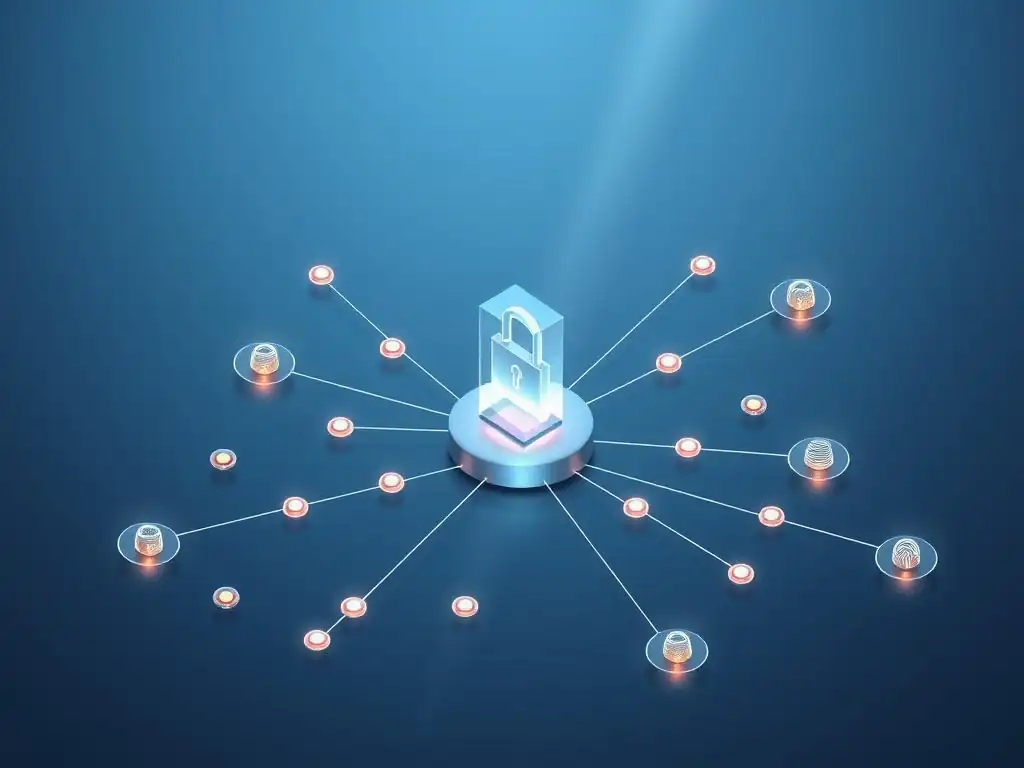
Digital Credentials for Academic Institutions: Verifying Education Records
Academic institutions are exploring and implementing Decentralized Identity to issue tamper-proof digital credentials such as diplomas, transcripts, and certificates. Traditionally, verifying academic records involves manual processes, sending physical documents, or relying on centralized databases that can be slow and prone to fraud or errors. Using DID, universities can issue Verifiable Credentials for degrees or course completion directly to students' digital wallets.
When a student applies for a job or further education, they can share the specific credential directly from their wallet. The potential employer or institution can cryptographically verify that the credential was issued by the genuine university and has not been tampered with, all without needing to contact the university or access a central database. This process significantly enhances security by preventing document forgery and streamlining verification, showcasing practical decentralized identity security benefits in education. For example, initiatives like the European Blockchain Services Infrastructure (EBSI) are piloting the use of VCs for educational credentials across member states.
Healthcare: Secure and Private Patient Data Management
The healthcare sector deals with highly sensitive personal information, making security and privacy paramount. Decentralized Identity can empower patients to control access to their health records. Instead of patient data being scattered across various provider databases or consolidated in a single, potentially vulnerable Electronic Health Record (EHR) system, a patient could use a DID to link to their various health records.
Using Verifiable Credentials, a patient could obtain VCs from different doctors or hospitals asserting specific health information (e.g., vaccination status, lab results, medical history). When visiting a new specialist or needing to share data for a specific purpose (like travel or insurance), the patient could selectively share only the required credentials directly from their wallet. This minimizes the risk of large-scale data breaches affecting sensitive health information and gives patients unprecedented control over who accesses their data, illustrating significant decentralized identity security benefits in health data management. Pilots are underway globally exploring patient-controlled health data using DID frameworks.
Supply Chain Management: Ensuring Authenticity and Traceability of Goods
Ensuring the authenticity and traceability of goods is a major challenge in supply chain management, with counterfeiting and fraud leading to significant financial losses and safety risks. Decentralized Identity can be applied to products or components, assigning each a unique DID. As a product moves through the supply chain, each participant (manufacturer, distributor, retailer) can issue Verifiable Credentials attesting to specific events or attributes (e.g., origin, manufacturing date, quality checks, transfer of ownership).
This creates an immutable, verifiable history of the product's journey. Consumers or businesses can scan a QR code linked to the product's DID and verify the associated credentials from trusted issuers, confirming authenticity and tracking its provenance. This system makes it extremely difficult to introduce counterfeit goods or falsify records, as any attempt would break the chain of verifiable credentials. This application demonstrates how decentralized identity security benefits can combat fraud and enhance transparency in global supply chains.
Identity Verification for Online Banking: Reducing Fraud and Enhancing KYC/AML Compliance
Online banking and financial services require robust identity verification for Know Your Customer (KYC) and Anti-Money Laundering (AML) compliance, as well as fraud prevention. Traditional processes often involve submitting sensitive documents, which are then stored in centralized databases, creating risks. DID offers a more secure and efficient approach.
Users could obtain Verifiable Credentials from trusted identity verification services (e.g., government-approved identity providers) that attest to their identity attributes (e.g., "is a verified resident of Country X," "is over 18," "has a verified address"). When opening a new bank account or performing a high-value transaction online, the user could present the specific VCs required by the bank.
The bank can cryptographically verify these credentials without needing to store copies of the user's underlying identity documents. This reduces the bank's liability regarding data storage and enhances security by using cryptographically secure proofs, contributing significantly to the decentralized identity security benefits in the financial sector.
Addressing Potential Security Challenges in Decentralized Identity
Key Management Security: Best Practices for Protecting Private Keys
While Decentralized Identity offers significant security improvements, it introduces a new critical challenge: the secure management of private keys. Since the user is in control of their private key, its compromise can lead to identity theft and loss of control over their DID. Unlike centralized systems where a forgotten password can often be reset by a service provider, losing a private key in a DID system without a proper recovery mechanism can mean permanently losing access to that identity.
Best practices for key management are therefore paramount. These include using secure hardware wallets (like Ledger or Trezor) or secure enclaves on devices (like smartphone secure elements) to store private keys, ensuring they never leave the secure environment. Implementing robust backup strategies for recovery phrases or encrypted key backups is essential to prevent permanent loss.
Furthermore, users need to be educated on the importance of private key security and how to avoid phishing attempts targeting their keys. While this responsibility shifts to the user, technological solutions and user education are key to mitigating this challenge and realizing the full decentralized identity security benefits.
Revocation Mechanisms: Handling Compromised or Invalid Credentials
In any identity system, there must be a way to invalidate or revoke credentials that are no longer valid (e.g., an employee leaves a company, a license expires, a private key is compromised). While Verifiable Credentials themselves are tamper-evident, a mechanism is needed to check their current status. Simple revocation lists published by issuers are one approach, but they can impact privacy if the list is public and reveals who had which credential.
More advanced revocation methods are being developed within DID frameworks. These include cryptographically secure revocation lists that don't reveal the specific credential being revoked, or using mechanisms like Merkle trees to prove that a credential is not on a revocation list without revealing the list itself. Ensuring efficient, privacy-preserving, and secure revocation is crucial for maintaining the trustworthiness of the system. A robust revocation framework is necessary to fully realize the decentralized identity security benefits and ensure that verifiers can confidently trust the validity of presented credentials.
Interoperability Issues: Maintaining Security Across Different DID Systems
The DID ecosystem is evolving, with various methods and standards being developed for creating DIDs, issuing and verifying VCs, and interacting with different types of distributed ledgers or decentralized networks. Ensuring interoperability between different DID methods and implementations is a significant challenge. If systems cannot seamlessly communicate and verify credentials issued by different authorities using different methods, it can create fragmentation and potential security gaps.
Maintaining a high level of security requires that verification processes work correctly regardless of the underlying DID method or the specific wallet and verifier software used. Standards bodies like the W3C (World Wide Web Consortium) and the Decentralized Identity Foundation (DIF) are working on specifications (like the DID Core specification and the Verifiable Credentials Data Model) to promote interoperability. Adhering to these standards and developing robust cross-system verification protocols are essential to ensure that the decentralized identity security benefits are consistently delivered across the ecosystem.
Implementing Decentralized Identity systems requires careful consideration of existing and evolving legal and regulatory frameworks around data privacy, identity verification, and digital signatures. Regulations like GDPR in Europe, CCPA in California, and KYC/AML requirements in finance impose specific obligations on how personal data is handled and how identity is verified.
While DID is designed to enhance privacy and security, its implementation must align with these legal requirements. For example, ensuring the "right to be forgotten" or the ability to update information needs to be addressed within a system designed for immutability.
Determining legal liability when a private key is compromised or a credential is misused is another complex area. Navigating this landscape requires collaboration between technologists, legal experts, and regulators to ensure that DID systems are not only technically secure but also legally compliant, allowing businesses and individuals to fully leverage the decentralized identity security benefits within the bounds of the law.
The Future of Decentralized Identity Security: Trends and Innovations
Biometric Authentication Integration with Decentralized Identity
Integrating biometric authentication (like fingerprint, facial recognition, or iris scans) with Decentralized Identity holds significant promise for enhancing both security and user convenience. Instead of relying solely on private key passphrases or hardware tokens, biometrics can be used as a strong factor to authorize the use of the private key stored securely on a device.
In this model, the biometric data itself is typically not stored or transmitted externally. Instead, it's used locally on the user's device (e.g., smartphone secure enclave) to unlock or authorize the private key for signing operations. This combines the inherent security of the cryptographic private key with the convenience and strong user verification provided by biometrics. This integration can significantly strengthen the decentralized identity security benefits by adding an extra layer of protection against unauthorized use, especially in mobile environments.
Zero-Knowledge Proofs for Enhanced Privacy and Security
Zero-Knowledge Proofs (ZKPs) are a cryptographic technique that allows one party (the prover) to prove to another party (the verifier) that a statement is true, without revealing any information beyond the validity of the statement itself. Applying ZKPs to Verifiable Credentials can dramatically enhance privacy. For example, instead of presenting a VC that contains your date of birth to prove you are over 18, you could use a ZKP to prove only that your birthdate meets the "over 18" criteria, without revealing the actual date.
This capability takes the concept of selective disclosure to the next level, minimizing the amount of sensitive data revealed during verification to the absolute minimum necessary. ZKPs can also be used to prove possession of multiple attributes or credentials without revealing any of the underlying details, enabling complex verifications privately and securely. The integration of ZKPs is expected to significantly amplify the decentralized identity security benefits, particularly in terms of privacy protection and reducing the attack surface associated with data disclosure.
Hardware Security Modules (HSMs) for Enhanced Key Protection
For individuals and organizations managing high-value DIDs or large numbers of keys, utilizing Hardware Security Modules (HSMs) represents a significant step up in key protection. HSMs are dedicated physical computing devices that safeguard and manage digital keys, perform encryption and decryption functions, and provide strong authentication. They are designed to be tamper-resistant and operate within a secure environment.
Using HSMs to store and manage private keys associated with DIDs or credential issuance provides a much higher level of physical and logical security compared to software-based storage. Private keys held within an HSM cannot typically be extracted, only used within the module itself for signing or decryption operations. This level of protection is critical for preventing key theft and unauthorized use, especially in enterprise or institutional DID deployments. Implementing HSMs is a key trend for maximizing the decentralized identity security benefits by providing the strongest possible protection for the foundational cryptographic keys.
Conclusion: Embracing Decentralized Identity for a More Secure Future
The Transformative Potential of Decentralized Identity Security Benefits
The shift towards Decentralized Identity architectures holds immense transformative potential for digital security. By fundamentally redesigning how identities are managed, moving from centralized, vulnerable models to distributed, user-controlled, and cryptographically secured systems, DID offers a robust defense against many of the most prevalent cyber threats today. The decentralized identity security benefits – including enhanced privacy through selective disclosure, improved resilience against data breaches, stronger cryptographic authentication, and reduced susceptibility to identity theft and fraud – collectively paint a picture of a more secure and trustworthy digital future.
This new paradigm empowers individuals and organizations by giving them greater control over their digital lives and interactions. It reduces reliance on third parties who have historically been poor custodians of sensitive data, often becoming targets for malicious attacks. As the digital world becomes increasingly integrated into every aspect of life, building a secure foundation for digital identity is not merely an option but a necessity. Decentralized Identity provides a compelling pathway towards achieving this goal.
Key Takeaways: Implementing Decentralized Identity for Enhanced Security Posture
Implementing Decentralized Identity requires a thoughtful approach to maximize its security benefits. Key takeaways for organizations and individuals considering DID include:
- Prioritize Secure Key Management: The security of private keys is paramount. Invest in secure storage solutions like hardware wallets or HSMs and establish robust backup and recovery procedures.
- Understand Selective Disclosure: Leverage Verifiable Credentials to share only the minimum necessary information, significantly reducing data exposure and enhancing privacy.
- Educate Users: For organizational deployments, educate users on the principles of DID, the importance of key security, and how to safely manage their digital wallets and credentials.
- Stay Informed on Standards: Adhere to emerging DID and VC standards (like those from W3C and DIF) to ensure interoperability and maintain a high level of security across different systems.
- Address Revocation: Implement reliable and privacy-preserving mechanisms for revoking compromised or invalid credentials.
- Consider Advanced Security Features: Explore integrations with technologies like biometrics for enhanced authentication and Zero-Knowledge Proofs for advanced privacy protection.
By focusing on these aspects, organizations and individuals can effectively transition to Decentralized Identity systems and fully realize the significant decentralized identity security benefits they offer, paving the way for a more secure, private, and user-centric digital identity future.
Frequently Asked Questions
What are the primary security benefits of using a decentralized identity (DID) architecture compared to traditional identity management systems?
Decentralized identity offers enhanced security by eliminating a central point of failure. This reduces the risk of data breaches and single points of attack. Users gain more control over their personal data.
How does blockchain technology contribute to the security of decentralized identity solutions?
Blockchain provides an immutable and transparent ledger for recording identity information. This makes it extremely difficult to alter or tamper with identity data, enhancing data integrity and trust.
In the context of decentralized identity security, what role do cryptographic keys play?
Cryptographic keys, particularly private keys, are essential for proving ownership and controlling access to decentralized identities. They enable users to securely manage their identity without relying on intermediaries.
Regulatory bodies are still developing frameworks for decentralized identity. Concerns revolve around data protection, compliance with privacy laws like GDPR, and ensuring accountability within decentralized systems.
How can decentralized identity security be improved to address emerging threats in the rapidly evolving blockchain landscape?
Continual research and development are crucial to address emerging threats. This includes exploring advancements in cryptography, implementing robust access control mechanisms, and fostering collaboration between developers and security experts.
Final Reflection: Embracing Secure Autonomy
The exploration of decentralized identity architectures reveals not just a technological advancement, but a paradigm shift in how we perceive and manage digital security. The inherent resilience and user-centric control offered by these systems are now more critical than ever, as centralized databases become increasingly vulnerable targets for malicious actors, and individuals demand greater ownership over their personal data.
The journey towards decentralized identity is more than just a technical upgrade; it's a cultural evolution towards greater autonomy and trust in the digital realm. This shift resonates deeply with the growing desire for individuals to control their own narratives and protect their privacy in an increasingly interconnected world. Identity is not just data; it's the essence of who we are, and we must safeguard it with the utmost care.
This sentiment underscores the profound responsibility we have to champion and cultivate secure, decentralized identity solutions.
As we stand at the cusp of this transformative era, let us embrace the principles of decentralization and empower ourselves with the tools to navigate the digital landscape with confidence and security. Consider how you can advocate for and adopt decentralized identity solutions in your own life and community, contributing to a future where digital identity is not a vulnerability, but a source of strength and empowerment.
Unlock Your Identity's Potential: Take Control Now!
Thank you for exploring the world of decentralized identity and understanding its security benefits. We hope you now see how this technology can empower you and help protect your personal data. Are you ready to put this knowledge into action?
Here are some practical steps you can take today:
- Try out a self-sovereign identity wallet to experience decentralized identity firsthand. Popular options include MetaMask and Trust Wallet to get started.
- Join online communities or forums focused on decentralized identity and blockchain technology. Share your insights and learn from others on platforms like Reddit or dedicated Discord servers.
- Stay informed about current industry initiatives working on decentralized identity solutions, such as those led by organizations like the Decentralized Identity Foundation or the W3C Verifiable Credentials standards.
How will you leverage decentralized identity to keep your personal data secure in the digital world?
Leave a Reply