
SelfSovereign Identity for Individuals: Regaining Control of Your Online Persona


Welcome to Blockchain Trends, your compass in the rapidly evolving world of decentralized innovation! Dive into our latest exploration of how blockchain is reshaping industries beyond cryptocurrency.
Are you ready to understand how selfsovereign identity blockchain control empowers individuals to reclaim ownership of their digital lives? This is more than just a buzzword; it's a fundamental shift in how we interact online. Discover how this technology is revolutionizing digital identity and putting you back in control of your online persona. What does this mean for your privacy, security, and future? Let's unlock the potential together.
Self-Sovereign Identity for Individuals: Regaining Control of Your Online Persona
- Introduction to Self-Sovereign Identity (SSI) and Blockchain Control
- Understanding the Core Principles of Self-Sovereign Identity
-
Key Benefits of Self-Sovereign Identity for Individuals
- Enhanced Privacy: Protecting Personal Information from Unauthorized Access
- Increased Security: Reducing the Risk of Identity Theft and Fraud
- Greater Convenience: Streamlining Online Interactions and Transactions
- Reduced Costs: Eliminating the Need for Centralized Identity Providers
- Improved Control: Empowering Individuals to Manage Their Digital Persona
- How Self-Sovereign Identity Blockchain Solutions Work
- Real-World Applications of Self-Sovereign Identity
-
Challenges and Considerations for SSI Adoption
- Scalability and Performance of Blockchain-Based Identity Systems
- Interoperability Standards and Governance Frameworks
- User Education and Awareness: Overcoming the Learning Curve
- Regulatory Landscape and Compliance Requirements
- Security Vulnerabilities and Mitigation Strategies: Protecting Against Key Compromise
- The Future of Self-Sovereign Identity: Empowering Individuals in the Digital Age
- Conclusion: Embracing Self-Sovereign Identity and Blockchain for a More Secure and Empowered Future
-
Frequently Asked Questions
- What is Self-Sovereign Identity (SSI)?
- How does blockchain technology relate to Self-Sovereign Identity?
- What are the benefits of using Self-Sovereign Identity?
- What are some practical applications of Self-Sovereign Identity?
- What are the current challenges and future directions of Self-Sovereign Identity?
- Final Reflection: Embracing Digital Autonomy
- Rediscover Your Digital Freedom
Introduction to Self-Sovereign Identity (SSI) and Blockchain Control
What is Self-Sovereign Identity (SSI)? Defining Digital Autonomy
Self-Sovereign Identity (SSI) represents a paradigm shift in how individuals manage their digital identity. Instead of relying on centralized authorities like governments, corporations, or social media platforms to store and verify personal information, SSI empowers individuals to control their own identity data. This concept centers on the principle of digital autonomy, granting users the ability to decide what information they share, with whom, and for how long, directly from their personal digital wallet or secure storage. It moves away from fragmented, siloed identities managed by various third parties towards a unified, user-controlled digital persona.
At its core, SSI is about reclaiming ownership and agency over one's digital self. Imagine not having to create a new account and password for every online service, or share your full address just to prove you're over 18. SSI aims to make such interactions more efficient and privacy-preserving by allowing users to present verifiable claims about themselves without oversharing.
This model contrasts sharply with traditional systems where identity is often leased from providers, leading to concerns about data breaches, surveillance, and lack of portability. The goal is to establish a trusted digital identity layer where individuals are the ultimate arbitors of their data.
The Problem with Current Identity Management Systems: Lack of User Control
Current digital identity systems are fundamentally broken when viewed through the lens of individual control and privacy. Our identities are scattered across countless databases – banks, social media sites, government agencies, online retailers, and more. Each entity holds a piece of our personal information, often requiring us to provide more data than is strictly necessary for a transaction or service.
This fragmentation leads to significant security risks, as each database represents a potential target for cybercriminals. Data breaches have become commonplace, with millions of records exposed annually, often resulting in identity theft and financial fraud. For instance, a major credit reporting agency breach in 2017 compromised the personal data of approximately 147 million people in the US alone, highlighting the vulnerability of centralized identity repositories.
Beyond security concerns, current systems severely limit user control. Individuals have little to no insight into how their data is used, shared, or protected by third parties. Updating information across multiple platforms is cumbersome, and deleting data is often impossible or difficult due to opaque privacy policies and technical limitations. This lack of transparency and control erodes trust and makes individuals passive participants in their own digital lives. The power dynamic is skewed, with large organizations holding significant leverage over personal identity information, dictating terms of use and access without true consent or oversight from the data subject.
How Blockchain Enhances Self-Sovereign Identity Solutions
Blockchain technology provides a crucial, trust-enhancing layer for implementing Self-Sovereign Identity. While SSI is a set of principles, blockchain offers a decentralized, immutable, and transparent ledger ideally suited for anchoring identity components without centralizing personal data itself. Instead of storing sensitive personal information directly on the blockchain, which would be a privacy risk, blockchain is used to record cryptographically secured pointers to verifiable claims or to register Decentralized Identifiers (DIDs). These DIDs serve as persistent, globally unique identifiers that the individual controls.
The decentralized nature of blockchain ensures that there is no single point of failure or control that could be exploited or censored. This resilience is vital for a system where individuals need guaranteed access and control over their identity.
The immutability of the ledger means that once a record is added (like the registration of a DID or the anchoring of a verifiable credential schema), it cannot be altered or deleted, providing a reliable audit trail. This inherent trust mechanism enables parties to verify the integrity and authenticity of identity claims shared by individuals, fostering the essential Selfsovereign identity blockchain control that empowers users while providing necessary verification for relying parties.
Understanding the Core Principles of Self-Sovereign Identity
User-Centricity: Putting Individuals in Control of Their Data
User-centricity is the foundational principle of Self-Sovereign Identity. It dictates that the individual, not an institution or service provider, is the primary controller of their digital identity. This means that individuals manage their own identifiers, decide which attributes (like name, age, address) are associated with those identifiers, and control when and with whom they share verifiable claims about those attributes. This model flips the traditional identity management paradigm, where institutions issue and manage identities for individuals.
In a user-centric SSI system, the individual holds the 'keys' to their identity wallet, which stores their DIDs and Verifiable Credentials. They grant explicit consent for data sharing, often on a case-by-case basis, rather than accepting broad terms of service that allow wide data usage. This granular control allows for a more private and secure online experience, where individuals are active participants in managing their digital footprint, thereby achieving true Selfsovereign identity blockchain control.
Data Minimization: Sharing Only What's Necessary
Data minimization is a critical principle in SSI, emphasizing the importance of sharing only the specific pieces of information required for a particular transaction or interaction. Unlike traditional systems that often demand a full identity document (like a driver's license or passport) containing far more information than needed, SSI allows for selective disclosure of verifiable credentials. For example, to prove you are old enough to purchase age-restricted goods online, you could present a verifiable credential that simply asserts "over 18" without revealing your exact date of birth, address, or other personal details contained on a full ID.
This principle significantly enhances privacy by reducing the exposure of sensitive personal data. By minimizing the data shared, the attack surface for potential data breaches is drastically reduced, and the risk of unauthorized secondary use of personal information is mitigated. This focus on sharing only the necessary data aligns perfectly with global privacy regulations like GDPR, which mandate data minimization as a core tenet, and is a key aspect of effective Selfsovereign identity blockchain control.
Transparency and Auditability: Building Trust with Blockchain
Transparency and auditability are key benefits derived from anchoring Self-Sovereign Identity components on a blockchain. While personal data isn't stored on the chain, the decentralized ledger can record cryptographic proofs related to DIDs, schema definitions for Verifiable Credentials, or revocation registries. This public or permissioned ledger provides a transparent record of these events, visible to all authorized participants in the network. This transparency allows relying parties to verify the status and integrity of identity components they interact with.
The immutable nature of blockchain ensures that once a record is added, it cannot be tampered with, providing a reliable audit trail. This auditability is crucial for building trust among disparate parties in the SSI ecosystem – issuers, holders (individuals), and verifiers. Verifiers can cryptographically confirm that a credential was issued by a trusted entity and has not been revoked, without needing to directly query the issuer in real-time or trust a single centralized authority. This verifiable process is fundamental to the trust layer underpinning Selfsovereign identity blockchain control.
Interoperability: Enabling Seamless Identity Verification Across Platforms
Interoperability is a vital principle for Self-Sovereign Identity to achieve widespread adoption and utility. SSI systems are designed to allow individuals to use their digital identity across different platforms, services, and jurisdictions without needing to create new identities or adapt to incompatible systems. This requires adherence to open standards and protocols for DIDs, Verifiable Credentials, and communication between identity wallets, issuers, and verifiers.
Global standards bodies like the W3C (World Wide Web Consortium) and communities like the Decentralized Identity Foundation (DIF) are developing these specifications (e.g., the W3C DID Specification and Verifiable Credentials Data Model). Adherence to these standards ensures that an identity credential issued by one entity (like a university issuing a degree credential) can be understood and verified by another entity (like an employer) using different software or platforms, as long as they both support the same underlying protocols.
This seamless interaction is essential for the vision of a portable, user-controlled digital identity, enhancing the overall Selfsovereign identity blockchain control experience.
Key Benefits of Self-Sovereign Identity for Individuals
One of the most significant benefits of Self-Sovereign Identity for individuals is dramatically enhanced privacy. By storing identity credentials securely in a personal digital wallet, typically encrypted and under the user's sole control, SSI drastically reduces the exposure of sensitive data. Unlike traditional systems where data is replicated and stored in numerous third-party databases, creating multiple points of vulnerability, SSI minimizes the number of places where personal information resides.
Furthermore, SSI enables privacy-preserving interactions through selective disclosure and zero-knowledge proofs. For example, an individual might prove they meet a certain age requirement or residency status without revealing their exact date of birth or full address. This method of sharing only the necessary proof rather than the underlying data significantly limits the potential for unauthorized access, tracking, or misuse of personal information, empowering individuals with greater control over their digital privacy.
Increased Security: Reducing the Risk of Identity Theft and Fraud
Self-Sovereign Identity significantly increases security for individuals by reducing the risk of identity theft and fraud compared to traditional methods. Centralized databases holding vast amounts of personal data are prime targets for cyberattacks, and successful breaches can lead to widespread identity compromise. By shifting control and storage of identity data to the individual, SSI removes these honey pots of information.
Verifiable Credentials, cryptographically signed by trusted issuers and anchored using blockchain technology, are inherently more secure than photocopies of IDs or easily forged digital documents. The cryptographic proofs ensure the integrity and authenticity of the credential, making it difficult for malicious actors to alter or counterfeit identity attributes. This robust verification mechanism, combined with the reduced availability of personal data in centralized locations, creates a more secure environment for individuals' digital identities, bolstering Selfsovereign identity blockchain control against malicious actors.
Greater Convenience: Streamlining Online Interactions and Transactions
While the initial setup of an SSI wallet might require some user education, the long-term benefit is vastly improved convenience in online interactions and transactions. Imagine a future where onboarding to new services doesn't require repeatedly filling out forms or uploading documents. With SSI, an individual can simply share existing, verified credentials directly from their digital wallet with consent. For instance, proving employment status, educational qualifications, or professional licenses could become near-instantaneous.
This streamlined process eliminates repetitive data entry, speeds up verification processes (which can sometimes take days or weeks in traditional systems), and reduces friction in online workflows. Renewing services, applying for loans, or accessing government services could become much faster and simpler, as the user holds and controls the necessary verified information, enabling seamless and efficient interactions underpinned by Selfsovereign identity blockchain control.
Reduced Costs: Eliminating the Need for Centralized Identity Providers
Self-Sovereign Identity has the potential to significantly reduce costs associated with identity management, both for individuals and organizations. Individuals currently bear costs related to identity theft recovery (estimated to be billions of dollars globally each year) and the time and effort spent managing multiple online identities. For organizations, the costs of identity verification, KYC (Know Your Customer) processes, data storage, and cybersecurity defenses for large identity databases are substantial.
By enabling individuals to manage and share their own verified credentials, SSI can lower the operational overhead for businesses and government agencies. They spend less time and resources on identity verification and data management, shifting the responsibility and associated costs away from centralized systems. While there are initial investment costs in building SSI infrastructure, the long-term potential for cost reduction through decentralized, user-managed identity is considerable.
Improved Control: Empowering Individuals to Manage Their Digital Persona
The most defining benefit of Self-Sovereign Identity is the fundamental shift in power dynamics, empowering individuals to exercise unprecedented control over their digital persona. This control extends beyond simply deciding what data to share; it includes managing the identifiers associated with their identity, choosing which verifiable credentials to acquire and store, and revoking access to shared information when necessary.
This level of granular control means individuals are no longer passive subjects whose identity is managed by others. They become active agents, curating their digital representation and interacting with the online world on their own terms. This empowerment fosters trust and encourages individuals to engage more confidently and securely in the digital economy, knowing they possess the ultimate Selfsovereign identity blockchain control.
How Self-Sovereign Identity Blockchain Solutions Work
Decentralized Identifiers (DIDs): The Foundation of SSI
Decentralized Identifiers (DIDs) are the foundational technical component of Self-Sovereign Identity. Unlike traditional identifiers (like email addresses, usernames, or government ID numbers) which are typically issued and controlled by a central authority, DIDs are designed to be globally unique, persistent, and resolvable without relying on a centralized registry. An individual or organization can generate a DID pair (a public and private key) autonomously. The DID itself is a URI (Uniform Resource Identifier) that points to a DID document.
The DID document contains information necessary to use the DID, such as public keys and service endpoints. This document is typically stored in a decentralized location, often anchored or referenced on a blockchain or other distributed ledger. This anchoring process ensures that the DID is discoverable and verifiable in a decentralized manner. For example, a DID might look something like did:example:123456789abcdefghi#keys-1, where did is the URI scheme, example is the method name (specifying how the DID is resolved), and the rest is the unique identifier and fragment.
Verifiable Credentials (VCs): Securely Storing and Sharing Identity Attributes
Verifiable Credentials (VCs) are digital documents that represent claims made about an individual or entity. These claims are cryptographically signed by an issuer (e.g., a university, an employer, a government agency) and can be securely stored in the individual's digital wallet. A VC contains information such as the subject (the individual the claim is about, identified by their DID), the issuer (identified by their DID), the type of claim (e.g., "Bachelor's Degree," "Employee Status," "Age Over 18"), and the value of the claim (e.g., "Computer Science," "Active," "True").
The crucial aspect of VCs is that they are verifiable. A third party (a verifier) can cryptographically check that the credential was indeed issued by the claimed issuer and that it has not been tampered with or revoked. This verification process typically involves using the issuer's public key (found via their DID) and potentially checking a revocation registry anchored on a distributed ledger. VCs allow individuals to collect, store, and selectively present verified proofs of their attributes, enabling granular and privacy-preserving data sharing.
Blockchain as a Trust Anchor: Ensuring Data Integrity and Immutability
Blockchain technology serves as a critical trust anchor in Self-Sovereign Identity systems. It is not where the sensitive personal data of VCs is stored (that remains with the individual), but rather where public keys, DID documents, schema definitions for credentials, or revocation information can be immutably recorded and publicly verified. By anchoring these essential identity components on a decentralized ledger, the system avoids reliance on any single point of authority or control.
The blockchain's distributed nature ensures high availability and censorship resistance. Its cryptographic properties and consensus mechanisms guarantee that once information is added, it cannot be altered or removed without the network's consensus, providing a high degree of data integrity. This immutable, transparent ledger provides the necessary infrastructure for verifiers to trust the resolution of DIDs and the status of VCs, forming the backbone of Selfsovereign identity blockchain control.
Implementing SSI with Hyperledger Indy: A Practical Example
Hyperledger Indy is a distributed ledger specifically designed for decentralized identity. It provides tools, libraries, and components for creating and managing decentralized identities, including DIDs and Verifiable Credentials. Indy utilizes a permissioned ledger architecture, suitable for networks involving known participants like governments, corporations, and consortia, while still enabling individuals to have sovereign control over their identity data anchored on the ledger.
Indy supports the W3C DID and Verifiable Credentials standards and provides features like a secure transaction ordering service, a verifiable data registry for DIDs and schemas, and cryptographic primitives for issuing and verifying credentials. Projects like the Sovrin Network were built using Hyperledger Indy, demonstrating how the technology can be used to create a global public utility for self-sovereign identity. Users interact with the Indy ledger through compatible identity wallets, enabling them to register DIDs, receive VCs from issuers, and present them to verifiers, illustrating a concrete example of Selfsovereign identity blockchain control in practice.
Real-World Applications of Self-Sovereign Identity
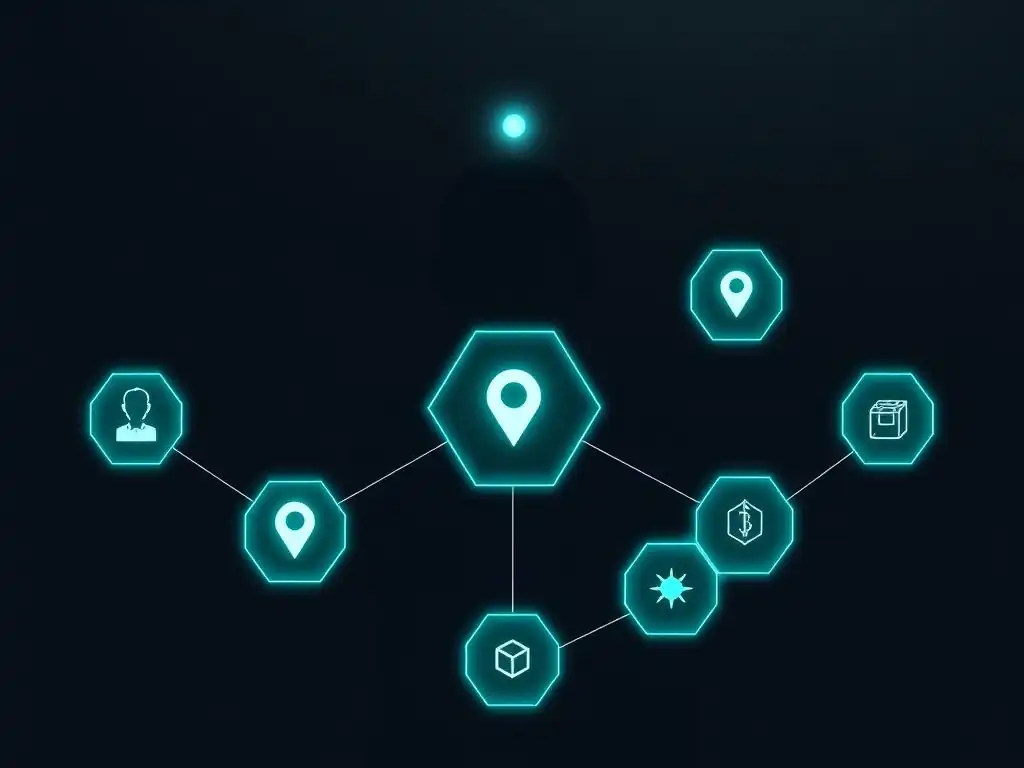
Secure Online Banking and Financial Services
Self-Sovereign Identity can revolutionize online banking and financial services by enhancing security, privacy, and user experience. Instead of repeatedly providing sensitive personal documents for KYC (Know Your Customer) and AML (Anti-Money Laundering) checks across different institutions, individuals could use verified credentials issued by a trusted authority or another bank. For example, a bank could issue a "Verified Account Holder" credential after initial onboarding, allowing the individual to use that credential to open accounts or access services with other financial providers who accept that issuer's credentials, without re-submitting full identity documents.
This approach minimizes the transmission and storage of sensitive data like passport numbers or social security numbers across multiple financial institutions, reducing the risk of large-scale breaches targeting banks. It also streamlines the onboarding process, potentially reducing the time it takes for individuals to access financial services from days or weeks to minutes. The Selfsovereign identity blockchain control mechanism ensures that the individual consents to sharing these verified credentials, adding a layer of user empowerment to financial interactions.
Streamlined Healthcare Data Management
Healthcare is another sector ripe for transformation through Self-Sovereign Identity. Patients often have fragmented health records spread across different hospitals, clinics, and specialists. SSI can empower individuals to control their health data by receiving verified credentials representing medical history, test results, vaccinations, or prescriptions directly into their digital wallet. For instance, a lab could issue a verifiable credential for blood test results, or a doctor could issue one for a diagnosis.
Individuals could then selectively share specific, relevant health credentials with new doctors, specialists, or emergency responders without handing over their entire medical history. This improves care coordination, reduces administrative burdens, and gives patients unprecedented privacy and control over sensitive health information. The use of a blockchain anchor ensures the integrity and verifiability of these health credentials, making Selfsovereign identity blockchain control particularly impactful in this sensitive domain.
Verified Digital Credentials for Education and Employment
The issuance and verification of educational and professional credentials is a prime use case for SSI. Universities, colleges, and professional bodies can issue verifiable credentials for degrees, diplomas, certificates, and licenses directly to graduates and members. These digital credentials, stored in the individual's SSI wallet, are cryptographically signed by the issuing institution, making them instantly verifiable and tamper-proof.
Job applicants could share specific, verified credentials with potential employers directly from their wallet, eliminating the need for manual transcript requests, background checks for degree verification, or concerns about forged documents. Similarly, professional licenses (like for doctors, lawyers, or engineers) could be issued as VCs, allowing employers or clients to instantly verify their current, active status. This streamlines hiring processes and builds trust in qualifications, demonstrating the practical benefits of Selfsovereign identity blockchain control in career progression.
Secure Government Services and Citizen Identification
Governments are exploring SSI to provide more secure, efficient, and privacy-preserving digital services to citizens. Instead of issuing physical ID cards or relying on centralized digital portals that aggregate vast amounts of citizen data, governments could issue verifiable credentials representing aspects of citizen identity, such as proof of age, residency, citizenship, or entitlement to benefits.
Citizens could then use these credentials to access various government services online or in person, sharing only the specific proof required for that service. For example, applying for a permit might only require proof of residency, not a full national ID scan. This reduces the risk of large government databases being breached and empowers citizens with greater control over their interactions with the state. Several governments, including some in Europe and North America, have initiated pilot projects exploring SSI for digital identity and service delivery, highlighting the potential for Selfsovereign identity blockchain control in the public sector.
Supply Chain Traceability with SSI: Ensuring Product Authenticity
While primarily focused on individuals, SSI principles and technology (DIDs and VCs anchored on a blockchain) can also be applied to objects and entities within a supply chain. Products, components, or even locations can be assigned DIDs, and verifiable credentials can be issued about their origin, manufacturing date, handling history, or authenticity.
Consumers could potentially scan a QR code on a product to receive verifiable credentials about its journey through the supply chain, issued by the manufacturer, distributors, or certification bodies. This provides transparency and assurance about the product's authenticity and ethical sourcing, combating counterfeiting and building consumer trust. This application extends the concept of Selfsovereign identity blockchain control to the identity and history of goods, benefiting both businesses and consumers.
Challenges and Considerations for SSI Adoption
Scalability and Performance of Blockchain-Based Identity Systems
One significant challenge for widespread SSI adoption is ensuring the scalability and performance of the underlying blockchain or distributed ledger infrastructure. While personal data isn't stored on the chain, the ledger must handle the volume of DID registrations, DID document updates, credential schema registrations, and revocation list anchoring required for potentially billions of users and trillions of credentials. Public, permissionless blockchains like early Bitcoin or Ethereum might face performance bottlenecks (transactions per second) and high transaction costs (gas fees) that could hinder the feasibility of frequent identity operations.
Newer ledger technologies and layer-2 solutions designed specifically for identity use cases, such as Hyperledger Indy, Sovrin, or decentralized identity networks built on platforms like Polygon or Solana, aim to address these issues. These platforms focus on higher throughput and lower transaction costs, but ensuring they can handle the global scale required for universal SSI remains an active area of development and testing. The infrastructure must scale to support the desired level of Selfsovereign identity blockchain control for a global population.
Interoperability Standards and Governance Frameworks
Achieving seamless interoperability across different SSI implementations and networks is crucial but challenging. While standards like W3C DIDs and VCs provide a technical foundation, variations in implementation, different ledger technologies, and diverse governance models for issuing and verifying credentials can create silos. For SSI to work effectively, an individual's credentials issued on one network or by one issuer must be reliably verifiable by relying parties on different networks.
Establishing robust governance frameworks is equally important. These frameworks define rules for issuers, verifiers, and ledger operators; establish trust roots; and handle dispute resolution. Lack of clear, widely accepted governance models can lead to a fragmented ecosystem where trust is limited to specific networks or communities, hindering the goal of a universally portable digital identity. Collaborative efforts across industries and jurisdictions are needed to mature these standards and frameworks to support global Selfsovereign identity blockchain control.
User Education and Awareness: Overcoming the Learning Curve
Self-Sovereign Identity introduces new concepts like digital wallets, DIDs, and verifiable credentials, which are different from familiar usernames, passwords, and physical IDs. A major challenge is educating individuals about what SSI is, how it works, its benefits (especially the privacy and control aspects), and how to securely manage their digital wallet and private keys. The responsibility for managing one's identity shifts to the individual, requiring a certain level of technical literacy and diligence.
Without adequate user education and intuitive user interfaces for identity wallets, adoption could be slow, particularly among less tech-savvy populations. User experience design is paramount to make managing Selfsovereign identity blockchain control as simple and safe as possible. Extensive outreach and training programs are needed to build confidence and understanding among the general public.
Regulatory Landscape and Compliance Requirements
The regulatory landscape surrounding digital identity and personal data is complex and constantly evolving. Integrating Self-Sovereign Identity systems with existing laws and regulations (like GDPR, CCPA, HIPAA, etc.) presents challenges. Regulators need to understand how SSI fits within existing frameworks for data protection, privacy, and identity verification (e.g., KYC/AML). Questions arise regarding the legal status of DIDs and VCs, the responsibilities of issuers and verifiers, and how to handle law enforcement access requests in a decentralized system.
While SSI aligns well with the principles of data minimization and user control promoted by regulations like GDPR, clarity is needed on specific implementation details. Regulatory uncertainty can slow down adoption by organizations concerned about compliance risks. Collaboration between SSI proponents and regulatory bodies is essential to develop clear guidelines and potentially adapt regulations to accommodate decentralized identity models, ensuring that Selfsovereign identity blockchain control operates within legal boundaries.
Security Vulnerabilities and Mitigation Strategies: Protecting Against Key Compromise
While SSI enhances security in many ways by reducing centralized data stores, it introduces new security considerations, particularly regarding the management of private keys. In an SSI model, the individual's digital wallet holding their private keys is critical. If these keys are lost or compromised, the individual could lose access to their DIDs and VCs, or worse, a malicious actor could potentially impersonate them. Unlike traditional systems where a password reset or ID replacement is possible via a central authority, recovering a lost private key in a purely self-sovereign model is inherently difficult or impossible by design.
Mitigation strategies include developing user-friendly and secure wallet software, implementing robust key management practices (e.g., hardware security modules, multi-factor authentication for wallet access), and exploring decentralized recovery mechanisms that do not reintroduce centralized points of failure. Educating users on the importance of key security is paramount. Protecting the individual's ability to maintain Selfsovereign identity blockchain control hinges critically on the security of their private keys.
The Future of Self-Sovereign Identity: Empowering Individuals in the Digital Age
The Convergence of SSI with Other Decentralized Technologies
The future of Self-Sovereign Identity is likely intertwined with the broader evolution and convergence of other decentralized technologies. SSI, built on principles of user control and data privacy, aligns naturally with decentralized storage solutions (like IPFS or Filecoin) where individuals can store associated data securely and privately, referenced by their DIDs. It can also integrate with decentralized finance (DeFi) applications, allowing users to prove identity or creditworthiness without sharing excessive personal data with centralized institutions.
Furthermore, SSI can play a crucial role in decentralized autonomous organizations (DAOs) by providing verified identity and reputation for participants, enabling more sophisticated and trustworthy governance models. The combination of SSI with technologies like zero-knowledge proofs will further enhance privacy, allowing individuals to prove facts about themselves without revealing any underlying information. This convergence promises a more robust, private, and user-controlled digital ecosystem, reinforcing Selfsovereign identity blockchain control across multiple domains.
The Role of SSI in Building a More Trustworthy and Privacy-Respecting Internet
Self-Sovereign Identity is poised to be a cornerstone technology in the movement towards a more trustworthy and privacy-respecting internet, often referred to as Web 3.0. The current internet, or Web 2.0, is characterized by centralized platforms, data silos, and business models reliant on harvesting user data, leading to widespread surveillance concerns and a lack of user agency. SSI directly challenges this model by putting individuals in control of their identity and data.
By enabling verifiable, selective disclosure of identity attributes and reducing reliance on centralized data brokers, SSI can fundamentally alter how online interactions occur. It fosters a digital environment where trust is established through cryptographic proof and user consent rather than reliance on intermediaries. This shift is essential for building online communities, services, and economies where privacy is protected by design and users are empowered participants, solidifying the concept of Selfsovereign identity blockchain control as a norm.
SSI Adoption Predictions: Projected Growth and Future Trends
While still in relatively early stages compared to traditional identity systems, Self-Sovereign Identity is gaining traction in various sectors. Market projections vary, but many analysts anticipate significant growth in the coming years. Reports often suggest a compound annual growth rate (CAGR) of 50% or more for the decentralized identity market, potentially reaching billions of dollars in value by the mid-2020s. This growth is expected to be driven by increasing privacy concerns, regulatory pushes (like stricter data protection laws), and the clear operational benefits for organizations.
Future trends include the development of more user-friendly SSI wallets integrated into mobile devices, the proliferation of verifiable credentials for a wider range of attributes (e.g., professional certifications, voting eligibility, carbon footprint data), and the integration of SSI into smart contracts and automated processes. As standards mature and pilot projects demonstrate tangible value, the adoption curve is expected to steepen, making Selfsovereign identity blockchain control a more common reality for individuals worldwide.
Conclusion: Embracing Self-Sovereign Identity and Blockchain for a More Secure and Empowered Future
Self-Sovereign Identity offers a compelling vision for the future of digital identity, moving control from institutions back to individuals. By leveraging the unique properties of blockchain technology – decentralization, immutability, and transparency – SSI provides a robust framework for individuals to manage their online persona securely and privately. The core principles of user-centricity, data minimization, transparency, and interoperability underpin a system where individuals are empowered to control their identity data and selectively share verifiable proofs of their attributes.
The benefits for individuals are substantial: enhanced privacy, increased security against identity theft, greater convenience in online interactions, and ultimately, improved control over their digital lives. Real-world applications in finance, healthcare, education, government, and beyond demonstrate the practical potential of this paradigm shift. While challenges related to scalability, standards, user education, regulation, and key security remain, ongoing development and collaboration are paving the way for broader adoption. Embracing Self-Sovereign Identity and blockchain is not just a technological upgrade; it's a fundamental step towards a more secure, trustworthy, and empowering digital future where individuals truly regain Selfsovereign identity blockchain control.
Frequently Asked Questions
What is Self-Sovereign Identity (SSI)?
SSI is a decentralized approach to digital identity that allows individuals to control their own data without relying on intermediaries like governments or corporations. Individuals hold their identity credentials and share them directly with relying parties.
How does blockchain technology relate to Self-Sovereign Identity?
Blockchain provides a secure and immutable ledger for verifying identity credentials. It allows for decentralized storage of verifiable claims, enabling trust without central authorities. SSI solutions often leverage blockchain for enhanced security and transparency.
What are the benefits of using Self-Sovereign Identity?
SSI offers greater privacy and security, as individuals control what information they share. It reduces reliance on centralized databases, minimizing the risk of data breaches. SSI also empowers individuals with greater control over their online persona.
What are some practical applications of Self-Sovereign Identity?
SSI can be used for streamlined KYC (Know Your Customer) processes, secure access to online services, and verifiable credentials for education and employment. It also facilitates cross-border identification and authentication.
What are the current challenges and future directions of Self-Sovereign Identity?
Challenges include scalability and interoperability between different SSI systems. Future directions focus on standardization, regulatory clarity, and wider adoption across various industries. The aim is to make SSI a mainstream approach to digital identity.
Final Reflection: Embracing Digital Autonomy
The journey towards self-sovereign identity is no longer a futuristic concept, but a present-day necessity. In a world increasingly dominated by centralized data silos, the ability to control our online persona, secured by blockchain technology, is paramount to safeguarding our privacy and autonomy. The power to decide who has access to our information, and for what purpose, is a fundamental right that self-sovereign identity empowers us to reclaim.
The impact of self-sovereign identity extends far beyond individual convenience; it has the potential to reshape the entire digital landscape. This shift towards user-centric data management is not just a technological advancement, but a cultural one, demanding a re-evaluation of how we interact with the digital world. Identity is not just a matter of technology; it's a matter of human rights and social justice.
- Kaliya Young, Identity Woman. This quote underscores the profound ethical implications of empowering individuals with control over their digital identities.
As we stand on the cusp of this transformative era, I invite you to reflect on your own digital footprint. Consider the power you currently relinquish to centralized entities and envision a future where you are the sole arbiter of your online identity. Embrace the principles of self-sovereign identity, explore the possibilities offered by blockchain technology, and become an active participant in shaping a more equitable and empowering digital future. The time to reclaim control is now.
Rediscover Your Digital Freedom
Thank you for exploring the world of Self-Sovereign Identity (SSI)! You've gained valuable insights into how SSI can empower you to reclaim control over your online presence. Now, let's put that knowledge into action and start building a more secure and private digital future for yourself.
Here are a few immediate steps you can take:
- Dive deeper and set up your first digital wallet today! Explore SSI-compatible wallet options and begin managing your credentials with unparalleled privacy.
- Follow us on social media or subscribe to our newsletter to stay updated on the latest SSI developments and real-world use cases.
- Surprise a friend! Share this article with someone who values their online privacy and could benefit from understanding SSI.
What first step towards digital sovereignty will you take today? Share your thoughts and intentions in the comments below!
Leave a Reply