
SelfSovereign Identity: The Missing Piece in the Puzzle of Digital Transformation?


Welcome to Blockchain Trends, your guide to navigating the evolving world of decentralized technology. Are you ready to unlock the transformative power of blockchain beyond cryptocurrencies?
Dive into our latest article and discover how selfsovereign identity blockchain benefits are becoming the crucial element for secure and user-centric digital transformation. Is this the missing piece you've been searching for? Explore the possibilities and join us as we delve into DeFi, enterprise applications, regulation, and the exciting future of decentralized systems.
Self-Sovereign Identity: The Missing Piece in the Puzzle of Digital Transformation?
- Introduction: Unlocking Digital Transformation with Self-Sovereign Identity (SSI)
- Understanding Self-Sovereign Identity (SSI)
- Benefits of Self-Sovereign Identity
- The Role of Blockchain in Self-Sovereign Identity Solutions
- Use Cases of Self-Sovereign Identity
- Overcoming the Challenges to Widespread SSI Adoption
- The Future of Self-Sovereign Identity
- Conclusion: Embracing Self-Sovereign Identity for a More Secure and Empowering Digital Future
-
Frequently Asked Questions
- What exactly is Self-Sovereign Identity (SSI) and how does it relate to blockchain?
- How does SSI differ from traditional identity management systems?
- What are the main benefits of using a blockchain for Self-Sovereign Identity?
- Beyond individual control, what are some enterprise applications of Self-Sovereign Identity blockchain solutions?
- What regulatory considerations are surrounding the implementation of Self-Sovereign Identity blockchain solutions?
- Final Reflection: Empowering the Digital Self
- Unlock Your Digital Freedom: Embrace Self-Sovereign Identity
Introduction: Unlocking Digital Transformation with Self-Sovereign Identity (SSI)
The Promise and Challenges of Digital Transformation
Digital transformation promises a future of seamless, efficient, and personalized interactions across all sectors, from government services to private enterprise. This ambitious shift leverages technology to fundamentally change how organizations operate and deliver value. The potential benefits are vast, including increased productivity, improved customer experiences, and the creation of entirely new business models. For instance, reports suggest that companies actively pursuing digital transformation can see revenue increases of 20-30% and significant reductions in operational costs.
However, achieving this vision is fraught with challenges. Legacy systems, data silos, security vulnerabilities, and a lack of trust in digital interactions often hinder progress. Centralized databases holding sensitive personal information are frequent targets for cyberattacks, leading to costly breaches and eroding public trust. The complexity of managing diverse digital identities across multiple platforms also creates friction for both users and organizations, slowing down the very processes digital transformation aims to accelerate.
Why Digital Transformation Needs a New Approach to Identity
At the heart of most digital interactions lies identity. Whether accessing a bank account, applying for a permit online, or sharing medical history with a doctor, proving who you are is fundamental. Traditional identity management systems, often centralized and fragmented, are proving inadequate for the demands of true digital transformation. Users are forced to create and manage dozens of disparate accounts, each with its own login credentials and privacy settings.
Organizations, meanwhile, bear the burden of verifying these identities, often relying on outdated manual processes or insecure digital methods. This not only creates inefficiencies but also centralizes risk, making them attractive targets for data theft. A truly transformative digital landscape requires an identity layer that is secure, interoperable, and puts the individual in control, moving away from the current model where identity is owned and managed by third parties.
Introducing Self-Sovereign Identity (SSI) and Its Potential
Self-Sovereign Identity (SSI) offers a paradigm shift in how identity is managed in the digital age. It is an approach where individuals (or organizations) have complete ownership and control over their digital identities and personal data. Unlike traditional systems where identity is issued and managed by central authorities or service providers, SSI empowers users to manage their own identity attributes and decide who they share them with, and under what conditions.
The potential of SSI to enable digital transformation is profound. By providing a secure, privacy-preserving, and user-centric identity layer, SSI can unlock new levels of trust and efficiency in digital interactions. It promises to streamline onboarding processes, reduce fraud, enhance data security, and empower individuals with greater control over their digital lives. This shift is not just technical; it represents a fundamental change in the power dynamics of the digital world, moving towards decentralization and user empowerment.
Understanding Self-Sovereign Identity (SSI)
Defining Self-Sovereign Identity: What it Means to Own Your Identity
Self-Sovereign Identity, at its core, means that an individual or entity has the principal agency over their digital identity. This contrasts sharply with traditional federated or siloed identity models where identity is managed by issuing authorities (like governments for passports) or service providers (like social media companies for login credentials). In an SSI model, the individual holds their identity attributes and credentials in a secure digital wallet, typically on their own device. They are the sole arbiters of who gets to see which piece of information and when.
Owning your identity means having the ability to present verified claims about yourself (like your age, qualifications, or address) directly to relying parties (like banks, employers, or online services) without needing to go through a third-party identity provider every time. This concept is akin to carrying a physical driver's license or passport and choosing to show it to someone when needed, rather than asking the issuing authority to verify your identity for you in real-time for every interaction.
Key Principles of Self-Sovereign Identity
The concept of SSI is built upon a set of foundational principles that distinguish it from other identity models. These principles emphasize user control, privacy, security, and interoperability.
- Control: Users have ultimate control over their identifiers and data.
- Access: Users can access their own data whenever they need it.
- Portability: Identity information is portable across different contexts and platforms.
- Persistence: Identity exists independently of any single entity and persists over time.
- Consent: Sharing of identity information requires explicit user consent.
- Minimization: Users can share only the minimum amount of information required for a specific interaction (e.g., proving they are over 18 without revealing their exact birthdate).
- Security: Cryptographic methods ensure the security and integrity of identity information and credentials.
- Interoperability: SSI systems should work across different technologies and ecosystems.
These principles collectively aim to create a digital identity framework that is more resilient, trustworthy, and empowering for individuals than existing models.
How SSI Differs from Traditional Identity Management Systems
Traditional identity management systems typically fall into two main categories: siloed and federated. Siloed systems are perhaps the most common, where each service provider (a bank, an online store, a social network) manages its own separate user database and login system. Users have fragmented identities across numerous platforms, leading to password fatigue and security risks if one account is compromised. Data is stored in centralized databases, making them prime targets for breaches.
Federated identity systems, like those using OAuth or SAML (e.g., "Login with Google" or "Login with Facebook"), attempt to alleviate this fragmentation by allowing users to use an identity from one provider to access services from another. While convenient, this model still relies on a central identity provider (Google, Facebook, etc.) that holds significant power and data about the user.
The user doesn't truly own their identity; they are borrowing it from the provider. SSI differs fundamentally by placing the user, not a third party, at the center of the identity ecosystem. The user holds their credentials, chooses who to share them with, and the underlying technology (often blockchain) provides a decentralized, verifiable layer for trust.
Benefits of Self-Sovereign Identity
The adoption of self-sovereign identity brings a multitude of advantages for individuals, businesses, and governments alike. Exploring the benefits of self-sovereign identity with blockchain reveals significant improvements over traditional systems.
Enhanced Security and Privacy
One of the most compelling self-sovereign identity blockchain benefits is the significant enhancement of security and privacy. In centralized systems, large databases of personal information represent honey pots for cybercriminals. A single breach can expose millions of records, leading to identity theft, financial fraud, and reputational damage. SSI mitigates this risk by decentralizing data storage. Users hold their credentials in secure digital wallets on their own devices, often protected by advanced encryption and biometric authentication.
Furthermore, SSI employs a principle called "selective disclosure" or "minimum disclosure." Instead of sharing a full government ID to prove age, a user can present a verifiable credential that simply confirms they are over 18. This drastically reduces the amount of sensitive information transmitted and stored by relying parties, minimizing the attack surface and protecting user privacy. The use of cryptographic proofs ensures that the shared information is verified as authentic without revealing underlying sensitive data.
Cost Reduction and Efficiency Gains
Another key advantage among the self-sovereign identity blockchain benefits is the potential for substantial cost reduction and efficiency gains for organizations. Traditional identity verification processes, especially those involving Know Your Customer (KYC) and Anti-Money Laundering (AML) regulations, are notoriously expensive and time-consuming. Manually collecting, verifying, and storing identity documents incurs significant operational costs.
With SSI, organizations can leverage verifiable credentials presented directly by the user. This can automate large parts of the verification process. For instance, a bank onboarding a new customer could accept a digitally signed credential from a trusted authority (like a government agency) verifying the customer's identity, rather than scanning and manually reviewing physical documents. Estimates suggest that SSI implementation could reduce onboarding costs by up to 50-70% and decrease processing times from days to minutes.
Improved User Experience and Control
From the user's perspective, SSI offers a dramatically improved experience and unprecedented control over their digital identity. Gone are the days of managing dozens of usernames and passwords for different services. With SSI, a user can leverage a single digital wallet to securely store and manage all their verifiable credentials – from their driver's license and academic degrees to professional certifications and health records.
When interacting with a service, the user simply selects the necessary credentials from their wallet and shares them with explicit consent. This streamlines online interactions, making processes like account creation, application submissions, and service access much faster and less frustrating. The user maintains full visibility into who has accessed their identity information and when, fostering a sense of trust and empowerment. This enhanced control is a major driver for user adoption.
Increased Trust and Transparency
Trust is a critical component of any digital interaction, and SSI is designed to build trust through transparency and verifiable credentials. The underlying infrastructure, often leveraging blockchain technology, provides a decentralized and immutable ledger for recording the issuance and revocation of credentials. This makes it difficult for credentials to be forged or tampered with.
When a relying party receives a verifiable credential from a user, they can cryptographically verify its authenticity and integrity against the issuer's public key recorded on the ledger. This process eliminates the need for the relying party to trust the user directly or to contact the issuer for verification every time. The transparency of the ledger (recording verifiable claims, not sensitive data) and the cryptographic proofs create a trust framework that is more robust and less reliant on centralized authorities or intermediaries. This fosters greater confidence in digital interactions for all parties involved.
The Role of Blockchain in Self-Sovereign Identity Solutions
While SSI is a concept that can technically be implemented using various technologies, blockchain has emerged as a particularly strong foundation due to its inherent properties. Understanding the role of blockchain is crucial when discussing self-sovereign identity blockchain benefits.
Why Blockchain is a Natural Fit for SSI
Blockchain technology provides several characteristics that align perfectly with the core principles of Self-Sovereign Identity. Its decentralized nature eliminates the need for a single, central authority to manage identity data, distributing control and reducing single points of failure. This decentralization is fundamental to achieving 'self-sovereignty'.
Moreover, the immutability of blockchain ensures that once a record is added (such as the public key of an issuer or a reference to a credential), it cannot be altered or deleted. This provides a high level of trust and integrity for the underlying identity framework. The transparency of a public or permissioned ledger allows relying parties to verify the status and authenticity of credentials without needing to access sensitive personal data stored off-chain. These features collectively make blockchain a robust and trustworthy infrastructure for managing the public aspects of an SSI system.
Blockchain as a Secure and Immutable Ledger
In an SSI framework, the blockchain does not typically store the sensitive personal data itself. Instead, it acts as a secure, immutable ledger for recording cryptographic proofs, public keys, and metadata related to verifiable credentials. For example, when a university issues a digital degree credential to a student, a cryptographic hash or a pointer to that credential, along with the university's public key, might be anchored on the blockchain.
A relying party (like an employer) receiving this digital degree from the student can then use the information on the blockchain to verify that the credential was genuinely issued by the university and has not been tampered with or revoked. This anchoring process leverages the blockchain's security and immutability to provide a root of trust for the verifiable credentials held and controlled by the individual. It provides a transparent audit trail of credential issuance and status without compromising user privacy by exposing personal details.
Different Blockchain Platforms for SSI: A Comparison
Several blockchain platforms are being explored and utilized for building SSI solutions, each with its own strengths and characteristics. Public blockchains like Ethereum or Bitcoin (via layers like ION) can be used to anchor decentralized identifiers (DIDs) and verifiable credentials, leveraging their high degree of decentralization and censorship resistance. However, they can face challenges with transaction costs (gas fees) and processing speed, especially Ethereum (though Ethereum 2.0 aims to improve this).
Permissioned blockchains like Hyperledger Fabric or R3 Corda are also popular choices, particularly for enterprise or government SSI implementations. These platforms offer better control over network participants, higher transaction throughput, and lower costs compared to public chains. They are often preferred for use cases requiring specific governance models or regulatory compliance.
Projects like Sovrin, built on its own distributed ledger technology, are specifically designed for decentralized identity and provide a network purpose-built for SSI, focusing on performance, security, and trust frameworks. The choice of platform often depends on the specific requirements of the SSI ecosystem being built, balancing factors like decentralization needs, performance, cost, and governance.
Use Cases of Self-Sovereign Identity
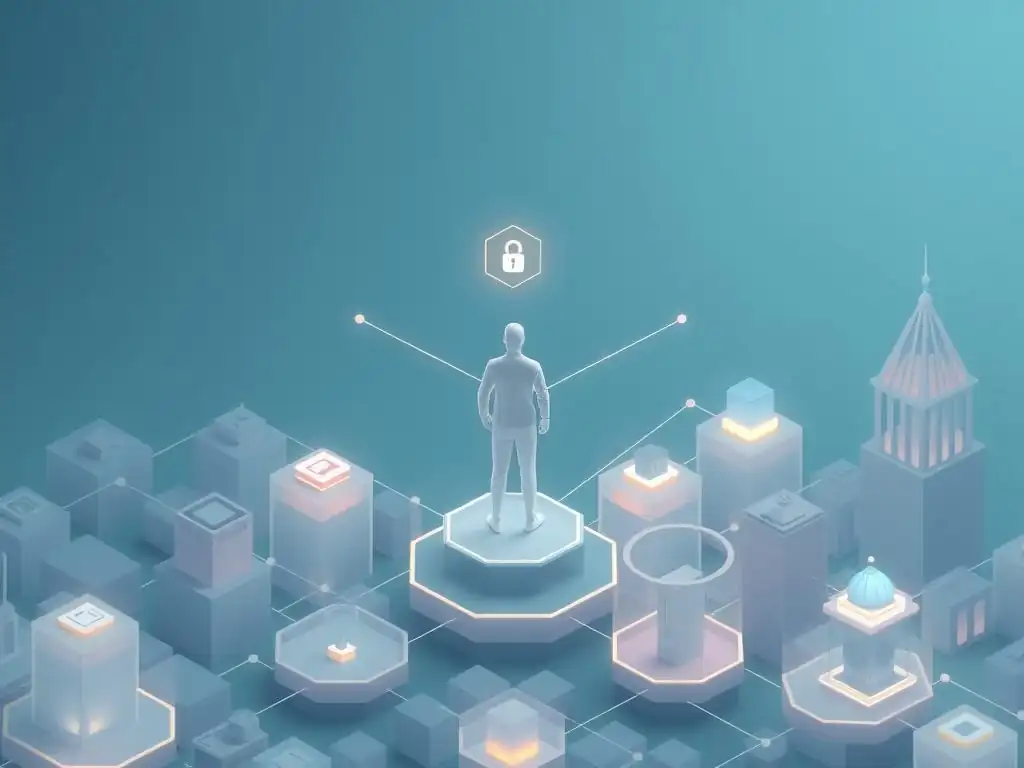
The application of Self-Sovereign Identity spans numerous sectors, showcasing the broad potential of self-sovereign identity blockchain benefits.
SSI in Government: Streamlining Citizen Services
Governments worldwide are exploring SSI to modernize public services and enhance interactions with citizens. Imagine a citizen applying for social benefits or renewing a license online. Currently, this often involves submitting physical documents or navigating complex, fragmented digital portals. With SSI, a citizen could use their digital wallet to present verifiable credentials issued by various government departments (e.g., proof of address from the municipality, proof of income from the tax authority) directly to the service provider.
This streamlines application processes, reduces administrative burden, and minimizes fraud. For instance, a pilot project in Europe demonstrated how SSI could simplify cross-border digital identity verification for accessing public services. By enabling citizens to control and share verified data securely, governments can build more efficient, transparent, and user-centric digital infrastructures, potentially reducing processing times for applications by days and cutting verification costs significantly.
SSI in Healthcare: Securely Sharing Medical Records
Securely sharing medical information between healthcare providers, patients, and insurers is a persistent challenge. Centralized health records are vulnerable to breaches, and patients often lack control over who accesses their sensitive health data. SSI offers a solution by enabling patients to own and manage their health records as verifiable credentials within their digital wallets.
A patient could grant a new doctor temporary access to specific parts of their medical history (e.g., allergies, current medications) directly from their wallet, without relying on complex, often incompatible hospital systems. This improves care coordination, reduces redundant tests, and empowers patients. For example, a patient visiting a specialist could instantly share relevant diagnostic reports issued by their primary care physician as a signed credential. This could lead to fewer errors and faster diagnosis, while ensuring HIPAA or GDPR compliance by giving the patient explicit control over data sharing.
SSI in Finance: KYC/AML Compliance and Identity Verification
The financial sector is heavily regulated, with strict Know Your Customer (KYC) and Anti-Money Laundering (AML) requirements. Verifying customer identities is costly and time-consuming, often involving manual checks of identity documents. SSI can revolutionize this process. A customer could undergo a one-time verification process with a trusted identity provider (perhaps a bank or a specialized verification service) and receive a verifiable credential confirming their identity and compliance status.
They could then use this credential to open accounts or access services at other financial institutions without repeating the full KYC process. This significantly reduces onboarding time (from days to minutes) and operational costs for financial institutions. A study by a major consulting firm estimated that implementing SSI for KYC could save the financial industry billions of dollars globally each year by automating verification and reducing fraud. The increased security provided by cryptographic proofs also mitigates risks associated with identity theft and synthetic identities.
SSI in Education: Verifiable Credentials and Lifelong Learning
SSI is poised to transform how educational achievements and professional qualifications are managed and shared. Diplomas, degrees, certificates, and training records can be issued as verifiable credentials by educational institutions and stored securely in a student's digital wallet.
Students can then easily share these credentials with potential employers, licensing bodies, or other educational institutions. This eliminates the need for manual transcript requests, reduces the risk of forged credentials, and streamlines the verification process for employers. For example, an employer could instantly verify a job applicant's degree directly with the issuing university via the blockchain anchor, rather than waiting weeks for paper transcripts. This also supports the concept of lifelong learning, allowing individuals to build a comprehensive, verifiable portfolio of their skills and qualifications over their career.
SSI in Supply Chain: Traceability and Authentication
In supply chain management, verifying the authenticity of goods and ensuring traceability is crucial for preventing fraud and ensuring quality. SSI can be applied to products and components themselves, providing them with a unique, verifiable digital identity.
Manufacturers can issue verifiable credentials for raw materials, components, or finished products, recording their origin, specifications, and movement through the supply chain. These credentials can be stored in a digital identity linked to the physical item (e.g., via a QR code or NFC tag). Stakeholders along the chain, from logistics providers to retailers and even consumers, can verify the authenticity and history of the product by scanning its digital identity and checking the associated verifiable credentials anchored on the blockchain. This increases transparency, builds trust, and helps combat counterfeiting, which costs the global economy billions annually.
Overcoming the Challenges to Widespread SSI Adoption
Despite the clear advantages and potential self-sovereign identity blockchain benefits, several significant challenges must be addressed for widespread SSI adoption to occur.
Addressing Technical Complexity and Interoperability
Implementing SSI involves navigating complex technical layers, including distributed ledger technology, cryptography, decentralized identifiers (DIDs), and verifiable credentials (VCs). Developing user-friendly digital wallets and interfaces that abstract this complexity is crucial for mass adoption. Furthermore, ensuring interoperability between different SSI platforms, wallet providers, and credential issuers is paramount. Without common standards and protocols, SSI ecosystems risk becoming fragmented silos, replicating the very problem they aim to solve.
Standards bodies like the W3C (World Wide Web Consortium) are developing specifications for DIDs and VCs, and initiatives are working on establishing interoperability frameworks. However, the ecosystem is still maturing, and achieving seamless communication between diverse SSI implementations remains a key technical hurdle. Developers need intuitive tools and clear guidelines to build applications that leverage SSI effectively.
The legal and regulatory landscape for decentralized identity and verifiable credentials is still evolving. Governments and regulatory bodies are grappling with how existing laws related to data privacy (like GDPR in Europe or CCPA in California), digital signatures, and identity verification apply to SSI. There is a need for clear legal frameworks that recognize and support SSI models while ensuring consumer protection and preventing misuse for illicit activities.
Compliance with industry-specific regulations, such as KYC/AML in finance or HIPAA in healthcare, also needs to be clearly defined within an SSI context. Organizations need confidence that adopting SSI solutions will meet their legal obligations. This regulatory uncertainty can slow down adoption, as businesses and public sector entities await clearer guidance before committing to large-scale SSI deployments. Collaboration between regulators, technologists, and industry stakeholders is essential to develop appropriate frameworks.
Raising Awareness and Promoting User Education
For SSI to succeed, both individuals and organizations need to understand what it is, how it works, and the benefits it offers. The concept of owning and managing one's digital identity is a significant shift for most people, who are accustomed to centralized systems. Educating the public about the security, privacy, and control advantages of SSI is vital to drive user adoption.
Similarly, businesses and government agencies need to be educated on the technical aspects, implementation strategies, and the potential return on investment from adopting SSI solutions. Lack of awareness and understanding can lead to skepticism and resistance to change. Effective communication campaigns, pilot programs, and readily available educational resources are necessary to build trust and encourage the transition to self-sovereign models.
Building a Robust SSI Ecosystem
A thriving SSI landscape requires a robust ecosystem of participants, including:
- Issuers: Entities that issue verifiable credentials (e.g., universities, governments, banks).
- Holders: Individuals or organizations who hold and manage their credentials (using digital wallets).
- Verifiers (Relying Parties): Entities that request and verify credentials (e.g., employers, service providers).
- Infrastructure Providers: Developers and organizations building the underlying technology (blockchain platforms, wallet software, identity networks).
Building this interconnected ecosystem requires collaboration, agreed-upon governance frameworks, and business models that incentivize participation from all parties. The "network effect" is crucial; the more issuers, holders, and verifiers adopt SSI, the more valuable the ecosystem becomes for everyone. Establishing trust frameworks and governance models that define rules and responsibilities within specific SSI networks is a key step in fostering this ecosystem growth.
The Future of Self-Sovereign Identity
Looking ahead, Self-Sovereign Identity is poised to play an increasingly central role in the digital landscape, further amplifying self-sovereign identity blockchain benefits.
The Convergence of SSI with Other Emerging Technologies
The power of SSI will be amplified through its convergence with other emerging technologies. For example, combining SSI with the Internet of Things (IoT) could allow devices to have verifiable identities and securely share data, enabling trusted automation and supply chain tracking. Integrating SSI with Artificial Intelligence (AI) could lead to more personalized and secure digital experiences, where AI agents act on behalf of individuals using their verifiable credentials while respecting privacy.
Furthermore, SSI is a foundational component for building truly decentralized applications (dApps) and Web3 environments, where users can interact directly with services without intermediaries, relying on their self-owned identity. The intersection of SSI with technologies like zero-knowledge proofs will further enhance privacy, allowing users to prove facts about themselves without revealing the underlying data. This convergence promises a future where digital interactions are not only more secure and private but also more intelligent and automated.
The Potential for SSI to Revolutionize Digital Interactions
SSI has the potential to fundamentally revolutionize almost every digital interaction. From logging into websites and making online purchases to accessing healthcare, voting, and managing personal data, SSI can replace cumbersome, insecure, and privacy-invasive processes with seamless, secure, and user-controlled flows.
Imagine a future where you instantly prove your eligibility for a service, your qualifications for a job, or your right to access information, all with a few clicks from your secure digital wallet, without ever exposing unnecessary personal details or relying on central databases. This shift will empower individuals, reduce friction for businesses, and create a more trustworthy digital environment for society as a whole. The self-sovereign identity blockchain benefits will become integral to this new digital paradigm.
Preparing for a World Where Identity is Truly Self-Sovereign
The transition to a world of self-sovereign identity will require preparation from individuals, organizations, and governments. For individuals, it means becoming familiar with digital wallets and understanding the value of their personal data and credentials. For organizations, it involves investing in SSI technology, adapting business processes, and integrating with emerging SSI ecosystems.
Governments need to establish supportive regulatory frameworks and explore issuing official credentials (like digital birth certificates or driver's licenses) in a verifiable credential format. The journey towards widespread SSI adoption is ongoing, but the foundational pieces are being put in place. As the technology matures and the ecosystem grows, self-sovereign identity will move from a niche concept to a mainstream reality, reshaping our digital lives for the better.
Conclusion: Embracing Self-Sovereign Identity for a More Secure and Empowering Digital Future
Recap of the Key Benefits of Self-Sovereign Identity
As we have explored, Self-Sovereign Identity offers a compelling alternative to traditional identity management systems, bringing significant advantages. The core self-sovereign identity blockchain benefits include enhanced security through decentralized data storage and minimum disclosure, leading to a reduced risk of data breaches. Organizations can achieve substantial cost reductions and efficiency gains by automating identity verification processes, particularly in areas like KYC/AML compliance.
For individuals, SSI provides a vastly improved user experience with greater control over their personal information, eliminating password fatigue and simplifying online interactions. Furthermore, the use of verifiable credentials anchored on technologies like blockchain fosters increased trust and transparency among all parties involved in digital transactions. These benefits collectively paint a picture of a more secure, efficient, and user-centric digital future.
The Call to Action: Exploring and Implementing SSI Solutions
The era of centralized, fragmented, and vulnerable digital identities is drawing to a close. Self-Sovereign Identity presents a powerful vision for how identity can be managed in the digital age, aligning with the principles of privacy, security, and user empowerment that are increasingly demanded by individuals and necessary for robust digital transformation.
Organizations, governments, and individuals should begin exploring SSI solutions today. Businesses can start with pilot projects to understand the potential cost savings and efficiency gains in specific processes like customer onboarding or employee verification. Governments can investigate issuing verifiable digital credentials for official documents.
Individuals can seek out and experiment with early SSI wallet applications. Embracing Self-Sovereign Identity is not just a technological upgrade; it is a strategic imperative for building a digital future that is truly secure, trustworthy, and puts the individual back in control of their identity. The journey towards widespread adoption requires collaboration and commitment, but the destination – a more secure and empowering digital world – is well worth the effort.
Frequently Asked Questions
What exactly is Self-Sovereign Identity (SSI) and how does it relate to blockchain?
SSI empowers individuals with control over their own digital identities. Blockchain provides a secure and transparent infrastructure for managing and verifying these identities, making it more trustworthy.
How does SSI differ from traditional identity management systems?
Traditional systems centralize identity control with organizations. SSI flips this, giving individuals complete ownership and control over their data, without needing a central authority.
What are the main benefits of using a blockchain for Self-Sovereign Identity?
Blockchain offers enhanced security, transparency, and immutability. This ensures data integrity and prevents unauthorized access or alteration of personal information.
Beyond individual control, what are some enterprise applications of Self-Sovereign Identity blockchain solutions?
Enterprises can streamline processes like KYC (Know Your Customer) and supply chain management by leveraging verifiable credentials and reducing reliance on centralized databases.
What regulatory considerations are surrounding the implementation of Self-Sovereign Identity blockchain solutions?
Regulations are still evolving, but focus on data privacy (GDPR, CCPA) and compliance with existing identity verification standards are key considerations for responsible adoption.
Okay, here's a final reflection tailored for your article "Self-Sovereign Identity: The Missing Piece in the Puzzle of Digital Transformation?" aiming to rank for "Selfsovereign identity blockchain benefits," following the structure you provided:
Final Reflection: Empowering the Digital Self
The promise of digital transformation hinges on trust and control, and Self-Sovereign Identity (SSI) is no longer a futuristic concept but a critical necessity. The benefits of SSI, particularly when underpinned by blockchain technology, are becoming increasingly apparent as individuals and organizations grapple with data breaches, privacy concerns, and the limitations of centralized identity systems. The shift towards user-centric control over personal data is not just a technological advancement; it's a fundamental shift in power dynamics.
The rise of SSI is profoundly impacting the cultural landscape, moving us towards a future where individuals are truly empowered to manage their digital lives. This journey towards digital autonomy is deeply personal, as it touches upon our fundamental right to privacy and control over our own narratives in the digital realm. Identity is not static; it is a dynamic process of becoming. Self-Sovereign Identity empowers individuals to actively participate in shaping their digital identity, rather than being defined by centralized authorities.
- (Insert a relevant quote from a thought leader in the SSI space here).
As we stand on the cusp of a new era of digital interaction, let us embrace the potential of Self-Sovereign Identity. Consider how you can advocate for and implement SSI solutions in your own life and within your organizations. The future of digital transformation depends on our collective commitment to building a more secure, private, and empowering digital world, one where each individual truly owns their digital self.
Unlock Your Digital Freedom: Embrace Self-Sovereign Identity
Thank you for exploring the concept of Self-Sovereign Identity (SSI) and its potential to transform digital interactions. We hope this article has highlighted how SSI can contribute to a more secure, user-focused digital future. Now, take the next step!
Here's how you can get involved:
- Start Building Your Digital Identity: Use a trusted digital wallet to begin claiming your credentials and managing your identity securely.
- Apply SSI in Your Industry: Think of three specific ways SSI could improve security, streamline processes, or enhance user experience within your field.
- Share and Discuss: Pass this article along to your network to encourage conversations about the significance of SSI in creating a safer, more empowering digital environment.
What is one credential you would like to own and control? How could it change your life? Share your thoughts in the comments below!
Leave a Reply