
Supply Chain Transparency and Blockchain Identity: Balancing Visibility with Data Confidentiality and Security


Welcome to Blockchain Trends, your guide to navigating the revolution beyond cryptocurrencies! In a world demanding greater transparency, discover how blockchain supply chain visibility security is reshaping industries. But how do we balance that visibility with crucial data confidentiality and security? Dive in to explore the innovative solutions and emerging challenges in our latest article and uncover the future of decentralized, secure supply chains.
Supply Chain Transparency and Blockchain Identity: Balancing Visibility with Data Confidentiality and Security
- Introduction: Blockchain's Role in Enhancing Supply Chain Visibility and Security
- Understanding the Challenges of Supply Chain Transparency
- Blockchain Identity: A Solution for Secure and Verifiable Supply Chain Data
- Implementing Blockchain for Supply Chain Visibility and Security: Key Considerations
- Privacy-Preserving Techniques in Blockchain-Based Supply Chains
- Use Cases: Blockchain Identity and Transparency in Action
- The Future of Blockchain Supply Chain Visibility Security
- Best Practices for Securing Your Blockchain Supply Chain
- Conclusion: Achieving Secure and Transparent Supply Chains with Blockchain Identity
-
Frequently Asked Questions
- How does blockchain enhance supply chain visibility?
- What are the security implications of using blockchain in supply chain management?
- How does blockchain identity contribute to supply chain transparency?
- What measures can be taken to balance visibility with data confidentiality in a blockchain supply chain?
- What is the future of blockchain supply chain visibility security concerning regulation?
- Final Reflection: Navigating the Future of Trust in Supply Chains
- Empower Your Supply Chain: Uncover Deeper Insights!
Introduction: Blockchain's Role in Enhancing Supply Chain Visibility and Security
The Growing Need for Transparency in Modern Supply Chains
Modern supply chains are increasingly global, complex, and fragmented, involving numerous participants across different jurisdictions. This complexity makes achieving end-to-end visibility a significant challenge. Stakeholders, from consumers demanding ethically sourced products to regulators requiring stringent traceability for safety, are pushing for greater transparency. For instance, recent food safety scares or the demand for conflict-free minerals highlight the critical need to track products and components from origin to destination. Without clear visibility, identifying the source of issues, ensuring compliance, and building consumer trust becomes incredibly difficult.
Furthermore, the lack of transparency in supply chains contributes to substantial financial losses. The global trade in counterfeit goods, estimated to be worth hundreds of billions of dollars annually (some estimates placing it over $500 billion), thrives in opaque supply chains where verifying authenticity is hard. Companies face risks of reputational damage, regulatory fines, and inefficient operations due to poor visibility. Enhancing supply chain visibility is no longer just an operational goal but a strategic imperative for resilience, compliance, and combating illicit trade.
Blockchain Identity as a Foundation for Secure and Transparent Supply Chains
Blockchain technology offers a promising solution to address the inherent lack of trust and transparency in traditional supply chains. By providing a shared, immutable ledger, it can record transactions and events in a verifiable manner. However, the true power of blockchain for supply chain visibility and security is unlocked when combined with robust digital identities. Blockchain identity, often implemented using decentralized identifiers (DIDs) and verifiable credentials (VCs), allows each participant – whether a farmer, manufacturer, logistics provider, or regulator – to have a secure, verifiable digital presence on the network.
This verifiable identity acts as the foundation for trust. When a participant records data on the blockchain, that data can be cryptographically linked to their unique identity. This ensures accountability and provides a high degree of assurance regarding the source and integrity of the information. For example, a quality control certification (a verifiable credential) issued by a trusted third party to a specific manufacturer (a decentralized identity) can be easily verified by anyone down the supply chain, significantly enhancing security and trust in the data being shared across the network and improving overall blockchain supply chain visibility security.
Understanding the Challenges of Supply Chain Transparency
Data Silos and Lack of Interoperability in Traditional Supply Chains
One of the primary impediments to achieving supply chain transparency is the prevalence of data silos. Enterprises typically use disparate systems like Enterprise Resource Planning (ERP), Warehouse Management Systems (WMS), Transportation Management Systems (TMS), and various legacy databases. These systems often do not communicate effectively with each other, leading to fragmented information. A manufacturer might have detailed production data, but this data isn't seamlessly shared with the logistics provider or the retailer, creating blind spots.
This lack of interoperability means that tracking a product's journey requires manual processes, phone calls, emails, and sifting through mountains of paperwork, which is slow, error-prone, and expensive. According to industry reports, integrating disparate systems is a major hurdle for companies attempting digital transformation in their supply chains. The absence of a single, shared source of truth makes it nearly impossible to gain real-time, end-to-end visibility, hindering effective decision-making and making it difficult to ensure the integrity of the entire supply chain process.
The Risks of Counterfeiting and Fraud in Global Supply Chains
Global supply chains are highly susceptible to counterfeiting and fraud, posing significant risks to businesses and consumers alike. Counterfeit goods range from luxury items and pharmaceuticals to electronics and automotive parts. The World Health Organization (WHO) estimates that up to 10% of medical products in low- and middle-income countries are substandard or falsified, a staggering figure with severe public health implications. The complex, multi-tiered nature of global supply chains provides numerous opportunities for illicit actors to introduce fake products or tamper with legitimate ones without detection.
Fraudulent activities can also include the misrepresentation of origin, quality, or ethical sourcing standards. For instance, products labeled as "organic" or "fair trade" might not genuinely meet those standards, deceiving consumers and undermining legitimate producers. These issues erode consumer trust and can result in costly recalls, lawsuits, and damage to brand reputation. Enhancing blockchain supply chain visibility security is crucial to combat these pervasive threats.
Balancing Transparency with Data Confidentiality: A Key Challenge
While the need for transparency is clear, businesses operating within a supply chain also have legitimate concerns about sharing sensitive data. Information regarding supplier lists, production volumes, pricing strategies, or intellectual property is often considered confidential and proprietary. Making all supply chain data fully transparent to every participant could expose competitive advantages, violate privacy regulations (like GDPR or CCPA), or reveal commercially sensitive agreements.
The challenge is to create a system that allows for necessary visibility for verification, auditing, and tracing purposes, while simultaneously protecting confidential business information and personal data. A robust blockchain supply chain visibility security solution must offer granular control over data access, allowing participants to selectively share information based on predefined rules or permissions. Simply putting all data on a public, permissionless blockchain is not a viable solution for most enterprise supply chains due to these privacy and confidentiality requirements.
Blockchain Identity: A Solution for Secure and Verifiable Supply Chain Data
How Blockchain Identity Works: Decentralized Identification and Authentication
Blockchain identity systems leverage cryptography and distributed ledger technology to create verifiable digital identities that are not controlled by a single central authority. At their core are Decentralized Identifiers (DIDs), unique identifiers that can be registered on a blockchain or other distributed ledger. Unlike traditional identifiers (like email addresses or usernames) tied to a specific service provider, DIDs are controlled by the individual or entity they represent.
Alongside DIDs are Verifiable Credentials (VCs). A VC is a digital document that cryptographically links a claim (e.g., "This shipment passed customs inspection," "This product is certified organic," "This person is an authorized auditor") to a DID. These credentials are issued by trusted entities (like a certification body, a government agency, or a supply chain partner) and can be verified by anyone using the blockchain or ledger. This system allows for secure, tamper-evident authentication and verification of participants and their associated attributes throughout the supply chain, forming a backbone for enhanced blockchain supply chain visibility security.
Benefits of Using Blockchain Identity in Supply Chain Management
Enhanced Traceability and Provenance Tracking
By assigning a unique blockchain identity to each participant and potentially to individual products or batches, every step of a product's journey can be recorded on the ledger and linked to the responsible identity. From the sourcing of raw materials to manufacturing, packaging, shipping, and final delivery, each transaction or event creates an immutable record. This provides unparalleled traceability and provenance tracking.
For example, a food producer using a blockchain identity system can track a specific batch of vegetables from the farm where they were grown (identified by its DID), through the processing plant (identified by its DID), the distribution center, and finally to the retailer. If a food safety issue arises with that batch, the source can be identified rapidly and precisely, allowing for targeted recalls instead of costly, broad ones. This level of granular traceability significantly improves supply chain resilience and responsiveness.
Improved Data Security and Integrity
Blockchain's inherent properties of immutability and cryptographic security significantly enhance data integrity within the supply chain. Once data related to a transaction or event is recorded on the blockchain and linked to a verifiable identity, it is extremely difficult to alter or tamper with it without being detected. Each block of data is cryptographically linked to the previous one, creating a secure chain.
This ensures that the information shared across the supply chain – such as quality control reports, shipment manifests, or temperature logs – is trustworthy and hasn't been fraudulently modified. Participants can have confidence in the accuracy of the data they access, reducing disputes and enhancing trust among partners. This foundational security is vital for building reliable blockchain supply chain visibility security solutions.
Streamlined Auditing and Compliance Processes
Auditing supply chains for quality, safety, ethical sourcing, or regulatory compliance is traditionally a time-consuming, manual, and often expensive process involving reviewing extensive documentation. With a blockchain identity system, relevant data and verifiable credentials are recorded in a secure, easily accessible, and verifiable manner. Auditors can be granted specific permissions to access the necessary immutable records on the ledger.
For instance, demonstrating compliance with organic certification standards requires proof at multiple stages. Using blockchain identity and VCs, the auditor can quickly verify the farm's organic certification (VC issued to the farm's DID), the processor's organic handling certification, and the records of organic inputs used, all linked to the respective participants' identities on the blockchain. This streamlines the audit process, reduces costs, and provides regulators with a more transparent and trustworthy view of compliance, enhancing overall blockchain supply chain visibility security.
Implementing Blockchain for Supply Chain Visibility and Security: Key Considerations
Choosing the Right Blockchain Platform for Your Supply Chain Needs
Selecting the appropriate blockchain platform is a critical decision for successful implementation. Different platforms offer varying features regarding consensus mechanisms, transaction speed, cost, privacy capabilities, and governance models. For enterprise supply chain solutions, permissioned blockchains (like Hyperledger Fabric or R3 Corda) or consortium blockchains are often preferred over public, permissionless ones (like Bitcoin or Ethereum) due to the need for controlled access, higher transaction throughput, and data confidentiality.
Considerations include the number and type of participants in the supply chain, the required transaction volume, the sensitivity of the data being shared, and the level of decentralization desired. A consortium of pharmaceutical companies might opt for a permissioned network allowing only known entities to join, ensuring data privacy and regulatory compliance. In contrast, a system for tracking ethically sourced goods involving many small producers might require a more open, yet still permissioned, approach with specific privacy features. The platform choice directly impacts the achievable level of blockchain supply chain visibility security and operational efficiency.
Integrating Blockchain with Existing Supply Chain Systems
A significant technical challenge in deploying blockchain for supply chains is integrating the new distributed ledger technology with existing legacy systems such as ERP, WMS, and IoT platforms. These systems hold vast amounts of operational data that need to be fed into the blockchain or linked to blockchain transactions. Simply replacing these systems is often impractical due to cost, complexity, and business disruption.
Effective integration typically involves using Application Programming Interfaces (APIs) and middleware to connect the blockchain platform with existing databases and applications. Data from legacy systems is captured, validated, and then recorded on the blockchain as transactions or linked to verifiable credentials. Conversely, data from the blockchain might need to be accessible within existing operational dashboards. Ensuring seamless, real-time data flow between traditional systems and the blockchain is crucial for maintaining accurate and up-to-date supply chain visibility.
Developing a Robust Data Governance Framework
Implementing a blockchain-based supply chain solution necessitates a clear and comprehensive data governance framework. This framework defines who owns the data recorded on the blockchain, who has access to it, under what conditions, and how data privacy and confidentiality are maintained. Because data on a blockchain is often immutable, errors or sensitive information recorded incorrectly can be difficult to rectify, highlighting the need for strict data input and validation protocols.
The governance model must also define the rules for participant onboarding, identity management, dispute resolution, and updates to the network's protocols. For a supply chain consortium, this might involve establishing a governing body comprising representatives from participating companies to make decisions on network evolution and policy. A well-defined data governance framework is essential for ensuring the trustworthiness, compliance, and long-term sustainability of the blockchain supply chain visibility security solution.
Privacy-Preserving Techniques in Blockchain-Based Supply Chains
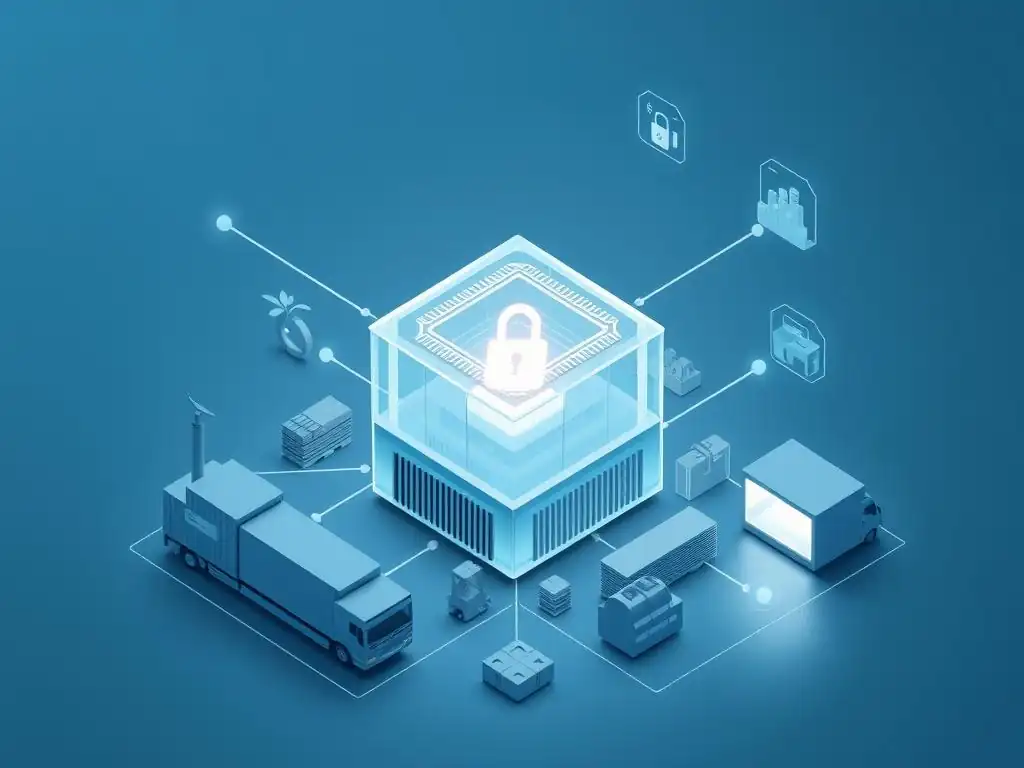
Zero-Knowledge Proofs for Protecting Sensitive Supply Chain Data
Zero-Knowledge Proofs (ZKPs) are cryptographic protocols that allow one party (the prover) to prove to another party (the verifier) that a statement is true, without revealing any information beyond the validity of the statement itself. In the context of blockchain supply chain visibility security, ZKPs are invaluable for balancing transparency with confidentiality. For example, a supplier might need to prove to a buyer that a shipment meets certain quality standards or originates from a specific region without revealing proprietary details about their manufacturing process or specific farm location.
Using ZKPs, the supplier can generate a proof that verifies the required condition (e.g., "Batch X was produced in a certified facility") based on data stored off-chain or encrypted on-chain, and the buyer can verify this proof against the blockchain record linked to the supplier's identity, without ever seeing the underlying sensitive facility details or production data. This allows for necessary verification steps to occur while keeping sensitive business information private, addressing a major barrier to widespread blockchain adoption in competitive industries.
Differential Privacy for Anonymizing Data While Maintaining Utility
Differential Privacy is a technique that adds carefully calibrated noise to a dataset to obscure individual data points while still allowing for accurate aggregate analysis. While less directly applicable to tracking individual items in a supply chain compared to ZKPs, it can be useful for analyzing supply chain trends or performance metrics derived from blockchain data without compromising the privacy of individual transactions or participants.
For instance, a consortium of companies might want to analyze overall shipping volumes, average transit times, or regional demand patterns across their shared supply chain network to identify bottlenecks or optimize logistics. Applying differential privacy to the aggregated data allows them to perform this analysis and gain valuable insights while ensuring that no specific company's sensitive operational data or specific transaction details can be inferred from the results. This technique supports data-driven decision-making while upholding data confidentiality within the blockchain supply chain visibility security framework.
Secure Multi-Party Computation for Collaborative Data Analysis
Secure Multi-Party Computation (SMPC) is a cryptographic technique that allows multiple parties to jointly compute a function over their private inputs without revealing those inputs to each other. In a supply chain context, this means several participants can combine their sensitive, proprietary data to perform a joint analysis or computation without any single party or even the computing platform itself seeing the others' raw data.
For example, multiple suppliers might want to calculate their collective carbon footprint or identify potential areas for cost savings in shared logistics routes. Using SMPC, each supplier can contribute their private data (e.g., energy consumption, shipping routes, fuel costs) to a joint computation, and the outcome (e.g., total carbon emissions, optimal joint route) is revealed, but the individual inputs remain confidential. This enables collaborative optimization and analysis within the supply chain while preserving the privacy of competitive information, further enhancing the utility and security of blockchain-based solutions.
Use Cases: Blockchain Identity and Transparency in Action
Tracking Pharmaceuticals from Manufacturing to Point of Sale
The pharmaceutical industry is a prime example where blockchain identity and traceability are critical for public safety and regulatory compliance. The global market for counterfeit drugs is substantial, posing a direct threat to patient health. Regulations like the U.S. Drug Supply Chain Security Act (DSCSA) mandate electronic, interoperable systems for tracking and tracing prescription drugs at the package level.
Blockchain, combined with unique product identifiers and participant identities, provides an ideal platform for this. Each actor in the supply chain – manufacturer, repackager, wholesaler, dispenser – is assigned a blockchain identity.
As drug packages move through the chain, each transfer of ownership or change in status (e.g., aggregation into a case, shipping) is recorded on the blockchain, linked to the identities involved. This creates an immutable audit trail, allowing regulators, pharmacies, and even patients to verify the provenance and authenticity of a drug package by scanning a code and checking the blockchain record, significantly improving blockchain supply chain visibility security in this life-critical sector.
Ensuring Ethical Sourcing and Fair Trade Practices
Consumers and regulators increasingly demand proof that products are sourced ethically and sustainably, free from child labor, forced labor, or environmental damage. Proving ethical sourcing in complex supply chains, such as those for minerals, agricultural products, or textiles, is challenging with traditional methods. Blockchain identity provides a mechanism to create a verifiable chain of custody from the point of origin.
Consider the sourcing of cocoa beans. Farmers can be assigned blockchain identities. Certifications (e.g., Fair Trade, organic) can be issued as verifiable credentials linked to their identities. As the beans are sold to aggregators, processors, and manufacturers, each transaction is recorded on the blockchain, linked to the identities of the buyer and seller. This allows brands to demonstrate the ethical journey of their product ingredients to consumers and auditors, providing transparency and accountability throughout the supply chain and supporting fair practices.
Verifying the Authenticity of Luxury Goods
The market for counterfeit luxury goods, including watches, handbags, apparel, and jewelry, is massive, causing significant financial losses for brands and deceiving consumers. Blockchain identity and traceability offer a powerful tool to combat this. High-value items can be assigned a unique digital identity on the blockchain, often linked to a physical identifier like an NFC tag or QR code embedded in the product.
When a luxury item is manufactured, its digital identity is created and linked to the brand's blockchain identity. Details about its production, materials, and initial ownership are recorded. As the item is sold and potentially resold, these transactions can be recorded on the blockchain, linked to the identities of the owners (potentially using pseudonymous DIDs for privacy). Consumers can scan the physical tag to verify the item's authenticity, view its ownership history, and access verifiable credentials about its origin or certifications, providing confidence and value in the secondary market while enhancing blockchain supply chain visibility security for high-value assets.
The Future of Blockchain Supply Chain Visibility Security
Emerging Trends in Blockchain and Supply Chain Technology
The field of blockchain for supply chains is rapidly evolving, with several key trends shaping its future. One significant trend is the increased focus on interoperability between different blockchain networks and traditional systems. As more companies adopt blockchain solutions, the ability for different networks to communicate and share data seamlessly becomes crucial for achieving true end-to-end visibility across complex, multi-network supply chains. Initiatives focused on cross-chain communication protocols are gaining traction.
Another trend is the development of more sophisticated privacy-preserving techniques beyond ZKPs and SMPC, tailored specifically for supply chain use cases. This includes advancements in confidential computing and homomorphic encryption, which allow computations to be performed on encrypted data. Furthermore, there is a growing interest in combining blockchain with other emerging technologies to create more intelligent and automated supply chain processes.
The Role of AI and IoT in Enhancing Blockchain-Based Supply Chains
The integration of Artificial Intelligence (AI) and the Internet of Things (IoT) is set to significantly enhance blockchain supply chain visibility security. IoT devices, such as sensors placed on shipments or in warehouses, can collect real-time data on location, temperature, humidity, and other conditions. This data can be automatically fed into the blockchain, creating immutable records of product status and environmental factors throughout the journey.
AI can then be applied to analyze this rich, verified data from the blockchain. AI algorithms can identify anomalies (e.g., unexpected temperature fluctuations), predict potential delays, optimize routes, detect fraudulent patterns by analyzing transaction histories, or provide insights into supply chain performance based on the secure, transparent data. This synergy between IoT for data collection, blockchain for secure recording and verification, and AI for analysis promises to create highly efficient, transparent, and secure supply chains.
Addressing Scalability and Interoperability Challenges
While blockchain offers significant potential, widespread adoption in large-scale, high-volume supply chains still faces challenges related to scalability and interoperability. Public blockchains can struggle with transaction speed and cost (gas fees) when handling millions of transactions per day, which is common in global logistics. Permissioned blockchains generally offer better performance but require careful governance.
Solutions are being developed to address these issues. Layer 2 scaling solutions, sidechains, and sharding are being explored to increase transaction throughput on blockchain networks. For interoperability, standards bodies and industry consortia are working on protocols that allow different blockchain platforms and traditional systems to exchange data in a standardized way. Overcoming these technical hurdles is essential for blockchain to realize its full potential in transforming global supply chain visibility security.
Best Practices for Securing Your Blockchain Supply Chain
Implementing Strong Key Management Practices
The security of a blockchain system fundamentally relies on the security of the private keys used to authorize transactions and access data. In a blockchain supply chain, participants use private keys linked to their blockchain identities to sign transactions, such as confirming receipt of goods or issuing verifiable credentials. If a private key is compromised, an attacker could potentially impersonate the participant, inject false data, or disrupt operations.
Implementing strong key management practices is paramount. This includes using secure hardware wallets or Hardware Security Modules (HSMs) to store private keys, employing multi-signature schemes for critical transactions requiring authorization from multiple parties, and establishing clear policies and procedures for key generation, storage, backup, and recovery. Robust key management is a non-negotiable requirement for maintaining blockchain supply chain visibility security.
Conducting Regular Security Audits and Penetration Testing
Even the most well-designed blockchain supply chain solution can have vulnerabilities, particularly at the points of integration with traditional systems or in the smart contracts governing operations. Regular security audits and penetration testing are essential to identify and remediate these weaknesses proactively. Security experts can review the blockchain platform configuration, smart contract code, API integrations, and identity management protocols.
Penetration testing involves simulating attacks to uncover potential entry points for malicious actors. This continuous process of assessment helps ensure that the system remains resilient against evolving cyber threats. Given the high stakes of supply chain disruptions and data breaches, investing in regular security assessments is crucial for protecting the integrity and confidentiality of the blockchain supply chain.
Educating Stakeholders on Blockchain Security Risks
Ultimately, the security of a blockchain-based supply chain also depends on the knowledge and practices of its users. Participants, including employees, partners, and suppliers, need to understand how the system works, the importance of their blockchain identity, and the risks associated with poor security practices. Phishing attacks targeting private keys or social engineering tactics remain significant threats.
Comprehensive training programs should educate all stakeholders on the basics of blockchain security, the importance of protecting their credentials and private keys, how to identify potential security threats, and the established protocols for reporting security incidents. A security-aware culture across the entire supply chain ecosystem significantly strengthens the overall blockchain supply chain visibility security posture.
Conclusion: Achieving Secure and Transparent Supply Chains with Blockchain Identity
The Potential of Blockchain to Revolutionize Supply Chain Management
Blockchain technology holds immense potential to revolutionize supply chain management by addressing fundamental challenges related to trust, transparency, and efficiency. By providing a shared, immutable ledger, it creates a single source of truth for tracking goods and information across complex networks. This enhanced visibility can lead to significant improvements in operational efficiency, reduced costs, faster dispute resolution, and increased resilience against disruptions.
Moreover, blockchain enables new business models and collaboration opportunities within supply chains. Smart contracts can automate processes like payments upon delivery verification or trigger insurance claims based on sensor data, reducing manual intervention and potential errors. The ability to securely and transparently share verified data empowers participants to optimize their operations and build stronger, more collaborative relationships.
Balancing Transparency, Confidentiality, and Security in the Blockchain Era
Achieving the ideal balance between supply chain transparency, data confidentiality, and robust security is the key to successful blockchain adoption. Simply making all data public is often not feasible or desirable for enterprises. The combination of blockchain's core properties (immutability, decentralization) with advanced privacy-preserving techniques (ZKPs, SMPC) and granular access control mechanisms allows for the creation of systems that provide necessary visibility without compromising sensitive information.
Blockchain identity, based on DIDs and VCs, is fundamental to this balance. It provides the secure foundation for verifying participants and the data they contribute, enabling selective data sharing based on permissions and roles. This layered approach ensures that while the integrity and provenance of data can be verified by authorized parties, competitive or private information remains protected, fostering trust among supply chain partners.
Embracing Blockchain Identity for a More Trustworthy and Efficient Supply Chain Ecosystem
The future of supply chains is undeniably digital and interconnected. Embracing blockchain identity is a crucial step towards building a more trustworthy, efficient, and resilient supply chain ecosystem. By providing a secure and verifiable digital presence for every participant, from the smallest farmer to the largest multinational corporation, blockchain identity enables reliable data sharing, enhances traceability, and strengthens security against fraud and counterfeiting.
As industries continue to digitize and face increasing demands for transparency and accountability, solutions that leverage blockchain supply chain visibility security will become essential. Investing in blockchain identity and the associated privacy-preserving technologies is not just about technological adoption; it's about building a foundation of trust that can support the complex, dynamic, and increasingly scrutinized global supply chains of tomorrow.
Frequently Asked Questions
How does blockchain enhance supply chain visibility?
Blockchain creates a shared, immutable ledger, allowing all participants to track product provenance and movement in real-time, enhancing transparency and reducing fraud. This improved traceability is a key benefit.
What are the security implications of using blockchain in supply chain management?
Blockchain's cryptographic security helps prevent data tampering and unauthorized access, improving the integrity of supply chain data. However, vulnerabilities can still exist in smart contract implementation.
How does blockchain identity contribute to supply chain transparency?
Blockchain-based identity solutions can verify the authenticity of participants and products, ensuring only verified entities contribute to the supply chain. This builds trust and accountability.
What measures can be taken to balance visibility with data confidentiality in a blockchain supply chain?
Techniques like zero-knowledge proofs and permissioned blockchains can restrict access to sensitive data while still enabling transparency for relevant stakeholders. Data masking is another useful tool.
What is the future of blockchain supply chain visibility security concerning regulation?
Increased regulatory scrutiny is expected, focusing on data privacy, security standards, and interoperability. Compliance with regulations like GDPR will be crucial for adoption.
The journey through the intricacies of blockchain supply chain visibility and security underscores a crucial point: transparency and confidentiality are not mutually exclusive. As global supply chains become increasingly complex and interconnected, the ability to verify product origin and authenticity while safeguarding sensitive data is no longer a luxury, but a necessity for building consumer trust and maintaining competitive advantage.
The impact of blockchain technology on supply chain management is profound, shaping not only how businesses operate but also how consumers perceive the products they purchase. This shift towards greater accountability and ethical sourcing resonates deeply with a growing awareness of the social and environmental consequences of our consumption habits. Trust is the glue of life. It's the most essential ingredient in effective communication. It's the foundational principle that holds all relationships.
- Stephen Covey. This quote perfectly encapsulates the fundamental need for trust that blockchain-enabled transparency seeks to address.
As we look to the future, let us not only embrace the technological advancements that promise to revolutionize supply chains, but also remember the human element at the heart of it all. Consider how you, as a consumer, a business leader, or a technology innovator, can contribute to building a more transparent, secure, and ethical global marketplace. The power to shape the future of supply chains, and the trust they engender, lies within each of us.
Empower Your Supply Chain: Uncover Deeper Insights!
Thank you for exploring the delicate balance between transparency and data security in supply chains. We hope you've gained valuable insights into leveraging blockchain technology to enhance visibility while safeguarding sensitive information. Now, it's time to take action.
Here are some ways to deepen your understanding and contribute to advancing blockchain-powered supply chains:
- Map your supply chain's data flow to identify potential vulnerabilities and opportunities for implementing blockchain-based identity management. This is essential for creating secure and transparent systems.
- Explore specific blockchain identity solutions by researching different platforms and protocols tailored for supply chain applications to find the best fit for your organization.
- Share this article with your network and encourage discussions on how we can collectively promote responsible and secure adoption of blockchain in supply chains.
What challenges are you facing in balancing transparency with confidentiality? How do you think blockchain can help address these issues? We’d love to hear your thoughts in the comments!
Leave a Reply