
The Technical Architecture of BlockchainBased Verifiable Credential Systems


Welcome to Blockchain Trends, your guide to understanding the revolutionary impact of blockchain technology beyond the hype. Are you ready to dive deep into the technical intricacies that are shaping the future of digital identity? This week, we're exploring the intricate world of Blockchain Verifiable Credential Systems Architecture. But how exactly do these systems work, and what are the key components that ensure their security and reliability? Unravel the complexities and discover the potential of this groundbreaking approach to verifiable credentials.
Technical Architecture of Blockchain-Based Verifiable Credential Systems
- Introduction to Blockchain and Verifiable Credentials
- Blockchain Verifiable Credential Systems Architecture: An Overview
- Layer 1: Blockchain Infrastructure for Verifiable Credentials
- Layer 2: Verifiable Credential Issuance and Management
- Layer 3: Verifier and Holder Interaction
- Security Considerations in Blockchain VC Systems
- Interoperability and Standardization in Blockchain VC Architectures
- Real-World Applications of Blockchain-Based Verifiable Credentials
- Challenges and Future Trends in Blockchain VC Architecture
- Conclusion: The Future of Secure Credentialing with Blockchain
-
Frequently Asked Questions
- How does a blockchain-based verifiable credential system architecture differ from traditional credentialing systems?
- What are the key components of a blockchain verifiable credential systems architecture?
- What role does Decentralized Identity (DID) play in blockchain verifiable credential systems architecture?
- How does blockchain technology enhance the security and privacy of verifiable credentials?
- What are some potential challenges in implementing blockchain verifiable credential systems architecture?
- Final Reflection: Building Trust, Block by Block
Introduction to Blockchain and Verifiable Credentials
Understanding Verifiable Credentials (VCs)
Verifiable Credentials (VCs) represent a digital way to express assertions about a subject (like a person, organization, or thing). These assertions are issued by a trusted party (the Issuer) and can be presented by the subject (the Holder) to another party (the Verifier) for verification. A key characteristic of VCs is that they are tamper-evident and cryptographically secure, ensuring that the Verifier can trust that the credential has not been altered since it was issued.
The World Wide Web Consortium (W3C) defines the Verifiable Credentials Data Model 1.0, which provides a standard framework for creating and exchanging VCs. This model specifies the structure of a VC, including claims, issuer information, subject information, and cryptographic proofs. Implementations adhering to this standard allow for interoperability between different VC systems, which is crucial for widespread adoption across various sectors like education, identity management, and supply chains.
The Role of Blockchain in Secure Credentialing
Blockchain technology provides a decentralized, immutable ledger that can significantly enhance the security, trust, and privacy aspects of digital credentialing. While VCs themselves don't require a blockchain, integrating them with blockchain can address key challenges related to trust in the issuer, credential revocation, and ensuring the integrity of the system without relying on a single point of failure.
Specifically, blockchain can be used to anchor critical information related to the VC system, such as Decentralized Identifiers (DIDs) and revocation lists. By recording cryptographic hashes or identifiers on an immutable ledger, the system gains a public, auditable record that enhances transparency and trust. This approach moves away from centralized credential databases, empowering individuals with greater control over their digital identity and credentials.
Advantages of Blockchain for Verifiable Credentials Systems
Leveraging blockchain within a verifiable credential system architecture offers several compelling advantages. One primary benefit is enhanced security and immutability; once information is recorded on the blockchain (or linked to it), it is extremely difficult to alter or delete, making credentials highly resistant to tampering. This is critical for high-stakes credentials like academic degrees or professional licenses.
Another significant advantage is decentralization and increased trust. By removing reliance on a single central authority for system integrity, blockchain reduces the risk of censorship or single points of failure. Furthermore, blockchain can facilitate transparent and efficient verification processes, allowing Verifiers to cryptographically confirm the validity of a credential and the status of the Issuer or Holder's identifier in a trust-minimized way. This contributes to a robust blockchain verifiable credential systems architecture.
Blockchain Verifiable Credential Systems Architecture: An Overview
Core Components of a Blockchain-Based VC System
A typical blockchain verifiable credential systems architecture comprises several key components working in concert. These include the Issuer, the Holder, and the Verifier, as defined in the W3C VC specification. Beyond these roles, the technical architecture involves a Decentralized Identifier (DID) method, a DID registry (often anchored on the blockchain), the blockchain itself (used for anchoring DIDs, revocation lists, or status checks), and the Holder's digital wallet.
The interaction flow generally involves the Issuer creating a VC, cryptographically signing it, and providing it to the Holder. The Holder stores the VC securely in their wallet. When needed, the Holder presents the VC (or a selective disclosure of it) to a Verifier. The Verifier then uses information anchored or available via the blockchain (like the Issuer's public key or DID document) and the VC's cryptographic proof to verify its authenticity and validity.
Decentralized Identity (DID) and its Integration
Decentralized Identifiers (DIDs) are a cornerstone of many modern blockchain verifiable credential systems architectures. DIDs are a new type of identifier designed to enable verifiable, decentralized digital identity. A DID identifies any subject (person, organization, device, etc.) and is registered in a DID registry, which is often built on or anchored to a blockchain or other decentralized ledger.
The integration of DIDs with VCs works as follows: the Issuer is identified by a DID, and the Subject (Holder) is also identified by a DID within the VC structure. The DID document, resolvable via the DID registry, contains public keys and service endpoints necessary for interacting with the DID controller (e.g., fetching an Issuer's public key to verify their signature on a VC). This architecture ensures that the identities of the parties involved are verifiable and controlled by the respective entities, not a centralized authority.
The Trust Model in Blockchain VC Architectures
The trust model in a blockchain verifiable credential systems architecture shifts significantly compared to traditional centralized systems. Instead of placing absolute trust in a central database operator or a single certificate authority, trust is distributed and verifiable cryptographically. Trust is primarily placed in the cryptographic proofs within the VC, the integrity of the underlying blockchain or ledger, and the DID method used.
Verifiers trust that the Issuer legitimately signed the credential because they can cryptographically verify the signature against the Issuer's public key, which is linked to their DID anchored on a trusted ledger. They trust the revocation status because it might be checked against a revocation list or status registry also anchored on the ledger. This distributed trust mechanism enhances resilience and reduces reliance on intermediaries, fundamentally altering how trust is established in digital interactions.
Layer 1: Blockchain Infrastructure for Verifiable Credentials
Choosing a Blockchain for VC Implementation: Permissioned vs. Permissionless
The selection of the underlying blockchain is a critical decision in designing a blockchain verifiable credential systems architecture. Two primary types are considered: permissionless (like Bitcoin or Ethereum) and permissioned (like Hyperledger Fabric or Corda). Permissionless blockchains offer high decentralization and censorship resistance but can face scalability challenges (e.g., Ethereum currently processes around 15-30 transactions per second, though upgrades are improving this) and variable transaction costs (gas fees).
Permissioned blockchains, on the other hand, offer higher transaction throughput (some permissioned networks can handle thousands of transactions per second), lower and more predictable costs, and often stricter privacy controls, as participation is restricted to known entities. They are typically better suited for enterprise or consortium-based VC solutions where participants are identified and regulatory compliance (like GDPR) is paramount. The choice depends heavily on the specific requirements for decentralization, throughput, cost, and privacy of the target blockchain verifiable credential systems architecture.
Smart Contracts for Credential Issuance and Verification
Smart contracts play a vital role, particularly on platforms like Ethereum or Hyperledger Fabric, in automating and enforcing rules within a blockchain verifiable credential systems architecture. While the VC itself is typically not stored in a smart contract, smart contracts can manage DID registries, handle revocation lists, or even automate aspects of the issuance process based on predefined conditions.
For instance, a smart contract could manage a registry mapping DIDs to public keys or service endpoints, enabling DID resolution on-chain. Another common use is managing credential status or revocation. Instead of storing the full VC, a smart contract might store a hash of the credential or a pointer, along with its current status (e.g., valid, revoked). Verifiers can interact with this smart contract to check the status of a credential or a DID before accepting a VC as valid.
Data Storage Options: On-Chain vs. Off-Chain
A fundamental design consideration in a blockchain verifiable credential systems architecture is deciding what data resides on the blockchain versus off-chain. Due to the cost and performance limitations of storing large amounts of data directly on most blockchains, the Verifiable Credential itself is almost always stored off-chain, typically in the Holder's secure digital wallet.
What is stored on-chain is minimal data necessary to support verification and trust. This includes DIDs, hashes of DID documents, revocation list entries, or status indicators managed by smart contracts. For example, a revocation event might record the hash of the revoked credential or the Issuer's DID and a specific credential identifier on-chain. The actual VC data, which can be several kilobytes or more, remains off-chain, balancing the need for decentralized trust with practical storage and cost constraints.
Layer 2: Verifiable Credential Issuance and Management
The Issuer's Role in the Blockchain VC Ecosystem
The Issuer is a fundamental entity in any blockchain verifiable credential systems architecture. This is the party that attests to claims about a subject and issues a cryptographically signed Verifiable Credential. Issuers can be diverse entities, ranging from universities issuing degrees, governments issuing identity documents, or companies issuing employee credentials. Their trustworthiness is critical, as the entire system relies on the Verifier's trust in the Issuer's assertion.
In a blockchain-based system, the Issuer typically operates a service that interfaces with the blockchain and the Holder's wallet. They must manage their own Decentralized Identifier (DID), often registered on a public or permissioned ledger. The Issuer uses their private key, associated with their DID, to cryptographically sign the VCs they issue, creating the tamper-evident proof required by the W3C standard and central to the security of the blockchain verifiable credential systems architecture.
Generating and Signing Verifiable Credentials
The process of generating and signing a Verifiable Credential involves several steps within the Issuer's system. First, the Issuer gathers the claims they want to make about the subject (e.g., name, date of birth, degree obtained). They structure this information according to the W3C Verifiable Credentials Data Model, including metadata about the Issuer and the subject's DID.
Next, the Issuer uses their private key (corresponding to their registered DID) to create a cryptographic signature over the entire VC document. This signature is crucial; it allows any Verifier to later confirm that the credential was indeed issued by this specific Issuer and has not been altered since signing. The resulting signed VC, which is typically a JSON-LD document, is then securely transmitted to the Holder, often directly or via a secure channel, without being published on the blockchain itself.
Credential Revocation Mechanisms
Revocation is a necessary feature in a blockchain verifiable credential systems architecture to handle situations where a credential is no longer valid (e.g., a license expires, a degree is rescinded). While VCs are designed to be tamper-evident, the Issuer must have a mechanism to invalidate previously issued credentials. Several approaches exist, and the choice impacts the overall architecture's complexity and privacy.
A common method involves maintaining a revocation list or a status registry, which can be anchored on the blockchain. The Issuer updates this list or registry when a credential is revoked, often by adding a hash or identifier of the revoked credential or subject's DID. Verifiers checking a VC must then query this list or registry (via the blockchain or an associated service) to confirm the credential has not been revoked. Other methods include using Merkle Trees or more advanced cryptographic techniques like Online Certificate Status Protocol (OCSP) integrated with decentralized identifiers.
Layer 3: Verifier and Holder Interaction
Verifying Credentials on the Blockchain
Verifying a credential in a blockchain verifiable credential systems architecture involves several steps performed by the Verifier. The Verifier receives a VC from the Holder. The first step is to check the VC's cryptographic signature using the Issuer's public key. To obtain the correct public key, the Verifier resolves the Issuer's DID (specified in the VC) using the relevant DID method and the underlying DID registry, which might involve querying the blockchain or a decentralized network.
Once the signature is validated, confirming the credential's authenticity and integrity, the Verifier typically checks the credential's status. This often involves querying a revocation list or status registry associated with the Issuer's DID, potentially anchored or managed via a smart contract on the blockchain. Only if the signature is valid and the credential is not revoked does the Verifier trust the claims made within the VC. This multi-step process ensures robust verification within the blockchain verifiable credential systems architecture.
The Holder's Wallet: Secure Storage and Presentation
The Holder's digital wallet is a crucial component in a blockchain verifiable credential systems architecture. This is a software application or secure hardware module where the Holder securely stores their Verifiable Credentials. It acts as a digital equivalent of a physical wallet, but for digital identity documents. The wallet is controlled solely by the Holder, giving them agency over their credentials.
Beyond simple storage, the wallet facilitates the presentation of VCs to Verifiers. The Holder can select which credentials to share and, importantly, can often create Verifiable Presentations (VPs) which are specific subsets of claims from one or more VCs. Advanced wallets support selective disclosure and privacy-preserving techniques, allowing the Holder to share only the minimum information required by the Verifier, enhancing user privacy within the blockchain verifiable credential systems architecture.
Privacy-Preserving Techniques: Zero-Knowledge Proofs and Selective Disclosure
Privacy is a paramount concern in digital identity systems, and blockchain verifiable credential systems architecture implementations often incorporate advanced privacy-preserving techniques. Selective disclosure, facilitated by the Holder's wallet, allows the Holder to reveal only specific claims from a VC (e.g., proving they are over 18 without revealing their exact birth date) rather than the entire credential.
Zero-Knowledge Proofs (ZKPs) represent a more advanced technique. ZKPs allow a Holder to prove that they possess a credential with certain properties or that a set of claims within their credentials are true, without revealing the actual credentials or claims themselves. For example, a ZKP could prove eligibility for a service based on criteria specified in multiple VCs (like age and residency) without disclosing the underlying documents. While computationally intensive, ZKPs offer the highest level of privacy in blockchain verifiable credential systems architecture.
Security Considerations in Blockchain VC Systems
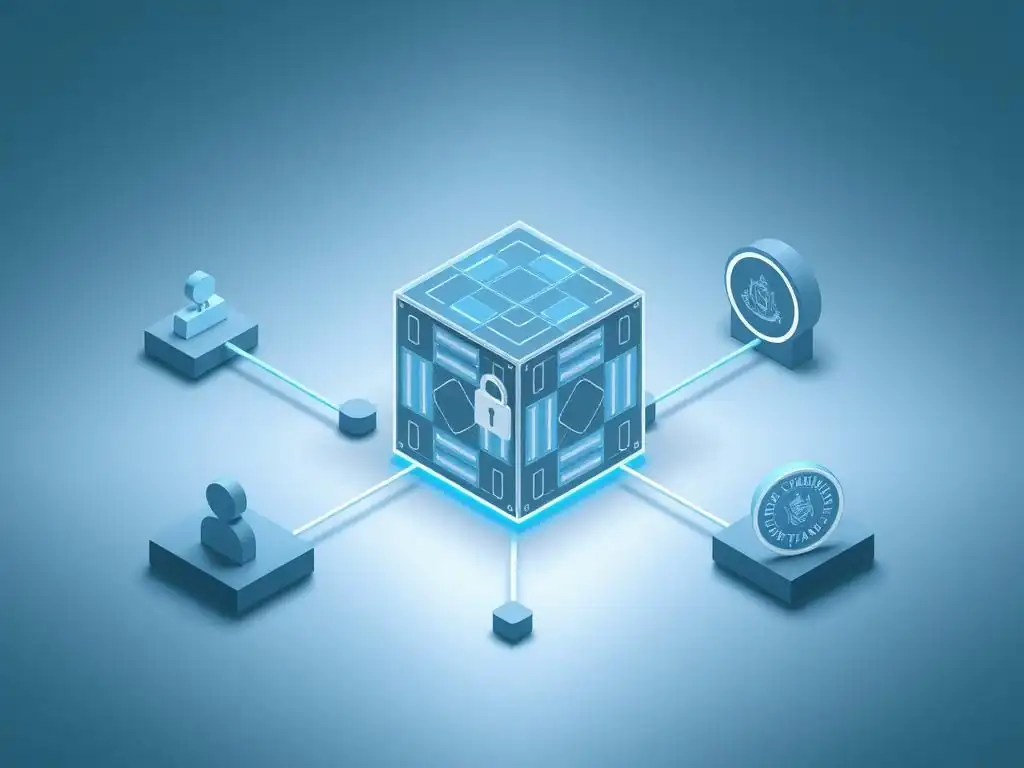
Addressing Smart Contract Vulnerabilities
Smart contracts, while powerful for automating processes in a blockchain verifiable credential systems architecture, introduce potential security risks. Vulnerabilities in smart contract code can lead to loss of funds, data breaches, or system manipulation. Examples of past incidents on public blockchains, such as the DAO hack (resulting in over $150 million loss), highlight the critical need for robust security measures.
Mitigating smart contract vulnerabilities requires rigorous auditing, formal verification, and extensive testing by experienced security professionals. Using established and audited libraries, following secure coding best practices (like those outlined by OWASP for smart contracts), and implementing upgradeability mechanisms safely are essential steps. Continuous monitoring and bug bounty programs can also help identify and fix issues proactively in the blockchain verifiable credential systems architecture.
Data Privacy and Regulatory Compliance (e.g., GDPR)
Integrating blockchain with verifiable credentials must carefully navigate data privacy regulations like the European Union's General Data Protection Regulation (GDPR). A core principle of GDPR is the "right to be forgotten," which conflicts with the immutability of public blockchains. Storing personal data directly on a public, immutable ledger is generally non-compliant.
Therefore, a compliant blockchain verifiable credential systems architecture must ensure that personal data is not stored directly on the chain. As discussed, only hashes, DIDs, or minimal, non-personally identifiable information should be recorded on-chain. The actual Verifiable Credentials containing personal data must reside off-chain, controlled by the Holder, allowing them to manage access and deletion requests in compliance with regulations. Privacy-by-design principles must be embedded from the outset.
Mitigating Sybil Attacks and Identity Fraud
Sybil attacks, where an attacker creates numerous pseudonymous identities to gain disproportionate influence, are a concern in decentralized systems. In a blockchain verifiable credential systems architecture, Sybil attacks could potentially undermine trust if Issuers or Verifiers cannot be reliably identified or if fake identities are used to obtain credentials.
Mitigating identity fraud and Sybil attacks involves relying on robust DID methods that incorporate verification processes appropriate for the context (e.g., know-your-customer procedures for high-assurance identities). While DIDs are designed to be self-sovereign, the trustworthiness of an assertion or identity is often linked to the rigor of the verification process performed by the Issuer. Attestations and credentials themselves act as reputation signals, making it harder for unverified or fraudulent identities to gain traction within the ecosystem.
Interoperability and Standardization in Blockchain VC Architectures
W3C Verifiable Credentials Data Model
The W3C Verifiable Credentials Data Model 1.0 is a foundational standard for interoperability in the verifiable credentials space, including blockchain verifiable credential systems architecture. It provides a common JSON-LD format and processing rules for creating and exchanging VCs and Verifiable Presentations. Adherence to this standard ensures that a VC issued by one party can be understood and verified by any other party using a compliant system, regardless of the underlying technology stack.
This standardization is critical for the widespread adoption and utility of VCs. Without it, different VC systems would be siloed and unable to communicate, limiting their potential. The W3C standard defines the structure, terminology (like 'issuer', 'holder', 'credentialSubject', 'proof'), and mechanisms for linking VCs to DIDs and cryptographic proofs, providing a necessary common language for the entire ecosystem.
Cross-Chain Interoperability for VCs
As different blockchain networks are used for various purposes (e.g., one for identity DIDs, another for supply chain tracking), cross-chain interoperability becomes important for complex blockchain verifiable credential systems architecture. A Holder might have credentials issued on different networks or need to present credentials verified against a DID registered on a separate chain from where a related asset is tracked.
Achieving cross-chain interoperability for VCs is challenging but necessary for a truly global decentralized identity layer. Solutions involve cross-chain communication protocols, atomic swaps for related assets/credentials, or using decentralized identity layers that abstract away the underlying blockchain, allowing DIDs and VC status to be resolved across different ledgers. Standards around cross-chain interactions for DIDs and VCs are still evolving but are key to unlocking the full potential of blockchain verifiable credential systems architecture.
The Future of Standardized Blockchain VC Systems
The future of blockchain verifiable credential systems architecture heavily relies on the continued development and adoption of open standards. The W3C VC Data Model and Decentralized Identifiers (DIDs) are significant steps, but ongoing work is needed on areas like revocation mechanisms, presentation exchange protocols (e.g., DIF Presentation Exchange), and cross-chain resolution.
Efforts by organizations like the Decentralized Identity Foundation (DIF) and the Trust Over IP Foundation (ToIP) are crucial in building the layers of trust and interoperability required for a global, decentralized identity network. As these standards mature and gain wider industry adoption, it will become easier to build interoperable blockchain verifiable credential systems architecture solutions that work seamlessly across different platforms and use cases.
Real-World Applications of Blockchain-Based Verifiable Credentials
Digital Identity and Access Management
One of the most prominent real-world applications for blockchain verifiable credential systems architecture is in digital identity and access management (IAM). Individuals can use VCs to prove aspects of their identity (e.g., age, residency, employment) without sharing underlying sensitive documents. This can streamline online onboarding processes, reduce the need for repeated KYC checks, and enhance user privacy.
For example, instead of uploading a passport scan to multiple services, a user could obtain a VC attesting to their identity from a trusted issuer (like a bank or government service) and use this VC to grant selective access to information required by various service providers. Several pilot projects globally, including some government initiatives exploring digital identity wallets built on decentralized principles, are demonstrating the potential of this blockchain verifiable credential systems architecture.
Supply Chain Traceability and Authentication
Blockchain verifiable credential systems architecture is also being applied to supply chain management to enhance transparency, traceability, and product authentication. VCs can be issued for various events or attributes within a supply chain, such as proof of origin for raw materials, certification of ethical sourcing, or verification of product authenticity at different stages.
A product could have a VC issued by the manufacturer attesting to its authenticity. As it moves through the supply chain, logistics providers could issue VCs confirming custody transfers, and quality inspectors could issue VCs attesting to inspection results. Consumers could then scan a QR code on the product, resolve the associated DIDs, and verify the chain of VCs on the blockchain, gaining trust in the product's journey and authenticity, thereby enhancing the entire blockchain verifiable credential systems architecture for goods.
Education and Professional Certification
The education sector is another area where blockchain verifiable credential systems architecture offers significant value. Universities and colleges can issue academic degrees, diplomas, and transcripts as Verifiable Credentials. This provides students with tamper-proof digital copies of their qualifications that they can easily share with potential employers or other institutions.
Issuing credentials as VCs reduces administrative burden for institutions, prevents credential fraud, and empowers graduates with portable, verifiable proof of their achievements. Similarly, professional bodies can issue certifications and licenses as VCs, allowing professionals to easily prove their qualifications and standing to employers or regulatory bodies. Several universities and credential networks are already exploring or implementing these solutions using a blockchain verifiable credential systems architecture.
Challenges and Future Trends in Blockchain VC Architecture
Scalability and Performance Optimization
A significant challenge for blockchain verifiable credential systems architecture, particularly when leveraging public blockchains, is scalability. While VCs themselves are off-chain, operations like DID resolution or checking revocation status that interact with the blockchain can face performance bottlenecks and high transaction fees if the underlying network is congested. Public networks like Ethereum have historically handled around 15-30 transactions per second, which may not be sufficient for systems requiring millions of identity interactions daily.
Future trends involve optimizing the blockchain verifiable credential systems architecture through Layer 2 scaling solutions (like rollups for transaction processing), using more performant or purpose-built blockchains, and designing DID methods and revocation mechanisms that minimize on-chain interactions. Techniques like batching transactions or using off-chain proofs anchored periodically on-chain are being explored to improve throughput and reduce costs.
Improving User Experience and Adoption
Despite the technical benefits, achieving widespread user adoption of blockchain verifiable credential systems architecture requires significant improvements in user experience (UX). Managing DIDs, securely storing private keys, understanding cryptographic proofs, and navigating decentralized applications can be complex for the average user. The Holder's wallet needs to be intuitive, reliable, and seamlessly integrated into everyday digital interactions.
Future efforts will focus on abstracting away the underlying blockchain complexity from end-users. This includes developing user-friendly wallet interfaces, simplifying the process of obtaining and presenting credentials, and integrating VC capabilities directly into existing applications and platforms. Education and clear communication about the benefits and security of decentralized identity are also crucial for driving adoption of the blockchain verifiable credential systems architecture.
The Evolution of Decentralized Identity Standards
The field of decentralized identity, and consequently blockchain verifiable credential systems architecture, is still evolving rapidly. While core standards like W3C VCs and DIDs provide a solid foundation, ongoing work is needed on related protocols for secure data storage, credential exchange, and complex privacy-preserving interactions (like advanced ZKPs).
Future trends involve the refinement of existing standards based on real-world deployments, the development of new standards for emerging use cases (e.g., machine identity, IoT credentials), and the convergence of different identity initiatives. The goal is to create a cohesive, global framework for decentralized digital identity that is interoperable, secure, and privacy-preserving, further strengthening the potential of blockchain verifiable credential systems architecture.
Conclusion: The Future of Secure Credentialing with Blockchain
Key Takeaways on Blockchain VC Systems Architecture
The technical architecture of blockchain verifiable credential systems represents a paradigm shift in how we manage and verify digital credentials. Key components include Issuers, Holders, Verifiers, Decentralized Identifiers (DIDs), a decentralized ledger (blockchain), and secure digital wallets. The architecture leverages cryptography and distributed ledger technology to provide enhanced security, immutability, and decentralized trust compared to traditional systems.
Critical design choices involve selecting the appropriate blockchain type (permissioned vs. permissionless), deciding on data storage strategies (on-chain vs. off-chain), and implementing robust mechanisms for credential issuance, management, and revocation. The W3C VC and DID standards are fundamental enablers of interoperability within this complex blockchain verifiable credential systems architecture.
The Transformative Potential of Decentralized Credentials
Blockchain-based verifiable credentials hold immense transformative potential across various sectors. They promise a future where individuals have greater control over their digital identities, sharing only necessary information securely and privately. Applications in digital identity, supply chain, and education are just the beginning.
While challenges related to scalability, user experience, and regulatory compliance remain, ongoing standardization efforts and technological advancements are continuously improving the capabilities of blockchain verifiable credential systems architecture. As these systems mature and gain wider adoption, they are poised to redefine trust and efficiency in the digital world, moving towards a more secure, private, and user-centric model for managing credentials.
Frequently Asked Questions
How does a blockchain-based verifiable credential system architecture differ from traditional credentialing systems?
Traditional systems rely on centralized authorities for issuing and verifying credentials. Blockchain systems use a decentralized ledger to increase trust and reduce reliance on single points of failure. This impacts the overall architecture.
What are the key components of a blockchain verifiable credential systems architecture?
The core components include the issuer, the holder, and the verifier. It also relies on a distributed ledger for storing credential schemas and revocation lists, as well as secure wallets for managing credentials.
What role does Decentralized Identity (DID) play in blockchain verifiable credential systems architecture?
DIDs provide a unique and verifiable identifier for each entity (issuer, holder, verifier) within the system. This is crucial for establishing trust and authenticity without relying on centralized identity providers.
How does blockchain technology enhance the security and privacy of verifiable credentials?
Blockchain's cryptographic nature ensures data integrity and immutability. Furthermore, techniques like zero-knowledge proofs can be implemented to enhance privacy by allowing verification without revealing the underlying credential data.
What are some potential challenges in implementing blockchain verifiable credential systems architecture?
Challenges include scalability issues of blockchain networks, ensuring interoperability between different blockchain platforms and verifiable credential standards, and overcoming regulatory hurdles.
Okay, here's a final reflection designed to close your article, focusing on the architecture of blockchain-based verifiable credential systems, and aiming to resonate with readers while reinforcing the article's key themes:
Final Reflection: Building Trust, Block by Block
The exploration of blockchain verifiable credential systems architecture reveals more than just technical blueprints; it unveils a fundamental shift in how we establish and maintain trust in the digital age. The intricate layers of cryptography, distributed ledgers, and standardized protocols are not merely abstract concepts, but the very foundation upon which a more secure and transparent future can be built. This architecture, therefore, is not just relevant, but absolutely crucial in a world increasingly reliant on digital identities and verifiable data.
The ongoing influence of blockchain verifiable credential systems extends far beyond the technical realm, impacting everything from education and healthcare to supply chain management and government services. The potential to empower individuals with control over their own data, while simultaneously enhancing security and interoperability, is truly transformative. The future of identity is decentralized, self-sovereign, and verifiable.
This quote encapsulates the promise of these systems, highlighting their ability to reshape our interactions and build a more equitable and trustworthy digital landscape.
As we conclude this exploration of blockchain verifiable credential systems architecture, I invite you to consider the role you can play in shaping this future. Reflect on how these technologies can be applied to solve real-world problems, and how you can contribute to the development and adoption of secure, privacy-preserving, and user-centric solutions. The architecture is built, but the implementation and impact are up to us. Let's build a future where trust is not a privilege, but a fundamental right, verified block by block.
Unlock the Power of Verifiable Credentials
Thank you for exploring the technical architecture of blockchain-based verifiable credential systems. We hope this has given you a clearer understanding of how these systems can transform trust and data ownership. Now, it’s time to take action.
Are you ready to contribute to the future of secure digital identities? Here's how you can get started:
- Design a simple verifiable credential system tailored to a specific use case, such as verifying educational credentials. Starting small allows you to grasp the fundamentals and build from there.
- Explore open-source blockchain projects related to verifiable credentials and consider contributing to their development.
- Share this article with your network to inspire discussions about the potential of verifiable credentials and encourage others to learn more.
What use case excites you the most when it comes to blockchain-based verifiable credentials? Share your ideas in the comments below!
Leave a Reply