
The Technical Foundations of Blockchain Digital Identity Systems

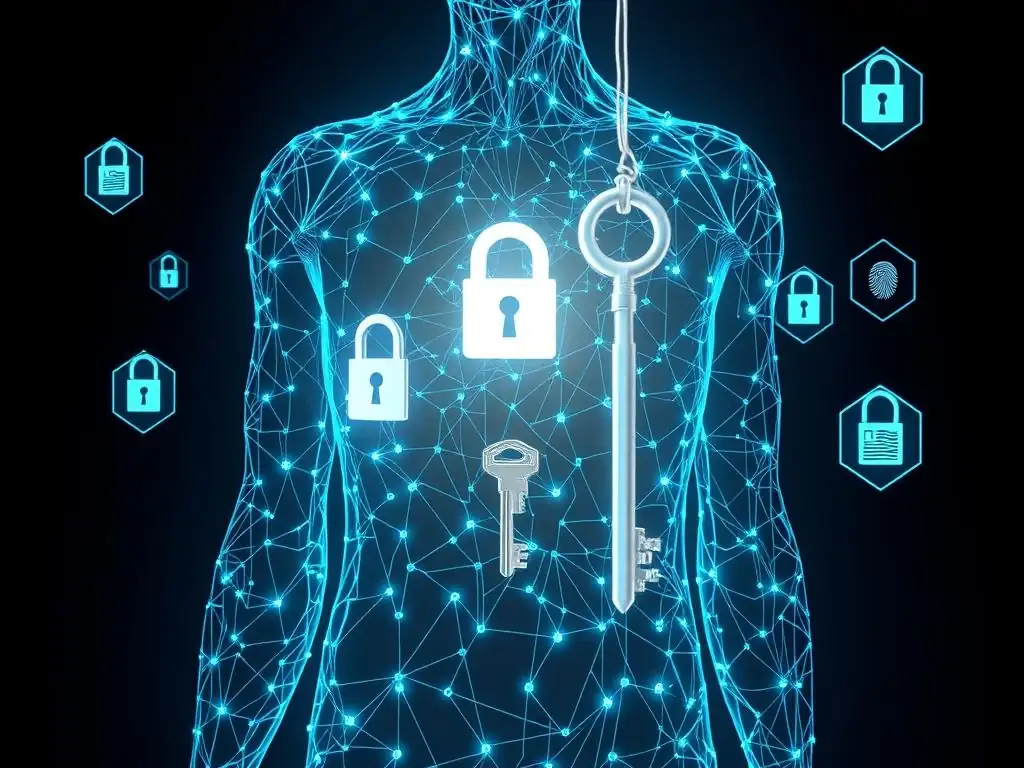
Welcome to Blockchain Trends, your guide to understanding the revolutionary impact of blockchain technology beyond the world of cryptocurrencies.
Are you ready to unlock the potential of secure and decentralized digital identities? Dive in to explore the technical foundations and, more importantly, discover essential " Blockchain digital identity security best practices" that are shaping the future of trusted online interactions. This is just the beginning – uncover how blockchain is transforming identity management and why it matters for everyone. Let's get started!
Technical Foundations of Blockchain-Based Digital Identity Systems
- Introduction to Blockchain Digital Identity and Security
- Core Technical Components
- Blockchain Architectures
- Security Best Practices
- Interoperability and Standards
- Use Cases and Applications
- Future Trends
- Conclusion: Potential of Blockchain for Digital Identity
-
Frequently Asked Questions
- What are the fundamental technical components of a blockchain-based digital identity system?
- How does blockchain technology enhance the security of digital identities compared to traditional centralized systems?
- What are some of the best practices for ensuring the security of private keys used in blockchain digital identity systems?
- How does the concept of self-sovereign identity (SSI) relate to blockchain digital identity systems?
- What are some potential regulatory challenges and considerations surrounding the implementation of blockchain digital identity systems?
- Final Reflection: Securing Our Digital Selves
Introduction to Blockchain Digital Identity and Security
Role of Blockchain in Digital Identity Management
Blockchain technology offers a transformative approach to digital identity management, moving away from centralized systems prone to data breaches and single points of failure. By leveraging the inherent characteristics of distributed ledgers – immutability, transparency (in some configurations), and cryptographic security – blockchain can empower individuals and organizations with greater control over their personal data and credentials.
This decentralized paradigm shift aims to solve long-standing issues related to identity verification, data sovereignty, and trust in online interactions. Instead of relying on a single entity to store and validate identity attributes, a blockchain-based system distributes trust and validation across a network.
This distributed nature fundamentally alters the landscape of digital identity. Users can potentially own and manage their identity data directly, granting access permissions selectively to relying parties without intermediaries holding vast, vulnerable databases.
This model reduces the risk of large-scale data compromises, such as the Equifax breach in 2017 which exposed personal data of approximately 147 million people, or the Marriott data breach affecting around 500 million guests. By distributing sensitive data or, more commonly, verifiable pointers to data, blockchain systems can significantly enhance the resilience of digital identity infrastructure against such catastrophic failures, making robust blockchain digital identity security best practices paramount.
Importance of Secure Digital Identity
In an increasingly digital world, a secure digital identity is not merely a convenience but a fundamental necessity for participating in online commerce, accessing services, and maintaining privacy. Weak or compromised digital identities are primary targets for cybercriminals, leading to identity theft, financial fraud, and unauthorized access to sensitive information. The implications extend beyond individual harm, impacting businesses through reputational damage, financial losses, and regulatory penalties. For instance, the average cost of a data breach in 2023 was reported to be $4.45 million globally, highlighting the severe financial consequences of inadequate security.
The growing complexity of digital interactions, from online banking and e-governance to supply chain tracking and healthcare records, demands identity systems that are not only accurate and reliable but also resistant to tampering and unauthorized access. Traditional centralized databases, while convenient, represent honeypots for attackers. A secure digital identity system must ensure the authenticity of credentials, the integrity of associated data, and the privacy of the individual, necessitating a comprehensive approach to security that incorporates advanced cryptographic techniques and decentralized architectures, aligning with established blockchain digital identity security best practices.
Core Technical Components
Distributed Ledger Technology (DLT) and Identity
Distributed Ledger Technology (DLT), of which blockchain is the most well-known type, forms the foundational layer for decentralized digital identity systems. Unlike traditional databases stored on a single server or network of servers managed by a central authority, DLT replicates and synchronizes data across a vast network of nodes. Transactions (or identity updates) are grouped into blocks (in blockchain) and cryptographically linked, forming an immutable chain. This distributed nature means there is no single point of control or failure, making the ledger highly resistant to censorship and tampering.
For digital identity, DLT provides a secure, shared source of truth for identity-related information, or more commonly, for cryptographic pointers or hashes representing identity attributes. Instead of storing sensitive personal data directly on the ledger (which raises privacy concerns), the DLT can record verifications, claims, or verifiable credentials issued by trusted parties.
For example, a university could issue a verifiable credential confirming a degree, and a hash or reference to this credential could be recorded on a ledger, allowing others to verify its authenticity without the university needing to be online constantly or without the user revealing the details of the degree itself unless necessary. This structure underpins the technical framework for robust blockchain digital identity security best practices.
Cryptographic Principles
Cryptography is the bedrock of blockchain technology and, consequently, of secure blockchain-based digital identity. It provides the tools necessary for ensuring data integrity, user authentication, and transaction security within a decentralized environment. Key cryptographic principles employed include public key infrastructure (PKI), hashing algorithms, and digital signatures. These elements work in concert to create a trust framework where identity claims can be verified without relying on a central authority.
The application of these cryptographic techniques allows individuals to cryptographically prove ownership of their identity identifiers and control access to their associated data. This shifts the power dynamic from institutions to individuals, enabling self-sovereign identity principles. Understanding these cryptographic underpinnings is crucial for implementing effective blockchain digital identity security best practices and building trust in decentralized identity solutions.
Public Key Infrastructure (PKI)
Public Key Infrastructure (PKI) is a system used to manage digital certificates, which bind public keys to entities (like individuals or organizations). In traditional PKI, Certificate Authorities (CAs) issue these certificates, acting as trusted third parties. Blockchain adapts this concept by using cryptographic key pairs (a public key and a private key) as the core of a user's identity. The private key is kept secret by the user and is used to create digital signatures, while the public key is shared and used by others to verify those signatures.
In a blockchain identity context, the public key can be linked to a Decentralized Identifier (DID), which is then anchored on the blockchain. The user controls the private key associated with the DID, giving them control over that identifier and any data or credentials linked to it.
While some blockchain identity systems might still involve trusted issuers (like a government or university) signing credentials using their private keys, the PKI element is often decentralized, with the blockchain acting as a public, verifiable registry for public keys or DID documents, rather than relying on a single CA. This decentralized approach enhances resilience but places significant responsibility on the user for secure private key management, a critical aspect of blockchain digital identity security best practices.
Hashing and Digital Signatures
Hashing is a process where data of any size is transformed into a fixed-size string of characters, known as a hash or digest. This process is one-way (it's computationally infeasible to reconstruct the original data from the hash) and deterministic (the same input always produces the same output). Even a tiny change in the input data will result in a drastically different hash.
In blockchain identity, hashing is used to ensure the integrity of data. For example, the hash of an identity document or a verifiable credential can be stored on the blockchain, allowing anyone to verify that the document hasn't been altered since it was issued by re-hashing it and comparing the results.
Digital signatures use hashing along with public/private key cryptography to authenticate the origin and ensure the integrity of a piece of data or a transaction. When a user or issuer signs a credential or transaction, they use their private key to encrypt the hash of the data. Anyone with the corresponding public key can decrypt the hash and compare it to a hash they generate from the same data.
If the hashes match, it proves that the data was signed by the owner of that specific private key and that the data has not been tampered with since it was signed. This cryptographic proof of authenticity is fundamental to establishing trust in decentralized identity systems and forms a cornerstone of blockchain digital identity security best practices.
Decentralized Identifiers (DIDs)
Decentralized Identifiers (DIDs) are a new type of identifier designed for verifiable, decentralized digital identity. Unlike traditional identifiers (like email addresses or usernames) that are typically controlled by a central authority, DIDs are globally unique identifiers that do not require a centralized registration authority. They are designed to be resolvable to a DID document, which contains information about how to use the DID, including public keys and service endpoints. The DID specification is being developed under the World Wide Web Consortium (W3C).
The core idea behind DIDs is to allow any entity (person, organization, or thing) to create and manage its own identifiers and the metadata associated with them. This gives individuals and entities greater autonomy and control over their digital presence. DIDs are a critical component in enabling self-sovereign identity, where users have ultimate control over their identity information. Implementing DID systems requires careful consideration of resolution mechanisms and security protocols, emphasizing the need for diligent blockchain digital identity security best practices.
DID Standard
The W3C DID Specification defines the format and requirements for DIDs and DID documents. A DID is a simple string that follows a specific format, starting with the did: URI scheme, followed by a method name (e.g., did:ethr:, did:ion:, did:key:), and a method-specific identifier. The method name specifies the particular DID method being used, which dictates how the DID is created, resolved, and managed, often leveraging different underlying DLTs or decentralized networks. For instance, did:ethr: uses the Ethereum blockchain, while did:ion: uses the Sidetree protocol anchored on Bitcoin.
The DID document associated with a DID contains essential information for interacting with the identity subject, such as cryptographic public keys used for authentication and verification, and service endpoints (URIs) for interacting with associated services. For example, a DID document might list a public key for verifying verifiable credentials issued to the DID subject and an endpoint for a secure messaging service.
The integrity and authenticity of the DID document are typically protected using cryptographic signatures, often anchored or registered on a decentralized ledger, reinforcing the importance of blockchain digital identity security best practices in ensuring the validity of these identity anchors.
DID Resolution
DID resolution is the process of taking a DID and retrieving its corresponding DID document. This process is method-specific, meaning that how a DID is resolved depends on the DID method specified in the DID string. Some methods resolve DIDs by querying a specific blockchain or distributed ledger for the DID document or a pointer to it. Others might use distributed hash tables or other decentralized storage mechanisms. The W3C DID Resolution specification outlines a standard way for resolvers to interact with different DID methods.
Efficient and secure DID resolution is vital for the usability and reliability of decentralized identity systems. Resolvers must be able to quickly and reliably retrieve the correct and current DID document associated with a given DID to verify signatures, establish secure communication channels, or interact with associated services. The security of the resolution process itself, including preventing man-in-the-middle attacks or ensuring the integrity of the retrieved DID document, is a key concern and falls under the umbrella of blockchain digital identity security best practices.
Blockchain Architectures
Permissioned vs. Permissionless Blockchains
The choice of blockchain architecture significantly impacts the design and security of a digital identity system. Permissionless blockchains, like public Ethereum or Bitcoin, are open networks where anyone can join, participate in consensus, and read/write transactions. They offer high degrees of decentralization and censorship resistance but can suffer from scalability issues, variable transaction costs, and lack of privacy for data stored on the public ledger.
Permissioned blockchains, in contrast, restrict participation to known and authorized nodes. They offer better performance, scalability, and privacy controls, as participation is limited and often requires identity verification of participants, but they sacrifice some degree of decentralization and rely on trust among the consortium members.
For digital identity, permissionless blockchains can be suitable for anchoring DIDs or verifying the existence and integrity of public keys or credential hashes, leveraging their high availability and censorship resistance. However, storing sensitive identity data directly on a public ledger is generally not advisable due to privacy concerns. Permissioned blockchains are often preferred for enterprise or government identity solutions where participants are known entities (e.g., a consortium of banks or government agencies).
They can manage access controls more effectively and offer better performance for high-volume identity transactions. The specific blockchain digital identity security best practices employed will vary depending on the chosen architecture, particularly regarding access control and data visibility.
Advantages and Disadvantages
Permissionless blockchains offer maximum transparency and immutability due to a large, open network of validators. This makes them ideal for public verification of identity anchors or proofs. However, their performance (transactions per second) can be limited, transaction fees can be high and unpredictable (especially during network congestion), and the lack of identity verification of participants can make governance challenging. Storing any data on a public ledger is visible to everyone, posing significant privacy challenges for personal identity information.
Permissioned blockchains provide better scalability and throughput, lower and more predictable transaction costs, and enhanced privacy as access is restricted. They allow for more granular control over who can read and write to the ledger. However, they are less decentralized than permissionless networks, relying on trust among the participating organizations.
The security of a permissioned system is dependent on the security practices of the member nodes. The choice between permissioned and permissionless depends heavily on the specific identity use case, regulatory requirements, and the desired balance between decentralization, performance, and privacy, each requiring tailored blockchain digital identity security best practices.
Layer-2 Solutions for Scalability
Scalability remains a significant challenge for many blockchain networks, particularly permissionless ones, limiting their ability to handle the high transaction volume potentially required for global digital identity systems. Layer-2 solutions are protocols built on top of a base blockchain (Layer-1) designed to increase throughput and reduce transaction costs by processing transactions off-chain or in a more efficient manner before ultimately settling them on the main chain. Examples include state channels, plasma, and various rollup technologies (Optimistic and Zero-Knowledge).
For blockchain identity, Layer-2 solutions can enable faster and cheaper updates to identity-related data or verification processes that don't require the full security and finality of the Layer-1 chain for every single interaction. For instance, frequent updates to a user's profile data or micro-verifications could occur on a Layer-2 network, with only periodic checkpoints or disputes settled on the main chain.
This approach can make blockchain identity systems more practical for everyday use cases, improving user experience without compromising the security guarantees provided by the underlying Layer-1, provided appropriate blockchain digital identity security best practices are applied at both layers.
State Channels and Rollups
State channels allow participants to conduct multiple transactions or state updates off-chain within a secure channel, with only the initial and final states (or intermediate states in case of disputes) recorded on the main blockchain. This significantly reduces the load on the Layer-1 chain. For identity, this could allow for frequent attribute updates or credential exchanges between two parties without broadcasting every change to the entire network.
Rollups aggregate multiple off-chain transactions into a single batch and submit a compressed representation or cryptographic proof of the batch to the Layer-1 chain. Optimistic Rollups assume transactions are valid by default and only run computation on-chain in case of disputes, while Zero-Knowledge Rollups (ZK-Rollups) generate a cryptographic proof (like a ZK-SNARK or ZK-STARK) for the batch that can be quickly verified on-chain, proving the validity of all transactions within the batch without revealing the individual transactions.
ZK-Rollups are particularly interesting for identity as they can prove the validity of transactions or credentials without revealing the underlying data, aligning well with privacy requirements and bolstering blockchain digital identity security best practices.
Consortium Blockchains for Enterprise Identity
Consortium blockchains are a type of permissioned blockchain where governance is shared among a predefined group of organizations. This model is particularly relevant for enterprise and inter-organizational identity solutions, such as supply chain verification, interbank identity checks, or cross-border credentialing. Participants are known entities, which facilitates establishing trust and accountability within the network.
In a consortium blockchain for identity, member organizations (e.g., a group of universities, employers, or government agencies) might act as nodes, validating identity claims or issuing verifiable credentials. This architecture allows for shared infrastructure and standardized processes for identity verification and data exchange among trusted partners.
While less decentralized than public blockchains, consortium blockchains offer a balance of control, performance, and privacy that can be well-suited for specific industry or governmental use cases. Implementing robust governance frameworks and strong cryptographic controls among consortium members is essential for ensuring the security and integrity of the identity system, forming a key part of blockchain digital identity security best practices in this context.
Security Best Practices
Implementing robust blockchain digital identity security best practices is paramount to building trust and ensuring the integrity and privacy of decentralized identity systems. Given the sensitive nature of identity data and the potential for significant harm from breaches or misuse, security must be a core consideration from the design phase through deployment and ongoing operation. This involves not only securing the underlying blockchain or DLT but also managing cryptographic keys, mitigating common attack vectors, and ensuring data privacy.
A layered security approach is crucial, addressing vulnerabilities at the protocol level, application level, and user level. Education and user empowerment regarding key management and data sharing are also vital components of a secure decentralized identity ecosystem. Adherence to established security standards and continuous auditing are necessary to maintain the system's integrity against evolving threats.
Key Management Strategies
Secure key management is perhaps the single most critical aspect of blockchain digital identity security best practices. In decentralized identity systems, users control their private keys, which are essential for signing transactions, authenticating themselves, and proving ownership of their DIDs and associated credentials. Loss or compromise of a private key can lead to irreversible loss of control over one's digital identity or unauthorized access to linked data.
Effective key management strategies must address secure storage, key rotation, and recovery mechanisms. Unlike traditional systems where a password reset is possible via a central authority, recovering a lost private key in a decentralized system without a pre-configured recovery mechanism is often impossible. This places a significant burden on the user and highlights the need for user-friendly yet highly secure key management solutions.
Secure Storage
Storing private keys securely is fundamental. Private keys should ideally never be exposed to the internet or stored in easily accessible locations. Hardware Security Modules (HSMs) or dedicated hardware wallets are considered the most secure options for storing private keys, as they perform cryptographic operations within a secure chip and prevent the key from ever leaving the device. Software wallets, while convenient, are generally less secure as the private key is stored on a device connected to the internet and is vulnerable to malware.
Multi-signature wallets, requiring multiple private keys to authorize a transaction or identity operation, can add an extra layer of security, distributing trust and preventing a single point of compromise. For institutional use or managing organizational DIDs, dedicated key management systems (KMS) designed for blockchain interactions are essential. Educating users on the risks associated with different storage methods and promoting the use of hardware-backed security are vital blockchain digital identity security best practices.
Key Rotation and Recovery
Regular key rotation, periodically generating new key pairs and updating the public key linked to a DID (while maintaining a secure record of previous keys for verifying older signatures), can limit the damage if a private key is compromised without the user's knowledge. While not always practical for individual users with simple setups, it's a crucial strategy for organizations managing significant identity infrastructure.
Key recovery mechanisms are essential to prevent permanent loss of identity control due to lost or inaccessible private keys. Unlike traditional systems, this cannot rely on a central "forgot password" function. Decentralized recovery methods include social recovery (where designated trusted friends can help regain access), multi-signature schemes (where a quorum of trusted parties can initiate recovery), or using secure backups (e.g., encrypted backups stored in multiple secure locations). Designing and implementing user-friendly and secure recovery options is a critical challenge and a necessary component of robust blockchain digital identity security best practices.
Common Blockchain Security Threats
While blockchain is inherently secure due to its cryptographic and distributed nature, blockchain-based identity systems are not immune to all security threats. Some attacks target the underlying blockchain network, while others target the application layer or user interactions. Understanding these common threats is crucial for designing resilient systems and implementing effective countermeasures.
Threats range from attacks aiming to disrupt the network's consensus mechanism to social engineering tactics targeting individual users' private keys. The decentralized nature can sometimes introduce new attack vectors not present in traditional centralized systems. A comprehensive security strategy must consider these unique risks inherent to DLTs.
Sybil Attacks
A Sybil attack occurs when an attacker creates a large number of pseudonymous identities or nodes to gain a disproportionate amount of influence or control over a network. In the context of blockchain identity, while a public, permissionless blockchain might be resistant to Sybil attacks on its consensus mechanism (especially Proof-of-Work or robust Proof-of-Stake), the identity layer built on the blockchain could be vulnerable if not properly designed.
For example, an attacker could create numerous DIDs to spam a network, manipulate decentralized reputation systems, or overwhelm verification processes if the cost of creating a DID is negligible and there are no other checks in place.
Countermeasures often involve linking DID creation or usage to resources or verifiable real-world identities where appropriate, or using reputation systems that are resistant to Sybil manipulation. For permissioned or consortium blockchains, participants are known, which inherently prevents Sybil attacks on the network itself. However, ensuring the integrity of the identity data managed by participants remains crucial, requiring other blockchain digital identity security best practices.
51% Attacks
A 51% attack is a potential attack on a Proof-of-Work blockchain where a single entity or group gains control of more than 50% of the network's total mining hash rate. With this majority control, they could potentially disrupt the network by preventing new transactions from being confirmed, reversing completed transactions (double-spending), or preventing other miners from finding blocks. While theoretically possible, executing a 51% attack on large, established public blockchains like Bitcoin or Ethereum (post-merge, on Proof-of-Stake) is extremely difficult and costly due to the sheer amount of computational power or staked capital required.
For smaller or newer blockchains used for identity, a 51% attack might be more feasible. If the blockchain anchoring DIDs or verifiable credentials were compromised in this way, an attacker could potentially censor identity transactions, prevent DID updates, or even potentially tamper with the historical record (though the cost and visibility of doing so would be significant). Choosing a blockchain with a robust and widely distributed consensus mechanism is a key blockchain digital identity security best practice to mitigate this risk.
Data Privacy Considerations
While blockchain excels at providing transparency and immutability, storing sensitive personal data directly on a public ledger is a significant privacy risk. The principle of least data exposure dictates that only necessary information should be shared, and this information should ideally not be permanently recorded on an immutable public ledger accessible to everyone. Therefore, blockchain identity systems must employ techniques to ensure data privacy while still leveraging the blockchain for verification and trust.
The focus shifts from storing identity data on the blockchain to using the blockchain to store proofs or references to data stored elsewhere, often encrypted and under the user's control. Techniques like zero-knowledge proofs and selective disclosure are critical for achieving this balance between verifiability and privacy, forming essential blockchain digital identity security best practices for privacy protection.
Zero-Knowledge Proofs (ZKPs)
Zero-Knowledge Proofs (ZKPs) are cryptographic methods that allow one party (the prover) to prove to another party (the verifier) that a statement is true, without revealing any information beyond the validity of the statement itself. For example, a user could prove to a verifier that they are over 18 without revealing their exact date of birth.
In blockchain identity, ZKPs are invaluable for privacy-preserving verification. A user could hold a verifiable credential containing sensitive information (e.g., income, medical history) and use a ZKP to prove a specific attribute (e.g., income bracket is above a certain threshold) without revealing the actual value. This enables identity verification and attribute-based access control in a way that significantly enhances privacy compared to revealing the full credential, representing a cutting-edge blockchain digital identity security best practice.
Selective Disclosure
Selective disclosure is a technique that allows a user to choose which specific pieces of information from a verifiable credential to reveal to a verifier, rather than presenting the entire credential. For example, a digital driver's license credential might contain name, address, date of birth, and license number. For proving age at a store, the user could selectively disclose only their name and date of birth, withholding their address and license number.
This is often achieved by structuring verifiable credentials with multiple attributes and allowing the user's wallet application to cryptographically present only the requested attributes. Combined with cryptographic techniques like ZKPs, selective disclosure empowers users to share the minimum necessary information for a given transaction or verification, significantly improving privacy and aligning with essential blockchain digital identity security best practices for data minimization.
Interoperability and Standards
Need for Interoperability
For blockchain-based digital identity systems to achieve widespread adoption, they must be interoperable. This means different identity systems, built on different blockchains or using different DID methods and credential formats, must be able to interact and exchange information seamlessly. A user should ideally be able to use a credential issued on one network to prove an attribute to a service provider using a different network, without technical friction. Lack of interoperability leads to fragmentation, limiting the utility and network effects of decentralized identity solutions.
Interoperability is crucial for enabling a truly global and decentralized identity layer where users can manage their identity across various domains and applications. It requires common standards for identifiers, credential formats, and communication protocols. Achieving this level of seamless interaction across diverse technical stacks is a significant challenge but essential for the success of blockchain identity.
Standards and Initiatives (W3C Verifiable Credentials)
Recognizing the need for standardization, several initiatives are working towards common specifications for decentralized identity. The World Wide Web Consortium (W3C) is playing a leading role with its specifications for Decentralized Identifiers (DIDs) and Verifiable Credentials (VCs). The W3C Verifiable Credentials Data Model specification provides a standard way to express identity credentials, making them interoperable across different systems. A VC is essentially a tamper-evident credential that can be issued by an entity (the issuer), held by an entity (the holder), and presented to another entity (the verifier).
These standards define the structure of credentials, how they are cryptographically signed by the issuer, and how they can be verified by relying parties. Adherence to these W3C standards is a critical factor in ensuring interoperability between different blockchain identity platforms and applications. By adopting common data models and protocols, the ecosystem can grow in a more unified and less fragmented manner, enhancing overall utility and enabling more consistent application of blockchain digital identity security best practices.
Cross-Chain Identity Solutions
As the blockchain landscape is diverse, with different chains optimized for different purposes, the ability to manage identity across multiple blockchains or decentralized networks becomes necessary. Cross-chain identity solutions aim to enable a user's identity, or aspects of it (like DIDs or credentials), to be recognized and used on different, otherwise incompatible, blockchain networks.
Techniques for achieving cross-chain identity include using universal DID methods that are not tied to a single blockchain (like did:key:), anchoring identity components on multiple chains, or using cross-chain communication protocols (like bridges or interoperability layers) to relay identity proofs or verifiable credentials between networks. Developing secure and reliable cross-chain mechanisms is complex and requires careful consideration of the security risks associated with bridges and inter-chain communication, adding another layer to consider in blockchain digital identity security best practices.
Use Cases and Applications
Blockchain-based digital identity has the potential to revolutionize identity management across numerous sectors by providing more secure, private, and user-controlled solutions. The technical foundations discussed enable a wide range of practical applications, moving beyond theoretical concepts to real-world deployments. These use cases demonstrate the tangible benefits of leveraging DLT, cryptography, and decentralized identifiers for identity purposes.
The diverse applications highlight the flexibility and adaptability of blockchain identity technology to meet the specific needs and regulatory environments of different industries. From securing supply chains to empowering patients in healthcare, decentralized identity offers compelling advantages over legacy systems.
Supply Chain Management
In supply chain management, verifying the identity and authenticity of goods, participants (suppliers, manufacturers, distributors), and events (shipments, inspections) is crucial for ensuring transparency, combating counterfeiting, and improving efficiency. Blockchain identity can provide a secure and verifiable way to track the provenance of products and establish trust between different parties in a complex supply chain network.
Each product, batch, or participant can be assigned a unique DID, anchored on a blockchain. Verifiable credentials can be issued by trusted parties (e.g., a certifier confirming organic origin, a customs agency confirming export). As goods move through the supply chain, these credentials can be updated or new ones added, creating an immutable log on the ledger.
Verifiers (like retailers or consumers) can then use the DID to resolve the DID document and verify the associated credentials, ensuring the product's journey and attributes are genuine. This enhances traceability and accountability, while ensuring the integrity of identity data within the chain requires rigorous blockchain digital identity security best practices.
Healthcare
Secure and private management of patient identity and health records is a critical challenge in healthcare. Centralized databases are vulnerable to breaches, and patients often lack control over who accesses their sensitive health information. Blockchain identity offers a path towards patient-centric health data management.
Patients can control their medical DIDs and grant selective access to their health records (stored off-chain, encrypted) to healthcare providers, specialists, or insurers using granular permissions linked to their DID. Hospitals, labs, and pharmacies can issue verifiable credentials for diagnoses, test results, prescriptions, or vaccinations. The blockchain can serve as a secure log of who accessed the record and when, enhancing auditability. This empowers patients, improves data security, and streamlines the secure sharing of medical information, provided strong blockchain digital identity security best practices are enforced to protect sensitive patient data.
Government
Governments are exploring blockchain identity to improve the efficiency, security, and citizen-centricity of public services, such as digital IDs, voting systems, and access to social benefits. Replacing physical identity documents or vulnerable centralized databases with a secure, verifiable digital identity linked to a DID could reduce fraud and administrative costs.
A government could issue a digital identity credential as a verifiable credential to its citizens, anchored on a permissioned or consortium blockchain. Citizens could then use this digital identity to access various government services online, vote remotely in a verifiable manner, or prove eligibility for benefits without revealing unnecessary personal information. This requires significant regulatory adaptation and robust blockchain digital identity security best practices to ensure citizen privacy and prevent state overreach or surveillance.
Digital Driver's Licenses on Blockchain in Colorado
A concrete example of government exploration is the State of Colorado's initiative to develop a digital driver's license using blockchain technology. While specific implementation details and the final rollout status may vary, the concept involves issuing a verifiable digital version of a driver's license that can be stored on a user's smartphone and verified using cryptographic proofs.
This system aims to provide citizens with a secure, privacy-preserving alternative to physical cards. The digital license would likely be issued as a verifiable credential by the state's Division of Motor Vehicles (DMV), signed with the DMV's private key.
When presenting the license (e.g., to law enforcement or businesses requiring age verification), the user could selectively disclose only the required information (like age, without showing the full license) using cryptographic proofs. The verifier could cryptographically confirm the credential's authenticity against the DMV's public key, potentially anchored or referenced on a blockchain, demonstrating a real-world application of blockchain digital identity security best practices for government-issued credentials.
Future Trends
The field of blockchain digital identity is continuously evolving, driven by technological advancements, growing awareness of privacy needs, and regulatory developments. Several key trends are shaping the future of decentralized identity systems, promising even more sophisticated and integrated applications.
These trends point towards a future where identity is more fluid, integrated with the physical and digital world, and increasingly controlled by the individual, while navigating complex technical and regulatory landscapes.
Self-Sovereign Identity (SSI)
Self-Sovereign Identity (SSI) is a core philosophy underpinning many blockchain identity efforts. It asserts that individuals should have complete control over their digital identities. This means users should be able to create, own, and manage their identifiers (like DIDs) and associated identity data and credentials without relying on any single administrative authority. Users decide what information to share, with whom, and when.
The future of blockchain identity is strongly aligned with achieving true SSI. This involves developing user-friendly tools (like decentralized identity wallets), establishing robust governance frameworks for DID methods and verifiable credentials, and ensuring the underlying technology is resilient and secure. SSI represents a significant paradigm shift from traditional identity models and requires widespread adoption of the technical standards and blockchain digital identity security best practices that enable it.
Integration with Emerging Technologies
The convergence of blockchain identity with other emerging technologies is expected to create powerful new capabilities. Integration with the Internet of Things (IoT) could enable devices to have their own decentralized identities (DIDs for Things), allowing for secure, verifiable machine-to-machine communication and data exchange. Artificial Intelligence (AI) could be used to analyze verifiable credentials for fraud detection or personalized service delivery, while ensuring privacy through techniques like federated learning or ZKPs.
Furthermore, integration with technologies like Decentralized Finance (DeFi) could enable identity-based services, such as verifiable credit scores or KYC/AML compliance without revealing underlying personal data. The metaverse and other virtual environments will also require robust, portable, and secure digital identities, potentially leveraging blockchain and DIDs. These integrations will introduce new security challenges and require extending blockchain digital identity security best practices to novel contexts.
Regulatory Landscape
The regulatory landscape for blockchain and digital identity is still developing globally. Governments and international bodies are grappling with how to regulate decentralized technologies, data privacy in a distributed environment, and the legal status of DIDs and verifiable credentials. Regulations like GDPR in Europe or CCPA in California impose strict requirements on data handling and privacy, which must be carefully considered in the design of blockchain identity systems.
Future developments will likely involve clearer legal recognition of decentralized identifiers and verifiable credentials, potentially leading to mandates for their use in certain sectors. Balancing innovation with necessary consumer protection, privacy rights, and anti-money laundering/counter-terrorism financing (AML/CTF) requirements will be a key challenge. Navigating this evolving landscape will be crucial for the widespread adoption and success of blockchain identity, requiring continuous adaptation of technical implementations and blockchain digital identity security best practices to remain compliant.
Conclusion: Potential of Blockchain for Digital Identity
Blockchain technology, with its foundation in DLT, cryptography, and decentralized identifiers, offers a compelling technical framework for building more secure, private, and user-controlled digital identity systems. By shifting control away from centralized authorities and empowering individuals with ownership of their identity data and keys, blockchain can address many of the inherent vulnerabilities and privacy concerns associated with traditional identity models.
While challenges related to scalability, interoperability across diverse platforms, and regulatory clarity persist, the ongoing development of standards like W3C DIDs and VCs, advancements in Layer-2 scaling solutions, and the exploration of practical use cases across various sectors demonstrate the technology's significant potential. Implementing rigorous blockchain digital identity security best practices remains paramount to unlocking this potential and ensuring that decentralized identity systems are not only innovative but also resilient against threats and trustworthy for users and relying parties alike.
The future of digital identity is increasingly likely to be shaped by these decentralized, blockchain-enabled approaches, promising a more secure and equitable digital future.
Frequently Asked Questions
What are the fundamental technical components of a blockchain-based digital identity system?
The key components include a decentralized ledger for storing identity data, cryptographic keys for secure access and control, and smart contracts for automating identity verification and management processes.
How does blockchain technology enhance the security of digital identities compared to traditional centralized systems?
Blockchain offers enhanced security through its immutable nature and decentralized structure, making it significantly harder for hackers to alter or steal identity information compared to vulnerable centralized databases. This leverages cryptographic principles.
What are some of the best practices for ensuring the security of private keys used in blockchain digital identity systems?
Best practices involve secure key generation using robust algorithms, storing keys in hardware wallets or secure enclaves, and implementing multi-factor authentication for access control to prevent unauthorized use.
How does the concept of self-sovereign identity (SSI) relate to blockchain digital identity systems?
SSI empowers individuals with complete control over their digital identities, allowing them to manage and share their data selectively, which aligns perfectly with the decentralized and permissionless nature of blockchain technology.
What are some potential regulatory challenges and considerations surrounding the implementation of blockchain digital identity systems?
Regulatory concerns include data privacy regulations like GDPR, the legal recognition of digital identities, and ensuring compliance with anti-money laundering (AML) and know-your-customer (KYC) requirements when using blockchain for identity verification.
Final Reflection: Securing Our Digital Selves
The exploration of blockchain digital identity systems, as we've seen, is not merely an academic exercise. It's a crucial step towards reclaiming control over our personal data in an increasingly digital world. The security best practices we've discussed are not just technical recommendations; they are the building blocks of a future where identity is verifiable, secure, and truly owned by the individual.
The promise of self-sovereign identity, underpinned by blockchain technology, continues to resonate deeply within the cultural and social landscape. It represents a paradigm shift, moving away from centralized authorities and towards a more decentralized and equitable model of identity management. This shift is not without its challenges, but the potential benefits are immense. Identity is the new perimeter. Security professionals must understand how to protect it.
- Gartner. This quote underscores the critical importance of the work being done in this field and the need for continued innovation and vigilance.
As you consider the implications of blockchain digital identity, I urge you to reflect on your own digital footprint. How much control do you truly have over your personal information? What steps can you take to advocate for more secure and privacy-respecting systems? The future of digital identity is being shaped now, and your understanding and engagement are essential to ensuring that it reflects our shared values of security, privacy, and autonomy.
I'm ready to assist. Please provide the article content, and I will craft an appropriate call-to-action for the conclusion. Having the full text will help me understand the theme and tailor the CTA effectively.
Leave a Reply