
The Ultimate Guide to SelfSovereign Identity: Everything You Need to Know

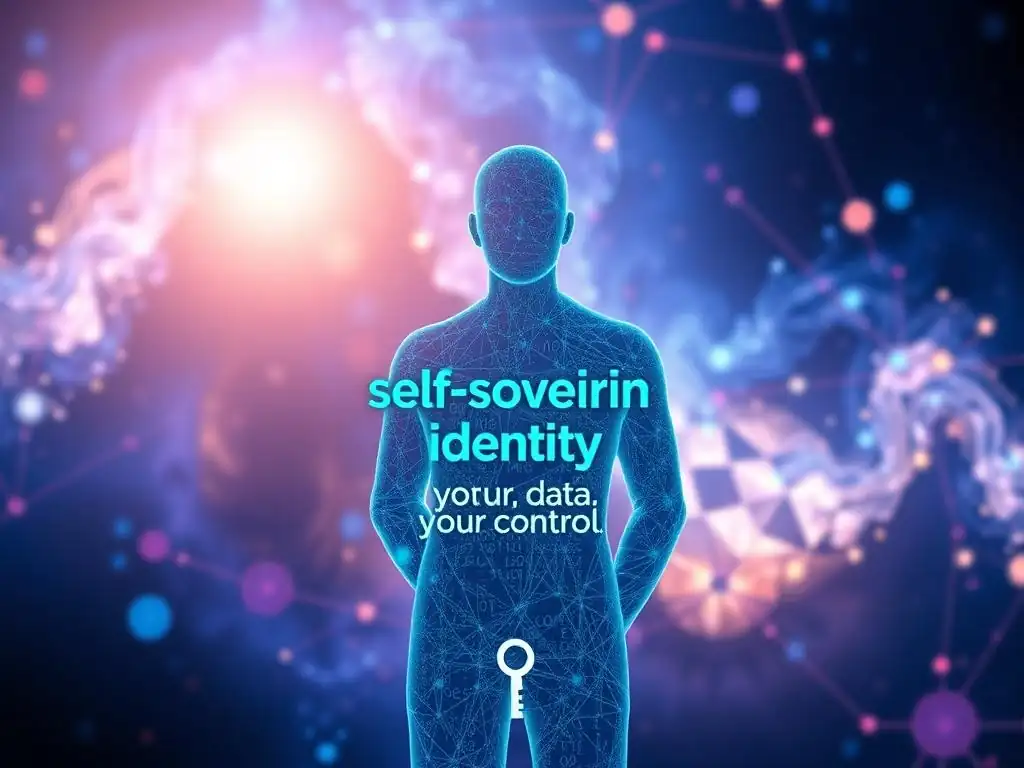
Welcome to Blockchain Trends, your compass in the ever-evolving landscape of decentralized innovation. Beyond the buzzwords, we delve into the real-world applications of blockchain technology, from revolutionizing finance to reshaping industries. Ready to unlock the power of digital autonomy? Our Ultimate Guide to Self-Sovereign Identity is your starting point. Discover how blockchain is empowering individuals to control their data and build a more secure, private future. Intrigued? Let's explore the potential together...
The Ultimate Guide to Self-Sovereign Identity: Everything You Need to Know
- Introduction to Self-Sovereign Identity (SSI) and Blockchain Trends
- What is Self-Sovereign Identity (SSI)? A Detailed Explanation
- Self-Sovereign Identity Blockchain Guide: How it Works
- Benefits of Implementing Self-Sovereign Identity Solutions
- Use Cases of Self-Sovereign Identity Across Industries
- Comparing Self-Sovereign Identity Solutions: Blockchain Platforms and Technologies
- Implementing Self-Sovereign Identity: A Step-by-Step Guide
- Challenges and Considerations for Self-Sovereign Identity Adoption
- The Future of Self-Sovereign Identity: Trends and Predictions
- Conclusion: Embracing Self-Sovereign Identity with Blockchain Technology
-
Frequently Asked Questions
- What is Self-Sovereign Identity (SSI) and why is it important?
- How does blockchain technology play a role in Self-Sovereign Identity?
- What are some potential use cases for Self-Sovereign Identity beyond personal identification?
- What are the key challenges in implementing Self-Sovereign Identity on a large scale?
- What regulatory considerations are surrounding Self-Sovereign Identity and blockchain implementation?
- Final Reflection: Embracing the Future of Digital Autonomy
- Unleash Your Identity: Start Building Your Self-Sovereign Future!
Introduction to Self-Sovereign Identity (SSI) and Blockchain Trends
Understanding the Evolution of Digital Identity
For decades, digital identity has largely been managed by centralized authorities, be they governments issuing physical IDs or corporations controlling online accounts. This model, while convenient for service providers, has led to significant challenges for individuals. Personal data is scattered across countless databases, creating silos that are difficult for users to manage and easy targets for malicious actors. Major data breaches affecting millions of users, such as the Equifax breach impacting an estimated 147 million people in 2017, highlight the inherent risks of concentrating sensitive identity information in honey pots.
This traditional approach often treats the user's identity as an asset owned or controlled by the issuing or service-providing entity, rather than the individual. The lack of a unified, user-controlled identity layer has resulted in fragmented online experiences, constant requests for the same personal information, and limited transparency regarding how data is used or shared. The increasing volume of online interactions, from banking to social media, necessitates a more robust, secure, and user-centric approach to digital identity.
Why Self-Sovereign Identity Matters in Today's Digital Landscape
Self-Sovereign Identity (SSI) emerges as a crucial paradigm shift, placing the individual firmly in control of their digital identity. In an era marked by growing concerns over data privacy and security, SSI addresses the fundamental imbalance of power by empowering users to manage and share their personal information on their own terms. It offers a compelling alternative to current systems where individuals are often forced to hand over excessive personal data simply to access services, increasing their vulnerability to identity theft and surveillance.
The importance of SSI is amplified by the increasing demand for trust and transparency in digital interactions. As we move towards more decentralized systems and Web3 applications, the ability for individuals to prove aspects of their identity or qualifications selectively, without revealing unnecessary details, becomes paramount. SSI enables this granular control, fostering greater trust between individuals and service providers and laying the groundwork for a more respectful and secure digital ecosystem. A solid selfsovereign identity blockchain guide is essential for understanding this shift.
Blockchain's Role in Empowering Self-Sovereign Identity Solutions
Blockchain technology provides a foundational layer of trust and security essential for realizing the vision of Self-Sovereign Identity. Unlike traditional centralized databases, a blockchain offers an immutable, distributed ledger that can securely anchor key components of an SSI system, such as Decentralized Identifiers (DIDs) and the public keys required to verify credentials. This decentralized nature eliminates the single point of failure inherent in centralized identity systems, making identity information more resilient to censorship and tampering.
Furthermore, blockchain facilitates the verification process in SSI without requiring sensitive personal data to be stored on the chain itself. Instead, the blockchain can store cryptographic proofs or references that allow a verifier to confirm the validity of a Verifiable Credential held by an individual. This separation of sensitive data (kept securely by the user) from the public, verifiable proof on the ledger is critical for privacy. Understanding this mechanism is key to grasping how a selfsovereign identity blockchain guide works in practice.
What is Self-Sovereign Identity (SSI)? A Detailed Explanation
Defining Self-Sovereign Identity: Taking Control of Your Data
Self-Sovereign Identity (SSI) is a model of digital identity where the individual has complete control over their identity data. Instead of relying on institutions like governments or corporations to manage and verify identity attributes, the individual becomes the central authority. This means you decide what information about yourself is stored, who has access to it, and for how long. It represents a fundamental shift from institutional identity management to user-centric identity empowerment.
At its core, SSI is about putting the user in the driver's seat of their digital life. You collect identity attributes (like your date of birth, educational degree, or professional license) as digitally signed credentials from trusted issuers. These credentials are then stored securely in your personal digital wallet, not on a third party's server. When a service provider needs to verify an aspect of your identity, you can present the relevant credential directly from your wallet, often without revealing any other personal information.
The Core Principles of SSI: User-Centricity, Control, and Portability
SSI is built upon a set of foundational principles designed to prioritize the individual. User-centricity dictates that the individual is the primary controller and beneficiary of their identity. All processes and technologies within an SSI system are designed around the user's needs and autonomy, rather than the convenience of issuers or verifiers. This contrasts sharply with traditional systems where identity is often managed primarily for the benefit of institutions.
Control means the user has explicit consent over the sharing of their identity data. They can choose exactly which pieces of information to share, with whom, and revoke access at any time. Portability ensures that a user's identity is not tied to a specific platform, service provider, or even a single blockchain.
Credentials and identifiers should be usable across different contexts and ecosystems, allowing individuals to take their verified identity with them wherever they go online or offline, which is a critical aspect covered in a selfsovereign identity blockchain guide. Other principles include persistence (identity lasts a lifetime), consent (explicit permission for data use), transparency (how the system works is clear), and minimization (share only necessary data).
Key Components of a Self-Sovereign Identity System: Wallets, Verifiable Credentials, and DIDs
A functional Self-Sovereign Identity system relies on the interplay of several key components. The user's Identity Wallet serves as the secure repository for their digital identity artifacts. This is typically a software application on a smartphone or computer, though hardware wallets are also possible. The wallet stores the user's private keys, Decentralized Identifiers (DIDs), and Verifiable Credentials (VCs), allowing the user to manage their identity and interact with issuers and verifiers.
Verifiable Credentials (VCs) are digital equivalents of physical credentials like passports, driver's licenses, or academic degrees. They are issued by trusted authorities (Issuers) and cryptographically signed, allowing any relying party (Verifier) to cryptographically confirm that the credential was issued by the stated Issuer and has not been tampered with.
Decentralized Identifiers (DIDs) are unique, persistent identifiers for individuals or entities that are anchored on a decentralized ledger, often a blockchain. DIDs are resolvable to DID Documents, which contain public keys and service endpoints needed to interact securely with the DID subject, forming the backbone of a selfsovereign identity blockchain guide.
Self-Sovereign Identity Blockchain Guide: How it Works
The Self-Sovereign Identity Ecosystem: Actors and Interactions
The SSI ecosystem involves three primary types of participants: the Holder, the Issuer, and the Verifier. The Holder is the individual or entity who possesses and controls their digital identity and Verifiable Credentials, typically stored in an identity wallet. Issuers are trusted organizations or individuals that attest to specific attributes or facts about the Holder by issuing a Verifiable Credential. Examples include universities issuing degrees, governments issuing digital IDs, or banks issuing proof of address.
Verifiers are parties that wish to cryptographically verify a credential presented by a Holder. This could be an employer checking a degree, a website verifying age, or a bank verifying identity for a loan application. The interaction flow typically involves: 1. The Holder requesting a credential from an Issuer. 2. The Issuer verifying the Holder's claim and issuing a signed VC to the Holder's wallet.
3. The Holder presenting the VC (or a subset of its data, via selective disclosure or zero-knowledge proof) to a Verifier. 4. The Verifier using information on the decentralized ledger (like the Issuer's DID and public key) and the VC's cryptographic signature to verify its authenticity and validity. This process is fundamental to understanding a selfsovereign identity blockchain guide.
How Blockchain Technology Enhances SSI Security and Transparency
Blockchain technology provides several key security and transparency benefits for SSI systems. Its distributed and immutable nature ensures that once a DID or a reference to an Issuer's public key is recorded on the chain, it cannot be altered or deleted without the consensus of the network. This provides a high level of trust and assurance for Verifiers that the identity infrastructure itself is reliable and hasn't been compromised, unlike a single, vulnerable centralized database.
While the sensitive personal data contained within a Verifiable Credential is not typically stored on the blockchain for privacy reasons, the blockchain serves as a transparent layer for verifying the integrity and status of credentials and issuers. For example, the blockchain can be used to publish the public keys of Issuers, register DIDs, or record revocation lists for credentials. This allows Verifiers to cryptographically confirm the source of a credential and check if it has been revoked, all without needing access to the user's private information, embodying the principles of a secure selfsovereign identity blockchain guide.
Decentralized Identifiers (DIDs): The Foundation of SSI on Blockchain
Decentralized Identifiers (DIDs) are a cornerstone of Self-Sovereign Identity, particularly when integrated with blockchain technology. Defined by the W3C (World Wide Web Consortium), DIDs are persistent, globally unique identifiers that are owned and controlled by the individual or entity they identify, without reliance on a centralized registry. A DID is essentially a URI (Uniform Resource Identifier) that links a DID subject to a DID Document.
The DID Document contains public keys, cryptographic material, and service endpoints associated with the DID subject. This document is often anchored on a blockchain or other decentralized ledger, making it publicly discoverable and verifiable. When a Verifier receives a Verifiable Credential, they can use the Issuer's DID (found within the VC) to retrieve the Issuer's DID Document from the ledger. Using the public key from the DID Document, the Verifier can then cryptographically verify the signature on the Verifiable Credential, confirming its authenticity. This ledger-anchored resolution process is a critical mechanism detailed in a selfsovereign identity blockchain guide.
Benefits of Implementing Self-Sovereign Identity Solutions
Enhanced Privacy and Data Security with SSI
One of the most significant benefits of Self-Sovereign Identity is the dramatic improvement in user privacy and data security. In traditional systems, users are often required to share excessive personal information with numerous service providers, who then store this data in potentially vulnerable databases. SSI flips this model by keeping sensitive data solely in the user's secure wallet.
When a service requires identity verification, the user can employ techniques like selective disclosure or zero-knowledge proofs to share only the absolute minimum necessary information, or even just prove that a certain condition is met (e.g., "I am over 18") without revealing the exact age. This drastically reduces the digital footprint left with third parties and minimizes the attack surface for data breaches, as there are no large, centralized honeypots of user data to target, a key advantage highlighted in any selfsovereign identity blockchain guide.
Reduced Reliance on Centralized Identity Providers
Self-Sovereign Identity fundamentally reduces dependence on centralized identity providers, whether they are governmental agencies, large tech companies offering single sign-on, or corporate databases. This disintermediation empowers individuals by removing the single point of control and potential censorship or failure associated with centralized systems.
By holding their identity credentials in their own wallet, users are no longer locked into using a specific platform's identity service or reliant on a single institution to verify their existence or attributes. This fosters greater autonomy and resilience in the digital realm. It aligns with the broader trend towards decentralization seen in blockchain trends, particularly in areas like DeFi and Web3, making it a core concept in a selfsovereign identity blockchain guide.
Streamlined Identity Verification Processes
SSI can significantly streamline and accelerate identity verification processes for both individuals and organizations. Instead of manual document checks or slow, multi-step digital verification procedures, a user can present a pre-verified credential from their wallet. Since this credential is cryptographically signed by a trusted issuer and verifiable against a public record (like a blockchain), verification can happen almost instantaneously.
Consider the process of opening a new bank account or renting an apartment. Traditionally, this involves submitting copies of multiple documents (ID, proof of address, etc.) and waiting for manual review, which can take hours or even days. With SSI, a user could present verifiable credentials for "Government ID Verified" and "Proof of Address," previously issued and stored in their wallet. The verifier can instantly check the cryptographic signatures and issuer validity against the ledger, reducing the verification time to seconds and lowering administrative costs. Industry reports suggest SSI can cut KYC costs by 10-20%.
Improved User Experience and Control Over Personal Data
For the end-user, SSI offers a vastly improved experience compared to juggling multiple logins, remembering passwords, or repeatedly submitting the same personal documents. A single, secure digital wallet can hold all necessary credentials, making it easy to access and manage their digital identity assets from one place.
Crucially, SSI provides users with granular control and transparency over their data. Every time a service requests access to a credential or specific piece of information, the user receives a prompt and must explicitly grant consent. They can see exactly what information is being requested and by whom, fostering a relationship of trust and making the digital experience feel less intrusive and more empowering. This user empowerment is a central theme in any selfsovereign identity blockchain guide.
Cost Savings for Businesses and Individuals
Implementing SSI solutions can lead to substantial cost savings across various sectors. Businesses that regularly perform identity verification, such as financial institutions (for KYC/AML), healthcare providers, or online service platforms, can significantly reduce operational costs associated with manual checks, data storage, and compliance audits. The ability to instantly verify cryptographically secure credentials is far more efficient than traditional methods.
For individuals, SSI reduces the time and effort spent on identity-related tasks. It can also unlock access to services that were previously difficult to obtain due to the complexities of proving identity, potentially lowering costs associated with accessing financial services, government benefits, or employment opportunities. While exact figures vary by industry and scale, the efficiency gains are a clear economic benefit.
Use Cases of Self-Sovereign Identity Across Industries
SSI in Healthcare: Secure and Patient-Controlled Medical Records
In healthcare, SSI can revolutionize how patients manage and share their sensitive medical information. Instead of patient data being fragmented across various hospitals, clinics, and specialists, SSI allows patients to collect verifiable credentials representing aspects of their health history – vaccination records from a clinic, lab results from a testing facility, or prescriptions from a doctor – all stored securely in their personal wallet.
Patients can then selectively grant access to specific medical professionals, emergency responders, or researchers, sharing only the relevant information needed for a particular context. For example, a patient visiting a new doctor can share a VC proving their allergy status or a list of current medications without handing over their entire medical history. This enhances privacy, improves data accuracy by keeping the patient at the center, and can streamline care coordination across different providers, a critical application discussed in a selfsovereign identity blockchain guide.
SSI in Finance: Streamlining KYC and AML Compliance
The finance sector faces stringent Know Your Customer (KYC) and Anti-Money Laundering (AML) regulations, which often involve costly and time-consuming identity verification processes. SSI offers a solution by enabling reusable digital identities. A user can undergo a thorough KYC verification process with one trusted entity (e.g., a bank or a specialized identity verification service) and receive a cryptographically signed "KYC Verified" verifiable credential in their wallet.
Subsequently, when interacting with other financial institutions, the user can simply present this credential. The new institution can instantly verify the credential's authenticity and the issuer's credibility by checking the public ledger, fulfilling their compliance requirements in seconds rather than days. This significantly reduces onboarding friction, lowers operational costs for financial institutions, and enhances the user experience, proving SSI's value in a selfsovereign identity blockchain guide for finance.
SSI in Supply Chain Management: Verifying Product Authenticity
SSI can be applied to supply chains to track the provenance and authenticity of goods, combating counterfeiting and ensuring ethical sourcing. Each product or significant component can be assigned a Decentralized Identifier (DID). As the item moves through the supply chain, each participant (manufacturer, shipper, distributor, retailer) can issue verifiable credentials attesting to specific events or attributes – proof of manufacture date, shipping history, quality control checks, or origin of materials.
These credentials are added to the product's identity profile, accessible via its DID. Consumers or businesses can scan a QR code linked to the product's DID and view the chain of verified credentials, ensuring the product is genuine and has followed the correct path. This provides end-to-end transparency and builds trust throughout the supply chain, a practical application of a selfsovereign identity blockchain guide in logistics.
SSI in Government: Secure and Efficient Citizen Services
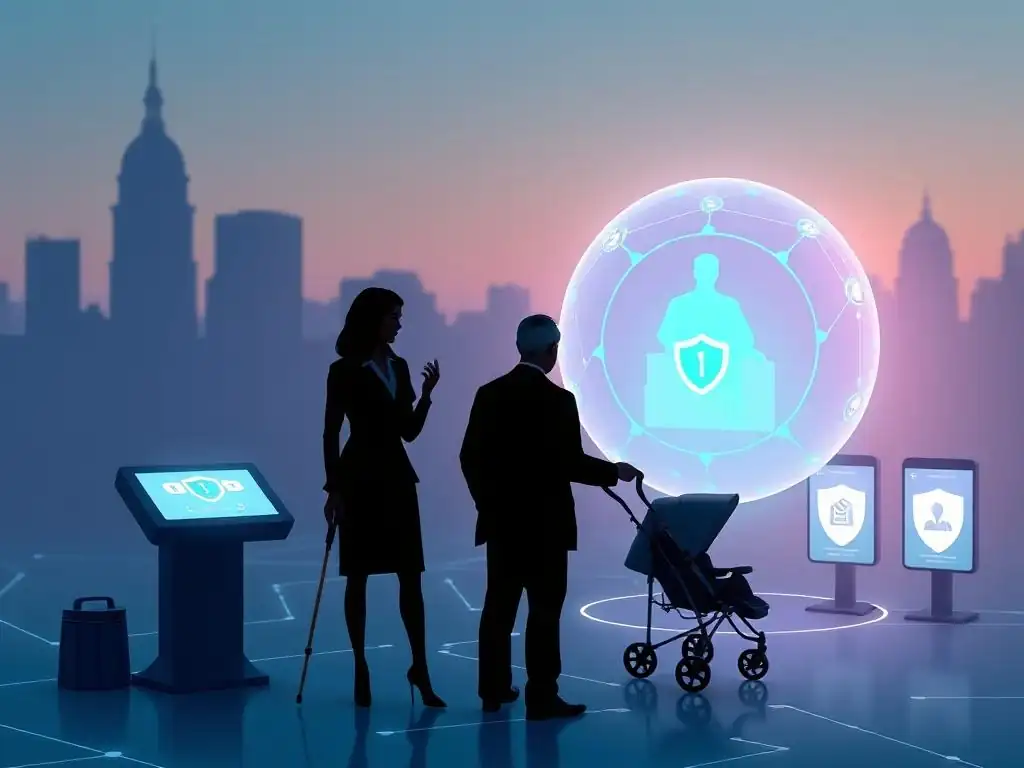
Governments are exploring SSI to issue secure, privacy-preserving digital identities and credentials to citizens, streamlining access to public services. Official documents like birth certificates, driver's licenses, passports, and professional certifications can be issued as verifiable credentials to a citizen's SSI wallet.
Citizens can then use these digital credentials to interact with various government departments or other services online or offline, without needing to present physical documents or repeatedly fill out forms. For example, applying for a permit might only require presenting a verified 'Proof of Residency' credential. This enhances efficiency, reduces administrative burden, minimizes the risk of fraud associated with physical documents, and empowers citizens with control over their official digital identity, making it a vital use case for a selfsovereign identity blockchain guide in the public sector.
SSI in Education: Portable and Verified Academic Credentials
Educational institutions can leverage SSI to issue academic records, such as degrees, diplomas, and transcripts, as verifiable credentials to graduates. Students can collect these credentials in their digital wallets upon graduation.
When applying for jobs or further education, graduates can share their verified academic credentials directly from their wallet to potential employers or universities. The recipient can instantly verify the authenticity of the credential and the issuing institution against the public ledger, eliminating the need for traditional paper transcripts, reducing fraud, and accelerating the application process. This provides students with a portable, lifelong record of their educational achievements, a compelling example in a selfsovereign identity blockchain guide for education.
Comparing Self-Sovereign Identity Solutions: Blockchain Platforms and Technologies
Evaluating Different Blockchain Options for SSI Implementation: Hyperledger Indy vs. Ethereum
When building SSI solutions, the choice of underlying blockchain or distributed ledger technology is critical. Hyperledger Indy, a project specifically designed for decentralized identity, is a prominent option. It provides features optimized for SSI, including support for DIDs, verifiable credentials, and a ledger designed for high-performance identity transactions. Networks built on Indy, like Sovrin, are purpose-built identity networks focused on trust frameworks and interoperability standards.
Ethereum, a general-purpose smart contract platform, can also be used for SSI, typically by anchoring DIDs or storing cryptographic proofs related to credentials via smart contracts (e.g., using standards like ERC-721 or ERC-1155 for identity tokens, though VC data itself is kept off-chain). Ethereum offers flexibility and a large developer community.
However, public Ethereum's transaction costs (gas fees) and throughput limitations can be challenges for high-volume identity operations, prompting consideration of Layer 2 solutions or permissioned Ethereum variants. Choosing between these depends on the specific requirements for decentralization, performance, and cost, a key decision point in a selfsovereign identity blockchain guide.
Exploring Leading SSI Frameworks and Protocols: DIF vs. W3C Verifiable Credentials
Interoperability is paramount for SSI to achieve its full potential. This requires adherence to open standards and frameworks. The Decentralized Identity Foundation (DIF) is a cross-industry organization dedicated to developing an open ecosystem for decentralized identity. DIF contributes to and promotes standards for DIDs, DID documents, and other identity protocols, focusing on ensuring different SSI solutions can work together seamlessly.
The W3C Verifiable Credentials (VCs) Data Model is perhaps the most foundational standard in the SSI space. It provides a standardized way to express credentials cryptographically, ensuring that a credential issued by one party using one SSI system can be verified by any other compliant system, regardless of the underlying technology. Adherence to W3C VCs is essential for creating an interoperable identity layer, allowing users to carry their credentials across different platforms and services, a cornerstone of any modern selfsovereign identity blockchain guide.
Understanding the Trade-offs Between Permissioned and Permissionless Blockchains for SSI
The choice between a permissioned and a permissionless blockchain impacts the design and characteristics of an SSI solution. Permissionless blockchains, like public Ethereum or Bitcoin (though Bitcoin is less common for complex SSI), are open networks where anyone can participate in validating transactions. They offer high decentralization and censorship resistance, suitable for truly global, trust-minimized identity networks. However, they can face challenges with scalability, unpredictable transaction costs, and slower finality, which might impact user experience for frequent identity interactions.
Permissioned blockchains, such as Hyperledger Indy, Hyperledger Fabric, or R3 Corda, require participants to be pre-approved. They offer better performance, higher transaction throughput, lower and predictable costs, and faster transaction finality. These are often preferred for enterprise or government-led SSI initiatives where participants are known entities and regulatory compliance is a priority. The trade-off is a degree of centralization compared to public chains, as trust is placed in the consortium operating the network. The ideal choice depends on the specific use case and trust requirements outlined in the selfsovereign identity blockchain guide.
Implementing Self-Sovereign Identity: A Step-by-Step Guide
Assessing Your Organization's Needs for SSI
Before diving into implementation, an organization must clearly define why SSI is the right solution for them. This involves assessing current identity-related pain points, such as high costs of KYC/onboarding, poor user experience, compliance challenges with data privacy regulations (like GDPR or CCPA), or the need for more secure data sharing. Identifying specific use cases where SSI can deliver tangible value is crucial, whether it's for employees, customers, or partners.
Conduct a thorough analysis of existing identity management processes, data flows, and the types of identity attributes and credentials that are relevant to your business. Determine the required level of assurance for identity verification and the regulatory landscape you operate within. This assessment phase lays the groundwork for selecting the appropriate technology and designing a compliant and effective SSI solution tailored to your needs, as advised in a practical selfsovereign identity blockchain guide.
Choosing the Right SSI Technology Stack
Selecting the appropriate technology stack is a critical step. This involves choosing the underlying distributed ledger or blockchain technology. Factors to consider include the required performance (transaction speed and volume), cost model, desired level of decentralization, and the existing ecosystem and developer community. Options range from purpose-built identity ledgers like Hyperledger Indy to general-purpose blockchains like Polygon ID (built on Polygon) or enterprise solutions like Hyperledger Fabric.
Beyond the ledger, you'll need to select or build identity wallets (mobile, web, or hardware), software development kits (SDKs) for integrating identity issuance and verification into your applications, and potentially middleware or platforms that abstract away some of the complexity of interacting with the ledger. Crucially, ensure all chosen components are compliant with open standards, particularly the W3C DID and Verifiable Credentials specifications, to ensure interoperability and future-proofing the selfsovereign identity blockchain guide solution.
Developing and Deploying SSI Applications
With the technology stack chosen, the next phase involves developing the SSI applications. This includes building the user-facing identity wallet (or integrating an existing one), developing the logic for Issuers to create and sign verifiable credentials, and building the Verifier applications that request and cryptographically verify credentials presented by users. This often involves integrating SDKs provided by the chosen SSI framework or platform.
Deployment requires careful consideration of security, key management, and infrastructure reliability. Private keys used for signing credentials by Issuers and managing DIDs must be securely stored and managed. The infrastructure supporting the interaction with the ledger and DID resolution services needs to be robust and available. Phased rollouts, starting with pilot programs involving a limited number of users and use cases, are recommended to test the system in a real-world environment before broader deployment, a standard practice for any complex implementation discussed in a selfsovereign identity blockchain guide.
Ensuring Interoperability and Compliance
Designing for interoperability from the outset is paramount for SSI success. Adhering to open standards like W3C DID and Verifiable Credentials is non-negotiable to ensure that credentials issued by your system can be verified by other compliant systems and vice versa. Participating in identity networks or ecosystems that promote shared governance and trust frameworks, such as those aligned with the Trust Over IP (ToIP) Foundation principles, further enhances interoperability.
Navigating the regulatory landscape is also essential. While SSI enhances data privacy by design, organizations must ensure their implementation complies with relevant data protection laws (like GDPR, CCPA, etc.). This includes designing systems that support data minimization, obtaining explicit user consent for data sharing, and understanding the legal implications and recognition of verifiable credentials in different jurisdictions. Consulting legal and compliance experts is vital throughout the development process to ensure the selfsovereign identity blockchain guide solution meets all legal requirements.
Challenges and Considerations for Self-Sovereign Identity Adoption
Addressing Scalability Concerns in Blockchain-Based SSI Systems
While SSI minimizes the amount of sensitive data on the blockchain, the underlying ledger still needs to handle a potentially high volume of transactions related to DID registrations, DID document updates, revocation list entries, and potentially anchoring proofs of credential issuance. Public blockchains, especially older ones, can face scalability limitations in terms of transaction throughput (e.g., a few dozen transactions per second).
Solutions to address this include utilizing purpose-built identity ledgers designed for higher transaction volumes (like Hyperledger Indy networks), leveraging Layer 2 scaling solutions on public blockchains, or employing off-chain verification protocols that only interact with the ledger when absolutely necessary (e.g., only for checking revocation status). The architecture of the selfsovereign identity blockchain guide solution must account for expected transaction load to ensure performance.
Overcoming Interoperability Challenges Between Different SSI Solutions
Despite the existence of standards like W3C DIDs and VCs, achieving true, seamless interoperability between different SSI implementations remains an ongoing challenge. Variations in how DID methods are implemented, differences in trust frameworks between various identity networks, and the lack of universal governance models can create silos where credentials issued in one system are difficult to verify in another.
Efforts by organizations like DIF and ToIP are actively working on establishing common governance frameworks, interoperability protocols, and trust registries to bridge these gaps. Adopting widely supported DID methods and participating in collaborative initiatives are key strategies to mitigate these interoperability issues and ensure the selfsovereign identity blockchain guide ecosystem can connect effectively.
The legal and regulatory landscape for Self-Sovereign Identity is still evolving. While SSI is designed with privacy in mind, its interaction with existing data protection laws (like GDPR, which grants rights like the right to erasure) and identity proofing regulations can be complex. Questions arise about the legal standing of verifiable credentials, liability in case of misuse, and how to handle requirements like the right to be forgotten when using an immutable ledger.
Organizations implementing SSI must engage legal counsel to ensure compliance. This involves designing the system such that sensitive personal data is managed off-chain, supporting data minimization and consent mechanisms, and exploring technical solutions that align with legal requirements (e.g., managing pointers on-chain while allowing off-chain data deletion). The legal framework around a selfsovereign identity blockchain guide is a developing area requiring careful consideration.
Educating Users About the Benefits and Use of SSI
A significant barrier to SSI adoption is user education. SSI represents a paradigm shift where users are responsible for managing their own digital identity wallets and understanding concepts like private keys and verifiable credentials. This requires a higher degree of technical literacy and responsibility than traditional identity systems where institutions handle most of the complexity.
Clear, user-friendly interfaces and comprehensive educational resources are essential to help users understand the benefits of SSI (enhanced privacy, control) and how to securely manage their digital identity assets. Onboarding processes must be intuitive, and support systems need to be in place to assist users in navigating this new model. Successful adoption hinges on making SSI accessible and understandable to the average user, a crucial aspect for widespread impact of a selfsovereign identity blockchain guide.
The Future of Self-Sovereign Identity: Trends and Predictions
The Convergence of SSI and Decentralized Finance (DeFi)
The intersection of Self-Sovereign Identity and Decentralized Finance (DeFi) is poised to be a major trend. DeFi protocols currently operate largely pseudonymously, which limits their ability to interact with the regulated financial world and offer services requiring identity verification, such as lending based on creditworthiness or compliance with accredited investor rules. SSI provides a way to bridge this gap.
With SSI, users can obtain verifiable credentials from trusted issuers attesting to their financial history, credit score, or regulatory status without revealing their underlying real-world identity directly to the DeFi protocol. The protocol can cryptographically verify the credential, enabling access to services based on verified attributes while preserving user privacy. This 'Decentralized KYC' approach allows DeFi to mature and potentially integrate with traditional finance, significantly expanding the scope of a selfsovereign identity blockchain guide.
The Role of SSI in the Metaverse and Web3
As the concepts of the Metaverse and Web3 evolve, Self-Sovereign Identity will play a fundamental role in shaping digital interactions and persistent identities. In these decentralized virtual environments, users will need portable, user-controlled identities that can traverse different platforms and applications. SSI allows individuals to own their digital identity, including avatars, reputations, and verifiable credentials earned or issued within these spaces.
SSI enables trusted interactions in the Metaverse by allowing users to prove who they are, what they own (e.g., ownership of NFTs via VCs), or what they are authorized to do, all tied to their DID. This creates a foundation for reputation systems, secure transactions, and personalized experiences that are not tied to a single centralized platform, realizing the vision of a truly user-owned digital presence as explored in a selfsovereign identity blockchain guide for the future.
The Growing Importance of Interoperable and Open-Source SSI Standards
The future success of Self-Sovereign Identity heavily relies on widespread adoption of open standards and achieving true interoperability between different SSI solutions and networks. Proprietary, siloed identity systems would undermine the core principles of portability and user control. Organizations like W3C, DIF, and ToIP will continue to be crucial in developing and promoting these standards and governance frameworks.
We can expect to see increased focus on implementing and complying with these standards across various industries and governmental initiatives. Furthermore, the growth of open-source SSI projects and libraries will accelerate development and foster a collaborative ecosystem. The emphasis will be on building a global, interconnected network of trust based on shared, open standards, making interoperability a key theme in the ongoing evolution of a selfsovereign identity blockchain guide.
Conclusion: Embracing Self-Sovereign Identity with Blockchain Technology
The Transformative Potential of SSI for Individuals and Organizations
Self-Sovereign Identity, powered by the unique capabilities of blockchain technology, holds immense transformative potential for individuals and organizations alike. For individuals, it promises a future of enhanced privacy, greater security against data breaches and identity theft, and unprecedented control over their personal information in the digital world. It empowers users to be active participants in their digital lives, rather than passive subjects whose data is managed by others.
For organizations, SSI offers significant benefits including reduced costs for identity verification and compliance, improved efficiency in onboarding processes, enhanced security postures by minimizing the storage of sensitive data, and the ability to build more trusted relationships with customers and partners. It represents an opportunity to move beyond legacy identity systems that are costly, insecure, and user-unfriendly, paving the way for innovative digital services. The selfsovereign identity blockchain guide highlights these comprehensive benefits.
Taking the Next Steps Towards a Self-Sovereign Future
Embracing Self-Sovereign Identity is not just a technological upgrade; it's a step towards a more equitable, secure, and user-centric digital society. For individuals, this means becoming aware of SSI concepts, exploring emerging identity wallets, and understanding the value of owning and controlling their digital credentials. For organizations, it involves strategic assessment of current identity challenges, piloting SSI solutions in relevant use cases, and committing to open standards and interoperability.
As the selfsovereign identity blockchain guide demonstrates, the technology and frameworks are maturing. The path forward requires collaboration across industries, continued development of user-friendly applications, and ongoing education to build trust and facilitate adoption. By prioritizing user control and leveraging the security and transparency of blockchain, SSI can unlock a new era of digital identity that truly serves the individual.
Frequently Asked Questions
What is Self-Sovereign Identity (SSI) and why is it important?
SSI empowers individuals with complete control over their digital identities. This means no more relying on centralized authorities, enhancing privacy and security. It's crucial for building trust in the digital world.
How does blockchain technology play a role in Self-Sovereign Identity?
Blockchain provides a decentralized and immutable ledger for verifying identity credentials. This ensures the authenticity and integrity of identity information, making it tamper-proof. It's a key component of SSI solutions.
What are some potential use cases for Self-Sovereign Identity beyond personal identification?
SSI can revolutionize various sectors, including supply chain management, healthcare, and finance. It enables secure and verifiable data sharing, fostering trust and efficiency across industries. This goes beyond simply verifying who someone is.
What are the key challenges in implementing Self-Sovereign Identity on a large scale?
Scalability, interoperability between different SSI systems, and user adoption are significant hurdles. Overcoming these challenges is crucial for realizing the full potential of SSI. Education is also a key factor.
What regulatory considerations are surrounding Self-Sovereign Identity and blockchain implementation?
Clear and consistent regulations are needed to address data privacy, security, and compliance. These regulations must balance innovation with consumer protection and ethical considerations. The future depends on it.
Final Reflection: Embracing the Future of Digital Autonomy
The journey through self-sovereign identity (SSI) reveals more than just a technological advancement; it unveils a paradigm shift in how we interact with the digital world. The promise of reclaiming control over our personal data is no longer a futuristic fantasy, but a tangible possibility being built on the foundations of blockchain technology. This guide has aimed to demystify SSI, and its relevance today lies in empowering individuals to understand and participate in this revolution.
The impact of SSI extends far beyond mere convenience; it touches upon fundamental rights and freedoms in an increasingly digital society. The ability to own and manage our identities represents a profound step towards a more equitable and secure online experience, fostering trust and transparency in every interaction. Identity is the new perimeter of security,
as Jeremy Grant aptly stated, highlighting the critical importance of securing and controlling our digital selves in the modern age.
As you navigate the complexities of the digital landscape, remember that the power to shape your online identity rests in your hands. Embrace the principles of self-sovereignty, explore the possibilities offered by blockchain technology, and become an active participant in building a future where your data is truly yours. The time to reclaim your digital autonomy is now.
Okay, I'm ready to craft a Call to Action based on the provided article title and website information. Here's a draft:
Unleash Your Identity: Start Building Your Self-Sovereign Future!
Thank you for diving into the world of Self-Sovereign Identity! We hope this guide from Blockchain Trends has empowered you with the knowledge to navigate this revolutionary concept. Now, it's time to put that knowledge into action and take control of your digital identity.
- Embrace the Future: Begin researching available SSI wallets and platforms. Find one that aligns with your needs and privacy preferences, and experiment with creating your own verifiable credentials.
- Explore further: Delve deeper into the underlying technologies and protocols (like DID and Verifiable Credentials) that power SSI. Check out resources from the W3C or the Decentralized Identity Foundation.
- Join the conversation: Share this article with your network and spark a discussion about the importance of Self-Sovereign Identity in building a more secure and privacy-respecting digital world.
What first step will you take today towards owning and controlling your digital identity? Share your thoughts in the comments below!
Leave a Reply