
Understanding the Different Types of Verifiable Credentials in SSI

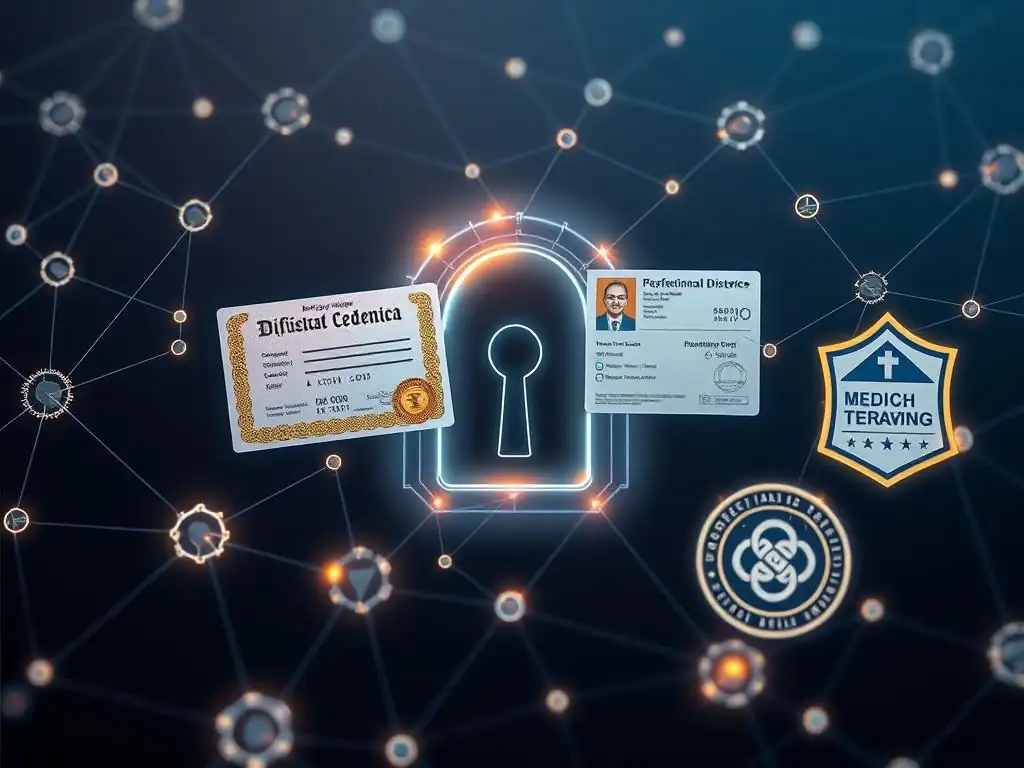
Welcome to Blockchain Trends, your guide to understanding the revolutionary impact of blockchain technology.
Dive into the world of decentralized innovation and discover how blockchain is reshaping industries beyond cryptocurrencies. Are you curious about how verifiable credentials are being utilized in real-world applications? This week, we're exploring the diverse landscape of verifiable credentials blockchain applications and their crucial role in Self-Sovereign Identity (SSI). Learn about the different types and their potential to revolutionize digital identity. What makes each type unique, and what are the implications for the future? Let's unravel the future, one block at a time.
Understanding Different Types of Verifiable Credentials in SSI
- Introduction to Verifiable Credentials and Self-Sovereign Identity (SSI)
- Verifiable Credentials: A Categorical Overview
- Type 1: Identity Credentials
- Type 2: Attribute-Based Verifiable Credentials
- Type 3: Professional and Educational Credentials
- Type 4: Healthcare Verifiable Credentials
- Type 5: Supply Chain Verifiable Credentials
- Technical Standards and Interoperability of Verifiable Credentials
- The Future of Verifiable Credentials
- Conclusion: Embracing the Potential of Verifiable Credentials
-
Frequently Asked Questions
- What are Verifiable Credentials and why are they important in the context of blockchain applications?
- How do Verifiable Credentials relate to Self-Sovereign Identity (SSI)?
- What are some common types of Verifiable Credentials used in blockchain-based systems?
- How does the use of blockchain enhance the security and trustworthiness of Verifiable Credentials?
- What are some potential future applications of Verifiable Credentials in blockchain ecosystems beyond identity management?
- Final Reflection: Embracing the Trust Revolution
- Unleash the Power of Verifiable Credentials Today!
Introduction to Verifiable Credentials and Self-Sovereign Identity (SSI)
What are Verifiable Credentials?
Verifiable Credentials (VCs) represent a significant evolution in how we manage and share digital identity information. At their core, VCs are digital equivalents of physical documents like passports, driver's licenses, diplomas, or professional certifications. However, unlike traditional digital documents which are often static copies or require centralized verification, VCs are designed to be cryptographically secure, tamper-evident, and verifiable independently by the recipient. This is typically achieved through cryptographic signatures from three key parties: the issuer (who asserts the information), the holder (the individual or entity the credential is about), and the verifier (who checks the credential's validity).
The power of VCs lies in their structure, often following standards like those defined by the World Wide Web Consortium (W3C). This structure allows for selective disclosure, meaning the holder can choose to share only the specific pieces of information required for a particular interaction, rather than presenting an entire document.
For instance, proving you are over 18 might only require sharing a single attribute from a driver's license VC, not your full date of birth, address, or license number. This granular control is a fundamental shift towards a more privacy-preserving and user-centric model for digital interactions, paving the way for sophisticated verifiable credentials blockchain applications.
The Role of SSI in Empowering Digital Identity
Self-Sovereign Identity (SSI) is a paradigm where individuals or organizations have control over their digital identities. Unlike traditional models where identity is managed by large central authorities (like governments or corporations), SSI puts the user at the center. VCs are a cornerstone technology enabling SSI. In an SSI framework, an individual receives VCs from trusted issuers (e.g., a university issues a diploma VC, a government issues an identity VC). The individual stores these VCs securely in a digital wallet, often referred to as an identity wallet.
When interacting with a verifier (e.g., an employer, a service provider), the individual uses their wallet to present the necessary VCs. The verifier then cryptographically checks the issuer's signature and potentially the status of the credential (e.g., if it hasn't been revoked) using information anchored or referenced on a distributed ledger or blockchain.
This process verifies the authenticity and validity of the credential without requiring the verifier to directly contact the issuer in real-time or rely on a centralized database of credentials. This model enhances privacy, reduces reliance on intermediaries, and empowers the individual, forming the basis for many innovative verifiable credentials blockchain applications.
Verifiable Credentials: A Categorical Overview
Exploring the Spectrum of VC Types
Verifiable Credentials are not a monolithic concept; they can represent virtually any piece of information that an issuer can assert about a holder and a verifier needs to trust. This flexibility allows for a wide spectrum of VC types, each tailored to specific use cases and industries. While the underlying technical standards might be similar, the semantic meaning and the attributes contained within different VCs vary significantly. These types range from basic identity proofs to complex professional qualifications, health records, and even proofs of ownership or status within a supply chain.
Categorizing VCs helps understand their diverse applications and the specific challenges and benefits associated with each type. The following sections will delve into some of the most common and impactful categories of verifiable credentials, illustrating how they are being applied or have the potential to be applied in various sectors, often leveraging verifiable credentials blockchain applications for enhanced trust and security. Understanding these distinctions is crucial for appreciating the full potential of SSI and the decentralized web.
Type 1: Identity Credentials
Use Cases for Identity VCs
Identity Credentials are among the most fundamental types of Verifiable Credentials. These VCs assert core identifying information about an individual or entity. Common examples include a digital equivalent of a driver's license, passport, national ID card, or even a basic proof of name and address. These credentials are typically issued by trusted authorities, such as government agencies or registered identity providers.
The use cases for Identity VCs are extensive. They can be used for online onboarding processes, replacing cumbersome document uploads and manual verification steps. Imagine signing up for a new bank account or a social media platform by simply presenting a digitally signed Identity VC from your government, allowing the service provider to instantly and cryptographically verify your identity without storing sensitive copies of your physical documents. Another key application is in digital signatures and authentication, proving your identity when accessing online services or signing digital documents, significantly streamlining processes that currently rely on less secure methods.
Benefits and Limitations of Identity Credentials
The primary benefit of Identity VCs is enhanced privacy and control for the holder. Instead of sharing an entire physical document with numerous parties, the holder can selectively disclose only the necessary attributes (e.g., just proving age for purchasing restricted goods online). This minimizes the exposure of sensitive personal data.
Furthermore, the cryptographic nature of VCs makes them highly resistant to tampering and easier for verifiers to trust compared to scanned copies or manually input data. The use of verifiable credentials blockchain applications can further enhance the trust layer by providing a decentralized method for checking issuer validity or revocation status.
However, Identity VCs also face limitations. The primary challenge is the issuance process itself. Relying on government agencies or large institutions to issue these VCs requires significant infrastructure and policy changes. Achieving widespread adoption requires trusted issuers to participate. Another limitation is the potential for single points of failure if the underlying identity verification process before issuance is flawed. While the VC itself is secure, it's only as reliable as the initial assertion made by the issuer. Ensuring interoperability between VCs issued by different authorities across different jurisdictions also presents a complex challenge.
Type 2: Attribute-Based Verifiable Credentials
Understanding Attribute-Based Credentials (ABCs)
Attribute-Based Credentials (ABCs), often used interchangeably with VCs in some contexts, focus on proving specific attributes about a holder without necessarily revealing their full identity or the source document from which the attribute originated. While Identity VCs might contain a bundle of identifying attributes like name, date of birth, and address linked to a specific document type (like a passport), ABCs can be more granular. They can assert a single fact, such as "is over 18," "is a resident of California," "has a specific professional license," or "has completed a particular training course."
The power of ABCs lies in their ability to support fine-grained access control and privacy-preserving interactions. Instead of proving who you are with a full identity document, you prove that you possess a certain attribute. This aligns perfectly with the principle of data minimization. For example, accessing an age-restricted website only requires proving you are over 18, not revealing your exact date of birth, name, or where you live. This selective disclosure capability, often facilitated by verifiable credentials blockchain applications for trust roots, is a core feature differentiating VCs from traditional digital identity methods.
Examples of Attribute Credentials [Example: Citizenship Verification]
A practical example of an Attribute-Based Credential is proving citizenship or residency without showing a full passport or national ID. An individual could receive an ABC from a government authority stating simply "Citizen of Country X" or "Resident of State Y." When applying for a service or benefit that requires proof of citizenship/residency, they could present this specific ABC. The verifier could then cryptographically confirm that the credential was issued by a recognized authority and is valid, without needing to see the holder's name, photo, or other sensitive details typically found on a full identity document.
Another example could be proving eligibility for a specific discount based on student status. Instead of showing a full student ID with photo and student number, a student could present an ABC issued by their university stating "Currently Enrolled Student." The verifier (e.g., a store offering a student discount) only needs to confirm the "Currently Enrolled Student" attribute is valid and issued by a recognized educational institution, streamlining the process and protecting the student's privacy. These specific verifiable credentials blockchain applications streamline verification processes while upholding privacy.
How ABCs Improve Data Minimization and Control
ABCs are instrumental in implementing the principle of data minimization, a core tenet of privacy regulations like GDPR. By allowing holders to share only the minimum necessary information required for a specific transaction or interaction, ABCs drastically reduce the amount of sensitive data exchanged and stored by verifiers. This lowers the risk of data breaches and misuse. Instead of a service provider storing a copy of your entire driver's license just to verify your age, they might only receive and verify a single attribute: "age >= 18".
Furthermore, ABCs empower the individual with greater control over their data. The holder decides which specific ABCs to present and when. Unlike centralized identity systems where authorities or service providers control access to your data, in an SSI model leveraging ABCs, the holder is the gatekeeper. This shift in control, combined with the security and transparency offered by verifiable credentials blockchain applications, fundamentally alters the power dynamic in digital identity interactions, moving towards a more equitable and privacy-respecting model.
Type 3: Professional and Educational Credentials
Verifying Skills and Qualifications
Professional and Educational Verifiable Credentials are used to assert qualifications, skills, degrees, certifications, and licenses issued by educational institutions, professional bodies, and employers. These VCs can represent everything from a high school diploma or university degree to a specific professional license (like a medical license or bar admission) or proof of completing a training course (like first aid or cybersecurity certification).
Traditionally, verifying these credentials is often a slow, manual, and sometimes costly process involving contacting issuing institutions, sending physical documents, or using third-party verification services. VCs offer a way to digitize this process securely and efficiently. An institution issues the VC to the individual, who can then share it instantly with anyone needing to verify the qualification. The verifier can cryptographically confirm the credential's authenticity directly, significantly speeding up verification times and reducing administrative overhead, making these important verifiable credentials blockchain applications for career mobility.
Use Cases for Professional and Educational VCs [Example: Professional License Verification]
A prime example is the verification of professional licenses. Consider a healthcare provider applying for a job at a new hospital. Instead of mailing copies of their medical license, board certifications, and malpractice insurance, they could present a set of VCs issued by the relevant licensing boards and insurers. The hospital's HR department or credentialing committee could instantly verify the validity and current status of these licenses and certifications by checking the cryptographic signatures and potentially looking up revocation status via a decentralized ledger or trusted registry.
Another use case is university degree verification. When applying for a job or further education, an applicant could share a VC representing their degree, issued by their university. The potential employer or next institution could verify the degree's authenticity instantly. This eliminates the need for transcripts, paper diplomas, and potentially weeks of waiting for confirmation from the issuing university, streamlining admissions and hiring processes globally through verifiable credentials blockchain applications.
The Impact on Recruitment and Talent Management
The adoption of Professional and Educational VCs has a transformative impact on recruitment and talent management. It accelerates the hiring process by enabling near-instantaneous verification of candidate qualifications, reducing the time and cost associated with background checks and credential verification. Recruiters can trust the digital credentials presented by candidates, reducing the risk of fraudulent claims about education or work history.
Furthermore, VCs allow individuals to build a comprehensive, verifiable digital portfolio of their skills and qualifications throughout their career. This empowers individuals to showcase their true capabilities accurately and granularly. For employers, it means potentially accessing a more reliable pool of candidates and making faster, more informed hiring decisions. This shift towards verifiable digital credentials improves efficiency and trust within the talent ecosystem, leveraging verifiable credentials blockchain applications for tamper-proof records.
Type 4: Healthcare Verifiable Credentials
Securing Patient Data with Healthcare Credentials
Healthcare data is among the most sensitive personal information, requiring stringent privacy and security measures. Healthcare Verifiable Credentials can represent various health-related facts about an individual, such as vaccination records, allergy information, medical history summaries, test results, or proof of insurance coverage. These VCs are typically issued by healthcare providers, laboratories, or insurance companies.
Using VCs in healthcare allows patients to have greater control over their health information. Instead of disparate records held by different providers, a patient could store VCs representing key health data in their secure digital wallet. When visiting a new doctor or needing to share specific health information (e.g., at an emergency room), the patient can selectively disclose only the necessary VCs. This minimizes the sharing of their entire medical history while ensuring the shared information is authentic and verified by the issuing healthcare entity, facilitated by verifiable credentials blockchain applications for secure issuance records.
Use Cases in Healthcare [Example: Allergy Information]
A critical use case for Healthcare VCs is the secure and immediate sharing of vital information like allergies or existing medical conditions. Imagine a patient arriving at an emergency room unconscious. If they had a Healthcare VC for their allergies stored in a readily accessible, secure identity wallet (perhaps linked to a medical ID wearable), emergency medical personnel could, with appropriate authorization mechanisms, access only the specific allergy VC. This immediate access to critical information could be life-saving, preventing the administration of medication the patient is allergic to.
Another example involves vaccination records. A patient could receive a VC for their COVID-19 vaccination from the administering clinic or public health authority. This VC could then be used to prove vaccination status when required (e.g., for travel or entry into certain venues), without needing to present a physical card or rely on a centralized database lookup. The verifier simply checks the VC's authenticity using the issuer's signature, potentially anchored or referenced via verifiable credentials blockchain applications.
Addressing Privacy Concerns in Healthcare Data Management
Privacy is paramount in healthcare. Healthcare VCs, when implemented correctly within an SSI framework, significantly enhance privacy compared to traditional methods. The holder's ability to selectively disclose specific pieces of information ensures that sensitive data is not overshared. Unlike systems where healthcare providers or third parties hold and potentially share large amounts of patient data, VCs empower the patient to control access.
Furthermore, the cryptographic nature of VCs means that the data within the credential is secure and tamper-evident. The verifier only receives the specific data points needed and can verify their origin and integrity without necessarily needing ongoing access to the patient's full record. This model aligns well with privacy regulations and builds trust between patients and healthcare providers, showcasing the potential of verifiable credentials blockchain applications in sensitive data contexts.
Type 5: Supply Chain Verifiable Credentials
Enhancing Supply Chain Traceability
Verifiable Credentials are finding significant applications beyond personal identity, particularly in supply chain management. In complex global supply chains, tracking the origin, journey, and attributes of goods is challenging but crucial for ensuring quality, safety, and ethical sourcing. Supply Chain VCs can represent facts about a product or its components at various stages, such as "manufactured in facility X," "contains organic ingredients," "shipped on date Y," "cleared customs at port Z," or "certified fair trade."
Each participant in the supply chain – manufacturers, suppliers, logistics providers, certifiers – can act as an issuer, creating VCs about the goods or processes they handle. These VCs can be attached digitally to the product or its manifest. As the product moves through the chain, more VCs are added by subsequent parties. This creates a verifiable, auditable trail of the product's history, significantly enhancing transparency and traceability from origin to consumer, often leveraging verifiable credentials blockchain applications to ensure the immutability and availability of the credential issuance records.
Use Cases in Supply Chain Management [Example: Organic Certification]
A clear example is proving organic certification for food products. Traditionally, this involves paper certificates and audits that are difficult for consumers or downstream buyers to verify easily. With Supply Chain VCs, an organic certifier can issue a VC stating "Certified Organic by [Certifier Name] on [Date] for Batch [Batch ID]." This VC can be linked to the specific batch of produce. As the produce is processed, packaged, and shipped, subsequent parties can issue VCs confirming handling steps.
A consumer could scan a QR code on the final product packaging, which links to the set of VCs associated with that item. They could then verify the organic certification VC directly from the certifier, confirm the origin VC from the farm, and see VCs related to transport and handling. This provides unprecedented transparency and trust, allowing consumers to verify claims about the product's attributes instantly and reliably, demonstrating powerful verifiable credentials blockchain applications for consumer trust.
Improving Trust and Efficiency in Global Supply Chains
Supply Chain VCs build trust by providing a tamper-evident record of product attributes and handling history. This reduces fraud, counterfeiting, and misrepresentation of goods. Buyers and consumers can have higher confidence in the provenance and quality of products. For businesses, this increased trust can lead to stronger relationships with suppliers and customers.
Beyond trust, VCs significantly improve efficiency. Digital verification of certifications, shipping manifests, and other documents is faster and less prone to error than manual processes. Disputes can be resolved more quickly with a clear, verifiable record of events. Furthermore, regulatory compliance and audits become easier when all relevant documentation is available as verifiable digital credentials. The integration of verifiable credentials blockchain applications can provide a robust, decentralized infrastructure for managing the lifecycle and verification of these supply chain VCs.
Technical Standards and Interoperability of Verifiable Credentials
W3C Standards for Verifiable Credentials
The development and widespread adoption of Verifiable Credentials are heavily reliant on open technical standards that ensure interoperability between different systems, issuers, holders, and verifiers. The primary standard governing the structure and processing of VCs is the W3C Verifiable Credentials Data Model. This standard defines a common format for creating, presenting, and verifying credentials, specifying how claims are made, how they are signed by issuers, and how they can be verified by relying parties.
Key components of the W3C standard include the concept of a "credential" containing claims (the asserted information), metadata about the issuer and subject, and a cryptographic proof (typically a digital signature). It also defines "presentations," which are collections of one or more credentials (or derivations of them) that a holder presents to a verifier. Adherence to this standard is crucial for enabling a future where VCs issued by different entities can be understood and processed by any compliant wallet or verifier application, fostering diverse verifiable credentials blockchain applications.
Ensuring Interoperability
Interoperability is perhaps the most critical factor for the success of Verifiable Credentials. For VCs to be truly useful, a credential issued by Institution A must be verifiable by Organization B, even if they use different software providers or are in different sectors or geographies. This requires adherence not only to the core W3C VC Data Model but also to related standards and specifications.
These include standards for decentralized identifiers (DIDs), which provide a method for creating globally unique, cryptographically verifiable identifiers that are not tied to a centralized registry and are essential for identifying issuers, holders, and verifiers in an SSI context. Other relevant standards cover presentation exchange protocols (how wallets and verifiers communicate) and methods for checking credential status (e.g., revocation lists). The ongoing development and adoption of these interconnected standards are vital for building a global, interoperable network of verifiable credentials blockchain applications.
The Importance of Standardized VC Formats
Standardized formats for VCs are fundamental because they create a common language for digital identity information. Without standards, each issuer might create credentials in a proprietary format, requiring verifiers to build custom integrations for every single type of credential and issuer. This would severely limit scalability and adoption, creating fragmented "identity islands" rather than a connected ecosystem.
A standardized format ensures that any compliant VC wallet can receive and store a credential from any compliant issuer, and any compliant verifier can process a presentation from any compliant holder's wallet. This significantly lowers the barrier to entry for all participants, encourages innovation on top of the standard layer, and is essential for realizing the full potential of verifiable credentials blockchain applications across various industries. It allows for the creation of universal identity infrastructure rather than siloed systems.
The Future of Verifiable Credentials
Emerging Trends in VC Technology and Applications
The field of Verifiable Credentials is rapidly evolving. Beyond the core W3C standard, emerging trends include the development of privacy-enhancing technologies like Zero-Knowledge Proofs (ZKPs). ZKPs allow a holder to prove that a credential is valid or that they possess a certain attribute without revealing any information about the credential or attribute itself. For instance, proving you are over 18 without revealing your date of birth or even that you have a driver's license. This takes data minimization to an even higher level.
Another trend is the integration of VCs with decentralized autonomous organizations (DAOs) and decentralized finance (DeFi). VCs can be used to prove eligibility for participation in a DAO, access specific DeFi services based on verified attributes (like creditworthiness or accreditation), or even represent tokenized real-world assets linked to verifiable credentials. The use of verifiable credentials blockchain applications is expected to expand significantly as these technologies mature and converge.
The Role of VCs in Decentralized Finance (DeFi)
Decentralized Finance (DeFi) is a sector ripe for disruption by Verifiable Credentials. While DeFi protocols aim to remove traditional financial intermediaries, they still often struggle with identity, compliance (KYC/AML), and establishing trust metrics like credit scores in a decentralized way. VCs offer a potential solution.
Imagine a user wanting to access a DeFi lending protocol. Instead of providing personal documents to a centralized entity for KYC, they could present a VC issued by a trusted identity provider confirming their identity has been verified to a certain standard. For credit assessment, they could present VCs issued by verifiable data sources confirming income, employment, or repayment history from traditional finance, without revealing the underlying sensitive data. This allows DeFi protocols to incorporate verifiable real-world data and compliance requirements while maintaining user privacy and leveraging the trust layer provided by verifiable credentials blockchain applications.
Verifiable Credentials: Predictions and Opportunities
Predictions for the future of Verifiable Credentials are optimistic, envisioning widespread adoption across numerous sectors. Experts anticipate VCs becoming the standard for digital identity verification in government services, healthcare, education, finance, and e-commerce. The convenience, security, and privacy benefits are compelling drivers.
The opportunities are vast. For developers, there is opportunity in building interoperable wallets, verifier services, and issuer platforms based on open standards. For businesses, VCs offer ways to streamline operations, reduce fraud, improve customer experience, and enhance compliance. For individuals, the opportunity is greater control over their digital lives and a more secure and private way to interact online. As the infrastructure for verifiable credentials blockchain applications matures, we can expect increasingly innovative and impactful uses of this transformative technology.
Conclusion: Embracing the Potential of Verifiable Credentials
Verifiable Credentials, underpinned by the principles of Self-Sovereign Identity, represent a fundamental shift towards a more secure, private, and user-centric digital world. By moving beyond centralized identity systems and static documents, VCs empower individuals and organizations to control and selectively share verified information about themselves. We have explored diverse types of VCs, from basic identity and attributes to complex professional, healthcare, and supply chain applications, highlighting their specific use cases and benefits.
The reliance on open standards like W3C VCs and DIDs is critical for ensuring interoperability and fostering a truly connected identity ecosystem. While challenges remain, particularly in achieving widespread issuance and regulatory alignment, the trajectory is clear. As technical capabilities advance, including privacy-preserving technologies like ZKPs, and as verifiable credentials blockchain applications become more prevalent for anchoring trust and managing credential status, VCs are poised to become an indispensable component of the future digital infrastructure, transforming how we interact and build trust online. Embracing this potential is key to unlocking a more equitable and efficient digital future.
Frequently Asked Questions
What are Verifiable Credentials and why are they important in the context of blockchain applications?
Verifiable Credentials (VCs) are digital credentials that are cryptographically secure and allow individuals or organizations to prove claims about themselves without relying on central authorities. They are important for building trust and efficiency in various blockchain applications.
How do Verifiable Credentials relate to Self-Sovereign Identity (SSI)?
VCs are a core component of SSI, enabling individuals to control their own data and share it selectively. SSI empowers users to manage their digital identities independently, using blockchain to secure and verify their credentials.
What are some common types of Verifiable Credentials used in blockchain-based systems?
Some common types include educational credentials, professional certifications, and identity documents. These VCs can be used to streamline processes like job applications, KYC/AML compliance, and access control.
How does the use of blockchain enhance the security and trustworthiness of Verifiable Credentials?
Blockchain provides a tamper-proof ledger for recording and verifying the issuance and revocation of VCs. This makes them more secure and trustworthy than traditional paper-based or centralized digital credentials because it's decentralized and immutable.
What are some potential future applications of Verifiable Credentials in blockchain ecosystems beyond identity management?
Future applications include supply chain traceability, healthcare data management, and voting systems. VCs can enable secure and transparent data exchange across various industries, fostering innovation and efficiency.
Okay, here's a final reflection you can use for your article, "Understanding the Different Types of Verifiable Credentials in SSI," tailored to resonate with readers interested in verifiable credentials and blockchain applications:
Final Reflection: Embracing the Trust Revolution
The exploration of verifiable credentials within the SSI framework reveals more than just a technological advancement; it unveils a fundamental shift in how we establish and maintain trust in the digital age. The potential of verifiable credentials to revolutionize blockchain applications is undeniable, offering a secure, private, and user-centric approach to identity and data management. This is no longer a futuristic concept, but a tangible solution addressing critical challenges in data privacy, security, and interoperability across various industries.
The ongoing evolution of verifiable credentials continues to shape the cultural and social landscape, empowering individuals with greater control over their digital identities and fostering a more transparent and accountable ecosystem. Witnessing this transformation firsthand underscores the profound impact of decentralized identity solutions on our collective future. The future of identity is decentralized, giving individuals control over their data and enabling trust in a digital world.
- Don Tapscott, Blockchain Research Institute.
As we conclude this exploration, I invite you to consider the implications of verifiable credentials in your own sphere of influence. How can you leverage these technologies to build more secure, private, and user-centric applications? How can you contribute to a future where individuals are empowered to own and control their digital identities? Embrace the trust revolution, and let us collectively build a more equitable and trustworthy digital world, one verifiable credential at a time.
Unleash the Power of Verifiable Credentials Today!
Thank you for exploring the world of Verifiable Credentials with us. We hope you now have a clearer understanding of the different types and their potential within the Self-Sovereign Identity (SSI) landscape. It's time to put this knowledge into action!
Here's how you can take the next step:
- Dive Deep: Start experimenting with building a basic Verifiable Credential using a test network. This hands-on experience will reinforce your understanding and open up new opportunities.
- Explore Community: Join discussions on platforms like Hyperledger Aries or the Decentralized Identity Foundation to connect with experts and contribute to the future of digital identity.
- Surprise Yourself: Try creating a Verifiable Credential that represents a skill you possess and share it on a professional networking site to showcase your expertise in this emerging field.
What type of Verifiable Credential are you planning to explore in your projects? Share your thoughts below!
Leave a Reply