
Verifiable Credentials: Blockchain's Building Blocks for Digital Trust

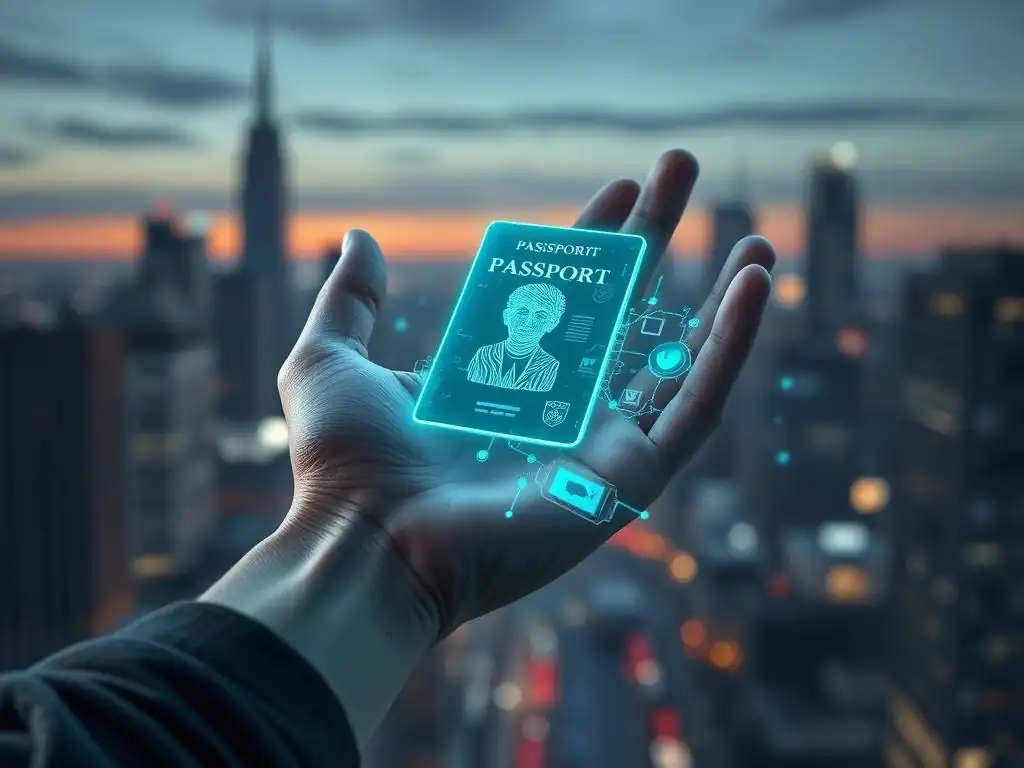
Welcome to Blockchain Trends, your guide to understanding the revolution beyond cryptocurrency. Are you ready to unlock the secrets of verifiable credentials? Our in-depth exploration of the Blockchain digital trust verification process reveals how this technology is shaping the future of digital identity and trust. Delve in to discover how blockchain is fostering secure and transparent interactions in an increasingly interconnected world – and why it matters to you. What new possibilities will it unlock? Let's find out.
Verifiable Credentials: Blockchain's Building Blocks for Digital Trust
- Introduction: The Rise of Digital Trust in the Blockchain Era
- What are Verifiable Credentials? A Deep Dive
- Blockchain's Role in Enhancing Verifiable Credentials
- The Blockchain Digital Trust Verification Process Explained
- Use Cases of Verifiable Credentials in Blockchain Applications
- Benefits of Using Verifiable Credentials for Digital Trust
- Challenges and Considerations for Widespread Adoption
- The Future of Digital Identity: Verifiable Credentials Leading the Way
- Conclusion: Building a More Trustworthy Digital Future with Blockchain
-
Frequently Asked Questions
- How does blockchain technology enhance the verifiability of digital credentials?
- What role do verifiable credentials play in establishing "Blockchain digital trust verification process"?
- Beyond identity, what other applications benefit from verifiable credentials and blockchain-based trust systems?
- What are some of the regulatory challenges surrounding the adoption of blockchain-based digital trust verification processes?
- How will decentralized identity and verifiable credentials shape the future of online interactions and data ownership?
- Final Reflection: Forging a Future of Trust with Verifiable Credentials
- Unlock Your Digital Identity: Start Building with Verifiable Credentials
Introduction: The Rise of Digital Trust in the Blockchain Era
Understanding the Growing Need for Secure Digital Identities
In today's increasingly digital world, the need for secure, reliable, and privacy-preserving digital identities has become paramount. Traditional identity systems, often relying on centralized databases or physical documents, are vulnerable to fraud, breaches, and misuse. High-profile data breaches impacting hundreds of millions of users globally underscore the fragility of current models.
For instance, a major credit reporting agency breach in 2017 exposed the personal data of approximately 147 million people, highlighting the systemic risks associated with centralized storage of sensitive information. Individuals and organizations alike require robust mechanisms to verify claims and attributes about a person or entity without compromising their fundamental privacy or security.
The digital economy, from online banking and e-commerce to remote work and healthcare, depends heavily on the ability to trust the identities and credentials presented. However, verifying authenticity often involves cumbersome processes, repeated sharing of sensitive personal data, and reliance on third parties, increasing friction and potential points of failure. The estimated cost of identity fraud reached billions of dollars annually across major economies even before the significant shift to digital interactions accelerated by recent global events. This escalating challenge necessitates a paradigm shift towards more resilient and user-centric approaches to digital identity and the associated verification processes.
How Blockchain is Revolutionizing Digital Trust and Verification
Blockchain technology, initially known for powering cryptocurrencies like Bitcoin, offers a foundational shift in how we approach trust and verification in the digital realm. By providing a decentralized, immutable, and transparent ledger, blockchain removes the reliance on a single central authority for recording and validating transactions or data. This inherent characteristic makes it uniquely suited to underpin systems where trust needs to be established between multiple parties who may not inherently trust each other.
This distributed ledger technology enables the creation of systems where data integrity is verifiable by anyone on the network, rather than depending on the trustworthiness of a single data holder. When applied to identity and credentials, blockchain allows for the anchoring of verifiable proofs in a way that is resistant to tampering and censorship. This significantly enhances the blockchain digital trust verification process, moving from an opaque, centralized model to a transparent, decentralized one where the validity of claims can be cryptographically verified against an immutable record, fostering a new level of confidence in digital interactions.
What are Verifiable Credentials? A Deep Dive
Defining Verifiable Credentials: Beyond Traditional Identification
Verifiable Credentials represent a new standard for expressing information about an individual or entity in a secure, privacy-preserving, and machine-verifiable manner. Unlike traditional forms of identification or documentation (like physical passports, driver's licenses, or paper diplomas) which often involve manual processes, centralized issuance, and limited digital portability, Verifiable Credentials are designed for the digital age. They are digital documents containing cryptographically-signed claims, such as "This person is over 18," "This person holds a degree in Computer Science from University X," or "This company is a registered vendor for Product Y."
These credentials move beyond simple identification to encompass a wide range of attributes and qualifications. They are based on open standards developed by organizations like the World Wide Web Consortium (W3C), ensuring interoperability and broad applicability.
The core concept is to allow an individual or organization (the holder) to possess digital proofs of their attributes, issued by a trusted source (the issuer), and present them to any party (the verifier) who needs to confirm those attributes, all while maintaining control over their own data. This contrasts sharply with current methods where sensitive data is often shared broadly and stored in numerous locations.
Key Components of a Verifiable Credential Ecosystem
A functional Verifiable Credential ecosystem relies on the interaction of several key components working together through defined protocols. At the heart of the system are the Verifiable Credentials themselves, which are structured data objects containing claims and cryptographic proofs. These credentials are tied to Decentralized Identifiers (DIDs), a new type of identifier designed for decentralized digital identity that is not tied to a single registry or provider. DIDs enable entities to generate, register, and manage their own identifiers without relying on a centralized authority.
Supporting infrastructure includes secure digital wallets or agents where individuals can store and manage their DIDs and Verifiable Credentials. These wallets allow holders to receive credentials, manage their consent for sharing, and present specific proofs to verifiers.
The blockchain digital trust verification process is facilitated by the ability of verifiers to cryptographically check the signature of an issuer on a presented credential and, crucially, check the status of the issuer's DID and potentially the credential itself (e.g., revocation status) anchored or referenced on a blockchain or distributed ledger. This interconnected system ensures that credentials can be issued, held, and verified securely and privately across different applications and platforms.
The Role of Issuers, Holders, and Verifiers
The Verifiable Credential framework defines three primary roles that interact within the ecosystem. The Issuer is an entity that attests to information and issues a Verifiable Credential containing claims about a subject. Examples of issuers include universities issuing degree credentials, governments issuing identity documents, or companies issuing employment records. Issuers cryptographically sign the credentials they issue, vouching for the accuracy of the claims at the time of issuance.
The Holder is the entity that receives and possesses a Verifiable Credential. This is typically an individual but can also be an organization or even a device. The holder stores their credentials securely, usually in a digital wallet. A key principle is that the holder has control over their credentials and decides when and to whom they present them.
The Verifier is the entity that receives a Verifiable Credential from a holder and checks its validity. Verifiers use the cryptographic proof within the credential and information from the issuer (often referenced via a DID and potentially anchored on a blockchain) to confirm that the credential was issued by a trusted source and has not been tampered with or revoked. This three-party interaction forms the basis of the secure and privacy-preserving blockchain digital trust verification process.
Blockchain's Role in Enhancing Verifiable Credentials
Leveraging Blockchain for Immutable Data Storage and Verification
Blockchain technology provides a critical layer of trust and immutability for Verifiable Credential systems. While the full credential data containing sensitive personal information is typically not stored directly on the blockchain for privacy reasons, the blockchain is used to anchor cryptographic proofs or hashes related to the credentials or the Decentralized Identifiers (DIDs) of the issuers and holders. This anchoring process creates an immutable, tamper-evident record on a distributed ledger.
By anchoring DID documents or revocation registries on a blockchain, verifiers can trust that the information they are checking against has not been altered since it was recorded. For example, if an issuer's public key information is registered on a blockchain via their DID document, a verifier can cryptographically confirm that the key used to sign a credential is the legitimate key associated with that issuer at the time of verification. This immutability is fundamental to the blockchain digital trust verification process, ensuring that the foundational elements required to validate a credential's authenticity are reliable and resistant to fraud.
Decentralized Identity (DID) and Verifiable Credentials: A Synergistic Relationship
Decentralized Identifiers (DIDs) and Verifiable Credentials are often described as two sides of the same coin in the realm of decentralized digital identity. DIDs provide the underlying addressable entity – a persistent, self-managed identifier for a person, organization, or thing – that is not tied to any single service provider. Verifiable Credentials are the attestations or claims about that DID. You can think of the DID as the digital equivalent of "who I am" (or rather, "this is my unique digital handle"), and Verifiable Credentials as "what I know" or "what I have done" or "what attributes I possess."
The synergy lies in how they enable self-sovereign identity. A user (holder) controls their DID and uses it to receive Verifiable Credentials from various issuers.
When presenting a credential to a verifier, the verifier uses the DID method specified in the credential to resolve the issuer's DID document (often located or anchored via a blockchain) to retrieve necessary information, such as the issuer's public key, to verify the credential's signature. This combination allows for a digital identity system where the individual is at the center, controlling their identifiers and credentials, and leveraging the decentralized nature of blockchain and DIDs for trust and verification without relying on a central authority or honeypot of personal data.
Enhancing Security and Privacy through Blockchain-Based Credentials
Integrating blockchain into the Verifiable Credentials framework significantly enhances both security and privacy compared to traditional systems. From a security perspective, the cryptographic anchoring on an immutable ledger makes it extremely difficult, if not practically impossible, for malicious actors to tamper with the foundational identity information or the status of issued credentials (like revocation). The distributed nature of blockchain also reduces the risk of a single point of failure or attack that could compromise an entire identity system, a vulnerability inherent in centralized databases.
Regarding privacy, Verifiable Credentials, especially when combined with DIDs and anchored on a blockchain, empower users with greater control over their data. Instead of sharing a full identity document (like a passport) to prove a single attribute (like age), a holder can present a specific Verifiable Credential containing only the necessary claim (e.g., "over 18"), cryptographically signed by a trusted issuer and verifiable via the blockchain.
This selective disclosure minimizes the amount of personal data shared and reduces the risk of oversharing. The blockchain digital trust verification process thus becomes not only secure but also privacy-preserving, aligning with principles of data minimization and user consent.
The Blockchain Digital Trust Verification Process Explained
Step-by-Step Breakdown of the Verification Workflow
The blockchain digital trust verification process for Verifiable Credentials involves a series of distinct steps, starting from the issuance of the credential and culminating in its verification by a third party. First, an Issuer creates a Verifiable Credential containing claims about a Holder. The issuer cryptographically signs this credential using their private key. The signed credential is then sent to the holder, who stores it securely in a digital wallet application.
When the holder needs to prove an attribute to a Verifier, they select the relevant Verifiable Credential from their wallet and present it to the verifier. This presentation can be done offline or online, depending on the application. The verifier receives the credential and initiates the verification process.
This involves several checks: 1) verifying the cryptographic signature on the credential using the issuer's public key, 2) resolving the issuer's Decentralized Identifier (DID) to obtain their DID document (often anchored or referenced on a blockchain or distributed ledger), and 3) checking the status of the credential (e.g., ensuring it hasn't been revoked) against information potentially recorded on a ledger or through a separate status service referenced via the DID document. Only if all checks pass is the credential deemed valid and trustworthy.
From Issuance to Verification: A Complete Lifecycle Overview
The lifecycle of a Verifiable Credential begins with the Issuance phase. An authorized entity (the issuer) gathers verified information about a subject (the holder) and packages this information into a structured digital format according to W3C Verifiable Credentials specifications. The issuer then signs this package using their private key, creating a tamper-evident credential. This signed credential is then delivered to the holder, typically into a secure digital wallet.
The Holding phase involves the holder storing and managing their credentials. The holder has control over their wallet and the credentials within it. They can inspect the credentials, organize them, and decide which ones to share. The Presentation phase occurs when the holder needs to prove a claim to a verifier.
The holder selects the appropriate credential(s) and generates a Verifiable Presentation, which is a package containing the selected credentials and potentially proofs of selective disclosure (e.g., zero-knowledge proofs) to share minimal information. Finally, the Verification phase is where the verifier receives the presentation and checks the validity of the credentials within it, primarily by verifying signatures, resolving DIDs, and checking status information (often using blockchain references). This complete lifecycle, particularly the verification steps leveraging blockchain, forms the core of the blockchain digital trust verification process.
Ensuring Data Integrity and Authenticity with Blockchain Technology
Blockchain technology plays a crucial, albeit often indirect, role in ensuring the data integrity and authenticity of Verifiable Credentials. While the sensitive content of a credential isn't typically on-chain, cryptographic proofs and identity anchors are. When an issuer registers their DID or updates their DID document (containing public keys and service endpoints) on a blockchain, that record becomes highly resistant to tampering. A verifier resolving this DID document via the blockchain can be confident they are retrieving the legitimate, unaltered public information needed to verify the issuer's signature on a credential.
Furthermore, mechanisms for credential revocation status can leverage blockchain. An issuer might publish a hash of revoked credentials or a pointer to a revocation list on-chain. A verifier can then check this immutable on-chain record to confirm that a presented credential has not been invalidated by the issuer. This anchoring of critical identity and status information on a distributed, immutable ledger provides a strong guarantee of authenticity for the parties involved in the blockchain digital trust verification process, significantly reducing the risk of fraud through credential forgery or presentation of revoked credentials.
Use Cases of Verifiable Credentials in Blockchain Applications

Streamlining KYC/AML Processes with Blockchain-Based Identity
Know Your Customer (KYC) and Anti-Money Laundering (AML) regulations require financial institutions and other regulated entities to verify the identity of their customers. This process is traditionally cumbersome, repetitive, and involves collecting and storing sensitive personal documents. Using Verifiable Credentials anchored by blockchain can significantly streamline KYC/AML. A customer can obtain a KYC credential from a trusted identity verification service (the issuer) after a one-time verification process. This credential, stored in the user's wallet, contains verified attributes like name, address, and date of birth, potentially with proofs of meeting certain thresholds (e.g., "verified identity level 2").
When opening an account with a bank (the verifier), the customer can simply present this KYC credential. The bank uses the blockchain digital trust verification process to cryptographically verify the credential's authenticity against the issuer's DID anchored on a ledger and potentially check its revocation status. This eliminates the need for the bank to re-collect and store copies of identity documents, reducing operational costs, improving efficiency, and significantly enhancing customer privacy by minimizing data sharing. Estimates suggest this approach could reduce KYC costs by 10-30% and improve customer onboarding times from days to minutes.
Enhancing Supply Chain Transparency and Traceability
Supply chains are complex networks involving numerous parties, making transparency and tracing the origin and journey of goods challenging. Verifiable Credentials can be used to create digital proofs of origin, ownership transfers, quality certifications, and other critical events within a supply chain. For example, a manufacturer can issue a Verifiable Credential for a batch of goods, certifying its production date and origin. As the goods move, each handler (shipper, distributor, retailer) can issue a credential confirming receipt and transfer of ownership or adding information like temperature logs during transit.
These credentials, linked to specific product identifiers (potentially also represented by DIDs), can be anchored or referenced on a blockchain. Any party in the supply chain, or even the end consumer, can use the blockchain digital trust verification process to verify the authenticity and history of the goods by checking the associated Verifiable Credentials and their on-chain anchors.
This provides an immutable and transparent record of the product's journey, combating counterfeiting, ensuring compliance with regulations (like food safety standards), and building trust among supply chain participants and consumers. Pilot projects have shown significant improvements in tracing speed and accuracy compared to traditional paper-based or siloed digital systems.
Secure and Efficient Healthcare Data Management
Healthcare involves highly sensitive personal data, and current systems often suffer from fragmentation, lack of interoperability, and security vulnerabilities. Verifiable Credentials offer a path towards more secure and patient-centric healthcare data management. A patient can hold Verifiable Credentials issued by different healthcare providers (hospitals, labs, doctors) for specific medical records, test results, or vaccination status. For instance, a lab can issue a credential for a blood test result, or a hospital can issue one for a discharge summary.
The patient stores these credentials in their secure digital wallet. When visiting a new doctor or specialist, the patient can selectively share relevant medical credentials, giving the new provider access only to the specific information needed for diagnosis or treatment. The provider uses the blockchain digital trust verification process to authenticate the credentials, ensuring they were issued by a legitimate source and haven't been tampered with.
Anchoring issuer DIDs or credential hashes on a blockchain provides the necessary trust layer. This model empowers patients with control over their medical history, improves data interoperability between providers, and enhances privacy by minimizing the need to share full, extensive medical records.
Revolutionizing Education Credentials and Professional Certifications
The traditional system for issuing and verifying academic degrees, diplomas, and professional certifications is often slow, prone to fraud, and difficult for employers to verify efficiently. Universities, colleges, and professional bodies can issue Verifiable Credentials for degrees, course completion, or specific skills. These digital credentials, signed by the institution (the issuer) and stored by the graduate (the holder), contain verifiable claims about their qualifications.
When applying for a job or further education (to a verifier), the graduate presents the relevant Verifiable Credentials from their wallet. The employer or institution can instantly verify the authenticity of the credential using the blockchain digital trust verification process, checking the issuer's signature and potentially confirming the credential's validity against an on-chain record or service referenced by the issuer's DID. This eliminates the need for paper transcripts, reduces administrative burden for institutions and applicants, speeds up hiring processes, and drastically reduces diploma mill fraud. Several universities globally are already piloting or implementing blockchain-based Verifiable Credentials for academic records.
Benefits of Using Verifiable Credentials for Digital Trust
Increased Security and Reduced Fraud
One of the most significant benefits of Verifiable Credentials, particularly when combined with blockchain technology, is the substantial increase in security and reduction in fraud. Traditional credentials are often static and easy to forge or alter. Verifiable Credentials, however, are cryptographically signed by the issuer. Any attempt to tamper with the credential invalidates the signature, which is instantly detectable during the blockchain digital trust verification process.
Furthermore, by anchoring issuer identities (DIDs) and potentially credential status information (like revocation lists) on an immutable blockchain, the system becomes highly resistant to attacks aimed at compromising the foundational trust anchors. A verifier can rely on the integrity of the on-chain data to confirm the legitimacy of the issuer and the credential's status. This distributed and cryptographically secured approach makes it vastly more difficult for malicious actors to create or use fraudulent credentials compared to centralized, less transparent systems, leading to a more secure digital environment.
Improved User Privacy and Data Control
Verifiable Credentials shift the control of identity data from centralized authorities and service providers to the individual user (the holder). Users store their credentials in their personal digital wallets, not in databases owned by third parties. This gives individuals unprecedented control over their own information, aligning with principles of self-sovereign identity.
When a verifier requires proof of an attribute, the user can selectively disclose only the specific credential(s) containing that attribute, rather than sharing a complete identity document that contains much more information than is necessary. Advanced techniques like zero-knowledge proofs, which can be used in conjunction with Verifiable Credentials, allow a user to prove that they meet certain criteria (e.g., "I am over 18") without revealing the underlying data (e.g., their exact date of birth).
This granular control and selective disclosure, facilitated by the blockchain digital trust verification process which validates these privacy-preserving proofs, dramatically enhances user privacy and minimizes the digital footprint left during online interactions.
Enhanced Interoperability and Standardization
The Verifiable Credentials framework is built on open standards developed by the W3C, such as the Verifiable Credentials Data Model and Decentralized Identifiers (DIDs) specifications. This commitment to open standards is crucial for achieving interoperability across different platforms, applications, and industries. Unlike proprietary identity systems that create data silos and vendor lock-in, Verifiable Credentials are designed to work seamlessly regardless of which software wallet a user employs, which issuer issued the credential, or which verifier is checking it.
The use of standardized data models and protocols for issuance, holding, and verification means that a credential issued by one entity (e.g., a university in one country) can be understood and verified by another entity (e.g., an employer in a different country), provided they both adhere to the standards. While specific blockchain implementations for anchoring DIDs might vary, the DID method specifications provide a standardized way to resolve identifiers across different ledgers or systems. This adherence to global standards fosters a truly interconnected and functional ecosystem for the blockchain digital trust verification process, enabling widespread adoption and utility.
Cost Savings and Efficiency Gains
Implementing Verifiable Credentials can lead to significant cost savings and efficiency gains for organizations across various sectors. For issuers, it reduces the administrative burden and costs associated with printing, mailing, and manually verifying paper documents. Digital issuance is faster and cheaper. For verifiers, the automated blockchain digital trust verification process drastically reduces the time and labor required to check credentials compared to manual verification or contacting the original issuer.
For example, onboarding new employees or customers can be accelerated from days or weeks to minutes. The risk reduction associated with decreased fraud also translates into financial savings. While there are initial costs associated with implementing the necessary infrastructure, the long-term operational efficiencies and reduced fraud losses offer a compelling return on investment. Estimates from various pilot programs suggest potential cost reductions in identity verification processes ranging from 20% to over 50% in some cases.
Challenges and Considerations for Widespread Adoption
Addressing Scalability and Performance Issues
While blockchain offers significant advantages for trust and immutability, certain blockchain platforms, particularly public, permissionless ones, can face challenges with scalability and transaction throughput. Anchoring a large volume of DID registrations, credential hashes, or revocation updates on a blockchain needs to be efficient and cost-effective. High transaction fees or slow confirmation times on some networks could become a barrier to widespread adoption, especially for applications requiring frequent updates or high transaction volumes.
Solutions being explored include using permissioned or consortium blockchains optimized for enterprise use, leveraging layer-2 scaling solutions, or employing hybrid approaches where only minimal proofs or hashes are committed to a public chain, while more detailed information or revocation status is managed off-chain but secured via cryptographic proofs anchored on the ledger. Ensuring the blockchain digital trust verification process remains performant and cost-efficient as millions or billions of credentials are issued and verified globally is a critical area of focus for the ecosystem's growth.
Ensuring Regulatory Compliance and Legal Acceptance
The legal and regulatory landscape surrounding digital identity and blockchain technology is still evolving in many jurisdictions. For Verifiable Credentials to achieve widespread adoption, there needs to be clear legal recognition and acceptance of these digital proofs as equivalent to, or even superior to, traditional paper documents. Regulations like GDPR in Europe or CCPA in California highlight the importance of privacy and data control, which Verifiable Credentials are well-suited to address, but their specific legal standing needs to be solidified.
Furthermore, the use of blockchain in the blockchain digital trust verification process raises questions around data residency, immutability (and the "right to be forgotten"), and jurisdiction. While blockchain adds integrity, the legal frameworks for identity verification, electronic signatures, and data protection need to adapt to fully accommodate decentralized identity technologies. Collaboration between technologists, legal experts, and policymakers is essential to establish clear guidelines and foster an environment where Verifiable Credentials can be legally relied upon across different sectors and borders.
Overcoming Interoperability Challenges Across Different Blockchain Platforms
Although Verifiable Credentials and DIDs are based on open standards, the underlying blockchain or distributed ledger used to anchor DIDs and related status information can vary. Different projects and consortia might choose different ledgers (e.g., Hyperledger Indy, Ethereum, Polygon, custom DLTs) based on their specific needs regarding performance, permissioning, or governance. This can lead to potential interoperability challenges if a verifier needs to resolve a DID anchored on a ledger they do not support or are not connected to.
The DID specification includes a mechanism for "DID Methods," which define how a specific type of DID is created, resolved, updated, and deactivated on a particular network or system. While DID Methods aim to standardize the interface for interacting with DIDs across different platforms, the underlying infrastructure differences remain. Ensuring seamless resolution of DIDs and verification of associated on-chain proofs across a diverse landscape of blockchain implementations is crucial for a truly global and interoperable blockchain digital trust verification process. Efforts within the W3C and decentralized identity community are focused on promoting standard DID methods and interoperability protocols.
User Education and Awareness: Bridging the Knowledge Gap
For Verifiable Credentials and decentralized identity to become mainstream, there is a significant need for user education and awareness. The concepts of DIDs, Verifiable Credentials, digital wallets, and the underlying blockchain digital trust verification process are relatively new and complex for the average user. Individuals need to understand the benefits – enhanced privacy, security, and control – and how to securely manage their digital wallets and credentials.
Issuers and verifiers also need to understand the technology and implement user-friendly interfaces and processes. Bridging the knowledge gap requires clear communication, intuitive application design, and potentially government or industry-led initiatives to promote understanding and adoption. Without broad user understanding and confidence, even the most technically robust system will struggle to achieve widespread use. Building trust in this new model of digital identity requires more than just technology; it requires empowering users through knowledge.
The Future of Digital Identity: Verifiable Credentials Leading the Way
Exploring the Potential of Self-Sovereign Identity (SSI)
Verifiable Credentials are a foundational technology enabling the vision of Self-Sovereign Identity (SSI). SSI is a paradigm where individuals have complete ownership and control over their digital identity, independent of any single government, corporation, or other administrative authority. In an SSI model, users manage their own identifiers (DIDs) and store their credentials (VCs) in secure digital wallets. They decide which information to share, with whom, and for how long.
This contrasts sharply with federated identity (like "Login with Google") or siloed identity systems, where a third party controls the identity data. SSI, built upon the technical pillars of DIDs and VCs, often leveraging blockchain for trust anchoring, promises a future where digital interactions are more private, secure, and user-centric. The blockchain digital trust verification process is integral to SSI, providing the technical assurance that claims made by the user, via their VCs, are authentic and trustworthy, without requiring the user to surrender control of their core identity or data.
The Convergence of Blockchain, Verifiable Credentials, and AI
The future of digital identity and trust involves the convergence of several transformative technologies. Blockchain provides the decentralized trust layer and immutability for anchoring identifiers and proofs. Verifiable Credentials offer the standardized, privacy-preserving format for representing identity claims. Artificial Intelligence (AI) is increasingly being explored to enhance various aspects of this ecosystem, from fraud detection during the issuance process to risk assessment during verification.
AI could potentially analyze patterns in credential presentations or verification requests to identify suspicious activity more effectively than traditional rules-based systems. It could also assist users in managing their credentials, suggesting which credentials might be relevant for a particular interaction based on context, or helping to generate minimal disclosures. However, the integration of AI must be approached carefully to ensure it enhances, rather than compromises, user privacy and control within the blockchain digital trust verification process. The combination of these technologies holds the potential to create incredibly robust, intelligent, and user-empowering digital identity systems.
Predictions for the Future of Digital Trust and Verification
Looking ahead, several trends are likely to shape the future of digital trust and verification, with Verifiable Credentials and blockchain playing central roles. We can expect to see increasing adoption of VC/DID standards across different sectors, moving beyond initial pilots in government, education, and finance into areas like travel (digital passports/visas), voting, and the Internet of Things (IoT) identity. Regulatory clarity is expected to improve, providing a more stable legal foundation for these technologies.
Interoperability solutions between different blockchain networks and identity systems will likely mature, facilitating seamless cross-platform verification. The user experience of managing digital wallets and credentials will become more intuitive, driving broader consumer adoption. Ultimately, the blockchain digital trust verification process, powered by Verifiable Credentials and DIDs, is poised to become the standard for establishing trust in digital interactions, moving away from centralized, data-vulnerable models towards a decentralized, user-controlled, and privacy-preserving future of digital identity.
Conclusion: Building a More Trustworthy Digital Future with Blockchain
The Transformative Power of Verifiable Credentials
Verifiable Credentials represent a fundamental shift in how we manage and verify identity and attributes in the digital age. By moving away from outdated, centralized systems prone to breaches and fraud, they empower individuals with control over their data and enable organizations to verify claims in a secure, efficient, and privacy-preserving manner. Their standardized nature ensures interoperability, paving the way for a globally connected digital identity ecosystem.
When combined with the decentralized trust and immutability offered by blockchain technology, Verifiable Credentials become powerful building blocks for constructing a more trustworthy digital future. They are not just a technical specification; they are a key enabler for self-sovereign identity, putting the individual back at the center of their digital life and interactions.
Embracing Blockchain for Enhanced Digital Identity and Security
Blockchain's role in providing a decentralized, immutable anchor for identity information is critical to the reliability and security of Verifiable Credential systems. It provides the underlying infrastructure that allows verifiers to trust the authenticity and integrity of the identity proofs being presented, without relying on a single point of control or failure. The blockchain digital trust verification process moves trust from centralized authorities to decentralized, cryptographically secured networks.
Embracing blockchain technology in the development and deployment of digital identity solutions based on Verifiable Credentials is essential for realizing the full potential of this transformative approach. It offers a robust foundation for enhanced security, increased privacy, and unprecedented efficiency in digital interactions, promising a future where establishing trust online is faster, safer, and more respectful of individual data rights.
Frequently Asked Questions
How does blockchain technology enhance the verifiability of digital credentials?
Blockchain provides an immutable and transparent ledger, making it extremely difficult to tamper with credential data. This enhanced security allows for independent verification of credentials' authenticity and validity.
What role do verifiable credentials play in establishing "Blockchain digital trust verification process"?
Verifiable credentials act as building blocks, offering a standardized format for issuing and verifying digital trust. They allow individuals and organizations to prove claims without revealing underlying sensitive data, fostering trust.
Beyond identity, what other applications benefit from verifiable credentials and blockchain-based trust systems?
Supply chain management, education, and healthcare are all ripe for disruption. Verifiable credentials enable traceability, credential validation, and secure data sharing across decentralized networks.
What are some of the regulatory challenges surrounding the adoption of blockchain-based digital trust verification processes?
Lack of clear legal frameworks and data privacy regulations pose significant hurdles. Ensuring compliance with GDPR and other regional laws is crucial for widespread adoption.
How will decentralized identity and verifiable credentials shape the future of online interactions and data ownership?
Individuals will gain greater control over their data and online identities. This shift towards decentralized systems empowers users and fosters a more trustworthy and secure digital environment.
Final Reflection: Forging a Future of Trust with Verifiable Credentials
The journey through the landscape of Verifiable Credentials reveals a powerful truth: blockchain technology offers more than just cryptocurrency; it provides the foundational elements for a future built on digital trust. The ability to verify information securely and transparently, without relying on centralized authorities, is no longer a futuristic concept but a present-day necessity, especially as we navigate an increasingly digital world rife with misinformation and data breaches.
This exploration has underscored the profound impact Verifiable Credentials are poised to have on our cultural and social fabric. The potential to empower individuals with control over their own data, while simultaneously fostering greater trust in online interactions, is truly transformative. Trust is the glue of life. It's the most essential ingredient in effective communication. It's the foundational principle that holds all relationships together.
- Stephen Covey. This quote resonates deeply as we consider the role Verifiable Credentials can play in rebuilding trust in a digital age where it has become increasingly fragile.
As we stand at the cusp of this technological revolution, let us not simply be passive observers. Instead, let us embrace the potential of Verifiable Credentials to shape a more trustworthy and equitable digital future. Consider how you can advocate for the adoption of these technologies, demand greater transparency from the institutions you interact with, and actively participate in building a world where trust is not a commodity to be earned, but a fundamental right to be protected. The future of digital trust is in our hands; let's build it wisely.
Unlock Your Digital Identity: Start Building with Verifiable Credentials
Thank you for exploring the future of digital trust with us! Now that you understand the power of verifiable credentials, it's time to take the next step and put this knowledge into action.
Here's how you can get started:
- Explore standards and frameworks for verifiable credentials, such as those established by the World Wide Web Consortium, to understand implementation details. This is your primary action!
- Experiment and innovate by downloading and testing decentralized identity solutions.
- Share the knowledge by discussing the potential of verifiable credentials with your network and spreading awareness about this transformative technology.
What exciting applications of verifiable credentials are you envisioning, and what first steps will you take to bring them to life? Let us know in the comments!
Leave a Reply