
Voting and Elections: Enhancing Security with Blockchain Identity

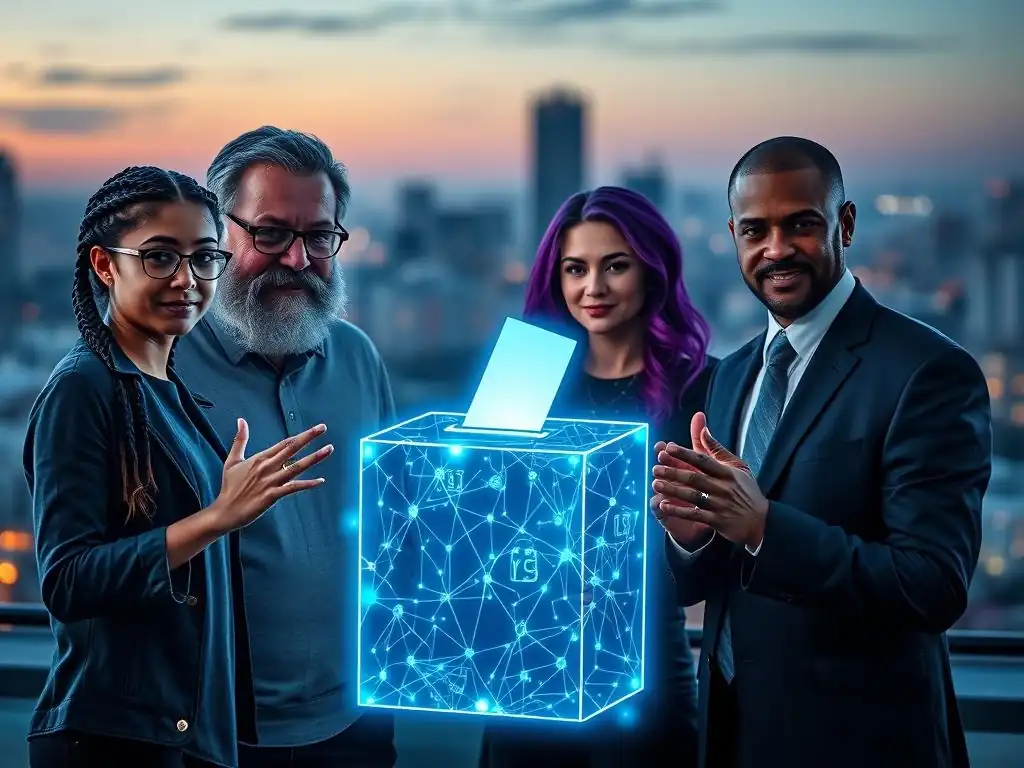
Welcome to Blockchain Trends, your go-to source for understanding the real-world impact of blockchain technology. Beyond the hype, discover how this revolutionary technology is reshaping industries and redefining trust. Ever wondered how blockchain can make elections more secure and transparent? Dive in to explore how Blockchain voting security solutions are leveraging decentralized identity to create a more verifiable and tamper-proof electoral process. Uncover the potential to revolutionize voting and secure the future of democracy.
-
Blockchain Voting Security Solutions: Securing Elections with Decentralized Identity
- Introduction: The Need for Enhanced Election Security
- The Vulnerabilities of Traditional Voting Systems
- Blockchain Technology: A Paradigm Shift for Secure Elections
- Blockchain-Based Digital Identity for Voter Authentication
- Implementing Blockchain Voting Security Solutions: Practical Examples
- Addressing the Challenges of Blockchain Voting Adoption
- The Future of Blockchain Voting Security Solutions
- Conclusion: Blockchain as a Catalyst for Trustworthy Elections
-
Frequently Asked Questions
- What are the primary benefits of using blockchain for voting and elections?
- How does blockchain identity contribute to more secure voting processes?
- What are some of the challenges associated with implementing blockchain voting security solutions?
- How can blockchain help address concerns about voter fraud and manipulation in elections?
- What are the current regulatory considerations surrounding the use of blockchain in elections?
- Final Reflection: Securing Democracy's Future
Blockchain Voting Security Solutions: Securing Elections with Decentralized Identity
Introduction: The Need for Enhanced Election Security
The integrity of democratic processes hinges on the trustworthiness and security of elections. Traditional voting systems, while serving democracies for centuries, face increasing scrutiny due to vulnerabilities ranging from potential fraud and errors in manual processes to sophisticated cyber threats targeting electronic systems. Public confidence in election outcomes can erode rapidly if the security of the voting process is questioned, making the pursuit of robust and verifiable election systems a critical global imperative.
Enhancing election security requires innovative approaches that can guarantee accuracy, prevent manipulation, and ensure voter privacy while maintaining transparency. The emergence of blockchain technology, particularly its capabilities in creating secure, immutable, and transparent ledgers, presents a compelling opportunity to address these long-standing challenges. Exploring blockchain voting security solutions is no longer theoretical; it is becoming a practical necessity for modernizing electoral infrastructure and safeguarding the fundamental right to vote.
The Vulnerabilities of Traditional Voting Systems
Traditional election methods, whether paper-based or electronic, are susceptible to various forms of attack and error. These vulnerabilities can undermine the legitimacy of an election and make the outcomes difficult to verify independently. Understanding these weaknesses is the first step in appreciating the potential of blockchain voting security solutions.
Centralized Databases: A Single Point of Failure
Many modern electronic voting systems rely on centralized databases to store voter registration information and cast ballots. While efficient, this architecture creates a single, high-value target for malicious actors. A successful cyberattack on a centralized database could potentially compromise voter rolls, alter vote counts, or even delete critical election data, making audits incredibly challenging.
Furthermore, the concentration of data in one location increases the risk of insider threats or unauthorized access. Breaches in voter registration databases have occurred, exposing millions of records and raising concerns about identity theft and potential manipulation of the electoral process. For instance, a reported breach in 2016 affected voter data for millions of Americans, highlighting the inherent risks of relying on centralized data storage for such sensitive information.
Paper-Based Voting: Susceptible to Fraud and Errors
Despite their apparent simplicity, paper-based voting systems are far from immune to issues. Manual counting is prone to human error, and recounts can be time-consuming and still yield discrepancies. The physical handling of ballots introduces opportunities for fraud, such as ballot stuffing, tampering with ballots, or misplacing or destroying votes.
Ensuring the secure transport and storage of physical ballots across vast geographical areas presents significant logistical and security challenges. Chain of custody can be difficult to maintain perfectly, and while audits and recounts exist, they are retrospective and cannot prevent initial manipulation. A specific example often cited is the complexity and disputes arising from manual recounts in close elections, demonstrating the inherent fallibility of purely physical systems.
Electronic Voting Machines: Concerns over Tampering and Transparency
Electronic voting machines (EVMs) were introduced to improve efficiency and accuracy but have introduced their own set of vulnerabilities. Concerns range from software glitches that could miscount votes to the potential for machines to be programmed to favor certain candidates. The proprietary nature of some EVM software often makes independent audits and verification difficult, leading to a lack of transparency.
Without a verifiable paper trail or an independently auditable digital record, voters and observers must simply trust that the machines are functioning correctly and honestly. Reports of security flaws discovered in various EVM models over the years, including vulnerabilities to hacking via physical ports or even wireless signals in some cases, underscore the significant risks associated with unauditable or easily compromised electronic systems.
Blockchain Technology: A Paradigm Shift for Secure Elections
Blockchain technology offers a fundamentally different approach to data management and transaction recording, one that is inherently suited to addressing many of the security shortcomings of traditional voting systems. By providing a distributed, immutable, and transparent ledger, blockchain can establish a new foundation of trust in the electoral process.
What is Blockchain and How Does It Work?
At its core, a blockchain is a decentralized, distributed ledger that records transactions across many computers. These transactions are grouped into "blocks," and each new block is cryptographically linked to the previous one, forming a chain. Once a block is added to the chain, it is extremely difficult to alter or remove the data it contains without invalidating the entire chain, which would require the consensus of a majority of the network participants.
This structure ensures that the ledger is highly resistant to tampering. Instead of relying on a single central authority to maintain the ledger, the data is replicated and verified across multiple nodes in the network. This distributed nature makes it significantly harder for any single entity to control or manipulate the data, laying a robust foundation for blockchain voting security solutions.
Key Benefits of Blockchain for Voting Security
The inherent properties of blockchain technology translate directly into significant advantages when applied to election security. These benefits address core issues of integrity, transparency, and resilience against attack, making blockchain voting security solutions a compelling alternative.
Immutability: Ensuring Data Integrity in Elections
One of the most powerful features of blockchain is its immutability. Once a transaction (such as a cast vote) is recorded on the blockchain and added to a block, it is cryptographically sealed and linked to the chain. Changing this data would require altering not only that specific block but also all subsequent blocks, and doing so across a distributed network simultaneously is practically impossible.
This immutability ensures that every vote, once cast and recorded, cannot be changed, deleted, or duplicated. This directly combats issues like ballot stuffing or altering vote counts after they have been submitted, providing a level of data integrity that is extremely difficult to achieve with centralized or paper-based systems. It builds a tamper-proof record of the election results from the moment the votes are cast.
Transparency: Enhancing Auditability of the Voting Process
While votes themselves might need to remain anonymous, the process of recording and counting votes on a public or permissioned blockchain can be made transparent. Every transaction (a cast vote, represented by a unique, anonymized identifier) is recorded on the distributed ledger, and this ledger can be viewed and audited by anyone with the necessary permissions (depending on whether it's a public or private/permissioned blockchain).
This transparency allows election observers, auditors, and even the general public to verify that votes are being recorded correctly and that the total count is accurate. While the voter's identity is kept separate or cryptographically protected, the path of a vote from casting to counting can be traced and verified on the blockchain. This level of audibility far surpasses the capabilities of many traditional systems, where the internal workings are often opaque.
Decentralization: Reducing the Risk of Centralized Attacks
Unlike centralized databases, where a single server or location holds all the critical data, a blockchain distributes the ledger across numerous nodes. This decentralization eliminates the single point of failure that plagues traditional electronic systems. Attacking a blockchain-based election system would require compromising a majority of the network's nodes simultaneously, a feat that becomes exponentially more difficult as the network grows.
This distributed resilience makes blockchain voting security solutions highly resistant to denial-of-service attacks, data breaches, and other forms of cyber warfare targeting a single entity. It ensures that even if some nodes are compromised or go offline, the integrity of the overall ledger and the election data remains intact, supported by the remaining participants.
Blockchain-Based Digital Identity for Voter Authentication
Securing the voting process isn't just about recording votes securely; it also requires robust authentication to ensure that only eligible, registered voters can cast a ballot, and only once. Blockchain-based digital identity solutions offer innovative ways to verify voter eligibility and identity securely and privately.
Verifiable Credentials for Secure Voter Registration
Blockchain technology, often combined with Self-Sovereign Identity (SSI) principles, allows for the creation and management of verifiable credentials for voter registration. Instead of relying on a centralized government database to store sensitive personal information, voters can hold their identity attributes (like proof of citizenship, age, and residency) as cryptographically signed credentials issued by trusted authorities.
These credentials can be stored securely on the voter's device or a decentralized network. When registering to vote or casting a ballot, the voter can selectively share only the specific information required (e.g., "Is this person a registered voter in District X?") without revealing their full identity details. This approach enhances privacy while providing a highly secure and verifiable method of confirming eligibility, mitigating the risks associated with centralized voter databases.
Decentralized Identifiers (DIDs) for Anonymous Voting
Decentralized Identifiers (DIDs) are a core component of many blockchain-based identity systems. DIDs are persistent identifiers that do not require a centralized registration authority. They are generated and owned by the individual or entity using them. In the context of voting, a voter could be assigned a unique DID linked to their verified eligibility credential, but not directly linked to their real-world identity on the ballot.
When casting a vote, the system can verify that the vote is associated with a valid, single-use DID that corresponds to an eligible voter, without revealing who that voter is. This separation of identity verification from the act of voting allows for anonymous yet auditable voting, addressing privacy concerns often raised with digital voting systems while maintaining the one-person, one-vote principle essential for fair elections.
Biometric Authentication Integrated with Blockchain Identity
To further strengthen voter authentication and prevent impersonation, blockchain-based identity systems can integrate with biometric data. After a voter's eligibility is verified using verifiable credentials and linked to a DID, subsequent authentication for casting a ballot could require a biometric scan (e.g., fingerprint, facial recognition).
The biometric template itself would not necessarily be stored on the blockchain but could be used to unlock or sign the transaction (the vote) associated with the voter's DID. The blockchain records the successful authentication event linked to the DID, providing an additional layer of security. This combination ensures that the person casting the vote is indeed the eligible voter associated with the unique digital identity, offering a robust defense against identity fraud in the voting process.
Implementing Blockchain Voting Security Solutions: Practical Examples

Several projects and companies are actively developing and piloting blockchain voting security solutions, demonstrating the technology's potential in real-world scenarios. While widespread national adoption is still nascent, these examples provide insight into the practical application of blockchain in elections.
Voatz: A Mobile Blockchain Voting Platform
Voatz is a mobile voting application that utilizes blockchain technology to enable secure voting for specific demographics, such as overseas military personnel and citizens. The platform aims to provide end-to-end verifiability, allowing voters to track their encrypted ballot from casting to tabulation.
Voatz has conducted pilot elections in several US states, including West Virginia and Utah, allowing eligible voters to cast ballots from their mobile devices. While facing scrutiny and security audits, these pilots represent concrete attempts to implement blockchain voting security solutions for specific use cases where traditional absentee voting is challenging. The platform encrypts ballots and uses blockchain to record and verify transactions securely.
Follow My Vote: End-to-End Verifiable Online Voting
Follow My Vote is another project focused on creating end-to-end verifiable online voting systems using blockchain. Their approach prioritizes transparency, aiming to allow voters to verify that their vote was correctly recorded and included in the final tally without revealing their identity.
The system uses a combination of cryptographic methods and a public blockchain (like BitShares) to record votes. Voters receive a tracking code for their encrypted ballot, which they can then use to follow its journey on the public ledger. This focus on voter-side verifiability is a key feature of their blockchain voting security solutions, empowering voters to trust the system by allowing them to independently confirm their vote's integrity.
Agora: Open-Source Blockchain Voting for Democratic Processes
Agora provides an open-source, public blockchain designed specifically for hosting transparent, secure, and verifiable elections. Unlike platforms focused on specific user groups or private blockchains, Agora aims to offer a scalable and publicly auditable infrastructure for national-level elections and other democratic processes.
Agora has been used in pilot elections in countries like Sierra Leone, providing election observers with access to an immutable ledger of votes. While the scale of these pilots may differ from a full national election, they demonstrate the viability of using a public blockchain for recording election data transparently. Their open-source nature encourages scrutiny and collaboration in developing robust blockchain voting security solutions.
Addressing the Challenges of Blockchain Voting Adoption
Despite the significant potential, the path to widespread adoption of blockchain voting security solutions is fraught with challenges. These hurdles span technical, regulatory, and societal dimensions, requiring careful consideration and innovative solutions.
Scalability Issues in Blockchain Voting Systems
One of the primary technical challenges for blockchain voting is scalability. A national election involves millions, potentially hundreds of millions, of voters casting ballots within a short timeframe. Current public blockchain networks, like Bitcoin or Ethereum (even with recent updates), are not designed to handle this volume of transactions per second without significant modifications or layer-two solutions.
While permissioned blockchains or custom-built solutions might offer higher throughput, they can introduce trade-offs in terms of decentralization and public auditability. Developing blockchain voting security solutions that can reliably process the sheer number of votes required for large-scale elections while maintaining security and decentralization remains a significant engineering challenge that requires ongoing research and development in blockchain architecture.
Regulatory Hurdles and Legal Frameworks for Blockchain Elections
Integrating blockchain technology into established electoral systems faces substantial regulatory and legal obstacles. Election laws are often deeply entrenched and vary significantly between jurisdictions. Adopting blockchain voting security solutions requires amending existing laws or creating entirely new legal frameworks to recognize digital votes, blockchain records as official ballots, and the identity verification methods used.
Furthermore, questions surrounding the legal finality of blockchain records, dispute resolution mechanisms, and the chain of custody for digital votes need to be addressed legally. Establishing the legal authority and processes for conducting blockchain-based elections necessitates close collaboration between technologists, legal experts, and election officials to build trust and legitimacy within the existing democratic structure.
Public Perception and Acceptance of Blockchain Voting Technology
Public trust is paramount in elections, and introducing a new, complex technology like blockchain can face skepticism. Many voters and policymakers may not understand how blockchain works, leading to concerns about its reliability, security, and potential for misuse. Past issues with electronic voting machines have already created a degree of mistrust towards digital voting methods.
Educating the public about how blockchain voting security solutions function, explaining the benefits of immutability and transparency, and demonstrating the security measures in place are crucial for gaining acceptance. Building confidence requires successful, transparent pilot programs and clear communication to overcome inherent resistance to change and ensure that voters feel comfortable and secure using the new system.
The Future of Blockchain Voting Security Solutions
The development of blockchain voting security solutions is an evolving field with significant potential for future advancements and broader adoption. As blockchain technology matures and integrates with other digital innovations, its application in securing elections is likely to become more sophisticated and viable for large-scale use.
Integration with Other Digital Identity Technologies
The future will likely see deeper integration of blockchain voting security solutions with a wider array of digital identity technologies. This could include advanced biometric verification methods, secure multi-party computation for preserving voter privacy during tabulation, and the use of Zero-Knowledge Proofs (ZKPs) to verify eligibility and votes without revealing any underlying sensitive data.
Combining the tamper-proof nature of blockchain with the privacy-enhancing capabilities of technologies like ZKPs could lead to highly secure, private, and verifiable voting systems. This synergy would address some of the current trade-offs between transparency and anonymity, paving the way for more robust and privacy-respecting blockchain voting security solutions.
The Potential for Global Adoption of Blockchain Voting
While challenges remain, the successful implementation of blockchain voting security solutions in pilot projects and smaller-scale elections demonstrates the potential for broader, even global, adoption. As the technology becomes more scalable, cost-effective, and understood, it could offer significant advantages, particularly in regions where establishing traditional secure election infrastructure is difficult or expensive.
Blockchain could standardize election security practices across different jurisdictions, providing a universally verifiable method for recording votes. International bodies and election monitoring organizations could play a key role in promoting standards and sharing knowledge on implementing effective blockchain voting security solutions worldwide, potentially enhancing democratic processes globally.
The Role of Blockchain in Promoting Democratic Governance
Ultimately, the future of blockchain voting security solutions is intertwined with the broader goal of promoting democratic governance. By enhancing the security, transparency, and audibility of elections, blockchain can help restore and bolster public trust in democratic institutions.
A system where every eligible vote is securely recorded, cannot be tampered with, and can be independently verified contributes significantly to the legitimacy of election outcomes. This increased confidence can encourage higher voter participation and strengthen the foundations of democracy by ensuring that the will of the people, as expressed through their votes, is accurately and securely reflected.
Conclusion: Blockchain as a Catalyst for Trustworthy Elections
The pursuit of trustworthy elections is fundamental to the health of democracies. Traditional voting methods, while historically significant, face inherent vulnerabilities that can undermine public confidence. Blockchain technology offers a transformative approach to election security, providing a decentralized, immutable, and transparent ledger capable of recording votes with unprecedented integrity.
By leveraging blockchain-based digital identity for secure voter authentication and utilizing the technology's core properties like immutability and transparency, we can build highly resilient blockchain voting security solutions. While significant technical, regulatory, and social hurdles must be overcome, ongoing pilots and advancements in scalability and privacy-enhancing technologies suggest a promising future. Blockchain has the potential to be a powerful catalyst in developing election systems that are not only secure against manipulation but also transparent and verifiable, ultimately strengthening democratic processes by fostering greater trust in the outcome of the vote.
Frequently Asked Questions
What are the primary benefits of using blockchain for voting and elections?
Blockchain offers enhanced transparency and security through its immutable ledger, reducing the risk of fraud and manipulation. This can lead to increased trust in election outcomes.
How does blockchain identity contribute to more secure voting processes?
Blockchain identity solutions allow for the creation of verifiable digital identities, making it harder to impersonate voters or create fraudulent ballots. This significantly improves voter authentication.
What are some of the challenges associated with implementing blockchain voting security solutions?
Challenges include the scalability of blockchain networks, the complexity of implementation, and ensuring accessibility for all voters, regardless of technical expertise.
How can blockchain help address concerns about voter fraud and manipulation in elections?
Blockchain's distributed and immutable nature makes it extremely difficult to alter or delete voting records, thereby deterring and detecting fraud. Each vote becomes a verifiable transaction.
What are the current regulatory considerations surrounding the use of blockchain in elections?
Regulations are still evolving, focusing on data privacy, security standards, and ensuring compliance with existing election laws. Harmonization across jurisdictions is a key challenge.
Final Reflection: Securing Democracy's Future
The exploration of blockchain identity as a cornerstone of enhanced voting security resonates powerfully in today's climate of heightened scrutiny and concerns surrounding electoral integrity. The potential for blockchain voting security solutions to mitigate fraud, increase transparency, and bolster public trust is not just a technological advancement, but a critical step towards safeguarding the very foundations of democratic processes.
The promise of blockchain in elections extends far beyond mere technological novelty; it touches upon the fundamental right to participate in a fair and verifiable election. This pursuit of secure and accessible voting systems is a continuous journey, one that demands innovation and a commitment to upholding democratic values. The ballot is stronger than the bullet.
- Abraham Lincoln. This quote reminds us that the power of the vote, and the integrity of the process, is paramount to a functioning society.
As we conclude this exploration, consider how you can contribute to a future where elections are not only secure but also more accessible and transparent. Reflect on the role technology can play in strengthening democratic institutions and empowering citizens. Let us all strive to be informed advocates for solutions like blockchain voting security, ensuring that the voice of the people is heard, counted, and protected for generations to come.
Voting and elections are fundamental to democratic societies, and ensuring their security is more critical than ever. Implementing blockchain technology for digital identities can significantly enhance the integrity and transparency of the voting process. By leveraging blockchain, we can create secure, tamper-proof systems that prevent fraud and increase voter confidence. Embracing this innovative approach will help modernize electoral systems, safeguard democratic rights, and promote trust in the electoral process. Join us in shaping the future of secure voting—learn more about how blockchain can revolutionize elections today.
Leave a Reply