
Web3 and Identity: How Blockchain is Defining Digital Ownership

Welcome to Blockchain Trends, your compass in the ever-evolving world of decentralized technology!
Ever wondered how blockchain is reshaping more than just cryptocurrency? We delve into its transformative potential, exploring everything from DeFi to enterprise solutions. This week, we're unraveling a crucial application: the blockchain digital ownership verification process. Discover how this innovative approach is redefining digital identity and security in the age of Web3. Intrigued? Dive in to learn how blockchain is paving the way for a future where digital ownership is secure, verifiable, and truly yours.
- The Blockchain Digital Ownership Verification Process: A Detailed Look
-
Frequently Asked Questions
- What is the role of blockchain in defining digital ownership in Web3?
- How does blockchain facilitate the "Blockchain digital ownership verification process" mentioned in the article?
- Beyond cryptocurrencies, what other applications leverage blockchain for digital ownership?
- What are some potential regulatory challenges surrounding blockchain-based digital ownership?
- What does the future hold for blockchain and the concept of digital ownership?
- Final Reflection: Embracing Decentralized Identity
- Unlock Your Web3 Identity Potential!
The Blockchain Digital Ownership Verification Process: A Detailed Look
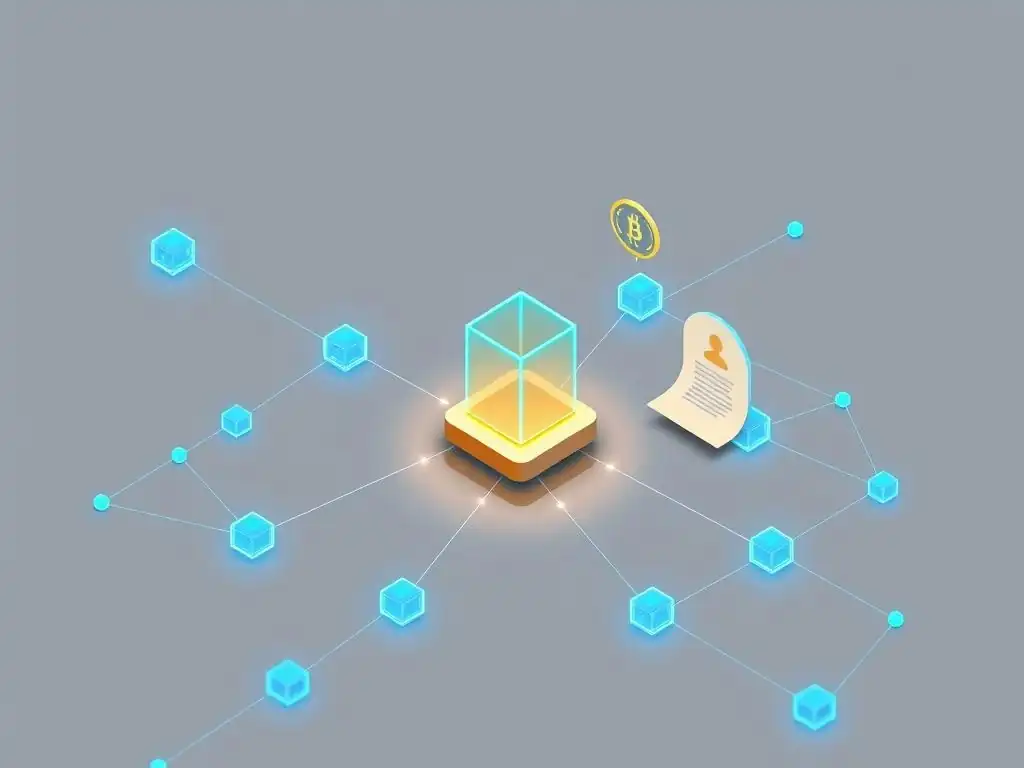
Step-by-Step Breakdown of Blockchain Digital Ownership Verification
The core of the blockchain digital ownership verification process relies on the transparent and immutable nature of the distributed ledger. When an asset, whether it's a tokenized piece of real estate, a digital collectible (NFT), or a representation of intellectual property, is recorded on a blockchain, its ownership is linked to a specific public key address. Verifying this ownership typically begins with accessing the blockchain explorer corresponding to the specific network (e.g., Etherscan for Ethereum, BscScan for Binance Smart Chain).
By inputting the public key address or the unique identifier of the digital asset (like a token ID or transaction hash), anyone can trace the asset's history and confirm the current owner's address as recorded on the public ledger. This eliminates the need for intermediaries or centralized databases to assert ownership, providing a trustless method for verification.
Further detail in the blockchain digital ownership verification process involves examining the transaction history associated with the asset's token ID or the owner's address. Each transaction, such as a transfer of ownership, is cryptographically signed by the sender's private key and broadcast to the network. Miners or validators confirm these transactions, bundling them into blocks that are added to the chain.
The transaction record includes details like the sender's address, the receiver's address, the asset transferred, and a timestamp. Because the blockchain is designed to be immutable, once a block is added, it is extremely difficult to alter the historical record.
This verifiable trail ensures that every transfer of ownership is transparently recorded and can be independently audited by anyone, providing a high degree of assurance regarding the legitimacy of the current owner's claim. For instance, verifying the owner of a specific Bored Ape Yacht Club NFT on Ethereum involves looking up the token ID on Etherscan and seeing the public address that currently holds it, along with its entire transfer history back to its minting.
Smart Contracts and Automated Ownership Transfer
Smart contracts play a pivotal role in automating and securing the blockchain digital ownership verification process and subsequent transfer. These self-executing contracts, with the terms of the agreement directly written into lines of code, reside on the blockchain. They define the rules and conditions under which digital assets can be transferred and verified. For example, a smart contract for an ERC-721 NFT specifies the unique properties of each token and includes functions for safe ownership transfer ( safeTransferFrom). When a user initiates a transfer, the smart contract code executes, automatically checking if the conditions are met (e.g., the sender is the current owner, the transaction is signed correctly) and, if so, updates the ownership record on the blockchain ledger without requiring any manual intervention from a third party.
The automation provided by smart contracts significantly enhances the efficiency and trustworthiness of the blockchain digital ownership verification process and transfer mechanisms. Beyond simple transfers, complex ownership scenarios can be programmed. Consider fractional ownership of a high-value asset like real estate or fine art, represented by multiple tokens (e.g., ERC-20 tokens linked to a primary asset token).
A smart contract can manage the distribution of these fractional tokens, handle buyouts, or even distribute proportional revenue based on programmed rules. This not only automates intricate processes but also ensures that ownership logic is enforced deterministically by code, reducing counterparty risk and providing a verifiable, automated method for managing diverse forms of blockchain digital ownership. For instance, platforms like Centrifuge use smart contracts to tokenize real-world assets like invoices or real estate, allowing investors to purchase fractional ownership represented by tokens, with the smart contract governing the terms and distribution.
Frequently Asked Questions
What is the role of blockchain in defining digital ownership in Web3?
Blockchain provides a decentralized and immutable ledger, allowing for verifiable digital ownership that's independent of central authorities. This enables users to truly own their data and assets.
How does blockchain facilitate the "Blockchain digital ownership verification process" mentioned in the article?
The Blockchain digital ownership verification process uses cryptographic keys and digital signatures to prove ownership. Transactions are recorded on the blockchain, creating a permanent and auditable history.
Beyond cryptocurrencies, what other applications leverage blockchain for digital ownership?
Blockchain enables digital ownership in areas like DeFi (Decentralized Finance), where users control their assets without intermediaries, and NFTs (Non-Fungible Tokens), representing unique digital or physical items.
What are some potential regulatory challenges surrounding blockchain-based digital ownership?
Regulatory challenges include data privacy concerns, compliance with existing laws regarding property rights, and the need for clear legal frameworks to govern decentralized systems.
What does the future hold for blockchain and the concept of digital ownership?
The future promises greater user control over data, enhanced security and transparency, and the emergence of new decentralized applications that redefine how we interact with the digital world.
Final Reflection: Embracing Decentralized Identity
The exploration of Web3 and its potential to revolutionize digital identity culminates in a crucial understanding: the power of blockchain digital ownership verification process is not just theoretical, but a burgeoning reality shaping the future of online interaction. The shift from centralized control to decentralized ownership is no longer a distant dream, but a tangible movement fueled by the inherent transparency and security of blockchain technology.
This journey into Web3 identity has profoundly impacted the way we perceive ownership and control in the digital realm. The ability to truly own and manage our digital assets, verified immutably on a blockchain, represents a fundamental shift in power dynamics, empowering individuals and fostering a more equitable online ecosystem. The future of identity is decentralized, and blockchain is the key to unlocking it.
This quote encapsulates the transformative potential of this technology, urging us to reconsider our relationship with digital ownership and the very definition of identity in the digital age.
As we stand on the cusp of this decentralized future, I invite you to reflect on your own digital footprint. How can you leverage the principles of Web3 to reclaim control over your data and assets? Embrace the possibilities offered by blockchain digital ownership verification process, and become an active participant in shaping a more secure, transparent, and empowering digital world for yourself and future generations.
Unlock Your Web3 Identity Potential!
Thank you for diving deep into how blockchain is revolutionizing digital identity. You've gained valuable insights into owning and controlling your online presence. Now, let's put that knowledge into action!
Here's how you can take the next step:
- Claim your decentralized identifier (DID) today! It's the foundation for your Web3 identity and puts you in control.
- Explore different Web3 platforms and actively experiment with using your new digital identity.
- Share this article with three friends who are curious about the future of the internet and start a conversation.
What unique aspect of your identity are you most excited to represent on the blockchain?
Leave a Reply