
ZeroKnowledge Proofs: The Key to Unlocking Privacy in Blockchain Identity?

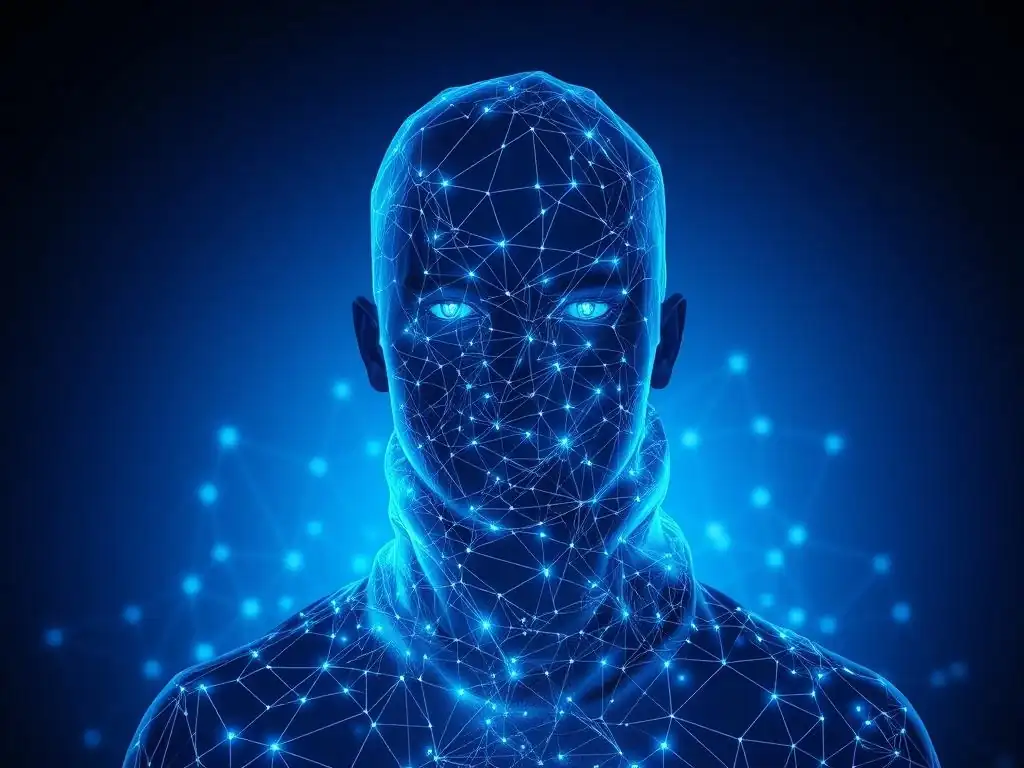
Welcome to Blockchain Trends, your compass in the ever-evolving world of decentralized technologies. Beyond the hype and headlines, we delve into the real-world applications and disruptive potential of blockchain. Curious about how blockchain can revolutionize digital identity while preserving user privacy? Then you've come to the right place. Dive into our latest exploration of Zero Knowledge Proofs, and discover how this groundbreaking technology could be the key to unlocking true privacy in blockchain identity. What secrets can it unlock, and what challenges remain? Let's find out...
Zero-Knowledge Proofs: The Key to Unlocking Privacy in Blockchain Identity?
- Introduction: Blockchain Identity and the Privacy Challenge
- What are Zero-Knowledge Proofs (ZKPs)? A Deep Dive
- Zero-Knowledge Proofs for Enhanced Privacy in Blockchain Identity
- Use Cases of ZKPs in Blockchain Identity Management
- Benefits of Implementing ZKPs for Blockchain Identity
- Challenges and Limitations of Zero-Knowledge Proofs in Blockchain Identity
- The Future of Zero-Knowledge Proofs and Blockchain Identity
- Conclusion: Zero-Knowledge – A Cornerstone of Secure Blockchain Identity
-
Frequently Asked Questions
- What are Zero-Knowledge Proofs (ZKPs) and why are they relevant to blockchain identity?
- How do Zero-Knowledge Proofs enhance blockchain privacy beyond traditional methods?
- What are some real-world applications of Zero-Knowledge Proofs in blockchain identity management?
- What are the current challenges and limitations in implementing Zero-Knowledge Proofs for blockchain identity?
- How might regulations impact the use of Zero-Knowledge Proofs in blockchain identity systems?
- Final Reflection: Embracing Privacy Through Zero-Knowledge
- Unveil Your Secure Blockchain Identity Now!
Introduction: Blockchain Identity and the Privacy Challenge
The Promise of Decentralized Identity on Blockchain
Decentralized identity (DID) solutions built on blockchain technology hold significant promise for empowering individuals with greater control over their personal data. By moving identity management away from centralized authorities, users could potentially own and manage their digital identities, selectively choosing what information to share and with whom.
This shift aims to reduce reliance on large data silos, which are attractive targets for cyberattacks, and provide a more secure and user-centric approach to online interactions. Imagine a future where you don't hand over your full driver's license details just to prove you're over 18 online; instead, you could present a verifiable credential anchored to a blockchain that only confirms your age, without revealing your name, address, or license number.
This paradigm shift offers the potential for enhanced security, reduced identity fraud, and greater individual autonomy. Blockchain's inherent immutability and transparency can ensure the integrity of identity claims and prevent tampering. Furthermore, by enabling self-sovereign identity, where users manage their own keys and data, the risk of a single point of failure or mass data breach affecting millions of identities is theoretically mitigated. The vision is a digital identity framework that is resilient, trustworthy, and puts the individual firmly in control of their digital self.
The Inherent Privacy Concerns of Public Blockchains
While blockchain offers compelling benefits for identity management, public blockchains, by their nature, present significant privacy challenges. Transactions and data stored on public ledgers are typically transparent and accessible to anyone. For instance, on networks like Bitcoin or Ethereum, while pseudonymous, transaction patterns and associated wallet addresses can potentially be linked over time, compromising user privacy. When applying this transparency to identity, storing personal attributes directly on a public, immutable ledger becomes a major concern.
Consider a scenario where sensitive identity documents or verified attributes (like educational degrees, medical history pointers, or citizenship status) are linked to a public blockchain address. Even if not explicitly stored, the metadata surrounding their verification or issuance could reveal patterns or associations that compromise privacy. This inherent transparency runs counter to the fundamental need for privacy in personal identity, potentially exposing individuals to surveillance, discrimination, or identity theft if their sensitive information becomes publicly linkable to their on-chain activity. The challenge is how to leverage the security and decentralization of blockchain without sacrificing crucial privacy.
Zero-Knowledge Proofs (ZKPs) as a Solution for Blockchain Identity Privacy
Zero-Knowledge Proofs (ZKPs) emerge as a powerful cryptographic primitive capable of addressing the privacy paradox in blockchain identity. A zero knowledge proof allows one party (the prover) to convince another party (the verifier) that a statement is true, without revealing any information beyond the validity of the statement itself.
Applied to blockchain identity, this means a user could prove they meet certain criteria (e.g., they are over 18, they are a resident of a specific country, they have a valid professional license) without disclosing the underlying sensitive data (like date of birth, full address, or license number) to either the verifier or the public blockchain.
This capability is revolutionary for enhancing zero knowledge proof blockchain privacy. Instead of publishing personal data or even hashes of that data that could potentially be brute-forced or linked, ZKPs enable proofs of properties about the data. The proof itself reveals nothing about the input data beyond the fact that it satisfies the stated property. This allows for selective disclosure – users can prove specific attributes without revealing the full credential or any other unrelated information. This cryptographic technique is seen as a cornerstone for building truly private and compliant decentralized identity systems on blockchain.
What are Zero-Knowledge Proofs (ZKPs)? A Deep Dive
Defining Zero-Knowledge: Proving Without Revealing
At its core, the concept of zero-knowledge means that a prover can convince a verifier of the truth of a statement without conveying any information beyond the fact that the statement is indeed true. Imagine proving you know a secret password to enter a digital room. Instead of typing the password (revealing the secret), you could perform a cryptographic action that only someone with the correct password could complete, and the verifier simply checks if that action was performed correctly.
The verifier learns that you know the password, but not what the password is. This is the essence of a zero knowledge proof.
This cryptographic property is crucial for privacy-preserving applications. In the context of blockchain identity, it allows a user to prove they possess certain qualifications or attributes required for a transaction or interaction without exposing the sensitive details of those qualifications or attributes. For example, to access age-restricted content, a user can generate a ZKP demonstrating they are over 18, without revealing their date of birth or any other personal information. The verifier confirms the validity of the proof, trusts the age assertion, and grants access, having learned nothing else about the user's identity.
The Mechanics of ZKPs: How They Work
The inner workings of Zero-Knowledge Proofs involve complex mathematical and cryptographic techniques, but the general principle revolves around interactive or non-interactive protocols. In an interactive ZKP, the prover and verifier engage in a series of challenges and responses. The prover performs computations based on their secret information and the verifier's random challenges.
The verifier checks the responses, and if they are consistent over multiple rounds of challenges, the verifier becomes convinced that the prover knows the secret, despite never seeing the secret itself. A classic example is the "Cave of Ali Baba" analogy, where proving knowledge of a magic word allows access to a hidden passage without revealing the word.
Non-interactive ZKPs, which are particularly relevant for blockchain applications, streamline this process. Using shared parameters established beforehand, the prover can generate a single proof that anyone can verify at any time, without requiring direct interaction with the prover. This is highly efficient for decentralized systems where verifiers (like smart contracts or other users) need to check proofs asynchronously on a public ledger. The security and privacy guarantees of ZKPs rely on the computational difficulty of reversing the proof to discover the secret or forging a valid proof without knowing the secret.
Types of Zero-Knowledge Proofs: zk-SNARKs, zk-STARKs, and More
Several types of Zero-Knowledge Proof systems have been developed, each with different properties regarding efficiency, trust assumptions, and scalability. The most prominent include zk-SNARKs and zk-STARKs, but other variants like Bulletproofs also exist.
-
zk-SNARKs: Succinct Non-Interactive Arguments of Knowledge
zk-SNARKs are widely used due to their "succinctness" – the proofs are small and very fast to verify, making them efficient for on-chain verification. They are "non-interactive," meaning a single proof is generated by the prover and verified by anyone. However, a significant characteristic of traditional zk-SNARKs is the requirement for a "trusted setup" phase, where initial cryptographic parameters are generated.
If the secrets used in this setup are not securely discarded, the integrity of the entire system could be compromised, potentially allowing someone to forge proofs. Newer versions and techniques aim to mitigate or remove this trusted setup requirement.
The succinctness of zk-SNARKs makes them particularly appealing for blockchain applications where storage and computation costs are significant. For example, a zk-SNARK proof might be only a few hundred bytes, and verification could take just a few milliseconds. This efficiency allows for complex computations or data validations to be proven off-chain, with only a small, easily verifiable proof being posted on the blockchain, significantly reducing transaction costs and improving scalability for privacy-preserving operations. Projects like Zcash were early pioneers in utilizing zk-SNARKs for private transactions.
-
zk-STARKs: Scalable Transparent Arguments of Knowledge
zk-STARKs were developed partly to address the trusted setup requirement of zk-SNARKs. They are "transparent," meaning they do not require a trusted setup phase, relying instead on publicly verifiable randomness, making them more trustless. They are also designed to be "scalable," meaning the size of the proof and the verification time grow more slowly with the complexity of the statement being proven compared to some other proof systems. While zk-STARK proofs are typically larger and slower to verify than zk-SNARKs, their transparency offers a strong advantage in trust-sensitive applications.
The transparency and scalability of zk-STARKs are significant for building open, decentralized systems where trust in a setup phase is undesirable. Although the proofs are larger (potentially kilobytes) and verification takes longer (tens or hundreds of milliseconds), ongoing research and development are improving their efficiency. Their robustness against potential quantum computing threats is another notable advantage. zk-STARKs are being explored for various applications, including scaling solutions for blockchains (like StarkNet) and for enhancing zero knowledge proof blockchain privacy in areas like identity and decentralized finance.
Key Properties of Zero-Knowledge Proofs: Completeness, Soundness, and Zero-Knowledge
A cryptographic system is considered a valid Zero-Knowledge Proof scheme if it satisfies three essential properties: completeness, soundness, and the zero-knowledge property itself. These properties collectively ensure that the system functions correctly and securely.
- Completeness: If the statement being proven is true, and both the prover and verifier follow the protocol correctly, the verifier will be convinced of the statement's truth. In the context of blockchain identity, if a user genuinely meets the age requirement, they should always be able to generate a valid ZKP that convinces the verifier.
- Soundness: If the statement being proven is false, a dishonest prover cannot convince the verifier that it is true, except with a negligible probability. This property is critical for security. It means someone who does not meet the age requirement cannot forge a ZKP to falsely claim they do. The probability of a dishonest prover succeeding should be computationally infeasible.
- Zero-Knowledge: If the statement being proven is true, the verifier learns nothing from the proof beyond the fact that the statement is true. Specifically, the verifier gains no information about the secret knowledge the prover used to construct the proof. This is the defining property that ensures privacy in zero knowledge proof blockchain privacy applications, guaranteeing that sensitive identity attributes remain confidential while still enabling verification of necessary properties.
Zero-Knowledge Proofs for Enhanced Privacy in Blockchain Identity
Selective Disclosure of Identity Attributes using ZKPs
Zero-Knowledge Proofs fundamentally enable selective disclosure, a critical feature for privacy in blockchain identity. Instead of presenting a full identity document (like a passport) that contains numerous pieces of information (name, photo, date of birth, nationality, passport number, etc. ), a user can use ZKPs to prove only the specific attribute required for a particular interaction.
For example, to rent a car, the user might need to prove they have a valid driver's license and are over 25. Using ZKPs, they can generate proofs confirming these two facts without revealing their license number, exact age, address, or any other data on the license.
This capability significantly enhances zero knowledge proof blockchain privacy by minimizing the data shared. In traditional systems, oversharing is rampant; proving one fact often requires revealing many others. With ZKPs, the prover generates a proof based on their underlying credentials off-chain. This proof is then verified on-chain or off-chain by the relying party. The proof itself reveals nothing about the original data, only that the data satisfies the condition (e.g., "age > 25"). This granular control over information release is a cornerstone of self-sovereign identity and a major step towards protecting user data in digital interactions.
Verifying Identity Credentials Without Exposing Sensitive Data
ZKPs allow for the verification of identity credentials in a privacy-preserving manner. A user might hold a verifiable credential (VC) issued by a trusted authority (e.g., a government or university) attesting to a specific fact (e.g., "Alice is a registered voter in District X"). When Alice needs to prove this fact to a verifier (e.g., a voting application), she doesn't present the full VC.
Instead, she uses the VC as input to a ZKP circuit and generates a proof that "I hold a valid credential stating I am a registered voter in District X." The verifier checks the validity of this proof against the issuing authority's public key or a reference on the blockchain, without ever seeing Alice's name, address, or any other details from the credential.
This process protects sensitive data by keeping it off the public ledger and away from the verifier. The verifier only learns the specific fact being proven. This is particularly valuable for compliance requirements like KYC (Know Your Customer), where businesses need to verify customer identities but are also burdened with protecting that sensitive data. ZKPs allow businesses to verify necessary attributes (e.g., "this user is a verified adult resident of Country Y") without needing to store copies of identity documents, significantly reducing their data liability and enhancing zero knowledge proof blockchain privacy for users.
Protecting User Data and Preventing Identity Theft with ZKPs
By minimizing the exposure of sensitive identity data, Zero-Knowledge Proofs inherently contribute to preventing data breaches and identity theft. In systems where full identity information is stored in centralized databases or exposed on transparent ledgers, a single security lapse can compromise millions of identities. With a ZKP-based identity system, the sensitive source data (like passport scans, social security numbers, etc.) remains solely with the user, encrypted or securely stored. Only cryptographic proofs derived from this data are shared or verified.
Even if a blockchain or a verifier's system were compromised, attackers would gain access only to ZKPs, which reveal nothing about the underlying personal information. For example, if a database of ZKPs proving age was stolen, an attacker would only have a list of proofs that someone is over 18, not the names, dates of birth, or addresses of those individuals.
This architectural shift reduces the "attack surface" for identity theft significantly. By separating the act of proving an attribute from the data of the attribute itself, zero knowledge proof blockchain privacy is maximized, making the system much more resilient against common forms of digital identity crime.
Use Cases of ZKPs in Blockchain Identity Management
Decentralized KYC (Know Your Customer) using Zero-Knowledge
Traditional KYC processes are notoriously cumbersome, centralized, and privacy-invasive. Users must submit sensitive documents (ID, proof of address) to every service provider, who then store this data, creating honeypots for attackers. Implementing decentralized KYC on blockchain with Zero-Knowledge Proofs offers a revolutionary alternative.
A user undergoes identity verification once with a trusted issuer (e.g., a regulated identity provider), who issues verifiable credentials anchored to a blockchain. When a service provider requires KYC, the user generates ZKPs based on these credentials to prove they meet the necessary criteria (e.g., "verified adult," "resident of specific country," "not on sanctions list") without sharing the underlying documents or personal details.
This approach significantly enhances zero knowledge proof blockchain privacy while fulfilling regulatory obligations. The service provider verifies the ZKP on-chain or off-chain, confirming the user's compliance status without ever handling sensitive personal data. This reduces the service provider's data storage liabilities and the user's exposure to privacy risks. Several projects and companies are actively developing decentralized KYC solutions leveraging ZKPs, aiming to streamline compliance, reduce costs (potentially by 50% or more in data handling), and provide a more privacy-respecting user experience.
Private Voting Systems on Blockchain
Ensuring both the integrity and privacy of votes is a critical challenge for digital voting systems. Blockchain offers immutability and transparency for vote counts, but naive implementations can expose individual voting choices, compromising voter anonymity.
Zero-Knowledge Proofs provide a solution to build private voting systems on blockchain where the final tally is verifiable, but individual votes remain secret. Each voter can cast an encrypted ballot and generate a ZKP proving that their ballot is valid (e.g., they are eligible to vote, they have only voted once, their vote is for a valid candidate) without revealing which candidate they voted for.
The ZKPs are posted on the blockchain alongside the encrypted ballots. Anyone can verify that all cast ballots are valid proofs of eligibility and correct formatting, ensuring the integrity of the process.
Only after the voting period ends are the ballots decrypted (often using a threshold decryption scheme where a set number of trustees are required to reveal the decryption key), and the final tally is published. The ZKPs ensure that only valid, unique votes from eligible voters are included in the tally, while maintaining complete anonymity for each voter's choice, thereby achieving robust zero knowledge proof blockchain privacy for democratic processes.
Secure and Anonymous Healthcare Data Sharing
Healthcare data is among the most sensitive personal information, subject to strict privacy regulations like HIPAA in the US or GDPR in Europe. Sharing this data securely and anonymously for research, public health analysis, or even between healthcare providers is challenging. Blockchain, combined with Zero-Knowledge Proofs, offers a potential framework for secure and privacy-preserving healthcare data sharing.
Patients could control access to their medical records, stored off-chain or encrypted. When a researcher or provider needs specific information (e.g., "patients diagnosed with Condition X in Region Y who are over 60"), the patient or a data custodian could provide access via a ZKP.
The ZKP would prove that a set of data points meets the requested criteria without revealing the patient's identity, specific diagnosis details, or other unrelated medical history. For instance, a ZKP could confirm that "this dataset contains records matching patients with Condition X and age > 60" without revealing patient names, exact ages, or locations.
This enables valuable data analysis while strictly adhering to privacy requirements. Pilot programs and research initiatives are exploring ZKPs for secure computation and data querying on encrypted health data, demonstrating the potential to unlock valuable insights from sensitive information while preserving zero knowledge proof blockchain privacy.
Enterprise Applications: Protecting Sensitive Business Information
Enterprises often deal with sensitive data regarding supply chains, financial transactions, intellectual property, and internal processes. Using blockchain for increased transparency or efficiency can conflict with the need to keep proprietary information confidential. ZKPs allow businesses to leverage the benefits of blockchain (immutability, transparency where needed, auditability) while keeping sensitive details private. For example, in a supply chain consortium using blockchain, companies might need to prove compliance with certain standards or verify the origin of goods without revealing their specific suppliers, pricing agreements, or logistics partners to competitors on the same network.
A company could generate a ZKP proving that a specific shipment originated from a certified supplier and meets quality standards, without revealing the supplier's name or the exact cost of the goods. Similarly, in inter-company financial reconciliation on a shared ledger, companies could use ZKPs to prove that a set of recorded transactions balances correctly with their internal records, without revealing the details of each transaction to other parties. This application of zero knowledge proof blockchain privacy is crucial for enterprise adoption, enabling collaboration and transparency on blockchain networks while maintaining competitive confidentiality and protecting sensitive business data.
Benefits of Implementing ZKPs for Blockchain Identity

Enhanced User Privacy and Control Over Data
The primary benefit of integrating Zero-Knowledge Proofs into blockchain identity solutions is the dramatic enhancement of user privacy. By enabling selective disclosure, ZKPs shift the power dynamic, allowing individuals to reveal only the minimum amount of information necessary for any given interaction. This contrasts sharply with current digital identity paradigms where users often surrender vast amounts of personal data unnecessarily. For example, verifying age with a ZKP instead of sharing a driver's license means less data is collected, stored, and potentially exposed by relying parties.
This granular control empowers users, giving them agency over their digital footprint. They decide which specific attributes to prove and when, rather than being forced to share entire documents or profiles. This heightened level of zero knowledge proof blockchain privacy fosters greater trust in digital services and online interactions, as users are more comfortable engaging when they know their sensitive information is not being indiscriminately shared or stored by multiple entities. It moves towards a model where privacy is the default, not an afterthought.
Increased Security and Reduced Risk of Data Breaches
Implementing ZKPs significantly increases the security of identity systems by reducing the amount of sensitive data held by various parties. Since the underlying sensitive data remains with the user (or in their secure vault), service providers and verifiers only handle non-sensitive ZKPs. This drastically shrinks the potential attack surface for data breaches. Hackers targeting a service provider integrated with a ZKP identity system would find no trove of personal identity documents or databases of names, addresses, and dates of birth to exfiltrate.
Even if a blockchain or a verifier's system is compromised, the ZKPs themselves reveal no personal information. This makes the data acquired by attackers far less valuable for identity theft or other malicious purposes. By decentralizing the storage of sensitive data and replacing its transmission with privacy-preserving proofs, ZKPs build a more resilient identity layer. This architectural approach, centered on maximizing zero knowledge proof blockchain privacy, fundamentally changes the risk landscape for identity systems, making them inherently more secure against large-scale data compromises.
Improved Compliance with Privacy Regulations (e.g., GDPR)
Global privacy regulations, such as the General Data Protection Regulation (GDPR) in Europe, mandate strict requirements for handling personal data, including principles like data minimization, purpose limitation, and the right to be forgotten. Traditional identity systems often struggle to meet these requirements, particularly the principle of collecting only data that is strictly necessary for a specific purpose. Zero-Knowledge Proofs are uniquely suited to address these challenges by enabling data minimization at its core.
With ZKPs, organizations can verify necessary attributes without ever collecting or storing the personal data from which those attributes are derived. For example, to comply with age verification laws, a company can accept a ZKP proving the user is over 18, without needing to collect and store the user's date of birth, thereby adhering to data minimization.
This not only reduces the burden of compliance but also lowers the legal and financial risks associated with handling sensitive personal data. By facilitating compliance with stringent privacy laws like GDPR, ZKPs help foster a legal framework conducive to broader adoption of zero knowledge proof blockchain privacy solutions.
Fostering Trust and Adoption of Blockchain Identity Solutions
Privacy concerns remain a significant barrier to the widespread adoption of blockchain-based identity solutions. Users are understandably hesitant to place sensitive identity information onto a public or semi-public ledger, even if pseudonymized. By providing a robust and mathematically verifiable guarantee of privacy, Zero-Knowledge Proofs build trust in these systems. Users can be confident that their sensitive attributes will not be exposed when they interact using their blockchain identity.
This increased trust is essential for driving adoption among both individuals and organizations. Individuals are more likely to use a decentralized identity system that respects their privacy. Organizations, in turn, are more likely to integrate with systems that allow them to verify necessary information without taking on the liability of storing sensitive personal data. By making privacy a core, verifiable feature, ZKPs pave the way for blockchain identity solutions to move from niche applications to mainstream use, accelerating the development of a more private and secure digital identity ecosystem built on zero knowledge proof blockchain privacy principles.
Challenges and Limitations of Zero-Knowledge Proofs in Blockchain Identity
Computational Complexity and Performance Overhead
Despite significant advancements, Zero-Knowledge Proof generation can still be computationally intensive, especially for complex statements or proofs involving large datasets. Generating a ZKP often requires substantial processing power and time on the prover's side (the user's device). While verification is typically much faster, the generation cost can be a barrier, particularly for users with less powerful devices or in applications requiring real-time proof generation. For instance, generating a complex zk-SNARK proof might take several seconds or even minutes on a standard mobile phone, depending on the circuit complexity.
This computational overhead can impact user experience and system performance. While hardware acceleration and more efficient algorithms are being developed, the resource requirements remain a challenge for widespread adoption, especially in mobile-first environments or scenarios requiring frequent proof generation. Balancing the desire for strong zero knowledge proof blockchain privacy with practical performance considerations is an ongoing area of research and development in the field.
Key Management and Security Considerations
While ZKPs enhance privacy, they introduce new security considerations related to key management. Users need to securely manage the private keys associated with their identity credentials and the keys used to generate ZKPs. If a user's private key is compromised, an attacker could potentially generate fraudulent proofs or lose control of their identity. Unlike traditional systems where a password reset might be possible, the decentralized nature of blockchain and ZKPs puts a greater onus on the individual for key security.
Furthermore, the initial issuance of verifiable credentials that serve as input for ZKPs requires trust in the issuer and secure communication channels. While ZKPs prove properties about a credential, the validity of the credential itself depends on the issuer's trustworthiness and the secure handling of the issuance process. Ensuring robust, user-friendly, and secure key management solutions is paramount for the safety and usability of ZKP-based identity systems and crucial for maintaining the integrity of zero knowledge proof blockchain privacy.
Standardization and Interoperability Issues
The field of Zero-Knowledge Proofs is rapidly evolving, with various proof systems (zk-SNARKs, zk-STARKs, Bulletproofs, etc.) and implementations under development. This diversity, while beneficial for innovation, can lead to challenges in standardization and interoperability. Different ZKP systems have different requirements, performance characteristics, and compatibility issues. A proof generated using one ZKP library or system might not be verifiable by a system built using another.
This lack of universal standards can hinder the seamless integration of ZKP-based identity solutions across different platforms, applications, and blockchains. For ZKP-enhanced blockchain identity to achieve widespread adoption, there is a need for greater standardization efforts around proof formats, verification protocols, and integration APIs. Achieving interoperability is key to building a cohesive digital identity ecosystem where users can seamlessly use their ZKP-powered identity across various services, reinforcing the value proposition of zero knowledge proof blockchain privacy across the ecosystem.
The Learning Curve and Adoption Barriers
Understanding and implementing Zero-Knowledge Proofs requires a high level of technical expertise in cryptography and complex mathematics. This steep learning curve can be a significant barrier for developers and organizations looking to integrate ZKPs into their identity solutions. Developing ZKP circuits (the programs that define the statement being proven) is a specialized skill, and errors in circuit design can lead to security vulnerabilities or incorrect proofs.
Beyond technical implementation, there is also an adoption barrier related to user understanding. Explaining the concept and benefits of ZKPs to the average user can be challenging. For widespread adoption of blockchain identity with ZKPs, user interfaces and experiences must abstract away the underlying cryptographic complexity, making it simple and intuitive for users to manage their identity and generate proofs without needing to understand the intricate details of zero knowledge proof blockchain privacy mechanics. Simplifying the developer experience and educating users are crucial steps for overcoming these hurdles.
The Future of Zero-Knowledge Proofs and Blockchain Identity
Advancements in ZKP Technology
The landscape of Zero-Knowledge Proof technology is experiencing rapid advancements. Researchers and developers are continuously working on improving the efficiency, scalability, and accessibility of ZKP systems. This includes developing new, faster algorithms for proof generation and verification, reducing the size of proofs, and creating more user-friendly tools and frameworks for building ZKP circuits. For example, recent work on recursive ZKPs allows for proving the validity of other ZKPs, enabling highly scalable verification of complex computations.
Efforts are also focused on addressing the trusted setup issue, with transparent systems like zk-STARKs gaining traction and new techniques emerging to minimize or eliminate the trust required in setup phases for other systems. As computational hardware improves and specialized ZKP acceleration becomes more common, the performance overhead associated with proof generation is expected to decrease significantly. These ongoing technological improvements are making Zero-Knowledge Proofs increasingly practical and viable for large-scale applications, further solidifying their role in enabling zero knowledge proof blockchain privacy.
Integration of ZKPs with Existing Identity Standards
For ZKP-enhanced blockchain identity to become widely adopted, it must integrate seamlessly with existing digital identity frameworks and standards. This includes working with standards like Decentralized Identifiers (DIDs) and Verifiable Credentials (VCs), which are already gaining traction in the identity space. ZKPs can act as a privacy layer on top of these standards, allowing users to prove attributes from their VCs using a DID as their identifier, without revealing the contents of the VC itself.
Efforts are underway within standards bodies and development communities to define how ZKPs can be incorporated into DID and VC architectures. This involves specifying proof formats, verification methods, and protocols for requesting and presenting ZKP-based identity claims. Successful integration with established standards will accelerate adoption by providing a familiar framework for developers and ensuring interoperability across different identity platforms. This integration is key to making zero knowledge proof blockchain privacy a standard feature of future digital identity systems.
The Role of ZKPs in Building a More Privacy-Preserving Decentralized Future
Zero-Knowledge Proofs are poised to play a foundational role in the broader vision of a decentralized, privacy-preserving digital future, extending beyond just identity. Their ability to enable verifiable computation and data validation without revealing underlying information is critical for various decentralized applications, including confidential transactions in DeFi, private data sharing in supply chains, and secure computation in decentralized AI.
In the context of identity, ZKPs are essential for ensuring that the shift to decentralized models doesn't come at the cost of individual privacy. They provide the cryptographic assurance needed for users to confidently participate in decentralized ecosystems, knowing their sensitive information is protected. As blockchain technology matures and decentralized applications become more prevalent, the demand for robust privacy-preserving techniques will only grow. ZKPs offer a powerful solution to meet this demand, positioning them as a core technology for building a digital world where security, decentralization, and zero knowledge proof blockchain privacy coexist harmoniously.
Conclusion: Zero-Knowledge – A Cornerstone of Secure Blockchain Identity
Zero-Knowledge Proofs: Enabling Privacy-First Blockchain Solutions
Zero-Knowledge Proofs represent a fundamental breakthrough in cryptography with profound implications for blockchain technology, particularly in the realm of digital identity. By allowing individuals to cryptographically prove the truth of a statement without revealing the underlying data, ZKPs directly address the inherent privacy challenges of public blockchains. This capability is not merely an enhancement; it is transformative, enabling the creation of privacy-first identity solutions that were previously difficult or impossible to achieve on transparent distributed ledgers.
The integration of ZKPs means that users can leverage the security, immutability, and decentralization benefits of blockchain for identity management without sacrificing control over their sensitive personal information. This shift from exposing data to proving attributes is a paradigm change that aligns blockchain's strengths with the critical need for privacy in digital interactions. The potential for zero knowledge proof blockchain privacy delivered by this technology is immense, promising a future where digital identity is both secure and respectful of individual confidentiality.
The Potential of ZKPs to Revolutionize Digital Identity Management
The potential of Zero-Knowledge Proofs to revolutionize digital identity management is vast. They offer a pathway to overcome significant barriers to the adoption of decentralized identity, including privacy concerns and compliance challenges. By enabling selective disclosure, reducing data storage liabilities for organizations, and enhancing overall security against data breaches, ZKPs create a compelling case for their widespread implementation. From decentralized KYC and private voting to secure healthcare data sharing and enterprise confidentiality, the use cases for ZKPs in identity are diverse and impactful.
While challenges related to computational complexity, standardization, and user adoption remain, ongoing research and development are rapidly addressing these limitations. As ZKP technology matures and integrates with existing identity standards, it will become easier to deploy and use. Ultimately, Zero-Knowledge Proofs are poised to become a cornerstone technology for building a digital identity layer that is not only secure and decentralized but also fundamentally privacy-preserving, ushering in a new era of trusted and user-centric digital interactions built on the principles of zero knowledge proof blockchain privacy.
Frequently Asked Questions
What are Zero-Knowledge Proofs (ZKPs) and why are they relevant to blockchain identity?
ZKPs are a cryptographic method allowing one party (the prover) to prove to another (the verifier) that a statement is true, without revealing any information beyond the statement's validity. This is crucial for blockchain identity as it enables verifying identity attributes without exposing sensitive personal data on the public ledger.
How do Zero-Knowledge Proofs enhance blockchain privacy beyond traditional methods?
Traditional methods might rely on pseudonyms or obfuscation, which can still be linked back to the user. ZKPs provide stronger privacy guarantees by proving claims about identity data without revealing the data itself, unlike simply hiding it.
What are some real-world applications of Zero-Knowledge Proofs in blockchain identity management?
ZKPs can enable selective disclosure, allowing users to prove specific attributes like age or location without revealing their actual date of birth or precise address. This is useful for things like verifying eligibility for services without exposing unnecessary personal information.
What are the current challenges and limitations in implementing Zero-Knowledge Proofs for blockchain identity?
Computational complexity and scalability are major hurdles. Generating and verifying ZKPs can be computationally expensive, hindering their widespread adoption on blockchains with limited resources.
How might regulations impact the use of Zero-Knowledge Proofs in blockchain identity systems?
Regulations concerning data privacy, like GDPR, could both drive and constrain ZKP adoption. While ZKPs can help comply with data minimization principles, regulators may also scrutinize their implementation to ensure accountability and prevent misuse.
Final Reflection: Embracing Privacy Through Zero-Knowledge
The exploration of Zero-Knowledge Proofs (ZKPs) reveals not just a technological advancement, but a paradigm shift in how we approach privacy in the digital age. The potential of ZKPs to revolutionize blockchain identity is undeniable, offering a path towards verifiable credentials without sacrificing individual autonomy. As data breaches become increasingly commonplace and concerns over surveillance intensify, the need for privacy-preserving technologies like ZKPs has never been more critical.
The impact of ZKPs extends far beyond the realm of blockchain, influencing how we think about data ownership and control. This technology empowers individuals to reclaim their digital sovereignty, fostering a future where privacy is not a luxury, but a fundamental right. Privacy is not secrecy. Privacy is the power to protect our own information and to decide who has access to it.
- Bruce Schneier. This quote encapsulates the essence of ZKPs: providing the tools to selectively disclose information, ensuring control remains firmly in the hands of the individual.
As we stand at the cusp of a new era of digital identity, I invite you to consider the implications of ZKPs and their potential to reshape our relationship with technology. Embrace the possibilities of a future where privacy and security coexist harmoniously, and actively seek out ways to leverage these powerful tools to protect your own digital footprint. Let us collectively champion the adoption of ZKPs and other privacy-enhancing technologies, paving the way for a more equitable and secure digital world for all.
Unveil Your Secure Blockchain Identity Now!
Thank you for exploring the fascinating world of Zero-Knowledge Proofs and their potential to transform privacy in blockchain identity. We hope you've gained valuable insights into how these technologies can give you greater control over your data. Now, it's time to take the next step!
Consider trying out a beginner-friendly Zero-Knowledge Proof library to understand the fundamental principles firsthand. This practical experience will reinforce your knowledge and pave the way for more advanced studies.
Look into blockchain projects that are implementing Zero-Knowledge Proofs, such as those focusing on privacy-preserving transactions. Explore their use cases and see how they are addressing real-world privacy concerns.
Join the conversation! Share this article with your network and discuss how Zero-Knowledge Proofs could impact online privacy. Feel free to leave your thoughts below or on social media using the hashtags #BlockchainTrends and #ZeroKnowledgeProofs.
How do you envision Zero-Knowledge Proofs shaping your digital identity in the future? Share your ideas with us!
Leave a Reply