
Addressing Data Silos in Healthcare with BlockchainBased Secure Data Sharing


Welcome to Blockchain Trends, your compass in the evolving landscape of decentralized technology!
Are you ready to unlock the potential of blockchain beyond cryptocurrencies? In this article, we dive into a critical application with the power to revolutionize an entire industry: blockchain healthcare data sharing. Discover how this secure, transparent technology is poised to break down data silos, improve patient outcomes, and reshape the future of healthcare. Intrigued? Let's explore the transformative possibilities together...
Addressing Data Silos in Healthcare with Blockchain-Based Secure Data Sharing
- Introduction: The Problem of Data Silos in Healthcare
- Blockchain Technology: A Secure Solution for Healthcare Data Sharing
-
Implementing Blockchain for Healthcare Data Sharing: A Step-by-Step Approach
- Step 1: Identifying Key Stakeholders and Data Sources within the Healthcare Ecosystem
- Step 2: Designing a Permissioned Blockchain Network for Secure Data Access Control
- Step 3: Developing Smart Contracts for Automated Data Sharing and Compliance
- Step 4: Integrating Blockchain with Existing Healthcare Systems and EHRs
- Step 5: Ensuring Data Privacy and Compliance with HIPAA and Other Regulations
- Use Cases of Blockchain in Healthcare Data Sharing
- Overcoming Challenges in Blockchain Adoption for Healthcare Data Sharing
- The Future of Blockchain in Healthcare: Transforming Data Sharing and Beyond
- Conclusion: Embracing Blockchain for Secure and Efficient Healthcare Data Sharing
-
Frequently Asked Questions
- How does blockchain technology improve data sharing in healthcare?
- What are the key benefits of using blockchain for healthcare data sharing?
- What are the main challenges in implementing blockchain for healthcare data sharing?
- How does blockchain address data silos in healthcare organizations?
- What is the future outlook for blockchain-based healthcare data sharing?
- Final Reflection: Bridging Silos, Building Trust
- Unlock Seamless Healthcare Collaboration Today!
Introduction: The Problem of Data Silos in Healthcare
Understanding Data Silos: Definition and Challenges in Healthcare
Healthcare data silos refer to isolated pockets of patient information held within disparate systems, often specific to a single department, healthcare provider, or even a particular software application. This fragmentation makes it incredibly difficult to access, share, and analyze patient data comprehensively across the healthcare ecosystem. Challenges stemming from these silos include a lack of interoperability between different Electronic Health Records (EHRs), laboratory information systems, imaging systems, and administrative databases.
The technical and organizational barriers between these systems mean that critical patient history, test results, or medication information might be locked away, inaccessible to a physician who needs it for diagnosis or treatment in another facility. Estimates suggest that a significant portion of healthcare data remains trapped in these silos, with up to 80% of clinical data potentially unstructured or inaccessible across different platforms, severely hindering coordinated care and operational efficiency.
The Impact of Data Silos on Patient Care and Healthcare Innovation
The consequences of healthcare data silos are far-reaching, directly impacting patient safety, quality of care, and the pace of medical innovation. When healthcare providers lack a complete view of a patient's medical history, it can lead to redundant tests, delayed diagnoses, incorrect treatments, and increased healthcare costs. Patients may have to repeatedly provide the same information, and critical alerts or contraindications might be missed if data isn't shared effectively between their various providers.
Beyond individual patient care, data silos significantly impede large-scale health research and public health initiatives. Aggregating de-identified patient data for population health studies, clinical trial recruitment, or identifying disease outbreaks becomes a monumental task. The inability to easily combine and analyze data from diverse sources slows down the discovery of new treatments, the understanding of disease patterns, and the development of personalized medicine approaches, stifling the potential for transformative healthcare innovation.
Why Traditional Solutions Fall Short in Breaking Down Healthcare Data Silos
Traditional approaches to addressing data silos in healthcare have often involved point-to-point integrations, centralized data warehouses, or the adoption of large, monolithic EHR systems. While these methods have offered some improvements, they have largely failed to provide a scalable, secure, and truly interoperable solution across the entire healthcare landscape. Point-to-point integrations are costly, complex to maintain, and create a tangled web of connections that is difficult to manage as the number of systems grows.
Centralized databases face challenges related to trust, security vulnerabilities (making them attractive targets for cyberattacks), and governance issues, particularly when trying to aggregate data from competing organizations. Even attempts to standardize on specific EHR platforms haven't solved the problem, as different hospitals or clinics often use different vendors, and data exchange between these proprietary systems remains problematic and often relies on outdated or inefficient standards. A fundamentally new approach is needed to build trust and enable secure, widespread blockchain healthcare data sharing.
Blockchain Technology: A Secure Solution for Healthcare Data Sharing
How Blockchain Enables Secure and Decentralized Data Management
Blockchain technology offers a fundamentally different paradigm for managing and sharing data compared to traditional centralized systems. At its core, a blockchain is a distributed, immutable ledger shared across a network of participants. Instead of storing all data in one central location, copies of the ledger are maintained by multiple nodes. When a transaction (like a data access request or record update) occurs, it is validated by the network participants according to predefined rules (consensus mechanisms) before being added as a new block to the chain.
This decentralized structure eliminates single points of failure and reduces reliance on a central authority, which is particularly valuable in a fragmented ecosystem like healthcare. For blockchain healthcare data sharing, this means patient data access logs or consent records can be securely recorded and verified across multiple entities (hospitals, labs, patients) without any single entity controlling the entire system or being able to unilaterally alter the history.
Key Features of Blockchain for Healthcare Data Security: Immutability, Transparency, and Auditability
The core features of blockchain technology provide robust mechanisms for enhancing healthcare data security. Immutability ensures that once data is recorded on the blockchain (or, more commonly for privacy, a hash or pointer to the data is recorded), it cannot be altered or deleted. This is critical for maintaining the integrity of medical records, consent trails, and audit logs. Any attempt to tamper with data would be immediately detectable by the network.
Transparency, in the context of a permissioned healthcare blockchain, means that authorized participants can view transactions relevant to them on the distributed ledger. This shared visibility fosters trust among different healthcare entities. Furthermore, every transaction is time-stamped and cryptographically linked to the previous one, creating a comprehensive and unalterable audit trail. This high level of auditability is invaluable for compliance purposes (like demonstrating HIPAA compliance) and investigating data access or usage, significantly improving the security posture of blockchain healthcare data sharing solutions.
Benefits of Blockchain-Based Data Sharing for Healthcare Providers and Patients
Implementing blockchain healthcare data sharing solutions offers significant benefits for all stakeholders. For healthcare providers, it can streamline administrative processes, reduce the burden of manual data exchange, and provide access to more complete patient histories, potentially leading to more accurate diagnoses and better treatment plans. It can also lower costs associated with data reconciliation and interoperability challenges, which are estimated to cost the US healthcare system billions annually.
Patients stand to gain greater control and transparency over their own health data. With blockchain, patients can potentially manage who accesses their records, for what purpose, and for how long, through secure, auditable consent mechanisms. This shift towards patient-centric data management empowers individuals and builds trust in the healthcare system, fostering better engagement in their own health journeys and enabling participation in research while maintaining privacy.
Implementing Blockchain for Healthcare Data Sharing: A Step-by-Step Approach
Step 1: Identifying Key Stakeholders and Data Sources within the Healthcare Ecosystem
The initial step in deploying a blockchain healthcare data sharing solution involves a thorough analysis of the existing ecosystem. This requires identifying all relevant parties who generate, store, or need access to patient data. This includes hospitals, clinics, diagnostic laboratories, pharmacies, insurance providers, public health agencies, and crucially, the patients themselves.
Simultaneously, a comprehensive inventory of the different data sources must be compiled. This encompasses various types of Electronic Health Records (EHRs) from different vendors, lab results, imaging reports, genomics data, wearable device data, and patient-reported outcomes. Understanding the current data flows, formats, and locations is essential to design a blockchain network that can effectively integrate these disparate elements and facilitate meaningful blockchain healthcare data sharing.
Step 2: Designing a Permissioned Blockchain Network for Secure Data Access Control
Given the sensitive nature of health information, a public, permissionless blockchain like Bitcoin or Ethereum is generally unsuitable for healthcare data sharing due to privacy and regulatory requirements. A permissioned blockchain network, where participants are known and vetted, is the preferred model. This design allows for strict control over who can join the network, validate transactions, and access specific types of data or metadata recorded on the ledger.
Designing this network involves defining governance rules, consensus mechanisms suitable for enterprise use (e.g., Proof-of-Authority, Proof-of-Stake variations), and identity management protocols. Access control is paramount; the system must ensure that data access is granted only with appropriate authorization, typically based on patient consent and clinical necessity, recorded securely on the blockchain ledger to create an immutable audit trail for all blockchain healthcare data sharing activities.
Step 3: Developing Smart Contracts for Automated Data Sharing and Compliance
Smart contracts are self-executing contracts with the terms of the agreement directly written into code. In a blockchain healthcare data sharing context, smart contracts are fundamental for automating data access requests, verifying permissions based on patient consent, and enforcing data usage policies. For example, a smart contract can be triggered when a physician requests a patient's record; it checks the patient's consent preferences recorded on the blockchain and automatically grants or denies access based on predefined rules.
Smart contracts can also automate compliance checks, ensuring that data sharing adheres to regulations like HIPAA in the US or GDPR in Europe. They can manage data licensing for research purposes, automate payments for data access (if applicable), and maintain detailed, tamper-proof logs of every data interaction. This automation reduces administrative overhead, minimizes human error, and provides a transparent, auditable mechanism for managing complex data sharing agreements within the blockchain network.
Step 4: Integrating Blockchain with Existing Healthcare Systems and EHRs
A major technical challenge is integrating the new blockchain layer with the vast array of existing legacy healthcare systems and Electronic Health Records (EHRs) currently in use. It is impractical and often impossible to migrate all historical patient data onto the blockchain itself, especially considering storage costs and privacy concerns. Instead, the blockchain typically stores metadata, hashes of data, or pointers to where the actual data resides in existing systems or secure, off-chain storage.
Integration strategies involve developing APIs (Application Programming Interfaces) and middleware that allow existing EHRs and other systems to interact with the blockchain network. This requires careful mapping of data standards (like FHIR - Fast Healthcare Interoperability Resources) to ensure semantic interoperability between systems connected by the blockchain. The goal is to create a seamless experience where authorized users can request and access patient data through their existing interfaces, with the blockchain operating securely in the background to manage access control and provide an audit trail for blockchain healthcare data sharing.
Step 5: Ensuring Data Privacy and Compliance with HIPAA and Other Regulations
Ensuring robust data privacy and compliance with stringent healthcare regulations like the Health Insurance Portability and Accountability Act (HIPAA) in the United States, GDPR in Europe, and similar laws globally is non-negotiable for blockchain healthcare data sharing. While blockchain's transparency is beneficial for auditability, directly storing sensitive Protected Health Information (PHI) on the chain is generally not advisable due to privacy requirements and the need for data immutability (regulations often grant individuals the right to request data deletion or modification).
Solutions involve storing PHI off-chain in secure, encrypted databases. The blockchain then stores only encrypted pointers, hashes, or consent records. Access to the off-chain data is controlled via keys managed through the blockchain network and smart contracts, ensuring that only authorized parties with the correct permissions can decrypt and view the sensitive information. Furthermore, network design must incorporate mechanisms for identity management, consent management tools that comply with patient rights, and robust security protocols to protect against breaches, ensuring that blockchain healthcare data sharing is conducted legally and ethically.
Use Cases of Blockchain in Healthcare Data Sharing
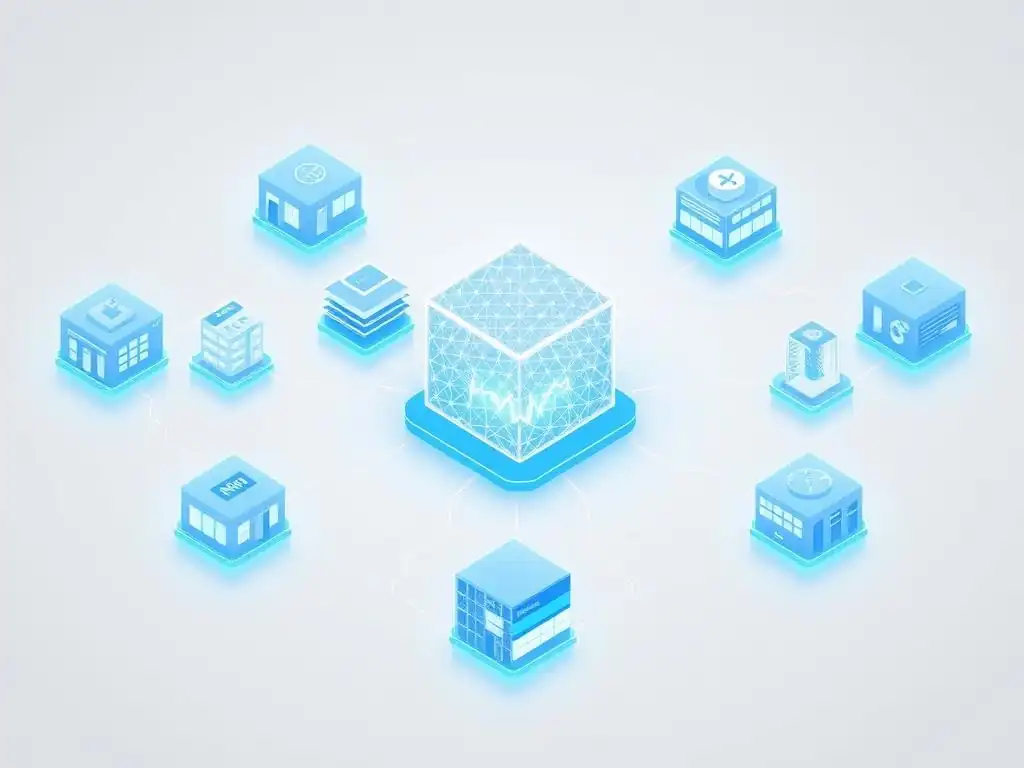
Secure Sharing of Patient Medical Records Across Different Healthcare Providers
One of the most compelling use cases for blockchain in healthcare is enabling the secure, consent-driven sharing of patient medical records across disparate providers. Today, transferring a patient's full record from one hospital system to another, or between a primary care physician and a specialist, is often a cumbersome process involving faxes, mail, or clunky electronic portals. This fragmentation can delay treatment, lead to duplicated tests, and compromise patient safety.
A blockchain-based system can allow a patient to grant temporary or permanent access to specific parts of their medical history to different providers via a secure application. The blockchain records the consent, the access event, and creates an immutable audit trail. The actual data remains stored securely off-chain, accessible only to those with the appropriate cryptographic keys and permissions verified by the network. This facilitates near real-time access to comprehensive patient data, improving care coordination and efficiency for blockchain healthcare data sharing.
Streamlining Clinical Trials and Research Data Management with Blockchain
Clinical trials are data-intensive and require high levels of data integrity, transparency, and auditability. Managing patient data, consent forms, and trial results across multiple sites is complex and prone to errors or delays. Blockchain can significantly streamline this process by providing a secure, shared ledger for recording patient consent, tracking the provenance of data collected during the trial, and managing access for researchers and regulatory bodies.
Using blockchain, researchers can ensure that data entered at different sites is immutable and verifiable, enhancing the trustworthiness of trial results. Smart contracts can automate data sharing with regulatory agencies upon completion and ensure compliance with trial protocols. This improved data management and transparency can potentially accelerate the drug discovery and approval process; estimates suggest that inefficiencies in clinical data management contribute significantly to the high cost and long timelines of bringing new therapies to market. Blockchain healthcare data sharing in research holds promise for reducing these burdens.
Improving Supply Chain Transparency and Traceability for Pharmaceuticals
Counterfeit drugs are a serious global health threat, and opaque supply chains make it difficult to track pharmaceuticals from manufacturer to patient. Blockchain's ability to create an immutable, shared ledger is ideal for building a transparent and traceable pharmaceutical supply chain. Each step in the drug's journey – manufacturing, packaging, shipping, dispensing – can be recorded on the blockchain.
This distributed ledger provides a single source of truth that all authorized parties in the supply chain can access and verify. If a problem arises, such as a recall or suspected counterfeit product, the blockchain record allows for rapid identification of the product's origin and path, improving the efficiency and effectiveness of recalls and helping to combat the flow of fake medications. The World Health Organization estimates that up to 10% of medical products in low- and middle-income countries are substandard or falsified, highlighting the critical need for improved traceability offered by blockchain healthcare data sharing in this sector.
Enhancing Interoperability of Healthcare Data Systems
While blockchain doesn't directly translate data formats between systems, it acts as a powerful layer to enhance interoperability by providing a trusted, shared infrastructure for managing access and transactions across disparate platforms. Instead of building complex, bilateral integrations between every pair of systems, healthcare organizations can connect their existing EHRs, labs, and other databases to a permissioned blockchain network.
The blockchain serves as a common backbone for identity verification, access control, and logging data exchange activities. When a system needs data from another, the request and authorization process is managed via the blockchain and associated smart contracts. The actual data exchange can still occur through existing mechanisms or standardized APIs (like FHIR), but the blockchain provides the overarching trust layer and audit trail, significantly simplifying the complexity of achieving true interoperability and facilitating secure blockchain healthcare data sharing across the ecosystem.
Overcoming Challenges in Blockchain Adoption for Healthcare Data Sharing
Addressing Scalability Issues in Blockchain Networks
One significant challenge for widespread blockchain healthcare data sharing is scalability. Public blockchains can process a limited number of transactions per second, which may not be sufficient for the high volume of data access requests and updates required across a large healthcare system or national network. While permissioned blockchains generally offer higher throughput than public ones, the sheer volume of potential transactions involving millions of patients and thousands of providers remains a concern.
Ongoing development in blockchain technology is addressing these issues through various methods. Layer 2 scaling solutions, sharding (splitting the network into smaller, more manageable parts), and the use of high-performance consensus mechanisms are improving transaction speeds and capacity. Choosing an enterprise-grade blockchain platform designed for high throughput and low latency is crucial for healthcare deployments to ensure the network can handle the demands of real-world blockchain healthcare data sharing.
Ensuring Interoperability Between Different Blockchain Platforms
As various healthcare organizations or consortia might adopt different blockchain platforms (e.g., Hyperledger Fabric, Ethereum variants, Corda), ensuring interoperability between these distinct blockchain networks becomes another hurdle. A patient's data might be referenced on one blockchain used by their hospital, while their pharmacy uses a different one. Without a way for these networks to communicate, new data silos could inadvertently be created at the blockchain level.
Solutions are emerging to address this, including the development of cross-chain protocols and industry-wide standards for blockchain healthcare data sharing. Initiatives focused on defining common data models and APIs for healthcare blockchain applications are also vital. Establishing standards bodies and collaborative frameworks will be essential to ensure that different blockchain implementations can seamlessly interact and exchange necessary information, preventing the fragmentation of health data across incompatible ledger technologies.
Managing Regulatory Uncertainty and Legal Compliance
The legal and regulatory landscape surrounding blockchain technology is still evolving, particularly concerning highly regulated industries like healthcare. Issues such as data ownership, responsibility for data accuracy on the ledger, the right to be forgotten (which conflicts with blockchain's immutability), and jurisdiction across international networks present complex legal questions. Applying existing regulations like HIPAA, GDPR, or the 21st Century Cures Act's interoperability rules to blockchain healthcare data sharing requires careful interpretation and guidance.
Healthcare organizations must work closely with legal and compliance experts to navigate this uncertainty. Designing blockchain solutions that store sensitive data off-chain and use the ledger primarily for access control and audit trails is one approach to mitigate conflicts with "right to be forgotten" principles. Furthermore, industry collaboration with regulatory bodies is needed to develop clear guidelines and frameworks that facilitate the secure and compliant adoption of blockchain healthcare data sharing technologies.
Educating Healthcare Professionals and Patients about Blockchain Technology
A significant non-technical barrier to adoption is the lack of understanding and familiarity with blockchain technology among healthcare professionals and the general public. Clinicians, administrators, and patients may be hesitant to trust or use a system they don't understand. Concerns about security, privacy, and the perceived complexity of blockchain can hinder its acceptance, regardless of its technical merits for blockchain healthcare data sharing.
Overcoming this requires comprehensive education and training programs tailored to different user groups. Demonstrating the practical benefits – such as faster access to patient information for clinicians, reduced administrative burden, and greater control for patients – is key. Explaining how blockchain enhances existing security measures and protects privacy, rather than exposing data, is crucial for building trust and driving the successful implementation and adoption of blockchain healthcare data sharing solutions.
The Future of Blockchain in Healthcare: Transforming Data Sharing and Beyond
Emerging Trends in Blockchain Healthcare Data Security
The field of blockchain healthcare data security is rapidly evolving, with several key trends shaping its future. One significant trend is the integration of decentralized identity (DID) solutions, allowing patients and providers to manage their digital identities and control access permissions more granularly across different healthcare services. Another is the tokenization of health data, potentially enabling individuals to control and even monetize access to their de-identified data for research purposes, creating new economic models for healthcare data sharing.
Furthermore, the convergence of blockchain with other emerging technologies like Artificial Intelligence (AI) and the Internet of Medical Things (IoMT) is gaining traction. Blockchain can provide a secure and auditable layer for managing data streams from connected health devices or ensuring the integrity of data used to train AI models for diagnostics. These integrations promise to create more secure, intelligent, and interconnected healthcare ecosystems built upon robust blockchain healthcare data sharing foundations.
The Potential of Blockchain to Revolutionize Patient-Centric Care
Blockchain technology has the profound potential to fundamentally shift the healthcare paradigm towards a more patient-centric model. By giving patients direct control over who can access their medical records via secure, consent-based mechanisms recorded on an immutable ledger, blockchain empowers individuals in managing their health information. This contrasts sharply with the current system where data is often fragmented and controlled by individual institutions.
Enabled by blockchain healthcare data sharing, patients could curate their own longitudinal health record, incorporating data from various providers, wearables, and even their own inputs. This comprehensive, patient-controlled record could improve care coordination, facilitate shared decision-making with clinicians, and enable individuals to participate more actively in research or wellness programs. This shift promises to make healthcare more transparent, personalized, and responsive to individual needs.
Predictions for the Long-Term Impact of Blockchain on the Healthcare Industry
Looking ahead, blockchain is poised to have a transformative long-term impact on the healthcare industry, extending far beyond just data sharing. We can anticipate blockchain becoming a foundational layer for healthcare data management, underpinning interoperability efforts and creating a trusted network for exchanging information between all stakeholders. This could lead to significant reductions in the administrative costs currently associated with managing fragmented data.
Beyond data, blockchain could revolutionize healthcare payments and claims processing by automating transactions and reducing fraud through smart contracts and transparent ledgers. It could also enhance the security and efficiency of drug discovery, clinical trials, and regulatory compliance processes. While widespread adoption will take time and require overcoming significant hurdles, the trajectory suggests that blockchain healthcare data sharing is just the beginning of a broader transformation towards a more secure, efficient, and patient-empowered healthcare future.
Conclusion: Embracing Blockchain for Secure and Efficient Healthcare Data Sharing
Key Takeaways: The Benefits of Blockchain in Addressing Data Silos
Healthcare data silos represent a critical and costly problem, hindering effective patient care, slowing innovation, and creating administrative burdens. Traditional solutions have proven insufficient to overcome the deep-seated challenges of interoperability and trust within the fragmented healthcare ecosystem. Blockchain technology offers a compelling and secure alternative by providing a decentralized, immutable, and transparent ledger for managing access and transactions related to patient data.
The core benefits of adopting blockchain healthcare data sharing solutions include enhanced data security through immutability and auditability, improved interoperability across disparate systems, streamlined administrative processes, greater transparency in data usage, and crucially, empowering patients with control over their own health information. These advantages position blockchain as a powerful tool to finally break down the persistent data silos that plague the healthcare industry.
Call to Action: Encouraging Collaboration and Innovation in Blockchain Healthcare Solutions
Realizing the full potential of blockchain healthcare data sharing requires concerted effort and collaboration across the entire ecosystem. Healthcare providers, technology developers, regulators, and patients must work together to design, implement, and refine blockchain solutions that meet the stringent requirements of privacy, security, and usability in healthcare. This involves establishing industry standards, developing robust and scalable platforms, and creating clear regulatory frameworks.
Embracing blockchain is not just about adopting a new technology; it's about rethinking how health data is managed, shared, and controlled to build a more connected, efficient, and patient-centric future. Investing in pilot projects, fostering education, and promoting open dialogue about the challenges and opportunities will accelerate the adoption of blockchain healthcare data sharing and unlock its transformative power for improving global health.
Frequently Asked Questions
How does blockchain technology improve data sharing in healthcare?
Blockchain facilitates secure and transparent data sharing by creating an immutable, shared ledger. This eliminates the need for a central authority and improves interoperability between different healthcare providers.
What are the key benefits of using blockchain for healthcare data sharing?
The primary benefits include enhanced data security, improved data privacy, and increased efficiency in data exchange. This can lead to better patient care and reduced administrative costs.
What are the main challenges in implementing blockchain for healthcare data sharing?
Challenges include regulatory uncertainties, scalability concerns, and the need for standardization in data formats and protocols. Overcoming these hurdles is crucial for widespread adoption.
How does blockchain address data silos in healthcare organizations?
Blockchain allows for a decentralized data ecosystem, enabling authorized parties to access and share data securely. This breaks down data silos and promotes better coordination of care.
What is the future outlook for blockchain-based healthcare data sharing?
The future looks promising, with potential for personalized medicine, streamlined clinical trials, and improved patient empowerment. Continued innovation and regulatory clarity are essential for realizing its full potential.
Final Reflection: Bridging Silos, Building Trust
The promise of seamless and secure healthcare data sharing remains tantalizingly close, yet persistently hampered by the fragmented nature of existing systems. This exploration of blockchain technology as a solution to data silos highlights not just a technological advancement, but a fundamental shift in how we approach patient care and data ownership in the digital age. The potential for improved diagnostics, personalized treatments, and streamlined administrative processes is immense, and the urgency to unlock this potential is greater than ever.
The impact of data silos extends far beyond mere inconvenience; it directly affects patient outcomes and perpetuates systemic inefficiencies. Witnessing the frustration of patients navigating disjointed healthcare systems underscores the critical need for a solution like blockchain-based data sharing. The goal is to unlock the potential of healthcare data to improve patient outcomes, while ensuring privacy and security.
This sentiment encapsulates the core aspiration of this technology: to empower patients and providers alike with readily accessible, trustworthy information.
As we look to the future, let us not simply view blockchain as a technological fix, but as a catalyst for a more collaborative and patient-centric healthcare ecosystem. Consider how you, as a patient, provider, or policymaker, can advocate for the adoption of secure and interoperable data sharing solutions. The power to transform healthcare lies within our collective commitment to breaking down silos and building a future where data serves as a bridge, not a barrier, to better health for all.
Unlock Seamless Healthcare Collaboration Today!
Thank you for diving into the transformative world of blockchain in healthcare! By understanding the potential of secure data sharing, you've taken the first step toward addressing critical data silos. Now, it's time to harness that knowledge and apply it for a brighter, more connected future in healthcare.
Here are a few actionable steps you can take right now:
- Join a blockchain-focused healthcare group: Engage with professionals and innovators who are eager to collaborate and share insights on breaking down data silos.
- Start a conversation: Share this article with colleagues or on social media to spread awareness about blockchain’s potential in healthcare. Your voice can inspire others!
- Explore local initiatives: Look for organizations in your area that are implementing blockchain solutions—get involved, volunteer, or even start a pilot project to make a tangible impact.
As you reflect on the potential of blockchain, what innovative solutions do you envision that could reshape the healthcare landscape?
Leave a Reply