
Beyond Passwords: BlockchainBased Identity Management for Secure Healthcare Access


Welcome to Blockchain Trends, your guide to understanding the revolutionary impact of blockchain technology. Are you ready to dive into the world beyond cryptocurrencies and explore how blockchain is reshaping industries? In this article, we're focusing on a critical application: secure healthcare blockchain identity. Discover how this innovative approach is moving beyond passwords to create a more efficient, secure, and patient-centric healthcare system. Intrigued? Read on to uncover the potential of decentralized identity in protecting sensitive medical data and streamlining access for patients and providers alike.
- Beyond Passwords: Blockchain-Based Identity Management for Secure Healthcare Access
- Blockchain Technology: A Paradigm Shift in Identity Management
- Secure Healthcare Blockchain Identity: A Detailed Exploration
- Use Cases: Blockchain Identity in Healthcare
- Implementing Blockchain for Healthcare Identity: Challenges and Considerations
- The Future of Secure Healthcare Blockchain Identity
- Conclusion: Embracing Blockchain for a Safer Healthcare Future
-
Frequently Asked Questions
- How does blockchain technology enhance security in healthcare identity management?
- What are the key benefits of using a blockchain-based identity system compared to traditional password-based systems in healthcare?
- How can blockchain-based identity management improve interoperability between different healthcare providers?
- What are the regulatory considerations and challenges surrounding the implementation of blockchain in healthcare identity management?
- What is the future outlook for blockchain-based identity solutions in the healthcare industry?
- Final Reflection: Embracing Decentralized Trust
- Unlock Secure Healthcare: Take Control of Your Digital Identity!
Beyond Passwords: Blockchain-Based Identity Management for Secure Healthcare Access
Introduction: The Need for Enhanced Security in Healthcare Data Access
The healthcare industry stands at a critical juncture, grappling with the increasing volume and sensitivity of patient data. Electronic Health Records (EHRs), medical imaging, genetic information, and billing details are all digital assets that require robust protection. Traditional security measures, often relying on simple password authentication and centralized databases, are proving inadequate against sophisticated cyber threats. The imperative for enhanced security is driven by regulatory mandates like HIPAA in the United States and GDPR in Europe, coupled with the ethical obligation to protect patient privacy and maintain trust in the healthcare system.
The digital transformation of healthcare, while offering significant benefits in terms of efficiency and patient care coordination, simultaneously expands the attack surface for malicious actors. Identity management lies at the heart of this challenge; ensuring that only authorized individuals can access specific data is paramount. Without a secure and verifiable method for managing who can access what, healthcare organizations remain vulnerable to breaches, data manipulation, and identity theft, all of which can have devastating consequences for patients and institutions alike.
The Vulnerabilities of Traditional Password-Based Healthcare Systems
Traditional healthcare systems heavily rely on password-based authentication, a method that has inherent weaknesses widely exploited by cybercriminals. Usernames and passwords can be easily compromised through phishing attacks, brute-force attempts, or simply weak password practices by staff. Once credentials are stolen, attackers gain unauthorized access, potentially compromising thousands or even millions of patient records, leading to significant financial losses, reputational damage, and erosion of patient trust.
The sheer volume of users – including doctors, nurses, administrators, and third-party vendors – accessing healthcare data creates a complex web of access points, each secured primarily by passwords. Managing password resets, enforcing strong password policies, and detecting compromised accounts become administrative burdens that are often difficult to scale effectively across large healthcare networks. This reliance on a single factor for authentication presents a significant single point of failure in protecting highly sensitive patient information.
Weaknesses of Password Authentication in Protecting Sensitive Patient Data
Password authentication, by itself, provides only a rudimentary layer of defense. Weak passwords are a persistent problem, with studies consistently showing a significant percentage of users choosing easily guessable combinations. Even strong passwords can be vulnerable to dictionary attacks or credential stuffing if users reuse them across multiple, less secure sites. The lack of multi-factor authentication (MFA) as a standard requirement in many legacy healthcare systems exacerbates this vulnerability, allowing a simple compromised password to grant full access.
Furthermore, the administrative overhead associated with password management in large healthcare organizations is substantial. Help desks are inundated with password reset requests, and enforcing complex password policies can lead to user frustration and potential workarounds that further compromise security. This system is not only inefficient but fundamentally fails to provide the granular, verifiable, and immutable access control necessary to protect sensitive patient data effectively against modern cyber threats.
The Growing Threat of Data Breaches in Healthcare
The healthcare sector is a prime target for cyberattacks due to the high value of patient data on the black market (often fetching prices significantly higher than credit card numbers) and the critical nature of healthcare operations, making organizations susceptible to ransomware. The number and scale of healthcare data breaches have been steadily increasing. In the United States, publicly reported breaches affecting 500 or more individuals averaged over one per day in recent years, impacting millions of patient records annually.
These breaches are not merely statistical figures; they represent real harm. Compromised data can lead to medical identity theft, fraudulent billing, and exposure of highly personal health information, causing distress and potential financial ruin for patients. For healthcare providers, a major breach can result in multi-million dollar regulatory fines, legal costs, remediation expenses, and a severe blow to their reputation, sometimes requiring years to recover public trust. The threat landscape demands a more resilient and secure approach to identity and access management than traditional password systems can offer.
Blockchain Technology: A Paradigm Shift in Identity Management
Understanding Blockchain's Core Principles for Secure Data Handling
Blockchain technology, at its core, is a distributed ledger system that records transactions across many computers. Each block in the chain contains a cryptographic hash of the previous block, linking them together in a secure, immutable chain. This structure inherently resists modification; altering a block would require recalculating the hash of all subsequent blocks, a computationally infeasible task for a public or large private network. This fundamental design provides a foundation for secure data handling unlike traditional centralized databases.
Beyond its structure, blockchain operates on principles of consensus and transparency. Before a new block (containing data or transactions) is added to the chain, network participants must validate and agree on its legitimacy through a consensus mechanism. Once validated and added, the data is permanently recorded and visible to all authorized participants on the network, creating an auditable and trustworthy history. These core principles – distributed consensus, immutability, and transparency – offer significant advantages for building a secure healthcare blockchain identity system.
Decentralization and Immutability: Key Benefits for Healthcare Identity
Decentralization means that the blockchain ledger is not stored in a single location or controlled by a single entity. Instead, copies are distributed across multiple nodes in the network. This eliminates the single point of failure common in centralized identity systems; if one node is compromised, the integrity of the entire network is not affected because the majority of nodes would hold the valid, unaltered copy of the ledger. For sensitive healthcare identity information, this distributed nature significantly enhances resilience against targeted attacks.
Immutability, the inability to alter data once it has been recorded on the blockchain, is a cornerstone for secure healthcare blockchain identity. Once a patient's identity attributes or a record of access to their data is added to the chain, it cannot be retroactively changed or deleted without the consensus of the network. This provides an unalterable audit trail of identity verification events and data access permissions, crucial for regulatory compliance, investigating security incidents, and ensuring the integrity of patient records over time.
Enhanced Transparency and Auditability with Blockchain
Blockchain's design inherently promotes transparency, although the level of transparency can be controlled in permissioned networks suitable for healthcare. In a permissioned secure healthcare blockchain identity system, authorized parties (like specific healthcare providers, patients controlling access, or auditors) can view the records on the chain. This transparency makes it difficult for unauthorized actions or data manipulations to go unnoticed, as the history is open to scrutiny by participants.
Every transaction or record update on the blockchain is timestamped and linked to previous entries, creating a comprehensive and easily auditable log. For healthcare organizations, this means having a verifiable history of when a patient's identity was confirmed, who requested access to their records, and when that access was granted or denied. This level of auditability is far more robust than traditional log files, which can be altered or deleted in a compromised system, providing a strong foundation for demonstrating compliance and security posture.
Secure Healthcare Blockchain Identity: A Detailed Exploration
How Blockchain-Based Identity Management Works in Healthcare
A secure healthcare blockchain identity system typically involves creating a digital representation of a patient's identity stored on a blockchain. Instead of storing sensitive personal data directly on the chain, which would violate privacy regulations, the blockchain holds verified identity attributes or cryptographic hashes linked to off-chain data stores. The patient or designated authority holds the private key associated with their blockchain identity, granting them control over who can access their information.
When a healthcare provider needs to verify a patient's identity or access their records, they interact with the blockchain using the patient's unique identifier. The blockchain verifies the request based on the permissions recorded on the ledger, which were previously granted by the patient or a trusted party. This process ensures that access is authenticated, authorized, and immutably recorded on the distributed ledger, creating a highly secure and transparent method for managing patient identity and data access.
Creating and Managing Digital Identities on the Blockchain
Creating a digital identity on a secure healthcare blockchain involves registering key identity attributes, perhaps through a trusted third party like a hospital or a government-issued ID verification service. These attributes might include a unique patient identifier, cryptographic keys, and potentially verified claims about the individual (e.g., "this identity belongs to John Doe born on MM/DD/YYYY"). Rather than storing the full, raw data on the public chain, a hash of the data or pointers to encrypted off-chain data are typically recorded.
Management of this digital identity is then controlled by the entity holding the associated private key – ideally, the patient themselves in a self-sovereign identity model. This private key is used to authenticate the patient and authorize access to their data or grant permissions to healthcare providers. Managing the identity involves updating verified attributes (e.g., a new address), revoking access permissions, or generating new cryptographic keys if necessary, all recorded as transactions on the secure healthcare blockchain identity ledger.
Secure Storage and Access Control of Patient Records
In a blockchain-based system for secure healthcare blockchain identity, sensitive patient records (like EHRs) are not stored directly on the blockchain due to privacy concerns and storage limitations. Instead, the records reside in secure, often encrypted, off-chain databases or distributed file systems. The blockchain acts as a secure, tamper-proof index and access control layer.
When a healthcare provider requests access to a patient's record, the system uses the patient's blockchain identity to verify their authorization. The patient (or their authorized representative) uses their private key to grant access permissions, which are recorded on the blockchain. The blockchain then releases a pointer or decryption key that allows the authorized provider to access the specific off-chain data. This separation of identity/access control (on-chain) from sensitive data storage (off-chain) ensures privacy while leveraging blockchain's security and auditability features for identity management and access logging.
Advantages of Blockchain Identity for Healthcare Organizations
Implementing secure healthcare blockchain identity solutions offers numerous advantages for healthcare organizations looking to enhance security, improve efficiency, and meet regulatory requirements. Firstly, it provides a fundamentally more secure and tamper-proof method for verifying identities and managing access permissions compared to vulnerable password-based systems. This directly addresses the growing threat of data breaches and protects sensitive patient information.
Secondly, blockchain technology can significantly improve interoperability and data sharing. By providing a standardized, verifiable identity layer, it simplifies the process for different healthcare providers, labs, and pharmacies to securely identify patients and request access to relevant data, provided the patient has granted permission. This can lead to better coordinated care and reduced administrative overhead associated with identity verification across disparate systems.
Improved Data Security and Reduced Risk of Breaches
One of the most significant benefits of a secure healthcare blockchain identity system is the enhanced data security it provides. By moving identity verification and access permissions onto a decentralized, immutable ledger, the risk associated with a single point of failure (like a compromised central identity server) is drastically reduced. The cryptographic nature of blockchain transactions ensures that identity attributes and access logs are tamper-proof.
Furthermore, the use of private keys for authentication and authorization, combined with the separation of identity information on-chain from sensitive data off-chain, makes it significantly harder for attackers to gain unauthorized access to patient records. Even if an attacker compromises a single endpoint, they cannot easily alter the access logs on the blockchain or gain access to data without the corresponding private key and blockchain-verified permissions. This architecture provides a robust defense against many common types of cyberattacks targeting healthcare data.
Enhanced Interoperability and Data Sharing Among Healthcare Providers
Achieving seamless and secure data sharing between different healthcare providers remains a major challenge, often hindered by incompatible systems and a lack of trust in verifying identities across organizational boundaries. A secure healthcare blockchain identity solution can act as a trust layer, providing a universal, verifiable identity for patients and providers that transcends individual organizational silos.
When a patient's identity is anchored on a blockchain, different hospitals, clinics, labs, and specialists can verify that identity against a shared, tamper-proof record. Access permissions granted by the patient can also be recorded on this shared ledger, allowing authorized providers to request access to specific data points (like lab results or a list of medications) stored off-chain. This framework facilitates smoother, more secure data exchange, improving care coordination and reducing the need for redundant tests or manual data transfers.
Streamlined Patient Identity Verification and Access Control
Current patient identity verification processes in healthcare are often manual, time-consuming, and prone to errors. Presenting physical IDs, filling out forms, and relying on administrative staff to verify identity can lead to delays and potential mistakes, particularly when patients move between different providers. A secure healthcare blockchain identity system can significantly streamline this process.
Patients can use their blockchain identity to quickly and securely verify themselves at various points of care – from check-in at a hospital to accessing a patient portal online. Access control becomes more efficient and precise; instead of relying on broad role-based access, permissions can be tied directly to the patient's consent and specific needs, recorded immutably on the blockchain. This not only enhances security but also improves the patient experience and reduces administrative burden.
Use Cases: Blockchain Identity in Healthcare
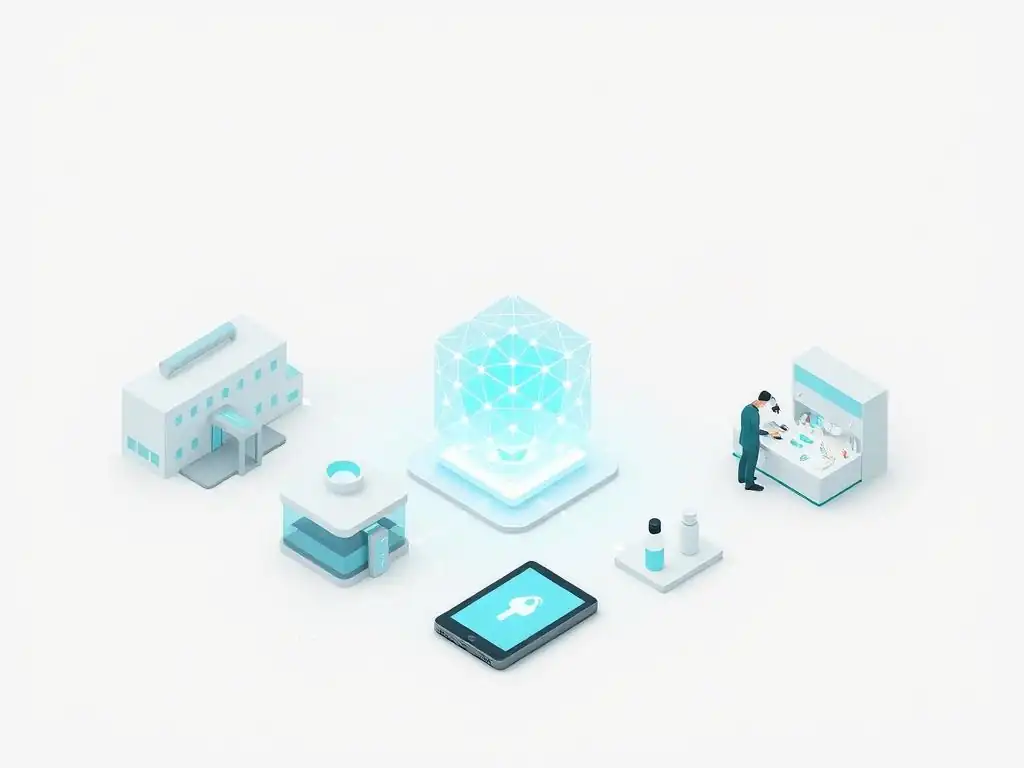
Secure Access to Electronic Health Records (EHRs)
Managing access to Electronic Health Records (EHRs) is perhaps the most critical application for secure healthcare blockchain identity. EHRs contain a wealth of sensitive patient information, and ensuring that only authorized individuals – the patient themselves, their approved doctors, or emergency personnel – can view or modify these records is paramount. Traditional EHR systems often rely on internal access controls that can be vulnerable if the system's perimeter is breached or if user credentials are compromised.
By integrating a blockchain identity layer, access requests to EHRs can be routed through a decentralized, immutable ledger. The blockchain verifies the identity of the requesting party and checks if they have the necessary permissions, as granted by the patient or a designated authority, before allowing access to the off-chain EHR data. This creates a cryptographically secure audit trail of every access attempt, providing a level of transparency and security far exceeding conventional methods.
Patient-Controlled Access to Medical Information
A key benefit of secure healthcare blockchain identity, particularly when combined with Self-Sovereign Identity (SSI) principles, is empowering patients with greater control over their medical information. Instead of healthcare providers being the sole custodians of their data and access permissions, patients can hold the private keys associated with their blockchain identity, giving them the ability to grant, revoke, and monitor access to their records.
Imagine a scenario where a patient visits a new specialist. Using their secure healthcare blockchain identity, the patient can log into a portal (or use a mobile app) and grant the specialist temporary access to specific parts of their EHR, such as recent lab results or medication history. This permission is recorded on the blockchain, and the specialist's system verifies this permission via the blockchain before accessing the data. This model shifts control from institutions to individuals, enhancing privacy and autonomy.
Integration with Epic EHR using Hyperledger Fabric for fine-grained access control
While a direct, real-world, large-scale integration example with a major EHR vendor like Epic publicly discussed might be limited due to proprietary systems, the concept of integrating blockchain identity with leading EHR platforms is a significant area of exploration. Consider a hypothetical pilot using Hyperledger Fabric, a permissioned blockchain platform suitable for enterprise use. A patient's identity could be anchored on the Fabric network.
Access policies for different parts of their Epic EHR data (e.g., demographics, clinical notes, billing) could be defined and managed via smart contracts on the Fabric ledger, linked to the patient's blockchain identity. When a user attempts to access data within Epic, the EHR system would query the Fabric network, using the user's and patient's blockchain identifiers, to confirm the specific access rights granted by the patient or the organization based on the smart contract rules. This allows for granular, policy-driven access control recorded on a tamper-proof blockchain, moving beyond simple role-based access lists within Epic.
Supply Chain Management for Pharmaceuticals
The pharmaceutical supply chain is complex and global, involving manufacturers, distributors, pharmacies, and patients. Ensuring the integrity and authenticity of medications throughout this chain is critical for patient safety. Counterfeit drugs are a significant problem, estimated by some organizations to represent a market value of tens of billions of dollars globally each year, posing serious health risks. Secure healthcare blockchain identity can play a vital role in addressing these issues.
By assigning a unique blockchain identity to each batch or even individual unit of medication and to each participant in the supply chain (manufacturers, distributors, etc. ), a verifiable, immutable record of the drug's journey from origin to patient can be created. This allows for transparent tracking and verification at each step, significantly reducing the opportunities for counterfeit products to enter the legitimate supply chain and enabling rapid recalls if issues arise.
Tracking and Verifying the Authenticity of Medications
Secure healthcare blockchain identity enables granular tracking of pharmaceutical products. Each container, batch, or even individual package of medication can be assigned a unique identifier linked to a blockchain entry. As the medication moves through the supply chain – from the manufacturing plant to the distributor, then to the pharmacy – each handover or logistical step is recorded as a transaction on the blockchain, signed by the blockchain identities of the parties involved.
Pharmacies and even patients (via a QR code on the packaging, for example) could then scan the product's identifier and query the blockchain to see its entire history: where it was manufactured, when it was shipped, which distributors handled it, and when it arrived at the pharmacy. This transparent and immutable ledger makes it possible to verify the legitimate path of the medication and detect any suspicious deviations or lack of verifiable history, indicating a potential counterfeit.
Combating Counterfeit Drugs with Blockchain Technology
Counterfeit drugs are a major threat, lacking the correct active ingredients, containing harmful substances, or being produced in unsanitary conditions. They pose a direct risk to patient health and erode trust in healthcare systems. Blockchain technology, particularly with secure healthcare blockchain identity for participants and products, offers a powerful tool to combat this.
By creating a tamper-proof record of authenticity and custody transfers, blockchain makes it extremely difficult for counterfeit products to infiltrate the legitimate supply chain undetected. A fake product would not have a corresponding, verifiable history on the blockchain linked to legitimate manufacturers and distributors. Regulatory bodies and supply chain partners can verify the identity and history of products in real-time, allowing for the identification and removal of counterfeit drugs before they reach patients. This enhances patient safety and protects the integrity of the pharmaceutical industry.
Clinical Trial Data Management
Clinical trials are the backbone of medical advancement, generating vast amounts of sensitive and critical data. Ensuring the integrity, security, and verifiability of this data is paramount for the validity of research findings and regulatory approval. Traditional methods often rely on centralized databases and manual auditing processes, which can be susceptible to errors, data tampering, and make secure sharing between research sites challenging. Secure healthcare blockchain identity offers a new approach.
By using blockchain identity for researchers, patients participating in trials (pseudonymously), and data points generated during the trial, an immutable and transparent record of data creation, access, and modification can be established. This enhances data integrity, simplifies auditing, and facilitates secure, permissioned sharing of trial data among authorized researchers and regulatory bodies, all while protecting patient privacy through appropriate data handling methods.
Ensuring Data Integrity and Security in Clinical Research
Maintaining the integrity of clinical trial data is non-negotiable. Any alteration or loss of data can invalidate trial results and potentially delay or prevent the approval of new treatments. A secure healthcare blockchain identity system can significantly enhance data integrity by creating an immutable log of every data point entered or accessed during a trial, linked to the identity of the researcher or system that performed the action.
Data generated from patient visits, lab tests, or device readings can be hashed and timestamped on the blockchain, with the raw data stored securely off-chain. Any subsequent attempt to modify the off-chain data would not match the hash recorded on the blockchain, immediately indicating tampering. This provides a cryptographically verifiable audit trail, assuring regulatory bodies like the FDA or EMA of the data's authenticity and integrity throughout the trial lifecycle.
Securely Sharing Clinical Trial Results with Researchers
Clinical trial data often needs to be shared securely among multiple research sites, sponsors, ethics committees, and regulatory agencies. Traditional methods involve secure file transfers, VPNs, and access controls specific to each organization, which can be cumbersome and create data silos. A secure healthcare blockchain identity framework facilitates more streamlined and secure data sharing.
Researchers and organizations involved in the trial can be issued blockchain identities. Smart contracts on the blockchain can define granular permissions for accessing specific datasets based on roles or agreements (e.g., allowing only statisticians from the sponsor to access raw patient data hashes, while researchers at a specific site can access aggregated, anonymized results). When access is granted via the blockchain identity and permission layer, the system provides access to the relevant off-chain encrypted data stores, ensuring that sensitive results are shared only with authorized parties and that every access is logged immutably.
Implementing Blockchain for Healthcare Identity: Challenges and Considerations
Implementing secure healthcare blockchain identity solutions is not without its challenges. While the technology offers significant advantages, practical deployment in the complex and highly regulated healthcare environment requires careful consideration of several factors. These include technical hurdles like scalability, regulatory compliance, and the significant task of integrating new blockchain systems with existing legacy healthcare IT infrastructure.
Addressing these challenges requires a phased approach, often starting with pilot programs in specific use cases like provider credentialing or patient consent management before attempting a full-scale identity management rollout. Collaboration between blockchain experts, healthcare IT professionals, regulators, and patients is essential to design systems that are not only technologically sound but also compliant, user-friendly, and truly enhance the security and efficiency of healthcare data access.
Scalability and Performance Limitations of Blockchain Networks
One of the primary technical challenges for implementing secure healthcare blockchain identity at scale is the inherent scalability and performance limitations of many blockchain networks. Public blockchains like Bitcoin or Ethereum, while highly decentralized, can process a relatively low number of transactions per second compared to the volume of identity verifications and access requests that occur daily across a large hospital network or healthcare system.
Enterprise-grade, permissioned blockchains like Hyperledger Fabric or R3 Corda offer better performance than public chains, capable of processing hundreds or even thousands of transactions per second. However, deploying identity solutions for millions of patients and hundreds of thousands of healthcare professionals across multiple organizations still presents significant scalability requirements that need careful architectural design and optimization to ensure real-time access without unacceptable delays.
Addressing Scalability Issues for Large-Scale Healthcare Deployments
To address scalability for secure healthcare blockchain identity, several strategies are being explored. Using permissioned blockchains designed for enterprise throughput is a fundamental step. These networks limit participation to known, validated nodes, allowing for faster consensus mechanisms and higher transaction volumes.
Layer 2 scaling solutions, which process transactions off-chain and periodically settle them on the main blockchain, can also significantly increase throughput. Sharding, dividing the blockchain into smaller, more manageable segments, is another technique. Furthermore, optimizing the design of the identity data stored on-chain – perhaps only storing hashes or minimal metadata and keeping bulk data off-chain – reduces the data load on the network, improving performance for a secure healthcare blockchain identity system.
Optimizing Blockchain Performance for Real-Time Data Access
Healthcare operations often require real-time or near real-time access to patient identity information and access permissions, especially in emergency situations. The latency inherent in some blockchain consensus mechanisms can pose a challenge. Optimizing blockchain performance for these critical use cases is crucial.
Choosing a blockchain platform with a high-performance consensus algorithm suitable for enterprise use is key. Designing the system architecture to minimize the amount of data that needs to be processed on-chain for each access request is also important. This might involve using off-chain data storage for sensitive patient records and leveraging the blockchain primarily for immutable identity anchoring, access logging, and managing encrypted pointers or decryption keys. Caching strategies and efficient data indexing can further help ensure that secure healthcare blockchain identity verification and access control decisions are made rapidly.
Regulatory Compliance and Data Privacy Concerns (HIPAA, GDPR)
Healthcare data is subject to stringent regulations designed to protect patient privacy and security, most notably HIPAA in the United States and GDPR in Europe. Implementing a secure healthcare blockchain identity solution must ensure full compliance with these complex legal frameworks, which can be challenging given the decentralized and immutable nature of blockchain.
Key concerns include the "right to be forgotten" under GDPR (which conflicts with blockchain immutability), the requirement to protect Protected Health Information (PHI) under HIPAA, and ensuring accountability within a decentralized system. Designing a secure healthcare blockchain identity solution requires careful consideration of how patient data is handled, where it is stored (off-chain is essential for PHI), and how consent and access are managed and auditable in a compliant manner.
Ensuring Compliance with Healthcare Regulations
Ensuring compliance with regulations like HIPAA and GDPR is paramount for any secure healthcare blockchain identity system. This typically means that sensitive patient data (PHI under HIPAA, personal data under GDPR) cannot be stored directly on the blockchain, especially not on public or semi-public chains. Instead, the blockchain should store encrypted hashes, pointers to off-chain data, or verified identity attributes that do not reveal sensitive information.
Mechanisms for managing consent, crucial under both HIPAA and GDPR, must be built into the blockchain identity layer. Patients should have the ability to grant and revoke access permissions, and these actions must be immutably recorded. For the "right to be forgotten," while the blockchain transaction itself cannot be deleted, the key to accessing the associated off-chain data can be removed or the data itself securely deleted off-chain, making the on-chain pointer useless. Designing for auditable data access logs on the blockchain directly supports compliance reporting requirements.
Protecting Patient Privacy in a Decentralized Environment
Protecting patient privacy in a decentralized secure healthcare blockchain identity system requires careful architectural choices. Simply putting identity data on a public ledger would be a catastrophic privacy violation. Permissioned blockchains, where participation is restricted to known, trusted entities, offer a higher degree of privacy suitable for healthcare.
Using pseudonymous or decentralized identifiers (DIDs) that are not directly linked to a patient's real-world identity on the blockchain, with the link maintained only in secure off-chain systems accessible only to authorized parties, is a key privacy-preserving technique. Encrypting off-chain data and managing decryption keys via blockchain permissions ensures that only authorized users with the correct key can access sensitive records. Cryptographic techniques like zero-knowledge proofs could potentially be used in the future to verify identity attributes or permissions without revealing the underlying sensitive data.
Interoperability with Existing Healthcare Systems
Healthcare organizations have invested heavily in their existing IT infrastructure, including EHR systems, patient portals, billing systems, and lab information systems. Integrating a new secure healthcare blockchain identity layer with this complex web of legacy systems is a significant challenge. These systems often use proprietary data formats, communication protocols, and authentication methods that are not easily compatible with blockchain technology.
Achieving seamless interoperability requires developing integration strategies that allow the blockchain identity system to interact effectively with existing applications without requiring a complete overhaul of the legacy infrastructure. This is crucial for widespread adoption and for realizing the benefits of a secure healthcare blockchain identity solution across the entire healthcare ecosystem.
Integrating Blockchain Identity with Legacy Systems
Integrating secure healthcare blockchain identity with legacy systems requires building bridges between the new decentralized identity layer and existing centralized applications. This often involves developing middleware or integration layers that can translate requests and data between the blockchain network and the legacy system's APIs or databases.
For instance, when a user attempts to log into an existing EHR system, the system might redirect the authentication request to the blockchain identity service. The user authenticates using their blockchain identity (e.g., via a digital wallet and private key). The blockchain service verifies the identity and checks their recorded permissions. A secure token or assertion is then passed back to the legacy EHR system, allowing the user access based on the blockchain-verified identity and permissions. This approach allows organizations to leverage blockchain identity without immediately replacing their core clinical systems.
API Gateways and Data Transformation Services for seamless integration
API gateways and data transformation services are essential components for achieving seamless integration between secure healthcare blockchain identity systems and legacy applications. An API gateway can act as a single entry point for all identity and access control requests, routing them appropriately between the legacy system and the blockchain network.
Data transformation services are needed to convert data formats and protocols used by legacy systems into formats compatible with the blockchain network and vice-versa. For example, converting a legacy system's internal user ID into a blockchain-compatible decentralized identifier (DID) or mapping blockchain-based access permissions to the access control lists used by an older application. These integration tools help abstract the complexity of the blockchain from the legacy systems, enabling a smoother transition and allowing organizations to gradually adopt secure healthcare blockchain identity solutions.
The Future of Secure Healthcare Blockchain Identity
The field of secure healthcare blockchain identity is rapidly evolving, driven by ongoing advancements in blockchain technology and increasing awareness of the need for more robust identity and access management in healthcare. The future is likely to see the widespread adoption of more sophisticated identity models and integration with cutting-edge authentication methods, fundamentally changing how patients and providers interact with healthcare data.
Emerging trends such as Self-Sovereign Identity (SSI) and the integration of biometrics are poised to further enhance the security, privacy, and user experience of secure healthcare blockchain identity solutions. As regulatory frameworks adapt and technology matures, blockchain is set to play a pivotal role in creating a more secure, efficient, and patient-centric healthcare ecosystem, moving far beyond the limitations of traditional passwords.
Emerging Trends and Innovations in Blockchain Identity Management
Several emerging trends are shaping the future of secure healthcare blockchain identity. One significant area is the development of more user-friendly interfaces and applications that abstract away the technical complexities of blockchain keys and transactions, making it easier for patients and providers to manage their digital identities and permissions.
Another key trend is the focus on interoperability standards. Initiatives are underway to develop universal standards for decentralized identifiers (DIDs) and verifiable credentials that can work across different blockchain networks and healthcare systems. This standardization is crucial for enabling truly seamless and secure healthcare blockchain identity verification and data sharing across the entire healthcare landscape, moving away from proprietary solutions.
Self-Sovereign Identity (SSI) and Decentralized Identifiers (DIDs)
Self-Sovereign Identity (SSI) is a model where individuals have complete control over their digital identity. Unlike traditional systems where identity is managed by institutions (like a hospital or government), SSI puts the individual at the center. Blockchain is a foundational technology for SSI, enabling the creation of Decentralized Identifiers (DIDs) – unique, persistent identifiers that the individual owns and controls, not tied to any central registry.
In a secure healthcare blockchain identity system based on SSI, a patient would have a DID anchored on a blockchain. They could then obtain verifiable credentials (digital proofs of attributes like "is a patient of Hospital X," "has received vaccination Y," or "is a licensed physician") issued by trusted authorities (hospitals, labs, government agencies) and store these credentials securely, often in a digital wallet. The patient uses their private key associated with their DID to present these credentials and prove attributes without revealing unnecessary personal data, giving them granular control over their identity and access to their data.
Biometric Authentication Integrated with Blockchain Identity
Integrating biometric authentication (like fingerprint, facial recognition, or iris scans) with secure healthcare blockchain identity can provide a strong, multi-factor authentication mechanism and enhance user convenience. Instead of relying solely on private keys or passwords, users could authenticate using a biometric scan, which then unlocks their private key stored securely on their device or in a hardware security module.
The biometric data itself would not be stored on the blockchain due to privacy concerns. The blockchain is used to verify the identity associated with the public key, and the biometric scan is simply a method to prove possession of the corresponding private key. This combination offers a high level of security – leveraging the uniqueness of biometrics with the tamper-proof nature of blockchain identity – while providing a more intuitive user experience for accessing healthcare services and data.
The Potential for Blockchain to Revolutionize Healthcare Data Security
Blockchain's potential to revolutionize healthcare data security lies in its ability to create a fundamentally more secure, transparent, and patient-centric system for managing identities and access. By shifting from vulnerable centralized systems to decentralized, immutable ledgers for identity verification and access control, blockchain can drastically reduce the attack surface and provide a robust defense against data breaches and manipulation.
Furthermore, by enabling granular, patient-controlled access permissions recorded on a tamper-proof ledger, secure healthcare blockchain identity solutions can enhance privacy and build greater trust in how sensitive health information is handled. This technological shift has the potential to create a more resilient and trustworthy digital healthcare ecosystem for patients, providers, and researchers alike.
Increased Patient Empowerment and Control Over Their Data
A major promise of secure healthcare blockchain identity, particularly through the lens of SSI, is the significant increase in patient empowerment. Patients move from being passive subjects whose data is held and controlled by institutions to active participants with agency over their own health information.
With a blockchain-based identity, patients can decide precisely who accesses their records, for how long, and for what purpose. They can grant temporary access to emergency responders, permanent access to their primary care physician, or limited access to a researcher studying a specific condition, all recorded immutably on the blockchain. This level of control not only enhances privacy but also fosters a more collaborative relationship between patients and their healthcare providers.
A More Secure and Efficient Healthcare Ecosystem
Ultimately, widespread adoption of secure healthcare blockchain identity can lead to a more secure and efficient healthcare ecosystem overall. Enhanced security reduces the significant costs and harms associated with data breaches and identity theft. Streamlined identity verification and access control processes improve administrative efficiency and reduce delays in patient care.
Improved interoperability facilitated by a shared, verifiable identity layer enables better coordination of care across different providers and settings. The ability to securely track pharmaceuticals and manage clinical trial data with greater integrity further contributes to patient safety and the advancement of medical science. By addressing fundamental challenges in identity and access management, blockchain can help build a healthcare system that is more resilient, trustworthy, and effective.
Conclusion: Embracing Blockchain for a Safer Healthcare Future
The challenges facing healthcare data security are significant and growing, demanding innovative solutions beyond traditional password-based systems. Blockchain technology, with its core principles of decentralization, immutability, and transparency, offers a compelling pathway to a more secure future for healthcare identity management. Implementing secure healthcare blockchain identity solutions can drastically reduce the risk of data breaches, enhance patient privacy and control, improve interoperability, and streamline administrative processes.
While challenges related to scalability, regulatory compliance, and integration with legacy systems exist, ongoing advancements in blockchain technology and the development of industry standards are paving the way for practical and compliant deployments. Embracing secure healthcare blockchain identity is not just about adopting a new technology; it's about fundamentally rethinking how patient data is accessed and protected, building a more resilient, efficient, and trustworthy healthcare ecosystem for everyone involved. The journey beyond passwords to a blockchain-secured identity is essential for a safer healthcare future.
Frequently Asked Questions
How does blockchain technology enhance security in healthcare identity management?
Blockchain offers enhanced security through its decentralized and immutable ledger, making it extremely difficult for hackers to alter or tamper with patient data. This ensures data integrity and prevents unauthorized access.
What are the key benefits of using a blockchain-based identity system compared to traditional password-based systems in healthcare?
Blockchain significantly reduces the risk of data breaches by eliminating the need for vulnerable passwords. It provides stronger authentication methods and enhances patient data privacy and control.
How can blockchain-based identity management improve interoperability between different healthcare providers?
By providing a unified and verifiable patient identity, blockchain facilitates secure data sharing and streamlines communication between healthcare providers. This improves care coordination and reduces administrative overhead.
What are the regulatory considerations and challenges surrounding the implementation of blockchain in healthcare identity management?
Compliance with regulations like HIPAA and GDPR is crucial when implementing blockchain. Addressing data privacy concerns and ensuring regulatory compliance are significant challenges.
What is the future outlook for blockchain-based identity solutions in the healthcare industry?
The future looks promising, with blockchain expected to play a significant role in creating more secure and efficient healthcare systems. This includes advancements in patient-centric data control and improved data security.
Final Reflection: Embracing Decentralized Trust
The journey through blockchain-based identity management reveals a profound truth: security in healthcare hinges on trust, and trust can be built on decentralized foundations. The vulnerabilities of traditional password-centric systems are starkly contrasted by the promise of blockchain, offering a future where patient data is not only protected but also empowers individuals with greater control over their own information. This shift is not merely a technological upgrade; it's a paradigm shift in how we perceive and manage sensitive health data.
The impact of this technology extends far beyond the technical realm, influencing the very fabric of our healthcare system. The potential for enhanced privacy, reduced fraud, and improved patient outcomes is immense, and the responsibility to explore and implement these solutions rests on all stakeholders. The future of healthcare is not just about treating illness, but about empowering individuals to own and manage their health data securely and transparently.
This quote encapsulates the transformative power of secure healthcare blockchain identity, moving us towards a more patient-centric and trustworthy system.
As we stand at the cusp of this technological revolution, let us not be passive observers. Consider the implications of secure healthcare blockchain identity in your own life, whether as a patient, a healthcare provider, or a technology innovator. Embrace the potential of decentralized trust, advocate for its responsible implementation, and contribute to a future where healthcare is both secure and empowering for all.
Unlock Secure Healthcare: Take Control of Your Digital Identity!
Thank you for exploring how blockchain can revolutionize healthcare access. Now that you’re informed, it’s time to prioritize security and help build a safer, more private healthcare system.
Here’s how you can get started:
- Explore Blockchain-Based Identity Solutions. Investigate existing blockchain identity management platforms tailored for healthcare and consider how they might be integrated into your organization or personal health management. This is your primary step to immediately implement what you’ve learned.
- Share this insight: Help spread awareness by sharing this article with your network. Use the hashtag #BlockchainHealthcare to connect with professionals interested in secure healthcare innovations and to foster discussions.
- Challenge the status quo: Think about your current password practices in healthcare settings. Identify specific vulnerabilities and brainstorm how blockchain technology could address them. Share your ideas in the comments below!
What small step can you take today to promote blockchain-based identity solutions in healthcare and enhance patient data security?
Leave a Reply