
Blockchain and AI for Healthcare Data Security: A Powerful Combination


Welcome to Blockchain Trends, your go-to source for unraveling the dynamic world of blockchain technology!
Intrigued by how blockchain AI healthcare security can revolutionize patient data protection? Discover how this powerful combination is forging a new era of trust and transparency in healthcare, moving beyond traditional security measures. Dive in to explore the transformative potential waiting within this cutting-edge intersection and unlock insights into the future of decentralized healthcare systems.
Blockchain and AI for Healthcare Data Security: A Powerful Combination
- Introduction: The Urgent Need for Enhanced Healthcare Data Security
- Understanding the Power of Blockchain in Healthcare Data Management
- Artificial Intelligence's Role in Strengthening Healthcare Data Security
- Blockchain and AI Synergy: A Unified Approach to Healthcare Data Security
- Use Cases: Real-World Applications of Blockchain and AI in Healthcare Security
- Overcoming Challenges and Addressing Concerns
- The Future of Blockchain and AI in Healthcare Data Protection
- Conclusion: Embracing the Transformative Potential of Blockchain and AI for Healthcare Security
-
Frequently Asked Questions
- How can blockchain technology enhance data security in the healthcare industry?
- What role does Artificial Intelligence (AI) play in optimizing blockchain-based healthcare systems?
- What are the key benefits of combining Blockchain and AI for healthcare data management?
- What are some potential regulatory hurdles for implementing blockchain and AI in healthcare?
- How does the integration of Blockchain and AI impact the future of healthcare data management and patient care?
- Final Reflection: Securing the Future of Healthcare
- Empower Your Healthcare Data Security Journey Today!
Introduction: The Urgent Need for Enhanced Healthcare Data Security
The healthcare industry is undergoing a rapid digital transformation, leading to an explosion in the volume and complexity of patient data. While this digitalization promises improved patient care and operational efficiency, it also presents significant challenges, particularly concerning data security.
Protecting sensitive patient information, from electronic health records (EHRs) to genomic data and clinical trial results, is paramount, not only for privacy but also for maintaining trust and complying with stringent regulations like HIPAA in the United States or GDPR in Europe. The growing frequency and sophistication of cyberattacks targeting healthcare organizations highlight the urgent need for more robust and innovative security measures.
Traditional security systems, often siloed and reliant on centralized databases, struggle to keep pace with evolving threats. Data breaches in healthcare can be devastating, leading to severe financial penalties, reputational damage, and, most critically, compromised patient safety. The average cost of a healthcare data breach reached a record-high of USD 10.93 million in 2023, according to IBM's Cost of a Data Breach Report, marking the thirteenth consecutive year healthcare has held this unfortunate distinction. This staggering figure underscores the inadequacy of current defenses and the critical necessity for advanced security paradigms.
Growing Threats to Patient Data and the Vulnerabilities of Traditional Systems
Healthcare organizations face a diverse array of cyber threats, including ransomware attacks, phishing schemes, insider threats, and sophisticated nation-state attacks. These threats exploit common vulnerabilities in traditional, centralized systems, such as single points of failure, weak access controls, and insufficient data encryption during transit or at rest.
Attackers are increasingly targeting healthcare due to the high value of medical data on the black market, often fetching prices significantly higher than financial data. For instance, a comprehensive patient record containing insurance details, medical history, and personal identifiers can reportedly sell for hundreds or even thousands of dollars on dark web marketplaces.
The inherent structure of many legacy healthcare IT systems contributes significantly to their vulnerability. Often patched together over years with disparate technologies, these systems lack inherent interoperability and unified security frameworks. Data is frequently duplicated across different departments or even different facilities, creating multiple points of exposure. Furthermore, manual processes for managing data access and ensuring compliance are prone to human error. The sheer volume of data, estimated to be growing at a compound annual growth rate of over 30%, makes manual oversight increasingly impractical and ineffective against automated attacks, leaving sensitive patient information exposed to significant risk.
The Promise of Blockchain and AI in Revolutionizing Healthcare Security
In response to these escalating threats, the healthcare industry is exploring next-generation technologies like blockchain and artificial intelligence (AI) to build more resilient and secure data infrastructures. Blockchain technology, with its decentralized, immutable, and transparent ledger, offers a fundamentally new way to manage and secure data by creating tamper-proof records of transactions and data access. This inherent security feature can help protect against unauthorized modifications and provide a clear audit trail for patient information.
Complementing blockchain's foundational security, AI brings powerful analytical capabilities to the forefront of healthcare data protection. AI algorithms can analyze vast datasets in real-time to detect anomalies, predict potential threats before they materialize, and automate security protocols. By combining the strengths of blockchain's integrity and immutability with AI's intelligence and automation, a powerful synergy emerges. This Blockchain AI healthcare security approach holds the potential to create a multi-layered defense system that is significantly more effective than traditional methods, offering enhanced protection for sensitive patient data against the complex and evolving landscape of cyber threats.
Understanding the Power of Blockchain in Healthcare Data Management
Blockchain technology, often associated with cryptocurrencies, is far more than just a financial tool. Its core innovation lies in its distributed ledger technology, which records transactions across a network of computers rather than on a single, central server. This decentralized nature inherently increases security and transparency. In the context of healthcare, blockchain can serve as a robust infrastructure for managing patient data, ensuring its integrity and controlling access in a verifiable and secure manner.
The application of blockchain in healthcare data management addresses several critical pain points that plague traditional systems. Issues such as data fragmentation across different providers, lack of patient control over their own health information, and the difficulty of securely sharing data for research or treatment purposes can potentially be mitigated. By creating a shared, secure, and immutable record of data transactions and access requests, blockchain empowers patients and improves the efficiency and security of data exchange among authorized parties, paving the way for a more connected and secure healthcare ecosystem.
Blockchain's Decentralized and Immutable Ledger: A Foundation for Trust
At the heart of blockchain's security capabilities is its decentralized and immutable ledger. When data is added to a blockchain, it is grouped into blocks, which are then cryptographically linked together in a chain. Each new block contains a hash of the previous block, making it virtually impossible to alter any historical data without invalidating the entire chain. This distributed nature means that the ledger is replicated across multiple nodes in the network; to tamper with the data, an attacker would need to compromise a majority of these nodes simultaneously, a computationally prohibitive task.
This inherent immutability provides a high level of data integrity, ensuring that once information is recorded on the blockchain, it cannot be retrospectively changed or deleted without detection. For healthcare, this is crucial for maintaining accurate and trustworthy patient records, clinical trial data, and supply chain information. Unlike traditional databases where a single administrator could potentially alter records undetected, a blockchain provides a transparent and verifiable history of all data transactions, building a foundation of trust among all participants in the network, whether they are patients, providers, researchers, or regulators.
Enhanced Data Integrity and Provenance with Blockchain Technology
Beyond immutability, blockchain significantly enhances data integrity and provenance. Every transaction or data entry on a blockchain is timestamped and linked to the identity of the participant who initiated it (often using cryptographic keys). This creates a clear, auditable trail documenting exactly when data was created, who accessed it, who modified it (if modifications are allowed through subsequent, linked transactions), and when. This level of detail is invaluable in healthcare for tracking the lifecycle of patient data and ensuring its accuracy.
For example, in managing prescriptions, a blockchain could record the doctor prescribing the medication, the pharmacy dispensing it, and the patient receiving it, all with verifiable timestamps. Any attempt to counterfeit or divert medications could be flagged by inconsistencies on the ledger. Similarly, for patient records, every interaction – from a doctor's note to a lab result – can be recorded as a transaction, providing an unalterable history. This enhanced provenance makes it far more difficult for malicious actors or even unintentional errors to compromise data integrity without leaving an immediate, transparent record on the distributed ledger.
Blockchain for Secure Storage and Sharing of Electronic Health Records (EHRs)
Using blockchain for Electronic Health Records (EHRs) doesn't typically mean storing the entire massive EHR file directly on the chain due to storage and scalability limitations. Instead, a common approach is to store hashes or pointers to the actual EHR data (which resides securely off-chain, perhaps in encrypted databases) on the blockchain. The blockchain then acts as a secure index and access control layer. This approach leverages the blockchain's security features to manage access permissions and verify data integrity without burdening the network with large data files.
When a healthcare provider or researcher needs access to a patient's EHR, they request permission through the blockchain network. The patient, or their authorized representative, can grant or revoke access using their private key, and this permission is recorded as a transaction on the immutable ledger. This gives patients unprecedented control over who accesses their sensitive health information. Furthermore, any access attempt, whether authorized or unauthorized, is recorded on the blockchain, creating a transparent audit log that significantly enhances accountability and the overall Blockchain AI healthcare security posture for managing sensitive patient data.
Artificial Intelligence's Role in Strengthening Healthcare Data Security
Artificial Intelligence (AI) offers a powerful suite of tools that can significantly enhance healthcare data security by providing capabilities beyond the scope of traditional rule-based systems. While blockchain provides a secure foundation and immutable record, AI excels at analyzing complex patterns, detecting anomalies, and automating responses, making it an ideal complement for dynamic threat detection and proactive security measures. AI algorithms can process vast amounts of data from various sources – network traffic logs, system audits, user behavior, and security alerts – to identify potential security risks that would be impossible for humans or simple scripts to detect.
The application of AI in healthcare security spans several critical areas, including real-time threat monitoring, predictive risk assessment, and intelligent access management. By continuously learning from new data and adapting to evolving attack vectors, AI systems can provide a dynamic defense layer. This is particularly important in healthcare environments, which are characterized by complex networks, diverse devices (including IoT medical devices), and a large volume of sensitive data, making comprehensive Blockchain AI healthcare security solutions essential.
AI-Powered Threat Detection and Prevention in Healthcare Networks
AI is revolutionizing threat detection in healthcare by moving beyond signature-based methods to employ behavioral analysis and machine learning. Traditional security systems often rely on databases of known malware signatures, which are ineffective against zero-day threats or novel attack techniques. AI, however, can analyze network traffic, system calls, and user activity for deviations from normal patterns, identifying suspicious behavior indicative of an attack in progress, such as unusual data access times or attempts to exfiltrate large volumes of data.
For instance, AI models trained on historical data can learn what constitutes 'normal' network behavior within a hospital. If a system suddenly starts attempting connections to unusual external IP addresses or accessing patient records it has never interacted with before, the AI can flag this as a potential threat, such as a ransomware spreading or data theft attempt. Some studies suggest that AI-powered intrusion detection systems can identify up to 95% of cyber threats, including previously unknown ones, significantly outperforming traditional methods and providing a crucial layer in robust Blockchain AI healthcare security.
Predictive Analytics for Identifying Potential Data Breaches and Vulnerabilities
Predictive analytics, powered by AI, allows healthcare organizations to proactively identify potential security vulnerabilities and predict the likelihood of future data breaches. By analyzing historical breach data, vulnerability reports, network configurations, and even external threat intelligence feeds, AI algorithms can assess the risk profile of different systems and assets within the healthcare network. This enables security teams to prioritize patching efforts, strengthen defenses in high-risk areas, and allocate resources more effectively.
AI can also predict which users or systems might be targeted based on factors like access privileges, usage patterns, or recent interactions with external systems. For example, an AI might identify that a particular workstation accessing a critical database also frequently interacts with potentially risky external websites, flagging it for closer monitoring or stricter security policies.
While precise prediction rates are difficult to quantify universally, organizations using AI for predictive security analytics report significant improvements in their ability to anticipate and mitigate risks, often reducing incident response times by a substantial margin – potentially by 20-30% or more in some implementations.
AI for Access Control and Authentication in Healthcare Systems
Managing user access in complex healthcare environments with numerous staff roles and permissions is a significant security challenge. AI can enhance access control and authentication mechanisms by implementing adaptive and risk-aware policies. Instead of static permissions, AI can analyze user context, location, device, and behavior in real-time to determine the appropriate level of access. For example, if a user attempts to access sensitive data from an unusual location or at an odd hour, the AI might require additional authentication factors or temporarily restrict access.
AI can also power sophisticated biometric authentication systems, such as facial recognition or voice recognition, adding robust layers of identity verification. Furthermore, AI can monitor user behavior post-authentication to detect insider threats or compromised accounts. If an account suddenly starts performing actions uncharacteristic of its legitimate user – like attempting to access thousands of patient records in quick succession – the AI can flag the activity, alert security personnel, or even automatically suspend the account. This intelligent approach to access management significantly reduces the risk of unauthorized data access, a critical component of comprehensive Blockchain AI healthcare security.
Blockchain and AI Synergy: A Unified Approach to Healthcare Data Security
While blockchain and AI offer significant security benefits individually, their true power emerges when they are integrated. The combination creates a synergistic defense mechanism that leverages the strengths of both technologies. Blockchain provides the secure, immutable foundation for data storage and transaction logging, ensuring data integrity and providing a trustworthy audit trail. AI, on the other hand, provides the intelligence layer, analyzing the data and logs stored on or referenced by the blockchain to detect threats, predict risks, and automate security responses.
This unified approach addresses limitations inherent in using either technology in isolation. Blockchain alone is not designed for real-time threat analysis or prediction, while AI can be vulnerable to data poisoning or manipulation if the data it analyzes is not trustworthy. By integrating them, the blockchain ensures the integrity of the data AI analyzes, while AI provides the necessary intelligence to monitor the blockchain network, detect suspicious patterns in data access or transactions recorded on the chain, and enhance overall system security. This creates a more resilient and intelligent system for Blockchain AI healthcare security.
Combining Blockchain's Security with AI's Intelligence for Optimal Protection
The integration of blockchain and AI creates a robust framework where blockchain acts as the secure backbone and AI as the intelligent guardian. Data access requests, modifications, and other critical events are recorded on the immutable blockchain ledger. AI algorithms then continuously monitor this ledger, along with other system logs and network traffic, to identify patterns indicative of malicious activity. This combined approach ensures that security decisions are based on verifiable, tamper-proof data while leveraging AI's ability to process and understand complex information landscapes.
Consider the process of sharing patient data for research. The patient grants permission via a blockchain transaction. The researcher's subsequent access attempts are also recorded on the blockchain.
An AI system can monitor these blockchain records, looking for unusual patterns, such as a single researcher attempting to access an excessive number of records in a short period or accessing data types outside the scope of their approved research. The AI can flag such activities as suspicious, even if the initial access was technically permitted according to the blockchain entry. This layered security approach, where blockchain ensures the who, what, and when is immutably recorded, and AI analyzes how those interactions occur, provides optimal Blockchain AI healthcare security.
AI-Driven Anomaly Detection on Blockchain-Secured Healthcare Data
Anomaly detection is a prime area where the synergy between blockchain and AI shines in healthcare security. With data access logs and transaction histories immutably stored on a blockchain, AI algorithms can analyze this verifiable data to identify deviations from established norms. This is particularly effective for detecting insider threats or compromised accounts, where malicious activity might involve authorized credentials but exhibit unusual behavior patterns.
For example, an AI system can learn the typical data access patterns for different roles within a hospital. A nurse might primarily access records for patients on their ward during specific shifts, while a billing specialist accesses different types of data during business hours. If the blockchain records show a nurse's account accessing billing records late at night, an AI can immediately flag this as an anomaly.
By analyzing these patterns on the trustworthy, immutable data provided by the blockchain, the AI's detection capabilities are significantly enhanced, providing a powerful tool for Blockchain AI healthcare security. Studies show that AI-driven anomaly detection can reduce false positives compared to rule-based systems, improving the efficiency of security teams.
Automated Compliance and Audit Trails with Blockchain and AI Integration
Healthcare organizations face complex regulatory requirements regarding data privacy and security, such as HIPAA's mandates for audit trails and access controls. The integration of blockchain and AI can significantly automate and simplify compliance reporting. The blockchain inherently provides a transparent, immutable, and timestamped record of every data access and transaction, fulfilling the core requirement for detailed audit trails.
AI can then process this blockchain data to automatically generate compliance reports, identify potential compliance violations in real-time, and even trigger automated remediation actions. For instance, if the AI detects an access pattern that violates a specific HIPAA rule based on the blockchain log, it can immediately alert the compliance officer or even restrict further access.
This automated process reduces the manual burden of compliance, ensures accuracy, and provides verifiable proof of adherence to regulations, bolstering the overall Blockchain AI healthcare security framework and simplifying audits. Using blockchain and AI for compliance can potentially reduce auditing time and costs by a significant percentage, estimated by some reports to be upwards of 30-50% in certain use cases.
Use Cases: Real-World Applications of Blockchain and AI in Healthcare Security
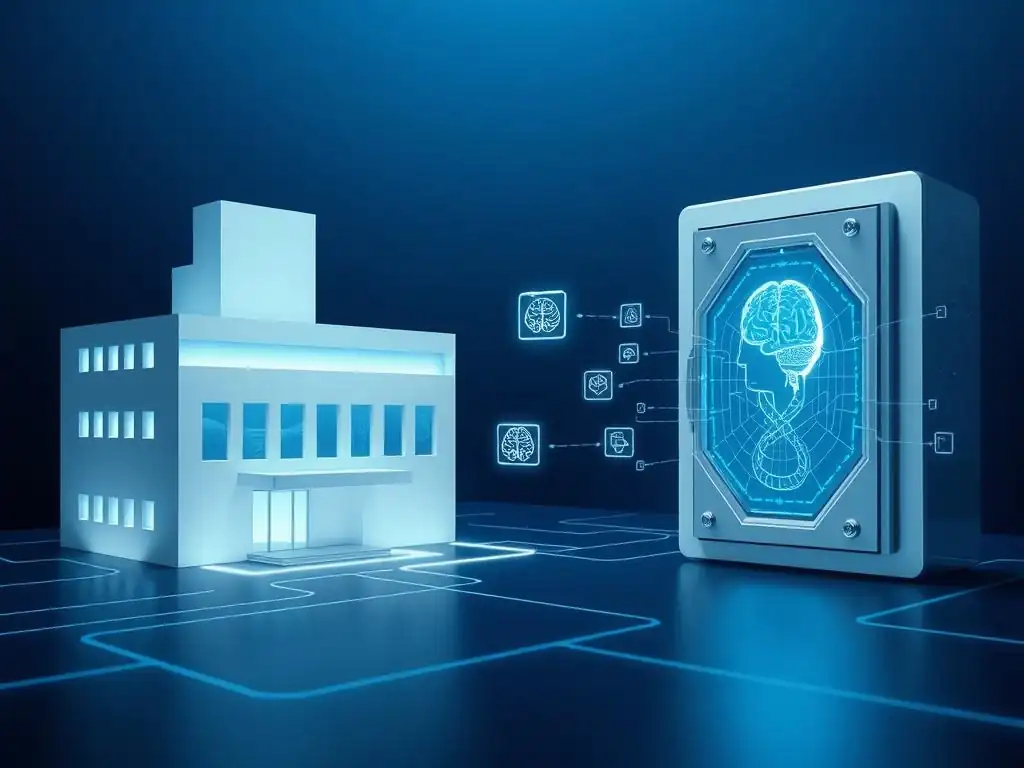
The theoretical benefits of combining blockchain and AI for healthcare data security are compelling, and various initiatives and projects are exploring or implementing these concepts in real-world scenarios. These applications demonstrate how this powerful synergy can address specific security challenges within the complex healthcare ecosystem, from protecting global supply chains to ensuring patient privacy and the integrity of critical research data.
While widespread, full-scale adoption is still evolving, pilot programs and early implementations are providing valuable insights and demonstrating tangible improvements in security, transparency, and efficiency. These use cases highlight the versatility of the Blockchain AI healthcare security combination and its potential to transform different facets of the industry's data management practices.
Securing Pharmaceutical Supply Chains with Blockchain and AI
Counterfeit drugs pose a significant threat to patient safety and generate billions in illegal profits globally. Securing the pharmaceutical supply chain from manufacturing to patient delivery is a critical challenge. Blockchain technology offers a solution by providing an immutable ledger to track the movement of drugs at every step. Each transaction – manufacturing, packaging, shipping, customs, distribution, and dispensing – can be recorded on the blockchain, creating a verifiable history or "digital twin" for each product.
AI enhances this blockchain-based tracking by analyzing the recorded data for anomalies that might indicate tampering, diversion, or counterfeiting. For example, an AI could flag shipments that take unusual routes, spend excessive time at certain nodes, or are associated with suspicious transaction patterns recorded on the blockchain.
Furthermore, AI can analyze external data, such as weather patterns or geopolitical events, to predict potential disruptions or points of vulnerability in the supply chain, integrating this intelligence with the blockchain's verifiable tracking data. Companies like MediLedger, a blockchain network for the pharmaceutical industry, are implementing such systems to comply with regulations like the US Drug Supply Chain Security Act (DSCSA), aiming to improve tracing and verification by 2023 deadlines.
Enhancing Patient Identity Management and Data Privacy Using Blockchain and AI
Managing patient identities across different healthcare providers is often fragmented and prone to errors, leading to potential data mix-ups and privacy breaches. Blockchain can create a secure, decentralized patient identity system where patients control access to their linked health records. Instead of multiple organizations maintaining separate, potentially inconsistent, copies of patient data, the blockchain can store a unique patient identifier linked to encrypted hashes of their data stored elsewhere.
AI can enhance this system by providing intelligent identity verification and privacy controls. AI algorithms can analyze biometric data for robust authentication or monitor access patterns associated with a specific patient identity on the blockchain to detect fraudulent activity. Furthermore, AI can help enforce granular privacy preferences set by the patient on the blockchain, ensuring that data is only shared with authorized parties for approved purposes.
For instance, a patient might grant an AI system permission via the blockchain to analyze their aggregated, anonymized data for research, while explicitly denying access to specific sensitive records for other purposes. This combined approach strengthens patient control and privacy within a secure Blockchain AI healthcare security framework.
Improving Clinical Trial Data Integrity and Security with Blockchain-AI Solutions
Clinical trials are the backbone of medical advancements, but ensuring the integrity, security, and transparency of trial data is paramount. Data manipulation, errors, or security breaches can invalidate trial results, delaying life-saving treatments and eroding public trust. Blockchain can provide an immutable record of clinical trial protocols, patient consent, data inputs, and results, ensuring that once data is recorded, it cannot be altered undetected.
AI complements this by analyzing the vast amounts of data generated during trials, which can include patient demographics, treatment responses, lab results, and adverse events. AI can identify inconsistencies or anomalies in the data recorded on the blockchain that might suggest errors or deliberate manipulation. For example, an AI could flag data entries that statistically deviate from expected outcomes or identify patterns in data entry times that seem suspicious.
Furthermore, AI can automate data verification processes by cross-referencing data points across the blockchain ledger. Companies are exploring blockchain platforms specifically designed for clinical trials, aiming to reduce data integrity issues, speed up audits, and enhance the overall security and trustworthiness of trial results by providing a verifiable audit trail secured by Blockchain AI healthcare security.
Overcoming Challenges and Addressing Concerns
While the potential of integrating blockchain and AI for healthcare data security is significant, their implementation is not without challenges. Like any transformative technology, adoption requires addressing technical hurdles, navigating complex regulatory landscapes, and ensuring that the workforce is equipped with the necessary skills. These challenges need careful consideration and strategic planning to unlock the full benefits of Blockchain AI healthcare security.
Addressing these concerns proactively is crucial for successful deployment. This involves developing scalable and interoperable solutions, working closely with regulators to ensure compliance, and investing in training and education for healthcare professionals and IT staff.
Scalability and Interoperability Issues in Blockchain-AI Healthcare Implementations
One of the primary technical challenges for blockchain adoption in healthcare is scalability. Public blockchains like Bitcoin or Ethereum can process a limited number of transactions per second (e.g., Ethereum 1.0 handled around 15-30 tps), which is insufficient for the high volume of data transactions in large healthcare systems. While private or consortium blockchains offer higher throughput (potentially thousands of transactions per second), they may sacrifice some degree of decentralization. Integrating these with AI systems that require real-time data processing adds another layer of complexity.
Interoperability is another significant hurdle. Healthcare data is notoriously siloed across different systems, using various formats and standards (or lack thereof). Building blockchain solutions that can seamlessly integrate with existing legacy EHR systems, laboratory information systems, and other platforms is technically challenging and often requires complex middleware or API development. Ensuring that AI systems can access and interpret data from these disparate sources, whether directly or via the blockchain layer, requires significant effort in data standardization and integration, which is a major roadblock for widespread Blockchain AI healthcare security deployment.
Addressing Regulatory Compliance and Data Privacy Concerns (e.g., HIPAA)
Healthcare data is subject to strict regulations like the Health Insurance Portability and Accountability Act (HIPAA) in the US, which mandates specific requirements for protecting Protected Health Information (PHI). While blockchain's immutability is beneficial for audit trails, it raises questions regarding the "right to be forgotten" or the ability to amend records, which are patient rights under regulations like GDPR. Storing PHI directly on a public, immutable blockchain is generally not compliant; hence, the approach of storing hashes or pointers, not the data itself, is favored.
Integrating AI introduces additional privacy concerns. AI systems require vast amounts of data for training, and using sensitive patient data, even if anonymized or de-identified, carries risks.
Ensuring that AI models are not susceptible to membership inference attacks (where attackers can determine if a specific individual's data was used in training) or other privacy-preserving challenges is critical. Furthermore, the "black box" nature of some advanced AI models can make it difficult to explain how decisions were made, which can conflict with regulatory requirements for transparency and accountability in handling sensitive data, posing challenges for a fully compliant Blockchain AI healthcare security solution.
The Need for Skilled Professionals and Training in Blockchain and AI for Healthcare
Implementing and managing integrated blockchain and AI solutions in healthcare requires a workforce with specialized skills that are currently in high demand and short supply. Healthcare IT professionals typically have expertise in traditional systems, networking, and established security protocols, but lack deep knowledge of distributed ledger technology, cryptography, machine learning algorithms, and secure AI development practices.
Hospitals and healthcare organizations need to invest significantly in training existing staff or hiring new talent with expertise in areas such as blockchain development, AI engineering, data science, and Blockchain AI healthcare security architecture. Without a skilled workforce capable of designing, deploying, maintaining, and securing these complex systems, the potential benefits of blockchain and AI will remain largely unrealized. The lack of readily available talent is a significant barrier to widespread adoption and requires concerted effort in education and workforce development across the healthcare sector.
The Future of Blockchain and AI in Healthcare Data Protection
Despite the challenges, the trajectory for integrating blockchain and AI in healthcare data protection is promising. As the technologies mature and implementation strategies become more refined, their combined impact is expected to grow significantly. The focus will likely shift towards developing more scalable, interoperable platforms and increasingly sophisticated AI applications that leverage the secure foundation provided by blockchain.
Emerging trends suggest a move towards more patient-centric data management models and the creation of secure, decentralized data ecosystems. This evolution promises not only enhanced security but also new opportunities for research, personalized medicine, and improved overall health outcomes, fundamentally reshaping how healthcare data is managed and protected. The future of Blockchain AI healthcare security lies in building intelligent, trusted networks that prioritize patient privacy and data integrity.
Emerging Trends and Innovations in Blockchain-AI Healthcare Security
Several emerging trends are shaping the future of Blockchain AI healthcare security. One significant trend is the development of privacy-preserving AI techniques, such as federated learning and differential privacy. Federated learning allows AI models to be trained on data distributed across multiple hospitals or devices without the data ever leaving its original location, thus protecting patient privacy.
Differential privacy adds noise to data or model outputs to prevent the identification of individuals. These techniques, when combined with blockchain's ability to verify the integrity of the training process and data access, offer powerful new ways to leverage sensitive healthcare data for AI insights while maintaining privacy.
Another trend is the rise of more sophisticated blockchain architectures tailored for enterprise use cases, such as Directed Acyclic Graphs (DAGs) or sharding techniques, which promise improved scalability compared to traditional blockchains. Furthermore, the integration of AI into the blockchain consensus mechanisms themselves is being explored to enhance network security and efficiency. The development of smart contracts with integrated AI capabilities ("AI-enhanced smart contracts") could allow for automated security checks and responses based on complex conditions analyzed by AI, all executed on the immutable ledger.
The Potential for Personalized Medicine and Secure Data Sharing
Personalized medicine relies heavily on access to vast, diverse datasets, including genomic data, electronic health records, lifestyle information, and treatment outcomes. Securely collecting, managing, and sharing this sensitive data is critical. Blockchain can provide a secure and patient-controlled platform for individuals to store and manage their health data, granting specific permissions for its use in research or clinical care via immutable ledger entries.
AI can then analyze this securely shared data to identify patterns, predict individual responses to treatments, and develop personalized health plans. For example, an AI could analyze a patient's genomic data (securely referenced on a blockchain) alongside their treatment history (also logged on the chain) to predict their likelihood of responding to a specific therapy. The Blockchain AI healthcare security combination ensures that this data is accessed and used according to the patient's consent and that all data interactions are transparently recorded, unlocking the potential of personalized medicine while upholding the highest standards of data privacy and security.
Blockchain-AI's Role in Shaping the Future of Healthcare Data Ecosystems
The integration of blockchain and AI is poised to fundamentally reshape healthcare data ecosystems. Moving away from fragmented, centralized systems, the future envisions decentralized networks where patients are empowered owners of their data, controlling access via blockchain permissions. Healthcare providers, researchers, payers, and even developers of health applications can interact with this data ecosystem through secure, verifiable channels defined by the blockchain.
AI will act as the intelligence layer within this ecosystem, providing tools for secure data analysis, threat detection, fraud prevention, and automated compliance across the decentralized network. This creates a dynamic, secure, and patient-centric data environment that fosters innovation, improves interoperability, and enhances trust among all stakeholders. The widespread adoption of Blockchain AI healthcare security solutions could lead to a future where healthcare data is more secure, more accessible (to authorized parties), and more effectively utilized for the benefit of patients and public health.
Conclusion: Embracing the Transformative Potential of Blockchain and AI for Healthcare Security
The healthcare industry faces persistent and evolving cyber threats that necessitate a paradigm shift in data security approaches. Traditional systems, burdened by centralization and legacy infrastructure, are increasingly vulnerable. The convergence of blockchain technology and artificial intelligence offers a powerful and promising path forward, providing a robust, multi-layered defense system capable of addressing the unique challenges of protecting sensitive patient data.
By leveraging blockchain's inherent security features – decentralization, immutability, and transparency – alongside AI's advanced analytical and automation capabilities, healthcare organizations can build more resilient and intelligent security frameworks. From enhancing data integrity and provenance to providing real-time threat detection and automating compliance, the synergistic benefits of this combination are clear.
Key Takeaways: The Synergistic Benefits of Blockchain and AI
- Enhanced Data Integrity: Blockchain's immutable ledger ensures that healthcare data, once recorded, cannot be altered undetected, providing a trustworthy record.
- Improved Security & Trust: Decentralization eliminates single points of failure, while AI provides intelligent monitoring for threats, building a more secure and trusted environment.
- Greater Transparency & Auditability: Blockchain provides a clear, verifiable audit trail of all data access and transactions, crucial for security monitoring and regulatory compliance.
- Proactive Threat Detection: AI analyzes patterns in data (including blockchain logs) to detect anomalies and predict potential breaches before they occur.
- Automated Security & Compliance: AI can automate security responses and compliance reporting based on data verified by the blockchain, increasing efficiency and accuracy.
- Patient Empowerment: Blockchain enables patients to have greater control over access to their health data, enhancing privacy and autonomy.
The Blockchain AI healthcare security synergy represents a significant leap forward in protecting sensitive health information in an increasingly digital world.
Call to Action: Encouraging Adoption and Innovation in Healthcare Data Security
The potential of blockchain and AI to revolutionize healthcare data security is immense, but realizing this potential requires concerted effort. Healthcare organizations, technology providers, regulators, and researchers must collaborate to overcome technical challenges, develop industry standards, and create a supportive ecosystem for innovation.
Investing in pilot programs, fostering talent development in Blockchain AI healthcare security, and engaging in open dialogue about best practices and regulatory interpretations are crucial next steps. By embracing these transformative technologies, the healthcare sector can build a future where patient data is not only highly secure but also managed in a way that fosters trust, enables innovation, and ultimately contributes to better health outcomes for all. The journey towards a truly secure and intelligent healthcare data ecosystem powered by blockchain and AI is underway, and active participation is key to its success.
Frequently Asked Questions
How can blockchain technology enhance data security in the healthcare industry?
Blockchain offers immutable records and decentralized control, making healthcare data more resistant to tampering and unauthorized access. This strengthens overall data security and integrity.
What role does Artificial Intelligence (AI) play in optimizing blockchain-based healthcare systems?
AI can enhance data analysis and anomaly detection within the blockchain, improving the efficiency of processes like fraud detection and personalized medicine. AI also helps automate smart contracts.
What are the key benefits of combining Blockchain and AI for healthcare data management?
The combination offers improved data security, enhanced data privacy, and streamlined data interoperability, leading to more efficient and secure healthcare operations. It provides a trustless environment.
What are some potential regulatory hurdles for implementing blockchain and AI in healthcare?
Regulatory bodies must address issues related to data privacy (HIPAA), data ownership, and algorithmic bias to ensure responsible and compliant use of these technologies in healthcare.
How does the integration of Blockchain and AI impact the future of healthcare data management and patient care?
This integration promises a more secure, transparent, and patient-centric healthcare ecosystem, enabling better data sharing, improved diagnostics, and more personalized treatment plans.
Okay, here's a final reflection designed to resonate with readers of your "Blockchain and AI for Healthcare Data Security: A Powerful Combination" article, optimized for the keyword "Blockchain AI healthcare security," and following your specified structure:
Final Reflection: Securing the Future of Healthcare
The convergence of blockchain and AI represents more than just technological advancement; it signifies a paradigm shift in how we approach healthcare data security. The vulnerabilities inherent in traditional systems demand innovative solutions, and the combined power of decentralized ledgers and intelligent algorithms offers a compelling path toward a more secure and trustworthy healthcare ecosystem. This is not just about protecting data; it's about safeguarding patient well-being and fostering trust in the medical community.
This synergy between blockchain and AI is profoundly shaping the cultural landscape of healthcare, moving us towards a future where data breaches are significantly minimized and patient privacy is paramount. The potential to empower individuals with control over their own health information is immense, and the ethical considerations surrounding AI implementation are crucial. The future of healthcare is not just about treating illness, but about preventing it, and that requires a secure and trustworthy data infrastructure.
This quote underscores the fundamental need for robust security measures to unlock the full potential of preventative and personalized medicine.
As we stand at the cusp of this technological revolution, I invite you to reflect on the role you can play in shaping the future of healthcare data security. Consider how you can advocate for the responsible implementation of blockchain and AI, ensuring that these powerful tools are used to protect patient privacy, promote data integrity, and ultimately, improve the lives of individuals around the world. The time to act is now, to build a future where healthcare data is not a vulnerability, but a cornerstone of a healthier and more secure society.
Empower Your Healthcare Data Security Journey Today!
Thank you for diving into the intricate world of Blockchain and AI for Healthcare Data Security! You've unlocked valuable insights that can revolutionize how we protect sensitive health information. Now, it’s time to take these insights and put them into action!
Here are a few impactful steps you can take to enhance your healthcare data security:
- Start implementing blockchain solutions in your healthcare practices to ensure transparency and immutability of records.
- Participate in AI-driven workshops or webinars to deepen your understanding of how artificial intelligence can amplify your data protection strategies.
- Share this article with colleagues and peers to foster discussions and encourage innovative solutions within your community.
What unique strategies will you adopt to safeguard healthcare data in your own organization? Let's discuss!
Leave a Reply