
Blockchain and the Internet of Medical Things (IoMT) in Clinical Trials: Data Integration and Analysis


Welcome to Blockchain Trends, your source for in-depth analysis of blockchain's revolutionary applications.
Delve into the fascinating intersection of healthcare and distributed ledger technology! Are you ready to witness how blockchain is poised to reshape the landscape of clinical trials? This article explores the groundbreaking potential of Blockchain IoMT clinical trials, focusing on how this synergy is streamlining data integration and analysis. Discover the future of medical research – and how blockchain's inherent security and transparency could revolutionize patient care and accelerate scientific breakthroughs. Read on to uncover the possibilities!
- Introduction: Transforming Clinical Trials with Blockchain and IoMT
- Understanding Blockchain Technology for Clinical Trial Data Security
- The Internet of Medical Things (IoMT) in Clinical Trials: Enabling Remote Data Collection
- Secure Data Exchange: Blockchain and IoMT Integration in Clinical Trials
- Use Cases: Real-World Applications of Blockchain IoMT in Clinical Trials
- Data Integration and Interoperability in Blockchain IoMT Clinical Trials
- Advanced Analytics for Blockchain IoMT Clinical Trial Data
- Benefits of Blockchain and IoMT Integration in Clinical Trials
- Implementation Considerations for Blockchain IoMT Solutions
- The Future of Blockchain and IoMT in Clinical Trials
- Conclusion: Revolutionizing Clinical Trials with Blockchain-Enabled IoMT
-
Frequently Asked Questions
- How can blockchain enhance data integrity in IoMT-based clinical trials?
- What role does blockchain play in improving patient data privacy within IoMT clinical trials?
- How does blockchain facilitate secure data sharing in IoMT clinical trials?
- What are the key benefits of integrating blockchain with IoMT for clinical trial data analysis?
- What regulatory challenges need to be addressed for the widespread adoption of blockchain in IoMT clinical trials?
- Final Reflection: Securing the Future of Medical Innovation
- Empower Clinical Trials: Take Control of IoMT & Blockchain!
Introduction: Transforming Clinical Trials with Blockchain and IoMT
The Synergistic Potential of Blockchain, IoMT, and Clinical Research
Clinical trials are the cornerstone of medical advancement, yet they grapple with persistent challenges related to data integrity, patient engagement, and operational efficiency. Traditional models often involve manual data handling, centralized databases prone to breaches or errors, and significant logistical burdens for patients.
The advent of decentralized technologies like blockchain and the proliferation of connected medical devices through the Internet of Medical Things (IoMT) offer a powerful synergy to address these issues head-on. Blockchain, with its inherent properties of immutability and transparency, can provide a robust layer of trust and security for sensitive trial data, while IoMT enables continuous, real-world data collection directly from patients.
The integration of blockchain and IoMT holds the promise of fundamentally reshaping how clinical trials are conducted. By leveraging IoMT devices to collect rich, real-time data outside traditional clinical settings and securing this data's provenance and integrity using blockchain, researchers can gain deeper insights, improve monitoring capabilities, and reduce reliance on periodic, potentially less representative data points.
This combined approach is not just about technological adoption; it's about creating a more resilient, transparent, and patient-friendly framework for generating the evidence needed to bring new therapies to market. The potential impact on the speed and cost of drug development, as well as patient participation, is significant.
Addressing Data Integrity and Patient Engagement Challenges in Traditional Clinical Trials
One of the most critical challenges in traditional clinical trials is ensuring the integrity and reliability of the vast amounts of data generated. Data silos, manual data entry errors, and the potential for data manipulation pose substantial risks that can compromise trial validity and regulatory approval. According to some estimates, data cleaning and validation can consume a significant portion of clinical trial budgets, potentially upwards of 20-30%, highlighting the cost of managing data integrity issues. Furthermore, tracking the complete history and origin (provenance) of data points across multiple sites and systems can be complex and time-prone.
Patient engagement and retention also represent significant hurdles. Traditional trials often require frequent site visits, which can be burdensome, especially for patients with chronic conditions or those living far from trial centers. This burden contributes to high dropout rates, sometimes exceeding 15-20% in Phase 3 trials, impacting study power and increasing costs.
The lack of continuous monitoring also means researchers only get snapshots of a patient's condition, potentially missing critical events or subtle responses between visits. Integrating Blockchain IoMT clinical trials offers a direct solution by enabling remote monitoring and securing the continuous stream of data, making participation easier and providing a more complete picture of patient health.
Understanding Blockchain Technology for Clinical Trial Data Security
Blockchain Fundamentals: Immutability, Transparency, and Distributed Ledger Technology
At its core, blockchain is a type of distributed ledger technology (DLT) that records transactions across a network of computers. Instead of a single, central database, copies of the ledger are maintained and updated simultaneously by multiple participants. Transactions are grouped into "blocks," which are then cryptographically linked together in a chronological "chain." Once a block is added to the chain through a consensus mechanism agreed upon by the network participants, it is extremely difficult, if not impossible, to alter retrospectively. This property is known as immutability.
Transparency is another key characteristic, particularly in public or permissioned blockchains where participants can view transactions on the ledger. While raw patient data would typically not be stored directly on a public blockchain for privacy reasons, hashes (unique digital fingerprints) of data or metadata can be recorded. This allows anyone with appropriate permissions to verify that the underlying data has not been tampered with since its hash was recorded on the blockchain. The distributed nature ensures that there is no single point of failure, making the system more resilient to attacks or outages compared to centralized databases.
Enhancing Data Security and Auditability in Clinical Trials with Blockchain
Applying blockchain technology to clinical trial data significantly enhances security and auditability. By hashing critical data points—such as patient consent forms, electronic Case Report Form (eCRF) entries, adverse event reports, and timestamps of data collection from IoMT devices—and anchoring these hashes onto a blockchain, a tamper-evident record is created. Any subsequent modification to the original off-chain data would result in a different hash, immediately alerting stakeholders to potential tampering when compared against the immutable hash on the ledger.
Furthermore, every interaction with the data, if designed into the system (e.g., data entry, query resolution, signature), can be recorded as a transaction on the blockchain. This creates a comprehensive, transparent, and immutable audit trail that details who did what, when, providing an unparalleled level of data provenance. Regulators require meticulous audit trails, and a blockchain-based system can automate and secure this process, reducing the risk of errors and simplifying audits. This secure framework is essential for building trust in the data collected in Blockchain IoMT clinical trials.
The Internet of Medical Things (IoMT) in Clinical Trials: Enabling Remote Data Collection
IoMT Devices: Wearable Sensors, Remote Monitoring Systems, and Connected Medical Devices
The Internet of Medical Things encompasses a wide array of connected devices designed for healthcare purposes. In the context of clinical trials, these devices range from consumer-grade wearables to specialized medical sensors. Examples include smartwatches and fitness trackers that monitor activity levels, sleep patterns, and heart rate; continuous glucose monitors (CGMs) for diabetes trials; remote blood pressure cuffs; digital stethoscopes; smart scales; and even smart pill bottles that record medication adherence. More complex systems might include remote patient monitoring platforms that integrate data from multiple devices.
These IoMT devices serve as powerful tools for collecting real-world data directly from patients in their natural environment, outside the controlled setting of a clinic. This allows for continuous or high-frequency data capture, providing a much richer and more granular dataset compared to traditional methods based on periodic site visits. For instance, a trial for a cardiovascular drug might collect thousands of blood pressure readings per day from a connected cuff, versus just one reading during a monthly clinic visit. This density of data offers unprecedented opportunities for understanding patient responses and safety profiles.
Streamlining Data Collection and Enhancing Patient Monitoring with IoMT
IoMT significantly streamlines the data collection process by automating the capture of physiological and behavioral data. Instead of patients manually recording information in diaries (which can be prone to inaccuracies or omissions), devices collect data passively or with minimal patient interaction. This reduces the burden on patients, potentially improving compliance and data quality. The data can be transmitted wirelessly to a secure platform, minimizing the need for manual data entry by clinical staff.
Beyond just collection, IoMT enhances patient monitoring capabilities. Researchers can receive near real-time alerts for critical events, such as significant deviations in vital signs or missed medication doses (via smart pill bottles). This enables proactive intervention, potentially improving patient safety and retention. For trials involving chronic conditions or those requiring frequent monitoring, IoMT-enabled remote data collection is transformative, making it feasible to conduct trials with wider geographic reach and more diverse patient populations, a key component of modern Blockchain IoMT clinical trials.
Secure Data Exchange: Blockchain and IoMT Integration in Clinical Trials
Secure and Transparent Data Transmission from IoMT Devices to Blockchain
Integrating IoMT devices with blockchain technology in clinical trials requires a secure and well-defined data pathway. Data generated by IoMT devices is typically transmitted wirelessly (e.g., via Bluetooth, Wi-Fi, cellular) to a local gateway device (like a smartphone or home hub) or directly to a cloud platform. Before this data (or a representation of it) is anchored on the blockchain, it must undergo processing. This processing often involves aggregation, standardization (e.g., converting raw sensor output into a recognized format like FHIR), and encryption to protect privacy.
Crucially, for blockchain integration, a cryptographic hash of the processed data packet, or relevant metadata and timestamps, is generated. This hash, along with a transaction identifier, is then sent to the blockchain network to be included in a new block. The raw patient data itself typically resides off-chain in secure, compliant data storage. The blockchain does not store the sensitive data but rather the immutable proof of its existence and integrity at a specific point in time. This process ensures transparency regarding when data was recorded and provides a verifiable link back to the original, securely stored data.
Mitigating Data Tampering and Ensuring Data Provenance
The primary benefit of anchoring IoMT data hashes on a blockchain is the mitigation of data tampering risks. Once a hash is recorded on the immutable ledger, it serves as a timestamped, verifiable fingerprint of the data it represents. If the original IoMT data stored off-chain were to be altered maliciously or accidentally, recalculating its hash would produce a different result than the one stored on the blockchain. This mismatch instantly indicates that the data's integrity has been compromised since it was recorded.
This mechanism provides a powerful tool for ensuring data provenance in Blockchain IoMT clinical trials. The blockchain record provides an irrefutable audit trail linking the hash back to the specific device, patient identifier (pseudonymized), timestamp, and data type. This verifiable history is essential for regulatory compliance and builds trust in the data's reliability. Researchers and auditors can trace the journey of the data from its source (the IoMT device) through the collection and processing layers, confirming that the data used for analysis is the same data originally captured, significantly enhancing the credibility of trial results.
Use Cases: Real-World Applications of Blockchain IoMT in Clinical Trials
Remote Patient Monitoring for Chronic Disease Management Trials
One compelling use case for Blockchain IoMT integration is in clinical trials for managing chronic diseases such as diabetes, cardiovascular conditions, or respiratory illnesses. Consider a trial for a new medication for Type 2 diabetes. Patients could be equipped with continuous glucose monitors (CGMs) and smartwatches. The CGM provides continuous glucose readings, while the smartwatch tracks activity levels, heart rate, and sleep. This rich stream of data, secured by hashing and anchoring on a blockchain, allows researchers to monitor the drug's effect on blood sugar control and overall patient health in real-time, remotely.
This continuous monitoring provides far more insight than periodic A1c tests or manual blood sugar logs. Researchers can identify trends, detect hypoglycemic or hyperglycemic events promptly, and correlate physiological responses with patient activity or sleep patterns. The blockchain layer ensures that this critical safety and efficacy data is trustworthy and hasn't been altered. This reduces the need for frequent clinic visits, making participation easier for patients and providing a more complete picture of the patient's response in their daily life, which is invaluable for evaluating treatment effectiveness and safety in a real-world setting.
Securing Investigational Product Adherence with Smart Packaging
While securing the entire drug supply chain is a broader use case, IoMT and blockchain can specifically enhance adherence monitoring for the investigational product within a clinical trial. Smart pill bottles or blister packs equipped with sensors can record the exact time a dose is removed. This event data (timestamp, dose removed, patient ID) can be captured by a gateway device and a hash of this event record anchored onto a blockchain.
This provides an objective, verifiable record of patient adherence, a crucial factor in clinical trial outcomes. Unlike patient self-reports or pill counts during site visits, the IoMT device provides granular, timestamped data. Securing this data on the blockchain ensures its accuracy and immutability, providing researchers with high confidence in the adherence data used for analysis. This is particularly important in trials where dosing compliance is critical for assessing efficacy and safety, directly contributing to the integrity of data collected in Blockchain IoMT clinical trials.
Decentralized Clinical Trials (DCTs) and Enhanced Patient Participation
Blockchain and IoMT are foundational technologies for enabling decentralized clinical trials (DCTs). DCTs aim to reduce or eliminate the need for traditional physical trial sites by leveraging technology to collect data and interact with patients remotely. IoMT devices collect physiological and behavioral data from patients at home, reducing the burden of travel to clinics. Electronic patient-reported outcomes (ePROs) and telemedicine consultations replace traditional site visits.
Integrating blockchain provides the essential trust layer for the data collected remotely via IoMT and other digital tools. It ensures the integrity and provenance of data captured outside the controlled clinic environment, which is a key regulatory concern for DCTs. By making participation less disruptive to their daily lives, DCTs enabled by Blockchain IoMT can potentially increase patient recruitment rates, improve retention (reducing the typical 15-30% dropout rates), and allow for more diverse patient populations, accelerating trial timelines and reducing overall costs.
Data Integration and Interoperability in Blockchain IoMT Clinical Trials
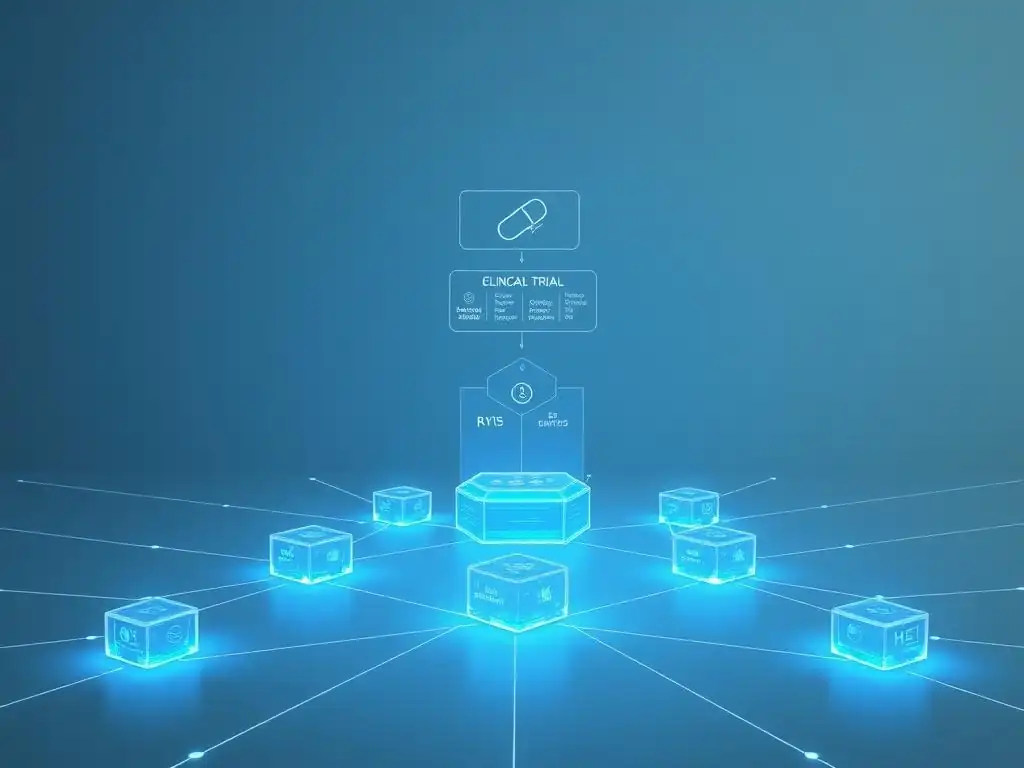
Integrating Diverse Data Streams from Various IoMT Devices
A significant challenge in leveraging IoMT data in clinical trials is integrating information from a multitude of disparate devices. Patients in a single trial might use a wearable sensor from one manufacturer, a blood pressure monitor from another, and a CGM from a third. Each device may produce data in different formats, with varying sampling rates, and transmit it via different protocols. This creates complex data silos that must be harmonized before they can be effectively used for analysis or anchored on a blockchain.
A robust data integration layer is necessary to collect data from these diverse sources, clean it, transform it into a standardized format, and aggregate it. This layer acts as an intermediary between the raw IoMT data streams and the analytical platform or the blockchain anchoring process. Developing and maintaining this integration layer requires significant technical expertise and careful planning to ensure data consistency and reliability across the entire trial population and duration.
Standardizing Data Formats for Blockchain Compatibility and Analysis
To effectively utilize IoMT data in a blockchain-enabled clinical trial, standardizing data formats is crucial. Industry standards like Fast Healthcare Interoperability Resources (FHIR) are increasingly being adopted to represent healthcare data in a structured, interoperable way. Converting raw IoMT data into a standardized format like FHIR bundles facilitates integration with other clinical data sources (like eCRFs or EHRs) and simplifies the process of generating consistent data hashes for blockchain anchoring.
Standardization also significantly improves the downstream analysis of the data. When data from all patients and devices is in a uniform format, applying analytical tools, including AI and machine learning algorithms, becomes much more straightforward and reliable. This reduces the time and complexity associated with data wrangling and ensures that analyses are performed on consistent, well-structured datasets, which is vital for drawing valid conclusions from complex Blockchain IoMT clinical trials.
Addressing Interoperability Challenges with Standardized Protocols
Beyond data formats, interoperability challenges extend to the communication protocols used by IoMT devices and data platforms. Ensuring secure and seamless data flow from the device, through intermediate gateways or cloud platforms, to the data storage and blockchain anchoring points requires adherence to standardized communication protocols and APIs. Proprietary protocols or lack of open standards can hinder the ability to integrate data from different vendors' devices.
Efforts within the healthcare industry are focused on developing and promoting interoperability standards to overcome these barriers. Implementing solutions based on these standards ensures that the Blockchain IoMT clinical trial infrastructure can effectively collect, transmit, and process data from a wide range of current and future devices. This future-proofing is essential for scalability and adaptability as IoMT technology continues to evolve and become more prevalent in healthcare settings.
Advanced Analytics for Blockchain IoMT Clinical Trial Data
Applying AI and Machine Learning for Predictive Insights and Anomaly Detection
The continuous, high-resolution data streams generated by IoMT devices, secured and validated by blockchain, provide an exceptionally rich dataset for advanced analytical techniques like Artificial Intelligence (AI) and Machine Learning (ML). AI/ML models can be trained on this data to identify subtle patterns that might not be apparent through traditional statistical methods. For instance, models could predict which patients are likely to respond positively to treatment, identify patients at high risk of adverse events based on physiological changes, or predict potential dropouts.
Furthermore, AI can be employed for anomaly detection within the IoMT data. This could involve identifying sensor malfunctions, data transmission errors, or potentially fraudulent data points by flagging patterns that deviate significantly from expected norms or patient baselines. This automated anomaly detection enhances data quality control and ensures that analyses are based on reliable information, adding another layer of value to Blockchain IoMT clinical trials data.
Real-Time Data Analysis for Adaptive Trial Management
The capability for near real-time data collection via IoMT and its secure anchoring on a blockchain opens the door to more dynamic and adaptive clinical trial designs. Traditionally, trial data is analyzed periodically at pre-defined intervals. With continuous data flow, researchers can monitor key efficacy and safety endpoints on an ongoing basis. This allows for interim analyses to be conducted more frequently and efficiently.
Based on these real-time insights, trial parameters can potentially be adjusted adaptively according to pre-specified rules – for example, modifying dosage based on patient response, adjusting sample size, or focusing recruitment on specific subgroups showing greater benefit. This adaptive approach can potentially shorten trial durations, reduce costs, and increase the likelihood of trial success compared to rigid, fixed designs.
Ensuring Data Privacy and Compliance with Regulatory Frameworks
While leveraging advanced analytics on sensitive patient data, maintaining privacy and complying with regulations like GDPR and HIPAA is paramount. Blockchain's role is primarily for data integrity and provenance, not as a place to store raw Protected Health Information (PHI). Analytical processes must be designed with privacy in mind. Techniques such as data anonymization or pseudonymization before analysis are critical.
Advanced privacy-preserving techniques like federated learning (where models are trained locally on decentralized data without the data leaving its source) or differential privacy (adding statistical noise to query results to protect individual privacy) can be explored. The secure, immutable audit trail provided by the blockchain can also help demonstrate compliance by showing exactly when and by whom data (or its hash) was accessed or used, providing transparency required by regulatory bodies overseeing clinical trials and data privacy.
Benefits of Blockchain and IoMT Integration in Clinical Trials
Improved Data Integrity and Traceability
The most significant benefit of integrating blockchain with IoMT in clinical trials is the dramatic improvement in data integrity and traceability. By hashing IoMT data and anchoring it to an immutable ledger, researchers gain high confidence that the data they are analyzing has not been tampered with since it was recorded. The blockchain provides a transparent, chronological, and verifiable audit trail for every data point, from device capture through processing. This level of data integrity is crucial for regulatory submissions and ensures the reliability of trial results.
This enhanced traceability means auditors and regulators can easily verify the origin and history of any data point, streamlining the audit process. It reduces the risk of errors or malicious alterations that could invalidate an entire trial, saving significant time and resources. The trust established by this secure foundation is essential for the credibility of research findings derived from Blockchain IoMT clinical trials.
Enhanced Patient Safety and Treatment Adherence
Continuous monitoring enabled by IoMT devices allows for quicker detection of adverse events or changes in a patient's condition. Researchers can receive alerts and intervene promptly, significantly enhancing patient safety during the trial. For example, continuous heart rate monitoring can detect arrhythmias, or smart pill bottles can flag missed doses, allowing trial staff to follow up with patients.
Furthermore, objective data on treatment adherence collected via IoMT (like smart pill bottle timestamps) provides researchers with accurate insights into patient compliance. This data is vital for interpreting efficacy results; a lack of observed effect might be due to non-adherence rather than drug failure. By improving monitoring and adherence tracking, the combined technologies contribute directly to better patient outcomes and more reliable trial data.
Reduced Operational Costs and Increased Trial Efficiency
Integrating Blockchain IoMT solutions can lead to substantial reductions in operational costs and improved trial efficiency. Remote data collection via IoMT reduces the need for frequent, expensive site visits. Automated data capture and secure blockchain anchoring minimize manual data handling, reducing data entry errors and the associated costs of data cleaning and query resolution. Streamlined data management processes can accelerate database lock timelines.
While initial setup costs for Blockchain IoMT infrastructure might be significant, the long-term savings from reduced site overhead, improved data quality, potentially lower dropout rates, and faster timelines can be substantial. The efficiency gains allow research teams to focus more on scientific analysis rather than administrative data management tasks.
Accelerated Clinical Trial Timelines
Ultimately, the combined benefits of improved data integrity, enhanced monitoring, increased patient engagement via DCTs, and advanced real-time analytics contribute to potentially accelerating clinical trial timelines. Faster data collection and secure processing mean data is available for analysis sooner. Adaptive trial designs, enabled by real-time IoMT data and secured by blockchain, can allow for quicker decision-making and adjustments.
Reducing patient burden through remote participation can speed up recruitment and reduce dropout rates, ensuring trials reach their required sample size more efficiently. While the regulatory landscape for these technologies is still evolving, demonstrating high data integrity through Blockchain IoMT clinical trials can potentially streamline the submission and review process, bringing promising new therapies to patients faster.
Implementation Considerations for Blockchain IoMT Solutions
Implementing Blockchain IoMT solutions in clinical trials requires careful navigation of a complex regulatory landscape. Clinical trials are subject to strict regulations (e.g., FDA, EMA guidelines), and data handling must comply with privacy laws like HIPAA in the US and GDPR in Europe. While regulatory bodies are increasingly open to digital health technologies and decentralized trials, the use of blockchain specifically is still under evaluation.
Trial sponsors and technology providers must demonstrate that their Blockchain IoMT system meets requirements for data accuracy, reliability, security, and auditability comparable to or exceeding traditional methods. This involves validating the entire digital infrastructure, including IoMT devices, data transmission protocols, data storage, and the blockchain implementation itself. Clear documentation and validation demonstrating compliance with relevant standards (e.g., GxP - Good Clinical Practice) are essential.
Addressing Data Security and Patient Privacy Safeguards
Ensuring robust data security and patient privacy is paramount when dealing with sensitive health data collected via IoMT. While blockchain provides data integrity and provenance, it does not inherently encrypt off-chain data or manage access control to the raw data. Comprehensive security measures are needed, including end-to-end encryption of data in transit from IoMT devices and at rest in storage.
Patient privacy must be protected through strong access controls, pseudonymization or anonymization of patient identifiers linked to IoMT data, and obtaining explicit informed consent from patients for the collection and use of their data within the Blockchain IoMT framework. The system design must adhere strictly to privacy-by-design principles, ensuring that sensitive information is handled responsibly throughout the data lifecycle, from collection to analysis and archiving.
Ensuring Scalability and Interoperability of the System
A successful Blockchain IoMT clinical trial solution must be scalable to handle the potentially massive volume of continuous data generated by hundreds or even thousands of patients using multiple devices simultaneously. The underlying infrastructure, including data storage, processing power, and the blockchain network itself, must be capable of handling this load without performance degradation. Choosing a blockchain platform with sufficient transaction throughput and scalability features is critical.
Interoperability with existing clinical trial systems (e.g., Electronic Data Capture - EDC, Clinical Trial Management Systems - CTMS, Electronic Health Records - EHR) is also a key consideration. The Blockchain IoMT platform should ideally integrate seamlessly with these systems to avoid creating new data silos. Adopting industry standards for data formats (like FHIR) and communication protocols facilitates this integration and enhances the overall efficiency of the trial data flow.
Building Technical Expertise and Capacity
Implementing and managing complex Blockchain IoMT solutions in a highly regulated environment like clinical trials requires specialized technical expertise. Organizations need personnel with knowledge in blockchain technology, distributed systems, cybersecurity, data engineering, IoMT device management, and healthcare data standards. Building this internal capacity or partnering with vendors possessing this expertise is crucial.
Furthermore, clinical research staff need training on how to use the new digital tools, monitor data streams, and manage patient interactions within a decentralized, technology-enabled framework. The success of Blockchain IoMT clinical trials relies not only on the technology itself but also on the readiness and capability of the teams implementing and operating it. Investing in training and capacity building is a critical implementation consideration.
The Future of Blockchain and IoMT in Clinical Trials
Emerging Technologies and Innovations in the Field
The convergence of blockchain and IoMT in clinical trials is an evolving area, with several emerging technologies poised to enhance their capabilities further. Edge computing, for example, can process IoMT data closer to the source (e.g., on a gateway device in the patient's home) before sending relevant summaries or hashes to the blockchain, reducing latency and bandwidth requirements. Advancements in AI will continue to improve the insights derived from the rich IoMT datasets.
Further development of healthcare-specific blockchain protocols or layer-2 solutions could improve scalability, privacy features (like zero-knowledge proofs for verifying data without revealing it), and interoperability specifically tailored for clinical research needs. Digital twins of patients, built from continuous IoMT data and other sources, could potentially be used for simulations, predicting individual responses to treatment or trial outcomes, adding another layer of predictive power to Blockchain IoMT clinical trials.
Impact on Drug Development, Personalized Medicine, and Healthcare Delivery
The widespread adoption of Blockchain IoMT in clinical trials has the potential to significantly impact the broader healthcare ecosystem. By making trials more efficient and less costly, it could accelerate the pace of drug development, bringing needed therapies to patients faster. The wealth of real-world data collected could inform more personalized medicine approaches, helping identify which treatments are most effective for specific patient subgroups based on their unique physiological and behavioral data.
Beyond trials, the infrastructure developed for secure, interoperable data exchange from IoMT devices, anchored by blockchain, could lay the groundwork for more connected and patient-centric healthcare delivery. Patients could have greater control and access to their health data, securely stored and verified, enabling them to share it with different providers or researchers as they choose.
Blockchain's Role in Patient-Centric Clinical Research
Blockchain's role in the future of clinical research is intrinsically linked to enhancing patient-centricity. By providing a secure and transparent platform for data management, it empowers patients with greater visibility and potential control over their health data collected during a trial. Patients could potentially be granted access to their own data stored off-chain, with the blockchain providing an auditable log of who has accessed it.
Combined with the reduced burden and increased accessibility offered by IoMT-enabled decentralized trials, blockchain helps shift the focus towards the patient experience. It builds trust by ensuring data integrity and transparency, which are critical for fostering a collaborative relationship between patients, researchers, and sponsors. The future of Blockchain IoMT clinical trials points towards a more ethical, transparent, and patient-empowered research paradigm.
Conclusion: Revolutionizing Clinical Trials with Blockchain-Enabled IoMT
The integration of Blockchain and the Internet of Medical Things represents a transformative opportunity for clinical trials. By combining IoMT's ability to collect rich, continuous real-world data remotely with blockchain's inherent strengths in providing data integrity, security, and an immutable audit trail, the clinical trial landscape is poised for a revolution. This synergy directly addresses long-standing challenges related to data reliability, operational inefficiency, and patient engagement that have historically hampered the drug development process.
From enhancing data security and ensuring provenance to enabling decentralized trial models and providing valuable datasets for advanced analytics, the benefits of Blockchain IoMT clinical trials are profound. While implementation requires careful consideration of regulatory compliance, data privacy, and technical infrastructure, the potential rewards – including accelerated timelines, reduced costs, enhanced patient safety, and more reliable trial results – make this integrated approach a compelling vision for the future of medical research. As these technologies mature and regulatory clarity increases, Blockchain-enabled IoMT is set to become a standard for conducting more efficient, secure, and patient-centric clinical trials.
Frequently Asked Questions
How can blockchain enhance data integrity in IoMT-based clinical trials?
Blockchain provides an immutable and transparent ledger. This ensures that data collected from IoMT devices during clinical trials cannot be tampered with, fostering trust and reliability in the results.
What role does blockchain play in improving patient data privacy within IoMT clinical trials?
Blockchain enables decentralized data management and the use of privacy-enhancing technologies like zero-knowledge proofs. This allows patients to retain control over their data and selectively grant access to researchers, complying with data protection regulations.
How does blockchain facilitate secure data sharing in IoMT clinical trials?
Blockchain allows for permissioned access to data, ensuring that only authorized parties can view and utilize the information. Smart contracts can automate the process of granting and revoking access, improving security and auditability.
What are the key benefits of integrating blockchain with IoMT for clinical trial data analysis?
The integration allows for real-time data analysis and improved data accuracy. This results in faster insights, better decision-making, and potentially accelerating the drug development process.
What regulatory challenges need to be addressed for the widespread adoption of blockchain in IoMT clinical trials?
Clear regulatory frameworks are needed to address issues such as data governance, security standards, and liability. Collaboration between regulatory bodies and blockchain experts is crucial for responsible implementation.
Final Reflection: Securing the Future of Medical Innovation
The convergence of blockchain and the Internet of Medical Things (IoMT) in clinical trials, as explored in this article, is not merely a technological advancement; it's a paradigm shift in how we approach medical research and data integrity. The potential to revolutionize data integration and analysis, ensuring transparency and security in clinical trials, is more relevant now than ever, as we strive for faster, more reliable, and patient-centric healthcare solutions.
This fusion of technologies has the power to reshape the very fabric of clinical research, moving it towards a more decentralized, trustworthy, and efficient future. The implications for patient safety, data privacy, and the speed at which we can bring life-saving treatments to market are profound. The future of healthcare is connected, and blockchain provides the trust layer needed to unlock its full potential.
This quote encapsulates the transformative power of this technology, highlighting its ability to foster collaboration and innovation within the medical field.
As we stand on the cusp of this new era, I urge you to consider the role you can play in shaping its trajectory. How can you advocate for the adoption of blockchain and IoMT technologies in clinical trials? How can you contribute to the development of secure and ethical frameworks that prioritize patient well-being? The future of medical innovation is in our hands; let us embrace the power of these technologies to build a healthier and more equitable world for all.
Empower Clinical Trials: Take Control of IoMT & Blockchain!
Thank you for exploring how blockchain and IoMT are revolutionizing clinical trials! You've gained valuable insights into enhancing data integrity and analysis. Now, it's time to translate that knowledge into action.
- Start a small Proof-of-Concept project using publicly available datasets and a free blockchain test network. This practical step encourages hands-on experience and helps you understand how these technologies can be applied in real-world scenarios.
- Explore open-source blockchain platforms designed for healthcare and consider contributing to their development—your insights as a reader are essential in shaping future solutions.
- Share this article with colleagues involved in clinical research to spark discussions about how blockchain and IoMT could transform the future of medicine.
Are you ready to be part of the future of clinical trials? What initial steps will you take to incorporate blockchain or IoMT into your work, or to explore their potential for enhancing patient data security?
Leave a Reply