
Blockchain and Pharma: A Prescription for Supply Chain Security and Efficiency


Welcome to Blockchain Trends, your compass in the rapidly evolving world of decentralized technology!
Delve into the transformative potential of blockchain beyond cryptocurrencies, as we explore its impact on diverse sectors. Curious about how this revolutionary technology can secure and streamline critical industries? Our feature article examines just that, focusing on how blockchain is offering a prescription for supply chain security and efficiency in the pharmaceutical industry.
Read on to discover how blockchain is revolutionizing the blockchain pharma supply chain and shaping the future of healthcare. What are the key benefits and challenges? The answers await!
Blockchain and Pharmaceuticals: Enhancing Supply Chain Integrity and Patient Safety
- Introduction: The Transformative Potential of Blockchain in Pharmaceutical Supply Chains
- Challenges in the Existing Pharmaceutical Supply Chain
- Enhancing Pharmaceutical Supply Chain Security with Blockchain Technology
- Key Advantages of Blockchain Implementation in the Pharmaceutical Industry
- Real-World Applications of Blockchain in Pharmaceutical Supply Chains
- Addressing Regulatory Compliance with Blockchain-Based Solutions
- Overcoming Obstacles in Blockchain Adoption for Pharmaceutical Supply Chains
- The Future of Blockchain in Pharmaceuticals: Trends and Predictions
- Conclusion: Blockchain as a Foundation for a Secure and Transparent Pharmaceutical Future
-
Frequently Asked Questions
- What specific problems in the pharmaceutical supply chain does blockchain technology aim to solve?
- How does blockchain improve the traceability of pharmaceutical products?
- What are some examples of blockchain applications in the pharmaceutical industry beyond supply chain tracking?
- What are the regulatory considerations and challenges associated with implementing blockchain in the pharma supply chain?
- What is the potential future impact of blockchain technology on the pharmaceutical industry as a whole?
- Final Reflection: Securing the Future of Medicine
- Seize Control: Revolutionize Pharma Security Now!
Introduction: The Transformative Potential of Blockchain in Pharmaceutical Supply Chains
The Critical Need for Secure and Efficient Pharmaceutical Supply Chains
The pharmaceutical supply chain is arguably one of the most complex and critical global networks. It involves a convoluted journey from raw material suppliers, manufacturers, distributors, wholesalers, pharmacies, and ultimately, to the patient. The integrity of this chain is paramount, as any failure can have devastating consequences, including compromised drug efficacy, patient harm, or even death.
The World Health Organization (WHO) estimates that 1 in 10 medical products in low and middle-income countries is substandard or falsified, representing a significant global health threat. This highlights a pressing need for robust systems that can ensure the authenticity and safety of pharmaceutical products at every step.
Beyond the critical safety aspect, the current pharmaceutical supply chain is plagued by inefficiencies. Fragmented data systems across different stakeholders lead to delays, errors in inventory management, and difficulties in executing timely product recalls. Processes like chargebacks and contract management between manufacturers and distributors are often manual and prone to disputes, adding significant administrative costs. The lack of real-time visibility makes optimizing logistics challenging and hinders quick responses to disruptions, underscoring the urgent requirement for a more transparent, efficient, and secure blockchain pharma supply chain.
Blockchain's Capability to Revolutionize Pharmaceutical Logistics
Blockchain technology offers a promising solution to many of the inherent vulnerabilities and inefficiencies within the pharmaceutical supply chain. At its core, blockchain is a decentralized, distributed ledger that records transactions across many computers. Once a transaction is recorded, it is extremely difficult to alter, creating an immutable history of events. This inherent immutability and transparency can fundamentally change how pharmaceutical products are tracked and verified from origin to destination. By creating a shared, trustworthy record accessible to authorized participants, blockchain can build a foundation of trust where it is currently lacking among disparate entities.
The application of blockchain in pharmaceutical logistics goes beyond simple tracking. It enables the creation of a tamper-proof audit trail for every movement and handling of a drug product. This can include recording manufacturing details, temperature data during transit, ownership transfers, and dispensing information. Smart contracts, self-executing contracts with the terms of the agreement directly written into code on the blockchain, can automate processes like payments, chargebacks, and compliance checks, significantly reducing administrative overhead and potential for errors. This revolutionary approach transforms the traditional linear model into a more interconnected, transparent, and secure blockchain pharma supply chain.
Challenges in the Existing Pharmaceutical Supply Chain
Counterfeit Drugs: A Significant Threat to Public Health and Brand Integrity
The proliferation of counterfeit drugs is a severe global issue, undermining public health and costing the pharmaceutical industry billions annually. These fake medications may contain incorrect ingredients, improper dosages, or no active pharmaceutical ingredients at all, posing direct health risks to patients. In some regions, estimates suggest that up to 30% of drugs sold may be counterfeit. This not only endangers lives but also erodes patient trust in legitimate pharmaceutical products and damages the reputation of pharmaceutical companies.
Identifying and removing counterfeit drugs from the supply chain is challenging due to complex, multi-layered distribution networks and limited real-time visibility. Once a counterfeit product enters the system, tracking its origin and preventing its spread is incredibly difficult with traditional methods. The lack of a universally verifiable record of a drug's journey makes it easy for illicit products to blend in with legitimate ones, highlighting a critical vulnerability that a secure blockchain pharma supply chain aims to address.
Limited Visibility and Traceability: Identifying Vulnerabilities
A major hurdle in managing the pharmaceutical supply chain effectively is the fragmented nature of data and limited end-to-end visibility. Information about a product's location, condition, and ownership is often siloed within individual companies, making it difficult for stakeholders further down the chain to verify the product's history or for manufacturers to track their goods after they leave the loading dock. This lack of transparency hinders proactive risk management and makes it challenging to pinpoint exactly where a problem occurred if an issue arises.
Consider a scenario where a shipment of temperature-sensitive vaccines experiences a temperature excursion during transit. Without continuous, verifiable data sharing across the chain, it's difficult to determine when and where the temperature breach occurred, who was responsible, and which specific units were affected. This uncertainty can lead to either unnecessary discarding of viable products or, worse, the administration of compromised vaccines. Improving visibility and traceability is essential for building a resilient and reliable blockchain pharma supply chain.
Inefficiencies in Distribution, Inventory, and Recall Processes
The current pharmaceutical supply chain is often burdened by manual processes, data inconsistencies, and delays, leading to significant operational inefficiencies. Inventory management can be suboptimal due to delayed or inaccurate reporting, resulting in stockouts or excessive inventory holding costs. The process of reconciling chargebacks between manufacturers and distributors, which involves verifying sales data and applying contract terms, is notoriously complex and often takes weeks or months to resolve, tying up capital and resources.
Furthermore, executing targeted and efficient product recalls is difficult in a system with poor traceability. When a recall is necessary, companies often have to recall entire batches or even larger quantities than necessary because they cannot precisely identify the affected units and their current locations. This results in substantial financial losses, logistical complexities, and potential delays in removing potentially harmful products from the market. Streamlining these processes is a key benefit sought by implementing a blockchain pharma supply chain.
Enhancing Pharmaceutical Supply Chain Security with Blockchain Technology
Blockchain's Immutable Ledger: Ensuring Data Authenticity and Trust
One of the most significant benefits of blockchain technology for the pharmaceutical industry is its immutable ledger. Every transaction or data entry recorded on the blockchain is cryptographically linked to the previous one, forming a chain that is extremely difficult to alter or delete once added. This creates a permanent, tamper-proof record of a drug's journey through the supply chain, from its raw materials and manufacturing details to its distribution and dispensing.
This inherent immutability ensures that the data associated with each product unit is authentic and trustworthy. Unlike centralized databases that can be modified by a single entity, a blockchain requires consensus among participants to add new blocks of data. This distributed trust mechanism makes it virtually impossible for malicious actors to falsify records, such as manufacturing dates, batch numbers, or ownership transfers, without being detected. This foundational security feature is critical for building a reliable and secure blockchain pharma supply chain.
Enhanced Traceability with Blockchain: Tracking Products from Manufacturing to Dispensing
Blockchain technology provides unprecedented levels of traceability for pharmaceutical products. By assigning a unique identifier (like a serial number or a serialized Global Trade Item Number - sGTIN, as mandated by regulations like the DSCSA) to each product unit and recording its movement and handling on the blockchain, stakeholders can track its journey from the manufacturing line to the patient's hands. Each scan, transfer of ownership, or change in status (e.g., shipped, received, dispensed) can be recorded as a transaction on the ledger.
This creates a transparent and verifiable history for every single drug package. Participants with appropriate permissions can access this shared ledger to view the complete audit trail, including who handled the product, when, and where. This level of granular traceability allows for rapid identification of the source of issues, verification of product legitimacy at any point in the chain, and precise targeting of recalled products. Implementing enhanced traceability is a core function of a robust blockchain pharma supply chain.
Preventing Counterfeiting with Blockchain-Based Verification
Blockchain technology directly addresses the challenge of counterfeit drugs by enabling sophisticated verification mechanisms. Each legitimate product unit can be associated with unique data points recorded on the blockchain at the point of manufacture. This might include serialization data, manufacturing location, expiry date, and even cryptographic hashes linked to physical security features like tamper-evident seals or QR codes.
When a product reaches a point of dispensing or verification (e.g., a pharmacy, hospital, or even potentially a patient via a mobile app), its unique identifier and associated data can be queried against the blockchain ledger. If the product's history aligns with the expected, verifiable record on the blockchain, its authenticity can be confirmed. If the identifier is not found, has already been marked as dispensed, or its recorded journey contains anomalies, it raises a red flag indicating a potential counterfeit or diversion. This real-time, distributed verification capability is a powerful tool in securing the blockchain pharma supply chain.
Key Advantages of Blockchain Implementation in the Pharmaceutical Industry
Increased Transparency and Accountability Throughout the Supply Chain
Implementing blockchain technology significantly enhances transparency across the pharmaceutical supply chain. By providing a shared, distributed ledger accessible to authorized participants, all stakeholders – from manufacturers and distributors to pharmacies and regulators – can gain visibility into the product's journey and associated data. This contrasts sharply with traditional systems where information is often siloed and difficult to share efficiently.
This heightened transparency fosters greater accountability. Because every action related to a product (shipping, receiving, quality checks, etc.) can be recorded on the immutable ledger with timestamps and participant identities (or pseudonyms), it becomes clear who handled the product at each stage. This makes it easier to identify bottlenecks, resolve disputes, and assign responsibility, creating a more reliable and trustworthy blockchain pharma supply chain where participants are incentivized to maintain data accuracy and process integrity.
Improved Efficiency and Reduced Costs Through Streamlined Processes
The automation capabilities of blockchain, particularly through smart contracts, can lead to significant improvements in operational efficiency and cost reduction. Manual processes like processing chargebacks, managing complex contracts, and reconciling invoices can be automated based on predefined conditions written into smart contracts. For example, a smart contract could automatically trigger a payment or credit once a distributor scans and confirms receipt of a shipment and its associated data matches the contract terms on the blockchain.
This automation reduces administrative burden, minimizes errors associated with manual data entry, and accelerates transaction settlements. Furthermore, improved visibility and traceability can optimize inventory management, reducing waste from expired or recalled products and preventing costly stockouts. Streamlining these core processes directly contributes to a more efficient and cost-effective blockchain pharma supply chain.
Enhanced Patient Safety and Confidence in Pharmaceutical Products
Ultimately, the primary goal of securing the pharmaceutical supply chain is to protect patient safety. By ensuring the authenticity and integrity of drugs through enhanced traceability and verification, blockchain technology significantly reduces the risk of counterfeit or substandard products reaching patients. Patients and healthcare providers can have increased confidence that the medication they are receiving is legitimate and has been handled correctly throughout its journey.
In scenarios requiring product recalls, the precise traceability offered by blockchain allows for rapid identification and targeting of affected batches or individual units, enabling faster and more effective removal of potentially harmful products from the market. This minimizes the exposure of patients to risks and enhances the overall responsiveness of the supply chain in critical situations. A secure and transparent blockchain pharma supply chain directly translates into better patient outcomes and increased public trust in the healthcare system.
Real-World Applications of Blockchain in Pharmaceutical Supply Chains
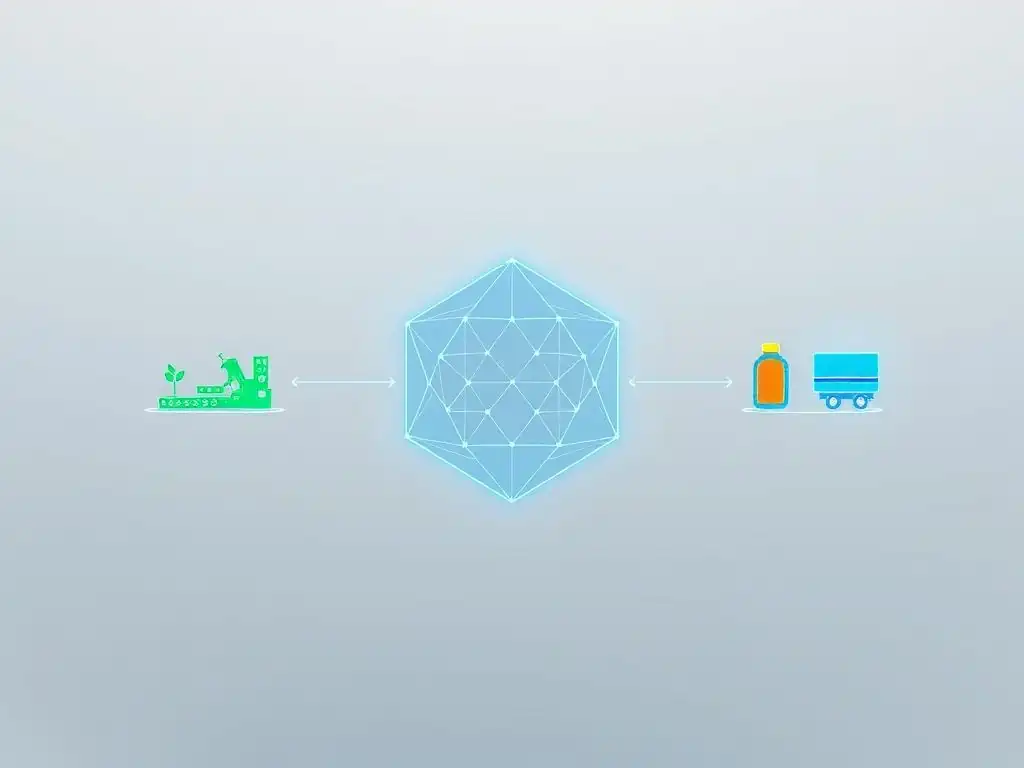
Case Study: MediLedger Network for Chargebacks and Contract Management
The MediLedger Network, an industry-driven initiative, provides a compelling real-world example of blockchain's application in the pharmaceutical supply chain, specifically addressing the complex issue of chargebacks. Chargebacks are credits manufacturers provide to distributors for selling products to eligible customers (like hospitals or pharmacies) at negotiated contract prices. This process is notoriously inefficient, involving the exchange and reconciliation of massive amounts of data, often leading to disputes and delays.
The MediLedger Network uses a decentralized blockchain to create a shared, immutable record of sales transactions and contract terms between manufacturers and distributors. When a sale occurs, the relevant data is recorded on the network, and smart contracts automatically verify if the sale qualifies for a chargeback based on the recorded contract terms. This system automates the reconciliation process, reduces manual effort, minimizes discrepancies, and significantly speeds up settlement times, demonstrating tangible efficiency gains in a key area of the blockchain pharma supply chain. Participants report significant reductions in disputes and processing time.
FDA's Drug Supply Chain Security Act (DSCSA) Pilot Programs Using Blockchain
Recognizing the potential of emerging technologies, the U.S. Food and Drug Administration (FDA) initiated pilot programs under the Drug Supply Chain Security Act (DSCSA). The DSCSA mandates an electronic, interoperable system to identify and trace certain prescription drugs as they are distributed within the United States, with a deadline for full implementation by November 2023 (though extensions and phased approaches are being discussed). Several of these pilot programs specifically explored the use of blockchain technology to meet the DSCSA's serialization and traceability requirements.
These pilots involved various consortia of pharmaceutical companies, distributors, and technology providers. They tested blockchain's ability to securely store and share transaction data, verify product identifiers at different points in the chain, and facilitate rapid tracing in case of recalls or suspect products. The outcomes generally highlighted blockchain's capability to enhance data integrity, improve interoperability between trading partners, and provide the necessary audit trails required by the DSCSA, validating its potential for the regulated blockchain pharma supply chain.
Quantifiable Improvements in Traceability and Reduced Counterfeit Incidents
While widespread, large-scale deployments are still evolving, early pilot programs and limited deployments have shown promising, sometimes quantifiable, results. For instance, some reports from blockchain pilots have indicated the ability to trace a specific drug unit's journey from manufacturer to dispenser in seconds or minutes, compared to hours or days with traditional systems. This speed is critical during recalls or investigations into suspect products.
While specific global figures are hard to attribute solely to blockchain deployments (as opposed to pilots), the potential for reducing counterfeit incidents is high. By enabling instant verification of product authenticity at the point of dispensing, systems built on a blockchain pharma supply chain can effectively block counterfeit products from reaching patients. Industry analysts project that successful implementation of serialisation and advanced tracing technologies, including blockchain, could reduce losses from counterfeiting by a significant percentage over time, potentially impacting the estimated $200+ billion global market for fake pharmaceuticals.
Addressing Regulatory Compliance with Blockchain-Based Solutions
Meeting DSCSA Requirements with Blockchain Technology
The U.S. Drug Supply Chain Security Act (DSCSA) requires trading partners to exchange transaction information and history for certain prescription drugs and implement systems for tracing and verifying products at the package level. By November 2023, the law mandates an interoperable electronic system. Blockchain technology aligns well with several core requirements of the DSCSA. Its ability to handle serialized data (sGTINs), record each change of ownership (transaction information), and build a complete, tamper-proof history of the product's movement (transaction history) directly supports the regulatory mandates.
A blockchain-based system can serve as the foundational layer for the interoperable network required by the DSCSA. Trading partners can record the necessary transaction data on the shared ledger, ensuring that all authorized parties have access to a consistent, verifiable record. The immutable nature of the blockchain ensures the integrity of the data exchanged, a critical requirement for regulatory compliance. Furthermore, blockchain can facilitate the verification of product identifiers at the package level, helping stakeholders meet the law's requirements for authenticating products. This positions blockchain as a powerful tool for achieving a compliant blockchain pharma supply chain.
Blockchain's Role in Data Integrity and Patient Privacy (HIPAA Compliance)
Maintaining data integrity is paramount in the pharmaceutical industry, especially concerning sensitive information. Blockchain's core feature of immutability ensures that the data recorded on the ledger cannot be altered or deleted after the fact without detection, providing a high level of data integrity for product tracking and transaction information. This is crucial for regulatory audits and investigations, ensuring that the historical record is accurate and reliable.
When dealing with patient-level data, such as dispensing information, compliance with privacy regulations like the Health Insurance Portability and Accountability Act (HIPAA) in the U.S. is critical. While blockchain is transparent, sensitive patient health information (PHI) should not be stored directly on a public or even permissioned ledger without strong privacy safeguards.
Instead, blockchain can be used to manage access permissions to off-chain databases where PHI is stored, or to record cryptographic hashes of data to verify its integrity without revealing the underlying sensitive information. Implementing appropriate privacy-preserving techniques is essential when designing a blockchain pharma supply chain solution that interacts with patient data.
Adopting blockchain in the pharmaceutical supply chain involves navigating a complex landscape of existing regulations and legal frameworks. While blockchain can help meet regulations like the DSCSA, its novel nature also raises questions. For instance, determining legal ownership of data on a distributed ledger, establishing liability in case of system failures or data breaches, and ensuring compliance across multiple international jurisdictions with varying regulations are significant challenges.
Regulatory bodies are still developing guidance on the use of blockchain in regulated industries like pharmaceuticals. Companies must work closely with legal counsel and regulators to ensure their blockchain implementations meet all applicable requirements. This includes considerations around data residency, electronic signatures, audit trails, and the legal standing of smart contracts. Successful implementation of a blockchain pharma supply chain requires careful planning and collaboration to address these evolving legal and regulatory considerations.
Overcoming Obstacles in Blockchain Adoption for Pharmaceutical Supply Chains
Scalability Challenges and Solutions for Large-Scale Pharmaceutical Networks
One significant technical challenge for blockchain adoption in a global pharmaceutical supply chain is scalability. The volume of transactions generated by tracking millions or billions of individual drug packages moving across complex networks can be enormous. Traditional public blockchains like Bitcoin or Ethereum, in their base layers, have limitations on the number of transactions they can process per second, which might not be sufficient for the high throughput required by large pharmaceutical companies and their trading partners.
Solutions to address scalability include using permissioned or private blockchains, which can often handle higher transaction volumes and offer faster consensus mechanisms than public ones. Additionally, layer 2 scaling solutions, like off-chain processing with periodic settlement on the main chain, or sharding (dividing the network into smaller, more manageable segments), are being explored and developed. Designing a blockchain pharma supply chain requires careful consideration of the underlying network architecture to ensure it can handle the required transaction load efficiently and cost-effectively.
Interoperability Challenges: Integrating Blockchain with Existing Systems
Pharmaceutical companies and their supply chain partners rely on a multitude of legacy systems, including Enterprise Resource Planning (ERP) systems, Warehouse Management Systems (WMS), Transportation Management Systems (TMS), and various databases. Integrating a new blockchain-based system with this diverse and often aging IT infrastructure presents a significant challenge. Data formats, communication protocols, and system architectures often vary widely between different companies and even within a single organization.
Achieving seamless interoperability is crucial for the success of a blockchain pharma supply chain. This requires developing robust Application Programming Interfaces (APIs) and middleware solutions that can translate and exchange data between existing systems and the blockchain network. Establishing industry standards for data exchange and system integration is also vital. Overcoming these integration hurdles requires significant technical effort, investment, and collaboration among trading partners.
Data Standardization and Harmonization for Effective Tracking
For a blockchain-based tracing system to be effective across a complex supply chain involving multiple entities, data must be standardized and harmonized. Different companies may use varying formats for product identifiers, location data, timestamps, or event types (e.g., 'shipment', 'dispatch', 'transfer'). Inconsistent data makes it difficult to record transactions uniformly on the blockchain and query or interpret the data reliably across the network.
Adopting and enforcing industry-wide data standards, such as GS1 standards for serialization (sGTINs) and event reporting (EPCIS - Electronic Product Code Information Services), is essential. All participants in the blockchain pharma supply chain must agree upon and consistently use these standardized formats when recording data on the ledger. Achieving this level of data harmonization requires collaboration, training, and potentially significant changes to internal data management processes within participating organizations. Without standardized data, the full benefits of blockchain's traceability and transparency cannot be realized.
The Future of Blockchain in Pharmaceuticals: Trends and Predictions
Integration with IoT and AI for Intelligent Supply Chain Management
The future of the blockchain pharma supply chain is likely to involve deep integration with other advanced technologies like the Internet of Things (IoT) and Artificial Intelligence (AI). IoT sensors, such as temperature monitors, humidity sensors, and location trackers, can be attached to pharmaceutical shipments to collect real-time environmental and location data. This data can be automatically recorded on the blockchain, creating an immutable record of conditions during transit and storage.
AI algorithms can then analyze this rich, verifiable data from the blockchain and IoT devices to provide predictive insights. For example, AI could predict potential temperature excursions based on historical data and current conditions, optimize routes for temperature-sensitive products, or identify anomalous patterns in the supply chain that might indicate tampering or diversion. This integration creates a truly intelligent and responsive supply chain, moving beyond simple tracking to proactive risk management and optimization.
Decentralized Clinical Trials and Patient-Owned Data Solutions
Beyond the supply chain for finished products, blockchain is poised to impact other areas of the pharmaceutical lifecycle, including clinical trials. Traditional clinical trials face challenges related to data integrity, patient recruitment, consent management, and ensuring patient privacy while allowing data sharing for research. Blockchain can help create a decentralized framework for clinical trials where data from various sources (wearable devices, labs, etc.) is recorded immutably.
Furthermore, blockchain can empower patients by giving them more control over their health data. Patients could own their encrypted health records on a blockchain and grant permission for researchers or healthcare providers to access specific data points for defined periods. This increases patient trust and participation while potentially accelerating research by facilitating secure, granular data sharing. This shift towards patient-centric data management is a significant future trend enabled by blockchain beyond the traditional blockchain pharma supply chain.
Expanding Blockchain Applications to Personalized Medicine and Drug Development
The trend towards personalized medicine relies heavily on collecting, managing, and securely sharing vast amounts of complex patient data, including genomic information, treatment responses, and lifestyle factors. Ensuring the integrity and privacy of this sensitive data while making it accessible to authorized researchers and clinicians is a major challenge. Blockchain's capabilities in secure data management, access control, and audit trails make it suitable for handling the data requirements of personalized medicine platforms.
In drug development, blockchain could potentially be used to manage intellectual property rights, track research data provenance, and facilitate secure collaboration between research institutions. By providing a trustworthy platform for sharing and verifying research data, blockchain could potentially accelerate the drug discovery and development process. These applications show the potential for blockchain to extend its transformative impact far beyond the initial focus on the blockchain pharma supply chain into the core of pharmaceutical research and innovation.
Conclusion: Blockchain as a Foundation for a Secure and Transparent Pharmaceutical Future
Embracing Blockchain for a More Transparent and Resilient Pharmaceutical Ecosystem
The pharmaceutical industry stands at a critical juncture, facing persistent challenges related to counterfeiting, supply chain inefficiencies, and the increasing demand for transparency and trust. Blockchain technology offers a robust, innovative solution to address these issues head-on. By providing an immutable, shared ledger that enhances traceability, ensures data integrity, and enables automation through smart contracts, blockchain can build a foundation for a significantly more secure, efficient, and transparent pharmaceutical ecosystem.
Embracing blockchain is not just about adopting a new technology; it's about fundamentally rethinking how pharmaceutical products are tracked, verified, and managed across the entire supply chain. It requires collaboration among manufacturers, distributors, pharmacies, regulators, and technology providers to establish standards and build interoperable networks. The potential benefits, from reduced financial losses due to counterfeits and inefficiencies to, most importantly, enhanced patient safety, make the investment in a blockchain pharma supply chain a compelling imperative for the industry's future.
The Long-Term Impact of Blockchain on Patient Outcomes and Public Health
The successful implementation of blockchain technology in the pharmaceutical supply chain holds the promise of a profound long-term impact on patient outcomes and public health. By drastically reducing the infiltration of counterfeit and substandard drugs, blockchain directly protects patients from ineffective or harmful medications. The ability to quickly and precisely trace products enables faster and more effective recalls, minimizing patient exposure to risks during safety events.
Furthermore, the increased transparency and accountability fostered by a blockchain pharma supply chain can build greater trust among patients and healthcare providers regarding the authenticity and quality of medications. As blockchain applications expand into clinical trials and personalized medicine, the technology can also contribute to more efficient research, secure data sharing, and ultimately, the development and delivery of safer and more effective treatments. Blockchain is poised to play a vital role in creating a healthier and more secure future for global public health.
Frequently Asked Questions
What specific problems in the pharmaceutical supply chain does blockchain technology aim to solve?
Blockchain addresses issues like counterfeit drugs, lack of transparency, and inefficient tracking by providing an immutable and auditable record of each product's journey. This enhances trust and reduces risks.
How does blockchain improve the traceability of pharmaceutical products?
Blockchain creates a shared, decentralized ledger where each transaction or movement of a product is recorded. This traceability allows stakeholders to easily verify the authenticity and origin of a drug.
What are some examples of blockchain applications in the pharmaceutical industry beyond supply chain tracking?
Beyond tracking, blockchain can be used for clinical trial data management, patient record security, and intellectual property protection within the pharmaceutical sector.
What are the regulatory considerations and challenges associated with implementing blockchain in the pharma supply chain?
Regulations surrounding data privacy, data security, and interoperability need to be addressed. Compliance with existing pharmaceutical regulations is also crucial for successful implementation.
What is the potential future impact of blockchain technology on the pharmaceutical industry as a whole?
Blockchain could lead to a more secure, efficient, and transparent pharmaceutical ecosystem. It may also facilitate the development of new business models and improve patient outcomes through better data management.
Final Reflection: Securing the Future of Medicine
The journey through the potential of blockchain technology in revolutionizing the pharmaceutical supply chain reveals a critical truth: the integrity of our medicine is inextricably linked to the security of its journey. From manufacturer to patient, each step is a vulnerable point, and the implementation of blockchain offers a robust, transparent, and immutable solution to combat counterfeiting, improve efficiency, and ultimately, safeguard public health.
This exploration has underscored the profound impact that technological advancements can have on our lives, often in ways we don't immediately perceive. The promise of a secure and transparent pharmaceutical supply chain, powered by blockchain, resonates deeply, not just as a technological marvel, but as a fundamental right to safe and effective medication. As Hippocrates famously stated, Cure sometimes, treat often, comfort always.
Blockchain, in this context, offers the potential to cure the systemic vulnerabilities that plague the current system, allowing us to treat patients with greater confidence and comfort.
Now, as you reflect on the potential of blockchain to reshape the pharmaceutical landscape, consider your role in advocating for transparency and security. How can you, as a consumer, a healthcare professional, or a policymaker, contribute to the adoption of this transformative technology? Let us embrace the power of innovation to build a future where access to safe and effective medicine is not a privilege, but a certainty for all.
Okay, I'm ready to craft a Call to Action (CTA) for your article, "Blockchain and Pharma: A Prescription for Supply Chain Security and Efficiency," targeted for the Blockchain Trends website. Here it is:
Seize Control: Revolutionize Pharma Security Now!
Thank you for diving into the world of blockchain and its potential to transform pharmaceutical supply chains. You've now gained valuable insights into how this technology can enhance security and efficiency. Now, let's put that knowledge into action.
- Dive deeper: Advocate for blockchain adoption within your network or organization, using the knowledge gained here to champion its benefits.:
- Explore similar case studies in the healthcare sector to broaden your perspective on blockchain's diverse applications.
- Share this article with your colleagues to spark a conversation about the future of pharma and blockchain's role in it.
How will you leverage blockchain to build a more secure and efficient pharmaceutical future?
Leave a Reply