
Clinical Trials Reimagined: Blockchain for Transparency and Patient Participation


Welcome to Blockchain Trends, your guide to the revolutionary world beyond crypto! Are you ready to discover how blockchain is reshaping healthcare? Imagine a world where clinical trial data is unequivocally transparent and patients are empowered with unprecedented control. Dive into our exploration of blockchain clinical trials transparency benefits and uncover the potential for a more secure, efficient, and patient-centric future for medical research. Intrigued? The journey begins now...
Clinical Trials Reimagined: Blockchain for Transparency and Patient Participation
- The Challenges of Traditional Clinical Trials
- Blockchain: A Solution for Clinical Trial Transformation
- Blockchain Clinical Trials Transparency Benefits: A Detailed Look
- Use Cases: Blockchain in Action for Clinical Trials
- Overcoming the Barriers to Blockchain Adoption in Clinical Research
- The Future of Clinical Trials with Blockchain Technology
- Blockchain Clinical Trials: Addressing Ethical Considerations
- Conclusion: Blockchain's Transformative Potential in Clinical Trials
-
Frequently Asked Questions
- How can blockchain technology enhance transparency in clinical trials?
- What are the potential benefits of using blockchain for patient participation in clinical trials?
- How does blockchain address the issue of data integrity in clinical trials?
- What role does blockchain play in streamlining the regulatory processes for clinical trials?
- Beyond transparency, what other advantages does blockchain offer for clinical trials?
- Final Reflection: Embracing Transparency in Medical Advancement
- Ignite Transparency: Dive Deeper into the Future of Clinical Trials!
The Challenges of Traditional Clinical Trials
Lack of Transparency in Clinical Trial Data
Traditional clinical trials often face significant challenges regarding data transparency, leading to skepticism and hindering scientific progress. A major issue is the potential for selective reporting of results, where positive outcomes are more likely to be published than negative or inconclusive ones.
This publication bias distorts the overall understanding of a treatment's efficacy and safety, making it difficult for researchers, clinicians, and the public to access a complete and unbiased picture. Furthermore, accessing raw patient data or detailed trial protocols can be cumbersome and restricted, limiting the ability of independent researchers to verify findings or conduct meta-analyses, thus undermining the potential blockchain clinical trials transparency benefits could offer.
The opacity extends to the operational aspects of trials, including protocol amendments, recruitment numbers, and adverse event reporting. Without a clear, auditable trail of all trial activities and data points, it's challenging to ensure that trials are conducted exactly as planned and that all relevant information is disclosed. This lack of a unified, verifiable record contributes to mistrust and makes it harder to identify potential misconduct or errors. Implementing technologies that provide a shared, immutable record is crucial for enhancing the openness and accountability required in rigorous scientific research.
Inefficient Patient Recruitment and Retention
Recruiting and retaining patients is a persistent hurdle in traditional clinical trials, often leading to significant delays and increased costs. Studies indicate that a substantial percentage of clinical trials, potentially up to 80%, fail to meet their enrollment deadlines, and a significant portion, perhaps 30% or more in some long-term trials, experience high patient dropout rates. These inefficiencies stem from various factors, including difficulty identifying eligible patients, complex enrollment processes, lack of convenient trial sites, and poor communication between trial administrators and participants. The administrative burden on both patients and sites is considerable.
Moreover, patients in traditional trials often have limited visibility into their own data and the overall progress of the trial, which can lead to disengagement. They may feel like passive subjects rather than active partners in the research process. Improving the recruitment and retention pipeline requires innovative approaches to streamline processes, enhance communication, and empower patients with greater control and information about their participation. Addressing these inefficiencies is vital for accelerating the pace of medical research and bringing new therapies to market faster.
Data Integrity and Security Concerns in Clinical Research
Ensuring the integrity and security of sensitive patient data is paramount in clinical trials, yet traditional systems face vulnerabilities. Data is often stored in disparate systems across multiple sites, making it susceptible to errors during manual entry, transcription, or transfer. Maintaining a consistent, accurate, and tamper-proof record across all participants and sites is a complex challenge. The risk of data alteration, whether intentional or accidental, can compromise the validity of trial results and potentially endanger patient safety.
Beyond integrity, security is a constant concern. Clinical trial data, containing highly sensitive personal health information, is a prime target for cyberattacks. Traditional centralized databases can be single points of failure, making them vulnerable to breaches that could expose patient identities and medical histories, leading to privacy violations and potential legal repercussions. Robust security measures are essential to protect patient confidentiality and maintain trust in the research process, highlighting the need for more resilient and secure data management solutions.
Blockchain: A Solution for Clinical Trial Transformation
How Blockchain Technology Enhances Clinical Trial Transparency
Blockchain technology offers a fundamentally new approach to managing data in clinical trials, significantly boosting transparency. By providing a decentralized, immutable ledger, every transaction, data entry, or change related to a trial can be recorded chronologically and made accessible to authorized parties.
This creates a verifiable and auditable trail from the moment a patient consents to participate, through data collection, monitoring, analysis, and reporting. The inherent nature of the blockchain means that once data is added, it cannot be altered or deleted without consensus from network participants, preventing selective reporting or data manipulation – a core component of blockchain clinical trials transparency benefits.
Consider the lifecycle of clinical trial data: from electronic health records (EHRs) and electronic data capture (EDC) systems to lab results and adverse event reports. Integrating these data streams onto a blockchain, or storing hashes of the data on-chain with the actual data kept securely off-chain, creates a single source of truth. This shared, distributed ledger ensures that all stakeholders – researchers, sponsors, regulators, and even patients – can view the same, verified record of trial activities and data points, fostering trust and accountability throughout the entire research process and directly contributing to enhanced blockchain clinical trials transparency benefits.
Improving Patient Engagement and Participation Through Blockchain
Blockchain technology has the potential to transform patients from passive subjects into active, empowered participants in clinical trials. By leveraging blockchain for identity management and consent, patients can gain granular control over their personal health data. They can explicitly grant or revoke access to specific data points for different research purposes, recorded transparently on the ledger. This level of data ownership and control can increase patient trust and willingness to participate in trials, as they feel more secure and informed about how their data is being used.
Furthermore, blockchain-based platforms can facilitate more direct and transparent communication between trial sites, sponsors, and patients. Patients could potentially access their own trial data in near real-time (in a de-identified or pseudonymized format where appropriate), receive updates on trial progress, and even be incentivized for participation or data sharing via tokenization, if designed ethically and compliantly. This enhanced engagement and sense of partnership are crucial for improving recruitment rates and, critically, reducing patient dropout rates, thereby making trials more efficient and successful.
Ensuring Data Security and Integrity with Blockchain in Clinical Trials
Data security and integrity are significantly enhanced by blockchain's core features. The use of cryptographic hashing ensures that each block of data is linked to the previous one, creating a chain that is virtually impossible to tamper with without breaking the cryptographic links, which would be immediately detectable. This immutability guarantees the integrity of the data recorded on the ledger. Even if the actual patient data is stored off-chain, the cryptographic hash stored on the blockchain serves as an unalterable fingerprint, verifying that the off-chain data has not been modified since its hash was recorded.
The decentralized nature of blockchain also eliminates single points of failure common in traditional centralized databases. Data is distributed across multiple nodes in the network, making it highly resilient to cyberattacks or system failures. While implementing blockchain requires careful consideration of privacy regulations like GDPR and HIPAA (often involving permissioned networks or off-chain storage for sensitive data), the technology provides robust tools for verifiable data integrity and enhanced security compared to many legacy systems. This foundational security and integrity are prerequisites for realizing the full blockchain clinical trials transparency benefits.
Blockchain Clinical Trials Transparency Benefits: A Detailed Look
Enhanced Data Auditability and Traceability
One of the primary blockchain clinical trials transparency benefits is the significant enhancement of data auditability and traceability. Every action recorded on a blockchain, such as a data entry, a protocol amendment, or a consent update, is timestamped and cryptographically linked to previous entries. This creates an immutable, transparent audit trail that details precisely who did what, when, and to which data point. Regulators, sponsors, and auditors can easily follow the entire history of the trial data and processes, verifying compliance with protocols and regulations with unprecedented ease and reliability.
This level of granular traceability is invaluable for ensuring the integrity of trial results and builds trust among all stakeholders. For instance, if a data query arises, the blockchain record can instantly show the origin of the data, any subsequent modifications (or lack thereof), and the individuals responsible. This eliminates disputes over data authenticity and streamlines the auditing process, which in traditional settings can be time-consuming and prone to errors. The ability to fully audit and trace data flow is a cornerstone of the transparency blockchain brings to clinical research.
Streamlined Data Management and Sharing
Blockchain technology can significantly streamline data management and sharing in complex clinical trial environments, particularly those involving multiple sites and research organizations. Instead of relying on fragmented databases and manual data transfers, a blockchain-based system allows for a single, shared source of truth (or rather, a shared, verified record of data hashes/transactions) accessible to authorized parties. This reduces the need for cumbersome data reconciliation processes and minimizes errors associated with moving data between different systems. The inherent structure of the blockchain facilitates secure and efficient data exchange.
Furthermore, blockchain's capabilities can be leveraged to manage access permissions for different stakeholders – allowing researchers at a specific site to access their patient's data, while regulators might have broader read-only access to verify compliance across all sites. This controlled yet efficient sharing mechanism reduces administrative overhead and accelerates the data analysis process, thereby contributing to overall trial efficiency. The ability to manage and share data in a more integrated and trustworthy manner is a key aspect of blockchain clinical trials transparency benefits.
Reduced Costs and Time in Clinical Trial Processes
The inefficiencies inherent in traditional clinical trials, such as slow patient recruitment, high dropout rates, data management challenges, and lengthy auditing processes, contribute significantly to their exorbitant costs and extended timelines. By addressing these pain points, blockchain technology offers the potential for substantial cost and time reductions. Streamlined patient recruitment and retention through improved engagement and digital consent can accelerate trial initiation and completion. Enhanced data integrity and auditability reduce the need for costly data reconciliation and monitoring efforts, while also speeding up regulatory review processes.
For example, automating processes like data validation and consent management via smart contracts on a blockchain can cut down on manual administrative tasks. A report by Deloitte in 2016 estimated that blockchain could reduce clinical trial costs by millions of dollars per trial phase by improving data management and sharing.
While precise figures are still emerging as adoption grows, the potential for efficiency gains across recruitment, data handling, monitoring, and auditing directly translates into lower operational costs and shorter timelines, ultimately making research more affordable and faster, which is an indirect but significant aspect of the overall blockchain clinical trials transparency benefits.
Use Cases: Blockchain in Action for Clinical Trials
Streamlining Informed Consent with Blockchain-Based Platforms
Informed consent is a cornerstone of ethical clinical research, yet traditional paper-based or even simple electronic consent processes can be cumbersome, difficult to track, and offer limited control to the patient. Blockchain-based platforms are being explored to create dynamic, digital consent processes. A patient's consent is recorded as an immutable transaction on the blockchain, linked to their identity (often pseudonymized). This record includes details of what data they are consenting to share, for what purpose, and for how long.
Such systems allow patients to access their consent records easily, understand how their data is being used, and potentially modify or revoke permissions in a transparent and auditable manner. This not only simplifies the process for patients and researchers but also provides a verifiable audit trail for regulatory compliance, ensuring that consent is valid and properly managed throughout the trial. Several startups and research initiatives are piloting blockchain solutions for digital consent, aiming to improve patient autonomy and streamline administrative workflows.
Improving Supply Chain Transparency for Clinical Trial Medications
Ensuring the integrity and authenticity of medications used in clinical trials is critical for patient safety and trial validity. The supply chain for investigational drugs is complex, involving manufacturers, distributors, and clinical sites. Counterfeiting, diversion, or improper handling can compromise the trial. Blockchain technology can provide end-to-end transparency and traceability for clinical trial supplies. By recording each transfer of custody from the manufacturer to the clinical site on a blockchain ledger, an immutable record is created.
This allows sponsors, regulators, and sites to verify the origin, handling history, and current location of every batch of investigational product. Using sensors linked to the blockchain could also record environmental conditions (like temperature) during transport and storage, ensuring product quality. This enhanced supply chain transparency helps prevent the use of counterfeit drugs, ensures proper storage and handling, and provides a verifiable record for audits, contributing indirectly but significantly to the integrity and trustworthiness of the trial process, which aligns with the broader goals of blockchain clinical trials transparency benefits.
Facilitating Secure Data Sharing in Multi-Center Clinical Trials
Multi-center clinical trials, which involve numerous sites collecting data from patients across different locations, face significant challenges in securely and efficiently sharing data while maintaining privacy and integrity. Data silos exist between sites, and transferring data often requires complex, manual, and potentially insecure processes. Blockchain offers a solution by enabling a secure, distributed framework for data sharing. While sensitive patient data is typically stored off-chain in compliance with privacy regulations, cryptographic hashes or metadata pointers are stored on the blockchain.
This allows researchers and authorized parties to verify the existence and integrity of data without directly accessing the sensitive information itself. Smart contracts can automate data access permissions based on pre-defined rules and user roles, ensuring that only authorized personnel can request access to specific data points. This architecture facilitates more efficient data aggregation and analysis across multiple sites while maintaining a verifiable audit trail of all data access requests and transactions, significantly improving the efficiency and security of collaborative research efforts.
Overcoming the Barriers to Blockchain Adoption in Clinical Research
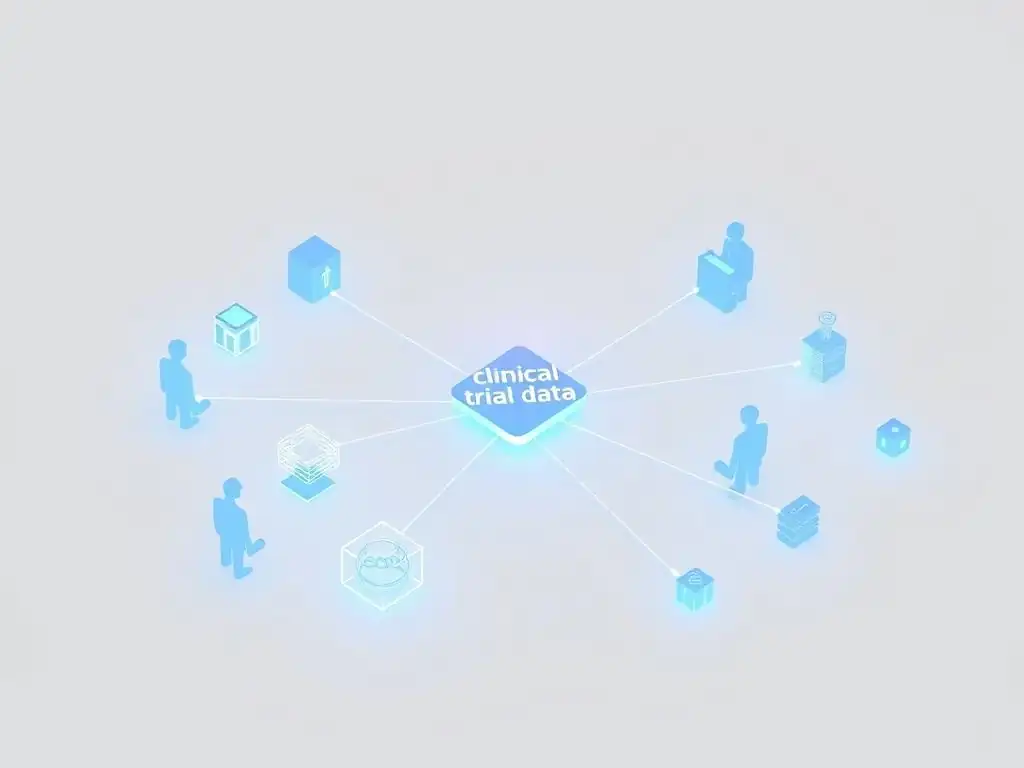
Addressing Regulatory Uncertainty and Compliance
One of the most significant hurdles to widespread blockchain adoption in clinical trials is the current lack of clear regulatory guidance from bodies like the FDA in the United States or the EMA in Europe. While regulators are exploring the potential of blockchain, specific frameworks for its use in managing clinical trial data, ensuring compliance with GxP (Good Practice) standards, and validating blockchain-based systems are still evolving. Companies are hesitant to invest heavily in blockchain solutions without certainty that they will meet stringent regulatory requirements for data integrity, security, and auditability.
Addressing this requires ongoing dialogue and collaboration between blockchain developers, pharmaceutical companies, clinical research organizations (CROs), and regulatory agencies. Pilot programs and demonstration projects can help regulators understand the technology's capabilities and limitations in a clinical setting. Establishing clear guidelines, validation standards, and best practices for using blockchain in areas like data capture, consent management, and supply chain tracking is essential to pave the way for broader adoption and fully realize the blockchain clinical trials transparency benefits.
Ensuring Interoperability with Existing Healthcare Systems
Clinical trials operate within a complex ecosystem of existing healthcare IT systems, including Electronic Health Records (EHRs), Electronic Data Capture (EDC) systems, Laboratory Information Management Systems (LIMS), and more. A major challenge for blockchain integration is ensuring seamless interoperability between these legacy systems and new blockchain platforms. Clinical trial data originates from various sources, and the blockchain solution must be able to receive, process, and record this data accurately and efficiently without requiring a complete overhaul of existing infrastructure.
Developing standardized APIs and integration layers that allow different systems to communicate with the blockchain is crucial. This involves defining common data standards and protocols for exchanging information. While challenging, achieving interoperability is vital for practical implementation, allowing organizations to incrementally adopt blockchain for specific use cases (like consent or supply chain) while continuing to use their existing core systems for other functions. Successful integration will be key to unlocking the potential efficiencies and blockchain clinical trials transparency benefits.
Educating Stakeholders on Blockchain Benefits
A lack of understanding about how blockchain technology works and its specific applications in clinical research is another significant barrier to adoption. Many professionals in the pharmaceutical industry, clinical research organizations, and regulatory bodies may view blockchain primarily through the lens of cryptocurrencies, without fully grasping its potential as a secure, transparent, and efficient data management tool for clinical trials. This knowledge gap can lead to skepticism, resistance to change, and difficulty in identifying appropriate use cases.
Educating stakeholders at all levels – from researchers and data managers to senior executives and regulators – is essential. This involves providing clear, accessible information about blockchain's core concepts (immutability, decentralization, cryptography) and demonstrating tangible examples of how it can solve real-world problems in clinical trials, such as improving data integrity, streamlining processes, and enhancing patient engagement. Highlighting the specific blockchain clinical trials transparency benefits through case studies and pilot results can build confidence and drive broader acceptance and implementation.
The Future of Clinical Trials with Blockchain Technology
Decentralized Clinical Trials (DCTs) and Blockchain
The shift towards Decentralized Clinical Trials (DCTs), which leverage technology to enable some or all trial activities to occur outside traditional physical sites (like patient homes or local clinics), is poised to accelerate, and blockchain is a natural fit for this model. DCTs rely heavily on remote data capture from sources like wearables, mobile apps, and remote monitoring devices. Ensuring the integrity, security, and auditability of this diverse stream of data collected outside a controlled site environment is paramount.
Blockchain can provide the necessary infrastructure for managing patient identity, obtaining and managing consent remotely, and creating a tamper-proof record of all data points collected from various decentralized sources. It can also facilitate secure data sharing between remote patients, local healthcare providers, and central trial administrators. By providing a trusted layer for data management and identity verification in a distributed setting, blockchain is set to become a foundational technology for scaling and securing the next generation of decentralized clinical trials.
Artificial Intelligence (AI) and Blockchain Integration for Enhanced Insights
The integration of Artificial Intelligence (AI) with blockchain technology holds significant promise for enhancing insights derived from clinical trial data. Blockchain provides a secure, immutable, and transparent foundation of verified data. This clean, trustworthy dataset is ideal for training and running AI algorithms aimed at tasks such as identifying potential trial participants, predicting patient response to therapies, detecting fraudulent data entries, or analyzing safety signals.
AI can process the large volumes of auditable data recorded on or linked to the blockchain to uncover patterns and correlations that might be missed by traditional methods. For instance, AI could analyze the blockchain's activity log to identify potential protocol deviations or data anomalies requiring further investigation. By ensuring the integrity and verifiability of the data used for analysis, blockchain enhances the reliability and trustworthiness of AI-driven insights, leading to more efficient trials, better decision-making, and ultimately, improved patient outcomes. This combination leverages blockchain clinical trials transparency benefits for advanced analytics.
The Role of Blockchain in Personalized Medicine
Personalized medicine, which tailors medical treatment to the individual characteristics of each patient, relies heavily on accessing and analyzing vast amounts of diverse health data, including genetic information, lifestyle data, and treatment history. Blockchain technology can play a crucial role in facilitating the secure, consent-driven sharing of this sensitive data for research and clinical purposes, including personalized clinical trials.
Patients could use blockchain-based platforms to manage consent for sharing their genomic and health data with specific researchers or institutions for studies related to personalized therapies. The blockchain would provide an immutable record of these consent decisions and data transactions, ensuring transparency and control for the individual. This secure and auditable data-sharing framework is essential for conducting personalized clinical trials and accelerating research into targeted therapies, where accessing and combining disparate datasets is key. Blockchain provides the trust layer needed to enable this future of highly individualized healthcare research.
Blockchain Clinical Trials: Addressing Ethical Considerations
Data Privacy and Patient Consent on the Blockchain
While blockchain promotes transparency, it also introduces challenges regarding data privacy, particularly with sensitive patient health information. Putting identifiable data directly onto a public, immutable ledger would violate privacy regulations like HIPAA and GDPR. Therefore, ethical blockchain solutions in clinical trials typically employ strategies like storing sensitive data off-chain in secure, compliant databases, with only cryptographic hashes or anonymized/pseudonymized metadata recorded on the blockchain.
Patient consent management on the blockchain is crucial. Systems must be designed to ensure that consent is truly informed, granular, and easily manageable by the patient. The blockchain record ensures that consent is verifiably given and can be revoked, but the underlying systems must handle the actual data access and deletion (or de-identification) in response to consent decisions. Balancing the immutability of the ledger with the patient's right to privacy and control over their data is an ongoing ethical and technical challenge that requires careful design and implementation.
Ensuring Equitable Access to Clinical Trials
The adoption of advanced technologies like blockchain in clinical trials raises concerns about ensuring equitable access for all patient populations. There is a risk that trials leveraging complex digital consent platforms or requiring specific technical skills might exclude patients who lack access to technology, digital literacy, or reliable internet connectivity. This could exacerbate existing disparities in trial participation, where certain demographic groups are already underrepresented.
To address this, blockchain solutions must be designed with inclusivity in mind. This might involve providing alternative consent methods (while still linking them to a blockchain record where feasible), offering digital literacy support, or ensuring that decentralized trial components do not create new barriers to participation. The goal is to leverage blockchain's benefits, including improved transparency and efficiency, to potentially make trials more accessible to a broader range of participants, rather than creating new digital divides in the research landscape.
Maintaining Data Integrity and Preventing Manipulation
While blockchain is inherently designed to prevent data alteration once recorded, the integrity of data before it is added to the blockchain is still critical. Data capture at the source (e.g., from an EDC system, a wearable device) must be accurate and reliable. If inaccurate or fraudulent data is entered into the system initially, the blockchain will immutably record that inaccurate data. Therefore, robust data validation processes before committing data to the blockchain are essential.
Furthermore, while the blockchain ledger itself is tamper-proof, the systems and processes that interact with the blockchain (e.g., oracles feeding external data, smart contract code) must also be secure and trustworthy to prevent manipulation upstream. Ensuring the ethical use of blockchain involves rigorous system design, validation, and ongoing monitoring to maintain data integrity from the point of origin to the immutable record, safeguarding the reliability of trial results and upholding the fundamental principles of clinical research.
Conclusion: Blockchain's Transformative Potential in Clinical Trials
Frequently Asked Questions
How can blockchain technology enhance transparency in clinical trials?
Blockchain provides an immutable ledger, ensuring all data related to the trial is securely recorded and auditable. This increased transparency builds trust among participants and researchers alike.
What are the potential benefits of using blockchain for patient participation in clinical trials?
Blockchain can empower patients by giving them greater control over their data. It can also facilitate secure and transparent data sharing, potentially leading to more diverse and representative trial results.
How does blockchain address the issue of data integrity in clinical trials?
The decentralized and tamper-proof nature of blockchain ensures data integrity. Any alteration to the data would require consensus across the network, making it extremely difficult to manipulate records.
What role does blockchain play in streamlining the regulatory processes for clinical trials?
By providing a transparent and auditable record, blockchain can simplify regulatory oversight. Regulators can access real-time data and easily verify the accuracy of trial information, potentially speeding up approvals.
Beyond transparency, what other advantages does blockchain offer for clinical trials?
Blockchain can improve data security, reduce administrative overhead, and enable better collaboration among researchers. It also has the potential to streamline payments to participants and reduce fraud.
Final Reflection: Embracing Transparency in Medical Advancement
The promise of blockchain clinical trials transparency benefits is no longer a futuristic concept, but a tangible opportunity to reshape the landscape of medical research. The potential to foster trust, empower patients, and accelerate scientific discovery through secure and transparent data management is immense, and its relevance in today's world, rife with concerns about data privacy and research integrity, is undeniable.
The impact of this technology extends far beyond simply streamlining processes; it fundamentally alters the power dynamic between researchers, pharmaceutical companies, and, most importantly, patients. The ability for individuals to own and control their medical data, contributing directly to research while maintaining privacy, is a paradigm shift that resonates deeply with the growing demand for patient-centric healthcare. The future of healthcare is participatory, predictive, and personalized, and blockchain technology has the potential to be a key enabler of this vision.
As we stand at the cusp of this transformative era, let us all consider the role we can play in fostering a more transparent and equitable future for clinical trials. Embrace the potential of blockchain technology to revolutionize medical research, advocate for patient empowerment, and contribute to a world where scientific advancements are built on a foundation of trust and collaboration. The future of medicine is in our hands; let's build it together, transparently and ethically.
Okay, I understand. Here's a Call to Action (CTA) designed for the end of an article titled "Clinical Trials Reimagined: Blockchain for Transparency and Patient Participation" on the website Blockchain Trends (blockchaintrends.org):
Ignite Transparency: Dive Deeper into the Future of Clinical Trials!
Thank you for exploring how blockchain technology can revolutionize clinical trials, bringing unprecedented transparency and empowering patient participation. Now, let's transform knowledge into action and shape the future of healthcare together.
- Become a Blockchain Advocate in Healthcare: Share this article with your network of medical professionals, researchers, and patient advocacy groups. Let's spread the word about the potential of blockchain to improve trust and efficiency in clinical trials.
- Research existing blockchain projects in healthcare. Consider attending a webinar or joining an online community focused on blockchain applications in medicine.
- Brainstorm with your colleagues or friends: how can blockchain principles of transparency and immutability be applied to improve other areas of data management and trust in your field?
How can YOU contribute to building a more transparent and patient-centric clinical trial ecosystem using blockchain? Share your ideas in the comments below!
Leave a Reply