
The Convergence of Blockchain and IoT for Secure Healthcare Device Management


Welcome to Blockchain Trends, your go-to source for dissecting the real-world impact of blockchain technology.
Are you ready to explore how the convergence of cutting-edge technologies is revolutionizing industries? Dive in and uncover the groundbreaking potential of Blockchain IoT healthcare security, and discover how it’s transforming device management and safeguarding sensitive patient data. The possibilities are only just beginning...
Enhancing Pharmaceutical Supply Chain Integrity with Blockchain and IoT
- Introduction: The Need for Transparency in Pharmaceutical Supply Chains
- Understanding Blockchain Technology for Supply Chain Management
- IoT in Pharmaceutical Supply Chains: Tracking and Monitoring
- Blockchain and IoT: A Synergistic Solution for Pharmaceutical Security
- Use Cases: Blockchain and IoT in Pharmaceutical Supply Chains
- Benefits of Blockchain and IoT in Pharmaceutical Supply Chains
- Challenges and Considerations for Blockchain and IoT Implementation
- Future Trends in Blockchain and IoT for Pharmaceutical Supply Chains
- Conclusion: The Future of Pharmaceutical Supply Chain Security
-
Frequently Asked Questions
- What are the primary benefits of using blockchain and IoT together in healthcare device management?
- How does blockchain enhance the security of IoT healthcare devices?
- What role does IoT play in collecting and transmitting data for blockchain-based healthcare systems?
- What are some of the regulatory challenges associated with implementing blockchain and IoT in healthcare?
- How might the integration of blockchain and IoT impact the future of healthcare data management?
- Final Reflection: Securing Healthcare's Future
- Empower Healthcare: Take Control of Device Security Now!
Introduction: The Need for Transparency in Pharmaceutical Supply Chains
The Challenges of Counterfeit Drugs and Supply Chain Disruptions
The global pharmaceutical supply chain is a complex, multi-layered network extending from raw material suppliers to manufacturers, distributors, pharmacies, and ultimately, patients. This complexity, coupled with varying regulations across jurisdictions, creates vulnerabilities that are exploited by criminals. Counterfeit drugs represent a significant threat, estimated by some organizations, such as the World Health Organization (WHO), to constitute up to 10% of the global drug market, potentially reaching over 30% in some developing countries. These falsified medicines can contain incorrect or no active ingredients, harmful substances, or improper dosages, leading to treatment failure, severe health complications, and even death.
Beyond counterfeiting, the supply chain is susceptible to disruptions from natural disasters, geopolitical events, and logistical failures. Maintaining the integrity of sensitive products, particularly those requiring strict temperature control (like many vaccines and biologics), is also a constant challenge. Breaches in the cold chain can render life-saving medications ineffective or even dangerous. Traditional paper-based tracking systems and disparate electronic databases lack the necessary transparency and security to provide a verifiable, end-to-end view of a drug's journey, making it difficult to quickly identify the source of issues like counterfeits or temperature excursions and hindering effective recalls.
How Blockchain and IoT Can Revolutionize Pharmaceutical Traceability
The convergence of blockchain and the Internet of Things (IoT) offers a powerful solution to the inherent challenges in pharmaceutical supply chains, significantly enhancing Blockchain IoT healthcare security. By combining the immutable, transparent ledger capabilities of blockchain with the real-time data collection power of IoT sensors, stakeholders can create a comprehensive, verifiable, and secure record of a drug's lifecycle. This integrated approach allows for unprecedented visibility, tracking products from manufacturing through distribution to the point of dispensing, ensuring authenticity and proper handling conditions throughout.
This synergistic technology pairing provides a robust framework for tackling issues like counterfeiting, diversion, and cold chain breaches. IoT devices attached to packaging or storage units can continuously monitor conditions such as temperature, humidity, and location, feeding this critical data directly onto a blockchain. The blockchain then serves as a tamper-proof historical record of this data, along with transaction details like ownership transfers and timestamps. This creates a trusted, shared source of truth accessible to authorized parties, enabling instant verification of a product's legitimacy and history, thereby strengthening the overall security and reliability of pharmaceutical logistics.
Understanding Blockchain Technology for Supply Chain Management
Blockchain Basics: Immutability, Transparency, and Decentralization
Blockchain technology operates as a distributed ledger shared across a network of computers. Its fundamental characteristics – immutability, transparency, and decentralization – make it uniquely suited for applications requiring high levels of trust and security, such as pharmaceutical supply chain management. Immutability means that once data is recorded on the blockchain in a block, it cannot be altered or deleted without invalidating all subsequent blocks, which is practically impossible without the consensus of the network participants. This ensures the integrity of the historical record.
Transparency, in the context of a permissioned blockchain often used in enterprise settings, means that authorized participants in the network can view the transactions and data relevant to them or the entire chain, depending on the design. This shared visibility fosters trust among disparate parties who may not otherwise trust each other.
Decentralization refers to the fact that the ledger is not stored in a single location or controlled by a single entity. Instead, copies of the ledger are maintained across multiple nodes in the network, making it highly resilient to single points of failure or malicious attacks aimed at altering records.
Permissioned vs. Public Blockchains in the Pharmaceutical Industry
While public blockchains like Bitcoin or Ethereum are open to anyone and prioritize censorship resistance, they may not be the ideal fit for sensitive industry applications like pharmaceuticals due to privacy concerns, potential scalability limitations under high transaction loads, and the need for known, accountable participants. For the pharmaceutical supply chain, permissioned blockchains are generally preferred. In a permissioned blockchain, participation is restricted; only authorized entities (like manufacturers, distributors, pharmacies, regulators) are allowed to join the network, validate transactions, or access specific data.
This controlled environment allows for greater privacy regarding sensitive business data while still providing the benefits of a distributed, immutable ledger. Participants are known entities, which facilitates governance, accountability, and regulatory compliance. Consortiums of pharmaceutical companies and supply chain partners can establish and govern a shared permissioned blockchain network, setting rules for access, data visibility, and transaction validation, thereby building a trusted ecosystem specifically tailored for the needs of pharmaceutical logistics and Blockchain IoT healthcare security.
The Role of Smart Contracts in Automated Supply Chain Processes
Smart contracts are self-executing contracts with the terms of the agreement directly written into lines of code. These codes and the agreements they contain exist across a distributed, decentralized blockchain network. Smart contracts automatically execute predefined actions when specific conditions are met, without the need for intermediaries. In pharmaceutical supply chains, smart contracts can automate various processes, improving efficiency and reducing potential for human error or deliberate manipulation.
Examples include automated payments released to a distributor upon verifiable delivery and authentication of goods recorded on the blockchain, or triggering alerts and initiating digital quarantine procedures if IoT temperature data exceeds acceptable thresholds recorded alongside the product's journey. Smart contracts can also automate compliance checks, verify credentials of trading partners, or manage complex agreements related to returns or recalls based on immutable data feeds from IoT devices and network participants. This automation streamlines operations, enhances trust, and ensures that contractual obligations are met based on verifiable, on-chain data.
IoT in Pharmaceutical Supply Chains: Tracking and Monitoring
The Proliferation of IoT Sensors for Temperature and Location Monitoring
The Internet of Things (IoT) has revolutionized asset tracking and condition monitoring across various industries, including pharmaceuticals. Affordable and sophisticated IoT sensors are now widely available and deployed to collect critical data throughout the drug supply chain. These sensors can be attached to individual product packages, pallets, shipping containers, or storage units. Key monitoring capabilities include precise temperature tracking, crucial for maintaining the cold chain integrity required for vaccines, biologics, and other temperature-sensitive medications.
Beyond temperature, IoT devices can monitor humidity levels, light exposure, and even detect physical shocks or tampering. Location tracking via GPS or other methods provides real-time visibility into a shipment's whereabouts. This constant stream of environmental and location data is vital for ensuring that pharmaceutical products are stored and transported within specified conditions, preserving their efficacy and safety. The proliferation of these devices provides an unprecedented volume of granular data about the physical journey and state of pharmaceutical goods.
Security Risks and Data Integrity Concerns in Traditional Systems
Traditional methods for tracking pharmaceutical conditions and location often rely on manual checks, data loggers that are downloaded periodically, and centralized databases. These systems are prone to several vulnerabilities. Manual data entry can introduce errors, and paper records can be lost or falsified. Traditional data loggers require physical retrieval and download, creating delays and opportunities for data manipulation before the information is recorded. Centralized databases are attractive targets for cyberattacks, and a breach could compromise the integrity of vast amounts of critical supply chain data.
Ensuring data integrity – that the data is accurate, consistent, and trustworthy – is paramount in pharmaceuticals due to the direct impact on patient safety and regulatory compliance. In traditional systems, proving that temperature data, for instance, has not been altered after collection is difficult. This lack of inherent security and verifiable data integrity in legacy systems highlights the urgent need for more robust and tamper-proof tracking solutions that can withstand malicious attempts to alter records or introduce false information into the supply chain narrative.
Limitations of Current Pharmaceutical Supply Chain Tracking Methods
Current pharmaceutical supply chain tracking methods, even those using electronic systems, often suffer from fragmentation and a lack of interoperability. Different companies within the chain (manufacturer, wholesaler, carrier, pharmacy) may use disparate systems that don't easily communicate with each other. This creates data silos and breaks in visibility as products move from one entity to the next. Tracking information can be delayed, incomplete, or inconsistent across different handover points.
Furthermore, existing serialization requirements, while a step towards traceability, often rely on centralized databases or point-to-point data sharing agreements that lack a single, shared, immutable source of truth accessible to all authorized parties. This makes it challenging to establish a comprehensive, verifiable history of a product's journey and handling conditions across the entire chain.
The absence of real-time, tamper-proof data collection and sharing limits the ability to proactively identify and respond to issues like temperature excursions or potential counterfeits detected downstream, underscoring the need for a more integrated and secure approach like that offered by Blockchain IoT healthcare security solutions.
Blockchain and IoT: A Synergistic Solution for Pharmaceutical Security
Combining Blockchain and IoT for End-to-End Traceability
The true power of integrating blockchain and IoT lies in creating seamless, end-to-end traceability for pharmaceutical products. IoT sensors collect real-time data on location, temperature, humidity, and other relevant conditions as a product moves through the supply chain. This data, along with key transaction information (like ownership changes, shipping details, and receiving confirmations), is then securely recorded as transactions on a blockchain ledger. Each step of the product's journey, from manufacturing to dispensing, can be represented as a transaction or data point linked to a unique identifier (like a serial number).
This creates an immutable digital thread for each product. Because the data is on a distributed ledger, all authorized participants in the supply chain network can access this shared, verifiable history. This eliminates information silos and provides unparalleled visibility into the product's provenance, handling conditions, and chain of custody. If a temperature deviation occurs, the specific product, time, location, and duration of the excursion are permanently recorded and transparently accessible, allowing for immediate action and root cause analysis, significantly bolstering Blockchain IoT healthcare security.
Decentralized Authentication and Verification of Pharmaceutical Products
One of the most critical applications of combining blockchain and IoT is the decentralized authentication and verification of pharmaceutical products. Each product can be associated with a unique digital identity on the blockchain, often linked to its serialized code. As the product moves through the supply chain, authenticated participants record events related to this identity on the blockchain. IoT data, such as a sensor embedded in the packaging confirming its presence at a specific location or reporting environmental conditions, further validates the product's journey and status.
At any point in the supply chain – from a distributor receiving a shipment to a pharmacist dispensing medication – the product's unique identifier can be scanned. This triggers a query to the blockchain, retrieving the complete, immutable history of that specific item.
Authorized users can instantly verify its origin, check its chain of custody, confirm it hasn't been reported as stolen or counterfeit, and review its handling conditions based on the recorded IoT data. This decentralized verification process makes it extremely difficult to introduce counterfeit products into the legitimate supply chain without their lack of blockchain history or matching IoT data being immediately flagged.
Secure Data Sharing and Collaboration Among Stakeholders
Pharmaceutical supply chains involve numerous independent stakeholders: active pharmaceutical ingredient (API) suppliers, manufacturers, packaging companies, third-party logistics providers (3PLs), wholesalers, hospitals, pharmacies, and regulatory bodies. Traditionally, data sharing between these entities is often manual, fragmented, and relies on potentially insecure methods like email or fax, or point-to-point electronic data interchange (EDI) systems that lack transparency across the entire chain.
A blockchain-based system provides a secure, shared platform for these stakeholders to collaborate and share relevant data in a controlled manner. Using a permissioned blockchain, access rights and data visibility can be precisely managed, ensuring that each participant only sees the information necessary for their role while contributing to the overall integrity of the shared ledger. This secure, collaborative environment built on a foundation of immutable data enhances trust among trading partners and facilitates more efficient communication and coordination across the entire network, strengthening Blockchain IoT healthcare security for all participants.
Real-time Monitoring and Alerting for Supply Chain Deviations
The integration of real-time data from IoT sensors with the automated capabilities of blockchain-based smart contracts enables sophisticated monitoring and alerting for supply chain deviations. IoT devices continuously transmit data on critical parameters like temperature. This data is timestamped and written onto the blockchain, creating an indisputable record. Smart contracts can be programmed to monitor this incoming blockchain data stream against predefined conditions.
For example, a smart contract tied to a shipment of vaccines might monitor the temperature data being recorded on the blockchain by its accompanying IoT sensor. If the temperature exceeds a certain threshold for a specified duration, the smart contract can automatically trigger an alert to relevant parties (e.g., the logistics manager, the recipient, the quality control team).
It could also automatically update the product's status on the blockchain to "compromised" or "under investigation," potentially triggering automated quarantine procedures downstream. This real-time, automated alerting system allows for immediate intervention, minimizing the impact of deviations and ensuring that compromised products do not reach patients.
Use Cases: Blockchain and IoT in Pharmaceutical Supply Chains
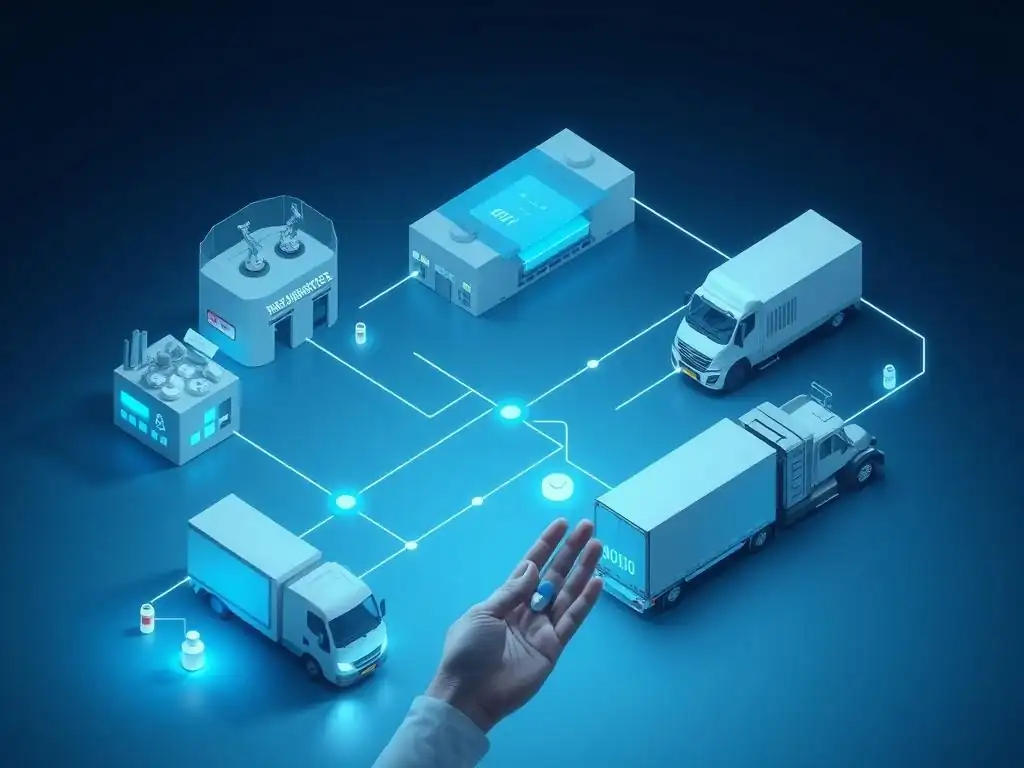
Tracking Drug Origin and Preventing Counterfeiting
One of the primary applications of Blockchain IoT healthcare security in the pharmaceutical sector is establishing an irrefutable record of a drug's origin and journey to combat counterfeiting. By assigning a unique digital identity on the blockchain to each unit or batch at the point of manufacturing, and recording every subsequent transaction and handling event on the ledger, a complete provenance trail is created.
As the product moves through the supply chain, distributors, wholesalers, and pharmacies verify its authenticity by scanning its identifier and checking its history on the blockchain. IoT sensors embedded in packaging or pallets can provide additional verification points, confirming the product's presence at expected locations and times. If a product with a seemingly legitimate serial number lacks a corresponding, verifiable history on the blockchain, or if its associated IoT data doesn't match the expected journey, it can be flagged as potentially counterfeit, preventing it from entering the legitimate supply chain and protecting patients.
Ensuring Temperature Control and Cold Chain Integrity
Maintaining the cold chain is critical for many high-value and life-saving pharmaceutical products, including vaccines, insulin, and various biologics. Failure to keep these products within a specific temperature range can render them ineffective or harmful. Integrating IoT temperature sensors with blockchain technology provides a robust solution for ensuring cold chain integrity.
IoT sensors continuously monitor the temperature of products during storage and transit. This temperature data is securely and immutably recorded on the blockchain in real-time or at frequent intervals. Smart contracts can monitor this data stream and automatically trigger alerts if temperatures deviate from the required range. The permanent, verifiable record on the blockchain proves that the product was kept within acceptable conditions throughout its journey, providing assurance to all stakeholders and facilitating compliance with strict cold chain regulations. This use case is paramount for Blockchain IoT healthcare security concerning product efficacy.
Streamlining Recall Processes and Reducing Liability
When a defective or potentially harmful drug needs to be recalled, the speed and accuracy of the process are paramount to public safety. Traditional recall processes can be slow and inefficient due to fragmented data and lack of clear visibility into where affected products are located within the supply chain. Identifying all affected batches and tracking their distribution can take significant time and effort.
A blockchain-based traceability system integrated with IoT data dramatically streamlines recalls. Because the blockchain holds an immutable, end-to-end record of every product's journey and ownership transfer, identifying the precise location of all units belonging to a specific recalled batch becomes much faster and more accurate. Stakeholders can query the blockchain to determine which distributors, pharmacies, or hospitals received units from the affected batch.
IoT location data can further pinpoint the physical whereabouts of goods still in transit or storage. This accelerated identification and notification process limits the exposure of patients to harmful products and can significantly reduce the manufacturer's liability by demonstrating swift and effective action based on verifiable data.
Improving Inventory Management and Reducing Waste
Inefficient inventory management in the pharmaceutical supply chain can lead to significant waste due to expired products, overstocking, or stockouts. Lack of real-time visibility into inventory levels across the distributed network makes optimization difficult. Combining blockchain traceability with IoT monitoring can provide a much clearer picture of product movement and stock levels.
By tracking each product unit on the blockchain, companies gain precise visibility into where inventory is located at any given moment within the network. IoT sensors in storage facilities can provide real-time counts and condition monitoring.
This granular data allows for more accurate forecasting, better stock rotation (e.g., ensuring first-expiry, first-out principles are followed based on verifiable data), and reducing the likelihood of products expiring on shelves. Improved inventory management based on shared, real-time data reduces waste, lowers costs, and ensures that products are available where and when they are needed, contributing to overall supply chain efficiency and Blockchain IoT healthcare security.
Benefits of Blockchain and IoT in Pharmaceutical Supply Chains
Increased Transparency and Trust Among Stakeholders
One of the most significant benefits of adopting Blockchain IoT healthcare security solutions in pharmaceuticals is the dramatic increase in transparency and trust among all participants. The shared, immutable ledger provides a single source of truth regarding a product's journey, transactions, and handling conditions. This eliminates the need for participants to solely rely on the data provided by their immediate upstream partner, as they can verify information against the distributed record.
This enhanced transparency fosters greater trust between manufacturers, distributors, pharmacies, and even regulators. Discrepancies or anomalies are immediately visible to authorized parties, making it difficult for any single entity to hide issues or manipulate records. This foundation of trust, built on verifiable data, encourages better collaboration and strengthens relationships across the entire pharmaceutical ecosystem, ultimately benefiting patient safety.
Reduced Counterfeiting and Diversion of Pharmaceutical Products
The enhanced traceability and verification capabilities offered by the combination of blockchain and IoT are powerful deterrents against counterfeiting and diversion. The ability to instantly verify a product's authenticity and history by scanning its unique identifier and cross-referencing it with the immutable blockchain record makes it significantly harder for counterfeit goods, which lack this verifiable digital history, to infiltrate the legitimate supply chain.
Similarly, diversion – the unauthorized movement of legitimate products outside the intended distribution channel – becomes more difficult to conceal. Any unauthorized transaction or movement not recorded on the blockchain, or any discrepancy between the expected location based on blockchain records and the actual location reported by IoT sensors, will be flagged. This increased risk of detection acts as a strong deterrent, protecting both the integrity of the supply chain and patient access to legitimate medications.
Improved Regulatory Compliance and Auditability
The pharmaceutical industry is heavily regulated, with strict requirements for traceability, record-keeping, and reporting (e.g., the US Drug Supply Chain Security Act - DSCSA). Complying with these regulations using traditional paper-based or siloed electronic systems can be cumbersome and resource-intensive. Blockchain and IoT offer a streamlined path to improved regulatory compliance and auditability.
The blockchain provides an immutable, time-stamped record of every transaction and handling event, including critical IoT data like temperature logs. This automatically generated, comprehensive digital trail simplifies audits and regulatory reporting. Regulators, granted appropriate permission on the network, can potentially access relevant data directly from the blockchain, facilitating faster and more efficient inspections. This verifiable record demonstrates compliance with serialization, traceability, and handling requirements, reducing the burden on pharmaceutical companies and enhancing overall Blockchain IoT healthcare security from a regulatory perspective.
Enhanced Efficiency and Cost Savings in Supply Chain Operations
While initial implementation requires investment, the long-term benefits of Blockchain IoT healthcare security solutions include significant enhancements in operational efficiency and cost savings. Automating processes through smart contracts reduces manual effort and administrative overhead. Real-time visibility into inventory and product location minimizes losses due to expiry, damage, or theft.
Faster and more accurate recalls reduce the costs associated with managing compromised products and potential legal liabilities. Reduced instances of counterfeiting protect brand reputation and revenue. Furthermore, improved data accuracy and accessibility streamline processes like receiving, dispensing, and reconciliation. By reducing inefficiencies, minimizing losses, and preventing costly issues like recalls or legal battles stemming from counterfeit drugs, the combined use of blockchain and IoT can lead to substantial cost savings across the entire pharmaceutical supply chain.
Challenges and Considerations for Blockchain and IoT Implementation
Scalability and Interoperability with Existing Systems
Implementing a blockchain and IoT solution across a complex, global pharmaceutical supply chain presents significant technical challenges, particularly concerning scalability and interoperability. The volume of data generated by millions of IoT devices tracking billions of drug packages daily can be enormous. The chosen blockchain platform must be capable of handling this transaction volume and data throughput efficiently without becoming prohibitively slow or expensive.
Integrating a new blockchain-based system with the myriad of legacy systems already in use by manufacturers, distributors, pharmacies (e.g., ERP systems, warehouse management systems, pharmacy management systems) is also a major hurdle. Ensuring seamless data exchange and interoperability between the new distributed ledger technology and existing centralized databases and software requires careful planning, standardization efforts, and potentially the use of middleware or APIs. Achieving widespread adoption depends on the ability of these new systems to work harmoniously with the existing infrastructure.
Data Privacy and Security Concerns
While blockchain offers inherent security advantages through immutability and cryptography, implementing Blockchain IoT healthcare security solutions in pharmaceuticals raises specific data privacy and security concerns that must be addressed. Pharmaceutical supply chain data can be highly sensitive, including information about production volumes, pricing, customer details, and potentially patient information if the scope extends to dispensing.
Ensuring that sensitive data is protected while still maintaining the necessary transparency for traceability is critical. Permissioned blockchains help by restricting access, but careful consideration must be given to data architecture, including what data is stored directly on-chain versus off-chain with verifiable hashes on the blockchain. Furthermore, the security of the IoT devices themselves and the networks they use to transmit data is paramount. Vulnerable sensors or communication channels could be exploited to feed false data into the blockchain, compromising the integrity of the entire system. Robust security protocols for IoT devices and data transmission are essential.
Regulatory Landscape and Compliance Requirements
The regulatory landscape for pharmaceuticals is constantly evolving, and implementing new technologies like blockchain and IoT requires careful navigation to ensure compliance. While regulators globally are exploring the potential of these technologies, clear guidelines and standards for their use in meeting specific requirements (like serialization, traceability, and data integrity regulations such as DSCSA in the US or similar directives elsewhere) are still developing.
Companies must ensure that their blockchain and IoT implementation meets existing regulatory requirements and is adaptable to future changes. This involves working closely with regulatory bodies, participating in pilot programs, and potentially contributing to the development of industry standards. Demonstrating the system's ability to provide verifiable, auditable records that satisfy regulatory demands is crucial for successful adoption and leveraging Blockchain IoT healthcare security benefits within the legal framework.
Adoption Barriers and Stakeholder Collaboration
Implementing a blockchain and IoT-based traceability system requires collaboration and adoption across multiple independent entities within the pharmaceutical supply chain. This presents significant challenges related to change management, investment, and gaining consensus among diverse stakeholders with potentially competing interests. Convincing all necessary parties – from large manufacturers to small independent pharmacies – to invest in new technology, adapt their processes, and share data on a common platform is a major undertaking.
Addressing concerns about cost, complexity, data ownership, and governance of the shared network is essential. Building a consortium model where participants collectively define the rules, standards, and technical architecture can help foster buy-in and ensure that the solution meets the needs of the entire ecosystem. Overcoming these adoption barriers through clear communication, demonstrated value propositions, and collaborative governance is key to realizing the full potential of Blockchain IoT healthcare security across the industry.
Future Trends in Blockchain and IoT for Pharmaceutical Supply Chains
Integration with AI and Machine Learning for Predictive Analytics
Looking ahead, the integration of blockchain and IoT data with Artificial Intelligence (AI) and Machine Learning (ML) holds immense potential for pharmaceutical supply chains. The vast amounts of immutable, real-time data collected by IoT sensors and recorded on the blockchain provide a rich dataset for AI and ML algorithms. These algorithms can analyze patterns in temperature data, transit times, and handling events to identify potential risks before they occur.
For example, AI could predict which routes or carriers are most likely to experience temperature deviations based on historical IoT data recorded on the blockchain, allowing for proactive mitigation. ML models could analyze transaction patterns to detect suspicious activities indicative of diversion or counterfeiting attempts with greater accuracy than rule-based systems. This integration of Blockchain IoT healthcare security data with advanced analytics can move the industry from reactive problem-solving to predictive and preventative supply chain management, enhancing efficiency and security.
Development of Standardized Protocols and Platforms
The successful widespread adoption of blockchain and IoT in pharmaceutical supply chains depends heavily on the development and acceptance of standardized protocols and interoperable platforms. Currently, various pilot projects and consortia are exploring different blockchain technologies and data standards. A lack of uniformity can lead to fragmentation, making it difficult for companies to connect with multiple partners who might be using different systems.
Future trends point towards the industry converging on common standards for data formats (e.g., for serialization data, IoT data), communication protocols, and potentially shared network infrastructure models. Initiatives like the MediLedger project (though not explicitly linked here) demonstrate the industry's movement towards building a shared, neutral network for verifying pharmaceutical products. The development of widely accepted standards will facilitate seamless data exchange, reduce implementation complexity, and accelerate the scaling of Blockchain IoT healthcare security solutions across the entire industry.
Expansion to Include Patient-Centric Supply Chain Solutions
While current efforts primarily focus on securing the supply chain up to the pharmacy or hospital, future trends may see the integration of blockchain and IoT extending closer to the patient. This could involve tracking high-value or sensitive medications all the way to the point of administration or even into the patient's home for certain therapies.
Patient-centric solutions could potentially use simplified interfaces or apps that allow patients or caregivers to verify the authenticity and history of their medication using the blockchain record. IoT sensors embedded in specialized packaging for home-use medications could monitor storage conditions in the patient's environment, providing data back to healthcare providers (with appropriate privacy controls) to ensure proper handling. This expansion would provide unprecedented visibility and security in the final leg of the pharmaceutical journey, significantly enhancing Blockchain IoT healthcare security directly impacting patient safety.
Decentralized Clinical Trial Supply Chain Management
Clinical trials involve complex and highly controlled supply chains for investigational medicinal products (IMPs), samples, and materials. Ensuring the integrity, temperature control, and traceability of these sensitive supplies across multiple sites and geographies is critical for trial validity and patient safety. Blockchain and IoT are poised to play a significant role in decentralizing and securing clinical trial supply chain management.
Using blockchain to track IMPs from manufacturing to site delivery and administration, combined with IoT monitoring of temperature and conditions during transit and storage, can provide an immutable audit trail required by regulators. This decentralized approach reduces reliance on centralized databases managed by potentially different parties for each trial, enhancing data integrity and transparency across all trial sites. Future developments will likely see these technologies becoming standard for managing the complex logistics of both traditional and increasingly decentralized clinical trials, bolstering Blockchain IoT healthcare security in research settings.
Conclusion: The Future of Pharmaceutical Supply Chain Security
The Transformative Potential of Blockchain and IoT
The convergence of blockchain and IoT technologies represents a transformative force for enhancing security, transparency, and efficiency in the pharmaceutical supply chain. By providing an immutable, shared ledger for tracking product journeys and integrating real-time, verifiable data from IoT sensors, these technologies directly address long-standing challenges like counterfeiting, diversion, and cold chain failures. The ability to create a secure, end-to-end digital thread for every pharmaceutical product fundamentally changes how authenticity is verified, conditions are monitored, and accountability is maintained across the complex network of stakeholders.
This integrated approach moves beyond simple serialization to provide a comprehensive, trustworthy history that benefits manufacturers, distributors, pharmacies, regulators, and most importantly, patients. The potential for automated processes via smart contracts, coupled with enhanced data visibility and the future integration with AI for predictive insights, paints a picture of a more resilient, intelligent, and secure pharmaceutical supply chain capable of ensuring the integrity and safety of medications from production to consumption. Realizing this potential requires industry-wide collaboration, investment, and a commitment to adopting innovative Blockchain IoT healthcare security solutions.
Key Takeaways and Recommendations for Pharmaceutical Companies
For pharmaceutical companies looking to navigate the future of supply chain security, several key takeaways and recommendations emerge.
- Embrace Digital Transformation: Recognize that traditional systems are insufficient for current and future security challenges. Invest in exploring and piloting integrated blockchain and IoT solutions.
- Prioritize Collaboration: Engage with industry consortia and partners to develop shared standards and build interoperable networks. A fragmented approach will limit the benefits.
- Focus on Data Integrity: Understand that the value of blockchain lies in the integrity of the data fed into it. Implement robust processes and secure IoT devices to ensure accurate and reliable data collection.
- Address Regulatory Compliance Proactively: Work with regulators and leverage these technologies to not just meet, but exceed compliance requirements, using the verifiable data to build trust.
- Start with Specific Use Cases: Instead of attempting a complete overhaul, begin by implementing blockchain and IoT for specific, high-impact use cases, such as cold chain monitoring for sensitive products or tracking high-risk medications, demonstrating value before scaling.
By strategically adopting and integrating Blockchain IoT healthcare security technologies, pharmaceutical companies can build a more transparent, secure, and efficient supply chain that ultimately safeguards patient health and strengthens the integrity of the global drug market. The future of pharmaceutical logistics is decentralized, data-driven, and built on a foundation of trust provided by these converging technologies.
Frequently Asked Questions
What are the primary benefits of using blockchain and IoT together in healthcare device management?
The convergence of blockchain and IoT enhances data security and device integrity. It creates an immutable audit trail for regulatory compliance and improves data transparency.
How does blockchain enhance the security of IoT healthcare devices?
Blockchain employs cryptography and decentralized ledgers to secure data. This prevents unauthorized access and ensures data authenticity. This strengthens device security against tampering.
What role does IoT play in collecting and transmitting data for blockchain-based healthcare systems?
IoT devices act as sensors, collecting real-time patient data. They securely transmit this data to the blockchain for immutable storage and analysis. This facilitates remote patient monitoring.
What are some of the regulatory challenges associated with implementing blockchain and IoT in healthcare?
Challenges include navigating data privacy regulations like HIPAA and GDPR. Establishing clear data governance policies and interoperability standards are also crucial.
How might the integration of blockchain and IoT impact the future of healthcare data management?
It promises enhanced data security, improved interoperability, and streamlined processes. This can lead to more efficient and patient-centric healthcare delivery and data management.
Okay, here's a final reflection designed to close your article, "The Convergence of Blockchain and IoT for Secure Healthcare Device Management," optimized for the keyword "Blockchain IoT healthcare security" and following the structure you outlined:
Final Reflection: Securing Healthcare's Future
The exploration of Blockchain IoT healthcare security reveals not just a technological advancement, but a fundamental shift in how we approach patient data protection and device integrity. The potential to revolutionize healthcare management through secure, transparent, and decentralized systems is no longer a futuristic concept; it's a pressing need in a world increasingly reliant on interconnected devices and vulnerable to cyber threats.
This convergence of blockchain and IoT is profoundly shaping the future of healthcare, offering a pathway to build trust and resilience in a system that handles our most sensitive information. The ability to ensure data provenance and device authenticity is not merely a technical achievement; it's a moral imperative that directly impacts patient well-being and public health. Security is always seen as too expensive until you need it.
- Unknown
As we stand at the cusp of this technological revolution, let us not only embrace the potential of Blockchain IoT healthcare security, but also actively participate in shaping its ethical and responsible implementation. Consider how you, as a healthcare professional, a technology enthusiast, or simply a concerned citizen, can contribute to a future where healthcare data is not just secure, but also empowers individuals and strengthens the foundation of trust within our communities.
Empower Healthcare: Take Control of Device Security Now!
Thank you for exploring the possibilities of blockchain and IoT in securing healthcare devices. You've seen how this technology can create a safer, more reliable healthcare environment. Are you ready to take action and drive innovation?
Here's how you can get started today:
- Advocate for Blockchain Adoption: Talk to your healthcare provider, IT team, or local hospital about the benefits of implementing blockchain technology to protect IoT devices and patient information. Be the catalyst for positive change in your community.
- Explore open-source blockchain IoT projects. Contribute to developing resources or deepen your understanding of this exciting field.
- Share this article with your network and spark a discussion about the future of healthcare security.
What small step can you take this week to promote blockchain integration in healthcare device management? Share your ideas in the comments below!
Leave a Reply