
CostEffective Care: Can Blockchain Reduce Telemedicine Operational Costs?


Welcome to Blockchain Trends, your guide to the revolution unfolding beyond Bitcoin. Are you ready to discover how blockchain is reshaping industries and redefining trust?
Dive into our latest article and explore a fascinating application: Blockchain telemedicine cost reduction. Can this groundbreaking technology truly unlock more affordable and efficient healthcare? The answer may surprise you. Let's uncover the potential!
Cost-Effective Care: Can Blockchain Reduce Telemedicine Operational Costs?
- Introduction: Exploring Blockchain's Potential for Telemedicine Cost Optimization
- Understanding the Challenges: Telemedicine's Current Cost Landscape
- Blockchain Solutions: Addressing Telemedicine Cost Challenges
- Use Cases: Blockchain's Impact on Telemedicine Cost Reduction
- How Blockchain Reduces Costs: A Detailed Breakdown
- The Future of Blockchain in Telemedicine: A Cost-Effective Vision
- Conclusion: Blockchain's Role in Affordable Telemedicine
-
Frequently Asked Questions
- How can blockchain technology contribute to blockchain telemedicine cost reduction?
- What are some specific areas where blockchain can lower telemedicine operational costs?
- How does blockchain enhance data security in telemedicine to potentially impact costs?
- What role does decentralization play in reducing costs within a blockchain-based telemedicine system?
- How might smart contracts contribute to blockchain telemedicine cost reduction?
- Final Reflection: Embracing Blockchain for Accessible Healthcare
- Embrace the Future: Revolutionize Telemedicine Efficiency!
Introduction: Exploring Blockchain's Potential for Telemedicine Cost Optimization
The Rising Costs of Traditional Telemedicine Operations
Telemedicine has seen explosive growth, especially in recent years, offering convenient access to healthcare. However, expanding these services comes with significant operational expenses. These costs aren't limited to technology infrastructure; they include complex administrative processes, high transaction fees for payments and data exchange, and the substantial burden of maintaining stringent data security and regulatory compliance. As demand increases, so does the pressure on providers to manage these expenses effectively while maintaining quality of care. The cost structure often involves multiple intermediaries, each adding a layer of cost and complexity, from payment processors to data clearinghouses.
Furthermore, the need for robust cybersecurity measures is paramount in healthcare, given the sensitive nature of patient data. Protecting against breaches and ensuring compliance with regulations like HIPAA in the U.S. or GDPR in Europe requires continuous investment in technology, training, and audits. These ongoing security and compliance costs represent a substantial portion of a telemedicine provider's budget. Finding ways to streamline operations, enhance security without prohibitive expense, and reduce reliance on costly intermediaries is crucial for the sustainable growth and affordability of telemedicine services, pushing the industry to explore innovative solutions like Blockchain telemedicine cost reduction.
Blockchain as a Disruptive Force in Healthcare: An Overview
Blockchain technology, initially known for powering cryptocurrencies, has emerged as a potential disruptor across various industries, including healthcare. At its core, blockchain is a decentralized, distributed ledger that records transactions across many computers. This structure makes it inherently secure, transparent (to authorized participants), and tamper-resistant. In healthcare, blockchain's potential extends far beyond payments; it offers solutions for managing patient records, securing data exchange, tracking pharmaceuticals, and streamlining administrative workflows. Its ability to create an immutable record shared among multiple parties can address long-standing issues of data fragmentation and trust.
The distributed nature of blockchain means there is no single point of failure, enhancing resilience. Smart contracts, self-executing contracts with the terms of the agreement directly written into code, can automate processes, reducing the need for intermediaries and minimizing manual errors. This foundational technology provides a framework for building more efficient, secure, and transparent healthcare systems. Exploring how these core features translate into tangible cost savings is key to understanding the potential for Blockchain telemedicine cost reduction and improving access to affordable care.
Focus: How Blockchain Technology Can Drive Down Telemedicine Expenses
This article focuses specifically on the mechanisms by which blockchain technology can contribute to reducing the operational costs associated with telemedicine services. While telemedicine offers convenience, its underlying infrastructure and processes can be inefficient and expensive. We will explore how blockchain's unique attributes – decentralization, immutability, transparency, and smart contracts – can address key cost drivers in the telemedicine value chain. This includes examining the potential for lower transaction fees, reduced data security and compliance costs, and improved interoperability that minimizes integration expenses.
The goal is to provide a detailed breakdown of blockchain's practical applications in telemedicine that lead to tangible cost savings. By analyzing specific challenges in the current telemedicine cost landscape and proposing blockchain-based solutions, we aim to illustrate the significant potential for Blockchain telemedicine cost reduction. Understanding these mechanisms is vital for healthcare providers, technology developers, and policymakers looking to leverage innovative technologies to make healthcare more accessible and affordable through efficient telemedicine delivery.
Understanding the Challenges: Telemedicine's Current Cost Landscape
High Transaction Fees and Intermediary Costs in Telemedicine
Traditional financial transactions and data exchanges within telemedicine platforms often involve multiple intermediaries, each adding fees and slowing down processes. Credit card processing fees, for instance, can range from 1.5% to 3.5% or more per transaction, plus fixed fees. While these might seem small individually, they accumulate significantly for practices processing thousands of patient payments monthly. Beyond financial transactions, data sharing often relies on clearinghouses or third-party services to ensure secure transmission between providers, labs, pharmacies, and patients, adding further costs for subscription fees, per-transaction fees, or integration expenses.
These intermediary layers not only add direct monetary costs but also introduce inefficiencies. Delays in payment processing or data transfer can impact cash flow for providers and potentially delay care. The complexity of managing relationships and contracts with multiple third-party service providers also adds administrative overhead. Reducing reliance on these intermediaries is a primary target for Blockchain telemedicine cost reduction strategies, aiming to create more direct, peer-to-peer interactions for transactions and data sharing.
Data Security Concerns and the Expenses of Compliance
Protecting sensitive patient health information (PHI) is a non-negotiable requirement for telemedicine providers. Compliance with regulations like HIPAA involves significant ongoing costs for implementing technical safeguards (encryption, access controls), physical safeguards, administrative safeguards (training, policies), and regular audits. The potential penalties for non-compliance are severe, with HIPAA fines ranging from \$100 to \$50,000 per violation, capped at \$1.5 million per year for identical violations. The average cost of a healthcare data breach reached \$10.93 million in 2023, according to IBM's Cost of a Data Breach Report, the highest across all industries for 13 consecutive years.
Beyond fines and breach recovery, the cost of preventing breaches is substantial. Investment in advanced cybersecurity technologies, intrusion detection systems, secure servers, and specialized personnel represents a significant operational expense. Furthermore, the administrative burden of demonstrating compliance through documentation, risk assessments, and audits is considerable. Any technology that can inherently enhance data security and streamline compliance reporting offers a direct path to Blockchain telemedicine cost reduction by mitigating these substantial expenses and risks.
Interoperability Issues and Fragmented Telemedicine Systems
A major challenge in healthcare, including telemedicine, is the lack of seamless interoperability between disparate systems. Electronic Health Records (EHRs), lab systems, pharmacy systems, remote monitoring devices, and telemedicine platforms often operate in silos, using different data formats and communication protocols. Integrating these systems is complex, time-consuming, and expensive, often requiring custom middleware or costly integration engines. Providers may struggle to get a complete view of a patient's health history, leading to redundant tests, delays in diagnosis, and inefficient care coordination.
The inability of systems to easily share data also hinders the potential of telemedicine for chronic disease management and coordinated care. Patients may need to provide the same information multiple times, and providers may lack access to critical data from other specialists or facilities. The cost of maintaining multiple, disconnected systems and the expense of attempting to bridge them through point-to-point integrations represent a significant operational burden. Achieving true interoperability through a shared, secure data layer is a key area where blockchain holds promise for reducing telemedicine operational costs.
Blockchain Solutions: Addressing Telemedicine Cost Challenges
Blockchain-Based Secure Data Storage and Reduced Security Costs
Blockchain's inherent security features offer a compelling solution to the high costs associated with data protection and compliance in telemedicine. Instead of storing sensitive PHI directly on the blockchain (which is often impractical due to data size and privacy concerns), a common approach is to store encrypted data off-chain in secure databases or decentralized storage networks. The blockchain then stores immutable hashes or pointers to this data, along with access control permissions managed via smart contracts. This creates an audit trail of data access that is transparent, verifiable, and tamper-proof.
This model significantly enhances security. Any attempt to alter the off-chain data would break the hash stored on the blockchain, immediately signaling tampering. The decentralized nature makes it harder for attackers to target a single point of failure.
Furthermore, the immutable audit trail simplifies compliance reporting and demonstrates adherence to privacy regulations by providing clear evidence of who accessed what data and when. By reducing the risk of costly data breaches and streamlining the compliance process, blockchain contributes directly to Blockchain telemedicine cost reduction related to security infrastructure, audits, and potential penalties. Estimates suggest that blockchain could reduce data breach costs by improving security posture and auditability.
Streamlining Transactions with Cryptocurrency and Smart Contracts
Blockchain technology enables peer-to-peer transactions, potentially bypassing traditional financial intermediaries and their associated fees. While direct cryptocurrency payments for telemedicine services are still nascent due to volatility and regulatory factors, the underlying principle of disintermediation can be applied. For instance, private or permissioned blockchains could facilitate direct payments between patients and providers using stablecoins or tokenized fiat currency, significantly reducing transaction fees compared to credit card processors. A typical 3% credit card fee could potentially be reduced to a fraction of a percent using blockchain-based payment rails.
Beyond financial transactions, smart contracts can automate administrative processes that currently require manual effort and introduce costs. Scheduling appointments, verifying insurance eligibility, processing claims, and managing billing can all be coded into smart contracts. When predefined conditions are met (e.g., appointment completed, eligibility confirmed), the smart contract automatically executes the next step, such as initiating a payment or updating a record. This automation reduces the need for administrative staff intervention, minimizes errors, and speeds up workflows, leading to significant operational savings and driving Blockchain telemedicine cost reduction in administrative overhead.
Enhancing Interoperability Through Decentralized Data Exchange
Blockchain provides a framework for creating a shared, secure, and decentralized layer for health data exchange, directly addressing the interoperability challenge. Instead of relying on complex point-to-point integrations between disparate systems, healthcare providers, labs, pharmacies, and patients can potentially interact with a blockchain-based network. Patient data, while stored off-chain and encrypted, can have metadata or pointers registered on the blockchain, along with patient-controlled access permissions managed by smart contracts. When a provider needs to access a patient's record, the patient grants permission via the blockchain, and the provider can then securely retrieve the data from its storage location.
This approach creates a single source of truth for data access permissions and an immutable log of all data interactions, without requiring all parties to use the same underlying EHR system. Different systems can interact with the blockchain layer to request and share data according to patient consent. This eliminates the need for costly custom integrations between every pair of systems, significantly reducing the expense and complexity of achieving interoperability. Implementing such a system could potentially save healthcare organizations millions annually in integration costs, contributing substantially to Blockchain telemedicine cost reduction by enabling smoother data flow.
Use Cases: Blockchain's Impact on Telemedicine Cost Reduction
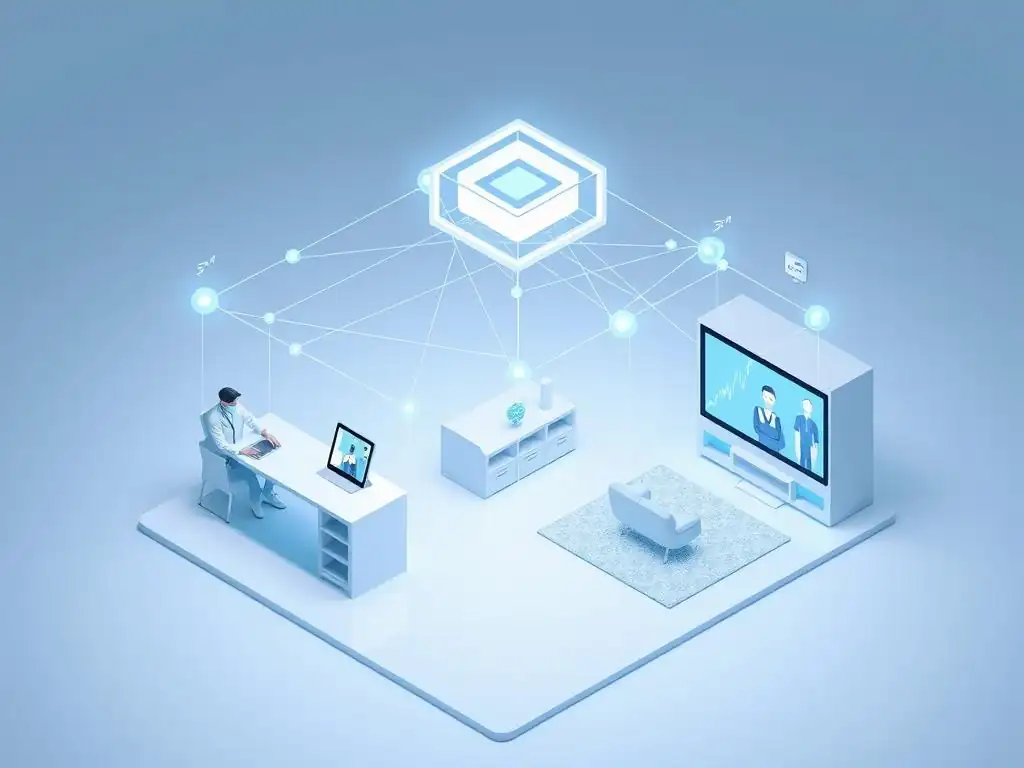
Case Study 1: Reducing Transaction Fees with a Blockchain-Based Telemedicine Platform
Consider a hypothetical telemedicine platform, "MediChain Connect," that utilizes a private, permissioned blockchain for patient payments and provider reimbursements. Instead of relying on traditional payment gateways charging 2-3% per transaction, MediChain Connect integrates a stablecoin payment system built on their blockchain. Patients load stablecoins into a digital wallet and pay providers directly. Transaction fees on this blockchain are minimal, potentially fractions of a cent per transaction, covering network validation costs.
Over a year, a platform processing 100,000 consultations averaging \$50 each would incur roughly \$100,000 to \$150,000 in credit card fees (at 2-3%). By switching to a blockchain-based stablecoin system with a nominal fee structure (e.g., 0.1% or a small fixed fee), the transaction costs could drop to \$5,000 or less, representing a potential saving of over 95% on payment processing fees. This significant reduction in financial transaction costs is a clear example of Blockchain telemedicine cost reduction in practice.
Case Study 2: Secure Data Sharing in Telemedicine Using Blockchain
Imagine a network of rural clinics using telemedicine to connect with specialists in urban hospitals. Traditionally, sharing patient records securely and compliantly between different EHR systems and organizations is cumbersome and expensive, requiring secure FTP, VPNs, or costly data exchange services. A blockchain-based solution, "HealthLink Ledger," is implemented where patient data remains within each clinic's or hospital's secure system, but an index and access permissions are managed on a shared blockchain.
When a rural clinic patient needs a specialist consultation, the patient grants access to their relevant records via a smart contract on HealthLink Ledger. The specialist hospital's system queries the blockchain, verifies permissions, and retrieves the encrypted data directly from the clinic's authorized server.
This eliminates the need for building and maintaining numerous direct, secure connections between every clinic and every hospital. By reducing the complexity and cost of establishing secure data pipelines and streamlining the audit process for data access (as every access is logged immutably on the ledger), the network saves significant amounts on IT infrastructure, integration middleware, and compliance auditing, contributing to Blockchain telemedicine cost reduction for all participating entities.
Case Study 3: Improved Interoperability with Blockchain in Remote Patient Monitoring
A telemedicine provider managing patients with chronic conditions uses various remote patient monitoring (RPM) devices (blood pressure cuffs, glucose meters, smart scales). Data from these devices needs to be integrated into the patient's record and potentially shared with specialists or care managers using different systems. Integrating data streams from multiple device vendors and platforms into an EHR or telemedicine portal is notoriously difficult and expensive.
A blockchain-based interoperability layer is introduced. Each RPM device or gateway registers data hashes and metadata on the blockchain, linked to a patient identifier. Smart contracts manage patient consent for data sharing.
The telemedicine platform and associated care management systems can subscribe to the patient's data stream via the blockchain, receiving notifications when new data is available and retrieving it from a designated secure storage location. This eliminates the need for custom integrations for each device type and system. By providing a standardized, consent-driven method for accessing diverse RPM data streams, the provider reduces integration costs and improves workflow efficiency, demonstrating Blockchain telemedicine cost reduction through enhanced data liquidity.
How Blockchain Reduces Costs: A Detailed Breakdown
Lowering Administrative Overhead with Smart Contracts
Smart contracts are key to reducing the manual administrative tasks that contribute significantly to telemedicine costs. Consider patient onboarding, appointment scheduling, insurance verification, and billing. Currently, these often involve multiple human touchpoints, phone calls, manual data entry, and paperwork. A smart contract can automate steps like sending appointment reminders, verifying insurance details against a payer's blockchain node, or triggering a billing process upon completion of a virtual visit, all based on predefined rules coded into the contract.
For example, a smart contract could automatically check a patient's eligibility and copay amount with an insurance provider's system (connected via the blockchain) when an appointment is booked. Upon the provider marking the visit as complete, the smart contract could automatically submit a claim and initiate a payment request. This level of automation reduces the need for administrative staff to perform these routine checks and follow-ups manually, freeing up personnel for more complex tasks and directly lowering operational overhead – a significant factor in Blockchain telemedicine cost reduction.
Eliminating Third-Party Intermediaries for Cost Savings
Many current telemedicine workflows rely on third-party services for functions like secure messaging, data storage, payment processing, and identity verification. Each intermediary takes a cut or charges a fee, adding to the overall cost. Blockchain's decentralized architecture and peer-to-peer capabilities can facilitate direct interactions between parties. For instance, instead of using a third-party service for secure data exchange, providers and patients can use a blockchain network with cryptographic keys to ensure data privacy and authenticity.
Payment processing, as discussed, can move away from traditional financial institutions to blockchain-based systems with much lower transaction costs. Identity verification can potentially leverage decentralized identity solutions built on blockchain, reducing reliance on third-party identity providers. By cutting out these intermediaries, telemedicine providers can retain more revenue and reduce expenditure on third-party service fees, contributing substantially to Blockchain telemedicine cost reduction. This disintermediation simplifies the operational model and reduces points of failure.
Improved Data Security and Compliance Cost Reduction
As highlighted earlier, data security and compliance are major cost centers. Blockchain's immutable ledger and cryptographic security features directly address these. The cost of recovering from a data breach is astronomical, involving forensics, legal fees, notification costs, and reputational damage. By making data tampering virtually impossible and providing an irrefutable audit trail of access, blockchain drastically reduces the likelihood and impact of breaches. This proactive security posture means less spending on reactive measures and crisis management.
Furthermore, demonstrating compliance becomes more efficient. The transparent and immutable log of all data interactions on the blockchain provides regulators with a clear, verifiable record of how patient data is accessed and managed. This can streamline audit processes, reduce the administrative burden of compiling compliance reports, and lower the risk of costly fines. The inherent security and auditability baked into a blockchain system offer a fundamental way to achieve Blockchain telemedicine cost reduction by proactively addressing major financial risks and compliance requirements.
Enhanced Supply Chain Management for Medical Devices and Pharmaceuticals in Telemedicine
While perhaps less direct than patient-provider interactions, the supply chain supporting telemedicine (e.g., remote monitoring devices, mail-order pharmaceuticals prescribed via telemedicine) also involves costs that blockchain can help reduce. Counterfeit medical devices or drugs pose significant risks and financial losses. A blockchain can provide an immutable record of a product's journey from manufacturer to patient, ensuring authenticity and transparency.
Tracking devices or medications on a blockchain can reduce the costs associated with verifying product legitimacy, managing recalls, and investigating discrepancies. Smart contracts can automate payments and inventory management based on verified delivery events. Although this is a broader healthcare application, its impact on the logistics and integrity of medical supplies used in remote care contributes indirectly but significantly to the overall efficiency and cost-effectiveness of the telemedicine ecosystem, supporting the broader goal of Blockchain telemedicine cost reduction across the entire value chain.
The Future of Blockchain in Telemedicine: A Cost-Effective Vision
Scalability Challenges and Potential Solutions for Blockchain Telemedicine
While the potential for Blockchain telemedicine cost reduction is significant, current blockchain technology faces scalability challenges that need to be addressed for widespread adoption in high-volume healthcare settings. Public blockchains like Bitcoin or Ethereum (prior to major upgrades) have limited transaction throughput (transactions per second, TPS) compared to the demands of a global healthcare system. High transaction fees (gas fees) on some networks can also negate cost savings.
However, significant research and development are focused on improving blockchain scalability. Layer 2 solutions (like rollups), sharding, and the development of faster, more efficient consensus mechanisms in newer blockchain platforms (e.g., some enterprise blockchains or newer public chains) offer promising pathways.
Permissioned blockchains, designed for specific consortia or enterprises, can often achieve higher throughput and lower costs by limiting participation. The future lies in selecting or developing blockchain architectures that can handle the volume and speed required for real-time telemedicine applications while maintaining security and decentralization principles, ensuring that scalability does not become a barrier to realizing Blockchain telemedicine cost reduction.
Regulatory Considerations for Blockchain-Based Telemedicine Systems
The regulatory landscape for blockchain in healthcare, particularly concerning sensitive patient data, is still evolving. While blockchain offers enhanced security and auditability, integrating it with existing regulations like HIPAA, GDPR, and others presents complexities. Questions arise regarding the "right to be forgotten" (GDPR) versus blockchain's immutability, or who is responsible for data stored on a decentralized network. Regulatory clarity and frameworks specifically addressing blockchain's use in healthcare are needed to instill confidence and accelerate adoption.
Compliance with data privacy laws requires careful architectural design, often involving storing PHI off-chain with only hashes and access controls on the ledger. Establishing clear governance models for permissioned networks and ensuring compliance with data residency requirements are also critical. Navigating these regulatory hurdles adds initial costs and complexity, which must be weighed against the long-term benefits of Blockchain telemedicine cost reduction. Collaboration between technology developers, healthcare providers, and regulatory bodies is essential to establish clear guidelines and standards.
The Long-Term Impact of Blockchain on Telemedicine Accessibility and Affordability
Looking ahead, the successful integration and scaling of blockchain in telemedicine hold the potential for transformative impacts on accessibility and affordability. By driving down operational costs related to administration, transactions, security, and interoperability, telemedicine providers can potentially lower the cost of services for patients. Reduced costs for providers can translate into more competitive pricing, making virtual care more accessible to a wider population, including underserved communities.
Furthermore, improved data sharing facilitated by blockchain can lead to more efficient and coordinated care, potentially reducing overall healthcare expenditures by preventing redundant services and improving patient outcomes. The long-term vision is a more streamlined, secure, and cost-effective telemedicine ecosystem where blockchain acts as a foundational layer, ultimately contributing to a healthier and more equitable society by expanding access to affordable healthcare services. The continued focus on Blockchain telemedicine cost reduction is not just about efficiency; it's about enabling a future where quality care is within reach for everyone.
Conclusion: Blockchain's Role in Affordable Telemedicine
Summarizing the Potential for Blockchain Telemedicine Cost Reduction
Blockchain technology offers a compelling suite of solutions to address the significant operational costs inherent in traditional telemedicine systems. By providing a decentralized, secure, and transparent ledger, blockchain can reduce expenses related to high transaction fees and intermediaries through peer-to-peer models and smart contracts. It directly tackles the substantial costs of data security and compliance by enhancing data integrity, providing immutable audit trails, and mitigating the risk of costly data breaches. Furthermore, blockchain's ability to facilitate secure and consent-driven data exchange between disparate systems promises to significantly lower the complex and expensive barriers to interoperability that currently plague healthcare IT. Real-world (or illustrative) use cases highlight the tangible potential for savings in payment processing, secure data sharing, and integrating diverse medical devices.
While challenges related to scalability and regulatory clarity persist, ongoing technological advancements and collaborative efforts are paving the way for broader adoption. The core mechanisms of disintermediation, automation via smart contracts, enhanced security, and improved data liquidity are the fundamental drivers behind the potential for Blockchain telemedicine cost reduction. Implementing blockchain requires careful planning and investment, but the long-term benefits in terms of efficiency, security, and reduced operational expenditure are substantial.
Call to Action: Embracing Blockchain for a More Efficient and Accessible Telemedicine Future
The evidence suggests that blockchain is not merely a theoretical concept for healthcare but a practical technology with the power to reshape the economic landscape of telemedicine. Healthcare providers, technology developers, and policymakers should proactively explore and pilot blockchain-based solutions. Investing in understanding this technology, developing compliant and scalable platforms, and collaborating on industry standards are critical next steps.
Embracing blockchain is an opportunity to move towards a more efficient, secure, and ultimately more affordable telemedicine future. By leveraging blockchain's unique capabilities to drive down costs, the healthcare industry can expand access to care, improve patient outcomes, and build a more resilient and equitable system. The journey towards widespread Blockchain telemedicine cost reduction requires innovation, collaboration, and a commitment to harnessing the power of decentralized technologies for the benefit of all.
Frequently Asked Questions
How can blockchain technology contribute to blockchain telemedicine cost reduction?
Blockchain can streamline processes like data management and payment processing in telemedicine, reducing administrative overhead and operational inefficiencies, leading to cost savings. This involves secure record keeping and automated transactions.
What are some specific areas where blockchain can lower telemedicine operational costs?
Blockchain can reduce costs associated with data storage, data security, and interoperability between different healthcare systems. It also simplifies billing processes and reduces the risk of fraud.
How does blockchain enhance data security in telemedicine to potentially impact costs?
By providing a secure and immutable record of patient data, blockchain minimizes the risk of data breaches and unauthorized access. This reduces the potential for costly security incidents and compliance penalties.
What role does decentralization play in reducing costs within a blockchain-based telemedicine system?
Decentralization can eliminate the need for costly intermediaries in data management and transaction processing. This can lead to significant savings in administrative fees and infrastructure maintenance.
How might smart contracts contribute to blockchain telemedicine cost reduction?
Smart contracts can automate tasks like insurance claims processing and prescription refills, reducing the need for manual intervention. This leads to greater efficiency and lower administrative costs.
Final Reflection: Embracing Blockchain for Accessible Healthcare
The exploration of blockchain's potential in telemedicine reveals a compelling intersection of technology and healthcare accessibility. The promise of blockchain telemedicine cost reduction is not just a theoretical possibility, but a tangible pathway towards more efficient and equitable healthcare delivery in a world increasingly reliant on remote solutions. The insights shared throughout this article highlight the urgent need to explore innovative solutions that can alleviate the financial burdens associated with telemedicine operations, ultimately benefiting both providers and patients.
The journey towards widespread adoption of blockchain in telemedicine is undoubtedly complex, yet the potential rewards are immense. Witnessing the evolution of telemedicine, and understanding how blockchain can address its inherent cost challenges, has reinforced my belief in the power of technology to democratize access to essential services. The future of healthcare is connected, and blockchain has the potential to be the connective tissue that makes it all work.
This quote encapsulates the transformative potential we've discussed, urging us to consider the broader implications of secure, transparent, and cost-effective healthcare solutions.
As we conclude this exploration, I invite you to consider how you can contribute to this evolving landscape. Whether you are a healthcare professional, a technology enthusiast, or simply a concerned citizen, your awareness and advocacy can play a crucial role in shaping the future of healthcare. Embrace the possibilities, champion innovation, and let us collectively strive towards a future where accessible and affordable healthcare is a reality for all.
Embrace the Future: Revolutionize Telemedicine Efficiency!
Thank you for exploring how blockchain technology can potentially transform the landscape of telemedicine and reduce operational costs. Now that you've gained valuable insights, it's time to put your knowledge into action.
Here's how you can get involved:
- Investigate specific blockchain solutions that address telemedicine operational challenges in your sector, focusing on verifiable use-case examples.
- Share your newfound insights! Spark a conversation about the potential of blockchain in telemedicine by posting this article on LinkedIn or Twitter. Don't forget to include #BlockchainTrends and your key takeaways.
- Consider contributing to open-source blockchain projects aimed at improving healthcare data security and accessibility, even if it's simply providing feedback or documentation.
What telemedicine processes do you think are most suitable for blockchain optimization, and what challenges might arise? Share your thoughts in the comments below!
Leave a Reply