
Decentralized Autonomous Organizations (DAOs) in Healthcare: A New Model for Governance?


Welcome to Blockchain Trends, your source for understanding the revolutionary impact of blockchain beyond the headlines.
Intrigued by the potential of decentralized systems? Dive in to discover how blockchain is reshaping industries. This article explores a fascinating application: DAO healthcare governance models. Can these innovative structures revolutionize healthcare administration and decision-making? Read on to uncover the possibilities and challenges ahead, and explore how DAOs might just be the future of healthcare governance.
- Decentralized Autonomous Organizations (DAOs) in Healthcare: A New Model for Governance?
- Current Challenges in Healthcare Governance: Why DAOs Matter
- DAO Healthcare Governance Models: Exploring Different Approaches
- Real-World Examples and Case Studies of DAOs in Healthcare
- Overcoming the Challenges of Implementing DAOs in Healthcare
- The Future of DAO-Based Healthcare: A Vision for Transformation
- Conclusion: Embracing DAO Healthcare Governance for a Better Future
-
Frequently Asked Questions
- What is a DAO and how does it relate to healthcare?
- How can DAOs improve healthcare governance compared to traditional models?
- What are some potential use cases for DAOs in the healthcare industry?
- What are the main challenges to implementing DAO healthcare governance models?
- How might DAO healthcare governance models evolve in the future?
- Final Reflection: Embracing Decentralized Healthcare Futures
- Revolutionize Healthcare: Join the DAO Movement!
Decentralized Autonomous Organizations (DAOs) in Healthcare: A New Model for Governance?
What is a Decentralized Autonomous Organization (DAO)?
A Decentralized Autonomous Organization, or DAO, represents a novel form of organizational structure that operates through rules encoded as a computer program, known as a smart contract, which is transparent, controlled by the organization's members, and not influenced by a central government or single entity. These rules are typically deployed on a blockchain, making their execution verifiable and immutable.
Membership and voting rights are often managed through tokens, allowing participants to propose and vote on decisions related to the organization's operations, funding, and future direction. This distributed control mechanism aims to create a more democratic, transparent, and efficient way for groups to collaborate and manage resources.
The core principle of a DAO lies in automating governance and operations through code, reducing reliance on traditional hierarchical management and intermediaries. Decisions are made collectively by the token holders, whose voting power is often proportional to their holdings or determined by other predefined metrics within the smart contract.
This distributed governance model ensures that once a proposal reaches a predetermined consensus threshold (e.g., 51% or 67% of votes), the smart contract automatically executes the agreed-upon action. This programmatic execution minimizes potential for human error, corruption, or censorship, providing a high degree of trust and predictability in the organization's activities.
The Promise of DAOs for Healthcare Innovation
The healthcare sector, often characterized by complex bureaucratic structures, data siloes, and significant trust requirements, stands to benefit considerably from the application of DAO principles. DAOs offer a framework for building decentralized networks that can manage shared resources, coordinate collaborative research, govern access to sensitive data, and even facilitate the development and distribution of medical innovations. By leveraging blockchain technology and smart contracts, DAOs can introduce unprecedented levels of transparency and auditability into processes like funding allocation for research, managing clinical trials, or tracking pharmaceutical supply chains, areas notoriously prone to inefficiencies and lack of visibility.
Furthermore, DAOs can empower stakeholders who traditionally have limited influence in healthcare decision-making, such as patients and researchers. Through token-based governance, individuals can directly participate in determining research priorities, approving funding for specific projects, or overseeing the ethical use of health data.
This shift towards a more inclusive and participatory model could accelerate innovation by breaking down traditional barriers and fostering a global community focused on addressing critical health challenges. The potential extends to creating marketplaces for health data where individuals control access and potentially monetize their information, or funding mechanisms that bypass traditional venture capital models to support promising, early-stage medical breakthroughs.
Key Benefits of DAO Healthcare Governance
One of the primary advantages of implementing DAO healthcare governance models is enhanced transparency and trust. All transactions and governance decisions within a DAO are recorded on a public blockchain, making them immutable and auditable by anyone. This level of openness can significantly reduce fraud, waste, and abuse in areas like grant funding, procurement, and supply chain management.
For instance, tracking the flow of funds for medical research or the movement of pharmaceuticals becomes verifiable at every step, building greater confidence among patients, researchers, and regulatory bodies. This inherent transparency addresses a major pain point in traditional healthcare systems where opaque processes can erode trust.
Another significant benefit is improved efficiency and reduced administrative overhead. By automating governance processes through smart contracts, DAOs can streamline decision-making and resource allocation. Proposals can be submitted, voted on, and executed automatically based on predefined rules, removing the need for lengthy meetings, bureaucratic approvals, and manual processing.
This can accelerate the pace of research, drug development, and service delivery. Additionally, DAO healthcare governance models can foster greater collaboration by providing a neutral, secure platform for multiple parties – researchers, institutions, patients, and funders – to work together towards common goals, such as pooling resources for rare disease research or sharing data for public health initiatives, all governed by collectively agreed-upon rules.
Current Challenges in Healthcare Governance: Why DAOs Matter
Centralized Control and Lack of Transparency
Traditional healthcare governance structures are often highly centralized, with decision-making power concentrated within large institutions, government agencies, or corporate boards. This centralized control can lead to slow decision-making processes, a lack of responsiveness to the needs of patients and healthcare professionals, and a significant power imbalance. Decisions regarding research funding, drug approval, data access, and resource allocation are often made behind closed doors, with limited public input or oversight. This opacity can breed distrust and make it difficult for external stakeholders to understand or influence the priorities and operations of key healthcare entities.
The lack of transparency extends to financial flows and operational activities within the healthcare system. Tracing how funds are spent, verifying the authenticity of medical products, or auditing administrative processes can be challenging within complex, siloed legacy systems. This makes the system vulnerable to inefficiencies, potential corruption, and difficulty in identifying bottlenecks or areas for improvement. The inherent design of DAO healthcare governance models, with their reliance on public blockchains and automated, transparent processes, directly confronts these issues by distributing control and making all relevant activities and decisions publicly verifiable, offering a compelling alternative to opaque centralized systems.
Inefficient Decision-Making Processes
Decision-making in traditional healthcare organizations is frequently hampered by bureaucracy, hierarchical structures, and reliance on manual processes. Gaining approval for new initiatives, allocating budgets, or implementing policy changes can involve navigating multiple layers of management and committees, leading to significant delays. This sluggishness can impede innovation, slow down the adoption of new technologies, and delay critical responses to public health crises. The time it takes to move from a research proposal to approved funding, or from clinical trial results to regulatory approval, can be years, partly due to complex governance workflows.
Moreover, traditional decision-making processes often rely on subjective evaluations and can be influenced by personal biases or political considerations. Reaching consensus among diverse stakeholders can be difficult and time-consuming. DAO healthcare governance models offer a potential solution by automating decision-making based on predefined, transparent rules and collective voting. This can significantly speed up processes like grant approvals, protocol amendments in trials, or resource allocation for specific health initiatives. By moving towards a more automated, consensus-driven approach, DAOs can help healthcare organizations become more agile and responsive to evolving needs and scientific advancements.
Data Silos and Interoperability Issues
A persistent and significant challenge in healthcare is the fragmentation of patient data across various providers, institutions, and systems. Electronic Health Records (EHRs) are often stored in proprietary databases that do not easily communicate with each other, creating data siloes. This lack of interoperability hinders coordinated patient care, makes it difficult to conduct large-scale research, and prevents individuals from having a comprehensive view or control over their own health information. Sharing data between different healthcare entities is often a cumbersome, manual, and legally complex process, limiting the potential for data-driven insights and personalized medicine.
These data siloes also create challenges for auditing and verifying information related to patient outcomes, treatment effectiveness, or the safety of medical products. The inability to easily access and link data from different sources compromises the integrity of research and public health surveillance. While not solely a governance issue, the lack of a unified, secure, and patient-controlled data layer underscores the need for a new model.
DAO healthcare governance models could potentially oversee decentralized networks where patients control access to their data, granting permission to researchers or providers through smart contracts. Such a model, governed by the community, could facilitate secure data sharing and aggregation for research while maintaining patient privacy and control, addressing the fundamental interoperability problem in a trust-minimized way.
DAO Healthcare Governance Models: Exploring Different Approaches
DAOs for Research Funding and Allocation
One promising application of DAO healthcare governance models is in the realm of medical research funding and allocation. Traditional grant processes can be slow, biased, and opaque, with decisions often concentrated within a few committees. A research funding DAO could allow token holders – potentially including researchers, patients, and funders – to collectively propose, evaluate, and vote on research projects.
Proposals could be submitted to the DAO, and community members could review their scientific merit, potential impact, and feasibility. Funding, held within the DAO's treasury, would be automatically disbursed via smart contracts upon successful proposal approval and potentially tied to milestones.
This model offers several advantages. It democratizes the funding process, allowing a wider range of voices to influence research priorities. It introduces transparency, as all proposals, votes, and funding transactions are recorded on the blockchain.
It can also potentially accelerate funding cycles compared to traditional mechanisms. For example, VitaDAO, focused on longevity research, allows its members to vote on funding cutting-edge research projects. Since its inception, VitaDAO has allocated millions of dollars (specific figures fluctuate but are in the range of tens of millions cumulatively) to various research initiatives, demonstrating the viability of this DAO healthcare governance model for directing capital towards specific scientific goals based on community consensus rather than centralized authority.
DAOs for Patient Data Management and Privacy
Patient data management and privacy are critical concerns where DAO healthcare governance models could offer significant improvements. Currently, patients often have limited control over their health records, which are scattered across various healthcare providers. A DAO could govern a decentralized network designed to store and manage patient data, giving individuals sovereign control over their information. Patients could use tokens to grant specific permissions to researchers, doctors, or applications, allowing access to their data under predefined conditions enforced by smart contracts. The DAO community could collectively decide on policies regarding data standards, access controls, and privacy protocols.
This approach shifts the power dynamic from institutions to individuals, enabling patients to decide who accesses their sensitive health information and for what purpose. It could also facilitate secure, privacy-preserving data sharing for research or public health initiatives. For instance, Patientory DAO aims to empower patients with control over their health data through its platform.
While specific adoption metrics can vary, the model proposes a system where patients manage access permissions via a decentralized application, with governance rules potentially overseen by a DAO. This DAO healthcare governance model focuses on creating a patient-centric ecosystem where data utility for research and care is balanced with individual privacy and control, managed by a community of stakeholders rather than a single corporate entity.
DAOs for Pharmaceutical Supply Chain Transparency
Ensuring the integrity and transparency of the pharmaceutical supply chain is vital to combat counterfeit drugs and ensure patient safety. DAO healthcare governance models can be applied to create decentralized, transparent tracking systems for pharmaceuticals. A DAO could govern a network where every participant in the supply chain – manufacturers, distributors, pharmacies, and potentially patients – records the movement of drugs on a blockchain. The DAO community could set and enforce rules regarding data entry, verification processes, and handling of discrepancies, all automated through smart contracts.
This system would provide an immutable, verifiable record of a drug's journey from production to the patient, making it significantly harder to introduce counterfeit products or divert legitimate ones. Any participant could audit the chain of custody on the blockchain.
While specific large-scale pharmaceutical DAOs are still emerging, pilot projects using blockchain for supply chain tracking have shown promising results in increasing transparency and reducing errors. A DAO healthcare governance model layered on top could provide a decentralized mechanism for updating the rules of this tracking system, resolving disputes, and ensuring the network evolves based on the needs of all participants, rather than being controlled by a single company or consortium.
DAOs for Clinical Trial Management and Oversight
Clinical trials are complex, expensive, and often face challenges related to data integrity, patient recruitment, and regulatory compliance. DAO healthcare governance models could streamline and improve the management and oversight of clinical trials. A DAO could govern a decentralized platform where trial protocols, patient consent forms (managed via smart contracts), data collection, and results are recorded on a blockchain, ensuring data integrity and auditability. The DAO community, potentially including researchers, patients, and independent monitors, could collectively oversee trial progress, vote on protocol amendments, and verify data submissions.
This approach enhances transparency in trial execution and data handling, which is crucial for regulatory approval and public trust. It can also facilitate patient recruitment by creating a more accessible and trustworthy platform. Furthermore, smart contracts could automate payments to participants or sites based on completed milestones, improving efficiency.
While a fully decentralized clinical trial DAO is a complex undertaking, initiatives are exploring components of this model. For instance, a DAO could govern a registry of clinical trial participants or oversee the peer review and publication of trial results. This DAO healthcare governance model aims to make clinical research more efficient, transparent, and trustworthy by distributing control and leveraging automated, verifiable processes.
Real-World Examples and Case Studies of DAOs in Healthcare
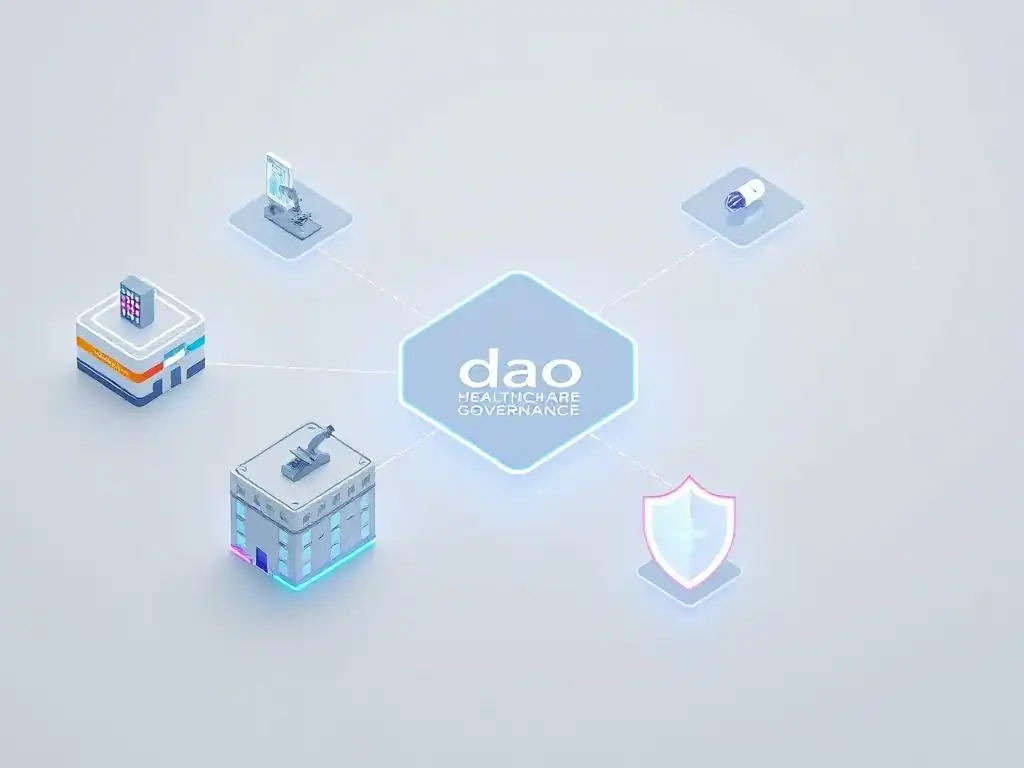
VitaDAO: Funding Longevity Research
VitaDAO stands as a prominent example of a DAO applying decentralized governance to the healthcare sector, specifically focusing on funding early-stage longevity research. Launched with the mission to accelerate research and development in human health and lifespan extension, VitaDAO allows its token holders to propose, evaluate, and vote on research projects and intellectual property (IP) acquisition opportunities.
The DAO manages a treasury of funds, primarily in cryptocurrency, which is allocated based on community consensus. As of late 2023, VitaDAO had invested millions of dollars, reportedly allocating over $5 million across more than a dozen research projects at universities and research institutions globally, including studies at institutions like the Buck Institute for Research on Aging and the Scheibye-Liew Lab.
The governance process in VitaDAO typically involves members submitting proposals for research funding or IP purchases. These proposals undergo a rigorous evaluation process by expert working groups composed of scientists and domain experts within the DAO. Following this initial review, proposals are put to a community-wide vote using the DAO's governance token, VITA.
Successful proposals receive funding directly from the DAO's treasury via smart contracts, often tied to specific milestones to ensure progress and accountability. This DAO healthcare governance model effectively bypasses traditional grant application processes, enabling a faster and more democratic allocation of capital towards promising, often overlooked, areas of longevity science, showcasing the potential for decentralized funding mechanisms in healthcare research.
Molecule DAO: Decentralizing Biotech IP
Molecule is a protocol that facilitates the decentralized exchange and collaboration around pharmaceutical and biotech intellectual property (IP). While Molecule itself is a protocol, it has fostered the creation of DAOs, such as the Molecule Discovery DAO, focused on specific therapeutic areas or research objectives.
The core idea is to break down large, complex IP assets into smaller, tradable units (often represented as tokens) and allow communities (governed by DAOs) to curate, fund, and develop these assets. This model aims to increase liquidity and access to promising research that might otherwise languish in academic labs or be overlooked by large pharmaceutical companies.
A key aspect of the Molecule ecosystem's DAO healthcare governance models is enabling collective ownership and governance over research IP. For example, a DAO could acquire the rights to a promising drug candidate from a university. Token holders in that DAO would then collectively decide on the next steps for developing the asset, such as funding preclinical studies, forming partnerships, or even planning clinical trials.
The governance mechanisms allow members to vote on budgets, development strategies, and potential licensing deals. This decentralized approach to biotech IP management, while still in its early stages, represents a significant departure from traditional licensing and R&D models, potentially unlocking new avenues for collaboration and investment in drug discovery and development governed by a distributed community.
Patientory DAO: Patient-Controlled Health Records
Patientory is a platform focused on giving patients greater control over their health data. While Patientory has evolved since its initial conception, the underlying philosophy aligns with DAO principles of decentralized governance and patient empowerment. The aim is to create a secure, blockchain-based network where patients can store their Electronic Health Records (EHRs) and control who has access to them. The vision includes a governance model where the network's participants, including patients, providers, and developers, could collectively make decisions about the platform's rules, data standards, and future development through a DAO structure.
In this envisioned DAO healthcare governance model, patients would theoretically use tokens to vote on proposals related to privacy settings, data sharing agreements, and features of the Patientory platform. Healthcare providers and developers building applications on the network might also participate in governance, creating a multi-stakeholder ecosystem.
The goal is to move away from centralized control of sensitive health information by institutions and towards a system where individuals are sovereign over their data, with the governance rules overseen by a community rather than a single corporate entity. While full DAO implementation for platform-wide governance is an ongoing process, the concept highlights how decentralized autonomous organizations can underpin initiatives aimed at enhancing patient data control and privacy through collective decision-making.
Overcoming the Challenges of Implementing DAOs in Healthcare
Regulatory Uncertainty and Compliance
Implementing DAO healthcare governance models faces significant hurdles related to regulatory uncertainty and compliance. The healthcare industry is one of the most heavily regulated sectors globally, with stringent rules governing patient data privacy (e.g., HIPAA in the US, GDPR in Europe), drug development and approval (e.g., FDA, EMA), and the conduct of clinical trials.
The legal status of DAOs themselves is still evolving, and it is unclear how existing regulations apply to decentralized, autonomous entities operating on a blockchain. For example, determining liability in case of errors or adverse events within a DAO-governed process, such as a clinical trial or data management system, is complex.
Navigating this regulatory landscape requires careful consideration. DAO structures in healthcare must be designed to meet existing compliance requirements, which may involve incorporating legal wrappers or hybrid models that combine decentralized governance with traditional legal entities where necessary.
Ensuring HIPAA or GDPR compliance, for instance, requires robust data security and access control mechanisms that must be integrated into the DAO's smart contracts and operational framework. Legal experts specializing in both blockchain and healthcare regulation are essential to develop DAO healthcare governance models that are both innovative and legally sound, providing a clear path for adoption within the existing regulatory environment.
Security and Data Protection Concerns
While blockchain technology offers inherent security features like immutability and cryptographic verification, implementing DAO healthcare governance models introduces new security and data protection challenges. Smart contracts, the backbone of DAOs, are susceptible to coding errors and vulnerabilities that could be exploited, leading to loss of funds, data breaches, or disruption of operations. Given the sensitive nature of health data and the critical functions healthcare DAOs might perform (e.g., funding research, managing clinical trials), security flaws could have severe consequences. Protecting highly sensitive patient information within a decentralized framework requires advanced cryptographic techniques and careful smart contract design.
Ensuring robust data protection goes beyond just smart contract security. It involves securing the entire ecosystem, including user interfaces, off-chain data storage (if used), and interactions with traditional systems. Compliance with data protection regulations like HIPAA and GDPR necessitates specific technical and organizational measures, such as encryption of data at rest and in transit, access controls, and audit trails, which must be integrated into the DAO's architecture.
Continuous security audits, bug bounty programs, and formal verification of smart contracts are crucial steps to minimize risks. DAO healthcare governance models must prioritize security by design, implementing best practices from both blockchain development and healthcare data protection to build trustworthy systems capable of handling sensitive information securely.
Technical Complexity and Scalability
The technical complexity of building and maintaining robust DAO healthcare governance models presents another significant challenge. Developing secure, efficient, and user-friendly smart contracts and decentralized applications requires specialized expertise in blockchain technology, cryptography, and software engineering. Integrating these decentralized systems with existing healthcare infrastructure, which often relies on legacy IT systems, adds another layer of complexity. Ensuring interoperability between blockchain-based DAO platforms and traditional Electronic Health Record (EHR) systems or research databases is crucial for practical adoption but technically demanding.
Scalability is also a major concern. As the number of participants and transactions increases within a healthcare DAO (e.g., managing thousands of patients' data permissions or millions of supply chain transactions), the underlying blockchain network must be able to handle the load efficiently and cost-effectively. Public blockchains like Ethereum, while popular for DAOs, can face congestion and high transaction fees, which might be prohibitive for frequent, low-value operations common in healthcare.
Exploring alternative blockchain platforms or Layer 2 scaling solutions designed for higher throughput and lower costs is necessary. Successful DAO healthcare governance models will need to leverage scalable and technically mature blockchain solutions to support widespread adoption and handle the demands of real-world healthcare operations.
Community Building and Governance Participation
The success of any DAO healthcare governance model fundamentally relies on active and informed participation from its community members. Building a diverse and engaged community of stakeholders – including patients, healthcare professionals, researchers, developers, and funders – is essential. However, encouraging meaningful participation in governance processes, such as voting on proposals or engaging in discussions, can be challenging. Many potential participants may lack the technical understanding of blockchain or the time and resources to actively engage in complex governance decisions. Ensuring that voting mechanisms are accessible and that information is presented clearly is vital.
Moreover, designing effective governance mechanisms that prevent centralization of power (e.g., preventing 'whale' token holders from dominating votes) and mitigate potential Sybil attacks or malicious actors is crucial. The rules encoded in the smart contracts must promote fair representation and robust decision-making. Educating potential members about the DAO's purpose, governance structure, and the impact of their participation is an ongoing effort. Successful DAO healthcare governance models will require significant investment in community building, education, and designing intuitive governance interfaces that lower the barrier to entry and encourage broad, informed participation from the diverse stakeholders within the healthcare ecosystem.
The Future of DAO-Based Healthcare: A Vision for Transformation
Increased Patient Empowerment and Control
The future of DAO-based healthcare holds the promise of significantly increased patient empowerment and control over their health journey. DAO healthcare governance models centered around patient data can shift ownership and access permissions from institutions back to individuals. Patients could potentially aggregate their health records from various providers onto a secure, decentralized platform governed by a DAO they participate in. Through token-based governance, they could grant granular access permissions to doctors, specialists, or researchers for specific periods or purposes, all recorded transparently on the blockchain. This level of control goes far beyond current patient portals, enabling true data sovereignty.
Beyond data, DAOs could empower patients to have a voice in decisions that affect their care and research priorities. Patient advocacy groups could form or participate in DAOs that fund research into specific diseases, collectively deciding which projects are most promising or aligned with patient needs. DAOs could also govern platforms for shared decision-making regarding treatment options or care plans, involving patients and their families more directly. This vision sees DAO healthcare governance models fostering a more collaborative and patient-centric healthcare ecosystem where individuals are not just recipients of care but active participants and decision-makers.
Enhanced Collaboration and Innovation in Healthcare
DAO healthcare governance models are poised to foster unprecedented levels of collaboration and innovation within the sector. By providing a trust-minimized framework for multiple parties to interact and manage shared resources on a blockchain, DAOs can break down institutional siloes and facilitate cross-organizational collaboration. Researchers from different institutions could pool resources and share data (under DAO-governed privacy rules) for collaborative studies. Startups and large pharmaceutical companies could collaborate on drug discovery or clinical trials under transparent, automated agreements governed by a DAO.
Funding DAOs, like VitaDAO, demonstrate the potential to accelerate innovation by democratizing access to capital for promising research that might struggle to find traditional funding. By enabling a global community of experts and enthusiasts to collectively identify and fund research projects, DAOs can support diverse and unconventional approaches. Furthermore, DAOs could govern open science initiatives, providing a transparent platform for sharing research data, protocols, and findings, speeding up the pace of discovery. This future vision sees DAO healthcare governance models creating dynamic, collaborative ecosystems that accelerate scientific progress and the development of new therapies and healthcare solutions.
Improved Efficiency and Transparency in Healthcare Operations
The adoption of DAO healthcare governance models has the potential to dramatically improve efficiency and transparency across various healthcare operations. Automating governance processes through smart contracts can reduce administrative overhead, speed up decision cycles, and decrease reliance on manual, error-prone procedures. For example, automating grant disbursements based on milestones or managing clinical trial payments via smart contracts can streamline financial operations. Transparent recording of transactions and decisions on a blockchain makes processes auditable and reduces opportunities for fraud or inefficiency.
Supply chain management DAOs could provide real-time, transparent tracking of pharmaceuticals and medical devices, improving logistics, reducing waste, and combating counterfeiting. DAO healthcare governance models could also be applied to manage credentialing for healthcare professionals, verify the authenticity of medical devices, or even manage decentralized insurance pools with transparent claims processing.
This future envisions a healthcare system where many operational processes are automated, transparent, and governed by collective consensus, leading to a more efficient, trustworthy, and ultimately more affordable delivery of care. The application of DAO healthcare governance models across administrative, operational, and research functions promises a fundamental transformation towards a more effective healthcare ecosystem.
Conclusion: Embracing DAO Healthcare Governance for a Better Future
Frequently Asked Questions
What is a DAO and how does it relate to healthcare?
A DAO, or Decentralized Autonomous Organization, is an internet-native organization governed by rules encoded in a smart contract on a blockchain. In healthcare, DAOs can provide a transparent and democratic way to manage resources, make decisions, and improve healthcare governance.
How can DAOs improve healthcare governance compared to traditional models?
Traditional healthcare governance is often hierarchical and opaque. DAOs offer increased transparency, greater stakeholder participation through token-based voting, and automated execution of decisions, leading to more efficient and equitable outcomes.
What are some potential use cases for DAOs in the healthcare industry?
DAOs can be used for various purposes, including managing clinical trial data, funding medical research, governing patient data access, and even overseeing hospital operations in a decentralized manner.
What are the main challenges to implementing DAO healthcare governance models?
Challenges include regulatory uncertainty, the need for robust security measures to protect sensitive patient data, ensuring broad stakeholder participation, and addressing potential biases in the token distribution and voting processes.
How might DAO healthcare governance models evolve in the future?
Future evolution may involve greater integration with existing healthcare systems, the development of standardized DAO governance frameworks, and increased adoption as regulations become clearer, ultimately leading to more decentralized and patient-centric healthcare ecosystems.
Final Reflection: Embracing Decentralized Healthcare Futures
The exploration of Decentralized Autonomous Organizations (DAOs) in healthcare governance reveals a potent intersection of technology and patient empowerment. The promise of transparent, community-driven decision-making in healthcare is no longer a distant dream, but a tangible possibility. As we've seen, various DAO healthcare governance models offer unique approaches to addressing critical challenges, from data security to research funding, and their potential impact on the future of healthcare is profound.
The shift towards decentralized governance is not merely a technological advancement; it represents a fundamental reimagining of power dynamics within the healthcare ecosystem. This shift necessitates a critical examination of our existing structures and a willingness to embrace innovative solutions that prioritize patient autonomy and collective well-being. The future of healthcare is participatory, proactive, personalized and predictive.
- Leroy Hood. This quote encapsulates the essence of what DAOs can bring to the table: a healthcare system that is truly centered around the individual.
Now, as you consider the potential of DAO healthcare governance models, I invite you to reflect on your own role in shaping this future. How can you contribute to fostering a more transparent, equitable, and patient-centric healthcare system? Consider the possibilities, engage in the conversation, and actively participate in building a future where healthcare decisions are made collaboratively, for the benefit of all.
Revolutionize Healthcare: Join the DAO Movement!
Thank you for exploring how decentralized autonomous organizations can transform healthcare governance. We hope this article has highlighted the potential for increased transparency, efficiency, and patient empowerment in the industry. Now, it's time to take action.
Here are a few ways you can get involved:
- Dive into the world of healthcare DAOs by researching existing projects and initiatives. Understand their structures, goals, and impact to gain a clearer picture of their possibilities.
- Share this article with your network of healthcare professionals and blockchain enthusiasts. Let’s start a conversation about the future of governance in healthcare.
- Consider contributing your skills and expertise to a healthcare DAO. Whether you're a developer, medical professional, or legal expert, your input can help shape the future of decentralized healthcare.
What specific challenge in healthcare do you believe a DAO could most effectively address? Share your thoughts in the comments below!
Leave a Reply