
Decentralized Telemedicine Platforms: The Future of Global Healthcare Access?

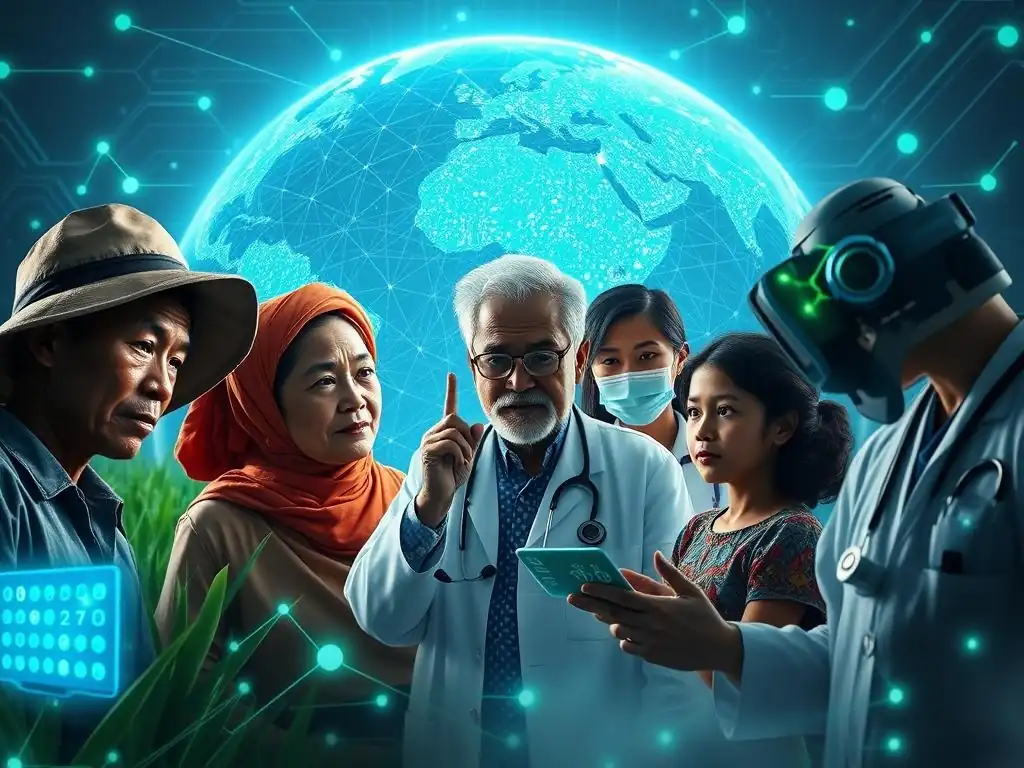
Welcome to Blockchain Trends, your guide to understanding the revolutionary impact of blockchain technology. Beyond the buzzwords, we delve into real-world applications, transformative solutions, and the future of decentralized systems.
Curious about how blockchain is reshaping healthcare? Our latest article, "Decentralized Telemedicine Platforms: The Future of Global Healthcare Access?" explores how blockchain can unlock unparalleled global healthcare access, and it might just change the way you see the future of medicine. Dive in to discover the potential and the challenges that lie ahead, and join the conversation about a more equitable and efficient healthcare system.
- Case Studies: Blockchain Telemedicine in Action
- Future Trends in Blockchain Telemedicine
- Addressing Challenges and Limitations
- Conclusion: Towards Equitable Healthcare Access
-
Frequently Asked Questions
- What is the potential impact of blockchain telemedicine on global healthcare access?
- How can blockchain technology enhance the security and privacy of patient data in telemedicine?
- What are some of the key challenges in implementing blockchain solutions for telemedicine?
- How does blockchain facilitate decentralized telemedicine platforms, and what are the benefits?
- What role does smart contracts play in blockchain telemedicine, and how can they improve healthcare services?
- Final Reflection: Embracing Decentralized Healthcare's Potential
- Reimagine Healthcare: Join the Telemedicine Revolution!
Case Studies: Blockchain Telemedicine in Action
Case Study 1: Estonia's E-Health Records System - National-Level Interoperability
Estonia has long been a pioneer in digital governance, and its e-Health system, built upon the X-Road data exchange layer, serves as a compelling, albeit foundational, example of secure health data infrastructure essential for advanced telemedicine. While not a pure telemedicine platform itself, the system demonstrates how secure, interoperable data management, a core requirement for effective blockchain telemedicine global healthcare access, can function at a national scale.
Operational for many years, the X-Road allows various healthcare providers, from hospitals to family doctors, to securely exchange patient data in real-time, significantly improving efficiency and coordination of care for the nation's nearly 1.3 million citizens.
Crucially, Estonia enhanced its e-Health system's security and integrity by integrating blockchain technology, specifically Guardtime's Keyless Signature Infrastructure (KSI). This layer was added to ensure that health records, once entered into the system, cannot be tampered with undetected. Every interaction with the data is cryptographically timestamped and recorded on a distributed ledger, providing an immutable audit trail. This level of data integrity and auditable access is paramount for building trust in digital health systems and underpins the potential of blockchain telemedicine global healthcare access solutions that rely on secure patient information sharing across different providers and potentially national borders.
Case Study 2: MedChain - Securing Medical Data Sharing
MedChain is an example of a project specifically focused on leveraging blockchain technology to create a decentralized platform for medical data sharing. Its primary goal is to empower patients with control over their health records while enabling secure and transparent sharing with authorized parties, such as doctors, specialists, or researchers. By placing patient data on a blockchain-based network, MedChain aims to eliminate the vulnerabilities associated with centralized databases and provide a verifiable history of data access and modification.
Projects like MedChain demonstrate key benefits for blockchain telemedicine global healthcare access. They facilitate more secure remote consultations because healthcare providers can access verified patient histories with explicit patient consent, recorded immutably on the ledger. This enhances trust and reduces the risk of data breaches or unauthorized access that can plague traditional telemedicine systems. The ability to share data securely across different healthcare entities, potentially even internationally, is a vital step towards breaking down information silos and enabling more effective global health initiatives powered by decentralized telemedicine.
Impact Analysis: Decentralized Telemedicine Benefits
The case studies, alongside the inherent capabilities of blockchain, highlight the significant impacts decentralized telemedicine can have. Firstly, enhanced data security and privacy build patient and provider confidence, crucial for widespread adoption. The immutability and transparency of blockchain records drastically reduce the risk of data tampering and provide clear audit trails for every data interaction. Secondly, improved interoperability breaks down the fragmentation of health data that exists in traditional systems, allowing for seamless data exchange between different healthcare providers, regardless of their location or specific Electronic Health Record (EHR) system.
Beyond security and interoperability, blockchain-powered decentralized telemedicine platforms promise increased efficiency and potential cost reductions. Streamlined administrative processes through smart contracts, reduced overhead from managing centralized data repositories, and faster access to comprehensive patient information can lead to more efficient consultations and treatments. This efficiency is particularly beneficial for expanding blockchain telemedicine global healthcare access, as it can help make remote healthcare delivery more economically viable and scalable, potentially lowering costs for both providers and patients, especially in resource-constrained environments.
Future Trends in Blockchain Telemedicine
Projected Growth and Widespread Adoption
The telemedicine market is experiencing rapid growth, and the integration of blockchain technology is poised to accelerate this trajectory, particularly in areas requiring high security and trust. Analysts project the global telemedicine market to reach hundreds of billions of dollars in the coming years, with the blockchain segment within healthcare data management and telemedicine expected to grow significantly, albeit from a smaller base. This growth is driven by increasing demand for remote healthcare services, technological advancements, and a growing recognition of blockchain's unique capabilities in securing sensitive information.
Widespread adoption of blockchain telemedicine global healthcare access solutions is anticipated across various healthcare domains. This includes remote monitoring of chronic conditions, secure platforms for mental health teletherapy, and facilitating cross-border medical consultations. As pilot projects prove successful and regulatory clarity emerges, the infrastructure provided by blockchain will become increasingly integral to scaling these telemedicine services, ensuring data integrity and patient privacy across distributed networks and diverse geographical locations.
A critical factor influencing the future of blockchain telemedicine global healthcare access is the evolving regulatory environment. Healthcare data is subject to stringent privacy laws in many jurisdictions, such as HIPAA in the United States and GDPR in Europe. Integrating decentralized technologies requires careful consideration of how these regulations apply to distributed ledgers, data ownership, and the right to be forgotten, which can be complex with immutable blockchain entries.
Governments and international bodies are actively exploring how to regulate blockchain applications in healthcare. This involves creating frameworks that balance the benefits of decentralization and security with the need for patient protection, accountability, and compliance. Successful widespread adoption will depend heavily on collaboration between technology developers, healthcare providers, and regulatory authorities to establish clear guidelines, standards, and legal precedents that build confidence and facilitate the integration of blockchain into mainstream healthcare workflows globally.
Blockchain's Contribution to Democratized Healthcare
Blockchain technology holds significant promise in democratizing healthcare by shifting the focus towards a more patient-centric model and improving access for underserved populations. By enabling patients to control their health data and grant permissions for its use, decentralized platforms empower individuals and reduce their reliance on centralized institutions as sole custodians of their information. This enhanced control is a cornerstone of patient autonomy in the digital age.
Furthermore, blockchain telemedicine global healthcare access initiatives can help bridge geographical and socioeconomic gaps. By providing a secure, reliable, and potentially lower-cost infrastructure for delivering remote medical services, decentralized platforms make specialized care more accessible to individuals in remote areas or developing countries where traditional healthcare infrastructure is limited. This democratization of access, underpinned by blockchain's security and transparency, is a key driver for equitable global health advancement.
Addressing Challenges and Limitations
Scalability and Potential Solutions
One of the primary technical challenges facing widespread blockchain telemedicine global healthcare access is scalability. Early blockchain networks, like Bitcoin and Ethereum (before significant upgrades), faced limitations in processing transaction volumes quickly and efficiently, which could be a bottleneck for high-frequency data exchanges common in healthcare. Handling millions of patient records and interactions requires a robust and highly scalable underlying technology.
However, significant advancements are being made to address these scalability issues. Layer 2 solutions, sharding techniques, and the development of more efficient consensus mechanisms (such as Proof-of-Stake variants) are dramatically increasing the transaction throughput and capacity of blockchain networks. Additionally, purpose-built enterprise blockchains designed for specific industry needs, including healthcare, offer higher performance and privacy features, providing viable pathways to scale decentralized telemedicine platforms to meet the demands of global healthcare access.
Security Risks and Mitigation
While blockchain is renowned for its security features like immutability and cryptography, it is not entirely without risks. Potential vulnerabilities include flaws in smart contract code, which could be exploited, and the critical challenge of securely managing private keys, which, if lost or compromised, can lead to irreversible loss of access or control over data. Furthermore, the security of systems interacting with the blockchain (off-chain data storage, user interfaces) remains crucial.
Mitigating these risks requires a multi-layered approach. Rigorous auditing and formal verification of smart contracts before deployment are essential to identify and fix vulnerabilities. Implementing robust private key management strategies, including hardware security modules and multi-signature wallets, can protect against loss or theft. Secure software development practices for off-chain components and regular security assessments are also vital to ensure the overall integrity and trust of blockchain telemedicine global healthcare access platforms.
Education and Awareness Initiatives
A significant non-technical challenge is the lack of widespread understanding and awareness of blockchain technology among healthcare professionals, patients, and policymakers. The complexity of the technology can lead to skepticism or reluctance to adopt it, hindering the potential for blockchain telemedicine global healthcare access. Healthcare providers need to understand how the technology works, its benefits, and how it integrates with existing workflows. Patients need to trust that their data is secure and that they have control.
Addressing this requires dedicated education and awareness initiatives. This includes developing clear, accessible training programs for healthcare staff, creating easy-to-understand resources for patients about how their data is managed, and engaging with policymakers to inform regulatory development. Building confidence through education and transparent communication is fundamental to overcoming inertia and fostering the adoption necessary for decentralized telemedicine to reach its full potential globally.
Conclusion: Towards Equitable Healthcare Access
The Transformative Power of Decentralized Telemedicine
Decentralized telemedicine, powered by blockchain technology, represents a potentially transformative shift in how healthcare is delivered and accessed globally. By leveraging blockchain's inherent strengths in security, transparency, and immutability, these platforms offer compelling solutions to long-standing challenges in healthcare data management, interoperability, and trust. They move beyond the limitations of traditional centralized systems, offering a more robust and resilient infrastructure for remote care.
The potential impact on blockchain telemedicine global healthcare access is profound. By providing secure, verifiable data sharing and potentially reducing administrative friction, decentralized telemedicine can lower barriers to accessing medical expertise, particularly for populations in remote or underserved areas. It promises a future where geographical distance is less of a determinant of healthcare quality and availability, paving the way for a more connected and responsive global health ecosystem.
Embracing Innovation for Global Health Advancement
Realizing the full promise of blockchain telemedicine global healthcare access requires continued innovation, collaboration, and a commitment to addressing the remaining challenges. While significant technical hurdles like scalability are being overcome, navigating regulatory landscapes and fostering widespread understanding and adoption remain critical tasks. It necessitates close cooperation between technology developers, healthcare providers, regulatory bodies, and patient advocacy groups.
Ultimately, embracing the potential of decentralized telemedicine is about more than just adopting a new technology; it is about advancing global health equity. By creating platforms that are more secure, interoperable, and accessible, blockchain can help build a future where high-quality healthcare is within reach for more people, regardless of their location or circumstances. This innovative approach holds the key to unlocking new possibilities for global health advancement and achieving truly equitable healthcare access.
Frequently Asked Questions
What is the potential impact of blockchain telemedicine on global healthcare access?
Blockchain telemedicine can significantly improve global healthcare access by enabling secure and transparent data sharing, reducing costs, and facilitating remote consultations, especially in underserved areas. This leads to more equitable healthcare distribution.
How can blockchain technology enhance the security and privacy of patient data in telemedicine?
Blockchain offers enhanced security through its decentralized and immutable nature. Patient data is encrypted and stored across a network, making it resistant to hacking and ensuring patient privacy is better protected.
What are some of the key challenges in implementing blockchain solutions for telemedicine?
Challenges include regulatory hurdles, interoperability issues with existing healthcare systems, and the need for widespread adoption by both healthcare providers and patients. Scalability and data security are also concerns.
How does blockchain facilitate decentralized telemedicine platforms, and what are the benefits?
Blockchain allows for the creation of decentralized telemedicine platforms that bypass traditional intermediaries. This can lead to lower costs, increased efficiency, and greater patient control over their health data.
What role does smart contracts play in blockchain telemedicine, and how can they improve healthcare services?
Smart contracts can automate various processes, such as appointment scheduling, payment processing, and data access permissions. This streamlines operations, reduces administrative overhead, and ensures transparent and secure transactions within the telemedicine ecosystem.
Final Reflection: Embracing Decentralized Healthcare's Potential
The exploration of decentralized telemedicine platforms reveals a compelling vision for the future of global healthcare. The promise of blockchain telemedicine to democratize healthcare access is no longer a distant dream, but a tangible possibility within our reach. The convergence of blockchain technology and telemedicine offers a powerful solution to address the persistent inequalities in healthcare access, particularly in underserved communities worldwide.
This potential transformation deeply resonates, reminding us of the fundamental human right to quality healthcare, regardless of geographical location or socioeconomic status. The ongoing evolution of decentralized telemedicine platforms represents a significant step towards realizing this right, empowering individuals to take control of their health data and access care on their own terms. The future of healthcare is participatory, predictive, and personalized, not just reactive and prescriptive.
This quote encapsulates the shift towards a more patient-centric and proactive healthcare system, facilitated by technologies like blockchain and telemedicine.
As we stand at the cusp of this technological revolution, let us not be passive observers. Consider how you can contribute to the advancement and adoption of decentralized telemedicine platforms. Reflect on the potential impact this technology could have on your own community and the lives of those less fortunate. Embrace the opportunity to advocate for equitable access to healthcare and champion the innovative solutions that can make it a reality for all.
Okay, here's a Call to Action for the end of a web article titled "Decentralized Telemedicine Platforms: The Future of Global Healthcare Access?" published on blockchaintrends.org:
Reimagine Healthcare: Join the Telemedicine Revolution!
Thank you for exploring the potential of decentralized telemedicine! We hope this article has shed light on how blockchain technology can revolutionize healthcare access and empower individuals globally. Now, let's take that knowledge and turn it into action:
- Dive deeper: Explore existing decentralized telemedicine platforms.: Research and identify platforms aligning with your healthcare needs or investment interests. This is the most important next step.
- Advocate for Change: Share this article to promote decentralized telemedicine and broaden the conversation around accessible global healthcare.
- Get Involved: Consider joining or contributing to open-source blockchain projects focused on healthcare solutions.
What specific steps will you take to support the development and adoption of decentralized telemedicine?
Leave a Reply