
The Future of Healthcare Identity Management: Blockchain for Secure Patient Verification


Welcome to Blockchain Trends, your compass in the rapidly evolving landscape of decentralized technology!
Imagine a world where patient data is instantly accessible, undeniably secure, and completely under your control. This article delves into exactly that, exploring how blockchain secure patient verification is poised to revolutionize healthcare. Curious how this groundbreaking technology can protect your sensitive information and streamline medical processes? Dive in and discover the future of healthcare identity management.
Secure Patient Verification: Blockchain's Role in Healthcare Identity Management
- Introduction: Enhancing Patient Data Security with Blockchain
- Current Challenges in Healthcare Identity Management
- Blockchain-Enabled Patient Verification: A Decentralized Approach
- Implementing Blockchain for Patient Verification: A Phased Approach
- Use Cases of Blockchain in Healthcare Identity
- Advantages of Blockchain-Based Secure Patient Verification
- Addressing Challenges in Blockchain Adoption
- The Future of Healthcare Identity
- Conclusion: Building a Secure and Patient-Centric Healthcare System with Blockchain
-
Frequently Asked Questions
- What are the main benefits of using blockchain for secure patient verification?
- How does blockchain improve data interoperability in healthcare?
- What role does DeFi play in healthcare identity management on the blockchain?
- How does blockchain help address regulatory concerns in healthcare data management?
- What are some potential challenges to implementing blockchain for patient verification?
- Final Reflection: Embracing Trust Through Decentralization
- Embrace Secure Healthcare: Start Your Blockchain Journey Today!
Introduction: Enhancing Patient Data Security with Blockchain
The Critical Need for Robust Patient Data Protection
The healthcare industry handles some of the most sensitive and personal data imaginable: patient health information (PHI). Protecting this data is not just a regulatory requirement, such as HIPAA in the United States or GDPR in Europe, but a fundamental ethical imperative. Despite increasing cybersecurity investments, healthcare remains a prime target for cyberattacks due to the high value and volume of patient records.
A single breach can expose millions of records, leading to severe financial penalties, reputational damage, and, most importantly, a loss of patient trust. The Ponemon Institute's 2023 Cost of a Data Breach Report found that the average cost of a healthcare data breach reached a record high of $10.93 million, significantly higher than any other industry sector. This staggering figure underscores the urgent need for more robust security measures, especially concerning the initial point of access and identification.
Beyond the financial and legal ramifications, inadequate data protection directly impacts patient care. When patient identities are compromised or records are inaccurate due to poor identification processes, it can lead to medical errors, delayed treatment, or even denial of care. For instance, misidentification can result in a patient receiving the wrong medication or treatment plan, potentially causing harm. The complexity of modern healthcare systems, involving multiple providers, specialists, and facilities, further complicates identity management, increasing the potential for errors and security vulnerabilities. Therefore, implementing advanced, secure methods for patient verification is paramount to safeguarding both data and patient well-being.
Blockchain's Potential to Transform Patient Verification
Blockchain technology offers a revolutionary approach to enhancing security and efficiency in healthcare identity management. Unlike traditional centralized databases, blockchain provides a decentralized, immutable, and transparent ledger for recording transactions – in this context, patient identity information and access logs. This inherent structure makes it significantly more resistant to tampering and unauthorized access. By creating a secure, shared source of truth for patient identities, blockchain can drastically reduce the risks associated with data breaches and identity fraud, paving the way for truly secure patient verification.
The distributed nature of blockchain means that no single point of failure exists, making it more resilient than conventional systems. When a patient's identity is verified and linked to a record on a blockchain, that verification event is cryptographically secured and added to the chain. Any subsequent access or update can also be recorded, creating a transparent audit trail that is virtually impossible to alter without detection.
This level of transparency and security is precisely what is needed to build trust in digital health records and enable seamless, yet secure, sharing of information between authorized parties. Blockchain secure patient verification is not just a theoretical concept; pilot programs are already demonstrating its potential to create a more reliable and trustworthy healthcare ecosystem.
Current Challenges in Healthcare Identity Management
Risks of Data Breaches and Patient Privacy Violations
Healthcare organizations face relentless cyber threats, ranging from phishing attacks and ransomware to insider threats. The sheer volume of sensitive data makes them attractive targets. In 2022, the U.S. Department of Health and Human Services (HHS) Breach Portal reported over 700 large breaches affecting 52 million individuals.
These incidents often begin with compromised login credentials or vulnerabilities in identity management systems. Once attackers gain access, they can steal patient data, hold it for ransom, or use it for fraudulent purposes, such as filing fake insurance claims or obtaining prescription drugs. The exposure of personal health information can have devastating consequences for individuals, including identity theft, discrimination, and emotional distress.
Moreover, the distributed nature of healthcare, with patients interacting with multiple providers, pharmacies, and laboratories, means that patient data is often scattered across disparate systems. Each system represents a potential vulnerability point. Ensuring consistent, high levels of security across this complex web of interconnected systems is a significant challenge.
Traditional methods of identity proofing and authentication, often relying on static passwords or easily compromised personal information, are simply not sufficient to protect against sophisticated modern threats. The need for a more robust and unified approach to secure patient verification is critical to mitigating these pervasive risks and upholding patient privacy.
Inefficiencies and Errors in Traditional Patient Identification
Traditional patient identification processes are often manual, paper-based, or reliant on outdated electronic systems that do not communicate effectively. This leads to significant inefficiencies and a high potential for errors. For example, registering a new patient can be a time-consuming process involving filling out multiple forms, verifying insurance details, and cross-referencing information across different databases.
Discrepancies in names, addresses, or dates of birth are common, leading to duplicate records or overlays (where one patient's information is mixed with another's). The American Health Information Management Association (AHIMA) has estimated that duplicate records can affect between 8% and 12% of patient records within a healthcare system, with overlays occurring in about 0.5% to 1% of records.
These errors have serious consequences. Duplicate records can lead to fragmented patient histories, making it difficult for clinicians to get a complete picture of a patient's health, potentially resulting in incorrect diagnoses or treatments. Overlays are even more dangerous, as they directly mingle the data of two different patients, risking severe medical errors and privacy violations.
The lack of a single, reliable source of truth for patient identity necessitates redundant data entry and reconciliation efforts, consuming valuable staff time and resources that could otherwise be dedicated to patient care. Implementing blockchain secure patient verification could standardize and automate many of these processes, drastically reducing errors and improving efficiency.
Financial Impact of Identity Fraud in Healthcare
Healthcare identity fraud is a pervasive and costly problem that significantly impacts healthcare providers, insurers, and ultimately, patients. This type of fraud occurs when someone uses another person's identity or insurance information to receive medical services, obtain prescription drugs, or submit fraudulent claims. The Coalition Against Insurance Fraud estimates that healthcare fraud costs the U.S. tens of billions of dollars annually. A significant portion of this cost is attributable to identity theft. For example, a fraudster might use a stolen identity to receive expensive medical treatments that are then billed to the victim or their insurer.
The financial impact extends beyond fraudulent claims. Healthcare providers incur costs in investigating and resolving cases of identity fraud, which can be complex and time-consuming. Insurers face higher payouts for fraudulent claims, leading to increased premiums for everyone.
Patients whose identities are stolen may face erroneous medical bills, damaged credit scores, and difficulties in receiving legitimate care until the fraud is cleared up. The U.S. Department of Justice frequently reports cases involving millions of dollars lost to healthcare fraud schemes often facilitated by compromised patient identities. By enabling robust blockchain secure patient verification, the healthcare industry can build a powerful defense against this financially crippling crime, protecting resources and ensuring they are used for legitimate patient care.
Blockchain-Enabled Patient Verification: A Decentralized Approach
Understanding Blockchain Technology in Healthcare
Blockchain technology, at its core, is a distributed, immutable ledger that records transactions across a network of computers. Instead of a single central database, copies of the ledger are maintained by multiple participants (nodes) in the network. When a new transaction occurs – for example, a patient's identity being verified for a hospital visit – it is grouped into a block with other recent transactions.
This block is then validated by the network participants using cryptographic principles. Once validated, the block is added to the chain of previous blocks in chronological order, forming a permanent and tamper-evident record. This structure makes it extremely difficult for any single party to alter data without detection, as the change would need to be replicated across the majority of the network nodes, a computationally infeasible task for malicious actors.
In healthcare, this technology can be adapted to manage patient data and identities in a secure and decentralized manner. A patient's identity could be represented by a unique, encrypted identifier on the blockchain, linked to permissions for accessing their health records. The actual health records themselves would likely reside off-chain, but access rights and audit trails would be managed on the blockchain.
This separation ensures that sensitive PHI is not stored directly on the public ledger while leveraging the blockchain's security and immutability properties for identity and access management. The decentralized nature means that control is not held by a single entity, reducing the risk of a single point of failure or manipulation.
Secure and Immutable Patient Records Using Blockchain
One of the most compelling applications of blockchain in healthcare is creating a secure and immutable record of patient interactions and data access. When a patient is verified using a blockchain-based system, this event is recorded as a transaction on the distributed ledger. Similarly, every time an authorized healthcare provider accesses the patient's record, or when new data (like lab results or prescriptions) is added, these actions can also be logged on the blockchain. Each entry is timestamped and cryptographically linked to the previous entry, creating a continuous, verifiable history.
This immutability is crucial for maintaining data integrity and building trust. If there is ever a question about who accessed a patient's record, when, or what changes were made to their identity profile or access permissions, the blockchain provides an indisputable audit trail. Unlike traditional logs that can potentially be altered by system administrators, a blockchain record is practically impossible to falsify.
This enhances accountability and provides a strong deterrent against unauthorized access or data manipulation. For instance, if a healthcare provider suspects a patient's identity has been used fraudulently, they can consult the blockchain ledger to see the history of verification events and access requests, providing clear evidence. This secure foundation is key to reliable blockchain secure patient verification.
Key Benefits of Blockchain for Patient Identity
Implementing blockchain for patient identity management offers several significant advantages over conventional methods. Firstly, it dramatically enhances security by providing a tamper-proof ledger for identity verification and access logs, making data breaches and identity theft far more difficult. The decentralized nature also eliminates single points of failure common in centralized systems. Secondly, it improves data integrity; once identity information or verification events are recorded on the blockchain, they cannot be altered, ensuring a reliable source of truth. This reduces errors associated with manual data entry and reconciliation.
Thirdly, blockchain can facilitate greater interoperability. By providing a standardized, secure layer for identity verification, it can enable different healthcare systems – hospitals, clinics, pharmacies, labs – to securely identify and authenticate patients and share necessary information seamlessly, provided the patient has granted permission. This is a major step towards breaking down data silos.
Finally, it can empower patients by potentially giving them more control over who accesses their health data, aligning with the principles of self-sovereign identity. Patients could use a secure digital identity managed on a blockchain to grant or revoke access permissions, adding a layer of transparency and control that is often missing in current systems. These benefits collectively make blockchain a promising technology for achieving secure patient verification.
Implementing Blockchain for Patient Verification: A Phased Approach
Establishing a Permissioned Blockchain Network
Implementing blockchain for secure patient verification in healthcare typically begins with establishing a suitable network architecture. Given the sensitive nature of health data and the need for regulatory compliance, a permissioned blockchain is often the preferred model over a public one like Bitcoin or Ethereum. In a permissioned network, participation is restricted to known and authorized entities, such as hospitals, clinics, insurance providers, and potentially government health agencies. Participants must obtain permission to join the network and validate transactions, providing a necessary layer of control and privacy that is absent in public, permissionless blockchains.
Setting up a permissioned network involves defining the rules of participation, establishing governance models, and selecting the appropriate blockchain platform (e.g., Hyperledger Fabric, R3 Corda, or a private Ethereum implementation). Consortiums of healthcare organizations often collaborate to build and govern these networks, ensuring that the interests of various stakeholders are represented. This phase involves significant technical planning, legal considerations regarding data sharing agreements, and establishing trust among participating organizations. A successful permissioned network forms the secure backbone necessary for enabling reliable blockchain secure patient verification across multiple entities.
Developing Secure Patient Identity Management Applications
Once the underlying blockchain network is established, the next critical step is developing the applications that will interface with the blockchain and manage patient identities. These applications will serve as the user interface for patients, healthcare providers, and administrators. Key functionalities include securely onboarding patients onto the system, linking their real-world identity to a unique blockchain identifier, managing access permissions, and facilitating the verification process at points of care. Security is paramount in the development phase; applications must employ strong authentication mechanisms and encrypt data before it interacts with the blockchain layer.
Patient-facing applications might allow individuals to view their identity information stored on the blockchain, see who has accessed their records, and approve or deny future access requests. Provider-facing applications would enable front-desk staff to quickly and securely verify a patient's identity upon arrival, access necessary demographic or insurance information linked to their blockchain ID, and record the verification event on the ledger. These applications must be intuitive, user-friendly, and designed with strict adherence to privacy-by-design principles. The success of blockchain secure patient verification heavily relies on the usability and security of these interface applications.
Integrating Blockchain with Existing Healthcare Systems
A major challenge in adopting new technology in healthcare is integrating it with the vast array of legacy systems already in place, such as Electronic Health Records (EHRs), Laboratory Information Systems (LIS), and billing systems. A blockchain-based patient verification system cannot exist in isolation; it must seamlessly interact with these existing workflows and data sources. This requires developing robust Application Programming Interfaces (APIs) and middleware that can translate data between the blockchain layer and traditional databases or applications.
Integration involves carefully mapping data elements, ensuring compatibility between different standards (like HL7 for health data exchange), and managing the flow of information without compromising security. For instance, when a patient checks in, the blockchain system verifies their identity and then uses this verified identity to securely retrieve their relevant health record from the EHR system via an API. This integration phase is complex and often requires significant development and testing to ensure data consistency and system reliability. Successful integration is essential to realizing the full potential of blockchain secure patient verification within the existing healthcare infrastructure.
Use Cases of Blockchain in Healthcare Identity
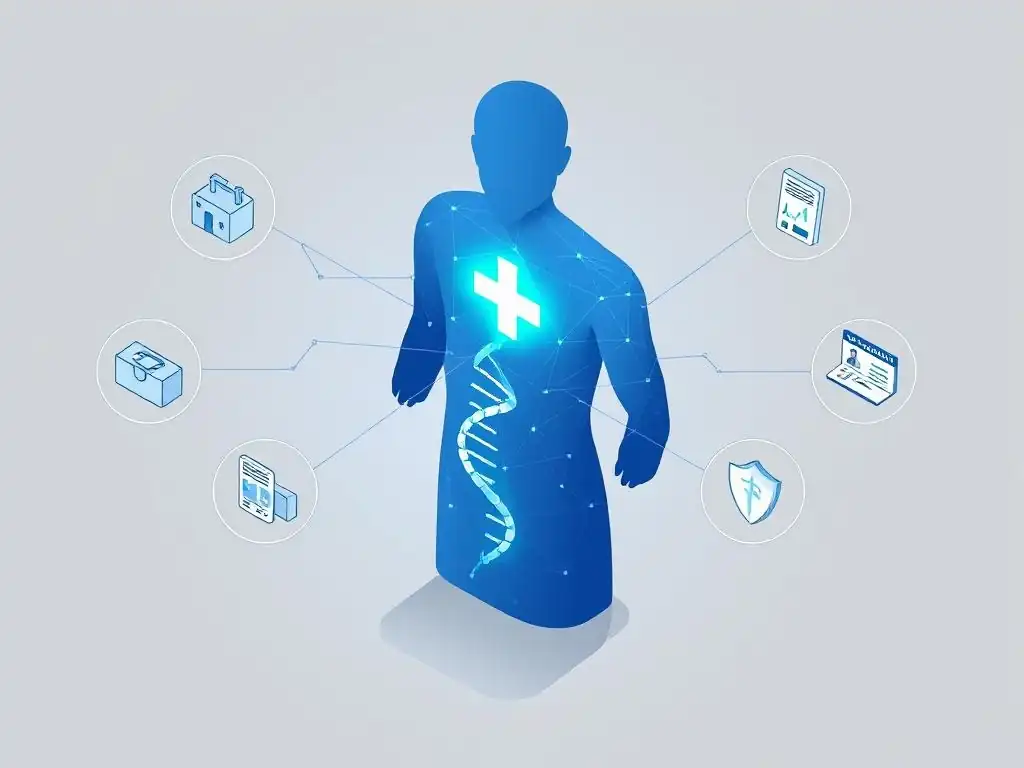
Streamlining Patient Registration and Appointment Management
Blockchain technology can significantly streamline the patient registration process, which is often a source of delays and errors. Instead of filling out lengthy forms at each new provider, a patient could create a secure, blockchain-based digital identity profile. This profile, containing verified demographic and insurance information, could be shared instantly and securely with authorized providers upon their consent.
When a patient arrives for an appointment, their identity can be quickly verified against the blockchain ledger using their unique identifier or a secure QR code. This process reduces check-in times, minimizes administrative burden, and decreases the likelihood of errors associated with manual data entry.
For example, consider a patient visiting a specialist for the first time. With a blockchain ID, they wouldn't need to re-enter all their personal details. The specialist's clinic, as a node on the permissioned blockchain network, could receive the necessary verified identity information directly from the patient's blockchain profile, with the patient's explicit permission, instantly and securely. This contrasts sharply with the traditional process involving paper forms, faxing records, and manual data entry. This streamlining enhances efficiency and provides a smoother experience for both patients and staff, powered by blockchain secure patient verification.
Strengthening Data Security and Preventing Identity Theft
Blockchain's inherent security features make it an powerful tool for protecting patient data and preventing identity theft. By using a distributed, immutable ledger, blockchain creates a tamper-evident record of all identity verification events and data access attempts. If a patient's identity is used fraudulently, the blockchain ledger would record this unauthorized access attempt, providing an immediate alert and an undeniable audit trail for investigation. This makes it much harder for criminals to use stolen identities for illicit purposes without being detected.
Furthermore, blockchain can enhance authentication processes. Instead of relying on easily compromised passwords or static personal information, patients could use multi-factor authentication methods linked to their blockchain identity. For instance, a patient might use a combination of a private key stored securely on their device and a biometric scan to verify their identity. This layered security approach, underpinned by the blockchain's integrity, makes it significantly more difficult for unauthorized individuals to gain access to patient data. Pilot programs have shown that using blockchain for secure patient verification can reduce the incidence of identity-related fraud attempts recorded within the system.
Facilitating Interoperability and Secure Data Sharing
A major hurdle in healthcare is the lack of interoperability between different systems and organizations. Patient data is often siloed, making it difficult for providers to access a patient's complete medical history, especially during emergencies or when a patient sees multiple specialists. Blockchain can act as a secure, standardized layer for managing patient identities and controlling access to distributed data sources, thereby facilitating interoperability.
By using a common blockchain network for identity verification, different healthcare organizations can agree on a secure method for identifying patients across their systems. When a provider needs to access a patient's record from another institution, the patient's blockchain identity can be used to verify their consent and the provider's authorization. The blockchain records the access request and approval, while the data itself is exchanged securely off-chain using established protocols.
This approach allows data to remain at its source while enabling controlled, secure access based on a universally verifiable identity. This use case demonstrates how blockchain secure patient verification is fundamental to building a truly interconnected and efficient healthcare ecosystem.
Advantages of Blockchain-Based Secure Patient Verification
Enhanced Patient Data Security and Privacy
The primary advantage of using blockchain for patient verification is the significant enhancement of data security and patient privacy. The decentralized and cryptographic nature of blockchain makes it inherently more secure than traditional centralized databases, which are single points of failure and attractive targets for hackers. By distributing the ledger across multiple nodes, it becomes virtually impossible for a single entity to tamper with identity records or access logs without detection. Every verification event or data access request is recorded immutably, creating a transparent and auditable trail.
This transparency, combined with cryptographic security, drastically reduces the risk of data breaches related to identity management. Patients can have greater confidence that their sensitive personal and health information is protected from unauthorized access and manipulation. Furthermore, blockchain can support privacy-preserving technologies, allowing identity verification without revealing sensitive details unnecessarily. For example, zero-knowledge proofs could be used to verify a patient's age or insurance status without disclosing their actual date of birth or policy number. This focus on security and privacy is central to effective blockchain secure patient verification.
Improved Accuracy and Reduced Identification Errors
Traditional patient identification systems are prone to errors such as duplicate records, overlays, and incorrect data entry, leading to fragmented patient histories and potentially dangerous medical mistakes. Blockchain-based systems can significantly improve accuracy by providing a single, consistent, and immutable source of truth for patient identities within the network. Once a patient's identity is verified and linked to a blockchain ID, this core information remains consistent across all participating healthcare providers.
Subsequent interactions and data points are linked to this verified ID on the blockchain, ensuring that all related information pertains to the correct individual. The immutability of the ledger prevents the accidental or malicious alteration of core identity data. This reduction in errors not only improves the quality of patient care by providing clinicians with accurate, complete information but also reduces the administrative burden and costs associated with correcting erroneous records. Studies have shown that implementing master patient index solutions, even traditional ones, can significantly reduce duplicate rates; blockchain offers an even more robust foundation for this.
Cost Reduction Through Efficiency and Fraud Prevention
Implementing blockchain secure patient verification can lead to substantial cost reductions within the healthcare system. The increased efficiency in patient registration and administrative processes reduces overhead costs for healthcare providers. Less time spent on manual data entry, record reconciliation, and correcting errors translates into lower labor costs. For instance, reducing duplicate records from 10% to 2% across a large hospital network can save hundreds of thousands or even millions of dollars annually in administrative effort and avoided medical errors.
More significantly, blockchain's ability to prevent identity fraud can lead to massive savings for both providers and insurers. By making it significantly harder for fraudsters to use stolen identities to receive services or file fake claims, blockchain directly tackles a major source of financial leakage in the healthcare system. Estimates of healthcare fraud costs run into the billions globally each year. A reduction in fraudulent claims and services obtained through identity theft would free up significant resources that could be reinvested in patient care or lead to lower healthcare costs overall.
Increased Patient Confidence and Control
Patients are increasingly concerned about the privacy and security of their health data. High-profile data breaches have eroded trust in traditional healthcare IT systems. By implementing blockchain secure patient verification, healthcare organizations can rebuild patient confidence by demonstrating a commitment to using cutting-edge technology to protect their most sensitive information. The transparency and immutability of the blockchain ledger mean that patients can potentially have visibility into who has accessed their identity information and when, fostering a sense of control and trust.
Furthermore, blockchain can support models of self-sovereign identity, where patients have ultimate control over their digital identity and associated data access permissions. Patients could use a digital wallet to manage their blockchain ID and grant or revoke access to their health records for specific providers or researchers. This shift from institutional control to patient empowerment aligns with modern privacy expectations and can lead to greater patient engagement in their own healthcare journey. Empowering patients with control over their data, secured by blockchain, is a powerful advantage.
Addressing Challenges in Blockchain Adoption
Scalability and Performance Considerations
One of the significant challenges in deploying blockchain technology for large-scale applications like healthcare identity management is scalability. Public blockchains can process a limited number of transactions per second (e.g., Bitcoin ~7 tps, Ethereum ~15-30 tps), which is insufficient for a system that needs to handle potentially millions of patient verifications and access requests daily across a national or global network.
While permissioned blockchains, often used in enterprise settings, offer significantly higher throughput (e.g., Hyperledger Fabric can handle thousands of transactions per second in benchmark tests), scaling to meet the demands of the entire healthcare system remains a complex technical hurdle.
Addressing scalability requires careful network design, potentially utilizing layer 2 solutions, sharding, or optimizing consensus mechanisms. Performance also includes latency – the time it takes for a transaction (like a patient verification) to be confirmed on the blockchain. In a clinical setting, verification needs to be near-instantaneous. Ongoing research and development in blockchain technology are focused on improving scalability and performance to meet enterprise requirements, but these remain key considerations that need to be thoroughly addressed during implementation planning for blockchain secure patient verification.
Regulatory Compliance and Data Governance
Healthcare is a highly regulated industry, and any new technology implementation must comply with strict data privacy and security regulations like HIPAA, GDPR, and others. Integrating blockchain with these existing legal frameworks presents complex challenges. For example, regulations often include the "right to be forgotten" or the ability to amend inaccurate records, which seemingly conflicts with the immutable nature of a blockchain ledger. While patient data itself would likely be stored off-chain, linked identity information and access logs on the blockchain still fall under regulatory scrutiny.
Establishing clear data governance policies for a blockchain network involving multiple organizations is crucial. This includes defining who is responsible for data accuracy, how errors are handled (e.g., invalidating a previous entry and adding a new, corrected one rather than deleting), and how regulatory requests are managed. Legal interpretations of how existing data regulations apply to decentralized ledger technology are still evolving. Organizations must work closely with legal and compliance experts to navigate this complex landscape and ensure that their blockchain secure patient verification solution meets all necessary legal requirements.
Interoperability with Legacy Systems
As mentioned earlier, integrating a new blockchain-based system with the myriad of existing legacy healthcare IT systems (EHRs, billing systems, etc.) is a major technical challenge. Healthcare IT environments are notoriously complex, often running on outdated infrastructure with proprietary data formats. Building robust, secure, and reliable interfaces (APIs) between the blockchain identity layer and these disparate systems requires significant development effort and ongoing maintenance.
Ensuring data consistency and flow between the blockchain and legacy systems without compromising security or performance is critical. For instance, changes made to a patient's demographic information in an EHR must be reflected accurately and securely in their blockchain identity profile, and vice-versa. This requires careful data mapping, transformation, and synchronization strategies. The success of blockchain secure patient verification depends heavily on its ability to function seamlessly within the existing, often fragmented, healthcare IT landscape.
User Adoption and Training
Implementing any new technology in healthcare requires significant user adoption and comprehensive training. Healthcare professionals, administrative staff, and patients must be willing and able to use the new blockchain-based system effectively. This involves overcoming potential resistance to change, addressing concerns about complexity, and ensuring that users understand the benefits and procedures associated with the new system.
Training programs must be developed for different user groups, tailored to their specific roles and interactions with the blockchain system. Front-desk staff need training on how to perform blockchain secure patient verification during check-in. Patients need clear instructions on how to manage their digital identity and grant permissions, potentially through a user-friendly mobile application. A lack of adequate training and support can lead to user frustration, errors, and ultimately, hinder the successful implementation and widespread adoption of the technology.
The Future of Healthcare Identity
Integration with Emerging Technologies
The future of healthcare identity management will likely see blockchain technology integrated with other emerging innovations to create even more secure and efficient systems. For instance, combining blockchain with Artificial Intelligence (AI) could enhance fraud detection by analyzing transaction patterns on the ledger to identify suspicious activities. AI could also help in verifying the authenticity of data linked to a patient's blockchain ID.
The Internet of Medical Things (IoMT), such as wearable health trackers and remote monitoring devices, generates vast amounts of data. Blockchain could provide a secure framework for authenticating these devices and managing the identity and ownership of the data they produce, ensuring that information is securely linked to the correct patient's blockchain ID.
Furthermore, the convergence of blockchain with biometric authentication methods, such as facial recognition or fingerprint scanning, can provide a robust multi-factor authentication layer for accessing patient identities and data. While biometric data itself would not be stored on the blockchain, a cryptographic hash or token representing the biometric could be linked to the patient's blockchain ID, enabling secure verification without compromising the raw biometric data. These integrations promise to create a highly sophisticated and resilient system for blockchain secure patient verification.
Potential for Self-Sovereign Identity
A key trend in digital identity is the move towards Self-Sovereign Identity (SSI), where individuals have complete ownership and control over their digital identities. Blockchain technology is a foundational element for enabling SSI. In a healthcare context, this means patients could manage their own digital health identity, stored securely on a blockchain or linked to it. They would decide which pieces of their verified identity information (e.g., name, date of birth, insurance details) to share and with whom, using cryptographic credentials.
Patients could use a digital wallet on their smartphone to store their private keys and manage permissions. When visiting a new doctor or hospital, they could use their wallet to present verifiable credentials (issued by trusted authorities like government agencies or healthcare providers) and grant temporary or permanent access to specific parts of their health record, all recorded on the blockchain. This shifts the paradigm from institutions controlling patient data to patients having ultimate control, enhancing privacy, security, and trust in blockchain secure patient verification processes.
Blockchain's Role in Personalized Medicine
Personalized medicine relies heavily on accessing and analyzing vast amounts of diverse health data, including genomic information, lifestyle data, and treatment histories. Securely linking this data to the correct patient identity and managing consent for its use is critical and complex. Blockchain can play a vital role by providing a secure, immutable record linking patients to their various data sources and managing granular access permissions for researchers or clinicians involved in personalized treatments.
A patient's blockchain identity could serve as the anchor for their personalized medicine profile. They could grant specific researchers or AI algorithms permission to access anonymized or pseudonymized subsets of their data, with each access logged on the blockchain. This ensures transparency and control over data usage, which is essential for building trust in research initiatives. By providing a secure and transparent framework for managing identity and data access, blockchain secure patient verification is an enabler for the future of personalized medicine, ensuring that sensitive data is used responsibly and ethically.
Conclusion: Building a Secure and Patient-Centric Healthcare System with Blockchain
Adopting Blockchain for a Secure and Efficient Healthcare Future
The challenges facing healthcare identity management – including data breaches, inefficiencies, and fraud – are significant and require innovative solutions. Traditional centralized systems, while foundational, are increasingly vulnerable and ill-equipped to handle the complexities of modern, interconnected healthcare. Blockchain technology offers a powerful alternative, providing a decentralized, immutable, and transparent ledger that can fundamentally transform how patient identities are managed and verified.
By implementing blockchain secure patient verification, the healthcare industry can achieve unprecedented levels of data security, reduce errors, prevent costly fraud, and empower patients with greater control over their information. While challenges related to scalability, regulation, integration, and user adoption must be carefully addressed, the potential benefits are immense. Moving forward, strategic investment in pilot programs, collaborative network development, and robust regulatory engagement will be crucial. Embracing blockchain is not just about adopting a new technology; it's about building a more secure, efficient, and patient-centric healthcare system for the future, where trusted and secure patient verification is the norm.
Frequently Asked Questions
What are the main benefits of using blockchain for secure patient verification?
Blockchain offers enhanced security and privacy through decentralized data storage. This helps prevent data breaches and ensures patient control over their information.
How does blockchain improve data interoperability in healthcare?
Blockchain enables seamless and secure data sharing among healthcare providers. This leads to better care coordination and reduced administrative overhead.
What role does DeFi play in healthcare identity management on the blockchain?
While not direct, DeFi principles inspire decentralized access control and incentivized data sharing. This can create more secure and transparent systems.
How does blockchain help address regulatory concerns in healthcare data management?
Blockchain's immutable audit trail assists with compliance with regulations like HIPAA. It provides a clear record of data access and modifications.
What are some potential challenges to implementing blockchain for patient verification?
Challenges include scalability issues, integration with existing systems, and the need for industry-wide collaboration to establish standards.
Okay, here's a final reflection section for your article, "The Future of Healthcare Identity Management: Blockchain for Secure Patient Verification," designed to rank for the keyword "Blockchain secure patient verification" and following the structure you provided:
Final Reflection: Embracing Trust Through Decentralization
The journey through healthcare identity management reveals a critical need for enhanced security and patient empowerment, and blockchain secure patient verification emerges as a powerful solution. The challenges of data breaches and fragmented patient records are not abstract concerns; they are realities impacting individuals and healthcare systems today. By embracing decentralized technologies, we can move towards a future where patient data is not only secure but also readily accessible to those who need it most, fostering a more efficient and trustworthy healthcare ecosystem.
The potential of blockchain to revolutionize patient verification extends far beyond mere technological advancement. It speaks to a fundamental shift in how we perceive and manage personal health information, placing control back in the hands of the individual. This paradigm shift is crucial for building trust and fostering a more collaborative relationship between patients and healthcare providers. The future of healthcare is not just about technology; it's about empowering patients to take control of their health data and make informed decisions.
This quote encapsulates the essence of what blockchain secure patient verification can achieve, fostering a future where data security and patient autonomy go hand in hand.
As we stand on the cusp of this transformative era, I invite you to reflect on the role you can play in shaping the future of healthcare. Consider how you can advocate for the adoption of secure and patient-centric technologies like blockchain. Let us all strive to create a healthcare landscape where trust is not just an aspiration, but a fundamental building block, ensuring that every individual's health information is protected and empowers them on their journey to well-being.
Embrace Secure Healthcare: Start Your Blockchain Journey Today!
Thank you for exploring how blockchain technology can transform healthcare identity management. You've gained valuable insights into how it can improve the security of patient data and make verification processes more efficient. Now, it’s time to take action and help shape a more secure healthcare future.
Here’s how you can get involved:
- Learn more: Research blockchain platforms designed for healthcare and review case studies of successful implementations. Find solutions that effectively address the challenges of secure patient verification.
- Enhance your knowledge: Enroll in webinars or courses focused on identity management within blockchain technology.
- Share the message: Spread this article within your network and spark conversations about the vital role of blockchain in healthcare. Let’s raise awareness and promote broader adoption!
What is the first step you will take to support the use of blockchain in protecting patient identities?
Leave a Reply