
Interoperability and Blockchain in Healthcare: Connecting Systems Securely


Welcome to Blockchain Trends, your compass in the rapidly evolving world of decentralized technologies. Beyond the hype surrounding cryptocurrencies, lies a universe of transformative applications. Are you ready to discover how blockchain is revolutionizing industries? This week, we delve into a critical area: healthcare. Explore how blockchain healthcare interoperability solutions secure patient data and streamline communication between disparate systems. Join us as we unravel the complexities and potential of this groundbreaking approach to healthcare data management. What new possibilities will this unlock? Let's find out!
- Blockchain Healthcare Interoperability Solutions: Securely Connecting Healthcare Systems
- Blockchain Technology: A Foundation for Secure Interoperability
- Blockchain Healthcare Interoperability Solutions: A Detailed Overview
- Benefits of Blockchain Interoperability in Healthcare
- Real-World Applications of Blockchain in Healthcare Interoperability
- Case Studies: Successful Implementations of Blockchain Interoperability
- Addressing the Challenges of Blockchain Adoption in Healthcare
- The Future of Blockchain Healthcare Interoperability
- Conclusion: Blockchain as a Catalyst for Secure and Efficient Healthcare Data Exchange
-
Frequently Asked Questions
- What is blockchain healthcare interoperability and why is it important?
- How can blockchain enhance the security of healthcare data exchange?
- Besides security, what other benefits does blockchain offer for healthcare interoperability?
- What are some of the challenges to implementing blockchain healthcare interoperability solutions?
- What is the future outlook for blockchain healthcare interoperability solutions?
- Final Reflection: Bridging Silos, Securing Futures
- Unlock Healthcare's Future: Your Next Steps Await!
Blockchain Healthcare Interoperability Solutions: Securely Connecting Healthcare Systems
Introduction: The Imperative of Interoperability in Healthcare
The healthcare industry faces a persistent and critical challenge: fragmented data. Patient information, ranging from medical history and lab results to prescriptions and insurance details, is often scattered across disparate systems used by hospitals, clinics, pharmacies, and laboratories. This lack of seamless data exchange, or interoperability, hinders effective care coordination, slows down clinical decision-making, and can even compromise patient safety.
The inability of healthcare providers to easily and securely access a patient's complete medical history across different institutions leads to duplicate tests, delayed diagnoses, and inefficient resource utilization. Addressing this fundamental issue is not just a matter of convenience; it is essential for improving the quality, efficiency, and cost-effectiveness of healthcare delivery.
Achieving true interoperability requires overcoming significant technical, organizational, and regulatory hurdles. Traditional methods of data exchange, such as faxing or mailing records, are slow and prone to errors. Even electronic methods often rely on complex point-to-point integrations or centralized databases, which can be expensive to maintain and create single points of failure or vulnerability.
The sensitive nature of health data, governed by stringent privacy regulations like HIPAA in the United States, adds another layer of complexity, demanding robust security measures for any data sharing mechanism. Therefore, the search for secure, efficient, and scalable blockchain healthcare interoperability solutions has become a top priority for the industry.
Understanding the Challenges of Healthcare Data Silos
Current Limitations of Traditional Healthcare Data Exchange
Traditional healthcare data exchange methods are plagued by inherent limitations that perpetuate data silos. Many healthcare organizations still rely on legacy systems built on outdated technologies, making integration difficult and costly. Data formats and standards vary widely between different Electronic Health Record (EHR) systems, requiring complex and often bespoke data mapping and transformation processes to enable any form of exchange.
This fragmentation means that a patient visiting multiple specialists or hospitals might have critical information locked away in separate systems, inaccessible to caregivers who need it most. The manual effort required to retrieve, consolidate, and reconcile this scattered data consumes valuable time for healthcare professionals, diverting them from patient care.
Furthermore, existing data exchange networks often operate on a hub-and-spoke model or require direct, bilateral agreements between parties. Scaling these connections across a vast and diverse healthcare ecosystem is a monumental task. For instance, connecting a large hospital network with dozens of smaller clinics, laboratories, and pharmacies individually becomes logistically prohibitive and financially burdensome. The lack of a universal, secure, and trust-minimized framework for data sharing means that even when data can be exchanged, the process is often cumbersome, expensive, and lacks real-time capabilities, significantly limiting its usefulness in urgent clinical scenarios.
The Need for Enhanced Data Security and Privacy in Healthcare
The increasing digitization of health records, while offering many benefits, simultaneously amplifies the need for enhanced data security and privacy. Healthcare data is among the most sensitive and valuable types of personal information, making it a prime target for cyberattacks. Data breaches in healthcare have become increasingly common, resulting in significant financial penalties, reputational damage, and, most importantly, potential harm to patients whose private information is compromised. For example, major healthcare data breaches in recent years have exposed the records of millions of individuals, highlighting the vulnerabilities of current systems.
Protecting patient privacy is mandated by regulations like HIPAA, which sets strict standards for the handling and protection of Protected Health Information (PHI). Any blockchain healthcare interoperability solutions must not only facilitate data exchange but also ensure that data is accessed and shared only by authorized parties, with patient consent where required, and that the integrity and confidentiality of the data are maintained at all times.
Traditional security measures, while necessary, often rely on centralized controls which can be single points of failure. A decentralized approach that inherently protects data integrity and provides auditable access logs is highly desirable for building truly secure and compliant healthcare data exchange networks.
Blockchain Technology: A Foundation for Secure Interoperability
How Blockchain Ensures Data Integrity and Immutability
Blockchain technology offers a fundamentally different approach to managing and sharing data, built on principles of transparency, security, and immutability. At its core, a blockchain is a distributed ledger that records transactions (in the context of healthcare, this could be a record of data access, a consent agreement, or a data hash) across a network of computers.
Each new transaction is grouped into a 'block', which is then cryptographically linked to the previous block, forming a chain. This process makes it virtually impossible to alter a record once it has been added to the chain without simultaneously changing all subsequent blocks, which would be immediately apparent to the network participants.
This immutability is crucial for healthcare data integrity. When a patient's medical record hash, a record of access, or a consent transaction is logged on a blockchain, it creates an unchangeable and verifiable audit trail.
Any attempt to tamper with the original data off-chain, or the record of the transaction on-chain, would break the cryptographic link and be detected by the network. This inherent feature provides a high degree of confidence in the accuracy and reliability of the data access history and transaction records stored on the ledger, a significant improvement over traditional systems where audit logs can potentially be altered.
Decentralized Data Management for Enhanced Security
Unlike traditional systems that rely on centralized databases, blockchain operates on a decentralized or distributed architecture. Copies of the ledger are maintained across multiple nodes in the network. This means there is no single point of failure that an attacker can target to compromise the entire system or access all the data. If one node is attacked or goes offline, the network continues to function using the other nodes. This distributed nature significantly enhances the resilience and security of the system against cyber threats, including denial-of-service attacks and data breaches that exploit vulnerabilities in a single server.
Furthermore, in many blockchain healthcare interoperability solutions, sensitive patient data itself is not stored directly on the public blockchain. Instead, the blockchain might store encrypted hashes of the data or pointers to where the data is securely stored off-chain, often in encrypted databases controlled by the patient or healthcare provider.
This approach leverages the blockchain's security features (immutability, transparency of transactions/access logs) while keeping the sensitive data itself off the distributed ledger, addressing privacy concerns. Access to the off-chain data is then governed by cryptographic keys and permissions managed through the blockchain, providing a decentralized yet secure mechanism for controlling who can view or use the information.
Smart Contracts: Automating Secure Data Sharing Agreements
Smart contracts are self-executing contracts with the terms of the agreement directly written into code. They run on the blockchain and automatically execute predefined actions when specific conditions are met. In the context of blockchain healthcare interoperability, smart contracts can automate and enforce secure data sharing agreements between patients, providers, researchers, and other authorized parties.
For example, a patient could use a smart contract to grant a specific doctor access to their medical records for a limited time or for a specific purpose. Once the conditions are met (e.g., the doctor's identity is verified, the time limit expires), the smart contract automatically revokes access.
This automation reduces the need for intermediaries, decreases administrative overhead, and ensures that data sharing adheres precisely to the agreed-upon terms. Smart contracts can also manage consent mechanisms, track data usage, and even automate payments for data access in a secure and transparent manner. Their immutable nature means that the terms of the data sharing agreement, once deployed on the blockchain, cannot be altered, providing a high level of trust and predictability for all parties involved. This capability is fundamental to building robust and secure blockchain healthcare interoperability solutions that respect patient autonomy and regulatory requirements.
Blockchain Healthcare Interoperability Solutions: A Detailed Overview
Permissioned vs. Permissionless Blockchains for Healthcare
When designing secure blockchain healthcare interoperability solutions, a critical decision involves choosing the appropriate type of blockchain: permissioned or permissionless. Permissionless blockchains, like Bitcoin or Ethereum (in its current state), are open networks where anyone can join, participate in consensus, and access the ledger (though data on the ledger might be pseudonymous or encrypted). They prioritize decentralization and censorship resistance but can face challenges with transaction speed, scalability, and regulatory compliance due to their open nature. Data privacy is also a significant concern, as while identities might be pseudonymous, transactions are often public.
In contrast, permissioned blockchains (also known as enterprise or consortium blockchains) restrict participation to known and authorized entities. Participants typically undergo a vetting process to join the network and have defined roles and permissions. Examples include Hyperledger Fabric or R3 Corda.
These networks offer greater control over access, higher transaction throughput, lower transaction costs, and enhanced data privacy, as ledger access can be restricted and identities are known. For healthcare, where data privacy (HIPAA) and regulatory compliance are paramount, and participants are typically known entities (hospitals, clinics, insurers), permissioned blockchains are often considered more suitable for building secure blockchain healthcare interoperability solutions. They offer a balance between decentralization benefits (security, immutability) and the practical needs of enterprise healthcare (privacy, performance, governance).
Choosing the Right Blockchain Architecture for Healthcare Data Exchange
The selection between a permissioned or permissionless blockchain architecture for healthcare data exchange depends heavily on the specific use case and requirements. For highly regulated environments dealing with sensitive patient data, a permissioned blockchain is generally preferred. This architecture allows healthcare organizations to control who can join the network, validate transactions, and access specific types of data or records on the ledger (or related off-chain data).
For instance, a consortium of hospitals and insurers might form a permissioned network to securely share patient eligibility or claims data. This setup facilitates compliance with privacy regulations by ensuring that all participants are verified entities bound by legal agreements and that data access is strictly controlled via smart contracts and identity management layers.
However, aspects of healthcare that benefit from broader participation or public verifiability, such as tracking the integrity of pharmaceutical supply chains or managing public health data trends (in an anonymized or aggregated form), might explore hybrid models or even permissionless approaches for specific, less sensitive data points or transaction types. Ultimately, the right architecture for secure blockchain healthcare interoperability solutions must balance the need for security, privacy, scalability, cost-effectiveness, and regulatory compliance, tailoring the blockchain design to the specific requirements of the healthcare data being managed and exchanged.
Key Components of Blockchain-Based Interoperability Platforms
Secure APIs and Data Integration Protocols
Building effective blockchain healthcare interoperability solutions requires seamless integration with existing, often legacy, healthcare systems like EHRs, laboratory information systems (LIS), and pharmacy management systems. This integration is typically achieved through secure APIs (Application Programming Interfaces) and standardized data integration protocols. These APIs act as a bridge, allowing existing systems to securely interact with the blockchain network – for example, to write a hash of a new clinical note onto the ledger, query the ledger for a patient's data access history, or trigger a smart contract to request data access.
Adherence to healthcare-specific data standards, such as FHIR (Fast Healthcare Interoperability Resources), is crucial for ensuring that data exchanged via the blockchain platform is structured in a way that is easily understood and usable by different healthcare applications. The platform must provide secure gateways and middleware that can translate data between legacy formats and the standardized formats used for blockchain interaction. Security of these APIs and integration points is paramount, requiring strong authentication, encryption, and access controls to prevent unauthorized access or data manipulation as data moves between off-chain systems and the blockchain layer.
Identity Management and Access Control on the Blockchain
Robust identity management and access control are fundamental pillars of secure blockchain healthcare interoperability solutions. In a permissioned blockchain, participants' identities are known and verified. The platform must provide a secure way to manage these digital identities for individuals (patients, doctors) and organizations (hospitals, labs). Decentralized identity (DID) frameworks are often explored, allowing individuals to control their digital identities and credentials verified by trusted entities.
Access control mechanisms, often implemented using smart contracts, dictate who can perform specific actions on the blockchain (e.g., write data, query transaction history) and, crucially, who can access sensitive patient data stored off-chain but referenced by the blockchain. Patients can use smart contracts to grant granular permissions to healthcare providers or researchers, specifying what data they can access, for how long, and for what purpose.
This puts patients in control of their health information, moving away from the traditional model where data custodianship is solely with the healthcare provider. Implementing strong cryptographic controls, multi-factor authentication, and detailed access logs on the blockchain ensures that data access is not only restricted but also transparent and auditable, enhancing both security and compliance.
Benefits of Blockchain Interoperability in Healthcare
Improved Patient Data Access and Control
One of the most significant benefits of secure blockchain healthcare interoperability solutions is the potential to dramatically improve patient access to and control over their own health data. By creating a patient-centric data model, often enabled by the blockchain's decentralized nature and smart contracts, patients can aggregate their health records from various providers into a single, comprehensive view. They can then use a secure application interface to manage permissions, granting or revoking access to specific healthcare providers, family members, or researchers with a few clicks.
This shift empowers patients, allowing them to be more active participants in their own care. For instance, a patient moving to a new city could easily provide their new doctor with immediate access to their full medical history, including records from previous providers, without relying on cumbersome manual processes. This improved access facilitates better-informed clinical decisions and enhances continuity of care, potentially leading to improved health outcomes and a more positive patient experience.
Enhanced Data Security and Reduced Data Breaches
Blockchain's inherent security features, such as immutability, cryptography, and decentralization, offer a powerful defense against data breaches and unauthorized data alteration, significantly enhancing data security in healthcare. By storing immutable records of all data transactions and access attempts on a distributed ledger, blockchain creates a tamper-evident audit trail that is virtually impossible to alter. This makes it difficult for malicious actors to secretly access or manipulate patient records without being detected by the network.
While sensitive PHI is typically stored off-chain in encrypted databases, the blockchain can secure the access layer and the integrity hashes of the data. Any attempt to access the off-chain data without proper authorization recorded on the blockchain, or any modification of the data that doesn't match the hash on the ledger, would be flagged. This multi-layered security approach, combining robust off-chain storage security with blockchain's immutable ledger and decentralized access control via smart contracts, provides a more resilient defense against cyber threats compared to traditional centralized systems, contributing to more secure blockchain healthcare interoperability solutions.
Streamlined Healthcare Processes and Reduced Administrative Costs
The inefficiencies of current data exchange processes contribute significantly to administrative overhead in healthcare. Staff members spend countless hours requesting, sending, receiving, and reconciling patient records from different providers. Secure blockchain healthcare interoperability solutions can automate many of these tasks through smart contracts and provide a single, trustworthy source of truth (or access point to the truth) for patient data.
For example, processes like patient registration, insurance verification, and referrals can be streamlined by allowing authorized parties to securely access necessary information via the blockchain network, reducing manual data entry and verification. Furthermore, automating data sharing for billing and claims processing between providers and payers can significantly reduce administrative costs and speed up payment cycles. While specific cost savings vary, industry estimates suggest that improving interoperability through technologies like blockchain could save the U.S. healthcare system billions of dollars annually by reducing administrative waste and improving efficiency.
Facilitating Clinical Research and Data Analytics
Clinical research and healthcare data analytics are often hampered by the difficulty of accessing large, diverse, and high-quality datasets. Patient data is siloed across institutions, and the process of de-identifying data and obtaining consent for research use is often complex, time-consuming, and costly. Blockchain healthcare interoperability solutions can facilitate secure and ethical data sharing for research purposes.
Patients can use smart contracts to grant researchers permission to access specific, de-identified portions of their data, while maintaining control and transparency over how their information is used. Researchers can access aggregated or de-identified datasets from multiple sources via the blockchain platform, accelerating the pace of medical discovery and the development of new treatments. The immutable audit trail provided by the blockchain ensures transparency regarding data usage, enhancing trust between patients, providers, and researchers. This streamlined access to broader datasets, governed by secure and transparent rules, is vital for advancements in areas like personalized medicine and population health management.
Real-World Applications of Blockchain in Healthcare Interoperability
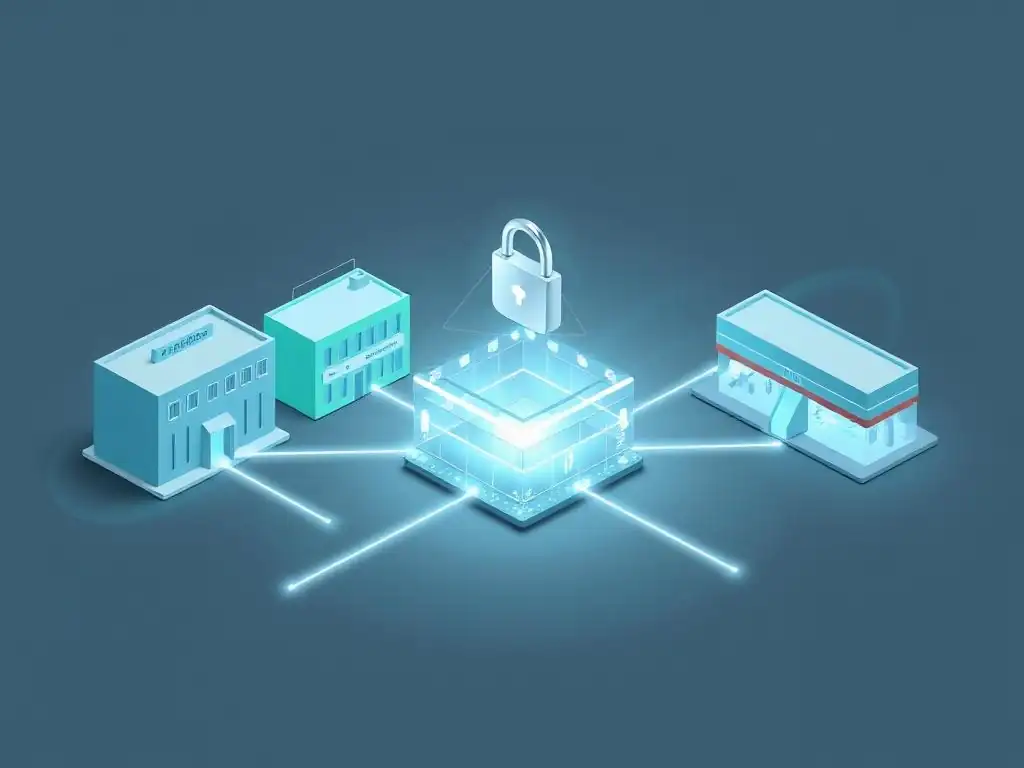
Supply Chain Management for Pharmaceuticals
The pharmaceutical supply chain is complex and vulnerable to issues like counterfeiting, diversion, and inefficiency. Tracking drugs from manufacturing to dispensing involves numerous intermediaries, making it difficult to maintain transparency and ensure product integrity. Blockchain healthcare interoperability solutions offer a powerful tool for creating a secure, transparent, and immutable record of a drug's journey through the supply chain.
By assigning a unique identifier to each product and recording its movement (manufacturing, packaging, shipping, receiving at distributor, dispensing at pharmacy) as transactions on a blockchain ledger, all authorized participants in the network (manufacturers, distributors, pharmacies, regulators) can access a shared, tamper-evident history. This allows for rapid verification of a drug's authenticity, helps pinpoint points of diversion in cases of theft, and improves recall efficiency.
The U.S. Drug Supply Chain Security Act (DSCSA) mandates electronic, interoperable tracing of products, and blockchain is being explored as a technology to meet these requirements, enhancing patient safety by reducing the risk of counterfeit or substandard drugs entering the market.
Secure Electronic Health Record (EHR) Sharing
Securely sharing Electronic Health Records (EHRs) between different healthcare providers is perhaps the most direct application of blockchain healthcare interoperability solutions. Currently, EHR systems from different vendors often struggle to exchange data seamlessly due to varying standards and proprietary architectures. Blockchain can act as an overlying layer that facilitates secure, patient-controlled exchange of EHR data references or hashes.
Instead of migrating all data to a single blockchain, which would be impractical and raise privacy issues, a common approach is to store encrypted EHR data off-chain in secure data vaults (which could be controlled by the patient or provider). The blockchain then stores immutable pointers to this data, along with cryptographic proofs of its integrity and smart contracts that manage patient consent and access permissions. When a provider needs to access a patient's record from another institution, the request is routed through the blockchain.
If the patient's smart contract grants permission, the requesting provider receives the decryption key or secure access to the off-chain data. This model enhances security by decentralizing control and access management, giving patients ultimate authority over who accesses their sensitive medical information.
Clinical Trial Data Management and Integrity
Ensuring the integrity and transparency of clinical trial data is critical for drug development and patient safety. Traditional clinical trial data management can be prone to errors, data manipulation, and challenges in verifying the authenticity of trial records. Blockchain healthcare interoperability solutions can significantly improve the reliability and auditability of clinical trial processes.
By recording key trial events, patient consent, data entries, and protocol amendments as immutable transactions on a blockchain, researchers and regulators gain access to a transparent and verifiable audit trail. This makes it much harder to falsify data or conceal deviations from the trial protocol. Secure data sharing mechanisms enabled by blockchain can also facilitate collaboration between different research sites and streamline the process of sharing de-identified trial data with regulatory bodies. This increased data integrity and transparency can accelerate the regulatory approval process and enhance public trust in the validity of clinical research findings.
Case Studies: Successful Implementations of Blockchain Interoperability
Medicalchain: Secure and Transparent EHR Sharing
Problem: Fragmented patient records across different healthcare providers leading to inefficiencies and potential errors.
Patients often receive care from multiple doctors, specialists, and hospitals, each using their own EHR system. This results in a scattered collection of medical records that are difficult for patients to access and even harder for different providers to share seamlessly. A primary care physician might not have access to critical test results from a specialist or a patient's full medication history from different pharmacies, leading to incomplete information, duplicate tests, and potential medical errors. The administrative burden of requesting and transferring these records is substantial, costing valuable time and resources.
Solution: A blockchain-based platform allowing patients to control access to their EHR and securely share it with authorized providers.
Medicalchain developed a platform utilizing blockchain technology to address this fragmentation. The system allows patients to upload their existing medical records from various sources onto a secure, encrypted storage linked to their unique identity on the blockchain. Patients then use the platform's interface, backed by smart contracts on the blockchain, to grant specific healthcare providers permission to access their records. This permission is recorded immutably on the blockchain, creating a transparent audit log of who accessed the data and when. Sensitive data remains encrypted off-chain, with access governed by cryptographic keys managed via the blockchain.
Results: Improved data accuracy, reduced administrative overhead, and enhanced patient empowerment.
By giving patients control and providing a unified access point to their dispersed records, Medicalchain's approach leads to more complete and accurate information being available at the point of care. Providers with authorized access can view a comprehensive patient history, reducing the need for redundant tests and improving diagnostic accuracy. The automated, secure sharing process reduces the manual administrative work associated with record requests and transfers. Furthermore, empowering patients to manage access to their data increases their engagement and trust in the healthcare system, demonstrating the potential for secure blockchain healthcare interoperability solutions to transform patient care delivery.
MediLedger: Pharmaceutical Supply Chain Integrity
Problem: Counterfeit drugs and inefficiencies in the pharmaceutical supply chain.
The global pharmaceutical supply chain is vast and complex, involving manufacturers, wholesalers, distributors, and pharmacies. This complexity creates opportunities for counterfeit drugs to enter the legitimate supply chain, posing serious health risks to patients. Tracking and tracing medications effectively through this multi-party network using traditional paper-based or disparate electronic systems is challenging, making it difficult to verify the authenticity of products and quickly identify the source of issues during recalls.
Solution: A blockchain network to track and trace pharmaceuticals from manufacturer to consumer, ensuring authenticity and preventing counterfeiting.
The MediLedger Network, a consortium initiative leveraging blockchain technology, was created to enhance transparency and security in the pharmaceutical supply chain. Participants (pharmaceutical manufacturers, wholesalers, etc.) record key transaction data, such as product identifiers, serial numbers, and ownership changes, on a permissioned blockchain ledger. This creates an immutable, shared record of a drug's journey. The network focuses on verifying trading partner information and product authenticity through cryptographic checks recorded on the ledger, rather than tracking every single product movement step-by-step like traditional track-and-trace systems. This approach helps meet regulatory requirements like the DSCSA.
Results: Increased supply chain transparency, reduced risk of counterfeit drugs, and improved patient safety.
By providing a shared, verifiable ledger of trading partner and product information, the MediLedger Network significantly increases transparency across the supply chain. This makes it much harder for counterfeit products to infiltrate the system, as their identifiers and transaction history would not match the legitimate records on the blockchain.
The ability to quickly verify the authenticity of trading partners and products enhances trust and efficiency within the network. This secure blockchain healthcare interoperability solution for the supply chain directly contributes to patient safety by helping ensure that the medications dispensed are genuine and have been handled appropriately throughout their distribution journey.
Addressing the Challenges of Blockchain Adoption in Healthcare
Regulatory Compliance and Data Privacy Concerns (HIPAA)
Adopting blockchain healthcare interoperability solutions faces significant hurdles related to regulatory compliance, particularly concerning data privacy laws like HIPAA in the United States. HIPAA mandates strict rules for the creation, reception, maintenance, and transmission of Protected Health Information (PHI). While blockchain offers robust security features, the immutable nature of some blockchain designs can conflict with the "right to be forgotten" or the ability to amend records, which are required under regulations like GDPR and sometimes interpreted under HIPAA contexts regarding patient rights to amend their records.
Healthcare organizations must carefully design blockchain solutions to ensure compliance. This often involves storing sensitive PHI off-chain in HIPAA-compliant databases, with only encrypted hashes or transaction metadata stored on the blockchain. Smart contracts must be designed to enforce consent directives and access controls in line with privacy regulations.
Furthermore, establishing clear governance frameworks for permissioned networks, defining roles and responsibilities for data handling, and ensuring auditability that satisfies regulatory requirements are critical steps. Navigating these complex legal and compliance landscapes requires close collaboration between blockchain developers, healthcare providers, legal experts, and regulators to build truly secure and compliant blockchain healthcare interoperability solutions.
Scalability and Performance Considerations for Blockchain Networks
Healthcare systems generate vast amounts of data daily, from patient visits and lab results to medical images and administrative transactions. Any blockchain healthcare interoperability solutions designed to support this ecosystem must be highly scalable and performant, capable of handling a massive volume of transactions and data access requests in near real-time. Many early blockchain platforms, particularly public permissionless ones, face limitations in transaction speed and throughput (e.g., handling only a few transactions per second) compared to the millions or billions of transactions required in a large healthcare network.
Permissioned blockchains generally offer much higher performance, capable of processing hundreds or thousands of transactions per second, which is more suitable for enterprise healthcare needs. However, even these networks require careful design and optimization. Strategies to enhance scalability include using off-chain data storage with on-chain verification (as discussed earlier), employing different consensus mechanisms that are faster than proof-of-work, and utilizing layer-2 scaling solutions.
Performance also relies on efficient data modeling and the design of smart contracts to minimize complexity and execution time. Addressing scalability is crucial for blockchain to move beyond pilot projects and become a foundational technology for widespread healthcare data exchange.
Interoperability with Existing Healthcare Systems
A significant practical challenge for implementing blockchain healthcare interoperability solutions is integrating with the diverse landscape of existing, often legacy, healthcare IT systems. Hospitals and clinics use a multitude of EHRs, billing systems, lab systems, and imaging systems from various vendors, many of which were not designed with easy interoperability in mind. These systems often use proprietary data formats and communication protocols, making it difficult to establish secure, real-time data exchange.
Bridging the gap between these legacy systems and a blockchain platform requires developing robust integration layers, including secure APIs, middleware, and data transformation tools that can translate data between different formats (e.g., HL7, CCDA) and the standards used by the blockchain application (e.g., FHIR). This integration work is often complex, time-consuming, and expensive. Successful adoption of blockchain in healthcare will depend heavily on the ability of blockchain platforms and solution providers to offer flexible and comprehensive integration capabilities that minimize disruption to existing workflows and systems while enabling the benefits of secure, decentralized data exchange.
The Future of Blockchain Healthcare Interoperability
Emerging Trends and Technologies in Blockchain Healthcare
The field of blockchain healthcare interoperability is continuously evolving, driven by advancements in blockchain technology itself and the growing needs of the healthcare industry. One emerging trend is the development of specialized healthcare blockchain protocols designed from the ground up with features tailored to the industry's unique requirements, such as enhanced data privacy features, built-in identity management, and support for healthcare data standards like FHIR. Another trend is the exploration of hybrid blockchain models that combine elements of both permissioned and permissionless networks to leverage the strengths of each for different aspects of healthcare data management.
Interoperability within the blockchain space itself is also becoming important, with efforts focused on enabling different blockchain networks to communicate and exchange data (cross-chain interoperability). This could allow, for instance, a pharmaceutical supply chain blockchain to securely interact with an EHR blockchain to verify medication history.
Furthermore, the integration of blockchain with other cutting-edge technologies like Artificial Intelligence (AI) and the Internet of Medical Things (IoMT) is on the horizon. Blockchain can provide a secure and transparent layer for managing data generated by IoMT devices or auditing the decisions made by AI algorithms used in diagnostics, further enhancing the potential for secure blockchain healthcare interoperability solutions.
The Role of Blockchain in Personalized Medicine
Personalized medicine relies heavily on accessing and analyzing vast amounts of diverse data, including genomic data, clinical records, lifestyle information, and data from wearable devices, to tailor treatments to individual patients. Secure and efficient data sharing across different data sources and stakeholders (patients, clinicians, researchers, pharmaceutical companies) is essential but currently challenging due to data silos and privacy concerns.
Blockchain can play a transformative role in enabling personalized medicine by providing a secure, patient-controlled platform for managing and sharing this complex data. Patients can consolidate their diverse health data, grant specific researchers or clinicians access via smart contracts, and even potentially monetize the use of their anonymized data for research. The immutable audit trail ensures transparency and trust regarding data usage. This capability to securely and efficiently bring together disparate data sources, governed by patient consent recorded on a blockchain, is fundamental to unlocking the full potential of personalized medicine and developing more targeted and effective therapies.
Predictions for the widespread adoption of Blockchain interoperability
While challenges remain, the trajectory for blockchain healthcare interoperability solutions is towards increasing adoption over the next five to ten years. Initial deployments are likely to continue focusing on specific high-value, contained use cases like pharmaceutical supply chain verification and secure clinical trial data management, where the benefits of immutability and transparency are immediately apparent and regulatory drivers are strong. As the technology matures, scalability solutions improve, and regulatory frameworks become clearer, adoption is expected to expand to more complex areas like cross-institutional EHR sharing and population health data analytics.
Industry analysts predict significant growth in the blockchain in healthcare market, with secure blockchain healthcare interoperability solutions being a key driver. Factors accelerating adoption include increasing pressure from governments and payers for greater data exchange, growing concerns over cybersecurity in healthcare, and the potential for substantial cost savings and efficiency gains.
While a complete overhaul of existing systems is unlikely in the short term, blockchain is poised to become an increasingly integral layer for enabling secure, patient-centric, and efficient data exchange across the fragmented healthcare ecosystem. The journey towards truly seamless and secure healthcare interoperability is long, but blockchain offers a promising pathway forward.
Conclusion: Blockchain as a Catalyst for Secure and Efficient Healthcare Data Exchange
Key Takeaways: Securing the Future of Healthcare with Blockchain
The healthcare industry is in urgent need of robust interoperability solutions to overcome the limitations of fragmented data, enhance patient care, and improve efficiency. Traditional methods of data exchange are proving insufficient in the face of growing data volumes and increasing cybersecurity threats. Blockchain technology, with its inherent characteristics of immutability, decentralization, transparency, and the power of smart contracts, offers a compelling foundation for building secure blockchain healthcare interoperability solutions.
Key takeaways highlight the potential of blockchain to:
- Enhance Data Integrity and Security: Providing tamper-evident audit trails and decentralized control over data access.
- Improve Patient Empowerment: Enabling patients to control access to their health records via secure, transparent mechanisms.
- Streamline Processes: Automating data sharing agreements and reducing administrative overhead.
- Facilitate Research: Providing secure and auditable access to de-identified data for clinical trials and analytics.
- Increase Supply Chain Transparency: Ensuring the authenticity and safety of pharmaceuticals.
While challenges related to regulatory compliance (HIPAA), scalability, and integration with legacy systems must be carefully addressed, ongoing advancements in blockchain technology and increasing industry collaboration are paving the way for broader adoption. Secure blockchain healthcare interoperability solutions are not just a technological trend; they represent a fundamental shift towards a more connected, secure, and patient-centric healthcare future. By leveraging the unique capabilities of blockchain, the industry can move closer to realizing the vision of seamless, secure, and efficient healthcare data exchange, ultimately leading to better outcomes for patients.
Frequently Asked Questions
What is blockchain healthcare interoperability and why is it important?
Blockchain healthcare interoperability refers to using blockchain technology to securely and efficiently share patient data between different healthcare systems. This is important because it improves data access and care coordination, leading to better patient outcomes.
How can blockchain enhance the security of healthcare data exchange?
Blockchain's decentralized and immutable nature makes it difficult for unauthorized parties to tamper with data. Using cryptographic techniques, blockchain ensures data integrity and access control, enhancing the security of healthcare data exchange.
Besides security, what other benefits does blockchain offer for healthcare interoperability?
Beyond security, blockchain facilitates transparency and auditability in data sharing. It can also streamline administrative processes like claims processing and supply chain management within the healthcare ecosystem.
What are some of the challenges to implementing blockchain healthcare interoperability solutions?
Challenges include scalability issues, the need for standardized data formats, and concerns about regulatory compliance. Overcoming these challenges is crucial for the widespread adoption of blockchain in healthcare.
What is the future outlook for blockchain healthcare interoperability solutions?
The future looks promising, with increasing interest in blockchain for secure data sharing and improved efficiency. As the technology matures and regulatory frameworks evolve, we can expect wider adoption of blockchain healthcare interoperability solutions.
Final Reflection: Bridging Silos, Securing Futures
The exploration of blockchain healthcare interoperability solutions secure has revealed a landscape ripe with potential, yet fraught with challenges. The promise of seamless data exchange, enhanced security, and improved patient outcomes is no longer a distant dream, but a tangible goal within reach. However, realizing this vision requires a concerted effort from all stakeholders to overcome existing barriers and embrace innovative approaches.
The impact of interoperability, particularly when fortified by blockchain technology, extends far beyond mere data transfer. It fundamentally reshapes the patient experience, empowers healthcare providers, and fosters a more collaborative and efficient ecosystem. Witnessing the potential for improved patient care and reduced administrative burdens fuels a deep sense of purpose. The greatest wealth is health.
- Virgil, reminding us that the secure and efficient management of healthcare data is paramount to societal well-being.
As we stand at the cusp of a new era in healthcare, let us not shy away from the transformative power of blockchain and interoperability. Consider how you, as a patient, provider, or innovator, can contribute to building a more connected, secure, and patient-centric healthcare future. The time to act is now, to ensure that the benefits of these technologies are realized for all.
Unlock Healthcare's Future: Your Next Steps Await!
Thank you for exploring how blockchain technology can revolutionize healthcare interoperability. You've gained insights into how this innovation can streamline data sharing and improve security. Now, it's time to take action!
Consider the following steps to contribute to this exciting field:
- Share this article with your network to spark important conversations about blockchain's role in healthcare. Spreading awareness is the most impactful step you can take right now.
- Explore additional resources and case studies to identify specific challenges within your local healthcare system that blockchain could help address.
- Join the discussion by suggesting real-world interoperability issues in the comments below—identify pressing problems that blockchain could solve.
Are you ready to see how blockchain can transform healthcare?
Leave a Reply