
From Lab to Patient: Tracking Every Pill with Blockchain Transparency


Welcome to Blockchain Trends, your guide to understanding the revolutionary impact of blockchain beyond the world of cryptocurrencies.
Are you ready to unravel how blockchain is reshaping industries? In this exploration, we delve into a fascinating application: blockchain pharmaceutical supply chain tracking. Discover how this technology is ensuring the integrity and authenticity of medications, from the lab to the patient, building trust and combating counterfeiting. Intrigued? Let's explore the future of pharmaceutical transparency together!
- From Manufacturer to Patient: Enhancing Drug Safety with Blockchain Transparency
- The Challenge: Vulnerabilities in Pharmaceutical Supply Chains
- Blockchain Technology: A Solution for Pharmaceutical Supply Chain Visibility
-
Implementing Blockchain for Pharmaceutical Supply Chain Tracking: A Phased Approach
- Step 1: Defining Data Requirements and Identifying Key Stakeholders
- Step 2: Selecting a Blockchain Platform (Permissioned vs. Public)
- Step 3: Integrating Blockchain with Existing Systems (ERP, WMS)
- Step 4: Establishing Data Governance and Compliance (DSCSA, GDPR)
- Step 5: Pilot Programs and Implementation of Blockchain Solutions
- Use Cases: Blockchain Transforming the Pharmaceutical Supply Chain
- The Future of Blockchain in Pharma: Beyond Tracking
- Addressing Challenges to Blockchain Adoption
- Conclusion: Blockchain for a Transparent and Secure Pharmaceutical Supply Chain
-
Frequently Asked Questions
- How can blockchain technology improve the pharmaceutical supply chain?
- What are the key benefits of using blockchain for pharmaceutical supply chain tracking as it relates to Blockchain Trends?
- How does blockchain help in combating counterfeit drugs within the pharmaceutical industry?
- What regulatory challenges might exist in implementing blockchain for pharmaceutical supply chain tracking?
- What does the future hold for blockchain in the pharmaceutical supply chain, according to Blockchain Trends?
- Final Reflection: Embracing Trust in Every Dose
- Unlock the Future of Healthcare: Take Action Today!
From Manufacturer to Patient: Enhancing Drug Safety with Blockchain Transparency
The journey of a pharmaceutical product, from its raw ingredients being processed by a manufacturer to reaching the hands of a patient, is incredibly complex. This intricate network involves numerous intermediaries, including wholesalers, distributors, pharmacies, and healthcare providers. Ensuring the integrity, authenticity, and safety of medications throughout this vast and fragmented path is paramount, yet traditional systems often struggle to provide the necessary visibility and security. The lack of a unified, tamper-proof record-keeping system creates vulnerabilities that can have devastating consequences, impacting public health and eroding trust in the healthcare ecosystem.
Addressing these critical challenges requires a fundamental shift in how pharmaceutical supply chains are managed and monitored. The need for robust, transparent, and secure tracking mechanisms has become increasingly urgent in the face of rising threats and regulatory pressures. This is where innovative technologies, particularly blockchain, offer a transformative solution. By leveraging blockchain's unique properties, the pharmaceutical industry can build a foundation of trust and transparency, enabling true end-to-end visibility and significantly enhancing drug safety from the point of origin all the way to the patient.
The Challenge: Vulnerabilities in Pharmaceutical Supply Chains
The traditional pharmaceutical supply chain is characterized by its linear structure and disparate data systems. Information is often siloed within individual organizations, leading to delays, errors, and a lack of real-time visibility across the entire chain. This fragmentation creates blind spots, making it difficult to quickly identify the source of issues like damaged goods, temperature excursions, or, most critically, counterfeit products. The reliance on paper-based records or centralized databases that can be vulnerable to tampering further exacerbates these problems, undermining the reliability and security of the supply chain.
These inherent vulnerabilities pose significant risks, not only to the financial stability of pharmaceutical companies but, more importantly, to the health and safety of patients worldwide. The opaque nature of the chain makes it a target for malicious actors seeking to introduce fraudulent products or divert legitimate ones. Without a secure and universally accessible method for tracking each unit of medication, the industry remains exposed to threats that can have life-threatening consequences. The imperative to secure the pharmaceutical supply chain has never been clearer.
Counterfeit Drugs: A Threat to Public Health
Counterfeit drugs represent a grave and growing threat to global public health. These fraudulent products may contain incorrect ingredients, insufficient or excessive active pharmaceutical ingredients, or even toxic substances. The World Health Organization (WHO) has estimated that up to 10% of medical products in low- and middle-income countries are substandard or falsified, though the problem exists globally.
This translates to potentially hundreds of thousands of deaths each year from conditions like malaria and pneumonia due to ineffective counterfeit treatments. Beyond the tragic human cost, the economic impact is substantial, estimated to be billions of dollars annually through lost revenue, investigation costs, and damage to brand reputation.
The sophisticated nature of modern counterfeiting operations makes traditional authentication methods increasingly ineffective. Criminal networks exploit the vulnerabilities and complexities of the global supply chain, introducing fake products at various points, from manufacturing to distribution. Once a counterfeit drug enters the legitimate supply chain, it becomes incredibly difficult to distinguish from genuine medication using visual inspection alone. This highlights the critical need for a secure, verifiable, and universally accessible system that can track the provenance and authenticity of every single drug package as it moves through the supply chain.
Inefficiencies in Traditional Pharmaceutical Supply Chain Management
Beyond the threat of counterfeits, traditional pharmaceutical supply chain management suffers from significant inefficiencies that impact cost, speed, and reliability. Information flow is often slow and disjointed, with data residing in separate systems that don't easily communicate with each other. This lack of interoperability leads to delays in order fulfillment, inventory inaccuracies, and difficulties in managing product recalls effectively. When a recall is necessary, identifying and locating affected batches quickly and accurately is a complex and time-consuming process, potentially leaving harmful products in circulation longer than necessary.
Manual processes and the reliance on intermediaries with limited visibility into upstream or downstream activities further contribute to these inefficiencies. For instance, tracking the temperature of sensitive biological products across multiple handoffs can be challenging, potentially leading to spoilage and waste. The absence of a single, shared source of truth for product data means that reconciling information between different parties can be a significant administrative burden. These inefficiencies not only increase operational costs but also hinder the industry's ability to respond swiftly to supply chain disruptions or quality issues, ultimately impacting patient access and safety.
The Need for Enhanced Security and Traceability
The inherent risks and inefficiencies within traditional pharmaceutical supply chains underscore an urgent need for enhanced security and traceability. Regulations like the US Drug Supply Chain Security Act (DSCSA) mandate increased tracking and tracing capabilities, requiring stakeholders to be able to identify and trace certain prescription drugs as they are distributed within the United States. However, meeting these requirements effectively with legacy systems remains a challenge. Achieving true end-to-end visibility – knowing where a product is, where it's been, and who has handled it at every step – is crucial for verifying authenticity, managing recalls, and ensuring product quality.
Enhanced security means building a system resistant to tampering and unauthorized access. Traceability requires the ability to follow a product's journey meticulously, creating an unalterable history. Together, these capabilities form the foundation for a more trustworthy pharmaceutical ecosystem. Implementing robust blockchain pharmaceutical supply chain tracking solutions offers a promising path forward, providing the immutable ledger and distributed network necessary to create this secure and transparent environment, ultimately protecting patients from harmful products and ensuring the integrity of the drug supply.
Blockchain Technology: A Solution for Pharmaceutical Supply Chain Visibility
Blockchain technology, initially popularized by cryptocurrencies, offers a fundamentally different approach to data management and transaction recording. Its core principles of decentralization, immutability, and transparency make it uniquely suited to address the challenges plaguing the pharmaceutical supply chain. Instead of relying on a single, central database controlled by one entity, a blockchain utilizes a distributed ledger shared across a network of participants. This distributed nature enhances resilience and reduces single points of failure or manipulation.
By creating a secure, shared, and append-only record of transactions (or events, in the case of a supply chain), blockchain provides a level of trust and transparency previously unattainable. Each transaction is cryptographically linked to the previous one, forming a 'chain' of blocks. Once a block is added, it is extremely difficult and computationally expensive to alter or remove the data within it, effectively creating an immutable history. This inherent security and transparency are precisely what the pharmaceutical industry needs to combat counterfeiting, improve traceability, and build confidence in the integrity of its products.
How Blockchain Works: Decentralized and Immutable Ledger Technology
At its heart, blockchain is a type of Distributed Ledger Technology (DLT). Imagine a shared, continuously updated spreadsheet that isn't stored in one place but is simultaneously held by many participants in a network. When a new transaction or data point occurs (e.g., a drug shipment changing hands), it's bundled with other recent transactions into a 'block'.
This block is then verified by network participants through a consensus mechanism, which is a set of rules determining how the network agrees that a transaction is valid. Once verified, the block is added to the end of the chain, linked using cryptographic hashes.
The immutability comes from this cryptographic linking. Each block contains a hash (a unique digital fingerprint) of the previous block. If any data within a block were tampered with, its hash would change, breaking the link to the next block in the chain and immediately alerting the network to the discrepancy. Because copies of the ledger are distributed across many nodes, altering the data on one copy without the network's consensus is practically impossible. This decentralized and immutable nature provides a high degree of security and data integrity, essential for sensitive applications like blockchain pharmaceutical supply chain tracking.
Benefits of Blockchain: Enhanced Security and Traceability in Pharmaceuticals
The application of blockchain in the pharmaceutical supply chain unlocks several key benefits that directly address existing vulnerabilities. Firstly, it provides enhanced security through its tamper-evident and immutable ledger. Every event recorded on the blockchain – such as a drug batch leaving a manufacturer, arriving at a distributor, or being dispensed by a pharmacy – creates a permanent and verifiable record. This makes it incredibly difficult for unauthorized parties to introduce counterfeit products or alter shipment data without detection.
Secondly, blockchain delivers unparalleled traceability. By recording each transfer of ownership and location data on the shared ledger, stakeholders can trace the journey of a specific drug package backward to its origin or forward to its current location with high confidence. This granular visibility is crucial for rapid response during recalls, verifying product authenticity, and ensuring compliance with regulatory requirements for tracking and tracing. Implementing blockchain pharmaceutical supply chain tracking solutions provides a single, trustworthy source of information accessible to authorized network participants, replacing fragmented and siloed systems.
Combating Counterfeit Pharmaceuticals with Blockchain
Blockchain offers a powerful tool in the fight against counterfeit drugs by enabling robust authentication and provenance verification. Each legitimate drug package can be assigned a unique serial number or identifier, which is then recorded on the blockchain at the point of manufacturing. As the product moves through the supply chain, each transaction involving that unique identifier is added to the ledger. This creates a verifiable history, a digital pedigree, for every individual unit.
At any point in the supply chain, stakeholders, including pharmacies and potentially even patients using a verification app, can scan the unique identifier (like a QR code) on the package. This scan queries the blockchain ledger to retrieve the product's history. By comparing the expected history (manufacturer, authorized distributors, etc.)
with the actual history recorded on the blockchain, the authenticity of the drug can be quickly and reliably verified. If a product's history doesn't match the expected path or if its serial number has already been dispensed or appears in multiple locations simultaneously, it can be flagged as potentially counterfeit. This capability is a game-changer for blockchain pharmaceutical supply chain tracking focused on ensuring drug authenticity.
Implementing Blockchain for Pharmaceutical Supply Chain Tracking: A Phased Approach
Implementing blockchain technology for pharmaceutical supply chain tracking is a complex undertaking that requires careful planning, collaboration, and execution. It's not simply a matter of installing new software; it involves integrating technology with existing processes, establishing new data governance rules, and ensuring buy-in from all stakeholders across the supply chain. A phased approach allows organizations to manage this complexity, mitigate risks, and demonstrate value incrementally. Starting with pilot programs focused on specific use cases or limited geographic areas can provide valuable lessons learned before a broader rollout.
Success in implementing a blockchain solution for the pharmaceutical industry hinges on addressing both the technical challenges of integration and the organizational challenges of change management and collaboration. It requires a clear understanding of regulatory requirements, a thoughtful selection of the appropriate blockchain platform, and a commitment to data accuracy and security. This structured, step-by-step process ensures that the transition to a blockchain-enabled supply chain is smooth and ultimately delivers the promised benefits of enhanced security, transparency, and efficiency.
Step 1: Defining Data Requirements and Identifying Key Stakeholders
The foundational step in implementing blockchain pharmaceutical supply chain tracking is clearly defining what data needs to be captured and who needs access to it. This involves identifying critical data points for each product unit, such as:
- Unique serial number
- Batch/Lot number
- Manufacturing date and location
- Expiry date
- Current location (GPS data if applicable)
- Ownership transfer details (sender, receiver, timestamp)
- Temperature data (for cold chain products)
- Packaging information
Simultaneously, it's crucial to identify all relevant stakeholders who will participate in or benefit from the blockchain network. This typically includes pharmaceutical manufacturers, third-party logistics providers (3PLs), wholesalers, distributors, pharmacies, hospitals, and potentially regulators. Engaging these stakeholders early helps ensure the solution meets their needs, facilitates data sharing agreements, and builds the necessary consortium or network for the blockchain to function effectively.
Step 2: Selecting a Blockchain Platform (Permissioned vs. Public)
Choosing the right blockchain platform is a critical decision that impacts the network's performance, security, and governance. For pharmaceutical supply chain tracking, permissioned blockchains are generally preferred over public ones. Public blockchains (like Bitcoin or Ethereum mainnet) are open to anyone, which raises concerns about data privacy and transaction speed for enterprise applications. Permissioned blockchains, in contrast, restrict participation to known and authorized entities, offering greater control over access and data visibility.
Platforms suitable for enterprise blockchain pharmaceutical supply chain tracking include Hyperledger Fabric, R3 Corda, and enterprise versions of Ethereum (like Quorum). These platforms allow organizations to set up networks where participants' identities are verified, and access permissions can be finely controlled. They also typically offer higher transaction throughput and lower latency compared to public chains, which is essential for tracking millions of individual drug packages. The selection process should consider factors like scalability, security features, consensus mechanism, cost, and the platform's ecosystem and community support.
Step 3: Integrating Blockchain with Existing Systems (ERP, WMS)
A major technical challenge in deploying blockchain pharmaceutical supply chain tracking is integrating the new ledger system with existing enterprise systems. Pharmaceutical companies and their partners rely heavily on established systems like Enterprise Resource Planning (ERP), Warehouse Management Systems (WMS), Transportation Management Systems (TMS), and serialization systems. The blockchain solution cannot operate in isolation; it must seamlessly receive data from and potentially send data back to these legacy systems.
Integration typically involves developing APIs (Application Programming Interfaces) or using middleware to connect the blockchain platform with existing databases and software. For example, when a batch of drugs is manufactured and serialized, the serialization data needs to be recorded on the blockchain.
When a shipment leaves a warehouse (recorded in the WMS), this transfer of custody needs to trigger a transaction on the blockchain. This integration layer is complex but essential for automating data capture, minimizing manual data entry (which is prone to errors), and ensuring that the blockchain accurately reflects the physical movement and status of products in the real world.
Step 4: Establishing Data Governance and Compliance (DSCSA, GDPR)
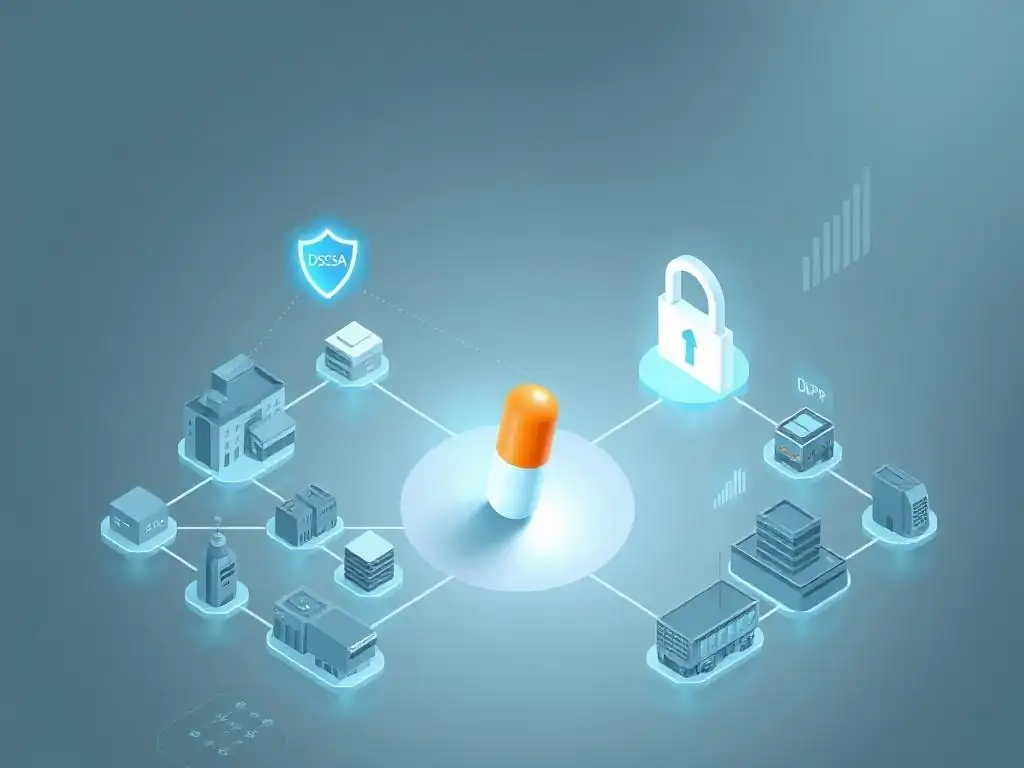
Robust data governance is paramount when implementing blockchain pharmaceutical supply chain tracking, especially given the sensitive nature of pharmaceutical data and strict regulatory requirements. Policies must be established regarding data ownership, access control, data quality standards, and dispute resolution mechanisms within the blockchain network. While blockchain is immutable, ensuring the accuracy of data before it is written to the ledger is critical – "garbage in, garbage out" still applies.
Compliance with regulations like the US DSCSA is a key driver for blockchain adoption. The DSCSA mandates requirements for product tracing, verification, and authorized trading partners. A blockchain ledger can inherently support many of these requirements by providing an immutable record of ownership transfers and facilitating product verification.
Additionally, data privacy regulations like GDPR (General Data Protection Regulation) in Europe must be considered, particularly regarding any personally identifiable information that might inadvertently enter the chain or be linked to product data. Solutions must be designed to handle sensitive data appropriately, perhaps using off-chain storage with on-chain hashes or zero-knowledge proofs.
Step 5: Pilot Programs and Implementation of Blockchain Solutions
Before a full-scale rollout, conducting pilot programs is a crucial step in implementing blockchain pharmaceutical supply chain tracking. Pilot projects allow organizations to test the technology and processes in a controlled environment, typically involving a limited set of products, participants, or geographic regions. This phase helps identify technical glitches, refine workflows, train personnel, and demonstrate the tangible benefits of the solution to stakeholders. Lessons learned from pilots are invaluable for scaling the implementation.
Successful pilots pave the way for broader implementation. This involves gradually expanding the scope of the blockchain network to include more products, supply chain partners, and regions. Scaling requires careful planning for infrastructure, network management, ongoing integration efforts, and continuous training. The implementation process is iterative, with ongoing monitoring and optimization needed to ensure the blockchain solution effectively supports the complex and dynamic nature of the global pharmaceutical supply chain, delivering reliable blockchain pharmaceutical supply chain tracking capabilities.
Use Cases: Blockchain Transforming the Pharmaceutical Supply Chain
The application of blockchain technology extends across numerous critical functions within the pharmaceutical supply chain, offering solutions to long-standing problems. From the initial stages of manufacturing through to the final point of dispensing, blockchain can provide unprecedented levels of transparency, security, and efficiency. These use cases demonstrate the practical value of blockchain pharmaceutical supply chain tracking beyond theoretical potential, illustrating how the technology is beginning to reshape industry practices and improve outcomes for both businesses and patients.
By creating a shared, immutable record of transactions and product movements, blockchain enables a level of trust and collaboration among disparate parties that is difficult to achieve with traditional systems. This shared source of truth facilitates better communication, faster problem resolution, and increased accountability. The specific examples below highlight some of the most impactful ways blockchain is being leveraged today to create a more robust, secure, and patient-centric pharmaceutical supply chain.
Tracking Medications from Manufacturer to Point of Dispensing
One of the most direct and impactful use cases for blockchain is providing end-to-end visibility by tracking medications throughout their entire journey. As a drug batch is manufactured and serialized, its unique identifiers and initial data (like manufacturing date, location, and batch number) are recorded on the blockchain. Each subsequent transfer of custody – from manufacturer to wholesaler, wholesaler to distributor, distributor to pharmacy or hospital – is recorded as a transaction on the shared ledger, timestamped and cryptographically secured.
This creates a complete, verifiable history for every single product unit. For example, if a pharmacist receives a shipment, they can scan the product's identifier and instantly access its entire journey on the blockchain. This allows them to verify that the product followed an authorized path, identify the parties who handled it at each step, and confirm details like expiry dates and batch numbers match the physical product. This level of detailed, immutable tracking is fundamental to effective blockchain pharmaceutical supply chain tracking and significantly enhances the ability to monitor product flow and identify anomalies.
Authenticating Drugs and Preventing Counterfeiting
Blockchain's ability to create an immutable pedigree for each drug package is a powerful weapon against counterfeiting. By recording the unique serial number and its association with a legitimate manufacturer on the blockchain, any attempt to introduce a product with a duplicated or invalid serial number can be immediately detected. When a product is scanned and its serial number checked against the blockchain, the system can verify if that number has been previously recorded, if it has already been marked as dispensed, or if its recorded history aligns with that of a genuine product.
For instance, a verification application used by pharmacists or patients could query the blockchain using the scanned serial number. The blockchain would confirm the drug's authenticity based on its verifiable history originating from a legitimate source. This capability empowers stakeholders at the point of dispensing to instantly authenticate medication, preventing counterfeit or diverted drugs from reaching patients. This direct application of blockchain pharmaceutical supply chain tracking is crucial for safeguarding public health by ensuring that only verified, legitimate medications enter circulation.
Improving Supply Chain Efficiency and Reducing Waste
The enhanced visibility and data integrity provided by blockchain contribute significantly to improving operational efficiencies within the pharmaceutical supply chain. With a shared, real-time ledger of inventory and movement data, stakeholders have better insights into stock levels, shipment statuses, and potential delays. This reduces the need for time-consuming manual checks and reconciliation processes between different parties, saving administrative costs.
Furthermore, improved visibility helps optimize inventory management, reducing instances of stockouts or overstocking. Tracking conditions like temperature via blockchain-linked IoT sensors can help identify potential spoilage events early, reducing waste of valuable medications, particularly cold chain products. Faster and more accurate recall processes, enabled by the ability to quickly identify and locate affected product batches on the blockchain, also minimize the duration harmful products remain in the supply chain, reducing potential losses and risks. These efficiencies are direct outcomes of implementing effective blockchain pharmaceutical supply chain tracking solutions.
Enhancing Patient Safety and Trust
Ultimately, all the benefits of blockchain pharmaceutical supply chain tracking converge to enhance patient safety and build trust in the pharmaceutical ecosystem. By ensuring that only authentic, properly handled medications reach patients, the risk of adverse effects from counterfeit or compromised drugs is significantly reduced. Patients and healthcare providers can have greater confidence in the integrity and quality of the medications they receive, knowing that their journey has been securely recorded and verified on an immutable ledger.
The ability to quickly and accurately trace products during a recall also means that potentially harmful medications can be removed from circulation faster, protecting patients from further exposure. In the future, providing patients with the ability to verify their own medication using a simple app connected to the blockchain could empower them and increase their trust in the legitimacy of the drugs they are taking. This patient-centric benefit is a powerful motivator for the widespread adoption of blockchain in the pharmaceutical supply chain.
The Future of Blockchain in Pharma: Beyond Tracking
While blockchain pharmaceutical supply chain tracking is a primary focus today, the potential applications of this technology in the pharmaceutical industry extend far beyond simply monitoring the movement of goods. The core capabilities of blockchain – secure, immutable data sharing, and the potential for automated execution through smart contracts – open up possibilities for transforming other critical areas within the pharmaceutical lifecycle, from clinical research to patient data management.
The future vision involves leveraging blockchain to create a more connected, efficient, and patient-centric healthcare ecosystem. By providing a trusted layer for data exchange and process automation, blockchain can streamline complex workflows, enhance data integrity in research, and potentially empower patients with greater control over their health information. Exploring these advanced use cases reveals the broader transformative potential of blockchain technology in shaping the future of pharmaceuticals and healthcare.
Smart Contracts for Automated Compliance
Smart contracts are self-executing contracts with the terms of the agreement directly written into lines of code. These contracts reside on the blockchain and automatically execute when predefined conditions are met, without the need for intermediaries. In the pharmaceutical supply chain, smart contracts can automate various compliance-related tasks, reducing manual effort and ensuring adherence to agreements and regulations.
For example, a smart contract could be programmed to automatically trigger a payment to a distributor once the blockchain confirms that a shipment has been received at its destination and relevant quality checks (like temperature data) have been verified on the ledger. Another application could involve automating reporting to regulatory bodies based on immutable data recorded on the blockchain.
Smart contracts could also facilitate automated recalls; once a recall event is logged and verified on the blockchain, a smart contract could automatically notify relevant parties downstream and initiate return processes based on predefined rules. This automation potential, built on secure blockchain pharmaceutical supply chain tracking data, can significantly improve efficiency and compliance.
Decentralized Clinical Trials and Data Sharing
Clinical trials are a critical, yet often slow and complex, part of bringing new drugs to market. Managing vast amounts of sensitive patient data across multiple research sites and ensuring data integrity and transparency are significant challenges. Blockchain can play a crucial role in enabling decentralized clinical trials and secure data sharing among authorized parties.
By recording clinical trial data (such as patient consent, treatment administration, and test results) on a permissioned blockchain, researchers can create an immutable and auditable trail of all data entries and modifications. This enhances data integrity and trust among collaborators. Blockchain could also facilitate secure, privacy-preserving sharing of anonymized or aggregated clinical trial data among researchers, potentially accelerating drug discovery and development while ensuring patient privacy through cryptographic techniques. This application leverages blockchain's security and transparency benefits in a research context, complementing its use in blockchain pharmaceutical supply chain tracking.
Personalized Medicine and Patient-Centric Data Management
The future of healthcare is moving towards personalized medicine, tailoring treatments based on an individual's genetic makeup, lifestyle, and other unique factors. This requires access to comprehensive and diverse patient health data. Blockchain offers a potential framework for patient-centric data management, giving individuals more control over their health information.
Patients could potentially store their electronic health records (EHRs), genomic data, and data from wearable devices on a blockchain or link to it via unique identifiers. Using cryptographic keys, they could grant specific healthcare providers, researchers, or even pharmaceutical companies (for personalized medicine development) permission to access certain parts of their data for a limited time. This empowers patients, enhances data security, and facilitates the ethical and secure use of health data for research and personalized treatments, moving beyond just blockchain pharmaceutical supply chain tracking to broader healthcare applications.
Addressing Challenges to Blockchain Adoption
Despite the significant potential of blockchain for pharmaceutical supply chain tracking and beyond, its widespread adoption faces several substantial challenges. Implementing this transformative technology requires overcoming technical hurdles, navigating a complex regulatory landscape, addressing concerns about data privacy and security, and fostering unprecedented levels of collaboration among competing entities within the industry. These challenges are not insurmountable but require careful planning, investment, and a concerted effort from all stakeholders involved.
Successfully integrating blockchain into the highly regulated and interconnected pharmaceutical world demands more than just technological prowess. It requires establishing clear standards, building trust among participants, and ensuring that the solutions are scalable and interoperable with existing systems and future technologies. Addressing these challenges head-on is crucial for unlocking the full potential of blockchain in creating a more secure, transparent, and efficient pharmaceutical ecosystem.
Scalability and Interoperability
One of the primary technical challenges for blockchain pharmaceutical supply chain tracking is scalability. The pharmaceutical supply chain generates an immense volume of data – tracking millions or billions of individual drug packages globally requires a network capable of handling a very high throughput of transactions per second. Early blockchain platforms, particularly public ones, often faced limitations in this regard. While permissioned blockchains offer better performance, ensuring they can scale to meet the demands of a global industry remains a key focus for platform developers.
Interoperability is another significant hurdle. The pharmaceutical supply chain involves numerous independent companies, each potentially using different internal systems or even different blockchain platforms if multiple consortia emerge. For true end-to-end visibility, these disparate systems and networks need to be able to communicate and exchange data seamlessly. Establishing industry-wide standards for data formats, protocols, and potentially cross-chain communication mechanisms is essential to ensure that blockchain solutions can work together effectively across the entire supply chain.
Regulatory Compliance and Uncertainty
The pharmaceutical industry is one of the most heavily regulated sectors globally, and navigating the existing and evolving regulatory landscape is a major challenge for blockchain adoption. While regulations like the DSCSA in the US are driving the need for better tracking, the specific requirements and acceptance of blockchain-based solutions by regulatory bodies like the FDA (Food and Drug Administration) or EMA (European Medicines Agency) are still being clarified. There is a need for clear guidance on how blockchain can be used to meet compliance requirements, particularly regarding data integrity, audit trails, and reporting.
Furthermore, the decentralized and immutable nature of blockchain can sometimes conflict with existing regulations that require the ability to modify or delete certain data under specific circumstances (e.g., data privacy regulations). Regulatory bodies need to understand how blockchain technology works and how solutions built on it can demonstrate compliance with existing rules while also potentially requiring updates or interpretations of those rules to accommodate the technology. This regulatory uncertainty can slow down investment and implementation efforts for blockchain pharmaceutical supply chain tracking.
Data Privacy and Security
Although blockchain is inherently secure and immutable, implementing it in the pharmaceutical supply chain raises specific data privacy and security concerns. While transaction data on a permissioned blockchain is only visible to authorized participants, the question of what data is stored on-chain vs. off-chain is critical. Sensitive commercial data (like pricing or detailed customer information) and patient-linked data must be handled with extreme care to comply with privacy regulations like GDPR or HIPAA. Putting such data directly onto an immutable ledger, even a permissioned one, could be problematic.
Solutions involve storing only hashes or encrypted references to sensitive data on the blockchain, with the actual data stored securely off-chain in databases with strict access controls. Zero-knowledge proofs are another advanced cryptographic technique that can allow parties to verify information (e.g., that a product is authentic) without revealing the underlying sensitive data. Ensuring robust identity management and access controls within the permissioned network is also paramount to prevent unauthorized access to sensitive supply chain information recorded via blockchain pharmaceutical supply chain tracking.
Collaboration and Standardization
Perhaps the most significant non-technical challenge is fostering collaboration among numerous, often competing, companies across the pharmaceutical supply chain. Implementing an effective blockchain pharmaceutical supply chain tracking solution requires multiple stakeholders – manufacturers, wholesalers, distributors, pharmacies – to agree on a shared network, data standards, governance rules, and potentially even the choice of platform. Building this level of trust and cooperation among entities that have traditionally operated more independently is complex.
Developing and adopting industry-wide standards for how pharmaceutical data is represented and transacted on a blockchain is crucial for interoperability and widespread adoption. Without common standards, different companies might build incompatible blockchain solutions, recreating the data silos the technology aims to eliminate. Initiatives involving industry consortia and working groups are essential to drive this necessary collaboration and standardization efforts, laying the groundwork for truly interconnected blockchain pharmaceutical supply chain tracking networks.
Conclusion: Blockchain for a Transparent and Secure Pharmaceutical Supply Chain
The pharmaceutical industry stands at a critical juncture, facing persistent challenges related to counterfeit drugs, supply chain inefficiencies, and the need for greater transparency and security. Traditional systems, burdened by fragmentation and a lack of immutable record-keeping, are struggling to keep pace with the complexities of a globalized supply chain and evolving regulatory demands. The risks associated with these vulnerabilities are significant, impacting not only the financial health of companies but, more importantly, the safety and well-being of patients worldwide.
Blockchain technology offers a powerful and potentially transformative solution to these challenges. By providing a decentralized, immutable, and transparent ledger, blockchain enables a new paradigm for managing pharmaceutical data and tracking products. From enhancing the security of transactions to providing granular, end-to-end visibility, blockchain creates a foundation of trust that can fundamentally change how drugs are tracked, authenticated, and delivered. While significant challenges remain regarding scalability, interoperability, regulation, and industry collaboration, the benefits of adopting blockchain pharmaceutical supply chain tracking are compelling enough to drive continued investment and development in this area.
Key Benefits of Blockchain in Pharmaceutical Tracking
Implementing blockchain pharmaceutical supply chain tracking delivers several critical benefits that directly address the industry's most pressing issues. Firstly, it provides unparalleled security and immutability, making it extremely difficult to tamper with product data or introduce fraudulent items undetected. Every recorded transaction creates a permanent, verifiable audit trail. Secondly, it enables robust traceability, allowing stakeholders to follow the journey of a specific drug package from its origin to the point of dispensing, which is vital for verifying authenticity and managing recalls efficiently.
Furthermore, blockchain enhances operational efficiency by providing a shared, real-time source of truth, reducing administrative overhead and improving inventory management. Ultimately, these capabilities converge to significantly enhance patient safety by ensuring the integrity and authenticity of medications, building trust in the pharmaceutical supply chain. These tangible advantages highlight why blockchain is increasingly viewed as an essential technology for the future of drug tracking.
The Future of Blockchain-Enabled Pharmaceutical Solutions
Looking ahead, the role of blockchain in the pharmaceutical industry is expected to expand significantly beyond its current focus on blockchain pharmaceutical supply chain tracking. Future applications will likely include the widespread use of smart contracts to automate compliance checks, payment processes, and even recall procedures, streamlining operations and reducing manual errors. Blockchain is also poised to play a crucial role in clinical trials, enhancing data integrity, facilitating secure data sharing among researchers, and potentially accelerating the drug development process.
Moreover, blockchain could empower patients by giving them greater control over their health data, enabling personalized medicine initiatives while ensuring privacy and security. While the path to full-scale adoption requires overcoming technical, regulatory, and collaborative hurdles, the ongoing pilots and industry initiatives demonstrate a clear trajectory towards a more transparent, secure, and efficient pharmaceutical ecosystem underpinned by blockchain technology. The journey from lab to patient is becoming increasingly trackable and trustworthy thanks to the advent of blockchain pharmaceutical supply chain tracking and its evolving capabilities.
Frequently Asked Questions
How can blockchain technology improve the pharmaceutical supply chain?
Blockchain offers enhanced transparency and traceability by creating an immutable record of each step in the supply chain, from manufacturing to distribution. This helps combat counterfeiting and ensures drug authenticity.
What are the key benefits of using blockchain for pharmaceutical supply chain tracking as it relates to Blockchain Trends?
Blockchain Trends highlights how blockchain provides end-to-end visibility, reducing the risk of tampering and diversion. It also facilitates quicker and more efficient recalls, improving patient safety.
How does blockchain help in combating counterfeit drugs within the pharmaceutical industry?
The immutable ledger of blockchain makes it extremely difficult to introduce counterfeit drugs into the supply chain. Each transaction is verifiable, ensuring product provenance and authenticity.
What regulatory challenges might exist in implementing blockchain for pharmaceutical supply chain tracking?
Data privacy regulations (like GDPR) and the need for interoperability between different blockchain systems are significant hurdles. Clear regulatory frameworks are needed to guide implementation.
What does the future hold for blockchain in the pharmaceutical supply chain, according to Blockchain Trends?
Blockchain Trends envisions a future with fully decentralized and transparent supply chains, leading to increased patient trust and improved efficiency. This includes the integration of IoT devices for real-time monitoring.
Final Reflection: Embracing Trust in Every Dose
The journey of a single pill, from its conception in a laboratory to its arrival in a patient's hand, is a complex and often opaque process. The promise of blockchain technology to revolutionize pharmaceutical supply chain tracking is no longer a futuristic fantasy, but a tangible solution to combat counterfeiting, improve safety, and ultimately, build trust. This article has explored the potential of this transformative technology to bring unprecedented transparency to an industry where lives literally hang in the balance.
The implications of a secure and transparent pharmaceutical supply chain extend far beyond mere efficiency. It touches upon the fundamental right of every individual to access safe and authentic medication, a right that is too often compromised by the insidious threat of counterfeit drugs. The cultural shift towards demanding greater accountability from all industries, coupled with the increasing sophistication of counterfeiters, makes the adoption of blockchain not just desirable, but imperative. Trust is the glue of life. It's the most essential ingredient in effective communication. It's the foundational principle that holds all relationships together.
- Stephen Covey. This quote underscores the core value that blockchain seeks to restore within the pharmaceutical industry: trust.
As we look to the future, let us not underestimate the power of technology to reshape our world for the better. The potential of blockchain to enhance the pharmaceutical supply chain is immense, but its true impact will depend on our collective willingness to embrace change, collaborate across industries, and prioritize the well-being of patients above all else.
Consider how you can advocate for greater transparency and accountability in the healthcare system, and demand that the medications you and your loved ones rely on are protected by the most advanced and secure technologies available. The future of healthcare depends on it.
Unlock the Future of Healthcare: Take Action Today!
Thank you for exploring the impact of blockchain technology on pharmaceutical transparency. We hope you've gained insights into how this innovation is enhancing patient safety and improving drug supply chains. Now, it's time to take action!
Here are some ways you can help build a more secure and transparent healthcare system:
- Encourage Healthcare Providers to Adopt Blockchain Transparency: Talk to your doctor, pharmacist, or insurance company about their current medication tracking methods and suggest they consider blockchain solutions. Your voice can make a difference!
- Join the Conversation: Share this article with your network on social media and use the hashtag #BlockchainForHealth to promote discussions about the benefits of blockchain in medicine.
- Learn About Related Technologies: Explore research on complementary innovations like IoT sensors that can work alongside blockchain to improve tracking accuracy. Investigate projects that are integrating these technologies to deepen your understanding.
How will you promote greater transparency in your healthcare experience? Share your ideas and insights in the comments below!
Leave a Reply