
Optimizing Pharma Logistics: Blockchain's EfficiencyBoosting Capabilities


Welcome to Blockchain Trends, your compass in the rapidly evolving world of decentralized technologies. Beyond the hype surrounding cryptocurrencies, blockchain is quietly revolutionizing industries. This week, we delve into a fascinating application: how blockchain is unlocking unprecedented efficiency gains in pharma logistics. Curious about how this technology can streamline supply chains, enhance transparency, and ensure the integrity of vital medicines? Let's explore.
- Introduction: Revolutionizing Pharma Supply Chains with Blockchain Technology
- Understanding Blockchain's Role in Pharma Logistics Optimization
- Blockchain Pharma Logistics Efficiency Gains: A Deep Dive
- Use Cases: Real-World Examples of Blockchain in Pharma Logistics
- Overcoming the Challenges of Blockchain Implementation in Pharma
- The Future of Blockchain in Pharma Supply Chain Management
- Conclusion: Embracing Blockchain for a More Efficient and Secure Pharma Supply Chain
-
Frequently Asked Questions
- What are the main challenges in current pharmaceutical logistics that blockchain technology can address?
- How can blockchain improve the tracking and tracing of pharmaceutical products?
- Beyond tracking, what other efficiency gains can blockchain bring to pharma logistics?
- What role does DeFi (Decentralized Finance) play in optimizing pharma logistics using blockchain?
- What are the key regulatory considerations when implementing blockchain in pharma logistics?
- Final Reflection: Unlocking Pharma's Future with Blockchain
- Revolutionize Your Pharma Supply Chain Now!
Introduction: Revolutionizing Pharma Supply Chains with Blockchain Technology
The Challenges Facing Traditional Pharmaceutical Logistics
The traditional pharmaceutical supply chain is notoriously complex, fragmented, and susceptible to various inefficiencies and risks. A significant challenge is the pervasive issue of counterfeit drugs, which not only pose a severe threat to patient safety but also result in substantial financial losses for the industry, estimated to be well over $200 billion annually by some reports. The lack of end-to-end visibility across disparate systems means tracking products from manufacturing plant to patient is often difficult, if not impossible, making it hard to identify points of failure, diversion, or tampering.
Furthermore, the regulatory landscape is increasingly stringent, requiring detailed serialization and tracking information (e.g., DSCSA in the US, FMD in Europe). Complying with these mandates using legacy systems involves extensive manual data handling, which is prone to errors, slow, and costly. Managing complex logistics, including cold chain requirements for sensitive biologics, adds another layer of difficulty. These challenges collectively hinder operational efficiency, drive up costs, and ultimately impact the timely and safe delivery of essential medicines.
The Promise of Blockchain for Pharma: Enhanced Efficiency and Transparency
Blockchain technology offers a compelling solution to many of the deep-seated problems plaguing pharmaceutical logistics. Its core features – immutability, transparency (among permissioned participants), and decentralization – provide a robust framework for building more resilient and trustworthy supply chains. By creating a shared, tamper-proof ledger of transactions and product movements, blockchain can establish an unprecedented level of visibility and accountability throughout the entire journey of a pharmaceutical product.
This enhanced transparency and security directly translate into significant Blockchain pharma logistics efficiency gains. Processes that were previously manual and error-prone can be automated. The risk of counterfeit products entering the legitimate supply chain is drastically reduced. Furthermore, blockchain enables more efficient data sharing and collaboration among supply chain partners, from manufacturers and distributors to pharmacies and regulators. This streamlined data flow can accelerate processes, reduce administrative overhead, and ensure that critical information, such as temperature data for cold chain items, is securely recorded and accessible.
Understanding Blockchain's Role in Pharma Logistics Optimization
What is Blockchain and How Does it Apply to Pharma?
At its heart, a blockchain is a distributed, decentralized ledger that records transactions across many computers. Once a transaction is added to the chain, it is cryptographically linked to the previous transaction, forming a 'block'. This chain of blocks is inherently difficult to alter without detection, making the ledger effectively immutable. In the context of pharmaceuticals, each 'transaction' can represent a significant event in a product's lifecycle, such as its manufacture, packaging, shipment, change of custody, or even temperature readings during transit.
Applying blockchain to pharma logistics means creating a shared, secure record of a drug's journey through the supply chain. Instead of relying on siloed databases held by individual companies, all authorized participants can access a single, consistent version of the truth. This allows for seamless tracking of products, verification of their origin and handling history, and provides irrefutable proof of compliance with regulations. This shared, transparent, and secure ledger is foundational to achieving the substantial Blockchain pharma logistics efficiency gains the technology promises.
Key Features of Blockchain for Pharmaceutical Supply Chain Management
Immutability and Traceability: Ensuring Product Integrity
One of blockchain's most critical features for pharmaceutical logistics is the immutability of its ledger. Once data is recorded on the blockchain – whether it's a serialization number linked to a batch, a timestamp of a transfer between parties, or temperature logs from a shipment – it cannot be retrospectively altered without the change being immediately obvious to all network participants. This tamper-proof characteristic is vital for maintaining the integrity of product records throughout the supply chain.
Coupled with immutability is enhanced traceability. By recording each significant event on the blockchain, a complete and verifiable history of a drug is created from its point of origin to its final destination. This allows stakeholders to trace a product's journey backward or forward with high confidence. For example, in case of a recall or quality issue, the exact path of affected products can be quickly identified, significantly reducing the time and cost associated with traditional trace-and-recall processes and bolstering overall supply chain efficiency.
Decentralization and Security: Protecting Against Counterfeiting
Blockchain's decentralized nature means that the ledger is not stored in a single location or controlled by a single entity. Instead, copies of the ledger are distributed across multiple nodes (computers) in the network. This distribution makes the system highly resilient to cyberattacks, as compromising one node does not compromise the entire network. Data is also encrypted, and transactions require consensus among network participants to be validated, adding further layers of security.
This inherent security and distributed control are powerful tools against the pervasive threat of counterfeit pharmaceuticals. By recording unique identifiers (like serial numbers) on the blockchain when a drug is manufactured and verifying these identifiers at various points in the supply chain, it becomes much harder for fake products with duplicate or invalid identifiers to infiltrate legitimate channels. The shared, secure ledger provides a reliable way for pharmacies, distributors, and even patients to verify the authenticity of a product, directly contributing to enhanced safety and trust in the pharmaceutical ecosystem.
Smart Contracts: Automating Processes and Compliance
Smart contracts are self-executing contracts with the terms of the agreement directly written into code. They run on the blockchain, automatically executing predefined actions when specific conditions are met. In pharmaceutical logistics, smart contracts can automate numerous processes that are currently manual, time-consuming, and prone to delays.
For example, a smart contract could automatically trigger a payment to a logistics provider once the blockchain confirms that a shipment has been delivered under the required conditions (e.g., within temperature range, by a specific date). They can also automate compliance checks; a smart contract could verify that all required serialization data has been recorded for a batch before allowing it to move to the next stage of the supply chain. This automation reduces administrative burdens, minimizes disputes, and accelerates transaction flows, leading to significant Blockchain pharma logistics efficiency gains.
Blockchain Pharma Logistics Efficiency Gains: A Deep Dive
Enhanced Supply Chain Visibility with Blockchain
Real-Time Tracking and Monitoring of Pharmaceuticals
One of the most immediate and impactful benefits of implementing blockchain in pharmaceutical logistics is the dramatic improvement in supply chain visibility. By integrating blockchain with tracking technologies like RFID, barcodes, or IoT sensors monitoring temperature and humidity, companies can record critical data points onto the distributed ledger in near real-time. This creates a dynamic, shared view of where products are, who possesses them, and the conditions they are experiencing at any given moment.
This level of real-time tracking allows stakeholders to proactively manage potential disruptions, identify bottlenecks, and ensure sensitive products like vaccines or biologics are maintained within their required temperature ranges throughout transit. If a temperature excursion occurs, the automated recording on the blockchain provides an immutable record, enabling rapid investigation and preventing potentially compromised products from reaching patients. This granular visibility and automated monitoring are key drivers of Blockchain pharma logistics efficiency gains, reducing waste and improving responsiveness.
Reducing Counterfeit Drugs: A Major Benefit of Blockchain
The ability to effectively combat the $200+ billion global trade in counterfeit drugs is perhaps the most significant safety-related benefit of blockchain in pharma. By creating a secure, shared, and immutable record of each product's unique identifier (like a serialized code), blockchain makes it incredibly difficult for fake products to masquerade as legitimate ones. Each time a product changes hands or reaches a checkpoint, its identity can be verified against the blockchain ledger.
If a product with a known serial number appears in an unexpected location, or if multiple products appear with the same serial number, the blockchain can immediately flag this as a potential counterfeit. This real-time verification capability empowers every participant in the supply chain, down to the dispensing pharmacy, to authenticate the drugs they handle. Reducing the influx of fakes not only protects patient health but also safeguards the revenue and reputation of legitimate pharmaceutical companies, contributing to operational efficiency by reducing costs associated with managing counterfeits.
Streamlining Processes and Reducing Costs in Pharma Logistics
Optimizing Inventory Management with Blockchain Solutions
Poor inventory management leads to significant waste and inefficiencies in the pharmaceutical supply chain, including stockouts of essential medicines and the expiration of overstocked products. Blockchain's ability to provide real-time, accurate data on product location, status, and ownership across the entire network offers a powerful tool for optimizing inventory levels. With better visibility into stock movements and demand signals, companies can make more informed decisions about production, distribution, and stock allocation.
By having a single source of truth for inventory data, shared among authorized partners, collaborative planning becomes much more effective. Smart contracts can potentially automate reordering based on predefined thresholds or trigger alerts when inventory levels are low at distribution centers. This optimization reduces carrying costs, minimizes losses from expired stock (which can be substantial for high-value drugs), and ensures that medicines are available where and when they are needed, contributing directly to Blockchain pharma logistics efficiency gains and cost reduction.
Automating Regulatory Compliance and Reporting
Navigating the complex web of global pharmaceutical regulations, particularly those related to serialization and track-and-trace, is a major operational burden. Traditional methods involve extensive manual data collection, aggregation, and reporting, which is time-consuming, error-prone, and costly. Blockchain, by its nature, captures and stores much of the required compliance data – such as product identifiers, timestamps, location data, and changes of custody – in a secure and verifiable manner.
Leveraging blockchain with smart contracts can automate many compliance processes. For instance, a smart contract could automatically compile the necessary data for regulatory reports (e.g., DSCSA reports) based on the transactions recorded on the ledger. It could also enforce compliance rules, preventing a product from moving to the next stage of the supply chain if the necessary data (like serialization details) hasn't been properly recorded. This automation significantly reduces the administrative overhead associated with compliance, minimizes the risk of penalties due to reporting errors, and frees up resources, thereby enhancing overall efficiency in pharma logistics.
Use Cases: Real-World Examples of Blockchain in Pharma Logistics
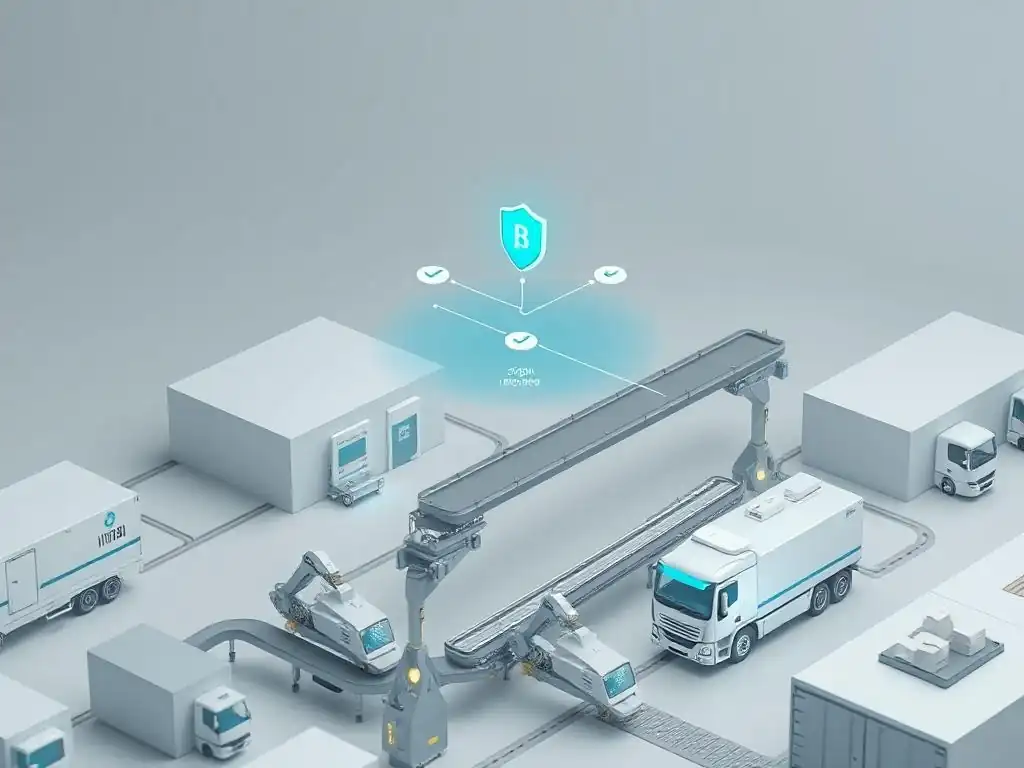
Case Study 1: Tracelink's Blockchain Network for DSCSA Compliance
TraceLink, a major player in pharmaceutical track and trace, has developed a blockchain-based network specifically aimed at helping pharmaceutical companies comply with regulations like the U.S. Drug Supply Chain Security Act (DSCSA). The DSCSA requires interoperable electronic tracing of products at the package level. TraceLink's network uses blockchain to provide a shared, immutable ledger for trading partners to record transaction data securely.
This network facilitates the secure exchange of data between different entities in the supply chain – manufacturers, repackagers, wholesale distributors, and dispensers. By recording key transaction information on a distributed ledger, it enhances trust and transparency among partners who might otherwise be reluctant to share sensitive data directly. This approach helps meet the DSCSA's interoperability requirements, streamlines the verification process, and offers a more robust method for tracing ownership changes, thus contributing to Blockchain pharma logistics efficiency gains in compliance management.
Case Study 2: MediLedger Network Addressing Chargebacks and Contract Management
The MediLedger Network, founded by Chronicled and involving major pharmaceutical companies and distributors, focuses on solving specific, high-friction problems within the pharma supply chain, particularly related to chargebacks and contract management. Chargebacks occur when a dispenser buys a drug from a wholesaler at a lower price based on a contract with the manufacturer, and the wholesaler then claims the difference from the manufacturer. This process is often manual, opaque, and prone to disputes, leading to significant administrative costs and delays.
The MediLedger Network uses blockchain to create a shared, cryptographically secure platform where manufacturers and distributors can verify contract eligibility and automate the chargeback process. By having a common, verifiable record of contracts and sales data, the network eliminates much of the manual reconciliation and dispute resolution previously required. Early reports from participants suggest substantial reductions in administrative overhead and faster resolution of chargeback claims, demonstrating clear Blockchain pharma logistics efficiency gains in financial and contractual processes.
Case Study 3: IBM Food Trust's Application in Vaccine Supply Chain
While primarily known for its application in the food industry, the underlying technology of IBM Food Trust, built on IBM Blockchain Platform (Hyperledger Fabric), is adaptable and has been explored for pharmaceutical supply chains, including vaccine distribution. The platform allows participants to record and share data about products as they move through the supply chain, including origin, handling, and environmental conditions.
In the context of vaccines, particularly those requiring strict cold chain management (like some COVID-19 vaccines), this platform can be used to record temperature data from IoT sensors onto the blockchain at various points. This creates an immutable record verifying that the vaccine remained within the required temperature range throughout its journey.
Participants can quickly access this data to ensure product viability. While specific public data on large-scale implementations for vaccines using IBM Food Trust's full capabilities is still emerging, the platform's design showcases the potential for blockchain to provide critical visibility and trust in managing sensitive medical products, contributing to efficiency by preventing spoilage and ensuring compliance.
Overcoming the Challenges of Blockchain Implementation in Pharma
Regulatory Hurdles and Compliance Requirements
Implementing blockchain in the highly regulated pharmaceutical industry faces significant hurdles, particularly concerning existing and evolving compliance requirements. While blockchain can aid compliance with regulations like DSCSA or FMD by providing a secure data layer, integrating it into established regulatory frameworks and processes is complex. Regulators need to understand and approve blockchain-based systems, and the industry must ensure that data recorded on the blockchain meets all legal requirements for record-keeping, reporting, and data integrity (e.g., FDA's 21 CFR Part 11).
Furthermore, global pharmaceutical supply chains operate under diverse national regulations. A blockchain solution must be flexible enough to accommodate varying requirements across different jurisdictions. This often necessitates careful design to ensure that the platform supports regional nuances while maintaining a global standard for core data. Addressing these regulatory considerations requires close collaboration between technology providers, pharmaceutical companies, and regulatory bodies to ensure that blockchain deployments are compliant and contribute positively to the regulated environment.
Data Privacy and Security Considerations
While blockchain is inherently secure due to cryptography and decentralization, implementing it in pharma logistics raises critical data privacy concerns, especially regarding sensitive business information and, potentially, patient data. Although patient data is typically not stored directly on a public or even a permissioned blockchain, links or references to such data could exist. Compliance with stringent privacy regulations like HIPAA (in the US) or GDPR (in Europe) is paramount.
Designing a blockchain solution for pharma requires careful consideration of what data is stored on-chain versus off-chain. Sensitive commercial data, such as pricing or specific customer details, may need to be kept off the main blockchain ledger, with only anonymized hashes or aggregated data recorded on-chain for verification purposes. Implementing robust access controls and permissioning is essential to ensure that only authorized participants can view specific types of data, balancing the need for transparency and security with privacy requirements.
Interoperability and Integration with Existing Systems
A major technical challenge for blockchain adoption in pharmaceutical logistics is achieving interoperability with the vast array of legacy systems currently used across the supply chain. Pharmaceutical companies, distributors, and pharmacies rely on established Enterprise Resource Planning (ERP) systems, Warehouse Management Systems (WMS), Temperature Monitoring Systems (TMS), and existing serialization databases.
Integrating a new blockchain platform with these disparate, often older, systems requires significant development effort and careful planning. Data formats, communication protocols, and business logic need to be harmonized to ensure seamless data flow between the blockchain and existing IT infrastructure. Lack of standardized APIs or data models across the industry further complicates this integration. Successful blockchain deployments will depend heavily on their ability to connect and exchange data effectively with the systems that companies already use daily, ensuring minimal disruption while delivering Blockchain pharma logistics efficiency gains.
The Future of Blockchain in Pharma Supply Chain Management
Emerging Trends and Innovations in Blockchain Pharma Logistics
The field of blockchain in pharmaceutical logistics is rapidly evolving, with several emerging trends pointing towards its broader adoption and impact. One key trend is the increasing integration of blockchain with Internet of Things (IoT) devices. This allows for automated, real-time recording of critical environmental data (like temperature and humidity) directly onto the blockchain, providing irrefutable proof of cold chain integrity. Another trend is the exploration of using blockchain for managing clinical trial data, ensuring data integrity and transparency from collection to analysis.
Furthermore, there's growing interest in leveraging decentralized identity solutions on blockchain to verify the credentials of supply chain participants, adding another layer of trust. The development of industry-specific blockchain consortia, like those mentioned in the use cases, is also a significant trend, indicating a move towards collaborative, standardized approaches rather than isolated company-specific initiatives. These innovations are poised to further enhance Blockchain pharma logistics efficiency gains and expand the technology's application.
The Potential for Blockchain to Transform the Entire Pharmaceutical Industry
Blockchain's potential impact extends far beyond just logistics optimization; it has the capacity to fundamentally transform various aspects of the pharmaceutical industry. By creating a trusted, transparent, and immutable layer for data exchange, blockchain can improve collaboration and data sharing in areas like drug discovery and development, supply chain finance, and even patient data management (with appropriate privacy safeguards).
In research and development, blockchain could secure intellectual property, manage consent for data usage, and ensure the integrity of research data. For supply chain finance, it can enable faster, more transparent payment processes based on verified deliveries recorded on the ledger. Ultimately, a widely adopted blockchain infrastructure could create a more interconnected, efficient, and trustworthy ecosystem for the entire pharmaceutical value chain, leading to breakthroughs in efficiency, safety, and ultimately, patient care.
Predictions: The Long-Term Impact of Blockchain on Pharma Logistics Efficiency
Looking ahead, the long-term impact of blockchain on pharma logistics efficiency is expected to be substantial. Within the next 5-10 years, we can anticipate wider adoption of blockchain networks for core functions like serialization compliance, track-and-trace, and potentially automating payments via smart contracts. This will likely lead to a significant reduction in manual processes, administrative costs, and errors across the supply chain.
Predictions include a notable decrease in the volume and impact of counterfeit drugs as verification becomes more ubiquitous and reliable. Furthermore, enhanced visibility is expected to lead to optimized inventory management, reducing waste and improving the availability of medicines. While initial implementation challenges remain, the long-term trajectory points towards blockchain becoming a standard, foundational technology for a more secure, transparent, and highly efficient pharmaceutical logistics network, delivering considerable Blockchain pharma logistics efficiency gains industry-wide.
Conclusion: Embracing Blockchain for a More Efficient and Secure Pharma Supply Chain
Key Takeaways: Blockchain's Transformative Potential in Pharma Logistics
Blockchain technology offers a powerful solution to many of the persistent challenges in pharmaceutical logistics, from combating counterfeiting and ensuring product integrity to streamlining complex regulatory compliance. Its core features – immutability, transparency, decentralization, and the ability to execute smart contracts – provide a robust framework for building a more secure, visible, and efficient supply chain. The potential for significant Blockchain pharma logistics efficiency gains is evident through enhanced real-time tracking, automated processes, optimized inventory management, and reduced administrative burdens associated with compliance and chargebacks.
Real-world examples, such as the TraceLink and MediLedger networks, demonstrate that blockchain is already being successfully applied to solve specific industry problems, proving its value in practice. While challenges related to regulation, data privacy, and integration with legacy systems must be carefully addressed, the trajectory of innovation and adoption suggests that blockchain is poised to become a cornerstone technology for the future of pharmaceutical supply chain management, fundamentally transforming how medicines are tracked, verified, and delivered.
Call to Action: Exploring Blockchain Solutions for Your Pharma Logistics Needs
The landscape of pharmaceutical logistics is rapidly evolving, driven by increasing regulatory demands, the need for greater security against counterfeiting, and the constant pressure to improve efficiency. Ignoring the potential of transformative technologies like blockchain is no longer a viable option for companies aiming to remain competitive and ensure patient safety. The evidence points towards significant Blockchain pharma logistics efficiency gains for those who strategically implement these solutions.
Now is the time for pharmaceutical manufacturers, distributors, wholesalers, and other supply chain partners to move beyond initial exploration and begin piloting or adopting blockchain solutions tailored to their specific needs. Engaging with experienced technology providers and industry consortia can help navigate the complexities and identify the most impactful applications for your organization. Embracing blockchain is an investment in a more secure, transparent, and ultimately, a far more efficient future for the pharmaceutical supply chain.
Frequently Asked Questions
What are the main challenges in current pharmaceutical logistics that blockchain technology can address?
Current pharmaceutical logistics faces challenges such as counterfeit drugs, supply chain visibility, and inefficient tracking. Blockchain can enhance transparency and traceability, directly tackling these issues.
How can blockchain improve the tracking and tracing of pharmaceutical products?
Blockchain creates an immutable record of each product's journey. This enhanced traceability helps verify authenticity and prevents counterfeit drugs from entering the supply chain.
Beyond tracking, what other efficiency gains can blockchain bring to pharma logistics?
Blockchain can automate processes like payments and customs clearance, reducing administrative overhead. It can also facilitate real-time data sharing among stakeholders, improving coordination.
What role does DeFi (Decentralized Finance) play in optimizing pharma logistics using blockchain?
DeFi solutions can enable faster and more secure payments between suppliers and distributors. This reduces transaction costs and improves the overall financial efficiency of the supply chain.
What are the key regulatory considerations when implementing blockchain in pharma logistics?
Compliance with regulations like data privacy laws (e.g., GDPR) and drug authentication standards is crucial. Proper implementation ensures adherence to legal requirements and builds trust in the system.
Final Reflection: Unlocking Pharma's Future with Blockchain
The journey through the potential of blockchain in pharmaceutical logistics reveals a powerful truth: transparency and efficiency are no longer optional, but essential for safeguarding global health. The challenges of counterfeit drugs, supply chain vulnerabilities, and regulatory compliance demand innovative solutions, and blockchain offers a compelling path forward, promising significant efficiency gains across the entire pharmaceutical value chain.
The transformative impact of blockchain on pharma logistics extends far beyond mere cost reduction; it touches upon the very integrity of the medications we rely on. Witnessing the potential to eradicate counterfeit drugs and ensure the safe delivery of life-saving treatments underscores the profound responsibility we have to embrace these technological advancements. The future of healthcare is interconnected, transparent, and secure. Blockchain is the key to unlocking that future.
- Dr. Maria Hernandez, Pharma Innovation Lead.
As we conclude this exploration, consider the role you can play in fostering the adoption of blockchain within the pharmaceutical industry. Reflect on the potential for increased trust, reduced waste, and ultimately, improved patient outcomes. Embrace the opportunity to champion innovation, advocate for transparency, and contribute to a future where every medication delivered is guaranteed safe, authentic, and effective. Let us all strive to build a healthier, more secure world, one block at a time.
Revolutionize Your Pharma Supply Chain Now!
Thank you for diving into the world of blockchain and its potential to reshape pharma logistics. We hope you've gained valuable insights into how this technology can drive efficiency, transparency, and security in your operations. Ready to put that knowledge into action?
Here are some practical steps you can take:
- Initiate a pilot project: Identify a key pain point in your current pharma supply chain and explore how a blockchain solution could address it. Start small and scale as you see success.
- Research existing blockchain consortia and partnerships in the pharmaceutical industry to collaborate and share best practices.
- Share this article with your colleagues in the pharmaceutical industry to spur wider discussions on the potential benefits of blockchain adoption.
What specific challenge in your pharma logistics are you most eager to tackle with blockchain technology, and what first step will you take to explore it?
Leave a Reply