
PatientControlled Health Records: Blockchain Empowering Individuals with Data Ownership

Welcome to Blockchain Trends, your compass in the rapidly evolving world of decentralized technologies. Beyond the hype of cryptocurrencies lies a universe of transformative applications, and we're here to explore them. Ever wondered how blockchain could revolutionize healthcare by giving you control over your own medical records? Dive into our latest article to unravel the complexities of blockchain patient data ownership and discover how this innovation is empowering individuals like never before. The future of healthcare is decentralized – are you ready to explore it?
Patient-Controlled Health Records: Blockchain Empowering Individuals with Data Ownership
- Introduction: The Need for Blockchain in Patient Data Management
- Blockchain and Healthcare: A Synergistic Revolution
- Blockchain Patient Data Ownership: A Deep Dive
- Key Features of Blockchain-Based Patient-Controlled Health Records
- Benefits of Blockchain-Enabled Patient Data Ownership
- Use Cases: Real-World Applications of Blockchain in Patient Data Management
- Addressing the Challenges of Blockchain Adoption in Healthcare
- The Future of Blockchain in Healthcare: Empowering Patients with Data
- Conclusion: Embracing Blockchain for a Patient-Centric Healthcare Future
-
Frequently Asked Questions
- What is patient-controlled health records and how does blockchain play a role?
- How does blockchain enhance patient data ownership compared to traditional systems?
- Beyond enhanced control, what are the potential benefits of blockchain-based health records for patients?
- What are some of the challenges in implementing blockchain technology for patient health records?
- How might future regulations impact the adoption of blockchain patient data ownership models?
- Final Reflection: Reclaiming Healthcare's Narrative
- Reclaim Your Health Data Destiny!
Introduction: The Need for Blockchain in Patient Data Management
The Current Challenges of Healthcare Data Interoperability
Healthcare data systems today are notoriously fragmented, hindering the seamless flow of patient information between different providers, hospitals, and clinics. This lack of interoperability means that a patient's complete medical history is often scattered across disparate electronic health record (EHR) systems, many of which use proprietary formats and communication protocols. According to various industry reports, a significant percentage of healthcare data remains siloed, making it difficult for clinicians to access comprehensive patient information at the point of care, leading to potential delays in treatment and increased costs.
This fragmentation also poses significant challenges for public health initiatives, medical research, and emergency response. Without a unified or easily accessible view of health data, tracking disease outbreaks, conducting large-scale studies, or quickly accessing critical patient information during emergencies becomes complex and inefficient. The inability of systems to 'talk' to each other necessitates manual processes, such as faxing or mailing records, which are not only slow and costly but also introduce opportunities for errors and compromise data security. The current landscape is a major barrier to achieving truly patient-centric care and realizing the full potential of data-driven healthcare improvements.
Why Patient Data Ownership Matters in Modern Healthcare
The traditional model of healthcare data management often places control primarily in the hands of healthcare providers and institutions, with patients having limited access or control over their own health records. In the age of digital information, there is a growing recognition of the fundamental right of individuals to own and control their personal data, including sensitive health information. Empowering patients with data ownership means giving them the ability to access, manage, and share their medical records securely and selectively, rather than being passive recipients of care whose data is held by others.
Establishing blockchain patient data ownership shifts the paradigm, placing the individual at the center of their healthcare journey. This is crucial for several reasons: it enhances patient engagement by making individuals active participants in their health management; it improves transparency regarding how their data is used; and it provides a foundation for greater trust in the healthcare system.
Furthermore, patient data ownership is essential for enabling individuals to leverage their health information for their own benefit, whether that's sharing it with a new specialist, contributing anonymized data to research, or using personal health apps that require access to their records. This shift is not just about control; it's about enabling better health outcomes through informed and empowered patients.
Blockchain and Healthcare: A Synergistic Revolution
How Blockchain Technology Addresses Healthcare Data Security Concerns
Healthcare data is a prime target for cyberattacks due to its sensitive nature and the wealth of personal information it contains, making data security a paramount concern. Traditional centralized databases are vulnerable to single points of failure, where a successful breach can compromise vast amounts of patient data.
Blockchain technology, with its decentralized and cryptographic nature, offers a robust alternative for enhancing healthcare data security. Data stored or referenced on a blockchain is distributed across a network of nodes, making it significantly harder for malicious actors to tamper with or corrupt records without being detected by the network consensus mechanisms.
The use of cryptographic hashing and digital signatures ensures that data entries are secure and verifiable. Each block in the chain contains a unique hash of its contents and the hash of the previous block, creating an unbreakable link.
Any attempt to alter data in a past block would change its hash, invalidating the chain and immediately alerting the network to the compromise. This inherent immutability makes blockchain an exceptionally strong defense against unauthorized data modification or deletion, addressing some of the most critical vulnerabilities in current healthcare data systems and laying a foundation for secure blockchain patient data ownership.
Enhancing Data Integrity and Transparency with Distributed Ledger Technology (DLT)
Data integrity is non-negotiable in healthcare; inaccurate or tampered records can lead to misdiagnoses, incorrect treatments, and severe patient harm. Distributed Ledger Technology (DLT), the underlying technology behind blockchain, fundamentally enhances data integrity by creating a shared, synchronized ledger across multiple participants. Every transaction or data entry is recorded chronologically and transparently (to authorized parties) across the distributed network. Once a record is added to the ledger and validated by the network, it is practically impossible to alter or remove it without the consensus of the majority of participants.
This distributed and immutable nature ensures that all authorized parties are working with the same, verified version of the data, drastically reducing the risk of conflicting or erroneous records. Furthermore, the transparent nature of DLT means that all transactions and data access events can be logged and audited, providing an unprecedented level of accountability. While the data itself might be encrypted or stored off-chain for privacy, the record of the data's existence, ownership, and access permissions is transparently managed on the ledger, fostering trust and reliability in the healthcare data ecosystem.
Blockchain Patient Data Ownership: A Deep Dive
Defining Blockchain Patient Data Ownership and its Implications
Blockchain patient data ownership refers to the concept where individuals, rather than healthcare institutions, are the primary controllers and managers of their personal health information stored or linked via a blockchain system. In this model, the blockchain acts not necessarily as a storage repository for the massive amounts of raw health data (which would be impractical due to scalability and cost), but rather as a secure, immutable index and access control layer for data that might reside elsewhere, such as in encrypted decentralized storage or even existing EHR systems.
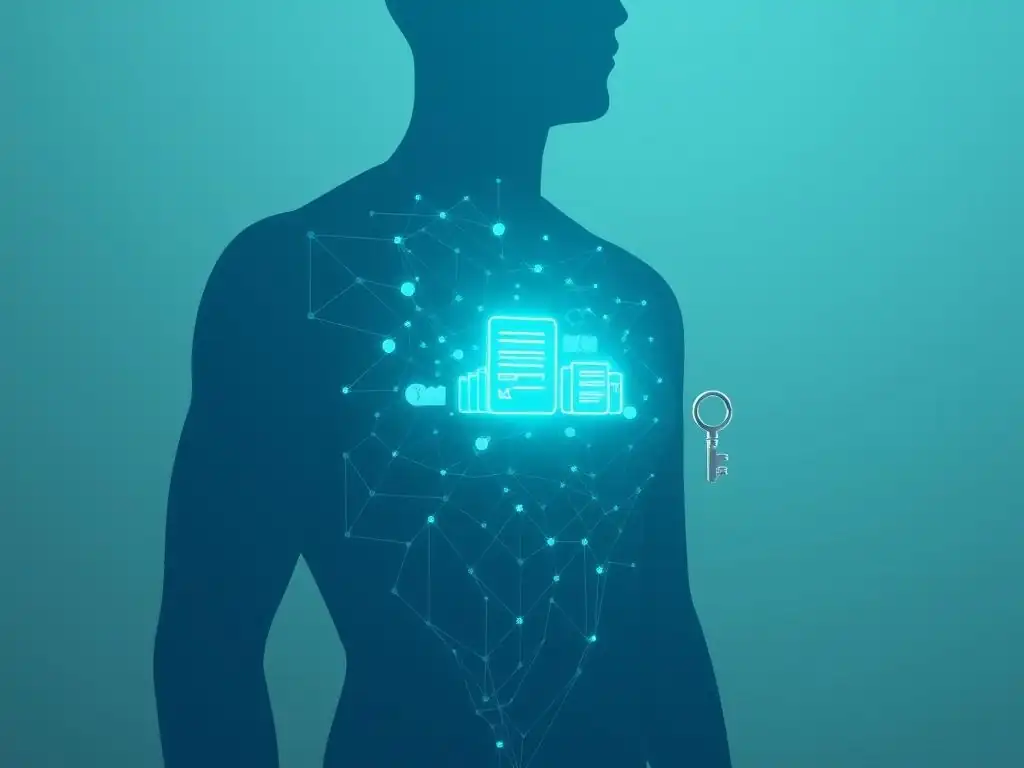
The patient holds the private keys associated with their data entries on the blockchain, granting them ultimate authority over who can access their records and under what conditions.
The implications of this shift are profound. Firstly, it empowers patients, giving them agency over their most sensitive personal information. They can grant temporary access to a specialist, share specific records for a clinical trial, or even revoke access permissions previously granted.
Secondly, it fosters a more collaborative healthcare environment where patients are active participants in managing their health. Thirdly, it creates opportunities for new models of healthcare data exchange and innovation, potentially enabling patients to monetize their anonymized data for research if they choose. Implementing blockchain patient data ownership fundamentally realigns the power dynamic in healthcare data management towards the individual.
Decentralized Health Records: Giving Patients Control Over Their Information
Decentralized health records, facilitated by blockchain technology, fundamentally change how patient information is stored, accessed, and controlled. Instead of a single institution holding a patient's entire record, segments of the record might be stored in a distributed manner, with the blockchain serving as the secure, shared index and permission layer. The patient, through their private keys, controls this index and dictates who can view or add information. For example, a patient could grant read-only access to their primary care physician, write access to their specialist for a specific condition, and temporary access to an emergency room physician.
This model contrasts sharply with current systems where patients often have to request copies of their records, which can be a cumbersome and slow process. With decentralized health records underpinned by blockchain patient data ownership, access can be granted instantly and securely via the blockchain.
The patient becomes the central hub, connecting their various healthcare providers, family members, or even researchers directly to their relevant health data under their explicit control. This not only improves efficiency and convenience but also significantly enhances patient privacy and security by removing the need to trust multiple third-party institutions with the entirety of one's sensitive health history.
Key Features of Blockchain-Based Patient-Controlled Health Records
Secure Data Storage and Access Control using Blockchain
While storing large volumes of raw patient data directly on a blockchain is generally impractical due to size and privacy concerns, blockchain excels at managing secure pointers to encrypted data stored off-chain and enforcing access control. Patient records can be encrypted using strong cryptographic algorithms, and the encrypted data stored on decentralized storage systems or even existing secure databases. The blockchain then stores immutable hashes of this encrypted data and, crucially, the access permissions defined by the patient.
Access control is managed through smart contracts or blockchain transactions initiated by the patient's private key. When a healthcare provider or researcher requests access, the request is routed through the blockchain. The smart contract verifies if the requesting party has the necessary permissions granted by the patient's digital signature. Only upon successful verification is the key or permission granted to decrypt and view the relevant portion of the data. This method ensures that access is always logged on the immutable ledger and is solely at the patient's discretion, embodying the core principle of blockchain patient data ownership.
Immutable Audit Trails for Enhanced Data Accountability
One of the most powerful features of blockchain technology for healthcare is the creation of immutable audit trails. Every interaction with the patient's data index on the blockchain – including granting access, revoking access, or adding a new data pointer – is recorded as a transaction on the distributed ledger. These transactions are cryptographically linked and timestamped, forming a permanent and verifiable history of all data access and modification events related to the patient's record.
This immutable log provides unparalleled accountability. If there is any question about who accessed a patient's data, when, and why, the blockchain provides a transparent record that cannot be altered or deleted by any single party. This significantly reduces the risk of unauthorized access or data misuse going unnoticed. For compliance purposes, dispute resolution, or simply maintaining transparency, the blockchain's audit trail offers a level of trustworthiness and detail that is challenging to achieve with traditional centralized logging systems, further strengthening the security benefits of blockchain patient data ownership.
Smart Contracts for Automated Data Sharing Permissions
Smart contracts are self-executing contracts with the terms of the agreement directly written into code. In the context of blockchain patient data ownership, smart contracts can automate and enforce complex data sharing permissions based on rules defined by the patient. For example, a patient could set up a smart contract that automatically grants a specific research institution access to their anonymized lab results only for studies related to diabetes, and only for a limited time period.
These automated rules eliminate the need for manual permission granting for every request, streamlining the data sharing process while ensuring that the patient's predefined conditions are strictly met. Smart contracts can also handle complex scenarios, such as triggering payments for data usage (if the patient chooses to monetize their data), or automatically revoking access upon a certain date or event. By encoding permissions into immutable, transparent code on the blockchain, smart contracts provide a reliable and efficient mechanism for patients to manage granular access to their health information, making blockchain patient data ownership practical and flexible.
Benefits of Blockchain-Enabled Patient Data Ownership
Improved Data Security and Reduced Risk of Data Breaches
The decentralized and cryptographic nature of blockchain technology significantly enhances the security posture of healthcare data. Unlike centralized databases which represent single points of failure, a blockchain distributes the data index and access controls across a network, making it exponentially harder for attackers to compromise the entire system. Cryptographic hashing ensures the integrity of the data pointers, and digital signatures verify the identity of participants.
While the raw patient data itself might be stored off-chain in encrypted form, the blockchain ensures that access is strictly controlled by the patient's private key and recorded immutably. This model drastically reduces the attack surface compared to traditional systems. Estimates suggest that healthcare data breaches cost billions annually. Implementing blockchain patient data ownership models can help mitigate these risks by making patient data less appealing and harder to access for malicious actors, potentially leading to a significant reduction in the frequency and impact of breaches.
Enhanced Patient Privacy and Control Over Personal Health Information (PHI)
Patient privacy is a fundamental ethical and legal requirement in healthcare. Blockchain patient data ownership empowers individuals by giving them granular control over their Personal Health Information (PHI). Patients can decide precisely which pieces of their data (e.g., only allergy information, only recent lab results) are shared with whom, for how long, and under what conditions. This is a stark contrast to current systems where patients often have limited visibility or control over how their data is accessed and used by healthcare providers and third parties.
By holding the private keys, the patient becomes the ultimate gatekeeper of their information. This enhances privacy by minimizing unnecessary exposure of sensitive data. Furthermore, the immutable audit trail on the blockchain provides transparency, allowing patients to see exactly who has requested or accessed their data, fostering trust and ensuring that their privacy preferences are being respected. This level of control is a cornerstone of effective blockchain patient data ownership.
Streamlined Data Sharing with Healthcare Providers and Researchers
Sharing health data between different healthcare providers is often a cumbersome and time-consuming process involving manual requests, faxes, or incompatible electronic systems. Blockchain-enabled patient-controlled records can dramatically streamline this process. When a patient needs to share their data with a new specialist or during an emergency, they can grant access instantly via the blockchain using their mobile device or a secure web interface.
Similarly, researchers often face significant hurdles in accessing sufficient, high-quality data for studies due to privacy concerns and data silos. With blockchain patient data ownership, patients can easily and securely consent to share specific, potentially anonymized, datasets for research purposes, potentially even receiving compensation for their contribution. This streamlined data sharing process benefits not only patient care by ensuring providers have access to complete information but also accelerates medical research and innovation by making data more accessible (with patient consent).
Increased Data Accuracy and Reduced Medical Errors
Fragmented and incomplete patient records are a significant contributor to medical errors. When healthcare providers lack access to a patient's full medical history, including past diagnoses, medications, allergies, and treatment outcomes from different institutions, they may make decisions based on partial information. Studies have shown that communication failures and lack of access to information are leading causes of preventable medical errors.
By enabling patients to consolidate and control access to their comprehensive health record via a blockchain platform, healthcare providers can gain access to a more complete and accurate picture of the patient's health status. Having access to up-to-date information from all relevant sources reduces the likelihood of prescribing conflicting medications, overlooking critical allergies, or repeating unnecessary tests. While the blockchain itself doesn't correct data entry errors, it ensures that all authorized parties are referencing the same, most current version of the data controlled by the patient, thereby contributing to improved data accuracy and a reduction in medical errors.
Use Cases: Real-World Applications of Blockchain in Patient Data Management
Estonia's KSI Blockchain for Healthcare Data Integrity
Estonia, a pioneer in digital governance, utilizes its state-of-the-art Keyless Signature Infrastructure (KSI) blockchain technology to secure its national electronic health records system. While not a system focused on individual blockchain patient data ownership in the sense of direct patient control over private keys, the KSI blockchain is used to ensure the integrity and security of the data stored within their centralized EHR system. Every entry and access event in the Estonian EHR system is timestamped and hashed onto the KSI blockchain, creating an immutable audit trail.
This implementation provides an unprecedented level of assurance that patient data has not been tampered with by administrators or unauthorized parties. It enhances trust in the system by providing a cryptographically verifiable log of all activities. While patients don't directly manage access via blockchain keys, the system demonstrates a national-level adoption of blockchain for securing healthcare data integrity, a crucial component that can underpin future models incorporating more direct blockchain patient data ownership. The system processes millions of transactions annually, demonstrating blockchain's capability in a large-scale healthcare context.
Medicalchain: A Platform for Secure and Transparent Healthcare Data Exchange
Medicalchain is a platform designed to enable patients to own and control their health data using blockchain technology. It aims to create a decentralized platform where patients can securely store their electronic health records and share them with healthcare professionals, hospitals, laboratories, and researchers using a private key infrastructure. The platform leverages blockchain to record data transactions and maintain an immutable history of patient interactions.
Medicalchain's approach focuses on giving patients the ability to manage access permissions directly. Patients can grant temporary or permanent access to their records and even choose to share anonymized data for research, potentially earning rewards in the process. The platform utilizes a dual-chain structure, with a private permissioned chain for sensitive data access and a public chain for recording transactions and permissions. This model directly addresses the goal of blockchain patient data ownership by putting control squarely in the hands of the individual.
Patientory: Secure Storage and Management of Health Records
Patientory is another notable example of a platform leveraging blockchain to empower individuals with control over their health information. The Patientory app allows users to create a secure, encrypted personal health profile that aggregates data from various sources, including EHRs, wearables, and patient-reported information. This data is stored securely, often using decentralized storage solutions, with access controlled via a blockchain.
The platform utilizes the Ethereum blockchain (or similar DLTs) to manage patient identities and track data access permissions via smart contracts. Patients use the Patientory app to grant or revoke access to their health information for providers, family members, or other trusted parties. The system logs all access attempts on the blockchain, creating a transparent audit trail. Patientory's focus is on creating a patient-centric health data ecosystem where individuals are sovereign over their information, demonstrating a practical application of blockchain patient data ownership.
Addressing the Challenges of Blockchain Adoption in Healthcare
Scalability and Performance Limitations of Blockchain Networks
One of the primary technical hurdles for widespread blockchain adoption in healthcare is scalability. Public blockchains like Bitcoin or Ethereum, while secure, can process only a limited number of transactions per second (TPS) – Bitcoin handles around 7 TPS, while Ethereum (pre-Eth2 upgrades) managed around 15-30 TPS. Even with newer technologies like sharding or Layer 2 solutions, achieving the thousands or even millions of TPS required for large-scale healthcare systems, especially during peak loads, remains a significant challenge for public chains.
Private or permissioned blockchains offer higher throughput, potentially reaching thousands of TPS, but they might compromise some degree of decentralization. Implementing blockchain patient data ownership for millions of patients, with frequent updates and access requests, requires a robust underlying infrastructure capable of handling immense data volumes and transaction rates efficiently and cost-effectively. Ongoing research and development in blockchain architecture are crucial to overcome these performance limitations and make blockchain a viable solution for global healthcare data management.
Regulatory Compliance and Data Governance Considerations
Healthcare data is subject to stringent regulations worldwide, such as HIPAA in the United States, GDPR in Europe, and similar laws in other regions. These regulations mandate strict requirements for data privacy, security, storage, retention, and patient rights (like the right to access, modify, or even erase data). Implementing blockchain solutions, especially those involving blockchain patient data ownership, must navigate this complex regulatory landscape.
While blockchain's immutability is a security strength, it can conflict with regulations like GDPR's "right to be forgotten." Solutions typically involve storing sensitive data off-chain with the blockchain storing only encrypted pointers and access logs, allowing the patient to "forget" or delete the off-chain data while the log of its existence remains on the chain. Data governance models must be carefully designed to ensure compliance, including defining roles and permissions within the blockchain network, establishing clear policies for data handling, and ensuring legal frameworks support the concept of decentralized data ownership and blockchain-based consent mechanisms.
Interoperability with Existing Healthcare Systems and Standards
The healthcare industry relies on a vast array of legacy systems and established data standards (like HL7, FHIR). Integrating new blockchain-based solutions for blockchain patient data ownership with this existing infrastructure is a significant challenge. Most current EHR systems were not designed to interact directly with decentralized ledgers or accommodate patient-controlled access via blockchain keys.
Achieving true interoperability requires developing middleware, APIs, and standardized protocols that can translate data between traditional systems and blockchain platforms. This involves significant development effort and cooperation among technology providers, healthcare institutions, and standards bodies. Furthermore, ensuring that data formats are compatible and that the semantic meaning of health information is preserved when shared across different systems and the blockchain layer is complex. Successful adoption hinges on creating solutions that can seamlessly integrate with the tools and workflows already in use by healthcare professionals.
The Future of Blockchain in Healthcare: Empowering Patients with Data
The Role of Blockchain in Personalized Medicine and Precision Healthcare
Personalized medicine relies on analyzing vast amounts of patient data, including genetic information, lifestyle factors, environmental exposures, and medical history, to tailor treatments and preventative strategies. Blockchain technology, by enabling secure, patient-controlled access to diverse datasets, is poised to play a crucial role in advancing personalized medicine. Patients can consent to share their specific, granular data (e.g., genomic sequences, microbiome data, wearable device data) directly and securely with researchers or healthcare providers focused on personalized treatments.
The ability to easily and verifiably share detailed personal health data under patient control facilitates the creation of richer, more comprehensive datasets for analysis. This can accelerate the discovery of biomarkers, improve diagnostic accuracy, and enable the development of highly targeted therapies. Blockchain patient data ownership ensures that individuals remain in control of their most intimate biological information while contributing to scientific progress, paving the way for a future where healthcare is truly tailored to the individual.
The Potential for Blockchain-Based Healthcare Ecosystems
Blockchain has the potential to underpin entirely new healthcare ecosystems that are more patient-centric, transparent, and efficient. Imagine a system where not just patient records, but also insurance claims, supply chain logistics for pharmaceuticals, and even credentialing for healthcare professionals are managed on interconnected blockchain networks. Patients could interact with various service providers within this ecosystem using their blockchain identity, granting access to relevant data as needed.
Such an ecosystem could streamline administrative processes, reduce fraud (estimated to cost the US healthcare system billions annually), improve supply chain transparency for drug authenticity, and create a unified, secure platform for all healthcare interactions. Blockchain patient data ownership would be a central pillar of this ecosystem, ensuring that the patient's consent and control are integrated into every transaction involving their health information or services. This vision represents a fundamental restructuring of the healthcare industry around decentralized trust and patient empowerment.
Predictions for the Growth of Blockchain Patient Data Ownership
While still in its early stages, the adoption of blockchain technology for healthcare data management and blockchain patient data ownership is expected to grow significantly in the coming years. Market research reports predict substantial growth in the global healthcare blockchain market, with some forecasting a market value reaching several billion dollars within the next five to seven years. This growth will be driven by increasing concerns over data security, the push for greater interoperability, regulatory pressures, and a growing demand from patients for more control over their health information.
Early implementations, like pilots and specific use cases by companies such as Medicalchain and Patientory, demonstrate the feasibility and benefits. As blockchain technology matures, scalability solutions improve, and regulatory frameworks adapt, we can expect to see more widespread adoption by healthcare providers, payers, and governments. The trend towards digital health, coupled with the imperative to secure sensitive data and empower patients, positions blockchain patient data ownership as a key component of the future healthcare landscape.
Conclusion: Embracing Blockchain for a Patient-Centric Healthcare Future
Recap of the Benefits of Blockchain for Patient Data Ownership
Blockchain technology offers a transformative approach to managing patient health information, fundamentally shifting control from institutions to individuals. The core benefits of implementing blockchain patient data ownership include significantly enhanced data security through decentralization and cryptography, reducing the risk and impact of costly data breaches. It provides unprecedented patient privacy and granular control over sensitive Personal Health Information (PHI), allowing individuals to decide precisely who accesses their data and under what conditions.
Furthermore, blockchain streamlines data sharing between disparate healthcare providers and facilitates consent-based data contributions to research, improving care coordination and accelerating medical advancements. The immutable audit trails ensure accountability and transparency in data access, while the potential for increased data accuracy can contribute to reducing medical errors. Despite challenges related to scalability, regulation, and interoperability, the inherent strengths of blockchain make it a powerful tool for building a more secure, transparent, and patient-centric healthcare system.
Call to Action: Encouraging the Adoption of Blockchain-Based Solutions
The potential benefits of blockchain patient data ownership are clear and compelling. To realize this vision, active steps are needed across the healthcare ecosystem. Healthcare providers and institutions should explore and pilot blockchain solutions for secure data management and consent management. Technology developers must continue to innovate, focusing on scalable, interoperable, and user-friendly platforms that meet regulatory requirements.
Policy makers and regulatory bodies need to engage with blockchain technology to create clear guidelines and legal frameworks that support decentralized data ownership models while ensuring patient protection. Most importantly, patients themselves should be educated about the possibilities that blockchain offers for controlling their health data and advocate for solutions that empower them. Embracing blockchain is not just a technological upgrade; it's a strategic move towards a future where patients are empowered partners in their healthcare journey, with sovereign control over their most valuable asset – their health information.
Frequently Asked Questions
What is patient-controlled health records and how does blockchain play a role?
Patient-controlled health records are systems where individuals have direct access and control over their medical data. Blockchain technology provides a secure and transparent way to manage and share this data, empowering patients.
How does blockchain enhance patient data ownership compared to traditional systems?
Traditional systems often keep patient data siloed within healthcare providers. Blockchain enables decentralized storage and ownership, giving patients the ability to grant or revoke access to their data, ensuring greater control.
Beyond enhanced control, what are the potential benefits of blockchain-based health records for patients?
Benefits include improved data security and privacy, easier sharing of records with specialists, and potential for better-coordinated care and personalized medicine.
What are some of the challenges in implementing blockchain technology for patient health records?
Challenges include scalability of blockchain networks, ensuring interoperability between different systems, and addressing regulatory concerns related to data privacy and security.
How might future regulations impact the adoption of blockchain patient data ownership models?
Future regulations will likely focus on ensuring data privacy, security, and patient rights within blockchain-based systems. Compliance with these regulations will be crucial for widespread adoption.
Final Reflection: Reclaiming Healthcare's Narrative
The exploration of blockchain's potential to revolutionize patient-controlled health records underscores a critical shift in power dynamics. The promise of blockchain patient data ownership is no longer a futuristic fantasy, but a tangible possibility reshaping how individuals interact with their healthcare information. This technology offers a pathway towards greater transparency, security, and ultimately, individual empowerment within a system often perceived as opaque and impersonal.
The implications of this shift extend far beyond mere data storage; it's about reclaiming agency over one's own health narrative. Witnessing the potential for individuals to actively manage and share their medical history, rather than being passive recipients of care, is profoundly inspiring. It speaks to a future where healthcare is truly patient-centric. The future of healthcare is participatory, predictive, and personalized.
- Eric Topol
As we stand at the cusp of this technological transformation, let us embrace the opportunity to champion blockchain-driven patient data ownership. Consider how you can advocate for policies and technologies that prioritize individual control and security. Reflect on the power of informed consent and the importance of actively participating in your own healthcare journey. The future of healthcare is being written now, and your voice matters in shaping a system that truly empowers every individual.
Reclaim Your Health Data Destiny!
Thank you for exploring how blockchain is transforming patient-controlled health records. You've seen the potential for genuine data ownership and the empowerment it offers. Are you ready to take control?
Here’s how to get started:
- Discuss with your healthcare provider the possibilities of adopting blockchain-based health record systems.
- Research existing platforms that utilize blockchain technology and find features that suit your needs.
- Share this article with friends and family to encourage conversations about the future of healthcare data ownership.
What actions will you take today to become an active participant in managing your health information?
Leave a Reply