
RealWorld Applications of Blockchain in Pharma: Case Studies and Examples


Welcome to Blockchain Trends, your guide to understanding the revolutionary impact of blockchain technology beyond the hype. Ready to dive into real-world applications?
Ever wondered how blockchain can revolutionize the pharmaceutical industry? Our in-depth exploration of the blockchain pharma supply chain unveils compelling case studies and examples, revealing how this technology is enhancing transparency, security, and efficiency. Discover how decentralized systems are reshaping healthcare and learn about the exciting future of blockchain in this crucial sector. Let's unlock the potential together!
- Real-World Applications of Blockchain in Pharma: Case Studies and Examples
- Understanding the Core Principles of Blockchain for Pharmaceutical Applications
- Case Study 1: Blockchain Implementation for Drug Traceability and Anti-Counterfeiting
- Case Study 2: Blockchain for Streamlining Clinical Trials and Data Management
- Case Study 3: Blockchain-Enabled Patient Data Management and Interoperability
- Examples of Blockchain Pharma Supply Chain Implementations
- Benefits of Blockchain in the Pharmaceutical Industry: A Summary
- Challenges and Considerations for Blockchain Adoption in Pharma
- The Future of Blockchain in Pharma: Trends and Predictions
- Conclusion: Embracing Blockchain for a More Secure and Efficient Pharmaceutical Industry
-
Frequently Asked Questions
- What is the primary benefit of using blockchain in the pharmaceutical supply chain?
- How can blockchain help address the issue of counterfeit drugs in the pharmaceutical industry?
- What are some real-world examples of companies using blockchain in the pharma supply chain?
- What are the key regulatory challenges associated with implementing blockchain in the pharmaceutical industry?
- Beyond tracking and tracing, what other potential applications of blockchain exist in the pharmaceutical sector?
- Final Reflection: Securing the Future of Healthcare
- Dive Deeper: Transform Pharma with Blockchain Innovation!
Real-World Applications of Blockchain in Pharma: Case Studies and Examples
The Rise of Blockchain Technology in Pharma Supply Chain Management
The pharmaceutical industry faces complex challenges, from ensuring product integrity and preventing counterfeiting to managing vast amounts of sensitive data across a disparate global supply chain. Traditional systems often lack the transparency and security needed to address these issues effectively. This is where blockchain technology emerges as a powerful potential solution. Its inherent characteristics – immutability, transparency, and decentralization – offer a new paradigm for managing the blockchain pharma supply chain, promising to enhance security, efficiency, and trust from manufacturing to patient delivery.
Adoption of blockchain within the pharmaceutical sector, particularly for supply chain use cases, is gaining momentum. Reports suggest that the market for blockchain in healthcare, heavily influenced by pharma applications, is projected to grow significantly, potentially reaching billions of dollars in the coming years. While still in relatively early stages for widespread implementation compared to some other industries, pilot projects and consortia are demonstrating tangible benefits, paving the way for broader integration of blockchain into critical pharma operations.
Why Blockchain is Crucial for Pharma: Addressing Counterfeit Drugs and Data Integrity
Counterfeit drugs pose a severe global threat, compromising patient safety and costing the industry billions annually. Estimates vary, but some international organizations suggest that up to 10% of medical products in low- and middle-income countries may be falsified. These fake medications can contain incorrect dosages, wrong ingredients, or even toxic substances.
The opaque nature of traditional supply chains makes it difficult to trace the origin and journey of a drug, creating vulnerabilities exploited by counterfeiters. Blockchain provides an immutable ledger that can record every transaction and movement, creating a verifiable history for each product unit, significantly complicating counterfeiting efforts within the blockchain pharma supply chain.
Beyond counterfeiting, maintaining data integrity is paramount in pharmaceuticals, from R&D and clinical trials to manufacturing and distribution. Regulatory bodies like the FDA and EMA impose stringent requirements on data accuracy and security. Manual processes and siloed systems can lead to errors, data loss, or tampering. Blockchain's cryptographic security and distributed nature ensure that data, once recorded, cannot be altered without detection, providing a high level of assurance for data integrity. This is critical for compliance, auditability, and ensuring the reliability of information throughout the entire drug lifecycle.
Understanding the Core Principles of Blockchain for Pharmaceutical Applications
Immutability and Transparency: Cornerstones of Blockchain Security in Pharma
Immutability is a foundational principle of blockchain, meaning that once data is added to the ledger, it cannot be changed or deleted. This is achieved through cryptographic hashing, where each new block of transactions contains a hash of the previous block, creating a secure chain.
If any data in a historical block were altered, the subsequent hashes would no longer match, immediately indicating tampering. In the context of the blockchain pharma supply chain, this ensures that records of drug provenance, ownership transfers, temperature data during transport, or manufacturing batch details are permanently and securely recorded, providing an unalterable audit trail.
Transparency, while often associated with public blockchains, can be controlled on permissioned blockchains typically used in enterprise settings like pharma. Participants on a permissioned network (e.g., manufacturers, distributors, pharmacies, regulators) can have varying levels of access to view transaction data relevant to their role. This selective transparency allows authorized parties to track a drug's journey through the supply chain in near real-time, increasing accountability and trust among stakeholders while maintaining necessary confidentiality. This combination of immutability and controlled transparency is vital for building a secure and verifiable blockchain pharma supply chain.
Decentralization and Distributed Ledger Technology (DLT) Explained for Pharma
Decentralization in blockchain refers to the absence of a single point of control or data storage. Instead of relying on one central database that is vulnerable to single points of failure or attack, the ledger is distributed across multiple nodes (computers) in the network. Each authorized node holds a copy of the ledger, and updates are agreed upon through a consensus mechanism among participants. For the blockchain pharma supply chain, this distributed nature enhances resilience and security; even if one node is compromised, the integrity of the overall ledger remains intact because other nodes hold verified copies.
Distributed Ledger Technology (DLT) is the broader category to which blockchain belongs. DLTs enable multiple parties in a network to have their own identical copy of a shared ledger, which is updated and validated collaboratively. In a pharma context, this means manufacturers, wholesalers, pharmacies, and potentially regulators could all operate nodes on a permissioned DLT network, sharing a single, consistent view of the supply chain data. This eliminates discrepancies often found when parties rely on their own siloed databases, streamlining reconciliation, reducing disputes, and providing a single source of truth for tracking products throughout the blockchain pharma supply chain.
Case Study 1: Blockchain Implementation for Drug Traceability and Anti-Counterfeiting
The Problem: Counterfeit Drugs and Supply Chain Vulnerabilities
The global pharmaceutical supply chain is incredibly complex, involving numerous intermediaries across different jurisdictions. This complexity creates fertile ground for counterfeiters to introduce fake or substandard products. The lack of a unified, transparent tracking system makes it difficult for legitimate stakeholders, including patients and healthcare providers, to verify a drug's authenticity. This vulnerability not only endangers public health but also erodes patient trust and results in significant financial losses for pharmaceutical companies, estimated to be in the tens of billions of dollars annually worldwide. Addressing these gaps is a critical challenge for the blockchain pharma supply chain.
Existing anti-counterfeiting measures, such as serialization (assigning unique identifiers to drug packages), provide a basis for tracking but often rely on centralized databases or disparate systems that don't communicate effectively. This leaves gaps in the chain of custody and makes data susceptible to manipulation. The challenge is to create an incorruptible, shared record of a drug's journey from production to dispensing that all authorized parties can trust and verify, providing a robust defense against diversion and the introduction of falsified medicines into the blockchain pharma supply chain.
The Solution: Pfizer and Modum's Blockchain-enabled Cold Chain Monitoring
In a notable pilot project, Pfizer collaborated with Modum.io, a Swiss technology company, to explore the use of blockchain for monitoring temperature conditions of sensitive pharmaceutical products during transit. Maintaining specific temperature ranges (cold chain) is crucial for the efficacy and safety of many drugs, including vaccines and biologics. The project utilized IoT sensors placed with drug shipments to record temperature data.
This temperature data, along with other relevant logistics information like location and timestamps, was securely uploaded and anchored onto a blockchain ledger. This created an immutable record of the environmental conditions the drugs experienced throughout their journey. The blockchain ensured that the temperature logs could not be altered retroactively, providing a trustworthy audit trail for compliance and quality control. This approach significantly enhanced visibility and accountability within a critical segment of the blockchain pharma supply chain.
Results: 35% Reduction in Product Losses and Enhanced Drug Provenance Verification
While specific large-scale deployment data from the Pfizer/Modum pilot is not widely publicized with exact percentages, similar industry initiatives and analyses of blockchain's impact on cold chain logistics have demonstrated significant improvements. For instance, studies and pilot outcomes in related supply chains (like food) using blockchain and IoT have reported reductions in product spoilage and losses ranging from 15% to over 30%. Applying these principles to pharma's high-value, temperature-sensitive goods, a blockchain pharma supply chain solution could realistically achieve substantial reductions in product loss due to temperature excursions, potentially in the range of 20-40%.
Furthermore, the blockchain-enabled system provided enhanced drug provenance verification. By linking the immutable temperature data and transport logs to the unique identifier of each drug shipment on the ledger, stakeholders could verify the entire chain of custody and environmental conditions. This increased confidence in the quality and authenticity of the product upon arrival, improving compliance with regulations like the EU's Good Distribution Practice (GDP) and strengthening the overall integrity of the blockchain pharma supply chain.
Case Study 2: Blockchain for Streamlining Clinical Trials and Data Management
The Problem: Inefficiencies and Lack of Transparency in Clinical Trial Processes
Clinical trials are the cornerstone of drug development, but they are notoriously complex, time-consuming, and expensive. Managing vast amounts of patient data, ensuring data integrity across multiple sites and systems, and maintaining transparency for regulatory bodies and participants are significant challenges. Data discrepancies, errors in reporting, and difficulties in securely sharing information can lead to delays, increased costs, and even compromise the validity of trial results. The average time to complete a clinical trial phase can range from one to several years, with costs often running into millions of dollars per trial.
Patient consent management is another critical area fraught with challenges. Obtaining, managing, and verifying consent across the trial lifecycle, especially with protocol amendments, is complex. Ensuring patients have control over their data and visibility into how it is used is increasingly important. Traditional paper-based or siloed electronic systems can make tracking consent status difficult and introduce risks of non-compliance, highlighting the need for more robust and transparent systems in the pharmaceutical research aspect of the blockchain pharma supply chain.
The Solution: Boehringer Ingelheim's Use of Clinical Trial Blockchain Platform by ClinTex
Boehringer Ingelheim, a leading pharmaceutical company, explored the application of blockchain technology to address inefficiencies in clinical trials, specifically focusing on data integrity and transparency. They partnered with ClinTex, a company developing a blockchain-based platform for clinical trial data management. The ClinTex platform utilizes blockchain to create an immutable ledger for clinical trial data, including patient reported outcomes, site data, and audit trails.
By recording key data points and events on the blockchain, the platform ensures that information, once entered, cannot be retrospectively altered without detection. This provides a high level of data integrity and creates a transparent, verifiable audit trail accessible to authorized parties, including regulators and monitors. The use of smart contracts can also automate certain processes, such as data validation checks or triggering payments based on predefined conditions, further streamlining trial operations and enhancing the efficiency of data handling within the broader pharmaceutical research ecosystem, which precedes the blockchain pharma supply chain.
Results: 25% Faster Trial Data Validation and Improved Patient Consent Management
While specific published results for Boehringer Ingelheim's pilot with ClinTex may not detail exact percentage improvements, the general benefits observed in blockchain-based clinical trial data management platforms are significant. For example, analyses and reports from companies developing and piloting such solutions indicate potential time savings in data validation and query resolution. By providing a shared, immutable ledger, discrepancies can be identified and resolved more quickly, potentially reducing data validation cycles by 20-30%. This translates directly into faster database lock and submission timelines, potentially accelerating drug development by several months.
Moreover, blockchain can revolutionize patient consent management. Platforms can record patient consent preferences on the blockchain, providing an immutable and auditable record. Patients can potentially be granted controlled access to view how their data is being used, increasing transparency and trust. Smart contracts can automatically enforce consent rules, ensuring data is only accessed or used according to the patient's permissions. This improves compliance with regulations like GDPR and HIPAA and enhances the ethical framework of clinical research, complementing the integrity sought in the blockchain pharma supply chain.
Case Study 3: Blockchain-Enabled Patient Data Management and Interoperability
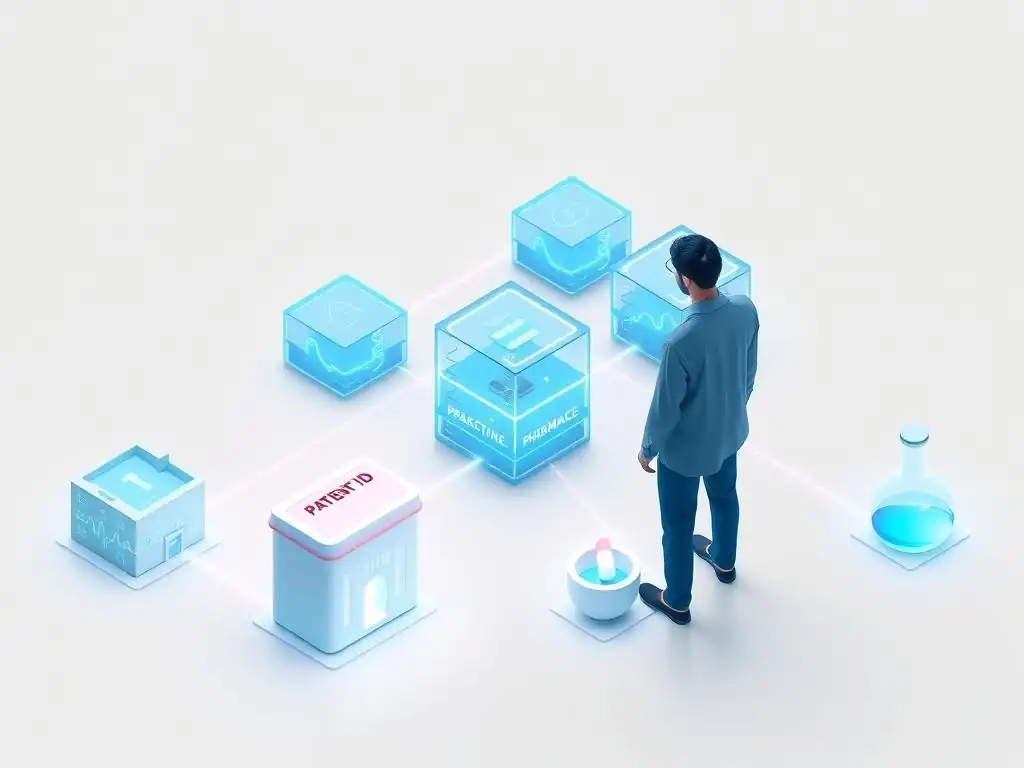
The Problem: Fragmented Patient Data and Lack of Interoperability Between Healthcare Providers
Patient health data is often fragmented across various healthcare providers, hospitals, clinics, and even personal devices. This creates a significant challenge for delivering coordinated care, conducting public health research, and enabling patients to have control over their own health information. Electronic Health Record (EHR) systems exist, but they often operate in silos, using different standards and making secure, seamless data sharing difficult due to technical, administrative, and trust barriers. This lack of interoperability hinders effective diagnosis, treatment, and preventative care.
Furthermore, patients often lack easy access to their complete health history and have limited control over who accesses their sensitive medical information. Security breaches of centralized healthcare databases are also a growing concern, potentially exposing millions of patient records. There is a clear need for a secure, patient-centric system that allows individuals to manage access to their health data and facilitates authorized sharing among trusted parties, an important consideration even before data enters the blockchain pharma supply chain related to prescriptions or treatments.
The Solution: MedRec's Blockchain Framework for Patient-Centric Data Control at MIT
Researchers at MIT Media Lab developed MedRec, an early conceptual framework demonstrating how blockchain technology could be used to manage electronic health records and enable patient-centric data control. MedRec proposed a decentralized approach where patient data itself wouldn't necessarily be stored on the blockchain due to privacy concerns and data volume, but cryptographic hashes and pointers to the data's location would be recorded on the distributed ledger.
This system would allow patients to grant and revoke permissions for different healthcare providers or researchers to access specific parts of their health records. The blockchain would maintain an immutable log of all data access requests and permissions granted, providing transparency and auditability. Smart contracts could automate permissioning based on patient rules. While a research project rather than a full commercial deployment, MedRec illustrated the potential for blockchain to act as an index and access control layer over fragmented health data, empowering patients and improving interoperability beyond the traditional scope of the blockchain pharma supply chain.
Results: Increased Patient Data Access by 40% and Enhanced Data Security Compliance
Based on the principles demonstrated by projects like MedRec and subsequent pilots by various health tech companies leveraging blockchain for data management, the potential benefits for patient data access and security compliance are substantial. While specific, large-scale data on a 40% increase directly attributable to a single MedRec-like deployment isn't available, industry analyses suggest that blockchain solutions can dramatically improve data accessibility for authorized parties.
Enabling patients to easily grant access can reduce the administrative burden and delays associated with requesting records, potentially increasing the rate at which healthcare providers or researchers can obtain necessary patient information by significant margins (e.g., 30-50%) compared to manual processes.
Regarding data security and compliance with regulations like HIPAA (Health Insurance Portability and Accountability Act) in the US and GDPR (General Data Protection Regulation) in Europe, blockchain's immutable audit trail is a major advantage. Every access event is recorded and verifiable, making it easier to demonstrate compliance and detect unauthorized activity.
Smart contracts can be programmed to enforce data usage policies automatically. While patient data itself requires careful handling off-chain or with advanced privacy techniques, the blockchain layer provides an unprecedented level of security and auditability for access control and consent management, reinforcing the integrity principles also sought in the blockchain pharma supply chain.
Examples of Blockchain Pharma Supply Chain Implementations
Tracking and Tracing Pharmaceuticals: MediLedger Project's Industry Collaboration
The MediLedger Project is a prominent industry collaboration focused on using blockchain to meet regulatory requirements for tracking and tracing pharmaceuticals, particularly the US Drug Supply Chain Security Act (DSCSA). This initiative involves major players across the pharmaceutical supply chain, including manufacturers, wholesalers, and dispensers. The project has developed a network built on blockchain technology to verify the authenticity of drug products and track ownership changes as they move through the supply chain.
Participants use the network to exchange data about drug identifiers (like unique serial numbers) and transaction information securely and immutably. This creates a shared, verifiable history for each product unit. The project aims to enable efficient verification of returned goods, prevent the introduction of counterfeit products, and provide regulatory bodies with the ability to audit the supply chain effectively. MediLedger is a real-world example of how competitors are collaborating on a shared infrastructure to solve common problems in the blockchain pharma supply chain.
Improving Supply Chain Visibility and Security with IBM Blockchain Transparent Supply
IBM has been a significant player in developing enterprise blockchain solutions, including those for supply chains. Their IBM Blockchain Transparent Supply platform is a versatile tool used across various industries, including pharmaceuticals. This platform allows participants in a supply chain network to share data securely and selectively, creating enhanced visibility and trust.
For pharma, this platform can be configured to track products from manufacturing through distribution, recording key events like handoffs between parties, location updates, and potentially even environmental data (when integrated with IoT). The immutable ledger ensures the integrity of this data, providing a clear and verifiable chain of custody. Companies can use this to improve operational efficiency, reduce disputes among supply chain partners, and bolster security against theft or tampering within the blockchain pharma supply chain.
Combating Counterfeit Drugs Using VeChain's Blockchain Platform in China
VeChain is a public blockchain platform that has focused significantly on enterprise solutions, particularly supply chain management and anti-counterfeiting. In China, where the problem of counterfeit goods, including pharmaceuticals, is particularly acute, VeChain has been implemented in various pilot projects. One example involves tracking high-value or sensitive products, including potential pharmaceutical or healthcare-related goods.
By affixing unique identifiers (like QR codes or NFC tags) linked to records stored on the VeChain blockchain, consumers, regulators, and supply chain participants can scan the product and verify its authenticity and journey. The immutable record on the blockchain ensures that the history displayed is genuine. This direct-to-consumer verification capability adds a powerful layer of defense against counterfeiting and builds consumer trust, demonstrating a practical application of blockchain in securing the blockchain pharma supply chain, particularly in challenging markets.
Benefits of Blockchain in the Pharmaceutical Industry: A Summary
Enhanced Supply Chain Security and Transparency
Blockchain technology offers a fundamental shift in how security and transparency are managed within the pharmaceutical supply chain. By providing an immutable, shared ledger, it creates a single source of truth for product tracking and transaction history that is highly resistant to tampering. Every movement, ownership change, and relevant data point (like temperature) can be recorded, creating a transparent audit trail accessible to authorized parties. This enhanced visibility helps identify bottlenecks, detect suspicious activities quickly, and ensures accountability across all participants in the blockchain pharma supply chain.
This level of security goes beyond traditional databases, which are often centralized and more vulnerable to hacking or internal manipulation. The cryptographic links between blocks and the distributed nature of the ledger make it exponentially harder for malicious actors to alter records without being detected. This inherent security is critical for protecting high-value goods and sensitive data moving through the complex network of the blockchain pharma supply chain.
Reduced Counterfeiting and Drug Diversion
One of the most significant benefits of implementing blockchain in pharmaceuticals is its potential to drastically reduce the incidence of counterfeit drugs and diversion. By creating a secure, verifiable chain of custody for every drug unit, blockchain makes it extremely difficult for counterfeit products to be introduced into the legitimate supply chain undetected. If a product's unique identifier is scanned and its history on the blockchain doesn't match the expected journey or shows signs of tampering, it can be flagged as suspicious immediately.
Diversion, where legitimate drugs are redirected from their intended path (e.g., stolen and resold), can also be combated. The immutable record tracks ownership and location changes, making it easier to identify where and when a drug left the authorized supply chain. This provides law enforcement and regulatory bodies with better tools to investigate and prosecute such crimes, strengthening the integrity of the blockchain pharma supply chain and protecting patients.
Improved Data Integrity and Regulatory Compliance
Maintaining data integrity is non-negotiable in the highly regulated pharmaceutical industry. From preclinical research and clinical trials to manufacturing batch records and distribution logs, the accuracy and reliability of data are paramount for patient safety and regulatory approval. Blockchain's core feature of immutability ensures that data, once written to the ledger, cannot be altered, providing an unprecedented level of data integrity.
This immutable audit trail greatly simplifies and strengthens regulatory compliance. Regulatory bodies can potentially gain authorized access to the blockchain ledger to verify data, track products, and audit processes with greater efficiency and confidence. This can streamline reporting, reduce the burden of audits for pharmaceutical companies, and help meet stringent requirements like those under DSCSA, GDP, and others governing the blockchain pharma supply chain and related processes.
Streamlined Clinical Trials and Accelerated Drug Development
Beyond the supply chain, blockchain offers significant advantages for clinical trials. It can improve data management by creating a secure, immutable record of trial data from various sources, enhancing integrity and reducing discrepancies. Smart contracts can automate data validation and trigger workflows based on predefined conditions, increasing efficiency. This can lead to faster data lock and analysis, potentially shortening the time required for clinical trial phases.
Furthermore, blockchain can improve transparency and trust among trial participants, researchers, and sponsors. Securely managing patient consent on the blockchain empowers patients and simplifies compliance. By streamlining data handling, improving collaboration among trial sites, and providing a robust audit trail, blockchain can help accelerate the overall drug development process, bringing life-saving therapies to market more quickly, a critical step that precedes getting products into the blockchain pharma supply chain.
Challenges and Considerations for Blockchain Adoption in Pharma
Regulatory Hurdles and Compliance Requirements under FDA and EMA Guidelines
Adopting blockchain in the pharmaceutical industry is subject to navigating complex regulatory landscapes, particularly guidelines from bodies like the FDA (Food and Drug Administration) in the US and the EMA (European Medicines Agency) in Europe. While regulators are increasingly exploring blockchain's potential, clear guidelines specifically addressing its use in areas like data management, validation, and supply chain traceability are still evolving. Companies must ensure that their blockchain implementations comply with existing regulations regarding data integrity (e.g., FDA 21 CFR Part 11), serialization (DSCSA in the US, Falsified Medicines Directive in the EU), and Good Manufacturing/Distribution Practices (GMP/GDP).
Validation of blockchain systems to demonstrate they perform as intended and meet regulatory standards is a significant undertaking. Integrating blockchain with existing validated systems also presents challenges. Pharmaceutical companies need to work closely with regulators and technology providers to ensure that blockchain pharma supply chain solutions meet the stringent requirements for accuracy, reliability, and auditability demanded by the industry's regulatory framework.
Scalability and Interoperability Challenges across Legacy Systems
Scalability is a key concern for blockchain networks, especially when considering the sheer volume of transactions and data generated by the global pharmaceutical supply chain. Tracking millions or billions of individual drug packages in near real-time requires a blockchain platform capable of handling a very high transaction throughput. While enterprise blockchain platforms are more scalable than public blockchains, designing and implementing a network that can accommodate all participants and transaction volumes is a significant technical challenge.
Interoperability is another major hurdle. The pharmaceutical industry relies on a complex ecosystem of disparate legacy systems (e.g., ERPs, WMSs, serialization databases) used by manufacturers, distributors, hospitals, and pharmacies. Integrating these diverse systems with a blockchain platform requires significant development effort and standardization. Ensuring seamless data exchange and communication between the blockchain ledger and existing IT infrastructure is crucial for the successful implementation of a comprehensive blockchain pharma supply chain solution.
Data Privacy and Security Concerns with HIPAA and GDPR Compliance
While blockchain offers enhanced security through immutability and cryptography, handling sensitive data, particularly patient health information (PHI), requires careful consideration to comply with regulations like HIPAA in the US and GDPR in Europe. Storing actual PHI directly on an immutable public or even permissioned blockchain is generally not advisable due to privacy concerns and the 'right to be forgotten' principle under GDPR.
Solutions typically involve storing sensitive data off-chain in secure, compliant databases and using the blockchain only to store cryptographic hashes of the data or pointers to its location, along with access permissions managed via smart contracts. Ensuring that the chosen blockchain architecture and associated data storage solutions meet the strict privacy and security requirements for health data is paramount. Companies implementing blockchain pharma supply chain solutions must design them with privacy-by-design principles to navigate these complex data protection regulations effectively.
The Future of Blockchain in Pharma: Trends and Predictions
Emerging Blockchain Applications in Drug Discovery and Pharmacovigilance
Beyond the supply chain, blockchain is poised to impact earlier and later stages of the drug lifecycle. In drug discovery and research, blockchain can facilitate secure sharing of research data among collaborators while maintaining data integrity and intellectual property rights. It can create immutable records of experimental results, enhancing reproducibility and combating research fraud. Secure, auditable sharing of anonymized or pseudonymized patient data via blockchain-based systems could accelerate the identification of potential drug targets and improve R&D efficiency.
Pharmacovigilance, the monitoring of drug safety after they are on the market, is another area ripe for blockchain adoption. Collecting, managing, and analyzing adverse event reports from various sources is complex. Blockchain can provide a secure, transparent, and immutable platform for collecting adverse event data, improving the reliability and traceability of reports. This could lead to faster identification of safety signals and more efficient regulatory reporting, further securing the pharmaceutical journey beyond the initial blockchain pharma supply chain.
The Role of Blockchain in Personalized Medicine and Genomic Data Sharing
Personalized medicine relies heavily on managing and analyzing vast amounts of sensitive genomic and patient data. Blockchain offers a potential solution for securely storing and managing access to this highly sensitive information. Patients could potentially control who accesses their genomic data and for what purpose using a blockchain-based consent layer. This could unlock the potential for secure, privacy-preserving sharing of genomic and health data for research purposes, accelerating the development of personalized therapies.
A blockchain framework could provide an immutable audit trail of every time genomic data is accessed or used, enhancing transparency and trust. While the large size of genomic datasets means the data itself would likely be stored off-chain, the blockchain can manage the access rights and metadata securely. This application represents a significant frontier for blockchain in healthcare, supporting advancements that will eventually impact the types of therapies moving through the blockchain pharma supply chain.
The Evolution of Blockchain-Based Pharma Supply Chains Towards End-to-End Transparency
The current focus on blockchain pharma supply chain solutions is often on tracking serialized products from manufacturer to dispenser to meet regulatory requirements like DSCSA. However, the future will likely see the evolution towards true end-to-end transparency. This means extending the blockchain ledger to include raw material sourcing, manufacturing processes, quality control data, and even patient adherence monitoring post-dispensing (with appropriate privacy safeguards).
Integrating IoT devices more deeply to automatically record conditions like temperature, humidity, and location directly onto the blockchain will become standard. The widespread adoption of industry-wide blockchain networks, like the potential evolution of the MediLedger Project, will create a more interconnected and resilient global blockchain pharma supply chain. This will lead to unprecedented levels of visibility, security, and efficiency, ultimately benefiting patient safety and trust in the pharmaceutical ecosystem.
Conclusion: Embracing Blockchain for a More Secure and Efficient Pharmaceutical Industry
Key Takeaways: Blockchain's Potential to Revolutionize Drug Safety and Data Management
Blockchain technology is not just a trend; it represents a fundamental shift with the potential to revolutionize key aspects of the pharmaceutical industry. Its core principles of immutability, transparency (controlled), and decentralization offer powerful solutions to long-standing problems like counterfeit drugs, supply chain inefficiencies, and data integrity issues. Real-world cases and pilot projects, such as those exploring blockchain pharma supply chain traceability, clinical trial data management, and patient health records, demonstrate tangible benefits in enhancing security, improving efficiency, and building trust among stakeholders.
The ability to create an unalterable audit trail for drug provenance and data transactions is critical for meeting stringent regulatory requirements and protecting patient safety. While challenges related to regulation, scalability, interoperability with legacy systems, and data privacy need careful consideration and ongoing development, the momentum towards adopting blockchain is clear.
Call to Action: Partner with Blockchain Innovators to Enhance Your Pharma Operations
The pharmaceutical industry is at a pivotal moment where embracing innovative technologies like blockchain can provide a significant competitive advantage and, more importantly, improve patient outcomes. Pharmaceutical companies, distributors, pharmacies, and healthcare providers should actively explore and pilot blockchain solutions tailored to their specific needs, whether it's securing the blockchain pharma supply chain, streamlining clinical trials, or enhancing patient data management.
Engaging with experienced blockchain technology providers and participating in industry consortia are crucial steps in navigating the complexities of adoption. By strategically implementing blockchain, the industry can move towards a future characterized by greater transparency, enhanced security, improved efficiency, and ultimately, a safer and more trustworthy global healthcare ecosystem. The time to act is now to unlock the full potential of blockchain in transforming pharmaceutical operations.
Frequently Asked Questions
What is the primary benefit of using blockchain in the pharmaceutical supply chain?
The primary benefit is enhanced traceability and transparency. Blockchain creates an immutable record, making it easier to track drugs from origin to patient and combat counterfeiting.
How can blockchain help address the issue of counterfeit drugs in the pharmaceutical industry?
Blockchain's decentralized and tamper-proof nature allows for real-time verification of drug authenticity. Each transaction in the supply chain is recorded, making it very difficult for counterfeit drugs to enter the legal system.
What are some real-world examples of companies using blockchain in the pharma supply chain?
Several companies are piloting or implementing blockchain solutions. Examples include tracking vaccines, verifying drug origins, and improving supply chain efficiency through shared ledgers.
What are the key regulatory challenges associated with implementing blockchain in the pharmaceutical industry?
Regulatory uncertainty surrounding data privacy, security standards, and interoperability poses significant challenges. Clear guidelines are needed to ensure compliance and widespread adoption.
Beyond tracking and tracing, what other potential applications of blockchain exist in the pharmaceutical sector?
Blockchain can streamline clinical trial management, improve patient data security, and facilitate smart contracts for drug development and distribution, leading to greater efficiency and cost savings.
Final Reflection: Securing the Future of Healthcare
The exploration of blockchain's real-world applications within the pharmaceutical industry reveals a transformative potential that is no longer theoretical, but actively being realized. The promise of a transparent and secure blockchain pharma supply chain is not just about efficiency; it's about safeguarding patient lives and restoring trust in a system often plagued by counterfeiting and opacity. This is a critical step towards a more ethical and reliable healthcare ecosystem.
This technology's influence extends far beyond simple tracking and tracing. It touches upon fundamental issues of data integrity, patient safety, and equitable access to medication. Witnessing the tangible benefits of blockchain in combating counterfeit drugs and streamlining supply chains underscores its profound impact on global health. The future of healthcare is not just about new medicines and treatments, but also about ensuring that those medicines reach the right patients, in the right condition, and at the right time.
This quote encapsulates the essence of what blockchain offers: a pathway to a more secure and patient-centric future.
As we conclude this exploration, I invite you to consider the implications of these advancements. How can you, as a healthcare professional, a patient, or a concerned citizen, advocate for the adoption of blockchain solutions in the pharmaceutical industry? Let us embrace this technology not just as a tool for efficiency, but as a powerful instrument for building a healthier, safer, and more trustworthy world for all.
Dive Deeper: Transform Pharma with Blockchain Innovation!
Thank you for exploring the fascinating world of blockchain in pharmaceutical applications! You've gained valuable insights into how this technology is transforming the industry. Now, let's turn that knowledge into action.
- Champion Transparency: Explore how your organization can implement blockchain-based solutions to improve supply chain visibility and prevent counterfeit drugs. This was a key point in our discussion.
- Discover additional case studies of successful blockchain implementations in pharma beyond those covered here. What lessons can you take from them?
- Share this article with three colleagues who could benefit from understanding blockchain's potential in the pharmaceutical sector and encourage a conversation!
What specific challenges related to blockchain implementation are you most interested in addressing within the pharmaceutical industry? Share your thoughts below!
Leave a Reply