
The Role of Blockchain in Verifying Drug Origins: Combating Counterfeiting at the Source


Welcome to Blockchain Trends, your dedicated source for unraveling the transformative power of blockchain technology. Beyond the hype of cryptocurrencies, are you ready to discover how blockchain is revolutionizing industries? This week, we delve into a critical application within the healthcare sector: blockchain drug origin verification. Explore how this groundbreaking technology is fighting counterfeiting at the source and ensuring patient safety. Intrigued? Dive in to learn more about how blockchain is securing the pharmaceutical supply chain!
The Role of Blockchain in Verifying Drug Origins: Combating Counterfeiting at the Source
- Introduction: The Growing Threat of Counterfeit Drugs and the Need for Verification
- Blockchain Technology: A Secure and Transparent Solution for Pharma
- Blockchain Drug Origin Verification: How It Works
- Real-World Applications of Blockchain in Pharmaceutical Supply Chains
- Addressing Challenges and Considerations for Blockchain Adoption in Pharma
- The Future of Blockchain in Pharma: Beyond Origin Verification
- Conclusion: Blockchain as a Key Enabler of Safe and Authentic Medicines
-
Frequently Asked Questions
- How can blockchain technology help verify the origin of drugs?
- What are the key benefits of using blockchain for drug origin verification?
- What challenges exist in implementing blockchain for drug origin verification?
- Is blockchain drug origin verification solely focused on pharmaceutical companies?
- How does blockchain help in complying with drug traceability regulations?
- Final Reflection: Securing Trust in Pharmaceuticals
- Uncover the Power of Blockchain: Secure Our Medicines!
Introduction: The Growing Threat of Counterfeit Drugs and the Need for Verification
The Scale of the Counterfeit Drug Problem: A Global Health Crisis
The global trade in counterfeit pharmaceuticals represents a significant and escalating threat to public health and safety worldwide. Estimates suggest the market for counterfeit drugs could be worth hundreds of billions of dollars annually, with some figures reaching as high as $200 billion according to the World Health Organization (WHO) and other bodies. These illicit products range from ineffective placebos to toxic substances containing incorrect or harmful ingredients, posing severe risks to patients who believe they are receiving legitimate treatment.
Counterfeit drugs are not confined to specific regions; they infiltrate supply chains in developed and developing countries alike. While low- and middle-income countries often bear a disproportionate burden, with estimates suggesting that up to 10% of drugs in these markets may be counterfeit, illicit products also appear in regulated markets like the United States and Europe. The consequences extend beyond health risks, impacting patient trust in healthcare systems and legitimate pharmaceutical companies, and diverting resources needed for genuine medical care.
Limitations of Traditional Pharmaceutical Supply Chains
Traditional pharmaceutical supply chains, while designed with regulations in mind, often rely on fragmented, paper-based, or disparate digital systems. This complexity creates vulnerabilities at various points, from manufacturing and packaging to distribution and dispensing. The lack of a single, immutable, and universally accessible record makes it difficult to track a drug's journey definitively from its origin to the patient.
Key limitations include poor visibility across the entire chain, making it challenging to identify where counterfeiting or diversion might occur. Manual processes are prone to error and tampering, and data silos prevent seamless information sharing between different stakeholders – manufacturers, wholesalers, distributors, pharmacies, and regulators. These inefficiencies not only increase operational costs but critically hinder the ability to quickly and reliably verify the authenticity and origin of a drug, making the supply chain susceptible to infiltration by counterfeit products.
How Blockchain Technology Offers a Solution for Drug Origin Verification
Blockchain technology presents a compelling solution to the inherent weaknesses in traditional pharmaceutical supply chains, particularly for enhancing blockchain drug origin verification. By providing a decentralized, immutable, and transparent ledger, blockchain can create a secure and verifiable record of a drug's journey from production to consumption. Each transaction or handover point along the supply chain can be recorded as a block on the chain, cryptographically linked to the previous block, making it extremely difficult to alter past records without detection.
Implementing blockchain for drug origin verification allows stakeholders to access a shared, trusted history of the product. This shared source of truth enables rapid authentication checks at any point in the supply chain. By securely logging details like manufacturing location, batch number, handling timestamps, and ownership transfers, blockchain provides the necessary visibility and integrity to confidently verify a drug's origin and detect suspicious activities, thereby directly combating the infiltration of counterfeit medicines.
Blockchain Technology: A Secure and Transparent Solution for Pharma
Understanding Blockchain's Core Principles: Immutability, Transparency, and Decentralization
At its heart, blockchain is a distributed ledger technology characterized by several core principles that make it uniquely suited for secure record-keeping. Immutability is perhaps the most critical for supply chain security; once data is recorded on the blockchain, it is computationally infeasible to alter or delete it. This is achieved through cryptographic hashing – each new block contains a hash of the previous block, creating a chain where any modification to an earlier block would break the cryptographic link and be immediately obvious to network participants.
Transparency is another key principle. While varying levels of privacy can be implemented, the structure of a blockchain allows authorized participants to view the transaction history relevant to them. In a pharmaceutical supply chain context, this means different stakeholders could potentially see the movement and handling history of a specific drug batch. Decentralization means the ledger is not stored in a single location but is replicated across multiple nodes (computers) in the network. This eliminates a single point of failure, making the system more resilient to attacks or data loss compared to centralized databases.
Applying Blockchain to Pharmaceutical Supply Chains: Enhancing Traceability
Applying blockchain technology to pharmaceutical supply chains fundamentally transforms traceability. Instead of relying on fragmented paper trails or disparate digital systems, each unit or batch of medication can be assigned a unique digital identifier (often linked to serialization standards like GS1). This identifier is then associated with a record on the blockchain when the drug is manufactured.
As the drug moves through the supply chain – from manufacturer to distributor, wholesaler, pharmacy, and potentially even to the patient – each transfer of ownership or significant handling event is recorded as a transaction on the blockchain. These transactions are timestamped and verified by network participants. This creates a comprehensive, tamper-evident history accessible to authorized parties, providing unprecedented visibility into the drug's journey. This enhanced traceability is the foundation for robust blockchain drug origin verification.
The Benefits of Blockchain Drug Origin Verification: A Secure Pharmaceutical Ecosystem
The implementation of blockchain drug origin verification offers a multitude of benefits for the pharmaceutical ecosystem. The most significant is the dramatically improved ability to detect and prevent counterfeit drugs from reaching patients. With an immutable and transparent record of origin and movement, verifying authenticity becomes straightforward, and any discrepancies or suspicious handling events can be quickly flagged. This directly enhances patient safety by ensuring they receive genuine, effective medication.
Beyond combating counterfeiting, blockchain can also improve operational efficiency. Automated processes via smart contracts (discussed later) can streamline transactions and record-keeping. Improved visibility allows for better inventory management and faster response times during recalls or investigations. Furthermore, a secure and transparent supply chain builds greater trust among all stakeholders, from manufacturers to patients, fostering a more reliable and resilient pharmaceutical ecosystem.
Blockchain Drug Origin Verification: How It Works
Tracking Drugs from Manufacturing to Distribution: A Step-by-Step Process
Blockchain drug origin verification typically begins at the point of manufacture. Each individual drug package or batch is serialized with a unique identifier, often a 2D matrix barcode containing information like the Global Trade Item Number (GTIN), serial number, lot number, and expiration date, compliant with regulations like the U.S. Drug Supply Chain Security Act (DSCSA) or the EU Falsified Medicines Directive (FMD). This unique identifier is then linked to a digital record, or hash, which is immutably recorded on the blockchain ledger.
As the drug moves from the manufacturer to the primary distributor, the transfer of ownership and physical custody is recorded as a transaction on the blockchain. This transaction includes details such as the identities of the sender and receiver, the unique identifiers of the drugs being transferred, the date and time, and potentially environmental conditions like temperature if monitored by IoT devices.
Each subsequent handover – from distributor to wholesaler, from wholesaler to pharmacy or hospital – is similarly recorded as a new block in the chain, building a complete, verifiable history of the drug's journey. At any point, a stakeholder can query the blockchain using the drug's identifier to verify its origin and track its path, confirming that it followed the expected, legitimate supply chain.
Utilizing Smart Contracts for Automated Verification and Compliance
Smart contracts play a crucial role in automating processes and enforcing compliance within a blockchain-based pharmaceutical supply chain. These are self-executing contracts with the terms of the agreement directly written into code. They reside on the blockchain and automatically execute predefined actions when specific conditions are met, without the need for intermediaries.
In the context of blockchain drug origin verification, smart contracts can automate various tasks. For example, a smart contract could be programmed to automatically update ownership records on the blockchain once a distributor scans and confirms receipt of a shipment. Another smart contract could trigger an alert if a drug batch deviates from its expected route or if its temperature record (as reported by connected sensors) exceeds a predefined threshold, potentially indicating spoilage or tampering.
Smart contracts can also facilitate automated payments between parties upon successful, verified delivery, streamlining financial settlements and reducing administrative overhead. They can also be coded to check compliance with regulatory requirements, such as ensuring that only licensed entities handle specific types of drugs, adding an extra layer of automated security and compliance enforcement.
Ensuring Data Integrity and Preventing Tampering with Blockchain
The fundamental design of blockchain technology inherently ensures data integrity and prevents tampering, which is vital for reliable blockchain drug origin verification. Every transaction recorded on the blockchain is cryptographically hashed, and each new block includes the hash of the preceding block. This creates a linked chain of blocks where altering data in any historical block would change its hash, thereby invalidating the hash stored in the next block, and so on, breaking the entire chain from that point forward.
Because the ledger is distributed across multiple nodes in the network, any attempt to tamper with the data on one node would require simultaneously altering the data on a majority of other nodes – a computationally prohibitive task, especially on a large, permissioned network designed for enterprise use. This distributed consensus mechanism ensures that all participants agree on the state of the ledger, making it virtually impossible for a single malicious actor or even a small group to fraudulently alter the records of drug origin or movement without being detected by the network participants.
This cryptographic security and distributed nature provide a far higher level of data integrity compared to centralized databases or paper records, where modifications can be made more easily and often without immediate detection.
Real-World Applications of Blockchain in Pharmaceutical Supply Chains
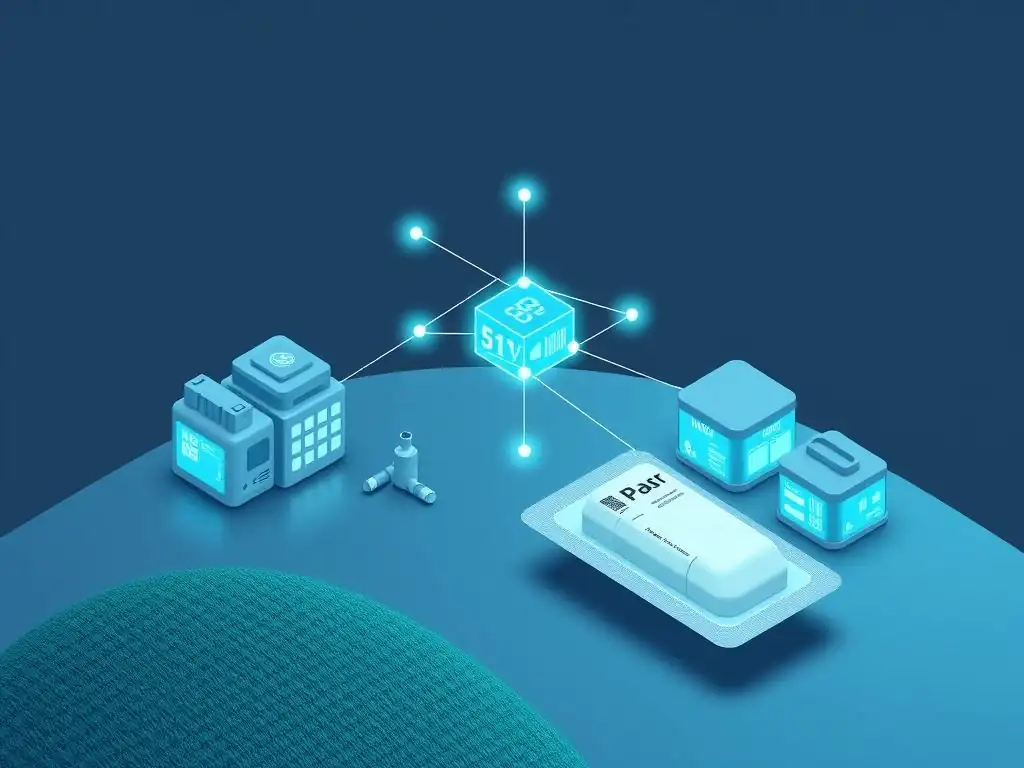
Case Study 1: MediLedger Implementing Blockchain for Drug Traceability
One prominent example of blockchain implementation in the pharmaceutical supply chain is the MediLedger Project, initiated by Chronicled and involving major players in the industry like Pfizer, Amgen, Genentech, and others. This consortium focused on addressing U.S. DSCSA requirements for tracing drug products. The DSCSA mandates an electronic, interoperable system for tracing certain prescription drugs as they are distributed within the United States.
The MediLedger Network utilizes a permissioned blockchain to create a shared, immutable record of drug transactions between trading partners. Participating companies record transaction data, such as the sale of drug products, on the network.
This allows authorized partners to verify the legitimacy of a drug's trading partner and its transaction history. While specific public data on reductions in counterfeiting are still emerging as the network matures towards full DSCSA compliance deadlines, the project successfully demonstrated the technical feasibility of using blockchain for tracking ownership changes and verifying product identifiers across different companies, laying a crucial foundation for enhanced blockchain drug origin verification in the U.S. market.
Case Study 2: The IBM Food Trust Network Utilizing Blockchain for Pharma
While primarily known for its application in the food industry, the IBM Food Trust network serves as an illustrative example of how a blockchain platform can be adapted and applied to other complex, regulated supply chains like pharmaceuticals, demonstrating the potential for blockchain drug origin verification. Built on the Hyperledger Fabric blockchain framework, Food Trust connects growers, processors, wholesalers, distributors, manufacturers, retailers, and others on a shared, permissioned ledger to improve traceability and transparency.
The principles demonstrated in Food Trust – rapid traceability (tracing a product from farm to store in seconds, compared to days or weeks traditionally), improved supply chain visibility, and enhanced trust among participants through a shared, immutable record – are directly transferable to the pharmaceutical sector. While IBM has other initiatives specifically for healthcare and supply chain, the Food Trust model highlights the capability of their blockchain platform to handle complex data sharing, permissions, and large-scale participation in a highly regulated environment.
Applying this model to pharmaceuticals would involve tracking drug batches instead of food items, with similar goals of drastically reducing the time needed to trace a drug's origin, improving recall efficiency, and bolstering the security of the supply chain against illicit products.
Benefits Observed: Reduced Counterfeiting, Improved Efficiency, and Enhanced Patient Safety
Early implementations and pilot programs utilizing blockchain for drug traceability and origin verification have shown promising results, even as large-scale adoption is still developing. Companies participating in blockchain initiatives have reported significant improvements in the efficiency of verifying product information and trading partner identities. For instance, processes that previously took hours or even days using traditional methods can often be completed in minutes or seconds by querying the blockchain ledger.
The enhanced visibility and immutability provided by blockchain directly contribute to reducing the risk of counterfeiting and diversion. By creating a verifiable record of every transaction, unauthorized handling or introduction of fake products becomes much harder to conceal.
While precise global statistics on counterfeiting reduction directly attributable to blockchain are still being compiled as projects scale, the fundamental transparency and security features of blockchain inherently deter illicit activities. Ultimately, these improvements in efficiency and security translate to enhanced patient safety, as the likelihood of receiving counterfeit or compromised medication is significantly decreased, building greater confidence in the integrity of the pharmaceutical supply chain.
Addressing Challenges and Considerations for Blockchain Adoption in Pharma
Regulatory Compliance and Data Privacy Concerns (GDPR, HIPAA)
Adopting blockchain technology in the pharmaceutical industry must carefully navigate a complex landscape of regulatory requirements and data privacy laws. Regulations like the U.S. Drug Supply Chain Security Act (DSCSA) mandate specific requirements for electronic, interoperable systems to track and trace prescription drugs, and blockchain solutions must align with these evolving standards. Similarly, the EU's Falsified Medicines Directive (FMD) has its own verification systems, and blockchain solutions need to consider interoperability or integration with these existing frameworks.
Furthermore, handling sensitive data within a pharmaceutical supply chain raises significant data privacy concerns, particularly under regulations like the General Data Protection Regulation (GDPR) in Europe and the Health Insurance Portability and Accountability Act (HIPAA) in the United States. While blockchain is often associated with transparency, sensitive information, such as patient data or commercially confidential manufacturing details, cannot be openly exposed on a public ledger.
Permissioned blockchains, where participation and data access are restricted and controlled, are typically the chosen model for pharma. Developers must implement robust privacy-preserving techniques, such as zero-knowledge proofs or storing only hashed data on-chain while keeping sensitive details off-chain in secure databases, to ensure compliance with these stringent privacy regulations while still enabling effective blockchain drug origin verification.
Interoperability with Existing Pharmaceutical Systems
A significant challenge for widespread blockchain adoption in pharma is ensuring interoperability with the vast array of legacy systems currently used by stakeholders across the supply chain. Pharmaceutical companies, wholesalers, distributors, and pharmacies rely on established Enterprise Resource Planning (ERP) systems, Warehouse Management Systems (WMS), serialization software, and other proprietary databases that manage everything from inventory and logistics to financial transactions and regulatory reporting.
Integrating a new blockchain-based system for blockchain drug origin verification with these diverse and often siloed existing systems requires significant effort and investment. Data formats, communication protocols, and business processes need to be standardized or adapted to ensure seamless data flow between the legacy infrastructure and the blockchain network.
This often necessitates developing APIs (Application Programming Interfaces) and middleware solutions to bridge the gap, ensuring that data captured by existing systems (like serialization data or shipment confirmations) can be securely and automatically recorded on the blockchain, and that information from the blockchain (like verification status) can be accessed by legacy systems.
Scalability and Performance Considerations for Large-Scale Implementation
The pharmaceutical supply chain operates on a massive scale, involving billions of individual drug packages and countless transactions globally each year. Implementing a blockchain solution for widespread blockchain drug origin verification requires a platform that can handle this immense volume of data and transactions efficiently and cost-effectively. Public blockchains like Bitcoin or Ethereum, while decentralized, can face challenges with transaction speed (throughput) and cost (gas fees) when processing a very high volume of small transactions, which are common in supply chain tracking.
Permissioned blockchain platforms, such as Hyperledger Fabric or R3 Corda, are often favored in enterprise settings like pharma because they can offer higher transaction speeds and lower costs by restricting participation to known, authorized entities. However, even these platforms require careful design and infrastructure planning to ensure they can scale adequately to accommodate the entire industry.
Considerations include the network's capacity to process thousands or millions of transactions per second, the storage requirements for the growing ledger, and the computational resources needed by participating nodes. Ensuring the platform can maintain performance and availability as more participants join and transaction volumes increase is critical for successful, large-scale blockchain drug origin verification.
The Future of Blockchain in Pharma: Beyond Origin Verification
Exploring Blockchain for Clinical Trials and Data Management
Beyond supply chain traceability and blockchain drug origin verification, blockchain holds significant potential to revolutionize other areas of the pharmaceutical lifecycle, including clinical trials and data management. Clinical trials are complex, multi-site processes that generate vast amounts of sensitive data, from patient records and test results to study protocols and regulatory submissions. Ensuring the integrity, security, and transparency of this data is paramount.
Blockchain can provide an immutable ledger for recording clinical trial data and events, such as patient consent, administration of dosages, and collection of results. This creates a verifiable audit trail that can enhance data integrity and reduce the risk of data manipulation or errors.
Smart contracts could automate trial milestones, manage data access permissions for researchers and regulators, and even facilitate secure, tokenized patient compensation. By providing a trusted, transparent, and secure platform for data sharing among authorized parties, blockchain can streamline data management, improve collaboration, and accelerate the clinical trial process while maintaining the highest standards of data integrity and patient privacy.
Decentralized Pharma: Empowering Patients and Streamlining Processes
The principles of decentralization inherent in blockchain technology can pave the way for a more decentralized pharmaceutical ecosystem that empowers patients and streamlines various processes. One area is patient data management; blockchain could enable patients to have greater control over their health records, granting permissioned access to healthcare providers, researchers, or pharmacies as needed, enhancing data privacy and portability.
Furthermore, blockchain and smart contracts could facilitate decentralized autonomous organizations (DAOs) focused on drug development or distribution, allowing for more transparent and community-driven approaches. Prescription management could be streamlined using blockchain, creating secure, immutable records of prescriptions and dispensing events accessible to authorized pharmacists and prescribers, reducing fraud and errors. By removing reliance on central authorities and enabling secure, peer-to-peer interactions, blockchain has the potential to make the pharmaceutical industry more efficient, transparent, and patient-centric, building on the foundation of secure blockchain drug origin verification.
The Potential of Blockchain to Revolutionize the Pharmaceutical Industry
Ultimately, blockchain technology has the potential to be a transformative force across the entire pharmaceutical industry value chain. From initial research and development, where it could secure intellectual property and facilitate collaborative data sharing, through clinical trials and manufacturing, to supply chain management and post-market surveillance, blockchain offers solutions for enhancing trust, transparency, and efficiency.
By providing a secure, immutable, and decentralized platform for recording critical data and executing complex transactions, blockchain can address long-standing challenges related to data integrity, fraud, counterfeiting, and operational inefficiencies. The ability to establish verifiable blockchain drug origin verification is just one, albeit critical, application. As the technology matures and regulatory frameworks adapt, the widespread adoption of blockchain could lead to faster drug development, more secure supply chains, improved patient safety, and a more collaborative and transparent pharmaceutical ecosystem, fundamentally revolutionizing how medicines are discovered, produced, and delivered to those who need them.
Conclusion: Blockchain as a Key Enabler of Safe and Authentic Medicines
Key Takeaways: The Power of Blockchain for Drug Origin Verification
The global fight against counterfeit drugs is a critical public health imperative, and traditional supply chain systems often lack the necessary security and transparency to effectively combat this threat. Blockchain technology offers a powerful solution, providing a decentralized, immutable, and transparent ledger that can track drugs from their point of manufacture through distribution. This capability enables robust blockchain drug origin verification, allowing stakeholders to confirm a drug's authenticity and trace its legitimate path through the supply chain.
By leveraging core blockchain principles like immutability and transparency, coupled with mechanisms like serialization and smart contracts, the pharmaceutical industry can build a more secure and trustworthy ecosystem. This enhanced traceability not only helps prevent counterfeit products from entering the supply chain but also improves operational efficiency, streamlines compliance, and ultimately enhances patient safety by ensuring access to safe and authentic medicines.
The Importance of Collaboration for Widespread Adoption
Achieving the full potential of blockchain drug origin verification requires significant collaboration across the entire pharmaceutical ecosystem. Manufacturers, distributors, wholesalers, pharmacies, hospitals, regulators, and technology providers must work together to establish common standards, protocols, and governance models for blockchain networks. Interoperability between different company systems and potentially different blockchain platforms is crucial for creating a truly seamless and transparent supply chain.
Consortiums and industry initiatives, like the MediLedger Project, play a vital role in driving this collaboration, bringing together competitors to address shared challenges. Regulatory bodies also need to engage with the technology, potentially adapting guidelines to accommodate blockchain-based solutions while ensuring patient safety and data privacy. Widespread adoption depends on building trust among participants and demonstrating clear value propositions for all stakeholders involved in the pharmaceutical supply chain.
Looking Ahead: The Future of Blockchain in the Pharmaceutical Industry
While blockchain drug origin verification is a primary focus today, the future applications of blockchain in the pharmaceutical industry extend far beyond supply chain traceability. The technology holds promise for transforming clinical trial data management, improving drug discovery processes, enabling more patient-centric data control, and streamlining regulatory reporting.
As pilot programs mature into full-scale deployments and the industry gains more experience with the technology, blockchain is poised to become a foundational layer for trust and transparency. Overcoming challenges related to interoperability, scalability, and regulatory alignment will be key to unlocking its full potential. The ongoing evolution of blockchain technology, combined with increasing industry recognition of its benefits, suggests a future where safe, authentic medicines are guaranteed through a verifiable, blockchain-powered ecosystem, marking a significant step forward in global healthcare security.
Frequently Asked Questions
How can blockchain technology help verify the origin of drugs?
Blockchain provides an immutable and transparent ledger that tracks a drug's journey from manufacturer to consumer. This allows for easy verification of authenticity and helps prevent counterfeit drugs from entering the supply chain.
What are the key benefits of using blockchain for drug origin verification?
The primary benefits include enhanced supply chain transparency, improved traceability, and increased security against counterfeiting. This leads to greater consumer trust and safety in the pharmaceutical industry.
What challenges exist in implementing blockchain for drug origin verification?
Some challenges include the lack of standardized regulations, the need for widespread adoption across the pharmaceutical industry, and the initial investment costs associated with implementing the technology.
Is blockchain drug origin verification solely focused on pharmaceutical companies?
No, blockchain solutions for drug origin verification benefit all stakeholders. This includes pharmaceutical companies, distributors, healthcare providers, and ultimately, the end consumers who rely on safe and authentic medications.
How does blockchain help in complying with drug traceability regulations?
Blockchain's inherent traceability features provide a clear audit trail, making it easier to meet regulatory requirements like the Drug Supply Chain Security Act (DSCSA). This helps ensure supply chain integrity and compliance.
Final Reflection: Securing Trust in Pharmaceuticals
The journey of a drug from its origin to the patient's hand is fraught with opportunities for counterfeiting, a reality that demands innovative solutions. Blockchain drug origin verification offers a powerful tool to combat this pervasive threat, providing an immutable and transparent record that can restore trust in the pharmaceutical supply chain. The potential of this technology to safeguard public health is undeniable, making its widespread adoption not just desirable, but essential.
The impact of counterfeit drugs extends far beyond financial losses; it directly affects human lives, eroding confidence in healthcare systems and fostering a climate of fear. Witnessing the potential of blockchain to address this critical issue has been profoundly inspiring, highlighting the power of technology to create a more secure and equitable world. The best way to predict the future is to create it.
- Peter Drucker. This quote resonates deeply with the promise of blockchain in revolutionizing drug origin verification, empowering us to actively shape a future where patients can trust the medications they rely on.
As we conclude this exploration of blockchain's role in securing drug origins, I invite you to consider the implications of this technology in your own life and community. How can you advocate for the adoption of blockchain solutions to combat counterfeiting and ensure access to safe and effective medications? Let us embrace this transformative technology and work together to build a future where trust and transparency are the cornerstones of the pharmaceutical industry, safeguarding the health and well-being of all.
Uncover the Power of Blockchain: Secure Our Medicines!
Thank you for exploring how blockchain can verify drug origins. Now that you understand its potential to combat counterfeiting and protect public health, it’s time to take action.
Here are a few ways you can help ensure a safer future:
- Demand Transparency: Advocate for pharmaceutical companies to implement blockchain-based tracking for their products. This is one of the most impactful steps you can take.
- Dive Deeper: Research existing blockchain projects in the pharmaceutical supply chain. Share your insights with your network.
- Engage: Join online forums and discussions related to blockchain in healthcare. Contribute your knowledge and help raise awareness.
What specific questions do you have about implementing blockchain solutions in the pharmaceutical industry, and how can we help you find the answers?
Leave a Reply