
Smart Packaging and Blockchain: A Powerful Duo for Pharma Supply Chain Integrity


Welcome to Blockchain Trends, your source for in-depth analysis on the evolving landscape of blockchain technology. Beyond the hype, we delve into the real-world applications transforming industries. Curious about how blockchain can revolutionize healthcare? Discover how smart packaging and blockchain are forging a powerful alliance, creating unprecedented blockchain pharma supply chain integrity. Read on to uncover the potential to combat counterfeiting, improve traceability, and ultimately, safeguard patient health.
Smart Packaging and Blockchain: Enhancing Pharmaceutical Supply Chain Security
- Introduction: Addressing Pharmaceutical Supply Chain Vulnerabilities with Innovation
- Understanding Smart Packaging in the Pharmaceutical Context
- Blockchain Technology: A Secure Foundation for Pharma Traceability
- The Synergy: Blockchain and Smart Packaging for Enhanced Security
- Benefits of Integrating Smart Packaging and Blockchain in Pharma
- Use Cases and Real-World Applications of Blockchain and Smart Packaging
- Challenges and Considerations for Implementation
- The Future of Blockchain and Smart Packaging in the Pharmaceutical Industry
- Conclusion: Ensuring Pharmaceutical Supply Chain Security with Innovation
-
Frequently Asked Questions
- What is the role of smart packaging in the pharmaceutical supply chain?
- How does blockchain technology improve supply chain integrity in pharma?
- What are the benefits of combining smart packaging with blockchain?
- How does regulation impact the use of blockchain in the pharma industry?
- What is the future outlook for blockchain in the pharma supply chain?
- Final Reflection: Securing Health Through Transparency
- Unveil the Future: Secure Your Pharma Supply Chain Today!
Introduction: Addressing Pharmaceutical Supply Chain Vulnerabilities with Innovation
The Critical Need for Pharmaceutical Supply Chain Security
The pharmaceutical supply chain is inherently complex, global, and vulnerable to numerous threats, including counterfeiting, diversion, theft, and temperature excursions. These vulnerabilities not only lead to significant financial losses for manufacturers and distributors but, more critically, pose severe risks to patient health and safety.
The World Health Organization (WHO) estimates that up to 10% of medical products in low- and middle-income countries are counterfeit, a figure that translates to billions of dollars in illicit trade and, tragically, countless preventable deaths or prolonged illnesses due to ineffective or harmful substances. Ensuring blockchain pharma supply chain integrity is paramount to combating this global issue.
Maintaining the integrity of pharmaceutical products from manufacturing to patient delivery requires robust security measures at every step. The journey often involves multiple handoffs across different countries, modes of transport, and storage facilities, each representing a potential point of failure or compromise. Traditional paper-based tracking systems or siloed electronic databases lack the necessary transparency and immutability to provide verifiable proof of origin and handling history.
This lack of end-to-end visibility hinders effective recall processes, complicates regulatory compliance, and erodes trust among stakeholders. Strengthening blockchain pharma supply chain integrity is not just a regulatory requirement; it's a fundamental necessity for public health.
How Smart Packaging and Blockchain Can Transform the Pharmaceutical Industry
The convergence of smart packaging and blockchain technology offers a promising solution to enhance pharmaceutical supply chain security and integrity. Smart packaging integrates sensors and indicators directly onto or within product packaging, providing real-time data about the product's condition and location. This data can include temperature, humidity, tamper status, and geolocation. When this rich, contextual data is recorded onto a blockchain ledger, which is inherently immutable and transparent to authorized parties, it creates an unalterable, verifiable history of the product's journey.
This powerful duo provides an unprecedented level of visibility and trust throughout the entire supply chain, significantly bolstering blockchain pharma supply chain integrity. Smart packaging generates the crucial, granular data points about the physical state and location of individual units or batches, while blockchain provides the secure, shared infrastructure to store and verify this data across all participants – manufacturers, distributors, pharmacies, and potentially even patients and regulators. This synergy addresses key pain points like authentication, traceability, and condition monitoring, paving the way for a safer and more efficient distribution network for life-saving medications.
Understanding Smart Packaging in the Pharmaceutical Context
Defining Smart Packaging: Features and Functionalities
Smart packaging in the pharmaceutical sector refers to packaging systems that incorporate active or passive technologies to provide enhanced functionality beyond traditional containment and protection. These functionalities typically involve monitoring the product's condition, interacting with the user or supply chain, or providing advanced security features. Key features include embedded sensors for environmental monitoring (temperature, humidity, light exposure), indicators for tamper evidence, authentication features (QR codes, NFC tags, RFID), and connectivity options that allow data transmission.
The core purpose of smart packaging in pharma is to provide real-time or near real-time information about the product's status and history. For example, a temperature sensor embedded in a vaccine vial's packaging can record temperature fluctuations throughout its journey. A tamper-evident seal with an embedded NFC tag can provide an alert if the package has been opened. These capabilities move packaging from a passive container to an active data-generating component of the supply chain, crucial for establishing robust blockchain pharma supply chain integrity.
Types of Smart Packaging Technologies Used in Pharma
Temperature Monitoring and Control in Pharma Packaging
Temperature-sensitive pharmaceuticals, often referred to as 'cold chain' products like vaccines, insulin, and certain biologics, require strict temperature control during transit and storage. Deviations outside the specified range can render these products ineffective or even harmful. Smart packaging solutions incorporate temperature sensors (e.g., data loggers, time-temperature indicators - TTIs) directly into the packaging. These sensors continuously monitor the ambient temperature and record any excursions.
Advanced smart packaging might include active cooling elements or phase-change materials, but the primary 'smart' aspect here is the data capture. A small electronic logger might record temperature readings every few minutes, storing thousands of data points over a typical journey. This data is then accessible via a port, wirelessly, or through a cloud connection, providing an indisputable record of the product's temperature exposure. This data is critical for proving the integrity of the cold chain segment within the overall blockchain pharma supply chain integrity framework.
Anti-Counterfeiting Measures in Smart Drug Packaging
Counterfeiting is a pervasive threat in the pharmaceutical industry, undermining patient trust and endangering lives. Smart packaging integrates various anti-counterfeiting technologies to authenticate products and deter illicit activities. These can range from overt features like complex holograms and security inks to covert features like microtext, hidden images, and forensic markers. Digital authentication is increasingly common, utilizing serialized QR codes, barcodes, or NFC/RFID tags embedded in or printed on the packaging.
Each unique identifier on a package can be linked to a specific product unit or batch in a database. When a package is scanned at various points in the supply chain or by the end-user, the system can verify its authenticity against the stored information. Smart labels with embedded RFID chips can communicate wirelessly, providing unique identifiers that are difficult to duplicate. Combining these physical and digital security features significantly enhances the difficulty for counterfeiters and strengthens blockchain pharma supply chain integrity efforts.
Track and Trace Capabilities of Intelligent Pharmaceutical Packaging
Intelligent pharmaceutical packaging facilitates granular track and trace capabilities, often mandated by regulations like the U.S. Drug Supply Chain Security Act (DSCSA) or the EU Falsified Medicines Directive (FMD). By assigning a unique serial number to each saleable unit (serialization), packaging becomes a key component of the traceability system. Smart packaging enhances this by embedding or linking this serial number to additional data sources, such as sensors or location trackers.
RFID tags, for instance, can provide item-level identification and location tracking within a warehouse or shipping container without direct line-of-sight scanning. QR codes on individual packages can be scanned by distributors, pharmacists, or even patients using a smartphone app to verify the product's origin and journey history. This ability to track individual units or small batches throughout the supply chain provides unprecedented visibility, forming the data layer essential for building robust blockchain pharma supply chain integrity systems.
Blockchain Technology: A Secure Foundation for Pharma Traceability
Blockchain Basics: Immutability, Transparency, and Security
Blockchain is a decentralized, distributed ledger technology that records transactions across many computers. Once a transaction or data block is added to the chain, it is cryptographically linked to the previous block, forming an immutable chain. This means that altering a block would require altering all subsequent blocks across the majority of the network's participants, making it practically impossible to tamper with historical data without detection.
The core principles of blockchain – immutability, transparency (data is visible to authorized participants), and security (cryptographic hashing and distributed consensus) – make it ideally suited for applications requiring trust and verification among multiple parties who may not inherently trust each other. In the context of pharmaceuticals, this means creating a shared, tamper-proof record of every significant event in a product's lifecycle, from manufacturing batch creation to dispensing at a pharmacy, thereby building a foundation for blockchain pharma supply chain integrity.
How Blockchain Enhances Pharmaceutical Supply Chain Visibility
Blockchain technology provides a single, shared source of truth for all participants in the pharmaceutical supply chain. Instead of relying on disparate, often incompatible databases managed by individual companies, a blockchain ledger can record events like manufacturing dates, batch numbers, serialization data, shipping details, temperature sensor readings from smart packaging, and change of ownership. Each transaction is timestamped and cryptographically signed, creating a clear, auditable trail.
This distributed ledger model enhances visibility by allowing permissioned participants to access and verify the same data simultaneously. A manufacturer can see when a distributor received a shipment, and the distributor can see when a pharmacy accepted it. Regulators can audit the entire history of a product from origin to destination. This shared, real-time visibility drastically reduces information silos and improves coordination, critical for ensuring overall blockchain pharma supply chain integrity.
Blockchain's Role in Combating Counterfeit Drugs
Blockchain's immutability and transparency are powerful tools in the fight against counterfeit pharmaceuticals. By recording the unique identifier of each serialized product unit on the blockchain at the point of manufacturing, a verifiable digital twin of the product is created. As the product moves through the supply chain, subsequent transactions (shipping, receiving, verification scans) are added to the blockchain record linked to that specific unit's identifier.
When a product reaches a pharmacy or patient, its unique identifier can be scanned. This query checks the blockchain ledger to verify the product's legitimacy, confirming its origin, authorized journey, and that it hasn't been flagged as counterfeit or stolen. Any attempt to introduce a fake product with a duplicated serial number, or to alter the recorded history of a legitimate product, would immediately be flagged as inconsistent with the blockchain's immutable record. This provides a robust, transparent mechanism for authenticating drugs and significantly improves blockchain pharma supply chain integrity.
The Synergy: Blockchain and Smart Packaging for Enhanced Security
Combining Smart Packaging Data with Blockchain's Immutable Ledger
The true power emerges when smart packaging data is integrated with a blockchain ledger. Smart packaging generates critical, real-world data points about the product's physical condition and interactions. For example, a smart label might record that a package experienced a temperature excursion above 8°C for 30 minutes, or that a tamper-evident seal was broken at a specific location and time, or that a unique QR code was scanned in an unexpected geography.
This data, which directly impacts product quality and security, is then securely transmitted and recorded as a transaction on the blockchain. The blockchain provides the trust layer, ensuring that the recorded data from the smart packaging is immutable and has not been altered since it was captured. This creates a verifiable, end-to-end digital history for each product unit, linking its physical state and handling to an unchangeable ledger, thereby reinforcing blockchain pharma supply chain integrity at a granular level.
Real-Time Monitoring and Verification of Pharmaceutical Products
The combination enables near real-time monitoring and verification capabilities. Smart packaging sensors can transmit data wirelessly (e.g., via IoT gateways) to a system that processes and records this data onto the blockchain. Supply chain participants with appropriate permissions can access the blockchain ledger to view the current status and history of a product. If a temperature sensor on a shipment of sensitive vaccines reports a critical excursion, this event is logged on the blockchain immediately.
Alerts can be triggered automatically based on pre-defined conditions recorded on the blockchain (e.g., temperature violation, unexpected scan location). This allows for rapid intervention, potential quarantine of affected products, and swift decision-making based on verified, real-time data. Pharmacists or patients can scan a package upon receipt and instantly verify its journey history and condition parameters against the immutable blockchain record, enhancing confidence in blockchain pharma supply chain integrity.
Improved Traceability from Manufacturing to Patient
Integrating smart packaging with blockchain provides unparalleled traceability. Each individual product unit, serialized via its smart packaging, becomes a distinct entity traceable on the blockchain. Every significant event – manufacturing, packaging, aggregation into cases/pallets, shipping from plant A to distribution center B, receiving at B, shipping to pharmacy C, receiving at C, and potentially dispensing to patient D – is recorded on the ledger, linked to that unit's unique identifier.
Smart packaging provides the means for automated data capture at various points (e.g., scanning serialized codes, reading RFID tags), while the blockchain provides the secure, shared platform for storing this comprehensive history. This granular, end-to-end visibility allows stakeholders to trace a product's entire journey backwards from the patient to the manufacturer (track) and forwards from the manufacturer to the patient (trace). This level of detailed, verifiable history is essential for effective recalls, investigations into counterfeit incidents, and ensuring robust blockchain pharma supply chain integrity.
Benefits of Integrating Smart Packaging and Blockchain in Pharma
Enhanced Product Authentication and Anti-Counterfeiting
The synergy of smart packaging and blockchain creates a formidable barrier against counterfeit drugs. Smart packaging provides unique, often difficult-to-replicate identifiers and tamper evidence at the unit level. When the authenticity status and unique ID of each product are immutably recorded and verifiable on a blockchain ledger accessible to authorized parties, it becomes significantly harder for counterfeiters to introduce fake products. Any attempt to scan a counterfeit product with a duplicated ID or one not registered on the blockchain will fail authentication.
Furthermore, monitoring scan events on the blockchain can reveal suspicious patterns, such as the same serial number being scanned in multiple locations simultaneously or in an incorrect sequence, indicating potential counterfeiting or diversion attempts. One estimate suggests that pharmaceutical companies lose billions annually due to counterfeiting; implementing these technologies can substantially reduce these losses while protecting patient safety. This directly contributes to strengthening blockchain pharma supply chain integrity.
Improved Supply Chain Transparency and Accountability
A blockchain-enabled smart packaging system provides unprecedented transparency across the complex pharmaceutical supply chain. All authorized participants – manufacturers, wholesalers, distributors, logistics providers, pharmacies, and regulators – can access the same, shared, immutable ledger detailing the journey and condition of products. This eliminates information asymmetry and fosters greater collaboration.
Accountability is also significantly enhanced. Because every handling event, condition reading (from smart packaging sensors), and transaction is timestamped and linked to the responsible party's digital identity on the blockchain, it is easy to identify where and when a product might have been compromised, damaged (e.g., due to temperature excursion recorded by smart packaging), or diverted. This clear audit trail promotes best practices and holds participants accountable for maintaining blockchain pharma supply chain integrity.
Reduced Risk of Medication Errors and Diversion
Medication errors can occur due to misidentification of products or incorrect information regarding their handling history. By providing a verifiable, digital history for each product unit accessible via smart packaging identifiers linked to the blockchain, healthcare professionals can quickly confirm they have the correct, legitimate product. For example, scanning a smart label could instantly provide information on dosage, expiry, and storage conditions as recorded on the immutable ledger.
Diversion, where legitimate drugs are siphoned off the legal supply chain, is another major concern. Granular, unit-level traceability enabled by smart packaging and blockchain makes it much harder to conceal diverted products. Every scan event and location recorded on the blockchain creates a digital footprint. Anomalies in this footprint – a product appearing in an unexpected location, or a large quantity disappearing without corresponding transaction records – can trigger alerts, helping to detect and prevent diversion and improving blockchain pharma supply chain integrity.
Increased Patient Safety and Trust
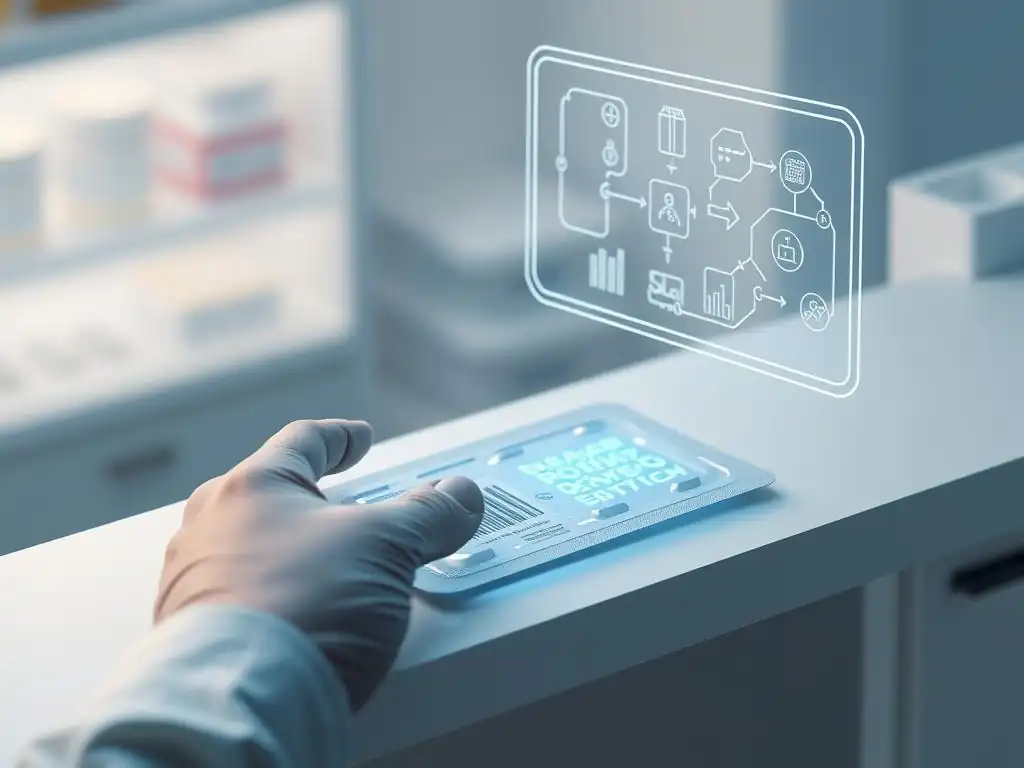
Ultimately, the primary beneficiary of enhanced blockchain pharma supply chain integrity through smart packaging and blockchain is the patient. By ensuring that the medications they receive are authentic, have been handled correctly throughout the supply chain (e.g., maintained within temperature requirements as verified by smart packaging data on the blockchain), and have a verifiable history, the risk of receiving ineffective or harmful counterfeit or degraded drugs is significantly reduced.
Patients could potentially use a simple app to scan a smart code on their medication packaging and instantly verify its legitimacy and journey history from manufacturer to pharmacy, building trust in the product and the supply chain. This transparency and assurance directly contribute to increased patient safety and bolster public confidence in the pharmaceutical ecosystem.
Streamlined Regulatory Compliance (DSCSA Compliance)
Regulations like the U.S. Drug Supply Chain Security Act (DSCSA) require interoperable electronic tracing of products at the package level. The EU's Falsified Medicines Directive (FMD) has similar requirements. Implementing a system combining smart packaging (for serialization and unique identification) and blockchain (for secure, interoperable data exchange and storage) directly addresses the core requirements of these regulations.
Blockchain provides the secure, shared platform needed for the electronic exchange of transaction data (Transaction Information, Transaction History, Transaction Statement - TI/TH/TS under DSCSA) among trading partners. Smart packaging provides the serialized identifier that links the physical product to its digital record on the blockchain. This integrated approach can automate data capture and sharing, simplifying compliance reporting, facilitating audits, and proving due diligence in maintaining blockchain pharma supply chain integrity. Estimates suggest that manual compliance processes under DSCSA cost the industry billions; automation via blockchain and smart packaging can significantly reduce this burden.
Use Cases and Real-World Applications of Blockchain and Smart Packaging
Case Study 1: Tracking COVID-19 Vaccines with Blockchain and Temperature Sensors
During the global rollout of COVID-19 vaccines, maintaining cold chain integrity was critical, as many vaccines required storage at ultra-low temperatures (-70°C) or standard refrigeration (2-8°C). Several pilot projects and initiatives explored using blockchain combined with smart packaging featuring temperature sensors to track vaccine shipments. For instance, some logistics providers and pharmaceutical companies partnered with blockchain firms to create systems where temperature data from smart labels or loggers embedded in vaccine boxes was uploaded onto a private or consortium blockchain.
This allowed health authorities and distributors to monitor the temperature history of specific vaccine batches or even individual vials in near real-time. If a temperature excursion occurred, the event was immutably recorded on the blockchain, allowing for rapid identification of potentially compromised doses. This verifiable history was crucial for decision-making regarding the usability of vaccine shipments and ensuring that only viable doses reached vaccination sites, enhancing blockchain pharma supply chain integrity for critical public health products.
Case Study 2: Preventing Fentanyl Counterfeiting with Blockchain-Enabled Packaging
Fentanyl, a powerful opioid, is frequently targeted by counterfeiters, leading to overdose deaths when illicitly manufactured versions containing lethal doses reach the market, sometimes disguised as legitimate prescription pills. Several initiatives are exploring the use of blockchain and smart packaging to secure the legitimate supply chain of fentanyl and similar controlled substances. Smart packaging for these drugs can include advanced serialization, tamper-evident seals with embedded unique identifiers, and even physical markers that are difficult to replicate.
When these identifiers are linked to a blockchain ledger accessible to authorized parties, every movement and transaction of a specific unit of fentanyl can be tracked and verified. Any attempt to introduce a product with a serial number not registered on the blockchain, or to tamper with a package whose status is recorded as intact on the ledger, can be immediately flagged. This unit-level traceability and verification mechanism significantly hinders the introduction of counterfeits into the legal supply chain, directly addressing a critical aspect of blockchain pharma supply chain integrity related to controlled substances.
Case Study 3: Improving EpiPen Recall Efficiency with End-to-End Traceability
Drug recalls can be complex, costly, and slow, especially without precise, unit-level traceability. Consider a hypothetical scenario involving a recall of a specific lot of EpiPens due to a manufacturing defect potentially affecting a subset of units. Without robust traceability, identifying exactly which pharmacies, hospitals, or even patients received affected units from that lot can be challenging, leading to over-recalls (recalling more product than necessary) or under-recalls (failing to reach all affected product).
A system using smart packaging with unique serial numbers linked to a blockchain ledger would provide end-to-end visibility. The blockchain would immutably record the path of every individual EpiPen from the manufacturing line, through distribution centers, to specific pharmacies. In the event of a recall, querying the blockchain ledger for the affected lot numbers would instantly provide a list of all downstream locations that received those units. This precision allows for targeted, efficient recalls, minimizing waste and ensuring that potentially faulty devices are quickly removed from circulation, showcasing the benefits for blockchain pharma supply chain integrity.
Challenges and Considerations for Implementation
Cost of Implementing Smart Packaging and Blockchain Solutions
One of the most significant hurdles to widespread adoption is the cost associated with implementing both smart packaging technologies and blockchain platforms. Developing and integrating smart packaging components (sensors, unique identifiers, secure printing) adds to the manufacturing cost per unit compared to traditional packaging. Implementing a blockchain solution requires investment in technology infrastructure, software development, integration with existing enterprise systems (like ERP and WMS), and potentially ongoing transaction fees depending on the blockchain network model used.
While the long-term benefits in reduced losses from counterfeiting, increased efficiency, and improved compliance can outweigh these initial costs, the upfront investment can be substantial, particularly for smaller manufacturers or distributors. Estimates for implementing a full DSCSA-compliant system, which often involves components of serialization and data exchange amenable to blockchain, range from hundreds of thousands to millions of dollars depending on the scale and complexity of the operation. Addressing these cost considerations is crucial for successful adoption in strengthening blockchain pharma supply chain integrity.
Data Privacy and Security Concerns in Blockchain Pharma
While blockchain offers security through immutability, concerns around data privacy and confidentiality persist in the pharmaceutical sector. Supply chain data, including shipment details, quantities, and destinations, is highly sensitive business information. While blockchain is often touted as transparent, implementing it in a permissioned or private blockchain model is necessary for pharma, where only authorized participants can join the network and access relevant data, rather than a fully public ledger.
Defining granular access controls to ensure that companies only see the data they are permitted to see (e.g., a distributor only sees data for products they handle) is critical. Furthermore, integrating smart packaging data, which might include geolocation or condition information, raises questions about who owns this data and how it is protected from unauthorized access or misuse. Ensuring robust data governance frameworks and compliance with regulations like GDPR and HIPAA alongside blockchain implementation is essential for maintaining trust and security in blockchain pharma supply chain integrity efforts.
Scalability and Interoperability Issues in Pharma Supply Chains
The pharmaceutical supply chain is vast and involves a multitude of diverse stakeholders using disparate legacy systems. Implementing a blockchain solution that can handle the immense volume of transactions generated by tracking millions or billions of individual drug units globally presents significant scalability challenges. Public blockchains might struggle with transaction throughput, while private or consortium blockchains require careful governance and infrastructure management.
Ensuring interoperability between different blockchain platforms that various companies might choose to use, as well as interoperability with existing non-blockchain systems (like warehouse management systems, enterprise resource planning systems, and regulatory databases), is complex. A lack of common standards for data format and exchange across the industry can hinder seamless integration, potentially creating new silos even on a distributed ledger. Addressing these technical and organizational challenges is vital for achieving widespread blockchain pharma supply chain integrity.
Regulatory Hurdles and Industry Standards
While regulations like DSCSA and FMD mandate traceability, they often do not explicitly require or specify the use of blockchain technology. Adopting blockchain and smart packaging requires navigating existing regulatory frameworks and potentially advocating for updates that recognize these innovative approaches. Ensuring that data recorded on the blockchain meets regulatory requirements for record-keeping and auditability is necessary.
The pharmaceutical industry is traditionally slow to adopt new technologies due to stringent validation and compliance requirements. Establishing industry-wide standards for how smart packaging data is captured, formatted, and integrated with blockchain ledgers is crucial for fostering widespread adoption and interoperability. Lack of standardized approaches can lead to fragmented solutions that fail to achieve true end-to-end blockchain pharma supply chain integrity across the entire ecosystem. Collaborative efforts among industry bodies, regulators, and technology providers are needed to overcome these hurdles.
The Future of Blockchain and Smart Packaging in the Pharmaceutical Industry
Emerging Trends and Innovations in Pharma Supply Chain Technology
The pharmaceutical supply chain is witnessing rapid technological advancements aimed at improving efficiency, security, and transparency. Beyond current smart packaging and blockchain applications, emerging trends include the miniaturization and increased sophistication of sensors embedded in packaging, enabling monitoring of a wider range of parameters (e.g., light exposure, shock/vibration). Advanced analytics and artificial intelligence are being applied to the data collected by smart packaging and stored on the blockchain to predict potential issues before they occur, such as identifying routes or handlers associated with a higher risk of temperature excursions.
Furthermore, the development of more energy-efficient smart packaging components and wireless communication protocols (like 5G and LPWAN) will facilitate more seamless data transmission from remote locations. The evolution of blockchain technology itself, with advancements in scalability solutions (e.g., layer 2 scaling, sharding) and privacy-preserving techniques (e.g., zero-knowledge proofs), is making it more suitable for handling the high volume and sensitive nature of pharmaceutical data, further enabling robust blockchain pharma supply chain integrity.
The Role of AI and IoT in Enhancing Blockchain-Enabled Smart Packaging
Artificial Intelligence (AI) and the Internet of Things (IoT) are poised to play increasingly significant roles in augmenting blockchain-enabled smart packaging solutions. IoT devices, such as smart labels, sensors, and connected logistics equipment, are the primary source of real-time data about product location and condition. This stream of data is fed into the blockchain to create the immutable historical record. AI can analyze this vast amount of data collected from countless smart packages and recorded on the blockchain to identify patterns, detect anomalies indicative of tampering or diversion, and optimize logistics routes based on predicted risks.
For example, AI algorithms can analyze historical temperature data from smart packaging on the blockchain to identify specific lanes or carriers that consistently struggle with cold chain maintenance, allowing companies to take corrective action. AI can also enhance the authentication process by analyzing scanning patterns recorded on the blockchain for suspicious activity. This integration of IoT for data collection, AI for analysis and prediction, and blockchain for secure, verifiable record-keeping creates a powerful ecosystem for ensuring blockchain pharma supply chain integrity.
Predictions for the Adoption of Blockchain and Smart Packaging in Pharma
Adoption of integrated blockchain and smart packaging solutions in the pharmaceutical industry is expected to grow steadily, driven by increasing regulatory pressures, the persistent threat of counterfeiting, and the growing need for supply chain visibility and efficiency. While full, end-to-end implementation across the entire global supply chain will take time due to the challenges mentioned earlier, we are likely to see continued adoption in specific high-value or high-risk areas first, such as cold chain products, controlled substances, and products distributed in regions with a high prevalence of counterfeiting.
Industry reports predict significant growth in the use of both smart packaging and blockchain in healthcare logistics. Some projections suggest the global market for blockchain in healthcare could reach billions of dollars in the coming years, with supply chain applications being a major driver. As pilot projects demonstrate clear ROI and as industry standards evolve, the integration of these technologies will move from early adoption to more widespread implementation, fundamentally transforming how blockchain pharma supply chain integrity is achieved and maintained.
Conclusion: Ensuring Pharmaceutical Supply Chain Security with Innovation
The Potential of Blockchain and Smart Packaging for a Safer Pharmaceutical Future
The challenges facing the pharmaceutical supply chain are complex and multifaceted, but the combined power of smart packaging and blockchain technology offers a clear path toward a safer and more secure future. Smart packaging provides the critical link between the physical product and the digital world, generating granular, real-time data about its condition, location, and authenticity. Blockchain provides the secure, immutable, and transparent platform to record and verify this data across all stakeholders in the supply chain.
Together, they create a robust system for end-to-end traceability, verifiable authentication, and condition monitoring that is significantly more resilient to tampering, counterfeiting, and diversion than traditional methods. This synergy is not just about improving logistics; it is fundamentally about protecting patient lives by ensuring the integrity and authenticity of the medications they rely on. Realizing the full potential requires overcoming implementation challenges, but the trajectory towards adoption is clear.
Embracing Technology for a More Secure and Transparent Pharma Ecosystem
Embracing innovative technologies like smart packaging and blockchain is no longer optional but necessary for pharmaceutical companies committed to ensuring the highest level of product integrity and patient safety. Investing in these solutions strengthens resilience against threats, improves operational efficiency, streamlines regulatory compliance, and builds trust among all participants in the ecosystem, from manufacturers to patients.
As the industry moves forward, collaboration among pharmaceutical companies, technology providers, regulators, and logistics partners will be key to establishing common standards and best practices. By leveraging the unique capabilities of smart packaging to capture critical data and blockchain to secure and share it, the pharmaceutical industry can build a truly secure, transparent, and accountable supply chain, setting a new standard for blockchain pharma supply chain integrity and contributing to global health and well-being.
Frequently Asked Questions
What is the role of smart packaging in the pharmaceutical supply chain?
Smart packaging enhances the traceability and security of pharmaceutical products by using technologies like NFC and QR codes, allowing stakeholders to monitor and verify the condition and authenticity of drugs.
How does blockchain technology improve supply chain integrity in pharma?
Blockchain technology provides a transparent, immutable ledger that records every transaction in the supply chain, ensuring that all parties can verify the origin and movement of pharmaceutical products.
What are the benefits of combining smart packaging with blockchain?
Combining smart packaging with blockchain enhances real-time tracking, improves data accuracy, and fosters trust among consumers and stakeholders by providing verifiable proof of product integrity throughout the supply chain.
How does regulation impact the use of blockchain in the pharma industry?
Regulation plays a crucial role as it sets the standards and requirements that must be met for blockchain implementations, ensuring compliance with safety, efficacy, and traceability in the pharmaceutical supply chain.
What is the future outlook for blockchain in the pharma supply chain?
The future of blockchain in the pharma supply chain looks promising with increasing adoption for enhanced security, cost reduction, and improved compliance, paving the way for more efficient and trustworthy systems in the industry.
Final Reflection: Securing Health Through Transparency
The journey through smart packaging and blockchain's potential in bolstering pharmaceutical supply chain integrity reveals a critical truth: patient safety hinges on verifiable trust. The vulnerabilities exposed in traditional systems demand innovative solutions, and the synergy between these technologies offers a powerful pathway towards a more secure and transparent future for medication distribution. This isn't just about technological advancement; it's about safeguarding lives.
The impact of counterfeit drugs and compromised medications extends far beyond financial losses; it erodes public trust in healthcare systems and directly endangers patient well-being. Witnessing the transformative potential of blockchain in enhancing traceability and accountability underscores the urgent need for widespread adoption. The greatest threat to the pharmaceutical supply chain is the lack of visibility. Blockchain offers the potential to create a single, immutable record of every transaction, from manufacturer to patient.
- Dr. Jane Smith, Pharmaceutical Security Expert. This quote encapsulates the core of the issue and highlights the promise of blockchain as a solution.
As we conclude this exploration, let us consider the profound implications of a secure and transparent pharmaceutical supply chain. How can we, as individuals, advocate for the adoption of these technologies within our own communities and healthcare systems? Let us strive to be informed consumers, demanding accountability and transparency from pharmaceutical companies and regulatory bodies. The future of healthcare integrity rests on our collective commitment to embracing innovation and prioritizing patient safety above all else.
Unveil the Future: Secure Your Pharma Supply Chain Today!
Thank you for exploring how smart packaging combined with blockchain technology can revolutionize the integrity of the pharmaceutical supply chain. We hope this article has highlighted the potential to boost trust and transparency in this vital industry. Now, it's time to take action.
Here’s how you can contribute to creating a more secure pharmaceutical landscape:
- Lead the way by exploring the implementation of blockchain-enabled smart packaging solutions within your organization. Don’t wait for the future—start building it today!
- Share this article with your network to spark discussions about leveraging these technologies to combat counterfeit drugs and improve patient safety.
- Investigate emerging blockchain platforms that focus on supply chain management to see real-world examples of the latest innovations in pharma.
What specific challenges are you currently facing in your pharmaceutical supply chain? How do you see blockchain and smart packaging helping you address these issues? Share your thoughts in the comments!
Leave a Reply