
Unlocking the Value of Healthcare Data: Blockchain for Secure and Ethical Sharing


Welcome to Blockchain Trends, your go-to source for understanding the revolutionary impact of blockchain technology.
Delve into the world beyond cryptocurrency and discover how blockchain is reshaping industries. Ever wondered how to secure sensitive patient information? Our feature article, Unlocking the Value of Healthcare Data: Blockchain for Secure and Ethical Sharing, explores how blockchain healthcare data security can revolutionize the industry. Discover the power of decentralized systems and the future of ethical data management within healthcare. Intrigued? Let's explore the possibilities together.
- Unlocking the Value of Healthcare Data: Blockchain for Secure and Ethical Sharing
- Understanding Blockchain's Role in Healthcare Data Security
- Ethical Considerations in Blockchain-Based Healthcare Data Sharing
- Use Cases of Blockchain for Secure Healthcare Data Sharing
- Technical Mechanisms Behind Blockchain Healthcare Data Security
- Future Prospects: Transforming Healthcare Data Sharing with Blockchain
- Conclusion: Maximizing the Value of Healthcare Data with Blockchain Security and Ethics.
-
Frequently Asked Questions
- What are the primary benefits of using blockchain for healthcare data?
- How does blockchain improve data sharing within the healthcare ecosystem?
- What are some of the current challenges in implementing blockchain for healthcare data security?
- How does blockchain address ethical concerns related to healthcare data usage?
- Beyond security, what other potential applications of blockchain exist in healthcare?
- Final Reflection: Embracing Trust in Healthcare's Digital Future
- Reimagine Healthcare: Your Role in the Blockchain Revolution!
Unlocking the Value of Healthcare Data: Blockchain for Secure and Ethical Sharing
Introduction to Blockchain Healthcare Data Security
Healthcare data is among the most sensitive and valuable information in existence, encompassing everything from patient demographics and medical history to treatment plans and genomic sequences. Its proper management is critical not only for individual patient care but also for broader public health initiatives, medical research, and the development of new therapies. However, traditional healthcare data systems are often fragmented, siloed, and vulnerable to security breaches, posing significant risks to patient privacy and data integrity. The sheer volume of data generated daily exacerbates these challenges, making robust blockchain healthcare data security a paramount concern.
The inherent characteristics of blockchain technology—its decentralized nature, cryptographic security, and immutable ledger—present a compelling opportunity to address these long-standing issues. By providing a secure, transparent, and tamper-proof method for recording transactions and interactions, blockchain can transform how healthcare data is managed and shared. This extends beyond simple storage to encompass complex processes like consent management, identity verification, and the creation of comprehensive, longitudinal patient records accessible across different providers, all while maintaining stringent blockchain healthcare data security standards.
The Importance of Secure and Ethical Healthcare Data Sharing
Secure and ethical sharing of healthcare data is vital for advancing medical knowledge and improving patient outcomes. Researchers require access to large, diverse datasets to identify trends, discover biomarkers, and develop personalized medicine. Clinicians benefit from having a complete view of a patient's medical history, regardless of where they received care, enabling more informed diagnoses and treatment decisions. Public health officials rely on aggregated data to track disease outbreaks and manage health crises effectively.
Despite the clear benefits, sharing healthcare data is fraught with risks. Data breaches can lead to identity theft, discrimination, and loss of trust. Furthermore, the ethical implications of using sensitive personal health information require careful consideration, including ensuring patient consent, maintaining anonymity where necessary, and preventing data misuse. Regulations like the Health Insurance Portability and Accountability Act (HIPAA) in the U.S., the General Data Protection Regulation (GDPR) in Europe, and similar laws globally mandate strict protocols for protecting health information, underscoring the critical need for advanced security measures and ethical frameworks in blockchain healthcare data security.
Overview of Blockchain Technology in Healthcare Data Management
At its core, blockchain is a distributed, immutable ledger that records transactions across a network of computers. Each block of transactions is cryptographically linked to the previous one, forming a chain that is exceedingly difficult to alter retroactively without detection. This inherent immutability makes it ideal for maintaining a reliable audit trail of data access and modifications, a fundamental requirement for blockchain healthcare data security.
In the context of healthcare data management, blockchain is not typically used to store massive amounts of raw patient data directly on the chain due to scalability and privacy concerns. Instead, it acts as a secure index or a system for managing metadata, access permissions, and consent. The actual patient data can reside in existing databases or decentralized storage systems, with cryptographic hashes or pointers stored on the blockchain. This model leverages blockchain's security and transparency features while addressing the practical challenges of handling large, sensitive datasets, forming the basis of effective blockchain healthcare data security solutions.
Understanding Blockchain's Role in Healthcare Data Security
How Blockchain Enhances Data Integrity and Confidentiality in Healthcare
Data integrity is paramount in healthcare; even minor alterations to patient records can have life-threatening consequences. Blockchain's immutable nature ensures that once data access or a data transaction is recorded on the ledger, it cannot be changed or deleted without leaving a clear, indelible trace. This cryptographic chaining of blocks provides a high degree of confidence in the integrity of the audit trail associated with healthcare data. Any attempt to tamper with a record would break the cryptographic link, immediately signaling that the data's integrity has been compromised.
While blockchain itself is often public or semi-public depending on the implementation (e.g., permissioned vs. permissionless), confidentiality is maintained through several mechanisms. Sensitive patient data is typically encrypted and stored off-chain. The blockchain then manages access control, using cryptographic keys and smart contracts to grant permissions only to authorized parties. Storing cryptographic hashes of the off-chain data on the blockchain allows for verification of the data's integrity without revealing the data itself. This combination of off-chain storage with on-chain access management is a key strategy for achieving robust blockchain healthcare data security while preserving patient confidentiality.
Decentralization and Its Impact on Healthcare Data Security
Traditional healthcare systems often rely on centralized databases, creating single points of failure that are attractive targets for cyberattacks. A breach in a large hospital network or a health insurance provider can expose millions of patient records, as seen in numerous high-profile incidents. For example, a 2015 attack on Anthem, a major U.S. health insurer, exposed the records of nearly 79 million people. Decentralization offered by blockchain technology mitigates this risk by distributing the ledger across multiple nodes in a network.
With a decentralized blockchain healthcare data security system, there is no single server holding all the sensitive information that an attacker can target. To compromise the system or alter records, an attacker would theoretically need to gain control of a majority of the network's nodes, a computationally infeasible task for most blockchain implementations, especially large, distributed ones. This distributed architecture significantly enhances resilience against cyber threats, making it much harder for malicious actors to access or manipulate patient data compared to traditional centralized models.
Blockchain vs Traditional Healthcare Data Security Methods
Traditional healthcare data security relies heavily on perimeter defenses like firewalls, intrusion detection systems, and access control lists managing centralized databases. While essential, these methods are vulnerable to sophisticated attacks, insider threats, and human error. Data is often copied and stored in disparate systems across different departments or institutions, leading to version control issues and increased attack surfaces. Auditing data access can be challenging across these siloed systems, lacking transparency and immutability.
Blockchain introduces a paradigm shift. Instead of solely focusing on preventing access to a central vault, it creates a shared, tamper-evident log of all interactions related to data access and sharing. This provides an unparalleled level of transparency and auditability. Unlike traditional logs that can be altered or deleted, the blockchain record is immutable. Furthermore, blockchain can facilitate secure, authorized data sharing between disparate entities without relying on vulnerable central exchanges or manual processes. This shift towards a decentralized, cryptographically secured, and transparent ledger fundamentally strengthens blockchain healthcare data security compared to relying solely on traditional methods.
Ethical Considerations in Blockchain-Based Healthcare Data Sharing
Addressing Patient Privacy Concerns with Blockchain Solutions
While blockchain offers enhanced security, the inherent transparency of the ledger can raise privacy concerns, especially in healthcare where data is highly sensitive. Simply putting patient identifiers on a public blockchain would be a major privacy violation. Therefore, advanced techniques are employed to ensure patient privacy within blockchain healthcare data security frameworks. One approach involves using private or permissioned blockchains where participation and data visibility are restricted to authorized entities.
Another crucial method is the use of privacy-preserving technologies in conjunction with blockchain. This includes storing only encrypted data or cryptographic hashes of data on the chain, with decryption keys managed securely off-chain and accessible only with appropriate permissions recorded on the blockchain. Techniques like Zero-Knowledge Proofs (ZKPs) allow verification of certain data properties (e.g., a patient meets criteria for a clinical trial) without revealing the underlying sensitive information itself.
Differential privacy can be applied to aggregated data before it's indexed or shared via the blockchain, adding noise to prevent individual identification while preserving statistical trends. These combined strategies are essential for balancing the transparency benefits of blockchain with the strict privacy requirements of blockchain healthcare data security.
Ensuring Compliance with Healthcare Data Regulations through Blockchain
Healthcare data is subject to stringent regulatory requirements globally, such as HIPAA, GDPR, and others. These regulations mandate specific levels of security, privacy, and accountability for handling Protected Health Information (PHI). Implementing blockchain healthcare data security solutions must ensure full compliance with these complex legal frameworks. Blockchain's immutable audit trail is a powerful tool for demonstrating compliance. Every data access request, consent update, or sharing event can be recorded on the ledger, providing regulators with a verifiable history of data handling practices.
Smart contracts, code that automatically executes on the blockchain when predefined conditions are met, can be programmed to enforce regulatory rules. For instance, a smart contract could ensure that patient data is only shared with a research institution if valid consent is recorded on the blockchain and the institution holds the necessary credentials. This automated enforcement mechanism reduces the risk of human error and ensures consistent adherence to legal requirements, significantly bolstering the compliance posture of blockchain healthcare data security systems.
Building Trust: Transparency and Consent Management on Blockchain Platforms
Patient trust is fundamental to effective healthcare data sharing. Patients need to feel confident that their sensitive information is secure and used ethically, according to their wishes. Blockchain can significantly enhance trust by providing unprecedented transparency regarding data access and usage. By granting patients access to the blockchain ledger (or a user-friendly interface connected to it), they can see an immutable log of who has accessed their medical records and when. This level of visibility is often lacking in traditional systems.
Furthermore, blockchain platforms can revolutionize consent management. Instead of static, paper-based consent forms, patients can manage their data permissions dynamically on the blockchain. They can grant granular consent for specific data types (e.g., share lab results with a specialist) for defined periods or purposes. This consent status is recorded immutably on the chain, and smart contracts can enforce these permissions automatically. This patient-centric approach to consent, secured by blockchain healthcare data security, empowers individuals and builds a foundation of trust necessary for widespread data sharing initiatives.
Use Cases of Blockchain for Secure Healthcare Data Sharing
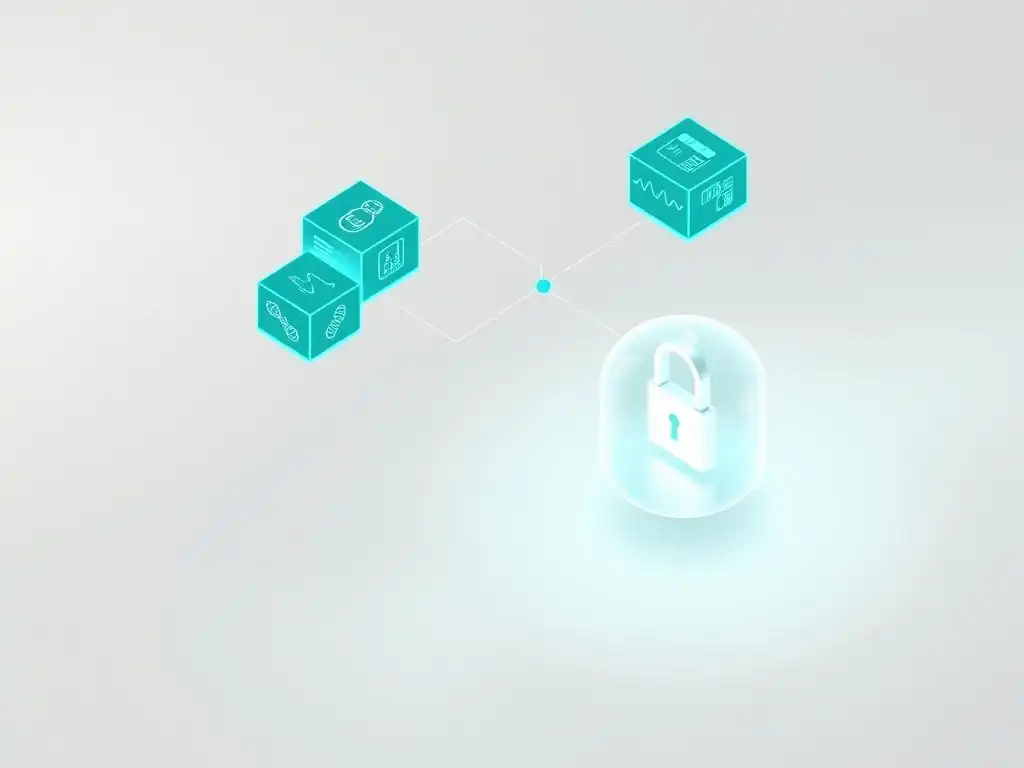
Interoperability and Data Exchange Between Healthcare Providers
A major challenge in healthcare is the lack of interoperability between disparate electronic health record (EHR) systems used by different hospitals, clinics, and labs. This fragmentation hinders care coordination, leads to duplicated tests, and prevents researchers from accessing comprehensive datasets. Blockchain can act as a secure, shared layer that facilitates the exchange of data pointers or summarized patient information between these incompatible systems.
Imagine a scenario where a patient visits a new specialist. Instead of relying on faxed records or patient recall, the specialist's EHR system could query a blockchain network (with the patient's permission, recorded on-chain). The blockchain would provide a secure, verified pointer to the patient's relevant records stored in their previous providers' systems. The specialist's system could then securely request and receive the necessary data. Projects are piloting blockchain-based solutions aiming to create such networks, streamlining data exchange while maintaining stringent blockchain healthcare data security across institutional boundaries.
Empowering Patients with Control Over Their Medical Records
Blockchain technology enables models where patients become the custodians of their own health data. In this model, patient data is often stored in a decentralized manner or encrypted on cloud storage, with the patient holding the private keys. The blockchain ledger then serves as a secure record of data ownership and a platform for managing access permissions. When a healthcare provider, researcher, or family member needs access, they must request it through the blockchain platform, and the patient can grant or deny permission via a user-friendly interface.
This approach shifts control from institutions to individuals, giving patients unprecedented agency over their sensitive information. They can decide who sees their data, for what purpose, and for how long. This not only enhances privacy and security but also encourages patients to actively engage with their health data and participate in research or donate anonymized data for public health, all managed within a secure blockchain healthcare data security framework.
Blockchain in Clinical Trials and Research Data Security
Clinical trials generate vast amounts of data, from patient demographics and test results to adverse event reports. Ensuring the integrity, security, and transparency of this data is critical for the validity of trial results and the safety of future patients. Traditional methods can be susceptible to data tampering or errors, potentially impacting the reliability of research findings. Blockchain offers a robust solution by providing an immutable ledger for recording every step of the clinical trial process, from patient recruitment and consent to data collection and analysis.
By timestamping and hashing trial data on the blockchain, researchers can create a verifiable audit trail that proves data has not been altered since it was recorded. This enhances trust in the research process for regulators, participants, and the scientific community. Furthermore, blockchain can facilitate the secure sharing of aggregated or anonymized trial data with regulatory bodies or other researchers while protecting patient identities, thereby advancing medical research efficiently and ethically, underpinned by strong blockchain healthcare data security.
Technical Mechanisms Behind Blockchain Healthcare Data Security
Cryptographic Techniques for Protecting Healthcare Information
Cryptography is the bedrock of blockchain healthcare data security. Several techniques are employed to protect sensitive healthcare information. Hashing functions (like SHA-256) are used to create a unique, fixed-size digital fingerprint of a piece of data. If even a single bit of the data is changed, the hash changes completely. By storing hashes of patient records or data transactions on the blockchain, the integrity of the off-chain data can be verified without revealing the data itself.
Digital signatures, based on public-key cryptography, are used to authenticate users and transactions. When a healthcare provider accesses a record or a patient grants consent, the action is signed with their private key. This signature is then verified using their public key, proving the action originated from that specific, authorized entity and ensuring non-repudiation. While raw data is typically stored encrypted off-chain, cryptographic keys for decryption can be managed and permissions controlled via the blockchain, ensuring that only parties with the correct authorization recorded on the immutable ledger can access the encrypted data.
Smart Contracts for Automated and Ethical Data Sharing
Smart contracts are self-executing pieces of code stored on the blockchain that automatically run when predefined conditions are met. In healthcare, smart contracts are instrumental in automating and enforcing data-sharing agreements and ethical guidelines. For example, a smart contract could be programmed to release a specific set of anonymized lab results to a registered research institution only if the patient's consent for that specific type of research has been recorded on the blockchain and the institution's credentials have been verified.
These automated agreements reduce the need for intermediaries, minimize administrative overhead, and ensure that data is shared precisely according to the rules and permissions set by the patient and healthcare providers. By encoding ethical guidelines and regulatory requirements directly into the smart contract logic, blockchain healthcare data security systems can ensure consistent and compliant data handling practices, reducing the risk of human error or intentional misuse.
Scalability and Performance Challenges in Healthcare Blockchain Systems
While the potential of blockchain healthcare data security is significant, implementing these systems at scale faces considerable technical challenges. Healthcare systems generate enormous volumes of data daily, from high-resolution medical images to continuous streams from wearable devices. Public blockchains, while highly secure, can be slow and have limited transaction throughput (e.g., Bitcoin processes about 7 transactions per second, Ethereum around 15-30, though newer versions aim higher). These speeds are insufficient for the demands of a large hospital network or a national health information exchange.
Permissioned or consortium blockchains, where participation is restricted to known entities (like hospitals, insurers, and regulators), offer better performance and scalability. However, they introduce a degree of centralization, potentially compromising some of the decentralized benefits. Storing large data files directly on any blockchain is generally impractical and expensive; hence, the reliance on off-chain storage with on-chain metadata/hashes. Developing scalable, performant blockchain architectures that can handle the volume and velocity of healthcare data while maintaining decentralization and cost-effectiveness remains an active area of research and development for advancing blockchain healthcare data security.
Future Prospects: Transforming Healthcare Data Sharing with Blockchain
Emerging Trends in Blockchain for Healthcare Data Security
The field of blockchain healthcare data security is rapidly evolving, with several promising trends emerging. One trend is the development of decentralized identity solutions built on blockchain, allowing patients to have sovereign control over their digital identities and associated health credentials. Another is the integration of more advanced cryptographic techniques like homomorphic encryption, which would allow computations to be performed on encrypted health data without decrypting it, offering unprecedented privacy during data analysis.
Furthermore, there's growing interest in combining blockchain with federated learning, a machine learning approach that trains algorithms across multiple decentralized devices or servers holding local data samples, without exchanging the data itself. Blockchain can secure the process, ensuring the integrity of the training models and the secure aggregation of results. Pilot projects exploring these concepts are underway globally, signaling a move towards more sophisticated and privacy-preserving blockchain healthcare data security architectures.
Integration of Blockchain with AI and IoT in Healthcare Data Management
The convergence of blockchain with Artificial Intelligence (AI) and the Internet of Things (IoT) holds immense potential for transforming healthcare data management. IoT devices, such as wearable health monitors and remote patient sensors, generate continuous streams of valuable health data. Blockchain can provide a secure and immutable ledger to record this data directly from the source, ensuring its integrity and provenance before it is used for diagnosis or analysis. This is crucial for reliable blockchain healthcare data security in remote monitoring scenarios.
AI algorithms require access to large, clean, and trustworthy datasets to provide accurate insights. Blockchain can ensure the trustworthiness of the data fed into AI systems by providing a verifiable history of its origin and handling. Furthermore, blockchain and smart contracts can manage the secure and ethical sharing of data for AI training, ensuring compliance with consent and privacy regulations. This integration can lead to more accurate diagnostics, personalized treatment plans, and proactive health interventions, all powered by securely managed data.
Potential Impact on Healthcare Outcomes and Patient Empowerment
The widespread adoption of blockchain healthcare data security solutions has the potential to profoundly impact healthcare outcomes and patient empowerment. By enabling secure, ethical, and efficient data sharing, blockchain can break down data silos, providing healthcare providers with a more complete picture of patient health. This can lead to faster, more accurate diagnoses, better-coordinated care transitions, and reduced medical errors.
For patients, blockchain offers the promise of regaining control over their personal health information. Empowered patients who can access, manage, and share their data on their terms are more likely to be engaged in their healthcare decisions. This increased engagement, combined with access to personalized insights derived from secure data, can lead to better health management and improved long-term outcomes. Ultimately, blockchain's contribution to blockchain healthcare data security and ethical data sharing is not just about technology; it's about building a more efficient, trustworthy, and patient-centric healthcare ecosystem.
Conclusion: Maximizing the Value of Healthcare Data with Blockchain Security and Ethics.
The challenges surrounding healthcare data security, privacy, and interoperability are significant, hindering progress in research and patient care. Traditional systems, while foundational, are increasingly inadequate in the face of rising cyber threats and the growing volume of data. Blockchain technology offers a transformative approach to blockchain healthcare data security, leveraging decentralization, cryptography, and immutability to create robust, tamper-evident systems for managing access and transactions related to sensitive health information.
By facilitating secure and ethical data sharing, empowering patients with control over their records, and providing an immutable audit trail for compliance, blockchain can unlock the immense value currently trapped within fragmented healthcare data systems. While technical hurdles related to scalability and integration remain, ongoing advancements and pilot projects demonstrate the tangible potential of blockchain to revolutionize healthcare data management. Embracing blockchain, alongside necessary privacy-preserving techniques and strong ethical frameworks, is essential for building a future where healthcare data is not only secure but also ethically shared to improve lives and drive medical innovation.
Frequently Asked Questions
What are the primary benefits of using blockchain for healthcare data?
Blockchain offers enhanced data security and patient privacy through its decentralized and immutable nature. This can lead to improved data integrity and trust among stakeholders.
How does blockchain improve data sharing within the healthcare ecosystem?
Blockchain enables secure and transparent data sharing between hospitals, researchers, and patients. This facilitates better care coordination and faster research advancements while maintaining data control.
What are some of the current challenges in implementing blockchain for healthcare data security?
Scalability, interoperability with existing systems, and regulatory uncertainty pose significant hurdles. Addressing these challenges is crucial for widespread adoption of blockchain in healthcare.
Blockchain can enforce patient consent and ensure data provenance, promoting ethical data handling. This helps maintain transparency and accountability in healthcare data management.
Beyond security, what other potential applications of blockchain exist in healthcare?
Blockchain can streamline supply chain management for pharmaceuticals and verify credentialing of healthcare professionals. It can also facilitate secure and efficient insurance claim processing.
Final Reflection: Embracing Trust in Healthcare's Digital Future
The exploration of blockchain's potential in healthcare data security underscores a critical need: building trust in a system increasingly reliant on digital information. As we've seen, the promise of secure, transparent, and ethical data sharing is no longer a futuristic fantasy, but a tangible possibility within our grasp, poised to revolutionize patient care and research advancements. The stakes are high, and the time to act is now.
The journey towards widespread adoption of blockchain in healthcare is not without its challenges, but the potential benefits are too significant to ignore. My own belief is that fostering collaboration and open dialogue between technologists, healthcare professionals, and policymakers is paramount to navigating these complexities. Data is the new oil, but in healthcare, it's more like the new lifeblood. We need to protect it, share it responsibly, and use it to heal.
This quote encapsulates the immense responsibility we bear in harnessing the power of healthcare data for the betterment of humanity.
Therefore, I invite you, the reader, to consider your role in shaping this future. How can you advocate for responsible data practices? How can you contribute to the conversation surrounding blockchain's implementation in healthcare? Let us embrace the potential of this technology, not with blind faith, but with informed optimism and a commitment to building a healthcare system that is both secure and ethically sound, ensuring that the benefits of innovation reach all those who need them most.
Reimagine Healthcare: Your Role in the Blockchain Revolution!
Thank you for exploring how blockchain can transform healthcare data sharing. Now that you understand its potential, it's time to take action and help create a more secure and ethical healthcare system.
Here’s how you can get involved:
- Advocate for Blockchain Adoption: Reach out to local healthcare providers and policymakers to discuss the benefits of blockchain for enhancing data security and empowering patients. Your voice can make a meaningful difference.
- Explore Blockchain Applications: Learn more about how blockchain is being used in other industries like finance and education to see its broader potential.
- Join the Conversation: Share this article with your network and help foster discussions on the ethical considerations and practical implementation of blockchain in healthcare.
What is the first step you will take to promote secure and ethical healthcare data sharing through blockchain technology?
Leave a Reply