
Blockchain for CrossBorder Property Transactions: Simplifying International Real Estate


Welcome to Blockchain Trends, your compass in the rapidly evolving world of decentralized technology!
Are you ready to uncover how blockchain is revolutionizing industries far beyond Bitcoin? Dive in to explore the potential of DeFi, enterprise blockchain solutions, and the future of decentralized systems. Our latest article delves into a fascinating application: how blockchain is simplifying blockchain international real estate deals. Discover how this technology is poised to transform cross-border property transactions, making them more secure, transparent, and efficient. Curious to learn more? Let's explore the possibilities together!
Blockchain for Cross-Border Property Transactions: Simplifying International Real Estate
- Introduction: Revolutionizing International Real Estate Deals with Blockchain
- Understanding Blockchain's Potential in International Property
- Streamlining Cross-Border Property Transactions with Blockchain
-
Frequently Asked Questions
- What is the main purpose of using blockchain in international real estate deals?
- How does blockchain enhance transparency in property transactions?
- What are the benefits of decentralized finance (DeFi) in real estate?
- What role does regulation play in blockchain real estate transactions?
- How might the future of blockchain in real estate look?
- Final Reflection: Embracing Transparency in Global Real Estate
- Unlock Your Global Property Future!
Introduction: Revolutionizing International Real Estate Deals with Blockchain
The Challenges of Traditional Cross-Border Property Transactions
Executing international real estate deals has historically been a complex, time-consuming, and expensive undertaking. The process involves navigating different legal systems, currency exchange fluctuations, disparate land registry databases, and often relies on intermediaries like banks, lawyers, and escrow agents located in multiple jurisdictions.
This fragmentation leads to significant delays, with transactions often taking months to complete, sometimes even exceeding six months for complex commercial properties spanning borders. The lack of a single, unified source of truth for property ownership and transaction history across nations exacerbates the difficulty in verifying legitimacy and title clarity, increasing the risk of fraud or disputes during blockchain international real estate deals.
Furthermore, the costs associated with traditional cross-border property transactions are substantial. Fees for legal services, title insurance, escrow services, international wire transfers, and taxes in different countries can easily add up to 5% to 10% or more of the property's value. Coordinating these various parties and processes across different time zones and regulatory environments creates friction, reduces efficiency, and introduces points of vulnerability. The inherent opacity in traditional systems makes due diligence challenging and can deter potential foreign investors seeking to engage in blockchain international real estate deals due to perceived risks and bureaucratic hurdles.
How Blockchain Technology Offers a Solution for Global Real Estate
Blockchain technology presents a compelling solution to many of the inherent challenges in facilitating international real estate deals. By providing a decentralized, immutable, and transparent ledger, blockchain can streamline processes that are currently manual, paper-based, and reliant on multiple trust points. It offers a shared, secure record of ownership and transaction history accessible to authorized parties globally, drastically reducing the need for extensive manual verification and coordination between intermediaries in different countries. This foundational shift enables a more direct and efficient pathway for executing blockchain international real estate deals.
The core capabilities of blockchain, such as smart contracts and tokenization, are particularly relevant for cross-border property transactions. Smart contracts can automate key steps of the transaction process, from offer acceptance to fund release, based on predefined conditions, eliminating delays caused by manual approvals and coordination. Tokenization allows fractional ownership of properties, making international real estate investment more accessible and liquid. By recording these processes on a secure, distributed ledger, blockchain enhances trust and reduces counterparty risk, paving the way for a new era of simplified and secure blockchain international real estate deals.
Understanding Blockchain's Potential in International Property
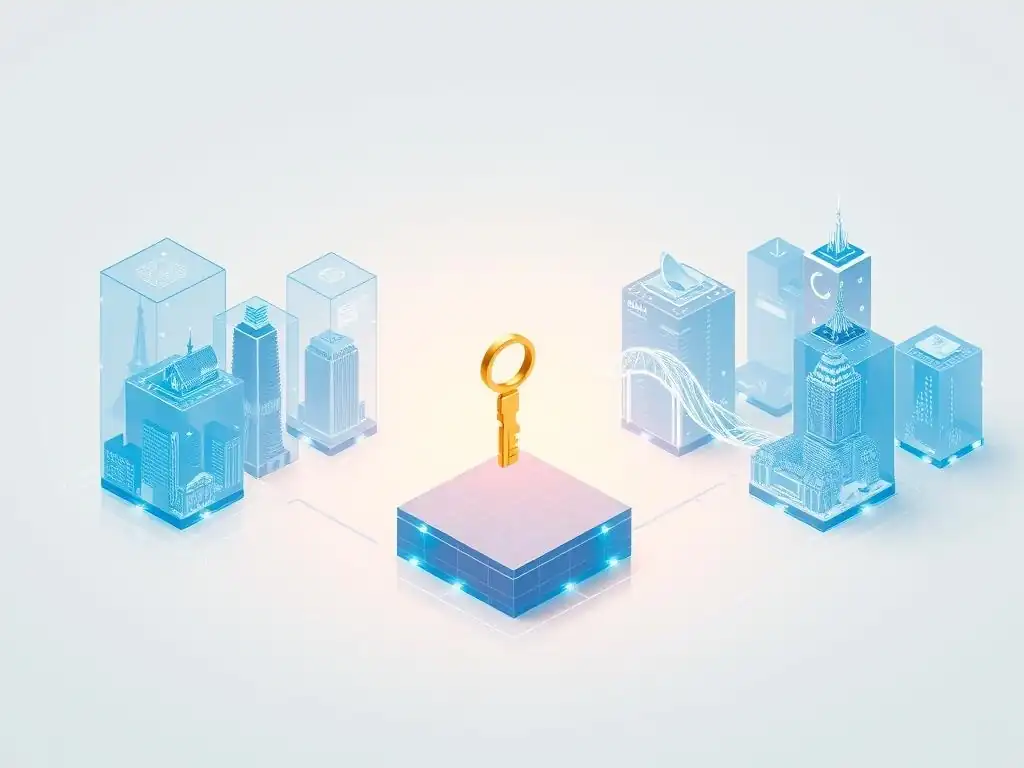
Key Benefits of Using Blockchain for Cross-Border Real Estate Transactions
The adoption of blockchain technology in international real estate promises a range of transformative benefits that address current inefficiencies. One primary advantage is the significant reduction in transaction time. While traditional cross-border deals can take weeks or months, blockchain-based processes, leveraging smart contracts and digital identities, have the potential to shorten this timeframe considerably, potentially down to days or even hours for certain steps like verification and fund transfer. This acceleration is crucial for investors and developers operating on tight schedules and seeking to capitalize on market opportunities more swiftly through blockchain international real estate deals.
Another key benefit is the potential for substantial cost savings. By reducing the reliance on numerous intermediaries and automating processes through smart contracts, transaction fees can be significantly lowered. Estimates vary, but some analyses suggest potential cost reductions of 1% to 3% or more of the property value by minimizing legal fees, escrow costs, and administrative overhead. Furthermore, blockchain's ability to provide a clear, verifiable record of ownership and encumbrances can reduce the need for extensive and costly title searches and insurance in many cases, making blockchain international real estate deals more economically viable.
Here's a quick look at some core benefits:
- Reduced Transaction Time
- Lower Transaction Costs
- Enhanced Transparency
- Improved Security
- Increased Liquidity (via tokenization)
- Greater Accessibility for Global Investors
- Streamlined Due Diligence
Enhanced Transparency and Security in Global Property Deals
Transparency is fundamentally enhanced when blockchain is applied to international real estate deals. Every transaction, ownership transfer, and relevant document hash (a unique digital fingerprint) can be recorded on the distributed ledger. This record is immutable, meaning once data is added, it cannot be altered or deleted without the consensus of the network, preventing fraudulent manipulation of ownership records or transaction details.
Authorized parties, such as buyers, sellers, regulators, and relevant government bodies, can access this shared, verifiable history, providing an unprecedented level of clarity and trust that is often lacking in disparate national land registries. This shared, transparent ledger significantly simplifies the due diligence process for blockchain international real estate deals.
Security is also inherently improved through blockchain's cryptographic principles. Each transaction is secured using advanced encryption, ensuring that data is protected and verifiable. The distributed nature of the ledger means that data is stored across multiple nodes, making it highly resistant to single points of failure or cyberattacks aimed at altering records.
Unlike centralized databases that can be vulnerable to hacking, a blockchain requires control over a majority of the network's computing power (in proof-of-work systems) or tokens (in proof-of-stake systems) to tamper with records, making it prohibitively difficult and expensive for malicious actors. This robust security framework builds confidence among parties involved in blockchain international real estate deals.
Reduced Costs and Faster Processing Times for International Real Estate
The inefficiencies embedded in traditional international real estate transactions directly contribute to high costs and lengthy timelines. Manual processes, repeated verification steps, cross-border payment delays, and the coordination of numerous intermediaries, each charging fees, accumulate significantly. A typical international property transfer can involve fees for lawyers in two countries, international wire transfers (which can take several days and incur significant costs), escrow services, and potentially multiple rounds of document notarization and authentication across borders. These steps are not only expensive but also time-consuming, leading to frustrating delays for all parties involved in blockchain international real estate deals.
Blockchain technology directly targets these pain points by automating and decentralizing many of these steps. Smart contracts can handle the logic of conditional payments and document exchange, eliminating the need for traditional escrow in some cases.
Cryptocurrencies or stablecoins used on a blockchain can facilitate near-instantaneous and low-cost cross-border fund transfers, bypassing the delays and fees associated with SWIFT or other traditional banking networks. By creating a single, shared source of truth for transaction data and ownership, the need for redundant verification and bureaucratic approvals is reduced, leading to significantly faster processing times and lower overall expenses for executing blockchain international real estate deals.
Streamlining Cross-Border Property Transactions with Blockchain
Smart Contracts: Automating International Real Estate Agreements
Smart contracts are self-executing contracts with the terms of the agreement directly written into code. In the context of blockchain international real estate deals, they can automate critical steps based on predefined conditions.
For example, a smart contract could be programmed to automatically release the final payment to the seller's digital wallet only when the digital representation of the property title is transferred to the buyer's wallet on the blockchain, and all necessary regulatory checks (verified by oracles – data feeds connecting real-world information to the blockchain) are confirmed. This eliminates the need for manual instruction and verification at each step, reducing the potential for human error and intentional delays.
The use of smart contracts enhances trust and efficiency by making the execution of the agreement transparent and guaranteed by the code. All parties can see the terms coded into the smart contract, and its execution is automatically triggered by events recorded on the blockchain or verified by oracles.
This is particularly valuable in cross-border transactions where parties may not have established trust or familiarity with each other's legal systems. By automating the escrow function and linking payment release directly to verifiable events like title transfer confirmation on a secure ledger, smart contracts significantly streamline the process and reduce counterparty risk in blockchain international real estate deals.
### Example: Basic Smart Contract Logic for Payment Escrow

```solidity
contract PropertyEscrow {
    address payable seller;
    address payable buyer;
    address inspector;
    uint256 purchasePrice;
    bool inspectionApproved;
    bool titleTransferred;

    enum State { Created, Locked, Inactive }
    State currentState;

    constructor(address payable _seller, address payable _buyer, address _inspector, uint256 _price) payable {
        seller = _seller;
        buyer = _buyer;
        inspector = _inspector;
        purchasePrice = _price;
        currentState = State.Created;
        require(msg.value == purchasePrice, "Buyer must send full purchase price.");
    }

    function approveInspection() public {
        require(msg.sender == inspector, "Only inspector can approve inspection.");
        inspectionApproved = true;
        checkConditions();
    }

    function confirmTitleTransfer() public {
        // This would ideally be linked to an on-chain title registry event
        require(msg.sender == seller, "Only seller can confirm title transfer.");
        titleTransferred = true;
        checkConditions();
    }

    function checkConditions() internal {
        if (inspectionApproved && titleTransferred) {
            currentState = State.Inactive;
            seller.transfer(address(this).balance); // Release funds to seller
        }
    }

    // ... other functions like refund logic ...
}
Note: This is a simplified example. Real-world smart contracts for property would be significantly more complex and integrated with external data sources (oracles) and potentially legal frameworks.
### Tokenization of Real Estate Assets: Facilitating Global Investment

Tokenization involves creating digital tokens on a blockchain that represent ownership or fractional ownership in a real-world asset, such as a property. For international real estate, this means a large commercial building or a portfolio of properties could be divided into thousands or millions of tokens. These tokens can then be bought, sold, and traded on regulated digital asset exchanges, dramatically lowering the barrier to entry for investors worldwide. Instead of needing millions of dollars to buy an entire building in a foreign country, an investor could purchase tokens representing a smaller fraction, perhaps for just a few thousand dollars. This fractional ownership makes international real estate investment accessible to a much wider global audience, democratizing access to markets previously limited to institutional investors or the wealthy.

The tokenization of property assets also significantly increases liquidity compared to traditional real estate. Selling a physical property is a lengthy process involving marketing, viewings, negotiations, and closing procedures, often taking months. Selling property tokens, however, can potentially happen much faster on a secondary market, similar to trading stocks or other digital assets. This enhanced liquidity makes international real estate a more attractive asset class for investors who may need to access their capital more readily. Furthermore, managing ownership and distributing rental income or sale proceeds to token holders across borders becomes more efficient and transparent through automated smart contract functions, simplifying the complexities of international property ownership and management during blockchain international real estate deals.

### Secure and Transparent Land Registries on the Blockchain

A fundamental challenge in traditional international real estate is the fragmentation and occasional unreliability of land registries across different countries. These registries are often paper-based or rely on outdated centralized databases, making verification slow, prone to errors, and susceptible to corruption or manipulation. Establishing a secure and transparent digital land registry on a blockchain could revolutionize this. Such a registry would record property ownership, historical transactions, liens, and other relevant data on a distributed ledger, making the information immutable, verifiable, and accessible to authorized parties globally.

Implementing blockchain-based land registries would provide a single, trustworthy source of truth for property information, drastically simplifying the due diligence process for blockchain international real estate deals. It would significantly reduce the risk of title disputes, fraudulent claims, and the need for extensive manual record searches in foreign jurisdictions. Several countries and jurisdictions, such as Georgia and Sweden (testing blockchain for land registry), have explored or piloted blockchain solutions for land administration, recognizing its potential to improve efficiency, security, and transparency. While a global, unified blockchain land registry is a long-term vision, even localized or regional blockchain implementations can significantly enhance the reliability and transparency of property records for international participants.

## Practical Applications of Blockchain in International Real Estate

### Case Study: Propy's Transaction in Miami - Facilitating International Property Purchase with Cryptocurrency

One notable real-world example of blockchain being used for an international property transaction is a deal facilitated by Propy, a real estate technology company utilizing blockchain. In 2017, Propy facilitated the sale of a property in Miami, Florida, to an international buyer using cryptocurrency (specifically, the transaction involved Ether). While the final legal title transfer still involved traditional local processes to comply with existing regulations, the core transaction – the agreement and the transfer of funds – was managed and recorded on the Ethereum blockchain via smart contracts.

This specific transaction demonstrated the feasibility of using blockchain and cryptocurrencies to streamline the payment and contractual aspects of a cross-border real estate deal. The use of Ether allowed for a faster and potentially lower-cost transfer of funds compared to traditional international wire transfers. The smart contract ensured that the cryptocurrency payment was held in escrow and released automatically upon verification of conditions related to the property transfer, providing an added layer of security and automation. Although early examples like this often still interface with legacy systems for the final legal deed, they prove the concept and highlight the potential for blockchain international real estate deals to become more efficient and globally accessible.

### Real-World Examples of Blockchain Adoption in Global Real Estate Markets

Beyond specific case studies like Propy's, several initiatives and platforms are emerging globally to leverage blockchain for real estate, particularly with an eye on international investment. Platforms focused on tokenization are allowing investors from different countries to collectively invest in properties located anywhere in the world, from commercial buildings in New York or London to vacation rentals in the Caribbean. Companies are developing blockchain-based platforms for managing property deeds and fractional ownership, aiming to create more liquid secondary markets for these tokenized assets. For instance, platforms are facilitating the tokenization of properties in markets like the US, Europe, and Asia, enabling investors from disparate locations to participate easily.

Furthermore, pilot programs and explorations into blockchain for land registries are underway in various countries, including aspects that could facilitate international verification. While a fully digital, blockchain-based global land registry is still a future prospect, these developments are laying the groundwork for more reliable and accessible property data that is essential for confident blockchain international real estate deals. The trend indicates a growing recognition among property technology firms, investors, and even some governmental bodies of blockchain's potential to overcome traditional barriers in the global property market.

### Navigating Legal and Regulatory Frameworks for Blockchain-Based International Property Deals

One of the significant hurdles for widespread adoption of blockchain in international real estate deals is the complex and often inconsistent legal and regulatory landscape across different jurisdictions. Real estate law is inherently local, varying significantly from country to country and sometimes even within regions of the same country. Legal frameworks need to evolve to recognize and accommodate blockchain-based ownership records, smart contracts as legally binding agreements, and tokenized property assets. The legal status of a blockchain entry representing property ownership is not yet universally defined or accepted, posing challenges for traditional title insurance and conveyancing processes.

Regulators globally are still grappling with how to classify and govern digital assets, including security tokens representing real estate. Ensuring compliance with anti-money laundering (AML) and know-your-customer (KYC) regulations is critical for preventing illicit activities in blockchain international real estate deals. While blockchain can enhance transparency, platforms facilitating these transactions must still integrate robust identity verification processes that comply with international standards. Overcoming these legal and regulatory challenges requires collaboration between technology providers, legal professionals, financial institutions, and governmental bodies to establish clear guidelines and frameworks that support the secure and legal execution of blockchain international real estate deals.

## The Future of Blockchain and International Real Estate Investments

### Predictions for Blockchain Adoption in Cross-Border Property Transactions

Predictions for the future of blockchain adoption in cross-border property transactions suggest a gradual but accelerating integration into existing processes. While fully replacing traditional systems will take time, blockchain is expected to play an increasingly vital role in specific areas like payment processing, escrow automation via smart contracts, and fractional ownership through tokenization. Experts anticipate that within the next five to ten years, a significant portion of large-scale international real estate investments, particularly in commercial property and development projects, will utilize blockchain technology for at least some part of the transaction lifecycle, driven by the demand for greater efficiency and transparency in blockchain international real estate deals.

The growth of regulated security token platforms is also a key factor. As these platforms mature and gain regulatory clarity in major financial centers, they will facilitate easier and more compliant trading of tokenized real estate assets across borders. This will open up international property markets to a wider pool of investors. Furthermore, as more countries explore or implement blockchain solutions for their land registries, the verification process for international buyers will become significantly faster and more reliable, reducing risk and encouraging more foreign investment facilitated by blockchain international real estate deals.

### The Role of Blockchain in Democratizing Global Real Estate Investment

Blockchain technology holds immense potential to democratize access to global real estate investment. Traditionally, investing in foreign property required substantial capital, navigating complex foreign laws, and dealing with geographical distances and intermediaries. Tokenization breaks down these barriers by allowing properties to be fractionalized into affordable digital units. This means an individual investor in one country could easily purchase a token representing a share of a property in another country with a relatively small amount of capital, bypassing the need to buy the entire asset.

This fractional ownership model, enabled by blockchain, makes lucrative international real estate markets accessible to everyday investors who were previously priced out. It also allows for greater portfolio diversification across different geographies and property types. Platforms facilitating tokenized blockchain international real estate deals are emerging, providing marketplaces where individuals can buy and sell these digital property shares with greater ease and liquidity than traditional methods. This shift is poised to transform international property investment from an exclusive domain of the wealthy into a more inclusive opportunity for a global pool of investors.

### Ensuring Interoperability and Scalability for Blockchain in International Property

For blockchain to achieve widespread adoption in international real estate, ensuring interoperability between different blockchain networks and existing legacy systems is crucial. The real estate ecosystem involves numerous participants – brokers, lawyers, banks, title companies, government registries – who use diverse systems. Blockchain solutions need to be able to communicate and exchange data seamlessly with these traditional systems, as well as potentially with different blockchain platforms used in various jurisdictions or for different asset classes. Developing standards and protocols for cross-chain communication and integration with legacy databases is an ongoing effort essential for scaling blockchain international real estate deals.

Scalability is another critical factor. As the volume of international property transactions grows, the underlying blockchain infrastructure must be able to handle a high throughput of transactions efficiently and without excessive costs or delays. Current blockchain platforms vary in their transaction capacity and speed. Ongoing developments in blockchain technology, such as Layer 2 scaling solutions and more efficient consensus mechanisms, are aimed at addressing these scalability challenges. Ensuring that blockchain networks can handle the demands of a global property market is vital for realizing the full potential of blockchain international real estate deals.

## Blockchain and Cross-Border Property: A Summary of Benefits

### Key Takeaways: Why Blockchain is Transforming International Real Estate

The integration of blockchain technology is poised to fundamentally transform blockchain international real estate deals by addressing the core inefficiencies and risks of traditional methods. Key takeaways include the significant potential for reducing transaction times, moving from months to potentially days or weeks by automating processes and enabling faster cross-border payments. Costs are also set to decrease substantially by minimizing reliance on multiple intermediaries and their associated fees.

Crucially, blockchain enhances transparency and security through its immutable, distributed ledger, providing a single, verifiable source of truth for ownership and transaction history that is resistant to fraud. The innovation of tokenization is democratizing access, allowing investors worldwide to participate in international property markets with smaller capital outlay and greater liquidity. While challenges related to regulation and interoperability remain, the demonstrated benefits in speed, cost, transparency, and accessibility highlight why blockchain is not just an incremental improvement but a potentially revolutionary force for blockchain international real estate deals.

### The Future of Global Property Investment with Blockchain Technology

The future of global property investment will increasingly involve blockchain technology, making markets more accessible, efficient, and transparent. Tokenization is set to unlock new avenues for fractional ownership and portfolio diversification across international borders, allowing investors to easily buy and sell digital shares of properties located anywhere in the world. This will lead to a more dynamic and liquid international real estate market.

Smart contracts will become standard tools for automating agreements, ensuring timely and secure execution of transaction phases, from due diligence to fund release, simplifying the complex coordination required in traditional blockchain international real estate deals. As regulatory clarity improves and blockchain land registries become more prevalent, the process of verifying ownership and conducting due diligence on foreign properties will be significantly streamlined. The vision is a global property market where investment is less constrained by geography and bureaucracy, driven by the efficiency and trust enabled by blockchain.

### Managing Volatility and Security Risks in Blockchain Adoption for International Real Estate Deals

While blockchain offers significant advantages, adopting it for international real estate deals also requires careful management of associated risks, particularly concerning volatility and security. If transactions involve cryptocurrencies like Bitcoin or Ether, volatility can be a major concern, as the value can fluctuate significantly between the agreement time and the transaction completion. Using stablecoins pegged to fiat currencies or ensuring rapid conversion mechanisms can mitigate this risk, but it remains a factor to consider in payment execution for blockchain international real estate deals.

Security risks, while generally lower than traditional systems due to blockchain's inherent properties, are not entirely absent. Smart contract vulnerabilities, if not properly audited and tested, can lead to losses. Private key management is critical, as losing keys can mean losing access to assets. Furthermore, regulatory uncertainty in different jurisdictions can introduce legal risks. Successful adoption requires robust security practices, thorough smart contract audits, clear legal frameworks, and potentially insurance solutions adapted for blockchain assets. Addressing these risks proactively is essential for building trust and ensuring the safe and widespread use of blockchain in international property transactions.
Frequently Asked Questions
What is the main purpose of using blockchain in international real estate deals?
Using blockchain technology in international real estate deals aims to simplify transactions, enhance transparency, and reduce fraud by providing a secure and immutable ledger for property transfers.
How does blockchain enhance transparency in property transactions?
Blockchain enhances transparency by allowing all parties to access a shared ledger that records each transaction in real-time, making it easier to verify ownership and chain of title without relying on intermediaries.
What are the benefits of decentralized finance (DeFi) in real estate?
DeFi can provide greater access to funding for property buyers and investors by offering peer-to-peer lending options, lower transaction fees, and more efficient processes compared to traditional financing methods.
What role does regulation play in blockchain real estate transactions?
Regulation is crucial in ensuring that blockchain real estate transactions comply with legal requirements and protect consumers, which helps build trust in the technology and can encourage wider adoption.
How might the future of blockchain in real estate look?
The future of blockchain in real estate could involve fully automated transactions, greater global accessibility, and enhanced security measures, leading to a more efficient marketplace for cross-border property deals.
Final Reflection: Embracing Transparency in Global Real Estate
The journey through understanding how blockchain can revolutionize cross-border property transactions reveals a profound truth: trust and transparency are paramount in a globalized world. The complexities and inherent risks associated with international real estate deals demand innovative solutions, and blockchain offers a compelling path toward simplification and security. This isn't just about technology; it's about building a more equitable and accessible market for everyone.
The potential of blockchain to reshape the cultural and social landscape of international property ownership is undeniable. It empowers individuals and fosters greater confidence in a system often perceived as opaque and daunting. The future of real estate is about creating a more transparent and efficient ecosystem, and blockchain is a key enabler of that vision.
This technology has the power to democratize access to global investment opportunities and reshape how we perceive ownership across borders.
As we conclude this exploration, I invite you to consider the implications of this technology in your own life. How can you embrace the principles of transparency and security in your own dealings? How can you advocate for a more equitable and accessible global real estate market? The future of international property transactions is being written now, and your understanding and engagement can help shape a future where trust and efficiency prevail.
Unlock Your Global Property Future!
Thank you for exploring how blockchain is transforming international real estate. You now have valuable insights into simplifying cross-border property transactions. It's time to apply that knowledge!
Are you ready to take the next step?
- Dive deeper into the legal requirements for blockchain-based property transactions in specific countries. Understanding these details will help you navigate the process successfully.
- Share this article with your network to help others discover how blockchain can make international real estate investing easier.
- Challenge yourself: research and identify a blockchain platform suitable for property transactions that aligns with your investment goals.
What innovative blockchain solution will you explore first to turn your international property dreams into reality? Share your ideas in the comments below!
Leave a Reply