
Blockchain and Property Valuation: Enhancing Accuracy and Transparency

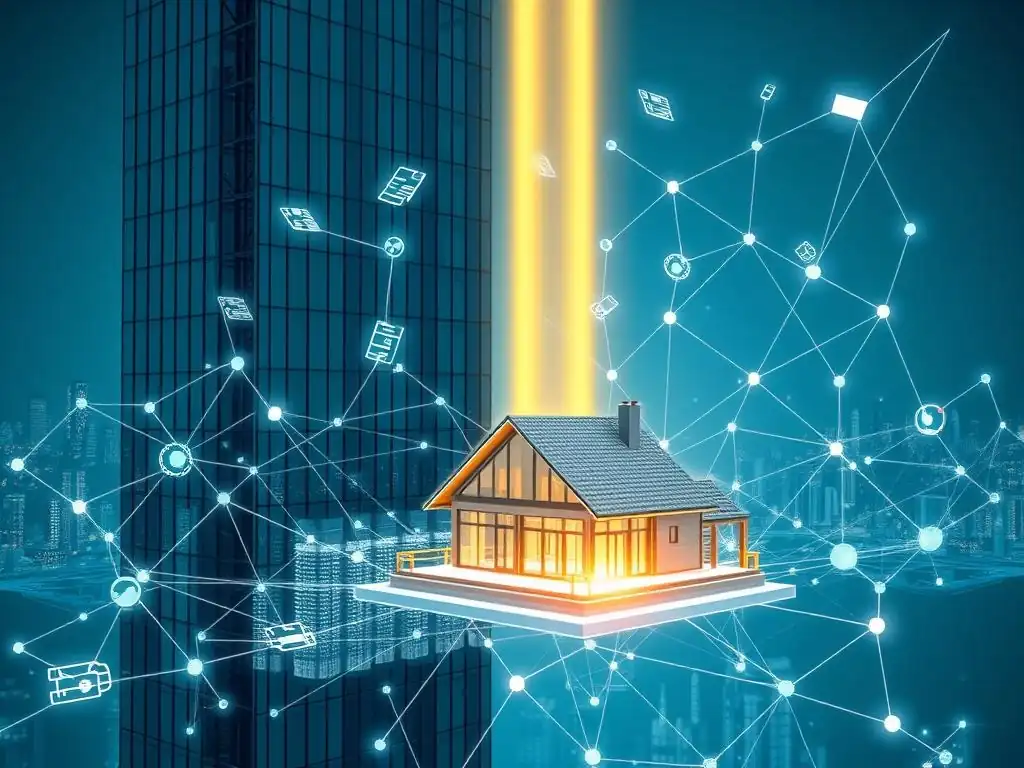
Welcome to Blockchain Trends, your compass in the rapidly evolving world of decentralized technologies. Beyond the hype, we delve into the real-world applications shaping industries today and tomorrow. Are you ready to uncover how blockchain is revolutionizing sectors you never imagined?
This week, we're focusing on a fascinating intersection: the impact of blockchain on real estate. Specifically, we're exploring how it's poised to dramatically enhance blockchain property valuation accuracy, bringing unprecedented transparency and efficiency to this crucial process. Intrigued? Read on to discover how this technology is set to redefine the future of property investment.
Blockchain and Property Valuation: Enhancing Accuracy and Transparency
- Introduction: Revolutionizing Real Estate Valuation with Blockchain
- The Problems with Traditional Property Valuation Methods
- Blockchain's Solution: A New Paradigm for Property Valuation
- Key Benefits of Blockchain-Based Property Valuation
- Blockchain Use Cases in Property Valuation
- Challenges and Considerations for Blockchain Adoption in Property Valuation
- The Future of Property Valuation: A Blockchain-Enabled Ecosystem
-
Frequently Asked Questions
- What is the main focus of the article "Blockchain and Property Valuation: Enhancing Accuracy and Transparency"?
- How does blockchain enhance property valuation accuracy?
- What are some applications of blockchain in the real estate sector?
- Why is transparency important in property valuation?
- What future developments can we expect in blockchain and property valuation?
- Final Reflection: Embracing Transparency in Valuation
- Uncover the Future: Revolutionize Your Property Insights!
Introduction: Revolutionizing Real Estate Valuation with Blockchain
Blockchain technology, often initially associated with cryptocurrencies like Bitcoin, is proving to be a revolutionary force across numerous industries, including the complex world of real estate. Its core features – decentralization, immutability, and transparency – offer compelling solutions to long-standing challenges. Traditional property valuation, a critical step in real estate transactions and finance, is particularly ripe for disruption.
The current landscape of property valuation is often plagued by issues such as inconsistent appraisals influenced by subjectivity, limited access to verifiable historical and market data, and opaque processes that can erode trust among stakeholders. These challenges can lead to delays, disputes, and even financial losses. The need for a more reliable, transparent, and efficient method is clear.
This is where blockchain technology emerges as a powerful tool. By providing a secure, shared, and immutable ledger, blockchain has the potential to fundamentally enhance blockchain property valuation accuracy and transparency. It can streamline data collection, automate processes, and build a verifiable history for every property, promising a new era of trust and efficiency in determining property values.
The Problems with Traditional Property Valuation Methods
Traditional methods for valuing property, while established, face significant hurdles that impact their reliability and efficiency. These challenges stem from a combination of human factors, data limitations, and procedural inefficiencies inherent in analog or siloed digital systems. Understanding these problems is crucial to appreciating the transformative potential of blockchain property valuation accuracy.
Inherent Inaccuracies in Current Appraisal Processes
A primary source of inaccuracy in traditional property valuation lies in the subjective nature of appraisals. While appraisers use standardized methods and comparable sales data, their expertise and judgment still introduce variability. Studies and anecdotal evidence suggest that valuations for similar properties in the same market can sometimes differ by 5-10% or even more, depending on the appraiser's interpretation of market conditions, property features, and comparable sales adjustments. This subjectivity can lead to inconsistent valuations that are difficult for stakeholders to fully reconcile or trust.
Furthermore, appraisers often face limitations in accessing comprehensive, real-time, and easily verifiable data. Public records might be outdated, private databases require subscriptions, and compiling a complete picture of a property's history, permits, renovations, and comparable sales data is a time-consuming manual effort. This fragmented data landscape increases the likelihood of human error during data collection and analysis, directly impacting the potential blockchain property valuation accuracy achievable without a unified, trustworthy data source.
Data Silos and Lack of Transparency
The real estate ecosystem relies on data scattered across a multitude of disparate systems and entities. Property ownership records reside with county recorders, mortgage information is held by lenders, sales data is managed by Multiple Listing Services (MLS), and appraisal reports are often stored in private databases. These data silos create significant friction, making it difficult and time-consuming to gather, verify, and reconcile information needed for a comprehensive valuation. The lack of a single, authoritative, and accessible source for all relevant property data hinders efficiency and transparency.
This fragmentation also contributes to a lack of transparency in the valuation process itself. Stakeholders outside the appraiser often have limited insight into the specific data sources used or the exact methodology applied, making it challenging to audit or challenge a valuation effectively. The opacity increases vulnerability to data manipulation or oversight, further undermining trust in the final valuation figure. Without a transparent and verifiable audit trail for data used in valuations, ensuring blockchain property valuation accuracy becomes an aspiration that traditional systems struggle to meet.
Blockchain's Solution: A New Paradigm for Property Valuation
Blockchain technology offers a robust framework to address the fundamental issues plaguing traditional property valuation. Its core principles of immutability, transparency, and decentralization provide the foundation for a more reliable, efficient, and trustworthy process. By creating a shared, verifiable ledger of property-related information, blockchain paves the way for enhanced blockchain property valuation accuracy.
How Blockchain Technology Enhances Accuracy
At the heart of blockchain's contribution to valuation accuracy is its immutable ledger. Once property data, transaction histories, permits, or appraisal reports are recorded on a blockchain, they cannot be altered or deleted without consensus from the network participants. This tamper-proof characteristic ensures the integrity and reliability of the underlying data used in valuation models. Appraisers and automated valuation models (AVMs) can rely on a trusted source of historical information, reducing the risk of basing valuations on erroneous or fraudulent data.
Smart contracts, self-executing contracts with the terms of the agreement directly written into code, further enhance accuracy by automating parts of the valuation workflow. These contracts can be programmed to fetch specific data points from the blockchain (e.g., last sale price, recorded renovations, tax assessments), compare them against predefined criteria, and even trigger automated calculations or flag discrepancies.
This reduces human intervention in repetitive data processing tasks, minimizing manual errors and ensuring consistent application of valuation rules, thereby boosting blockchain property valuation accuracy. Decentralized data storage across the network also increases data availability and resilience compared to centralized databases vulnerable to single points of failure or attack.
Increased Transparency and Trust in Real Estate Transactions
Blockchain's transparency features fundamentally change how property data and valuation processes are viewed. While privacy considerations dictate access levels, the underlying principle is that verified data is openly accessible to authorized participants on the network. Cryptographic verification ensures that any data added to the chain is authentic and linked to previous records, creating a clear, auditable history of a property. This shared, single source of truth eliminates information asymmetry that exists in traditional systems.
By providing equal access to verified property records, transaction histories, and potentially even the data inputs and logic used by automated valuation models, blockchain significantly increases transparency for all parties involved – buyers, sellers, lenders, and appraisers. This shared visibility builds trust, as stakeholders can independently verify the data supporting a valuation. Real-time updates to the blockchain as new information becomes available (e.g., a recent sale of a comparable property) enable dynamic valuation insights, ensuring that valuations reflect the most current market conditions and further improving blockchain property valuation accuracy and relevance.
Key Benefits of Blockchain-Based Property Valuation

Implementing blockchain technology in property valuation unlocks a multitude of benefits, directly addressing the limitations of traditional methods. These advantages span improvements in precision, reliability, efficiency, and cost-effectiveness, ultimately leading to a more trustworthy and dynamic real estate market. The potential for enhancing blockchain property valuation accuracy is a central theme among these benefits.
Improved Accuracy and Reduced Errors
Blockchain-based systems can significantly reduce the influence of human bias and errors. By leveraging immutable data and potentially integrating with sophisticated algorithms for automated valuation models (AVMs), the valuation process becomes more objective and data-driven. Instead of relying solely on an individual appraiser's interpretation, valuations can be cross-referenced against a comprehensive dataset of verified property attributes, transaction histories, and market trends recorded on the blockchain.
Furthermore, blockchain enables the integration of diverse and granular datasets that are difficult to aggregate and verify in traditional systems. This can include not only standard comparable sales but also detailed renovation permits, energy efficiency data, zoning changes, and even micro-market data points. By incorporating a wider array of verified information and potentially leveraging live market data feeds anchored to the chain, blockchain systems can generate valuations that more accurately reflect a property's true market value, thereby enhancing blockchain property valuation accuracy.
Enhanced Transparency and Trust
One of the most impactful benefits is the radical increase in transparency. Every significant event related to a property – from initial ownership records and transfers to renovations, permits, and potentially even previous appraisal reports or data inputs for AVMs – can be recorded on the blockchain, creating a clear, auditable, and tamper-proof history. This distributed ledger acts as a single source of truth accessible to authorized parties.
This transparency builds unprecedented confidence among all stakeholders. Buyers can verify the history of a property, lenders can trust the data used in appraisals, and regulators can audit transactions more easily. The verifiable nature of data on the blockchain minimizes opportunities for fraud, misrepresentation, or data manipulation that can occur in opaque, siloed systems. This enhanced trust environment, underpinned by verifiable data, is essential for achieving reliable blockchain property valuation accuracy.
Increased Efficiency and Cost Savings
Traditional valuation processes are often manual, paper-intensive, and involve multiple intermediaries, leading to significant delays and costs. Gathering data, verifying records, scheduling inspections, and delivering reports can take weeks. Blockchain and smart contracts can automate many of these steps. Smart contracts can automatically trigger data verification workflows, compile information from the chain, and potentially even generate initial valuation reports based on predefined criteria and data inputs.
Automating data collection and verification eliminates redundant manual tasks, significantly reducing the time required for a valuation. Streamlined processes and reduced reliance on intermediaries can lower operational costs associated with appraisals. By accelerating the valuation process and making it more efficient, blockchain contributes to faster real estate transactions, benefiting buyers, sellers, and the entire ecosystem while simultaneously improving blockchain property valuation accuracy through systematic data handling.
Blockchain Use Cases in Property Valuation
The theoretical benefits of blockchain in property valuation are being translated into real-world applications. Several specific use cases demonstrate how the technology can be applied to improve accuracy, transparency, and efficiency, ranging from fractional ownership models to automated valuation processes and decentralized data management. These examples highlight the practical steps towards achieving higher blockchain property valuation accuracy.
Tokenization of Real Estate Assets for Valuation
Tokenization involves representing real estate assets as digital tokens on a blockchain. This enables fractional ownership, allowing investors to buy and sell portions of a property, much like shares in a company. This process requires a reliable and transparent method for valuing the underlying asset to determine the token price. Blockchain provides the infrastructure to manage these tokens and record ownership securely.
Platforms like RealT and SolidBlock have successfully demonstrated tokenized property investments. RealT, for instance, offers tokenized shares of U.S. rental properties, primarily in markets like Detroit. The valuation of these tokenized properties is often based on factors like projected rental income and periodic appraisals conducted by independent third parties. By recording ownership and potentially key valuation data points on the blockchain, these platforms offer investors greater transparency into the asset's performance and underlying value, facilitating more liquid and transparent markets where blockchain property valuation accuracy is paramount for investor confidence.
Smart Contracts for Automated Valuation Models (AVMs)
Automated Valuation Models (AVMs) use statistical models and algorithms to estimate property values based on available data. While AVMs offer speed, their accuracy depends heavily on the quality and reliability of the data inputs. Integrating AVMs with blockchain technology can significantly enhance their trustworthiness and verifiability. Smart contracts can be used to automate the data collection process for AVMs, pulling verified data directly from the blockchain ledger.
Companies like Propy, which facilitates blockchain-based property transactions, are exploring and utilizing smart contracts in their workflows. While not solely an AVM provider, Propy's platform demonstrates how smart contracts can automate various steps in a real estate transaction, including potentially integrating with or validating data used in valuation. By anchoring the data inputs, the AVM algorithm used, and the resulting valuation output onto a blockchain ledger, a clear audit trail is created. This process makes AVM valuations more transparent and verifiable, contributing to improved blockchain property valuation accuracy compared to traditional AVMs operating on opaque, centralized databases.
Decentralized Property Data Platforms
A foundational element for improving property valuation is access to reliable and comprehensive property data. Decentralized property data platforms leverage blockchain to create secure, shared repositories of property records, ownership history, land surveys, permits, and other relevant information. Instead of relying on fragmented, siloed databases managed by different entities, these platforms aim to consolidate verified data onto a distributed ledger accessible to authorized parties.
Platforms such as Ubitquity are working with governments and private sector partners to record land and property records on blockchain. By moving title records and other foundational data onto a blockchain, Ubitquity enhances the security, immutability, and accessibility of this crucial information. For property valuation, having a single, verifiable source for property history and attributes drastically reduces the time and effort required for data collection and verification. This improved data accessibility and integrity provided by decentralized platforms directly supports the goal of achieving higher blockchain property valuation accuracy across the industry.
Challenges and Considerations for Blockchain Adoption in Property Valuation
Despite the compelling benefits, the widespread adoption of blockchain technology in property valuation faces significant challenges. These hurdles are not unique to real estate but are amplified by the industry's inherent complexity, reliance on legacy systems, and stringent regulatory environment. Addressing these issues is critical for unlocking the full potential of blockchain property valuation accuracy.
Regulatory Hurdles and Legal Framework
The real estate industry is heavily regulated, with laws governing everything from property ownership and transfers to data privacy and financial transactions. Navigating this complex legal landscape is a major challenge for blockchain adoption. Regulations like GDPR in Europe impose strict requirements on data privacy, which can conflict with the inherently transparent and immutable nature of public blockchains. Know Your Customer (KYC) and Anti-Money Laundering (AML) rules also need to be integrated into blockchain-based processes, requiring robust identity verification mechanisms.
Furthermore, the legal standing of blockchain-based records, smart contracts, and tokenized assets is still evolving in many jurisdictions. Policies from bodies like the U.S. Securities and Exchange Commission (SEC) regarding tokenized real estate need to be considered. The lack of standardized legal frameworks across different states or countries creates uncertainty for companies developing and deploying blockchain solutions. Ensuring compliance while leveraging blockchain's benefits requires careful legal consideration and collaboration with regulatory bodies to establish clear guidelines for blockchain property valuation accuracy within legal boundaries.
Scalability and Interoperability Issues
Blockchain networks, especially public ones, can sometimes face challenges with scalability – processing a large volume of transactions quickly and cost-effectively. Real estate involves vast amounts of data and potentially frequent updates (e.g., market data feeds). Ensuring that a blockchain network can handle the required throughput and data storage needs without becoming prohibitively slow or expensive is a critical technical consideration. While newer blockchain protocols and layer-2 solutions aim to improve scalability, it remains a factor for enterprise-level adoption.
Interoperability is another significant challenge. The real estate ecosystem relies on data from numerous sources (MLS, county records, appraisal software, financing platforms). Seamless data exchange is necessary for efficient valuation. Blockchain solutions need to be able to communicate and share data not only with different blockchain platforms but also with existing legacy systems that will not be replaced overnight. Initiatives like Polkadot and Cosmos are working on cross-chain communication, but integrating diverse systems remains a complex technical hurdle for achieving widespread blockchain property valuation accuracy through interconnected platforms.
Public Perception and Adoption Barriers
Overcoming skepticism and building trust among traditional stakeholders in the real estate industry is essential for adoption. Appraisers, real estate agents, investors, and even regulators may be unfamiliar with blockchain technology or hesitant to adopt new, complex systems. There is often a lack of understanding regarding how blockchain works and the specific benefits it offers beyond cryptocurrencies.
Providing education and demonstrating tangible value through successful pilot projects and use cases are crucial strategies to build confidence and drive adoption. Industry collaborations involving technology providers, real estate firms, appraisal associations, and regulatory bodies can help standardize processes and build consensus. Showcasing successful implementations of blockchain in managing property data or facilitating transparent transactions can help demonstrate its potential to enhance blockchain property valuation accuracy and efficiency, gradually shifting public perception and encouraging broader adoption.
The Future of Property Valuation: A Blockchain-Enabled Ecosystem
Looking ahead, the trajectory for property valuation suggests a significant integration of blockchain technology. As the challenges around regulation, scalability, and adoption are addressed, blockchain is poised to become a foundational layer for real estate data and transactions, fundamentally altering how properties are valued and traded. The focus will increasingly be on leveraging blockchain for enhanced blockchain property valuation accuracy and efficiency.
Predictions for the Evolution of Real Estate Valuation
One key prediction is the growing integration of blockchain to standardize and democratize access to property data. This will move away from siloed, proprietary databases towards a more open, yet secure, ecosystem where verified property information is readily available to authorized parties. This standardization will enable more consistent and reliable data inputs for valuation models. Furthermore, the rise of tokenized real estate assets will necessitate more dynamic and transparent valuation methods, likely leveraging blockchain's ability to track fractional ownership and associated data in real-time.
We can also anticipate the increased sophistication of Automated Valuation Models (AVMs) powered by AI and machine learning, operating on verified data from blockchain ledgers. AI can analyze vast datasets on the chain to identify complex patterns and predict property values with greater precision, while blockchain ensures the integrity and auditability of the data used and the results generated.
This convergence of technologies will lead to more predictive analytics in valuation. Ultimately, the future may see the emergence of fully decentralized marketplaces where transparent, real-time property data and automated, verifiable valuations are standard, significantly improving blockchain property valuation accuracy and market liquidity.
Conclusion: Embracing Blockchain for Accurate and Transparent Property Assessments
Traditional property valuation methods, while serving the industry for decades, are hindered by subjectivity, data fragmentation, and a lack of transparency. These limitations can lead to inaccuracies, inefficiencies, and reduced trust among stakeholders. Blockchain technology offers a compelling solution by providing a secure, immutable, and transparent ledger for property data and transactions.
By leveraging features like immutable records, smart contracts, and decentralized data storage, blockchain has the power to significantly enhance blockchain property valuation accuracy, increase transparency, and improve efficiency. Real-world use cases like tokenization platforms (RealT, SolidBlock), smart contract integration in transactions (Propy), and decentralized data management (Ubitquity) demonstrate the practical application of these benefits.
While challenges related to regulation, scalability, and industry adoption remain, the path forward involves continued innovation, collaboration, and education. Embracing blockchain technology is not just about adopting a new tool; it's about moving towards a more reliable, transparent, and efficient real estate market. The vision of a trust-driven, decentralized ecosystem, where property valuations are consistently accurate and verifiable, is becoming a tangible reality, empowered by the transformative potential of blockchain.
Frequently Asked Questions
What is the main focus of the article "Blockchain and Property Valuation: Enhancing Accuracy and Transparency"?
The article discusses how blockchain technology can improve property valuation accuracy and transparency, particularly in real estate transactions and assessments.
How does blockchain enhance property valuation accuracy?
By providing a secure, immutable ledger, blockchain allows for real-time updates and access to property data, reducing errors and increasing trust in valuation processes.
What are some applications of blockchain in the real estate sector?
Beyond property valuation, blockchain can facilitate smart contracts, streamline transactions, and enhance title management, thereby improving overall operational efficiency.
Why is transparency important in property valuation?
Transparency ensures that all parties involved can verify property data and valuation methods, which can lead to increased trust and reduced disputes in real estate transactions.
What future developments can we expect in blockchain and property valuation?
The future may see greater integration of blockchain with emerging technologies, leading to more innovative solutions that further enhance accuracy and efficiency in property valuation processes.
Final Reflection: Embracing Transparency in Valuation
The exploration of blockchain's potential in property valuation reveals a compelling truth: enhanced accuracy and transparency are no longer futuristic ideals, but achievable realities. The convergence of immutable data and decentralized ledgers promises to revolutionize how we perceive and determine property values, moving away from opaque systems towards a more equitable and reliable framework.
This shift towards blockchain-based valuation isn't just about technological advancement; it's about fostering trust and empowering stakeholders. The ability to trace a property's history, verify its attributes, and ensure the integrity of valuation data is paramount in today's complex real estate market. Transparency is the currency of trust,
as someone once said, and blockchain offers a powerful mechanism to cultivate that trust in property valuation.
As we stand on the cusp of this transformative era, I invite you to consider the implications of blockchain for your own understanding of property value. How can you leverage this technology to demand greater transparency and accuracy in your real estate dealings? Embrace the potential of blockchain to shape a future where property valuation is not just a process, but a testament to integrity and informed decision-making.
Uncover the Future: Revolutionize Your Property Insights!
Thank you for exploring the transformative potential of blockchain technology in property valuation. We hope you've gained valuable insights into how this innovation can improve accuracy and transparency in real estate. Now, it's time to take action and join the blockchain movement.
Consider researching existing blockchain-based property valuation platforms to understand current solutions. Share this article with colleagues and your professional network to encourage discussions about blockchain's impact on property assessments. You might also suggest that your local real estate organization explore integrating blockchain technology to modernize property valuation processes.
How will you leverage blockchain to bring greater transparency to property valuation in your community?
Leave a Reply