
Boosting Real Estate Liquidity: The Undeniable Advantage of Tokenization


Welcome to Blockchain Trends, your compass in the rapidly evolving world of decentralized innovation. Forget just cryptocurrencies – we're diving deep into the transformative power of blockchain across industries. Are you ready to unlock the secrets of a truly decentralized future?
This week, we're focusing on Blockchain in Real Estate, and we're kicking things off with an in-depth exploration of Blockchain real estate tokenization benefits. Imagine a world where real estate transactions are faster, more accessible, and more liquid. Intrigued? Read on to discover how tokenization is revolutionizing property ownership and investment.
-
Blockchain Real Estate Tokenization Benefits: A Deep Dive
- Enhanced Liquidity: The Primary Advantage of Tokenized Real Estate
- Lowering the Barrier to Entry: Democratizing Real Estate Investment
- Increased Transparency and Efficiency in Real Estate Transactions
- Fractional Ownership: Investing in High-Value Properties with Smaller Capital
- Automated Compliance and Reduced Administrative Costs
- Faster Transaction Times and Reduced Settlement Risk
-
Frequently Asked Questions
- What is real estate tokenization, and how does it work?
- What are the main Blockchain real estate tokenization benefits for investors?
- How does blockchain technology enhance the security and transparency of real estate transactions?
- What role does DeFi (Decentralized Finance) play in the tokenized real estate market?
- What are some potential regulatory challenges facing the widespread adoption of real estate tokenization?
- Final Reflection: Embracing the Future of Real Estate Investment
- Revolutionize Your Real Estate Portfolio Today!
Blockchain Real Estate Tokenization Benefits: A Deep Dive
Blockchain real estate tokenization offers a compelling array of advantages that address many of the long-standing challenges in the traditional property market. These benefits extend from increased accessibility and liquidity to enhanced efficiency and transparency, fundamentally reshaping how investors interact with real estate assets. Exploring these blockchain real estate tokenization benefits reveals the technology's transformative power.
The adoption of tokenization is driven by the clear value proposition it presents to both investors and property owners. By leveraging distributed ledger technology, real estate assets can be digitized, creating new opportunities for investment and management that were previously complex or cost-prohibitive. Understanding these core advantages is key to grasping the potential of this emerging market.
Enhanced Liquidity: The Primary Advantage of Tokenized Real Estate
One of the most significant blockchain real estate tokenization benefits is the dramatic improvement in liquidity. Traditional real estate is notoriously illiquid; selling a property typically involves lengthy processes, high transaction costs (often 5-6% in commissions plus other fees), and can take months, if not over a year, to finalize. This lack of easy exit options ties up capital and makes real estate less attractive for investors seeking flexibility.
Tokenization changes this dynamic by converting ownership stakes into digital tokens that can be traded on secondary markets. While the market is still nascent, the potential exists for near-instantaneous trading, much like stocks or other digital assets. Instead of waiting 90-180 days (a common average time to sell residential property in many markets), an investor could potentially sell their fractional ownership tokens within minutes or hours, albeit dependent on market demand. This enhanced liquidity unlocks capital previously locked in physical assets, providing investors with greater flexibility and potentially attracting a broader base of market participants.
Lowering the Barrier to Entry: Democratizing Real Estate Investment
Another crucial blockchain real estate tokenization benefit is the significant reduction in the minimum investment required to access real estate. Traditionally, investing directly in commercial properties or even residential units often necessitates substantial capital, frequently starting from tens of thousands to millions of dollars. This high barrier excludes a vast majority of potential investors, limiting real estate ownership to wealthy individuals and institutions.
Through tokenization, a property can be divided into thousands or even millions of individual tokens, each representing a small fractional ownership stake. This allows investors to participate with much smaller amounts, potentially as low as a few hundred or thousand dollars. For instance, a $10 million commercial building could be tokenized into 100,000 tokens priced at $100 each, making investment accessible to a wider demographic. This democratization of investment opens up opportunities for individuals who previously could not afford direct real estate exposure, fostering a more inclusive investment landscape.
Increased Transparency and Efficiency in Real Estate Transactions
Blockchain technology inherently offers a high degree of transparency and efficiency, which translates directly into notable blockchain real estate tokenization benefits. Traditional real estate transactions involve multiple intermediaries—agents, lawyers, escrow companies, title insurers—leading to complex processes, potential delays, and a lack of clear oversight for all parties involved. Information can be siloed or difficult to verify.
Tokenization leverages a distributed, immutable ledger to record ownership and transaction history. Every transaction is recorded on the blockchain, providing a transparent and verifiable record accessible to relevant parties. Smart contracts can automate many aspects of the transaction process, from fund distribution upon sale to the enforcement of ownership rules. This automation reduces reliance on manual processes and intermediaries, decreasing the likelihood of errors or fraud and significantly speeding up the overall transaction lifecycle compared to the weeks or months typically required in traditional deals.
Fractional Ownership: Investing in High-Value Properties with Smaller Capital
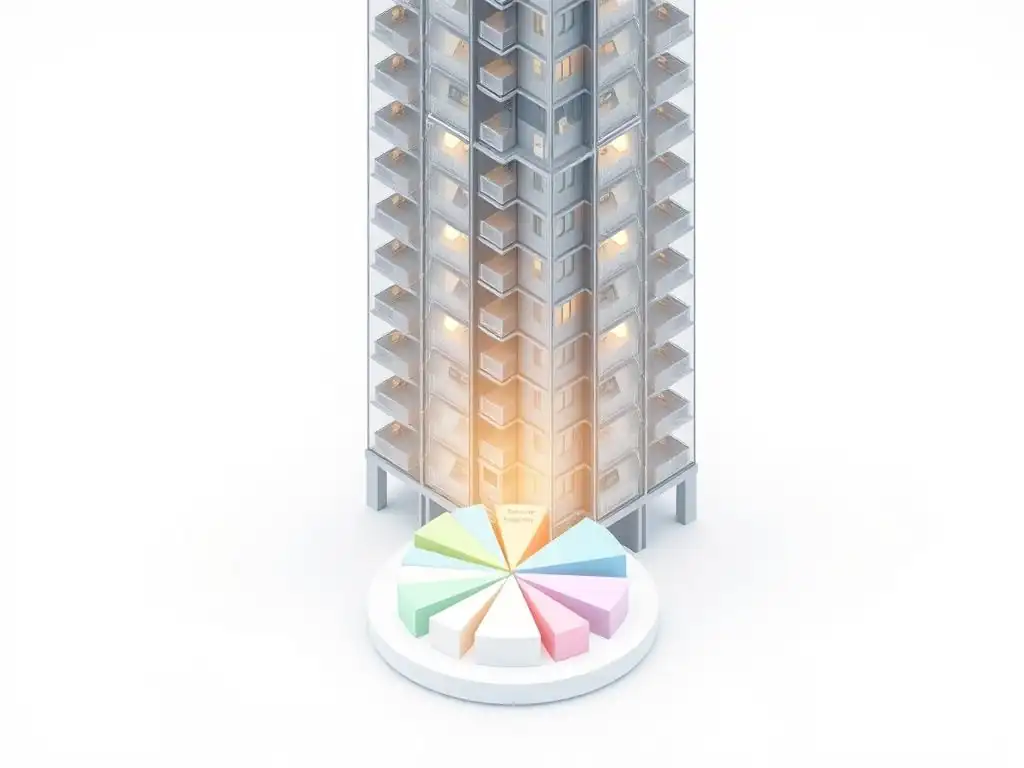
Fractional ownership, enabled by tokenization, is a powerful benefit that allows investors to own a piece of assets they otherwise couldn't afford individually. High-value properties like iconic skyscrapers, luxury hotels, or large commercial complexes typically require multi-million dollar investments, placing them out of reach for most retail investors.
By issuing tokens representing shares of such properties, tokenization breaks down these large assets into manageable, affordable units. An investor might purchase tokens representing a small percentage of a landmark building in a prime location, gaining exposure to a high-performing asset class with a relatively modest investment. This ability to invest fractionally not only lowers the entry barrier but also allows investors to diversify their real estate portfolio across different property types and locations more easily than with traditional, whole-property investments.
Automated Compliance and Reduced Administrative Costs
Automating compliance processes is another significant advantage among the blockchain real estate tokenization benefits. Real estate transactions and ongoing property management involve numerous compliance requirements, including Know Your Customer (KYC), Anti-Money Laundering (AML) checks, accredited investor verification, and distribution of rental income or dividends. These processes are often manual, time-consuming, and expensive.
Smart contracts can be programmed to handle many of these compliance and administrative tasks automatically. For example, smart contracts can ensure that only verified investors can hold tokens, automate the distribution of rental income based on token holdings, or manage voting rights for property decisions. This automation reduces the need for extensive manual administration, cutting down on legal fees, management costs, and administrative overhead, thereby increasing the net return for investors and making the process more efficient for issuers.
Faster Transaction Times and Reduced Settlement Risk
The speed of transactions is dramatically improved through blockchain real estate tokenization, leading to faster settlement and reduced risk. In the traditional market, the closing process, involving title searches, financing approval, inspections, and legal reviews, can take anywhere from 30 to 90 days or even longer. During this period, both buyer and seller face uncertainty and risk of the deal falling through.
With tokenized real estate, the ownership transfer of tokens on the blockchain can occur within minutes or hours, depending on the specific blockchain network used. While the underlying legal framework and asset management still require traditional processes, the trading of the digital representation of ownership is significantly accelerated. This speed reduces settlement risk, as the transfer of value (tokens) and payment can be executed almost simultaneously through smart contracts, providing greater certainty and efficiency for participants.
Frequently Asked Questions
What is real estate tokenization, and how does it work?
Real estate tokenization involves converting ownership rights of a property into digital tokens on a blockchain. These tokens represent a fractional ownership share, making it easier to buy, sell, and trade real estate assets.
What are the main Blockchain real estate tokenization benefits for investors?
Tokenization offers investors increased liquidity, allowing them to quickly buy or sell their shares. It also lowers the barrier to entry, enabling smaller investments in high-value properties.
How does blockchain technology enhance the security and transparency of real estate transactions?
Blockchain provides a secure and immutable record of ownership, reducing fraud and disputes. All transactions are publicly visible on the blockchain, increasing transparency and trust.
What role does DeFi (Decentralized Finance) play in the tokenized real estate market?
DeFi platforms can provide lending and borrowing opportunities using tokenized real estate as collateral. This creates new avenues for yield generation and financial innovation.
What are some potential regulatory challenges facing the widespread adoption of real estate tokenization?
Regulatory frameworks are still evolving, and uncertainties surrounding compliance and legal classifications exist. This can create challenges for market adoption and investor confidence.
Final Reflection: Embracing the Future of Real Estate Investment
The journey through understanding Blockchain real estate tokenization benefits reveals a profound shift in how we perceive and interact with property ownership. No longer confined by traditional barriers, real estate is poised to become more accessible, liquid, and transparent, unlocking opportunities for a wider range of investors and revolutionizing the market as we know it. This isn't just a technological advancement; it's a democratization of wealth creation.
The transformative power of tokenization extends far beyond mere efficiency. It's about empowering individuals and fostering a more inclusive financial ecosystem. The ability to fractionalize ownership and trade real estate assets with ease has the potential to reshape communities and redefine investment strategies. The future of finance is decentralized, and real estate is no exception. Tokenization is the key to unlocking unprecedented liquidity and accessibility in this traditionally illiquid market.
This quote encapsulates the fundamental shift we are witnessing, a move towards a more equitable and efficient future.
As we stand on the cusp of this new era, I invite you to consider the implications of tokenization for your own financial future. Explore the possibilities, educate yourself on the benefits, and embrace the potential of this groundbreaking technology to reshape your investment portfolio and contribute to a more accessible and dynamic real estate landscape. The future of real estate is here, and it's waiting to be built, one token at a time.
Okay, I understand. Here's a CTA designed for the end of an article titled "Boosting Real Estate Liquidity: The Undeniable Advantage of Tokenization" on the website Blockchain Trends (blockchaintrends.org), following all the instructions provided:
Revolutionize Your Real Estate Portfolio Today!
Thank you for exploring how tokenization can unlock unprecedented liquidity in the real estate market. You've now seen the potential for increased accessibility and efficiency. It's time to take the next step and experience the future of real estate investing.
Here are a few ways you can get started:
- Dive deeper: Investigate tokenized real estate platforms: to discover potential investment opportunities aligning with your goals. This is your chance to be at the forefront of a financial revolution.
- Explore blockchain events and webinars tailored to real estate to network with industry leaders.
- Share this article with your network to spark conversations about the transformative power of real estate tokenization.
What innovative ways will you leverage tokenization to reshape your real estate investments?
Leave a Reply