
Decentralized Real Estate and Estate Planning: Simplifying Inheritance with Blockchain


Welcome to Blockchain Trends, your guide to the revolutionary world of decentralized technologies!
Ever wondered how blockchain can fundamentally reshape estate planning and inheritance? Dive into our latest article, "Decentralized Real Estate and Estate Planning: Simplifying Inheritance with Blockchain," and discover how innovative solutions are streamlining property transfer and securing your legacy for the future. Prepare to unlock the potential of blockchain estate planning inheritance and explore a new era of secure, transparent, and efficient asset management. What if passing on your real estate could be as simple as a digital transaction? Read on to find out!
Decentralized Real Estate and Estate Planning: Simplifying Inheritance with Blockchain
- The Intersection of Blockchain, Real Estate, and Inheritance Planning
- Blockchain Estate Planning Inheritance: A Modern Approach
- Key Benefits of Using Blockchain for Real Estate Inheritance
- Decentralized Real Estate Marketplaces and Estate Planning Integration
- Blockchain and Wills: Digital Wills and Inheritance of Real Estate
- Overcoming Challenges and Considerations in Blockchain Estate Planning
- Future Trends in Blockchain-Based Real Estate Inheritance
- Conclusion: The Future of Real Estate Inheritance is Decentralized
-
Frequently Asked Questions
- What is the primary advantage of using blockchain for estate planning and inheritance in real estate?
- How does blockchain simplify the process of transferring real estate assets to heirs?
- What are some potential regulatory challenges associated with using blockchain in estate planning?
- Can blockchain solve issues of probate and taxes related to real estate inheritance?
- Beyond inheritance, what other applications does blockchain have in the real estate industry?
- Final Reflection: Embracing the Future of Inheritance
- Unveil Your Family's Future: Secure Your Legacy!
The Intersection of Blockchain, Real Estate, and Inheritance Planning
Understanding the Challenges of Traditional Estate Planning for Real Estate Assets
Traditional estate planning involving real estate assets is often a complex, time-consuming, and costly process. When an individual passes away, their real property typically enters probate, a legal process supervised by a court to validate the will (if one exists) and distribute assets to heirs.
This process can take months, sometimes even years, depending on the complexity of the estate, the jurisdiction, and potential disputes among beneficiaries. For instance, in the United States, the average probate process can last anywhere from 6 to 12 months, but complex cases can extend beyond two years, incurring significant legal fees, court costs, and appraisal expenses that can cumulatively represent 3% to 7% or more of the estate's total value.
Moreover, the traditional system relies heavily on physical documentation, such as deeds, wills, and trust documents, which are susceptible to loss, damage, or fraudulent alteration. Proving the authenticity and legal validity of these documents requires rigorous legal scrutiny. The lack of a single, universally accessible, and immutable record of ownership and estate instructions creates friction. Coordinating between executors, lawyers, courts, and beneficiaries adds layers of administrative burden. This inherent opacity and reliance on intermediaries contribute to delays and potential errors, making the transfer of real estate assets through inheritance a daunting task for grieving families.
Introducing Blockchain Technology for Streamlining Real Estate Inheritance
Blockchain technology offers a transformative approach to addressing many of the inefficiencies and risks inherent in traditional real estate inheritance processes. By providing a decentralized, immutable, and transparent ledger, blockchain can fundamentally change how property ownership is recorded, verified, and transferred upon death. Tokenizing real estate assets, for example, allows fractional ownership to be represented as digital tokens on a blockchain, making these assets more liquid and potentially easier to distribute among multiple heirs according to predefined rules.
Integrating blockchain into estate planning creates a framework where wills, property ownership records, and inheritance instructions can be securely stored and executed automatically via smart contracts. Instead of relying solely on paper documents and manual processes, a digital will or trust recorded on the blockchain can be linked directly to tokenized real estate assets.
Upon verification of a death certificate (potentially through secure oracle services), a smart contract could trigger the automated transfer of property tokens to designated beneficiary wallets, bypassing lengthy probate procedures for those specific assets. This application of blockchain estate planning inheritance promises a more direct, efficient, and secure method for passing on real estate wealth.
Blockchain Estate Planning Inheritance: A Modern Approach
Defining Blockchain Estate Planning: Key Concepts and Benefits
Blockchain estate planning inheritance refers to the use of distributed ledger technology to manage and execute the transfer of assets, particularly real estate, upon an individual's death. At its core are several key concepts: tokenization of assets, smart contracts, and immutable digital records. Tokenization involves representing real-world assets, like a house or a plot of land, as digital tokens on a blockchain.
Each token can represent full ownership or a fraction of the asset, making complex distributions simpler. Smart contracts are self-executing contracts with the terms of the agreement directly written into code; they automatically execute predefined actions (like transferring tokens) when specific conditions (like the verified death of the owner) are met.
The primary benefits of this approach stem from the inherent properties of blockchain: transparency, security, immutability, and automation. All relevant information—ownership history, will instructions, beneficiary details (often pseudonymized)—can be recorded on the blockchain, accessible to authorized parties, reducing informational asymmetry. The cryptographic security protects against fraud and unauthorized changes. Immutability ensures that once recorded, inheritance instructions cannot be tampered with. Automation via smart contracts significantly reduces the need for intermediaries, speeding up the process and potentially lowering costs, offering a compelling vision for the future of blockchain estate planning inheritance.
How Blockchain Simplifies Real Estate Inheritance Processes
Blockchain technology simplifies real estate inheritance by automating key steps and providing a single source of truth for asset ownership and distribution instructions. Instead of a manual search for physical wills and property deeds, an executor or designated party could access the digital will and associated property tokens recorded on the blockchain.
The process would look something like this: the owner creates a digital will linked to their tokenized real estate via a smart contract, specifying beneficiaries and distribution rules. Upon the owner's verified death, an oracle service (a secure third-party data feed connecting real-world information to the blockchain) triggers the smart contract.
The smart contract then automatically executes the inheritance instructions. If a property is to be transferred to a single heir, the smart contract transfers the property token(s) to their designated blockchain wallet. If the property is to be divided among multiple heirs, the smart contract can distribute fractional tokens according to the will's specifications.
This eliminates significant manual steps required in traditional probate, such as court filings, asset appraisals, and physical deed transfers. For example, while a traditional property transfer via inheritance might take months to record with local authorities, a blockchain transfer could theoretically be near-instantaneous once triggered by the smart contract and confirmed on the network, drastically simplifying the logistical burden.
Key Benefits of Using Blockchain for Real Estate Inheritance
Reduced Costs and Increased Efficiency in Estate Administration
One of the most significant advantages of adopting blockchain estate planning inheritance is the potential for substantial cost reduction and efficiency gains in estate administration. Traditional probate processes involve numerous intermediaries—lawyers, court clerks, appraisers, real estate agents—each adding fees. Legal fees alone for probate can range from a few thousand dollars to tens of thousands or more, depending on the estate's value and complexity. By automating the transfer of tokenized real estate assets via smart contracts, blockchain significantly reduces the reliance on many of these intermediaries.
For example, the need for extensive legal work to prove the validity of a paper will and manually facilitate property transfers can be drastically minimized. Smart contracts execute predefined rules without human intervention, eliminating administrative delays. While initial costs for setting up a blockchain-based estate plan might exist, the savings during the execution phase can be considerable.
Estimates vary, but some proponents suggest potential reductions in administrative costs by 30-50% or even more for the parts of an estate managed on the blockchain, compared to purely traditional methods. The time saved is also immense; processes that currently take months could potentially be completed in days or weeks, freeing up resources and reducing stress on beneficiaries.
Enhanced Transparency and Security in Property Transfer
Blockchain's inherent transparency and cryptographic security offer a robust solution to the vulnerabilities of traditional property transfer during inheritance. Every transaction, including the recording of ownership, the creation of a digital will, and the eventual transfer of property tokens, is recorded on a distributed ledger. This ledger is immutable, meaning that once data is added, it cannot be altered or deleted without the consensus of the network, making it extremely difficult to commit fraud or tamper with inheritance instructions or ownership records.
Unlike paper deeds or centralized databases that can be lost, destroyed, or hacked, a blockchain record is replicated across numerous nodes, ensuring high availability and resilience. This transparency means that beneficiaries and other interested parties (with appropriate permissions) can verify the legitimate chain of ownership and the status of the inheritance process directly on the blockchain. This level of verifiable truth significantly enhances trust and security compared to systems relying on centralized record-keeping, where errors or malicious activities can occur undetected for longer periods.
Minimizing Disputes and Legal Challenges in Inheritance Settlements
Inheritance disputes are unfortunately common, often arising from ambiguities in wills, challenges to their validity, or disagreements over the distribution of assets. Traditional paper wills can be subject to interpretation, claims of undue influence, or questions about the testator's mental capacity at the time of signing. Real estate, being a high-value and often emotionally significant asset, is frequently at the center of these conflicts.
Blockchain estate planning inheritance can help mitigate these disputes by providing clear, immutable, and automatically executing instructions via smart contracts. A digital will recorded on the blockchain, linked to tokenized property, offers a high degree of certainty regarding the testator's intentions at the time the smart contract was deployed or updated.
The immutability of the blockchain record makes it incredibly difficult to challenge the terms of the digital will or the ownership history of the property. While disputes over the initial setup or interpretation of a smart contract could still theoretically arise, the execution phase becomes far less prone to challenge based on procedural errors or document authenticity, potentially reducing the incidence and complexity of legal battles among heirs.
Decentralized Real Estate Marketplaces and Estate Planning Integration
Exploring Platforms Facilitating Blockchain-Based Real Estate Inheritance
The emergence of decentralized real estate marketplaces is a natural extension of tokenizing property and provides the infrastructure necessary for blockchain-based inheritance. These platforms allow users to buy, sell, and manage tokenized real estate assets. Integrating estate planning features into these marketplaces allows users to link their property tokens to digital wills and smart contracts directly within the platform's ecosystem.
Some platforms are starting to explore features that would enable users to designate beneficiaries for their tokenized assets. While still in early stages, the vision is that a user could log into their decentralized real estate account, manage their portfolio of tokenized properties, and also define how these specific tokens should be distributed upon their death. This creates a seamless experience where asset management and estate planning for those assets are handled within a single, blockchain-native environment. Such platforms would need robust security measures and clear legal frameworks to operate effectively across different jurisdictions.
Smart Contracts for Automated Inheritance Distribution of Real Estate
Smart contracts are the operational backbone of automated blockchain estate planning inheritance. Once a real estate asset is tokenized and linked to a digital will on the blockchain, a smart contract is coded to execute the specific instructions laid out in that will.
This code defines the conditions under which assets are transferred and to whom. For example, a smart contract could be programmed to verify the owner's death via a secure oracle (perhaps linked to official death records, where legally permissible and technically feasible) and, upon confirmation, automatically transfer the corresponding property tokens to the blockchain addresses of the designated beneficiaries.
The complexity of smart contracts can vary. A simple contract might transfer a single property token to one person. More complex contracts could handle fractional ownership distribution among multiple heirs, manage conditional transfers (e.g., transferring ownership only after a certain date or event), or even facilitate the automated sale of a property token and distribution of the proceeds. The key advantage is the elimination of manual steps and potential delays. Once triggered and executed, the transfer is recorded on the blockchain, providing an immutable audit trail of the inheritance distribution.
Land Registry Integration with Blockchain for Seamless Property Transfer
A critical step for blockchain estate planning inheritance to gain widespread adoption is the integration of blockchain systems with official land registries. While tokenizing property on a blockchain provides a digital representation of ownership, the legal recognition of this ownership still primarily resides with governmental land registries. For a blockchain transfer of a property token to have legal effect, it must be recognized by the official record-keepers.
Several countries and regions are piloting or exploring blockchain solutions for land registration. For example, Sweden's Lantmäteriet (the Swedish mapping, cadastral, and land registration authority) has conducted trials for using blockchain for property transfers. Similarly, jurisdictions like Georgia (country) and parts of the US (e.g., Vermont) have explored or enacted legislation related to blockchain and property records.
Seamless blockchain estate planning inheritance would ideally involve a system where the transfer of a property token on the blockchain automatically triggers an update in the official, legally recognized land registry, ensuring that the digital ownership record aligns with the legal one. This integration is perhaps the most significant regulatory and technical hurdle for achieving truly seamless blockchain-based real estate inheritance globally.
Blockchain and Wills: Digital Wills and Inheritance of Real Estate
Creating and Managing Digital Wills on the Blockchain
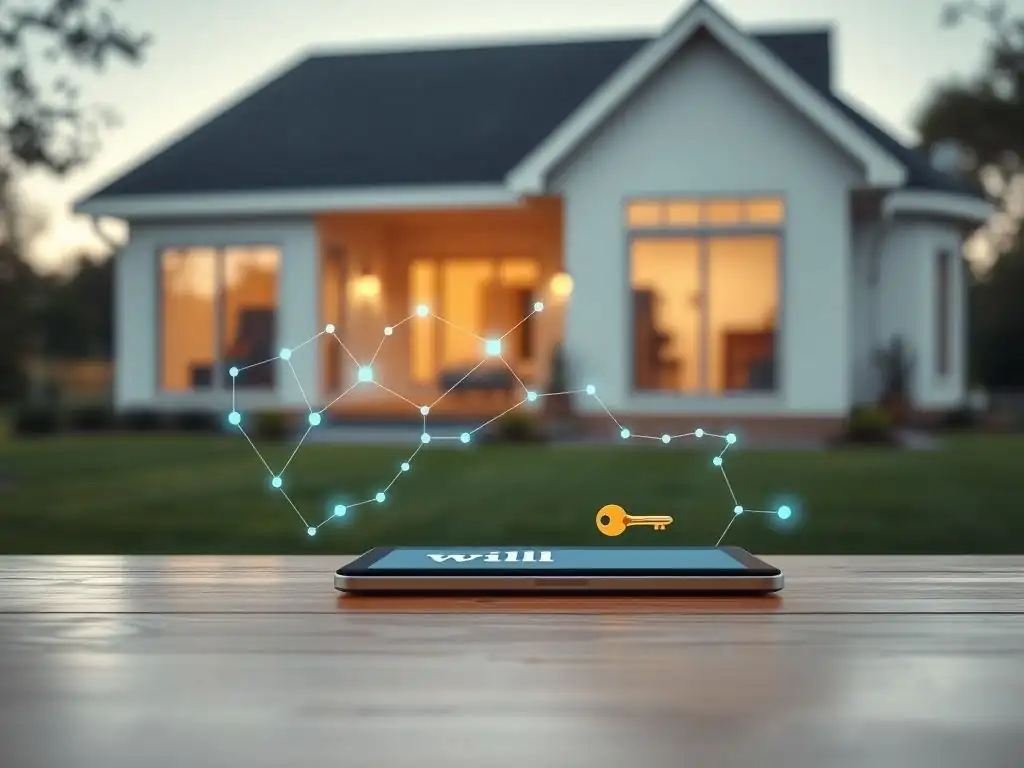
Creating a digital will on the blockchain involves drafting the testamentary instructions in a digital format and linking them to a blockchain record, often via a smart contract. Instead of a physical document signed with witnesses on paper, a digital will could be a digitally signed document or, more powerfully, the instructions embedded directly into the logic of a smart contract that governs the distribution of tokenized assets.
The process would typically involve using a platform or service designed for blockchain estate planning, where the user defines their beneficiaries, specifies which tokenized real estate assets go to whom, and sets the conditions for execution.
Managing a digital will on the blockchain offers advantages in terms of accessibility and version control. The will's existence and its latest version (if updates are allowed and tracked) are recorded immutably. Any changes or amendments are also logged, creating a clear history, unlike paper wills where older versions might be destroyed or lost, leading to uncertainty. The user retains control over their digital will through private keys, ensuring that only they (or designated parties) can access or modify it during their lifetime.
Secure Storage and Access Control for Estate Planning Documents
Blockchain provides enhanced security for storing digital wills and other estate planning documents compared to traditional methods. While the full content of a sensitive document like a will might not be stored directly on a public blockchain for privacy reasons, a cryptographic hash of the document can be stored on the ledger. This hash serves as a unique digital fingerprint.
Any attempt to alter the document, even slightly, would result in a different hash, immediately revealing that the document has been tampered with. The actual document could be stored securely off-chain, perhaps using decentralized storage solutions like IPFS, with access controlled by keys managed on the blockchain.
Access control is managed through public and private keys. The testator uses their private key to create and link their digital will to their identity on the blockchain. Access for executors or beneficiaries upon death is governed by rules defined in the smart contract or associated access control mechanisms, potentially triggered by multi-signature requirements or oracle verification of the death event. This ensures that sensitive information is protected during the testator's lifetime while guaranteeing that authorized parties can access the necessary documents and instructions precisely when needed for blockchain estate planning inheritance.
Ensuring Authenticity and Immutability of Inheritance Instructions
The core value proposition of blockchain for digital wills and inheritance instructions lies in its ability to ensure authenticity and immutability. Once a digital will or smart contract governing asset distribution is recorded on the blockchain, it is extremely difficult, if not impossible, to alter retroactively without leaving a clear, verifiable trace. This is because each block in the chain contains a hash of the previous block, creating a continuous, tamper-evident ledger.
This immutability provides a high degree of assurance that the inheritance instructions are exactly as the testator intended them to be at the time they were recorded on the blockchain. Unlike paper wills which can be forged, contested based on the circumstances of signing, or accidentally damaged, a blockchain-verified digital will's integrity is cryptographically secured. This significantly strengthens the legal standing and reduces the grounds for challenging the authenticity of the will or the legitimacy of the property transfer process during blockchain estate planning inheritance.
Overcoming Challenges and Considerations in Blockchain Estate Planning
Regulatory Landscape and Legal Compliance for Digital Inheritance
Despite its technological promise, one of the most significant hurdles for widespread blockchain estate planning inheritance is the evolving and often uncertain regulatory landscape. Legal frameworks surrounding wills, trusts, and property transfer are deeply rooted in centuries of common and civil law, which currently primarily recognize physical documents and centralized registries. The legal validity of a purely digital will or a smart contract as a binding testamentary instrument varies significantly by jurisdiction and is often untested in courts.
For blockchain estate planning to become a mainstream option, governments need to enact legislation that explicitly recognizes digital wills created and stored on a blockchain, acknowledges tokenized real estate as legally valid representations of property ownership, and integrates blockchain records with official land registries. Furthermore, issues like jurisdiction (especially for international real estate holdings), the definition of legal 'possession' of tokenized assets, and the legal status of smart contracts in the context of inheritance require clear legal definitions.
Without robust legal backing, relying solely on a blockchain solution for inheritance could leave estates vulnerable to legal challenges and non-recognition by authorities.
Addressing Security Risks and Vulnerabilities in Blockchain Systems
While blockchain is often touted for its security, it is not immune to risks, and these must be carefully addressed in the context of blockchain estate planning inheritance. Smart contracts, being code, can contain bugs or vulnerabilities if not rigorously audited. A flaw in a smart contract governing asset distribution could lead to assets being locked, sent to the wrong address, or even stolen. Examples of significant losses due to smart contract vulnerabilities exist, such as the infamous DAO hack in 2016, which resulted in the loss of millions of dollars worth of Ether.
Key management is another critical security consideration. If a user loses their private keys associated with their blockchain wallet holding tokenized property or access to their digital will, those assets and instructions could become permanently inaccessible. Mechanisms for secure key recovery or designation of trusted parties (like digital executors) are crucial.
Furthermore, the oracle services used to trigger smart contracts based on real-world events (like death) must be highly reliable and secure to prevent false triggers or manipulation. Developing and implementing robust security standards, conducting thorough smart contract audits, and providing secure key management solutions are paramount for building trust in blockchain estate planning.
Educating Stakeholders on the Benefits and Implementation of Blockchain Estate Planning
A major barrier to the adoption of blockchain estate planning inheritance is the lack of public awareness and understanding of both blockchain technology and its application in complex legal areas like estate planning. Legal professionals, estate planners, and the general public are often unfamiliar with concepts like tokenization, smart contracts, and decentralized ledgers. This knowledge gap creates apprehension and mistrust.
Overcoming this challenge requires significant educational efforts. Platforms and services offering blockchain estate planning solutions must clearly explain how the technology works, its benefits (cost savings, efficiency, security), and its limitations (regulatory uncertainty, technical risks). Legal professionals need training on how to advise clients on blockchain-related assets and digital wills. Educational initiatives targeting the public can help demystify the technology and build confidence. Increased understanding among all stakeholders is essential for the successful implementation and widespread adoption of blockchain estate planning for real estate and other assets.
Future Trends in Blockchain-Based Real Estate Inheritance
The Evolution of Smart Contracts for Complex Inheritance Scenarios
The capabilities of smart contracts in blockchain estate planning inheritance are expected to evolve significantly to handle increasingly complex inheritance scenarios that mirror the nuances of traditional wills and trusts. Current smart contracts are often best suited for straightforward distributions. However, future developments will likely enable smart contracts to manage conditional bequests (e.g., transferring ownership only if a beneficiary reaches a certain age), handle trusts with multiple beneficiaries and complex distribution schedules, or even incorporate clauses related to ongoing property management or sale processes.
Advancements in oracle technology will also be crucial, allowing smart contracts to reliably access and react to a wider range of real-world data needed for complex execution, such as tax information, market values for asset sales, or verification of specific life events. The development of more flexible and secure smart contract programming languages and formal verification methods will reduce the risk of coding errors, increasing confidence in their ability to execute intricate inheritance instructions accurately and securely.
Integration with Other Blockchain Applications: DeFi and Real Estate
The integration of blockchain estate planning inheritance with other emerging blockchain applications, particularly in Decentralized Finance (DeFi) and the broader tokenized real estate market, holds significant potential. Tokenized real estate can be used as collateral in DeFi lending protocols, traded on decentralized exchanges, or participate in fractional ownership investment pools. Future blockchain estate planning solutions will need to account for these possibilities.
For example, an estate plan might need to specify how tokenized property currently locked in a DeFi protocol should be handled upon the owner's death – perhaps instructing a smart contract to withdraw the asset before distributing it to heirs. Similarly, as decentralized real estate marketplaces mature, estate planning features will likely become standard inclusions, allowing seamless management from acquisition through inheritance within the same ecosystem. This convergence will create a more interconnected and versatile landscape for managing digital assets and their transfer across generations.
Increased Adoption of Blockchain Estate Planning for International Real Estate Holdings
Managing the inheritance of real estate located in multiple countries is notoriously complex due to varying legal systems, tax laws, and probate procedures. Blockchain estate planning inheritance offers a potential solution by providing a single, transparent, and efficient method for recording ownership and inheritance instructions that transcends geographical boundaries. While challenges related to legal recognition in different jurisdictions remain, the inherent cross-border nature of blockchain technology makes it uniquely suited for managing international assets.
As more countries explore or adopt blockchain for land registries and asset tokenization, the path for recognizing blockchain-based inheritance instructions across borders will become clearer. A standardized approach to tokenizing real estate and defining digital wills on the blockchain, potentially facilitated by international agreements or common technical standards, could dramatically simplify the process of transferring properties located in different nations to heirs, reducing the need for multiple, costly, and time-consuming probate proceedings in each country. This represents a significant area for future growth and impact for blockchain estate planning.
Conclusion: The Future of Real Estate Inheritance is Decentralized
Embracing Blockchain for Secure, Efficient, and Transparent Inheritance Processes
The traditional process of inheriting real estate is fraught with inefficiencies, high costs, and potential for disputes. Blockchain technology offers a compelling alternative through blockchain estate planning inheritance, leveraging tokenization, smart contracts, and immutable ledgers to create a system that is inherently more secure, efficient, and transparent. By converting physical property rights into digital tokens and using self-executing smart contracts to carry out inheritance instructions, many of the manual, paper-based steps of traditional probate can be automated or eliminated.
This shift promises significant benefits: reduced administrative costs and time delays, enhanced security against fraud and tampering, and a clearer, verifiable record of ownership and distribution that can help minimize legal challenges among heirs. While significant regulatory and technical challenges must still be addressed, the foundational technology exists to revolutionize how we think about and manage the transfer of real estate assets across generations.
The Potential of Blockchain to Revolutionize Estate Planning for Real Estate Assets
The potential of blockchain estate planning inheritance extends far beyond simply digitizing existing processes. It has the capacity to fundamentally reshape estate planning for real estate assets, making it more accessible, affordable, and predictable. As tokenized real estate becomes more common and legal frameworks adapt to digital assets and blockchain technology, the vision of seamless, automated inheritance becomes increasingly feasible.
The future likely involves integrated platforms where individuals can manage their tokenized assets, create digital wills linked via smart contracts, and ensure their final wishes regarding their real property are executed automatically and securely on the blockchain. While full realization requires collaboration between technologists, legal professionals, and regulators, the trajectory towards decentralized, blockchain-powered inheritance for real estate is clear, promising a more streamlined and reliable future for passing on generational wealth.
Frequently Asked Questions
What is the primary advantage of using blockchain for estate planning and inheritance in real estate?
The primary advantage is increased transparency and security. Blockchain creates an immutable record of ownership and transfer, reducing the risk of fraud and disputes during inheritance.
How does blockchain simplify the process of transferring real estate assets to heirs?
Blockchain utilizes smart contracts to automate the transfer process. This reduces the need for intermediaries, streamlining the complex legal procedures traditionally associated with real estate inheritance.
What are some potential regulatory challenges associated with using blockchain in estate planning?
Regulatory frameworks surrounding blockchain-based real estate are still evolving. This can create uncertainty regarding the legal validity and enforceability of smart contract-based inheritance.
While blockchain can streamline the transfer process, it doesn't eliminate probate entirely. However, it can provide a transparent record for tax calculations and simplify the asset valuation process.
Beyond inheritance, what other applications does blockchain have in the real estate industry?
Blockchain can be used for title registration, property management, and fractional ownership. It also enhances data security and reduces transaction costs throughout the real estate lifecycle.
Final Reflection: Embracing the Future of Inheritance
The exploration of decentralized real estate and estate planning through blockchain technology reveals a profound shift in how we perceive and manage inheritance. The promise of secure, transparent, and efficient transfer of assets, particularly real estate, is no longer a futuristic fantasy but a tangible possibility. This article has highlighted the potential of blockchain to revolutionize estate planning, offering solutions to age-old problems of probate, fraud, and accessibility, making it a critical consideration for anyone thinking about their legacy.
The impact of blockchain on estate planning extends far beyond mere technological advancement; it touches upon fundamental aspects of fairness, accessibility, and control. The ability to empower individuals with greater autonomy over their assets, even after their passing, is a deeply humanizing application of this technology. It challenges traditional power structures and offers a more equitable distribution of wealth. The best way to predict the future is to create it.
- Peter Drucker. This quote perfectly encapsulates the spirit of innovation driving the integration of blockchain into estate planning, urging us to actively shape a future where inheritance is simpler, fairer, and more secure.
As we stand on the cusp of this transformative era, I invite you to consider the implications of blockchain estate planning for your own life and legacy. How can you leverage this technology to ensure a smoother, more secure transfer of your assets to your loved ones? What steps can you take to educate yourself and others about the potential benefits of decentralized real estate and blockchain inheritance? The future of estate planning is being written now, and your participation in shaping it will ensure a more equitable and accessible inheritance process for generations to come.
Unveil Your Family's Future: Secure Your Legacy!
Thanks for exploring how blockchain is revolutionizing real estate and estate planning. You've discovered how decentralized systems can simplify inheritance and provide greater security for your family's future. Now, let's put that knowledge into action.
Here are a few ways to take the next step:
- Explore secure solutions: Begin by researching decentralized real estate platforms, like Propy, that offer smart contract capabilities for seamless property transfer.
- Consult with legal and blockchain advisors:Engage professionals familiar with both estate planning and blockchain technology.
- Share this article with your family: Help spread awareness about the potential of blockchain in securing family legacies.
What specific steps will you take this week to explore blockchain's role in protecting your family's real estate inheritance?
Leave a Reply