
Decentralized Real Estate: Smart Contracts and the Vision of a Borderless Property Market


Welcome to Blockchain Trends, your guide to understanding the evolving landscape of blockchain technology!
Ever wondered how blockchain can revolutionize industries beyond cryptocurrency? Dive into our latest exploration of blockchain real estate smart contracts and discover how they're poised to reshape the property market, creating a more transparent, efficient, and ultimately, borderless future. Ready to unlock the potential? Let's explore.
Decentralized Real Estate: Smart Contracts and the Vision of a Borderless Property Market
- Introduction: The Rise of Blockchain Real Estate Smart Contracts
- Understanding Smart Contracts in Real Estate
- Benefits of Decentralized Real Estate with Smart Contracts
- Use Cases: Real-World Applications of Blockchain Real Estate Smart Contracts
- Overcoming Challenges in Blockchain Real Estate Adoption
- The Future of Borderless Property Markets with Blockchain
- Conclusion: Embracing the Transformative Power of Blockchain in Real Estate
- Frequently Asked Questions
- Final Reflection: Embracing the Future of Property Ownership
- Unlock Your Real Estate Future: Begin Your Decentralized Journey!
Introduction: The Rise of Blockchain Real Estate Smart Contracts
Exploring the Intersection of Blockchain and Property: A New Era for Real Estate
The real estate industry, long characterized by its reliance on manual processes, extensive paperwork, and numerous intermediaries, stands on the cusp of a significant transformation. Blockchain technology, known for its decentralized, immutable ledger capabilities, is emerging as a powerful force capable of addressing many of the sector's deep-seated inefficiencies and lack of transparency. This intersection promises to usher in a new era for real estate, one where transactions are faster, more secure, and significantly less complex.
At the heart of this potential revolution are blockchain real estate smart contracts. These self-executing digital agreements, stored on a blockchain, are designed to automatically carry out the terms of a contract when predefined conditions are met. By digitizing and automating the complex steps involved in buying, selling, and managing property, smart contracts provide the operational engine needed to move real estate onto a decentralized infrastructure, fundamentally changing how assets are owned and transferred.
The Current Challenges of Traditional Real Estate Transactions
Traditional real estate transactions are notoriously cumbersome and time-consuming. The process typically involves multiple parties—buyers, sellers, agents, lawyers, escrow companies, title insurers, and government registrars—each adding layers of complexity, cost, and potential points of failure. Closing periods can often extend for several weeks or even months, a stark contrast to the speed of transactions in other asset classes.
Furthermore, the costs associated with traditional real estate transactions are substantial. Agent commissions alone can range from 5% to 6% or more of the property value, split between buyer and seller agents.
Add to this legal fees, title insurance premiums (which can be upwards of 0.5% of the property value), escrow fees, taxes, and recording fees, and the total transaction costs can easily exceed 8-10% of the property's price. These high costs, coupled with opaque processes and the risk of fraud (such as title forgery), highlight the urgent need for a more efficient, transparent, and secure system, which blockchain real estate smart contracts aim to provide.
Understanding Smart Contracts in Real Estate
What are Smart Contracts and How Do They Work?
Smart contracts are essentially programs stored on a blockchain that run automatically when specific, predetermined conditions are met. They are written in code, and once deployed to the blockchain, their execution is immutable and transparent. The core principle is "if [condition] then [action]," where the conditions and actions are explicitly coded into the contract's logic. This allows for agreements to be enforced automatically without the need for human intervention or reliance on a third party to ensure compliance.
In practice, a smart contract operates by receiving input data, checking if the coded conditions based on that data are satisfied, and then executing the corresponding actions. For example, a simple smart contract might be programmed to release funds from an escrow account (an action) if it receives verification (a condition) that a specific digital asset (like a tokenized property deed) has been transferred to another party's digital wallet. The entire process is recorded on the blockchain, providing a verifiable and tamper-proof audit trail.
The Role of Smart Contracts in Automating Real Estate Processes
Blockchain real estate smart contracts are poised to automate numerous manual steps within property transactions, significantly reducing friction and speeding up processes. Tasks such as payment processing, document verification (when linked with oracles or other data sources), and title transfers (in the context of tokenized property) can all be managed and executed automatically by smart contracts.
Consider the escrow process: traditionally, a third-party escrow agent holds funds until all conditions of a sale are met. With a smart contract, the buyer's funds could be locked within the contract on the blockchain.
The contract could be programmed to monitor for specific events, such as the digital signature of all parties on a digital deed and the successful transfer of a property token to the buyer's wallet. Once these conditions are verified on the blockchain, the smart contract automatically releases the locked funds to the seller's wallet, eliminating the need for a manual intermediary and accelerating the closing.
Key Features of Blockchain-Based Smart Contracts for Property
One of the primary features making blockchain real estate smart contracts suitable for the property market is immutability. Once a smart contract is deployed and the terms are set, the code cannot be altered. This ensures that the agreed-upon terms of a transaction will be executed exactly as written, providing a high level of trust and security among parties without relying on mutable paper documents or potentially fallible human agents.
Another crucial feature is transparency. The code of public blockchain smart contracts is often open-source and visible to anyone, and the execution of the contract is recorded on the transparent ledger. This allows all parties to verify the logic of the agreement and see that the transaction occurred as intended. Combined with the security provided by cryptographic hashing and the distributed nature of the blockchain, these features make blockchain real estate smart contracts a robust foundation for secure and verifiable property transactions.
Benefits of Decentralized Real Estate with Smart Contracts
Increased Transparency and Security in Property Transactions
Blockchain technology, at its core, provides a distributed and immutable ledger that records all transactions. When applied to real estate, this means that the history of ownership, transaction details, and potentially even property-related documents can be stored on the blockchain, visible to all authorized parties. This inherent transparency drastically reduces information asymmetry and makes it significantly harder for fraudulent activities, such as forging titles or hiding transaction details, to occur undetected.
Blockchain real estate smart contracts enhance this security further. By automating the execution of agreements based on verifiable conditions, they eliminate the risk of human error, bias, or malicious interference in the contract enforcement phase. The cryptographic security of the blockchain ensures that once a transaction is recorded and a smart contract executed, it cannot be retrospectively altered, providing a level of security and auditability that traditional paper-based systems struggle to match.
Streamlined Processes and Reduced Transaction Costs
The automation capabilities of blockchain real estate smart contracts lead directly to a more streamlined transaction process. By automatically handling tasks like escrow, payment release, and potentially title transfer (via tokenization), smart contracts can significantly cut down the time involved in closing a property deal. What traditionally takes weeks or months could potentially be reduced to days or even hours, depending on the complexity and integration with off-chain elements.
This streamlining also translates into substantial cost reductions. By minimizing or eliminating the need for certain intermediaries, such as traditional escrow agents or excessive legal oversight for standard transactions, the associated fees can be drastically lowered. While exact figures are still developing, estimates suggest that blockchain-based systems could reduce overall transaction costs by 1-3% of the property value, a significant saving compared to the typical 8-10% range in traditional markets. The efficiency gains from blockchain real estate smart contracts directly benefit both buyers and sellers.
Enhanced Liquidity and Accessibility to Global Real Estate Markets
Real estate is traditionally considered a highly illiquid asset class. Selling a property is a lengthy and complex process, making it difficult to quickly convert into cash. Property tokenization, facilitated by blockchain real estate smart contracts, offers a solution by dividing ownership rights into smaller, digital tokens that can be easily traded on secondary markets. This process transforms illiquid assets into potentially highly liquid digital ones, similar to trading stocks.
Furthermore, tokenization and blockchain real estate smart contracts enable unprecedented access to global real estate markets. Investors are no longer limited by geographical boundaries, complex international laws, or the need for significant capital to buy an entire property. They can potentially purchase tokens representing fractional ownership in properties located anywhere in the world through platforms leveraging this technology, opening up global investment opportunities to a much wider audience.
Fractional Ownership and Democratization of Investment Opportunities
One of the most transformative aspects enabled by blockchain real estate smart contracts is fractional ownership. Smart contracts allow a property to be legally divided into thousands or even millions of digital tokens, each representing a specific percentage or share of ownership. These tokens can then be sold to multiple investors.
This capability democratizes real estate investment. Previously, investing in high-value commercial properties or luxury real estate required significant capital, often millions of dollars. With fractional ownership via tokenization and smart contracts, an investor can buy a share for a much smaller amount, perhaps a few hundred or thousand dollars. This lowers the barrier to entry, allowing individuals with less capital to participate in lucrative real estate ventures, diversify their portfolios across different properties and locations, and potentially earn passive income from rent or appreciation distributed automatically via smart contracts.
Use Cases: Real-World Applications of Blockchain Real Estate Smart Contracts
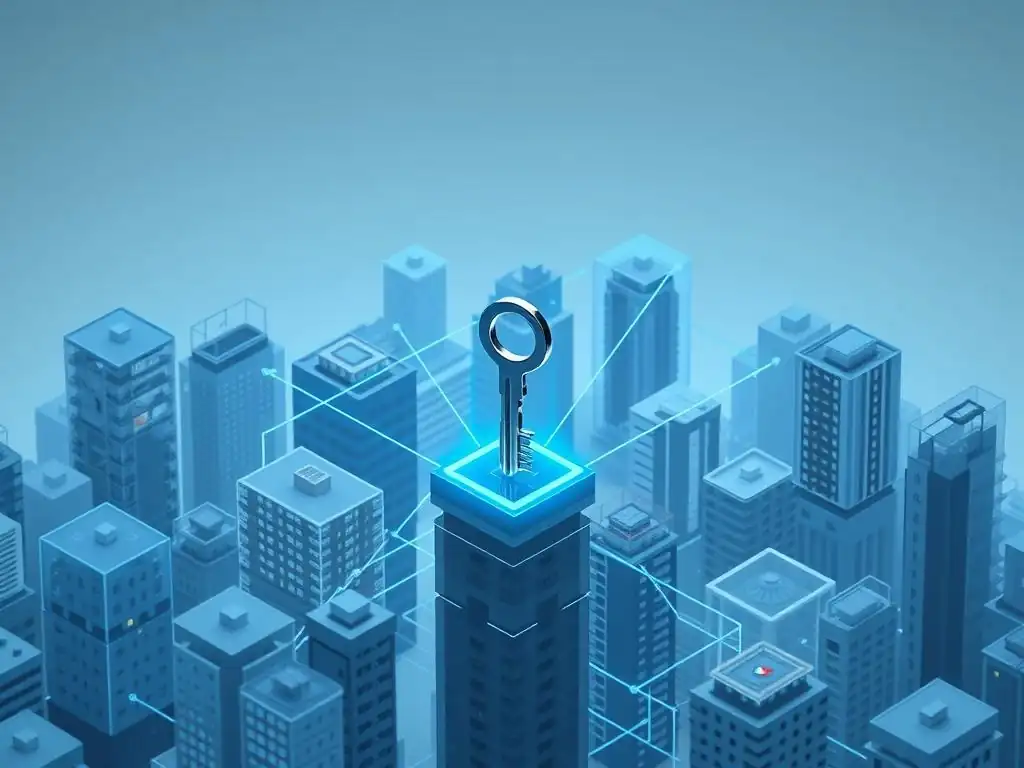
Smart Contracts for Property Tokenization: Aspen Digital's St. Regis Aspen Resort Tokenization
Property tokenization is one of the most prominent real-world applications leveraging blockchain real estate smart contracts. This process involves issuing digital tokens on a blockchain that represent ownership or economic rights in a physical property. Smart contracts are crucial here, defining the rules for token issuance, transfer, dividend distribution (from rental income), and potential buyouts or sales.
A notable early example is the tokenization of a portion of the St. Regis Aspen Resort in Colorado. In 2018, Aspen Digital (using the Securitize platform) tokenized approximately $18 million worth of limited partnership interest in the entity that owns the resort. Investors purchased digital tokens (known as ASPEN coins) representing shares in this entity. The smart contracts governing these tokens facilitated the compliant issuance and transfer of these digital securities, demonstrating how blockchain real estate smart contracts can be used for fractional ownership and investment in high-value assets within a regulated framework.
Automating Escrow Services with Blockchain Technology
Traditional escrow services involve a neutral third party holding funds and documents until all conditions of a real estate transaction are met, adding time and cost. Blockchain real estate smart contracts can automate this function entirely. The buyer deposits funds into a smart contract address on the blockchain, where they are securely held.
The smart contract is programmed with the transaction's conditions, such as the successful transfer of a tokenized property deed to the buyer's wallet or verification of other agreed-upon milestones. Once the blockchain verifies that these conditions have been met (perhaps through integration with oracle services that provide external data feeds), the smart contract automatically releases the held funds to the seller's digital wallet. This removes the need for a human escrow agent, reducing fees and potential delays, and providing a transparent, automated process managed by code.
Decentralized Autonomous Organizations (DAOs) for Real Estate Investment
Decentralized Autonomous Organizations (DAOs) provide a novel structure for collective real estate investment, powered by blockchain real estate smart contracts. In a real estate DAO, members pool capital (often in cryptocurrency or stablecoins) into a shared treasury managed by smart contracts. Ownership in the DAO, and thus the underlying assets, is represented by governance tokens.
Decisions regarding which properties to acquire, how to manage them, and when to sell are made through a decentralized voting process where token holders submit and vote on proposals, all governed by the DAO's smart contract rules. Income generated from the properties (e.g., rent) can be automatically distributed to token holders according to the smart contract's predefined rules. This model offers a transparent, community-driven approach to real estate investment, removing the need for traditional fund managers and potentially lowering management fees.
Streamlining Rental Agreements and Property Management
The utility of blockchain real estate smart contracts extends beyond sales to the rental market and property management. Rental agreements can be coded into smart contracts, outlining terms such as rent amount, payment due dates, lease duration, late fees, and conditions for the security deposit return.
For example, a smart contract could be set up to automatically collect rent from a tenant's designated digital wallet on the specified due date, provided the tenant has authorized it. It could also manage the security deposit, holding it in escrow and automatically releasing it back to the tenant at the end of the lease, contingent on conditions like a property inspection report being verified (potentially via an oracle). This automation simplifies rent collection, enforces lease terms consistently, and reduces administrative overhead for landlords and property managers, demonstrating the versatility of blockchain real estate smart contracts.
Overcoming Challenges in Blockchain Real Estate Adoption
Regulatory Uncertainty and Legal Frameworks for Smart Contracts
One of the most significant hurdles facing widespread adoption of blockchain real estate smart contracts is the lack of clear legal and regulatory frameworks in many jurisdictions. Real estate transactions are deeply embedded in existing legal systems that rely on physical deeds, notaries, and government registries. The legal status of a smart contract as a binding agreement, especially when dealing with the transfer of physical property rights, remains ambiguous in many places.
Furthermore, there are questions about how existing regulations, such as securities laws (for tokenized property), anti-money laundering (AML), and know-your-customer (KYC) rules, apply to decentralized blockchain systems. While some regions are beginning to explore or enact legislation recognizing smart contracts, a global consensus or harmonized approach is far from established. Addressing this regulatory uncertainty is critical for building trust and facilitating the mainstream use of blockchain real estate smart contracts.
Scalability and Performance Issues of Blockchain Networks
For blockchain real estate smart contracts to handle the volume and complexity of real estate transactions globally, the underlying blockchain networks must be highly scalable and performant. Early public blockchains, like Ethereum before its transition to Proof-of-Stake, faced limitations in transaction speed (transactions per second) and variable, often high, transaction fees (gas costs), which could make handling frequent, lower-value real estate operations economically unfeasible during peak times.
While newer blockchain architectures and Layer 2 scaling solutions offer significant improvements in speed and cost-efficiency, ensuring that a network can reliably support millions of property transactions, record updates, and smart contract executions without congestion or prohibitive costs remains a technical challenge. The scalability of the chosen blockchain is a key factor in the viability of large-scale blockchain real estate smart contracts implementations.
Educating Stakeholders and Fostering Trust in Decentralized Systems
The real estate industry is characterized by established practices and a stakeholder base that is generally unfamiliar with blockchain technology, cryptocurrencies, digital wallets, and smart contracts. Bridging this knowledge gap is a substantial challenge. Real estate agents, lawyers, title companies, and the general public need to understand how these technologies work, their benefits, and how they can be securely used for high-value transactions like buying or selling a home.
Fostering trust is equally important. People are accustomed to relying on trusted human intermediaries and physical processes, despite their inefficiencies. Shifting this trust to automated code and decentralized networks requires extensive education, successful pilot programs demonstrating the reliability and security of blockchain real estate smart contracts, and clear communication to build confidence in these new systems. Without trust, widespread adoption will remain limited.
Addressing Security Concerns and Preventing Smart Contract Vulnerabilities
While blockchain technology itself is highly secure, smart contracts are pieces of code written by humans, and like any code, they can contain bugs or vulnerabilities. History has shown that flaws in smart contracts can lead to significant financial losses, as famously seen with the DAO hack in 2016, where a vulnerability led to the loss of millions of dollars worth of Ether.
For blockchain real estate smart contracts dealing with high-value assets and potentially complex legal logic translated into code, security is paramount. Rigorous auditing of smart contract code by multiple independent security experts is essential before deployment. Techniques like formal verification can help mathematically prove the correctness of code logic. However, the potential for new vulnerabilities, especially when smart contracts interact with external data sources (oracles) or other protocols, requires continuous vigilance and robust security practices to protect the assets and agreements managed by blockchain real estate smart contracts.
The Future of Borderless Property Markets with Blockchain
The Potential for Global Real Estate Investment Platforms
The combination of property tokenization and blockchain real estate smart contracts paves the way for truly global, borderless real estate investment platforms. These platforms could allow investors from virtually anywhere in the world to browse a diverse catalog of tokenized properties located in different countries and invest in fractions of those properties with relative ease, bypassing many traditional cross-border investment hurdles.
Such platforms could unlock significant global capital flows into real estate, increasing liquidity and potentially stabilizing markets by broadening the investor base. Smart contracts would automate the investment process, manage fractional ownership rights, and distribute income, making international real estate investment as straightforward as buying shares on a global stock market, subject to evolving international regulations and compliance requirements for blockchain real estate smart contracts.
Disintermediation and Empowerment of Property Owners
Blockchain real estate smart contracts have the potential to disintermediate certain traditional roles within the property transaction process. By automating functions like escrow and potentially aspects of title transfer and payment processing, the reliance on some intermediaries may be reduced. This doesn't necessarily mean the complete elimination of roles like real estate agents or lawyers, but their functions may evolve, focusing more on advisory services, marketing, or handling legal complexities not easily coded.
This shift empowers property owners by giving them more direct control over their assets and transactions. With streamlined processes and reduced intermediary fees (such as the typical 5-6% agent commissions), owners could potentially retain a larger portion of their property's value upon sale. The transparency offered by blockchain real estate smart contracts also empowers owners with clear visibility into every step of the transaction process.
The Impact of Decentralized Finance (DeFi) on Real Estate
The integration of tokenized real estate assets with the burgeoning world of Decentralized Finance (DeFi) represents a significant future potential. Once real estate is represented by fungible or non-fungible tokens on a blockchain via smart contracts, these tokens can potentially be used within DeFi protocols.
This could mean using tokenized property shares as collateral for decentralized stablecoin loans, allowing owners to access liquidity without selling their physical asset. It could also involve trading these real estate tokens on decentralized exchanges (DEXs) or integrating them into yield farming or staking protocols. This convergence could unlock new financial products and liquidity options for real estate assets, leveraging the programmability and interoperability enabled by blockchain real estate smart contracts within the broader DeFi ecosystem.
The Convergence of Metaverse Real Estate and Smart Contracts
While distinct from physical property, the growth of virtual real estate within metaverses provides a compelling, live example of blockchain real estate smart contracts in action. Parcels of virtual land and digital buildings in platforms like Decentraland or The Sandbox are typically represented as NFTs (Non-Fungible Tokens) on blockchains like Ethereum.
Smart contracts are absolutely fundamental to the metaverse real estate market. They define the unique ownership of each virtual parcel (the NFT), handle the transfer of the NFT from seller to buyer upon payment, and can even encode rules regarding what can be built or done on the virtual land. This digital realm demonstrates the power and flexibility of blockchain real estate smart contracts in managing property ownership and transactions in a decentralized digital environment, offering insights and potentially transferable technologies for the physical real estate market.
Conclusion: Embracing the Transformative Power of Blockchain in Real Estate
Blockchain Real Estate Smart Contracts: A Catalyst for Innovation
The real estate industry is ripe for innovation, and blockchain technology, particularly through the implementation of blockchain real estate smart contracts, serves as a powerful catalyst for this change. Smart contracts introduce unprecedented levels of automation, efficiency, and transparency into processes that have historically been manual, slow, and opaque. They are not merely incremental improvements but represent a fundamental shift in how property transactions can be conceived and executed.
By enabling capabilities like fractional ownership, streamlining escrow, automating rental agreements, and facilitating tokenization, blockchain real estate smart contracts are pushing the boundaries of traditional real estate. They are the key technological component that translates the theoretical benefits of blockchain into practical applications for the property market, driving innovation across sales, investment, and management domains.
Moving Towards a More Efficient, Transparent, and Accessible Property Market
The vision of a future property market powered by blockchain real estate smart contracts is one that is significantly more efficient, transparent, and accessible than the current system. Transactions could be completed in a fraction of the time and at a lower cost, reducing friction for buyers and sellers alike. The inherent transparency of the blockchain ledger minimizes the potential for fraud and builds trust among all parties involved.
Furthermore, through fractionalization and tokenization managed by smart contracts, real estate investment becomes accessible to a much broader global audience, democratizing opportunities previously confined to wealthy investors. While challenges remain, including regulatory clarity and technological scalability, the trajectory points towards a future where blockchain real estate smart contracts are integral to creating a more liquid, equitable, and borderless property ecosystem.
Frequently Asked Questions
What are smart contracts in the context of real estate?
Smart contracts are self-executing contracts with the terms of the agreement directly written into code. They automate transactions and processes, reducing the need for intermediaries.
How can blockchain technology transform the real estate market?
Blockchain technology can enhance transparency, reduce fraud, and streamline transactions in real estate. It enables secure peer-to-peer transactions and efficient property management.
What is the significance of a borderless property market?
A borderless property market allows buyers and sellers from anywhere in the world to engage in real estate transactions. This democratizes access and increases investment opportunities globally.
How does DeFi relate to real estate transactions?
DeFi, or decentralized finance, can provide alternative financing options for real estate purchases. It enables users to leverage crypto assets for real estate investments, enhancing liquidity.
What challenges do regulators face with blockchain in real estate?
Regulators must address issues like compliance, fraud prevention, and consumer protection in blockchain real estate transactions. Balancing innovation with regulation is crucial for fostering a trustworthy market.
Final Reflection: Embracing the Future of Property Ownership
The exploration of decentralized real estate through blockchain and smart contracts reveals not just a technological advancement, but a fundamental shift in how we conceive of property ownership. The promise of a borderless, transparent, and efficient property market is no longer a distant dream, but a tangible possibility within our grasp. The potential to democratize access to real estate investment and streamline complex transactions is profoundly relevant in today's increasingly globalized and interconnected world.
This vision of a decentralized future profoundly impacts the cultural and social landscape. It challenges traditional power structures within the real estate industry and empowers individuals with greater control over their assets. It also fosters a sense of global community, where geographical boundaries become less relevant in the pursuit of property ownership. The future of real estate is not just about technology; it's about empowering individuals and creating a more equitable and transparent system for all.
This quote encapsulates the core principle driving the adoption of blockchain in real estate, highlighting the human-centric benefits that extend beyond mere efficiency.
As we stand on the cusp of this transformative era, I invite you to reflect on the implications of decentralized real estate for your own future. Consider how blockchain and smart contracts can empower you to participate in a global property market, secure your investments, and contribute to a more transparent and equitable system. Embrace the potential of this technology to reshape the future of property ownership and build a world where access to real estate is no longer limited by borders or traditional barriers.
Unlock Your Real Estate Future: Begin Your Decentralized Journey!
Thank you for exploring the exciting potential of decentralized real estate with us. We hope you’ve gained valuable insights into how smart contracts are transforming property ownership and investment. Now, it’s time to take the next step and become part of this innovative movement.
Ready to get started? Here’s how:
- Explore tokenized real estate platforms: Start researching platforms that enable you to invest in fractions of properties using cryptocurrency. This is one of the most effective ways to engage directly with decentralized real estate.
- Understand the legal landscape: Learn about the current regulations and potential challenges related to decentralized real estate in your region.
- Share this article: Help spread awareness about the opportunities in borderless property markets and contribute to the growing community.
What property would you love to see tokenized and accessible to global investors? Share your dream listing in the comments below!
Leave a Reply