
Exploring the Risks of Blockchain Investment in Real Estate: A Balanced Perspective

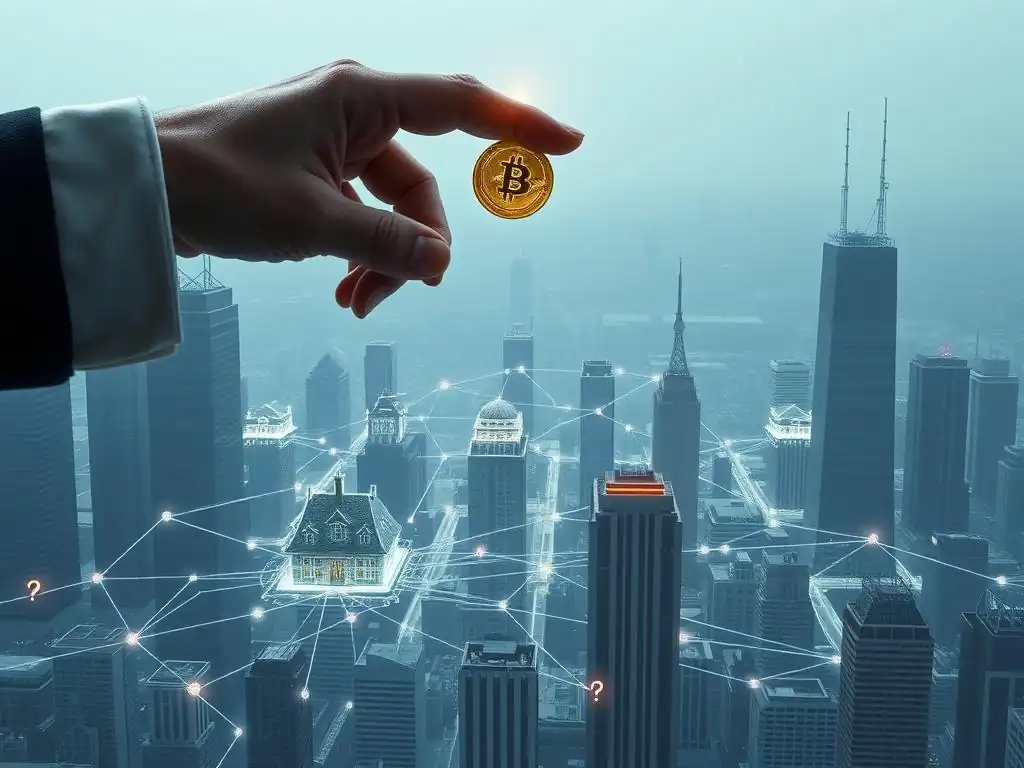
Welcome to Blockchain Trends, your guide to understanding the real-world impact of blockchain technology. Are you considering blockchain real estate investment? Before you dive in, our comprehensive analysis unveils the potential pitfalls and hidden risks involved. Discover a balanced perspective and equip yourself with the knowledge to navigate this emerging landscape. Ready to uncover the truth?
Key Blockchain Real Estate Investment Risks to Consider
While the potential benefits of integrating blockchain technology into real estate are significant, investors must navigate a complex landscape fraught with unique challenges and risks. Understanding these blockchain real estate investment risks is paramount for making informed decisions and protecting capital in this nascent market. These risks range from the unpredictable nature of regulatory environments to technical vulnerabilities inherent in new technologies and market-specific issues like liquidity and valuation complexities. A thorough analysis of these factors is essential for anyone considering blockchain real estate investment.
Beyond the general market risks associated with real estate itself, the adoption of blockchain introduces layers of technological, legal, and operational risks that are distinct from traditional property investment. These include concerns about the security of digital assets, the potential for smart contract failures, and the practical difficulties of integrating decentralized systems with existing legal and financial infrastructure. Successfully navigating these blockchain real estate investment risks requires a deep understanding of both the blockchain technology and the specific nuances of the real estate market it seeks to disrupt.
Regulatory Uncertainty and Legal Challenges for Tokenized Real Estate
Navigating Evolving Regulations for Blockchain Assets
One of the most significant blockchain real estate investment risks stems from the current global regulatory landscape, which is often unclear and constantly evolving regarding blockchain assets. Different jurisdictions classify tokens differently – some as securities, others as commodities, and some have no specific classification at all. This lack of uniformity creates legal ambiguity for both issuers of real estate tokens and potential investors.
For example, a token legally tradable in one country might face restrictions or outright bans in another, complicating international investment and the potential for a truly global market. The absence of established legal precedents for tokenized property ownership and transfer mechanisms adds further uncertainty, requiring careful legal counsel in each specific investment scenario.
The Impact of Regulatory Frameworks on Real Estate Token Offerings (RETOs)
The issuance of Real Estate Token Offerings (RETOs) is particularly susceptible to regulatory risks. Depending on how a token is structured, it may fall under existing securities laws, triggering stringent requirements similar to traditional IPOs or real estate investment trusts (REITs). Compliance with these regulations can be complex and costly, potentially limiting the types of properties that can be tokenized or the pool of eligible investors.
For instance, in the United States, if a real estate token is deemed a security, issuers must comply with SEC regulations, which can involve registration requirements or reliance on specific exemptions (like Regulation D or S). Failure to comply can lead to significant legal penalties, project delays, or even the complete shutdown of a tokenized real estate venture, posing a direct risk to investor funds.
Security Risks and Smart Contract Vulnerabilities in Real Estate Applications
Protecting Against Smart Contract Exploits in Real Estate Transactions
Smart contracts are foundational to many blockchain real estate platforms, automating processes like ownership transfer, rent distribution, or dividend payments based on pre-defined rules. However, these contracts are code, and like any code, they can contain bugs or vulnerabilities that malicious actors can exploit. A single error in a smart contract governing a real estate tokenization project could potentially lock up assets, misdirect funds, or allow unauthorized access to sensitive data.
While audits by third-party security firms are common practice, they do not guarantee complete immunity from exploits. The immutability of blockchain means that once a flawed smart contract is deployed and executed, reversing a malicious transaction or recovering lost assets can be extremely difficult or impossible, representing a critical security risk in blockchain real estate investment.
Cybersecurity Threats Specific to Blockchain Real Estate Platforms
Beyond smart contracts, the platforms and infrastructure supporting blockchain real estate ventures face various cybersecurity threats. These include risks associated with storing private keys (which control access to tokenized assets), potential attacks on the platform's servers or databases, and phishing attempts targeting investors to steal their credentials or private keys. A breach on a platform could compromise investor holdings or sensitive personal information.
Furthermore, the decentralized nature, while offering benefits, can also mean that if an investor loses their private key, there is no central authority to help them recover access to their tokenized property share, leading to a permanent loss of investment. These specific cybersecurity challenges contribute significantly to the overall blockchain real estate investment risks.
Liquidity Concerns in the Blockchain Real Estate Market
The Challenge of Illiquidity in Tokenized Real Estate Assets
Despite the theoretical promise of increased liquidity through fractional ownership and tokenization, the current blockchain real estate market often suffers from illiquidity. Compared to publicly traded stocks or even established REITs, the trading volume for individual real estate tokens on secondary markets is typically low. This means that investors may find it difficult to sell their tokens quickly or at a price close to their perceived market value, especially for tokens representing niche or less desirable properties.
The limited number of active buyers and sellers on fledgling platforms can create wide bid-ask spreads, making it costly to enter or exit positions. This lack of robust secondary market activity is a significant hurdle and a key blockchain real estate investment risk that needs to be addressed for wider adoption.
Strategies for Enhancing Liquidity in Blockchain Real Estate Investments
Efforts are being made to improve liquidity in tokenized real estate, but they are still in early stages. Strategies include listing tokens on multiple exchanges, developing sophisticated market-making mechanisms, or integrating with decentralized finance (DeFi) protocols to enable lending or borrowing against tokenized assets. However, each of these strategies introduces its own set of complexities and risks.
For instance, relying on multiple exchanges requires coordinating across different platforms with varying rules and fee structures. Integrating with DeFi exposes investors to the volatility and smart contract risks of the broader DeFi ecosystem. While these strategies aim to mitigate the illiquidity risk, they do not eliminate it and require careful consideration by investors.
Valuation and Price Discovery Challenges in Tokenized Real Estate
Establishing Fair Market Value for Tokenized Properties
Determining the fair market value of a tokenized property presents unique challenges. Traditional real estate valuation relies on appraisals and comparable sales data for whole properties, which doesn't directly translate to valuing a fraction represented by a token. The token's price might be influenced by factors beyond the physical property's fundamentals, such as the overall sentiment in the crypto market, the specific platform's dynamics, or the trading volume of the token itself.
Establishing a reliable and frequently updated valuation method for the underlying asset, and ensuring the token price accurately reflects this value minus platform fees or market premiums/discounts, remains a complex problem. This difficulty in price discovery adds to the uncertainty and blockchain real estate investment risks.
The Impact of Market Volatility on Blockchain Real Estate Investments
Even if the underlying physical real estate asset is relatively stable in value, the price of its corresponding token can be subject to the high volatility characteristic of the broader cryptocurrency markets. If a real estate token is traded on crypto exchanges or paired with volatile cryptocurrencies like Bitcoin or Ether, its price might fluctuate significantly based on general crypto market sentiment rather than changes in the property's value or rental income.
This introduces a layer of market risk that is distinct from traditional real estate, where price movements are typically less abrupt and driven by economic factors specific to the property market. Investors must be prepared for potential price swings in their token holdings that may not align with the performance of the physical asset.
Technological Adoption Barriers and Scalability Issues
Overcoming Technical Barriers to Entry for Investors
For many traditional real estate investors, engaging with blockchain technology presents a significant technical barrier. Understanding how to set up and secure a digital wallet, manage private keys, navigate blockchain explorers, and interact with tokenization platforms requires a level of technical literacy that is not typically needed for traditional property investment.
The user interfaces of some platforms can be complex, and the potential for irreversible errors (like sending tokens to the wrong address) is a real concern. Simplifying the user experience and providing robust educational resources are crucial for broader adoption, but currently, the technical hurdle remains a notable risk for less tech-savvy investors considering blockchain real estate investment.
Ensuring Scalability of Blockchain Real Estate Platforms
The underlying blockchain technology itself can face scalability issues that impact the efficiency and cost of real estate transactions. Public blockchains like Ethereum, currently a popular choice for tokenization, can suffer from network congestion, leading to slow transaction speeds and high gas fees, particularly during periods of high network activity.
While layer 2 scaling solutions and alternative blockchain protocols designed for higher throughput exist, their widespread adoption and proven reliability in handling large-scale real estate transactions over the long term are still developing. Ensuring that a platform can handle a high volume of transactions efficiently and affordably as the market grows is a critical factor for its success and mitigating operational blockchain real estate investment risks.
- What are the primary risks associated with using blockchain for real estate investment?
- How does the lack of regulatory clarity impact blockchain real estate investments?
- What role does smart contract security play in mitigating risks in blockchain real estate?
- How does the volatility of cryptocurrencies affect tokenized real estate assets?
- Beyond technical and regulatory risks, what other factors should investors consider when investing in blockchain real estate?
Frequently Asked Questions
What are the primary risks associated with using blockchain for real estate investment?
The primary risks include regulatory uncertainty surrounding blockchain-based real estate transactions, market volatility affecting tokenized assets, and security vulnerabilities in smart contracts.
How does the lack of regulatory clarity impact blockchain real estate investments?
A lack of clear regulations creates legal ambiguity and compliance challenges, making it difficult to ensure the legality and enforceability of transactions. This can deter investors and hinder market growth.
What role does smart contract security play in mitigating risks in blockchain real estate?
Smart contract security is crucial because vulnerabilities can lead to irreversible losses if exploited by malicious actors. Thorough audits and testing are essential to prevent such issues.
How does the volatility of cryptocurrencies affect tokenized real estate assets?
While tokenized real estate aims to offer fractional ownership, its value can be indirectly affected by crypto market fluctuations, leading to price instability and investor concerns.
Beyond technical and regulatory risks, what other factors should investors consider when investing in blockchain real estate?
Investors should also consider the liquidity of the tokenized assets, the transparency of the platform, and the reputation of the project team behind the blockchain real estate venture.
The exploration of blockchain real estate investment risks is not merely an academic exercise; it's a crucial undertaking in a world rapidly embracing decentralized technologies. Understanding these potential pitfalls is paramount for investors, developers, and policymakers alike, ensuring that the promise of blockchain in real estate doesn't become overshadowed by unforeseen challenges.
The allure of increased transparency and efficiency in real estate transactions through blockchain is undeniable, yet a cautious and informed approach is essential to mitigate the inherent risks. The potential for fraud, regulatory uncertainty, and technological vulnerabilities demands careful consideration. The future rewards those who press on. I don't have time to feel sorry for myself. I don't have time to complain. I'm going to press on.
- Barack Obama, a sentiment that underscores the need for resilience and proactive risk management in this evolving landscape.
As we stand at the cusp of a new era in real estate investment, let us not be blinded by the hype. Instead, let us use the knowledge gained from this exploration to navigate the blockchain real estate frontier with wisdom and foresight. Consider the risks, embrace the opportunities, and build a future where technology empowers, rather than endangers, the integrity of the real estate market.
Unlock Your Real Estate Potential: The Next Step Awaits!
Thank you for exploring the intersection of blockchain and real estate with us. You've gained valuable insights into the potential risks and rewards. Now, it's time to put that knowledge into action.
Here are a few steps you can take right now:
- Research specific blockchain real estate platforms that match your investment goals and risk appetite. Begin with thorough due diligence. This is your main action step, directly related to the core topic.
- Share your insights! Discuss this article with fellow investors and on relevant online communities. What risks do they perceive?
- Think creatively: Look into fractional real estate ownership opportunities enabled by blockchain technology—even if you start with a small investment to learn the process.
Which blockchain platform are you most interested in exploring further, and what draws you to it? Share your thoughts below!
Leave a Reply