
The Future of Real Estate Transactions: Blockchain's Transformative Power Unveiled


Welcome to Blockchain Trends, your compass in the rapidly evolving world of decentralized technologies.
Dive into our latest exploration of how blockchain is revolutionizing industries beyond cryptocurrency. Are you ready to discover how blockchain real estate transaction security is poised to reshape the future of property ownership and investment? Uncover the innovations, challenges, and opportunities that lie ahead as we delve into the transformative power of blockchain in real estate. The future is being built on the blockchain, and it starts here.
- Blockchain in Real Estate: Revolutionizing Property Transactions
- Enhancing Real Estate Transaction Security with Blockchain
- Streamlining Real Estate Processes Through Decentralization
- Blockchain's Impact on Property Management
- Overcoming the Challenges of Blockchain Adoption in Real Estate
- Real-World Examples of Blockchain in Real Estate
- The Future of Blockchain Real Estate Transactions: Predictions and Trends
- Ensuring Secure and Transparent Property Transactions with Blockchain Technology
-
Frequently Asked Questions
- How can blockchain improve the security of real estate transactions?
- What role does blockchain play in streamlining real estate processes?
- What are the key benefits of using blockchain for land registry?
- How does blockchain contribute to enhanced transparency in real estate?
- What are the potential challenges to widespread adoption of blockchain in real estate?
- Final Reflection: Securing the Foundation of Tomorrow's Transactions
- Unlock Your Real Estate Future: Embrace Blockchain Now!
Blockchain in Real Estate: Revolutionizing Property Transactions
Understanding the Current Challenges in Traditional Real Estate Transactions
Traditional real estate transactions are notoriously complex, time-consuming, and fraught with potential pitfalls. The process typically involves numerous intermediaries, including brokers, lawyers, escrow agents, title companies, and government recording offices. Each step, from property search and negotiation to financing, inspections, title searches, and final closing, adds layers of complexity and increases the likelihood of delays or errors. A significant challenge lies in the fragmented nature of data and documentation; information is often siloed across different parties and physical locations, making verification slow and prone to inconsistencies. This reliance on manual processes and disparate systems creates significant security vulnerabilities.
Moreover, the current system is susceptible to various forms of fraud. Title fraud, where someone illegally transfers property ownership using forged documents, is a persistent threat. Escrow fraud, involving the misappropriation of funds held in escrow, also poses a risk.
The lack of a single, universally accessible, tamper-proof record of ownership and transaction history makes it difficult to verify the authenticity of documents and the legitimacy of parties involved, directly impacting the overall security of real estate transactions. These inefficiencies and security concerns contribute to high transaction costs, often ranging from 5% to 8% or more of the property value, and lengthy closing periods that can stretch for 30 to 60 days or even longer.
The Promise of Blockchain Technology for Real Estate
Blockchain technology offers a compelling solution to many of the inherent inefficiencies and security risks in traditional real estate transactions. At its core, blockchain provides a decentralized, immutable, and transparent ledger capable of recording transactions securely and efficiently. By creating a single source of truth accessible to authorized parties, it eliminates the need for multiple, disconnected databases and manual verification steps that are characteristic of the current system. This distributed ledger technology promises to streamline processes, reduce reliance on intermediaries, and significantly lower transaction costs and times.
Beyond efficiency gains, the fundamental architecture of blockchain is designed to enhance security and trust. Cryptographic principles ensure that once a transaction is recorded on the chain, it cannot be altered or deleted without consensus from the network, making it incredibly difficult for fraudulent activities like document forgery or unauthorized changes to ownership records to occur undetected.
This inherent security feature is particularly relevant for blockchain real estate transaction security, offering a robust defense against many types of property fraud. By enabling smart contracts, self-executing agreements with terms directly coded into the blockchain, the technology can automate complex steps like payment releases and title transfers, further increasing both efficiency and security by removing human intervention from critical points in the process.
Enhancing Real Estate Transaction Security with Blockchain
Blockchain Real Estate Transaction Security: A Deep Dive
The security of real estate transactions is paramount, and blockchain technology provides a fundamentally different, and often superior, approach compared to traditional methods. At its heart, blockchain relies on cryptographic hashing and a distributed, peer-to-peer network. Each transaction is cryptographically hashed, and this hash is included in a block of data.
This block is then linked to the previous block using its hash, creating a chain. Any attempt to alter a transaction within a block would change its hash, breaking the link in the chain and immediately signaling tampering to the entire network. This makes the ledger exceptionally resistant to unauthorized modifications, forming the bedrock of blockchain real estate transaction security.
Furthermore, the distributed nature of the ledger means that copies of the transaction history are held by multiple participants (nodes) across the network. There is no single point of failure or central database that can be compromised.
To successfully alter the ledger, an attacker would need to gain control of a majority of the network's nodes simultaneously, a computationally and logistically infeasible task on robust public blockchains or even well-designed permissioned ones. This consensus mechanism, whether Proof-of-Work, Proof-of-Stake, or others, ensures that only validated and agreed-upon transactions are added to the chain, drastically improving blockchain real estate transaction security by making the historical record highly reliable and tamper-proof.
How Blockchain Addresses Security Vulnerabilities in Property Deals
Blockchain directly confronts several key security vulnerabilities prevalent in traditional property transactions. One major area is the prevention of title fraud. By recording property ownership and transfer history on an immutable ledger, blockchain makes it virtually impossible for someone to forge deeds or fraudulently claim ownership without detection. The legitimate ownership chain is transparently and securely recorded, providing an undeniable proof of title that is resistant to falsification. This is a significant enhancement to blockchain real estate transaction security.
Another vulnerability addressed is the risk associated with escrow. In traditional systems, funds and documents are held by a third-party escrow agent, introducing counterparty risk. With blockchain and smart contracts, the release of funds from a buyer to a seller, and the simultaneous transfer of the digital representation of the title, can be automated based on predefined conditions being met on the blockchain.
For instance, a smart contract could be programmed to release payment only when verification of title transfer is confirmed on the ledger. This removes the need to trust a single human intermediary with critical assets, significantly reducing the risk of fraud or error and bolstering blockchain real estate transaction security. Document forgery is also mitigated, as critical documents can be hashed and timestamped on the blockchain, creating verifiable proofs of existence and integrity.
Immutable Records and Tamper-Proof Transactions
The concept of immutability is fundamental to the security benefits of blockchain in real estate. Once a transaction, such as a change in ownership or the recording of a mortgage lien, is validated and added to a block on the blockchain, it becomes a permanent part of the ledger. This record is cryptographically linked to all previous transactions in the chain. Attempting to alter any detail within that record would break the cryptographic link, invalidating that block and all subsequent blocks in the chain. This makes any unauthorized modification immediately obvious to the entire network.
This tamper-proof nature ensures that the historical record of property ownership, liens, and transaction details is reliable and cannot be retroactively altered for fraudulent purposes. Unlike paper records or centralized digital databases that can be lost, destroyed, or manipulated, the distributed and cryptographically secured nature of blockchain provides an unprecedented level of data integrity. This core feature is arguably the most significant contributor to enhanced blockchain real estate transaction security, providing a verifiable and unchangeable history of every event related to a property on the chain.
Smart Contracts: Automating and Securing Real Estate Agreements
Smart contracts are self-executing contracts with the terms of the agreement directly written into lines of code. This code resides on the blockchain and automatically executes when predefined conditions are met.
In real estate, smart contracts can automate complex, multi-step processes like purchase agreements, lease agreements, and escrow instructions. For example, a smart contract for a property sale could be programmed to hold the buyer's funds in escrow and automatically release them to the seller only when the digital title token (representing ownership) is transferred to the buyer's wallet, and perhaps other conditions like proof of insurance or inspection clearance are cryptographically verified on or linked to the chain.
The security benefit here is twofold. First, it removes human error and potential bias from the execution of contractual terms. The code executes exactly as written, without subjective interpretation.
Second, it reduces the need to trust intermediaries to perform critical steps correctly and honestly. The logic of the agreement is transparently coded and executed by the decentralized network. This automation and trust reduction inherent in smart contracts significantly bolster blockchain real estate transaction security by ensuring that complex contractual obligations are fulfilled automatically and reliably based on verifiable on-chain events, minimizing opportunities for fraud or failure in the agreement execution phase.
Streamlining Real Estate Processes Through Decentralization
Reducing Intermediaries and Lowering Transaction Costs
One of the most significant promises of blockchain in real estate is its potential to disintermediate various parts of the transaction process. Traditional real estate deals involve a multitude of parties, each adding costs and complexity. Title companies perform searches and issue insurance; escrow agents hold funds and documents; lawyers review contracts and facilitate closing; recording offices register the final deed.
By providing a transparent, immutable, and shared ledger of ownership and transaction history, blockchain can potentially reduce the need for some of these roles or significantly streamline their functions. For instance, verifying title could become a near-instantaneous process by querying the blockchain ledger, potentially reducing reliance on extensive title searches and insurance in the long run.
While the complete elimination of all intermediaries is unlikely in the near future, blockchain enables a more direct peer-to-peer interaction for certain aspects of the transaction. Smart contracts can automate the conditional exchange of assets (digital title, funds) without a traditional escrow agent. This reduction in the number of parties involved, and the automation of manual tasks, can lead to substantial cost savings.
Estimates vary, but some projections suggest blockchain could reduce overall real estate transaction costs by 1-3% of the property value, translating to thousands or tens of thousands of dollars saved on a typical home sale. These savings benefit both buyers and sellers by making the process more efficient and less expensive.
Faster and More Efficient Property Transfers
The multi-step, manual, and often paper-based nature of traditional real estate transactions is inherently slow. Coordinating schedules among multiple parties, waiting for document processing, conducting title searches, and navigating bureaucratic recording procedures can easily take weeks or months. Blockchain technology, conversely, operates in near real-time. Once the necessary conditions are met and verified on the chain (e.g., payment confirmed, digital title token transferred), the transaction is recorded almost instantly across the network.
Smart contracts play a crucial role in accelerating the process. They can automate the release of funds and the transfer of digital ownership simultaneously and programmatically once all pre-programmed conditions are satisfied. This eliminates delays caused by manual handoffs, waiting for banks to process payments, or scheduling physical closings.
While legal requirements for physical registration may still exist in many jurisdictions, the core transaction on the blockchain can settle remarkably quickly. Pilot programs and early blockchain-based platforms have demonstrated the potential to reduce transaction times from the typical 30-60 days down to just a few days or even hours for the on-chain components, dramatically increasing efficiency and liquidity in the market.
Increased Transparency in Real Estate Ownership
Transparency is a key feature of blockchain technology that has profound implications for real estate. On a public blockchain, the entire history of transactions is visible to anyone on the network, albeit often pseudonymously. For real estate applications, a permissioned blockchain might be more appropriate, where only authorized parties (e.g., buyers, sellers, regulators, lenders, legal professionals) have access to view specific transaction details while maintaining privacy for sensitive personal information. Regardless of the model, the shared, immutable ledger provides a level of transparency currently unavailable in the fragmented traditional system.
This increased transparency allows stakeholders to easily verify the chain of ownership, check for existing liens or encumbrances, and track the history of a property. This reduces information asymmetry, making it harder to conceal issues or commit fraud. Buyers can have greater confidence in the legitimacy of the seller and the property's title history. Regulators can gain better oversight of market activity. This shared, verifiable record fosters trust among participants and contributes significantly to the overall security and integrity of the real estate market, complementing the direct security benefits related to blockchain real estate transaction security.
Blockchain's Impact on Property Management
Automating Rent Collection and Payments with Blockchain
Property management involves numerous recurring financial transactions, most notably rent collection. This process can be manual, time-consuming, and sometimes contentious. Blockchain technology, particularly through smart contracts, offers a powerful way to automate and streamline rent payments. A smart lease agreement could be coded into a smart contract on a blockchain. Tenants could deposit rent into a designated digital wallet, and on the due date, the smart contract could automatically transfer the funds to the landlord's wallet, provided the funds are available.
This automation eliminates the need for manual tracking, invoicing, and processing of payments. Late fees could also be automatically calculated and applied if payment conditions are not met by the deadline.
Furthermore, security deposits could be held in a multi-signature wallet or a smart contract escrow, with predefined conditions for release back to the tenant or to the landlord for damages, based on verifiable inputs. This level of automation reduces administrative overhead for property managers and landlords and provides tenants with clarity and reliability regarding payment processing, while the immutable ledger provides a clear and transparent record of all rental payments.
Improving Tenant Screening and Lease Management
While integrating sensitive personal data onto a public blockchain raises privacy concerns, blockchain technology can still play a role in improving tenant screening and lease management, potentially through permissioned ledgers or secure data anchoring. For instance, with a tenant's explicit consent, verifiable credentials related to rental history, payment punctuality, or previous landlord references could be attested to and recorded on a private or permissioned blockchain. Future landlords could then request access to these verifiable, tamper-proof records, providing a more reliable screening process than relying solely on traditional credit checks or potentially biased references.
Lease agreements themselves can be digitized and managed via smart contracts. Key terms, such as lease duration, rent amount, payment schedule, and specific clauses (e.g., pet policies, maintenance responsibilities), can be coded into the contract. The smart contract can then automate actions based on these terms, such as triggering rent payments or sending reminders.
Amendments to the lease could be recorded as new transactions on the ledger, creating a clear, immutable history of the agreement's evolution. This digital management reduces paper trails, centralizes lease information securely, and ensures that both parties are operating under the same, verifiable terms, enhancing efficiency and reducing potential disputes.
Tokenization of Real Estate Assets: Opening New Investment Opportunities
One of the most disruptive applications of blockchain in real estate is the tokenization of property assets. This involves representing ownership rights in a property as digital tokens on a blockchain. These tokens can represent full ownership of a property or, more commonly, fractional ownership, where a property is divided into many smaller, divisible tokens. For example, a commercial building valued at $10 million could be tokenized into 10 million tokens, each representing $1 of value in the property.
This fractionalization lowers the barrier to entry for real estate investment. Instead of needing hundreds of thousands or millions of dollars to buy a property outright, investors can purchase a small number of tokens, potentially for just a few hundred or thousand dollars. This opens up real estate investment to a much broader range of investors globally, increasing market liquidity.
These security tokens can be traded on regulated digital asset exchanges, potentially making it easier and faster to buy and sell real estate investments compared to the lengthy and illiquid process of traditional property sales. Tokenization, supported by the underlying blockchain real estate transaction security, has the potential to transform real estate from a relatively illiquid asset class into a more accessible and tradable one, democratizing investment opportunities.
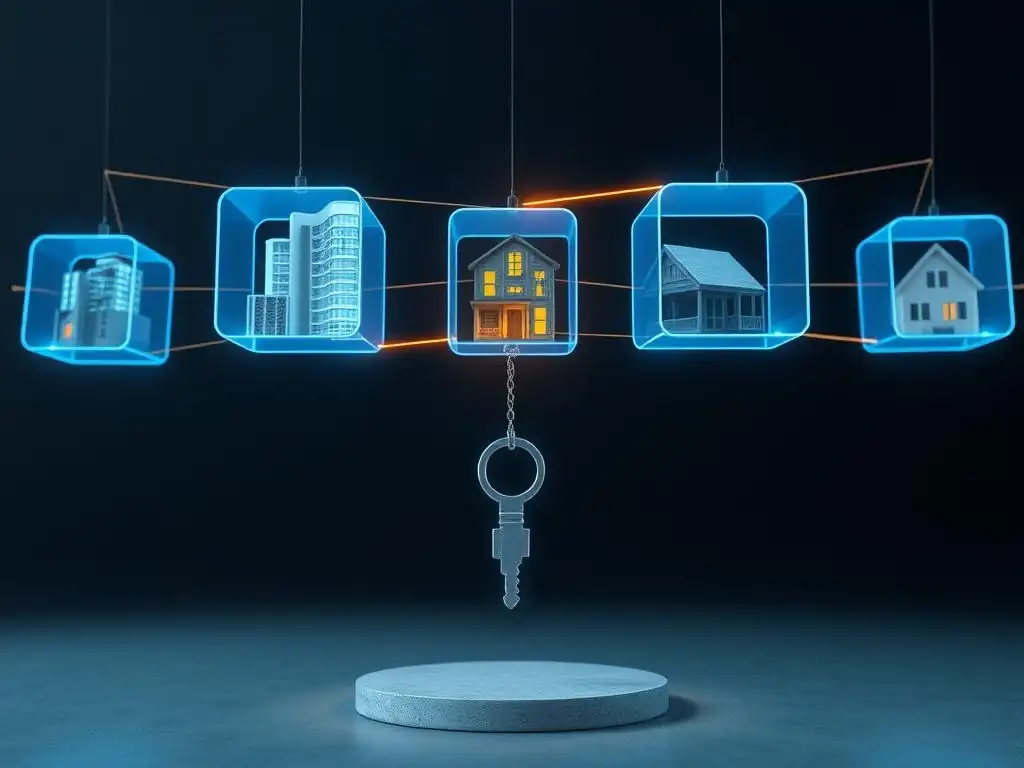
Overcoming the Challenges of Blockchain Adoption in Real Estate
Regulatory Hurdles and Legal Considerations
Despite its potential, the widespread adoption of blockchain in real estate faces significant challenges, particularly concerning regulation and legal frameworks. Most existing property laws and regulations were designed long before the advent of digital assets and decentralized ledgers. The legal status of a property deed recorded solely on a blockchain, the enforceability of smart contracts as legal agreements for property transfers, and the regulatory classification of tokenized real estate (as securities, commodities, or a new asset class) are still being debated and defined in many jurisdictions.
Governments and legal systems need to adapt to accommodate blockchain-based transactions. This involves developing clear legal guidelines for digital property representation, establishing how blockchain records interact with traditional land registries, and determining legal recourse in case of smart contract errors or disputes. The lack of uniformity across different states or countries further complicates adoption for platforms operating globally. Building trust among legal professionals, regulators, and the public is essential, requiring education and demonstration of how blockchain can comply with, or enhance, existing legal requirements while ensuring blockchain real estate transaction security.
Scalability and Interoperability Issues
Current blockchain networks, especially some public ones, can face challenges with scalability – their ability to handle a high volume of transactions quickly and cheaply. Processing the sheer number of property transactions that occur globally, along with potentially frequent trading of tokenized real estate, could strain the capacity of certain blockchains, leading to slower transaction times and higher fees (like gas costs on Ethereum). While layer-2 solutions and more scalable blockchain architectures are being developed, this remains a technical hurdle for mass adoption in a high-throughput market like real estate.
Interoperability is another challenge. The real estate ecosystem involves numerous different platforms, databases, and stakeholders (land registries, banks, title companies, listing services). For blockchain to seamlessly integrate, different blockchain networks and traditional systems need to be able to communicate and exchange data reliably. Developing standards and protocols for interoperability between various blockchain platforms and legacy systems is crucial to create a connected real estate ecosystem. Without effective interoperability, blockchain solutions risk becoming isolated islands, limiting their overall impact and hindering seamless blockchain real estate transaction security across different platforms.
Educating Stakeholders and Building Trust in Blockchain
Perhaps the most significant non-technical challenge is the need to educate and build trust among all stakeholders in the real estate industry. Buyers, sellers, agents, lawyers, lenders, and government officials are generally unfamiliar with blockchain technology. Concepts like private keys, digital wallets, smart contracts, and decentralized ledgers can seem complex and daunting. There is also inherent skepticism towards new technologies, especially when dealing with high-value assets like real estate.
Overcoming this requires comprehensive education initiatives to explain the benefits of blockchain, particularly how it enhances efficiency, reduces costs, and improves blockchain real estate transaction security. Demonstrating successful pilot programs and real-world use cases is vital. Building trust involves ensuring platforms are user-friendly, providing robust customer support, and working closely with regulatory bodies to ensure compliance and provide legal certainty. Until stakeholders are comfortable and confident using blockchain-based systems, adoption will remain limited, regardless of the technology's inherent advantages.
Real-World Examples of Blockchain in Real Estate
Case Study: Republic's Tokenized Real Estate Offerings
Republic is a prominent investment platform that has leveraged blockchain technology to offer fractional ownership in real estate assets through security tokens. Through its Republic Realm division, Republic has tokenized various properties, including commercial buildings, multi-family residences, and even virtual real estate in metaverse platforms. For example, Republic facilitated the tokenization of a portfolio of properties into digital shares, allowing investors to buy into a diversified real estate fund for relatively small amounts, sometimes as low as $100-$1,000 per token.
These tokens represent equity in the underlying properties and are issued on a blockchain, often Ethereum or Algorand, following security regulations. This approach makes real estate investment more accessible to a broader audience than traditional syndication or direct property ownership.
The use of blockchain provides a clear, immutable record of token ownership and transfer, enhancing transparency for investors. While the full legal frameworks are still evolving, platforms like Republic demonstrate the practical application of tokenization for democratizing real estate investment, underpinned by the inherent blockchain real estate transaction security for tracking ownership and facilitating secondary trading (subject to regulatory compliance).
Case Study: Propy's Blockchain-Based Real Estate Transaction Platform
Propy is a real estate technology company specifically focused on facilitating end-to-end property transactions on a blockchain. Propy's platform aims to automate the closing process and record the deed on a blockchain ledger, thereby streamlining the transfer of ownership. Propy gained notable attention for facilitating some of the first publicly reported blockchain-based real estate transactions, including a sale in Ukraine in 2017 and later transactions in the United States.
The Propy platform uses smart contracts to manage the transaction workflow, handling steps like offer submission, acceptance, payment (often in cryptocurrency or stablecoins), and the transfer of a digital representation of the property title. By recording transaction details and potentially the property deed on a blockchain, Propy seeks to provide an immutable and transparent record of ownership transfer, reducing the potential for fraud and disputes.
Their work directly demonstrates the application of blockchain for enhancing blockchain real estate transaction security by providing a verifiable and tamper-proof record of the entire transaction process from agreement to final ownership transfer. While full integration with government land registries is an ongoing process in most regions, Propy's platform illustrates the technical feasibility of conducting property sales primarily on a distributed ledger.
The Future of Blockchain Real Estate Transactions: Predictions and Trends
The Rise of Decentralized Autonomous Organizations (DAOs) in Real Estate
Looking ahead, Decentralized Autonomous Organizations (DAOs) are poised to play a significant role in the future of real estate investment and management. A DAO is an organization whose rules and operations are encoded as computer programs (smart contracts) on a blockchain, making it transparent and governed by its members (token holders) through on-chain voting. In real estate, DAOs could be formed to collectively purchase, manage, and potentially develop properties. Members could contribute capital (often in cryptocurrency or stablecoins) to the DAO, receiving governance tokens in return.
Decisions regarding which properties to acquire, how to manage them (e.g., setting rent, approving renovations), and when to sell would be made through proposals and voting by the token holders, all recorded transparently on the blockchain. This model offers a new way for groups of investors to pool capital and manage real estate assets collaboratively and transparently, bypassing traditional corporate structures. DAOs could potentially manage tokenized properties, adding a layer of decentralized governance to fractional ownership and further enhancing transparency and security in collective real estate investments.
The Integration of Blockchain with IoT for Smart Properties
The convergence of blockchain with the Internet of Things (IoT) holds exciting possibilities for the future of smart properties and property management. IoT devices, such as smart locks, sensors, and building management systems, generate vast amounts of data. Blockchain can provide a secure and immutable ledger to record, manage, and verify this data. For example, access logs from smart locks could be securely stored on a blockchain, providing an undeniable record of who entered a property and when. Sensor data related to property condition (temperature, humidity, structural integrity) could also be recorded.
Furthermore, smart contracts could be triggered by IoT data. A smart contract could automatically release payment to a maintenance provider upon verification from an IoT sensor that a repair has been completed, or grant temporary access to a service provider via a smart lock based on the terms of a work order managed on the blockchain.
This integration enhances efficiency in property management and adds a layer of security and transparency to building operations. Securely managing sensitive data from connected devices is crucial, and blockchain's inherent security features, contributing to overall blockchain real estate transaction security within the property itself, make it a suitable technology for this purpose.
The Evolution of Real Estate Investment Through Digital Assets
The trend towards tokenization is expected to continue and evolve, fundamentally changing how people invest in real estate. As regulatory clarity improves and platforms mature, real estate tokens are likely to become more sophisticated financial instruments. We may see the development of derivatives based on real estate tokens, lending protocols that accept real estate tokens as collateral, and decentralized exchanges specifically designed for trading tokenized property assets.
This evolution will make real estate a more liquid and accessible asset class globally, competing more directly with traditional financial assets like stocks and bonds. It will enable greater portfolio diversification for investors and potentially lead to more efficient price discovery in the real estate market.
The ability to buy and sell fractional ownership interests quickly and with lower transaction costs will democratize access to high-value properties and open up new avenues for capital formation in real estate development. The underlying blockchain real estate transaction security will be critical to the success and trust in these new digital asset markets, ensuring the integrity of ownership records and transaction histories.
Ensuring Secure and Transparent Property Transactions with Blockchain Technology
Best Practices for Implementing Blockchain in Real Estate
Implementing blockchain technology in real estate requires careful consideration to maximize its benefits while mitigating risks. A key best practice is selecting the appropriate blockchain platform – whether a public network, a consortium chain, or a fully private ledger – based on the specific use case, required level of transparency, and scalability needs. For sensitive property data, permissioned ledgers where access is restricted to authorized parties often strike a balance between transparency and privacy. Ensuring legal and regulatory compliance is paramount; systems must be designed to integrate with existing legal frameworks and land registries where required.
Another critical aspect is the security of digital identities and private keys. Users must be educated on how to securely manage their digital wallets and private keys, as loss or compromise can lead to irreversible loss of assets or control over property tokens. Rigorous auditing of smart contracts is also essential. Errors or vulnerabilities in smart contract code can have significant financial consequences, so independent security audits are crucial before deployment. Implementing these best practices is vital for building trust in blockchain solutions and ensuring robust blockchain real estate transaction security.
The Role of Blockchain in Preventing Real Estate Fraud
Blockchain's inherent characteristics make it a powerful tool in the fight against real estate fraud. The immutability of the ledger prevents unauthorized alteration of property records, effectively combating title fraud where malicious actors attempt to forge deeds or change ownership details. The distributed nature means there's no single database to hack and corrupt; any changes require consensus across the network, making manipulation extremely difficult.
Furthermore, recording transaction details and ownership history on a transparent (or permissioned-transparent) ledger makes it easier to verify the legitimacy of a sale and the seller's right to transfer the property, reducing the risk of double-selling properties or selling properties with undisclosed liens. Smart contracts automate the conditional exchange of assets, reducing the risk of escrow fraud by removing the human element from critical fund and title transfers. By providing a verifiable, tamper-proof, and transparent record of events, blockchain significantly enhances blockchain real estate transaction security and makes fraudulent activities far more detectable and difficult to execute successfully.
Securing Data Privacy in Blockchain-Based Real Estate Systems
While transparency is a key benefit of blockchain, sensitive personal and financial data involved in real estate transactions must remain private. This creates a tension, particularly with public blockchains where all transaction data is visible. For real estate applications, striking the right balance between transparency for verification and privacy for personal information is crucial for blockchain real estate transaction security. Permissioned blockchains, where network participation and data access are restricted to known and authorized parties, offer one solution.
Another approach involves storing sensitive personal data off-chain in secure databases while placing only cryptographic hashes or encrypted references onto the blockchain. This allows the integrity and existence of the data to be verified via the on-chain hash without revealing the actual sensitive information.
Advanced cryptographic techniques like Zero-Knowledge Proofs (ZKPs) can also be employed, allowing one party to prove that a statement is true (e.g., "I am the rightful owner of this property") without revealing any specific information about the statement itself. Implementing these privacy-enhancing techniques is vital to ensure that while the transaction integrity and ownership history are secure and verifiable on the blockchain, personal privacy is protected, maintaining trust and facilitating broader adoption.
Frequently Asked Questions
How can blockchain improve the security of real estate transactions?
Blockchain enhances security through its immutable ledger, making it virtually impossible to alter transaction records. This increased transparency and security reduce fraud and disputes related to property ownership.
What role does blockchain play in streamlining real estate processes?
Blockchain can automate many steps in the real estate process, such as title searches and escrow services. This leads to faster closings and reduced administrative costs for all parties involved.
What are the key benefits of using blockchain for land registry?
Using blockchain for land registry offers benefits like improved accuracy, reduced risk of fraud, and easier access to property ownership information. This contributes to a more efficient and reliable system.
How does blockchain contribute to enhanced transparency in real estate?
Blockchain's decentralized and distributed ledger provides a transparent record of all real estate transactions. All participants can view the transaction history, fostering trust and accountability.
What are the potential challenges to widespread adoption of blockchain in real estate?
Challenges include regulatory uncertainty, lack of standardization, and the need for industry-wide collaboration. Overcoming these hurdles is crucial for realizing the full potential of blockchain in real estate.
Final Reflection: Securing the Foundation of Tomorrow's Transactions
The exploration of blockchain's potential to revolutionize real estate transactions culminates in a crucial understanding: enhanced security is not merely a feature, but the cornerstone of future trust and efficiency in this sector. The vulnerabilities inherent in traditional systems, from fraud to bureaucratic delays, are increasingly unacceptable in a world demanding transparency and speed. Blockchain offers a compelling solution, and its adoption is no longer a question of "if," but "when" and "how."
The impact of blockchain on real estate extends far beyond simple transactions; it promises to reshape the entire landscape of property ownership and investment. Witnessing this evolution firsthand, and understanding its potential to democratize access and streamline processes, is both exciting and humbling. The shift towards decentralized, secure, and transparent systems is not just a technological advancement, but a fundamental shift in power dynamics. The future of real estate is not about owning property, it's about owning the data that represents it.
- Unknown
As we stand on the cusp of this transformative era, let us not merely observe, but actively participate in shaping the future of real estate. Consider the implications of blockchain technology in your own life, whether you are a buyer, seller, investor, or simply a curious observer. Embrace the potential for increased security, transparency, and efficiency, and advocate for the responsible and ethical implementation of blockchain solutions. The future of real estate is being written now, and your voice matters in ensuring it is a future built on trust and innovation.
Unlock Your Real Estate Future: Embrace Blockchain Now!
Thank you for exploring the exciting potential of blockchain technology to revolutionize real estate. We hope this article has helped clarify how blockchain can streamline transactions and promote transparency in the industry. Now, it's time to take action!
Here are some steps you can consider to further explore and engage with blockchain in real estate:
- Research a specific application: Identify a blockchain-based solution in real estate that interests you, such as tokenized property ownership or smart contracts for leasing agreements. Learn about its advantages and possible challenges.
- Participate in industry events: Join virtual or in-person conferences focused on blockchain and real estate. Connect with professionals, gain insights from experts, and observe real-world implementations.
- Share and discuss: Spread this article within your network and start conversations about how blockchain can reshape the real estate industry. What innovative ideas do you have?
What is the first step you will take to explore the transformative potential of blockchain in real estate? Share your thoughts in the comments below!
Leave a Reply