
The Impact of Smart Contracts on Real Estate Agents: Disruption or Evolution?


Welcome to Blockchain Trends, your go-to source for navigating the revolutionary world of blockchain technology. Forget just cryptocurrencies – we're diving deep into DeFi, enterprise solutions, and the very future of decentralized systems.
But what about real estate? Prepare to have your assumptions challenged. Our latest exploration delves into the smart contracts real estate impact, questioning whether this innovative technology will disrupt the role of agents or usher in a new era of collaboration. Intrigued? Discover how smart contracts are poised to reshape property transactions and what it means for the future of the industry. Let's explore.
- Smart Contracts Real Estate Use Cases: Practical Examples
-
Frequently Asked Questions
- What are smart contracts in the context of real estate?
- How do smart contracts disrupt traditional real estate practices?
- What are the potential benefits of using smart contracts for real estate agents?
- Are there any regulatory challenges associated with smart contracts in real estate?
- What does the future hold for smart contracts in the real estate sector?
- Final Reflection: Navigating the Future of Real Estate
- Reimagine Your Real Estate Future!
Smart Contracts Real Estate Use Cases: Practical Examples
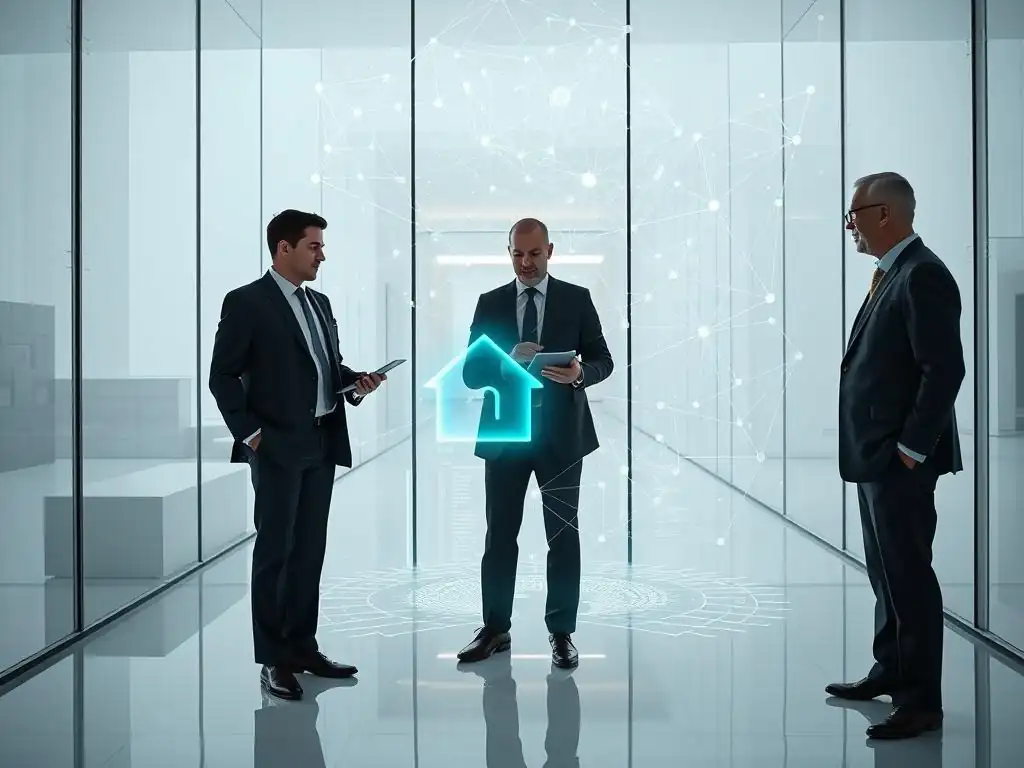
Smart contracts are moving beyond theoretical discussions to tangible applications within the real estate sector, showcasing a significant smart contracts real estate impact. These decentralized, self-executing agreements are being deployed to automate and streamline various processes that were traditionally manual, time-consuming, and prone to errors. Exploring specific use cases provides a clearer picture of how this technology is transforming the industry and redefining operational efficiencies.
The implementation of smart contracts in real estate is diverse, ranging from simplifying complex transaction steps to enabling entirely new models of property ownership and management. These examples illustrate the potential for increased speed, reduced costs, enhanced security, and greater transparency across the real estate lifecycle. They also highlight areas where the role of traditional intermediaries, including agents, might evolve or be augmented by automated processes.
Automated Escrow Services with Smart Contracts
One of the most compelling applications of smart contracts in real estate is the automation of escrow services. Traditionally, escrow involves a neutral third party holding funds and documents until all conditions of a sale agreement are met. This process can be lengthy, involving manual verification steps and coordination between multiple parties, often taking weeks or even months to complete. Smart contracts can replicate this function on a blockchain, executing the release of funds and digital asset ownership (like a tokenized deed) automatically once predefined conditions are verified on the blockchain.
This automated escrow process significantly reduces reliance on human intermediaries for the holding and release of assets, mitigating potential delays and human error. For instance, a smart contract could be programmed to release payment from the buyer's digital wallet directly to the seller's upon verification that the property's digital title has been successfully transferred to the buyer's blockchain address.
Pilot programs and platforms exploring this concept suggest that transaction finalization times could potentially be reduced from an average of 30-45 days to just a few days, or even hours, once regulatory and technological infrastructure is fully mature. This speed increase represents a substantial smart contracts real estate impact on transaction velocity.
Fractional Ownership of Real Estate Assets via Smart Contracts
Smart contracts are also enabling fractional ownership of real estate assets, making property investment more accessible and liquid. Historically, investing in real estate required significant capital, typically limiting direct ownership to wealthy individuals or large institutions. Fractional ownership allows investors to buy "shares" or tokens representing a portion of a property's value, effectively democratizing access to the real estate market. Smart contracts are crucial for managing these fractional interests transparently and efficiently.
Through tokenization, a property's ownership can be divided into thousands or millions of digital tokens on a blockchain. Smart contracts define the rules governing these tokens, including how ownership is recorded, how dividends (like rental income) are distributed proportionally to token holders, and how tokens can be traded on secondary markets.
For example, a smart contract could automatically disburse rental income from a property among all token holders based on their token percentage, eliminating the need for manual calculation and distribution. Early platforms facilitating real estate tokenization have seen properties valued at millions tokenized, allowing individuals to invest with as little as $100 or $1,000, demonstrating a clear smart contracts real estate impact on investment models and market accessibility.
Smart Contracts for Rent Collection and Property Management
Beyond sales, smart contracts offer valuable automation for ongoing property management tasks, particularly rent collection. Landlords and property managers often face challenges with timely rent payments, tracking arrears, and managing lease agreements. Smart contracts can automate the entire rent collection process, potentially improving reliability and reducing administrative overhead.
A smart contract linked to a digital lease agreement could be programmed to automatically deduct rent from a tenant's digital wallet on a specific date, provided sufficient funds are available. The contract could also include clauses for late fees that are automatically triggered and calculated if payment is missed, or even initiate predefined actions like sending automated reminders or notifications.
This automation minimizes the need for manual follow-ups and reduces disputes over payment history, as all transactions are immutably recorded on the blockchain. While widespread adoption is still developing, the potential for smart contracts to streamline property management tasks, from rent collection to maintenance requests triggered by specific conditions, highlights their growing smart contracts real estate impact on operational efficiency for landlords and property managers.
Frequently Asked Questions
What are smart contracts in the context of real estate?
Smart contracts are self-executing contracts with the terms directly written into code, enabling automated transactions and reducing the need for intermediaries in real estate deals.
How do smart contracts disrupt traditional real estate practices?
They streamline processes, such as property transfers and payments, by eliminating paperwork and minimizing human error, leading to faster transactions and reduced costs.
What are the potential benefits of using smart contracts for real estate agents?
Smart contracts can enhance transparency, improve transaction speed, and provide greater security, making real estate operations more efficient for agents and their clients.
Are there any regulatory challenges associated with smart contracts in real estate?
Yes, the regulatory landscape is still evolving, and compliance with existing laws is crucial to ensure that smart contracts are legally enforceable and protect all parties involved.
What does the future hold for smart contracts in the real estate sector?
The future is promising, with potential for wider adoption, integration with blockchain technology, and innovations that could transform how real estate transactions are conducted and managed.
The exploration of smart contracts and their potential impact on the real estate industry reveals a pivotal moment. It's no longer a question of if technology will reshape the landscape, but how we adapt and leverage these tools to enhance efficiency, transparency, and trust in property transactions. The future of real estate hinges on understanding and embracing this evolution.
The integration of smart contracts into real estate represents more than just technological advancement; it signifies a shift in power dynamics and a re-evaluation of traditional roles. This evolution demands that real estate agents not only understand the technology but also adapt their skill sets to provide value beyond simple transactions. The only constant in life is change.
- Heraclitus. This quote resonates deeply as we consider the ongoing transformation of the real estate industry, urging us to embrace change and seek continuous improvement.
As we stand at the cusp of this technological revolution, let us not fear disruption, but rather embrace the opportunity to evolve. Consider how you, as a real estate professional or a future homeowner, can leverage the power of smart contracts to create a more secure, transparent, and efficient real estate experience. The future of real estate is not about replacing human connection, but about augmenting it with the power of technology. Let's build that future together.
Reimagine Your Real Estate Future!
Thank you for exploring the potential of smart contracts and their influence on the real estate industry. We hope you've gained valuable insights into how this technology might transform your role. Now, consider how you can leverage this knowledge to succeed in the changing landscape.
- Investigate at least one practical application of smart contracts in your real estate transactions within the next month! Take the initiative to become a pioneer in this field.
- Share this article with your fellow real estate professionals to foster meaningful discussions about the industry's future. Together, we can learn and adapt.
- Brainstorm innovative uses of smart contracts with a colleague—perhaps they can address a persistent challenge in your local market in a completely new way.
What exciting possibilities do you see for smart contracts in your real estate practice? Share your thoughts in the comments below!
Leave a Reply