
The Metaverse Meets Real Estate: Virtual Land Ownership on the Blockchain

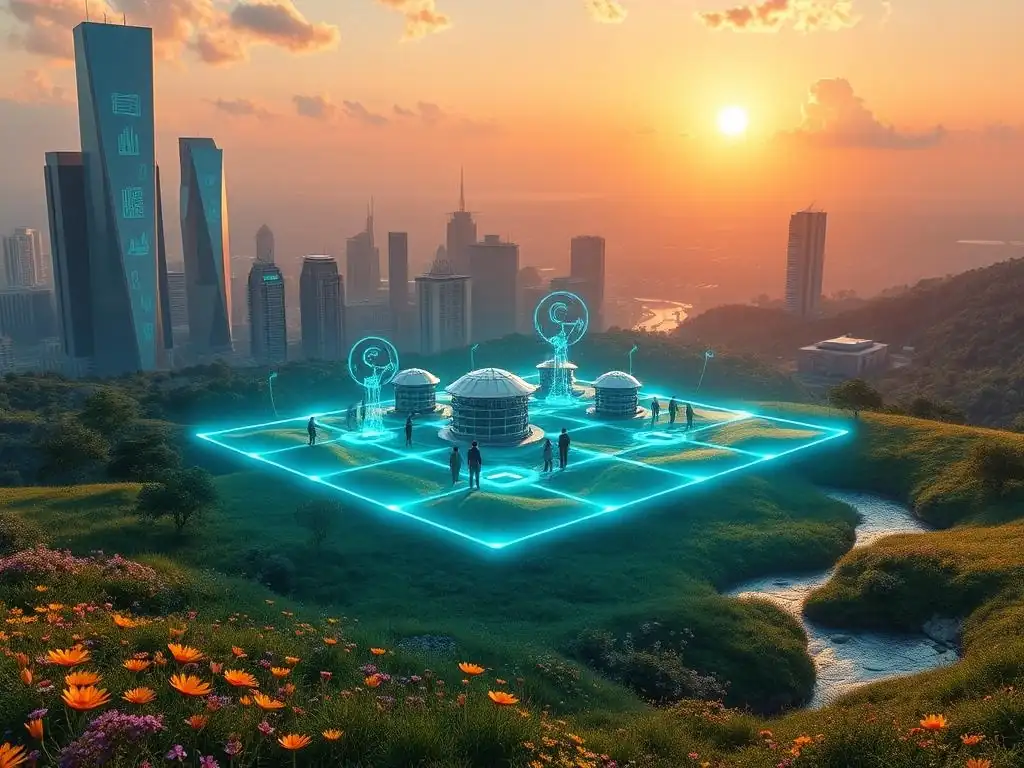
Welcome to Blockchain Trends, your guide to understanding the revolutionary impact of blockchain technology.
Ever wondered how blockchain is reshaping industries beyond cryptocurrency? Dive into our exploration of its transformative potential, from DeFi to enterprise applications. Today, we unravel a particularly fascinating development: blockchain virtual land ownership. Discover how the metaverse is intersecting with real estate, creating entirely new possibilities and raising crucial questions about the future of digital assets. Intrigued? Keep reading to explore the burgeoning world of virtual land ownership on the blockchain and its implications for the future.
The Metaverse Meets Real Estate: Virtual Land Ownership on the Blockchain
- Introduction: Blockchain's Impact on Real Estate and the Rise of Virtual Land
- What is Virtual Land? Defining Digital Real Estate in the Metaverse
- Blockchain Technology and Virtual Land Ownership: The Foundation of Decentralized Real Estate
- Benefits of Blockchain Virtual Land Ownership: Why Invest in Digital Real Estate?
- Challenges and Risks of Investing in Virtual Land on the Blockchain
- Blockchain Virtual Land Ownership: Legal and Regulatory Considerations
- Real-World Applications of Blockchain Virtual Land: Beyond Gaming
- Case Studies: Examples of Successful Virtual Land Investments on the Blockchain
-
The Future of Blockchain Virtual Land Ownership: Trends and Predictions
- The Evolving Metaverse Landscape and its Impact on Virtual Real Estate
- Integration of Augmented Reality (AR) and Virtual Reality (VR) with Blockchain Land
- The Role of DAOs (Decentralized Autonomous Organizations) in Virtual Land Management
- Mainstream Adoption of Blockchain Virtual Land Ownership: A Realistic Outlook
- Conclusion: Embracing the Future of Real Estate with Blockchain Technology and the Metaverse
- Frequently Asked Questions
- Final Reflection: Bridging the Digital and Physical Worlds
- Unveil Your Metaverse Real Estate Empire!
Introduction: Blockchain's Impact on Real Estate and the Rise of Virtual Land
Exploring the Convergence of Metaverse and Real Estate: A New Frontier
The concept of the metaverse, a persistent, interconnected set of virtual spaces where users can interact with each other, digital objects, and AI, is rapidly moving from science fiction to a tangible reality. Within this burgeoning digital universe, a new form of real estate is emerging: virtual land.
This convergence represents a fascinating frontier, blending the familiar principles of property ownership and development with the innovative capabilities of decentralized technologies. As companies like Meta (formerly Facebook) invest billions and platforms like Decentraland and The Sandbox gain traction, the economic potential of this digital landscape is becoming increasingly clear, driving significant interest from investors, developers, and brands alike.
This digital real estate market is not merely theoretical; it's backed by real transactions and growing valuations. In late 2021, for instance, Republic Realm reportedly purchased a plot of land in The Sandbox metaverse for a staggering $4.3 million, marking one of the largest virtual land sales on record at the time. While market cycles exist, this event underscored the significant capital flowing into digital property.
Similarly, sales in Decentraland have seen individual parcels fetch hundreds of thousands of dollars, demonstrating a tangible market driven by factors like location within the virtual world, potential for development, and scarcity. This activity highlights that virtual land is being treated as a valuable asset class, mirroring aspects of physical real estate investment.
Understanding the Significance of Blockchain Technology in Virtual Land Ownership
At the core of this emerging digital real estate market is blockchain technology. Blockchain provides the essential infrastructure that enables secure, transparent, and verifiable ownership of virtual assets, including land.
Unlike traditional online games or virtual worlds where digital items are controlled by a central server and the platform operator, blockchain technology allows for true digital scarcity and ownership rights to be recorded immutably on a decentralized ledger. This shift is fundamental; it transforms virtual items from mere data entries into unique, ownable assets that can be freely traded, sold, or utilized outside the confines of a single platform, fostering a genuine digital economy.
The application of blockchain technology to virtual land ownership ensures that when a user purchases a parcel of land in a blockchain-based metaverse, they receive a unique digital token, typically an NFT (Non-Fungible Token), that represents their indisputable ownership. This NFT is recorded on a public blockchain, such as Ethereum, Polygon, or flow, making the ownership history transparent and tamper-proof.
This contrasts sharply with centralized virtual worlds where ownership is merely a database entry managed by a single entity, susceptible to changes or shutdowns. The reliability and security offered by blockchain are critical for building trust and facilitating the growth of the blockchain virtual land ownership market.
What is Virtual Land? Defining Digital Real Estate in the Metaverse
Demystifying Virtual Land: Features and Characteristics
Virtual land, in the context of blockchain-based metaverses, refers to finite parcels of digital space within a specific virtual world platform. These parcels are typically represented as unique, non-fungible tokens (NFTs) on a blockchain, confirming ownership.
Much like physical land, virtual land possesses distinct characteristics: it has a fixed location within the metaverse map, often varying in size (e.g., represented by coordinates or grid squares), and can have different zoning or types (e.g., commercial, residential, or special event areas). The value of virtual land is influenced by factors analogous to physical real estate, such as proximity to popular areas, traffic flow (digital foot traffic), size, and potential for development or monetization.
Owners of virtual land gain specific rights associated with their parcels. These rights usually include the ability to build structures, host experiences (like events, games, or art galleries), display digital content (like NFTs), rent out the space, or even sell the land itself. The specific features and capabilities of virtual land can vary significantly between different metaverse platforms, depending on the platform's design and the underlying smart contracts governing the land NFTs.
For example, some platforms might offer integrated tools for building, while others might require external software. The common thread is that blockchain virtual land ownership grants verifiable control and utility over a piece of the digital world.
Key Differences Between Virtual Land and Traditional Real Estate
While the term "virtual land" borrows heavily from traditional real estate concepts, there are fundamental differences driven by its digital nature and blockchain foundation. Firstly, traditional real estate involves physical property bound by geographic location, physical infrastructure, and governmental regulations. Virtual land exists solely in digital space, accessible from anywhere with an internet connection, and its infrastructure is code-based, running on blockchain networks and platform servers. Ownership of physical property is typically recorded in centralized government registries, whereas blockchain virtual land ownership is recorded on decentralized, public ledgers accessible to anyone.
Secondly, the utility and monetization potential differ. Traditional real estate is used for physical dwelling, commerce, agriculture, etc. Virtual land is primarily used for digital experiences, social interaction, virtual commerce, gaming, and showcasing digital assets.
While both can generate rental income, the methods differ – renting physical space versus renting access for a virtual event or displaying digital advertising. Furthermore, the development possibilities are limited only by the platform's capabilities and the developer's imagination in the virtual world, rather than physical constraints and building codes in the real world. This distinction highlights that while the investment principles might share similarities (location, scarcity, utility), the underlying asset and its use cases are fundamentally different.
Popular Metaverse Platforms for Virtual Land Ownership: Decentraland, The Sandbox, Somnium Space
Several platforms have emerged as prominent players in the blockchain virtual land ownership market, each offering a distinct metaverse experience.
- Decentraland (MANA): Launched in 2020, Decentraland is a decentralized virtual world where users can explore, interact, and own land parcels represented by LAND NFTs on the Ethereum blockchain. The platform is governed by a DAO (Decentralized Autonomous Organization), giving LAND and MANA token holders a say in its future. It features various districts and estates, and users can build scenes, applications, and experiences on their owned land. As of early 2023, Decentraland had over 90,000 individual LAND parcels available for ownership.
- The Sandbox (SAND): The Sandbox is another major player, built on the Ethereum blockchain, which focuses on user-generated content. It provides tools like VoxEdit for creating voxel-based assets and Game Maker for building interactive experiences on owned LAND. The total supply of LAND parcels in The Sandbox is capped at 166,464. The platform has attracted numerous partnerships with major brands and celebrities looking to establish a presence in the metaverse, driving demand for blockchain virtual land ownership within its ecosystem.
- Somnium Space (CUBE): Somnium Space offers a high-fidelity virtual reality-centric metaverse. Built on the Ethereum blockchain, it allows users to buy, build, and trade virtual land parcels. It emphasizes customization and persistence, allowing users to import external 3D assets. Somnium Space features a smaller, more limited supply of land parcels compared to Decentraland or The Sandbox, contributing to its unique economic dynamics.
These platforms, among others, form the current landscape for blockchain virtual land ownership, each presenting different opportunities and communities for potential digital real estate investors and developers.
Blockchain Technology and Virtual Land Ownership: The Foundation of Decentralized Real Estate
How Blockchain Enables Secure and Transparent Virtual Land Transactions
Blockchain technology serves as the bedrock for secure and transparent blockchain virtual land ownership. Every transaction involving the purchase, sale, or transfer of virtual land parcels is recorded on a decentralized, immutable ledger. This means that once a transaction is confirmed and added to the blockchain, it cannot be altered or deleted.
This public record provides a transparent history of ownership for each virtual land parcel, verifiable by anyone on the network. Unlike traditional property records that might be held in centralized databases, blockchain records are distributed across many computers, making them highly resistant to fraud or single points of failure.
The security aspect stems from the cryptographic principles underlying blockchain. Each transaction is cryptographically signed by the participants, ensuring authenticity. The chaining of blocks, where each new block contains a hash of the previous one, makes it computationally infeasible to tamper with past records without invalidating the entire chain.
This inherent security and transparency are crucial for building trust in a purely digital asset class like virtual land, assuring buyers that their ownership is legitimate and protected by the network's consensus mechanism, rather than relying on a single entity's database. This fundamental shift in how ownership is recorded is what distinguishes blockchain virtual land ownership from previous forms of virtual property.
Smart Contracts: Automating Virtual Land Ownership and Transfers
Smart contracts are self-executing contracts with the terms of the agreement directly written into code. They reside on the blockchain and automatically execute when predefined conditions are met. In the context of blockchain virtual land ownership, smart contracts automate the process of buying, selling, and transferring land parcels.
For example, a smart contract for a land sale would hold the virtual land NFT in escrow and, upon receiving the agreed-upon cryptocurrency amount from the buyer, automatically transfer the NFT to the buyer's wallet and the funds to the seller's wallet. This eliminates the need for intermediaries, reducing transaction costs and increasing efficiency.
Furthermore, smart contracts can govern various rights and permissions associated with virtual land ownership. They can enforce rules about building on the land, manage rental agreements, or distribute revenue generated from activities on the parcel. For instance, a smart contract could be programmed to automatically pay a percentage of event ticket sales on a virtual land parcel to the landowner. This level of automation and programmability offered by smart contracts is a powerful feature of blockchain virtual land ownership, enabling complex digital economies and interactions to occur trustlessly and efficiently on the blockchain.
NFTs (Non-Fungible Tokens): Representing Virtual Land Ownership on the Blockchain
Non-Fungible Tokens, or NFTs, are the specific digital assets used to represent ownership of unique items, including virtual land, on the blockchain. Unlike fungible tokens like Bitcoin or Ether, where each unit is interchangeable and identical, each NFT is unique and holds distinct information, such as the specific coordinates or identification number of a virtual land parcel. This non-fungibility is essential because each piece of virtual land is distinct in its location and potentially its characteristics within the metaverse.
When you acquire a parcel of virtual land in platforms like Decentraland or The Sandbox, you receive an NFT (typically following standards like ERC-721 on Ethereum) that is minted and stored on the blockchain. This NFT serves as your verifiable deed of ownership. It contains metadata linking it to the specific parcel within the metaverse and confirms your rights as the owner.
The ability to trade these NFTs on secondary marketplaces (like OpenSea or Rarible) allows for a liquid market for blockchain virtual land ownership, enabling owners to easily buy, sell, or trade their digital property without relying on the metaverse platform itself as the sole marketplace. This portability and interoperability of ownership are key benefits enabled by using NFTs.
Benefits of Blockchain Virtual Land Ownership: Why Invest in Digital Real Estate?
Decentralization and Ownership Control: Empowering Virtual Landowners
One of the most significant advantages of blockchain virtual land ownership is the true decentralization and control it grants to the owner. In traditional online games or virtual worlds, any assets acquired are ultimately under the control of the company running the platform. The company could, in theory, confiscate items, change the rules, or even shut down the service, rendering digital possessions worthless. With blockchain virtual land, ownership is recorded on a decentralized ledger, not controlled by a single entity. The virtual land NFT resides in the owner's cryptocurrency wallet, separate from the platform's direct control.
This decentralized ownership empowers individuals by giving them sovereign control over their digital assets. They can hold their land indefinitely, sell it, build on it, or use it as collateral in decentralized finance (DeFi) protocols without needing permission from the metaverse platform operator. This shifts the power dynamic from platform to user, fostering a more equitable digital ecosystem.
The immutability of the blockchain record ensures that once you own the NFT representing the land, your ownership cannot be arbitrarily revoked by the platform operator, providing a level of security and permanence previously unavailable for digital assets in centralized virtual environments. This is a cornerstone of the value proposition for blockchain virtual land ownership.
Scarcity and Value Appreciation: The Economics of Virtual Land
Like physical real estate, scarcity is a key driver of value for blockchain virtual land. Most metaverse platforms have a fixed, limited supply of land parcels. For example, Decentraland has a total of 90,601 parcels, and The Sandbox has 166,464. This finite supply, combined with increasing demand as more users and brands enter the metaverse, creates a dynamic where the value of existing virtual land can appreciate. Early investors who acquired land at lower prices have seen significant returns as platforms grew and surrounding parcels were developed or became popular locations.
The value appreciation is also influenced by location within the metaverse. Land parcels located in desirable areas, such as near popular hubs, event spaces, or districts hosting major brands, tend to command higher prices due to increased digital foot traffic and visibility.
Development on adjacent parcels or the announcement of major events can also positively impact the value of nearby land. While the market is volatile, the principle of limited supply meeting growing demand provides a fundamental economic basis for potential value appreciation in blockchain virtual land ownership, mirroring the supply and demand dynamics seen in physical real estate markets.
New Revenue Streams: Monetizing Virtual Land in the Metaverse: Advertising, Events, Virtual Stores
Blockchain virtual land ownership opens up numerous avenues for generating revenue within the metaverse. Owners are not limited to simply holding the asset; they can actively utilize it to create value. One common method is hosting virtual events, such as concerts, conferences, or art exhibitions, and charging admission or selling virtual merchandise. For instance, a virtual concert on a parcel could attract thousands of avatars, generating income through ticket sales or sponsorships.
Another significant revenue stream is virtual commerce. Landowners can build virtual stores or galleries on their parcels to sell digital assets (like NFTs, wearables, or virtual goods) or even link to physical e-commerce sites. Advertising is also a viable option, where landowners can rent out digital billboard space on their property to brands looking to market within the metaverse.
Some owners also generate income by developing experiences or games on their land and charging users to play. The flexibility granted by blockchain virtual land ownership allows for diverse monetization strategies, transforming digital space into a potential source of passive or active income.
Enhanced Security and Transparency in Virtual Land Transactions
As previously discussed, blockchain technology significantly enhances the security and transparency of virtual land transactions compared to traditional digital asset trading. Every transaction, from the initial purchase from the platform to subsequent peer-to-peer sales, is recorded on a public blockchain ledger. This provides a clear, auditable history of ownership and transfers that is resistant to fraud. Potential buyers can verify the authenticity of a land parcel and its ownership history directly on the blockchain explorer before making a purchase, reducing the risk of acquiring counterfeit or disputed assets.
The use of smart contracts further bolsters security by automating the transfer process and removing the need for trust between parties. Funds and the virtual land NFT are exchanged simultaneously upon the conditions being met, eliminating the risk of one party failing to uphold their end of the bargain after the other has completed their part. This combination of public ledger transparency and automated smart contract execution provides a robust framework for secure blockchain virtual land ownership and transactions, fostering a more trustworthy environment for digital real estate commerce.
Challenges and Risks of Investing in Virtual Land on the Blockchain
Volatility and Market Risks in the Metaverse Real Estate Market
Despite the potential rewards, investing in blockchain virtual land ownership carries significant risks, primarily due to the market's inherent volatility. The value of virtual land parcels can fluctuate dramatically based on factors like overall cryptocurrency market sentiment, the popularity and development progress of the specific metaverse platform, media hype, and speculative trading. Prices can rise rapidly during periods of excitement but can also plummet just as quickly if interest wanes or the platform faces issues.
For example, following the peak in late 2021, the average price of virtual land across many platforms saw a substantial decline throughout 2022 and 2023, mirroring the broader downturn in the crypto and NFT markets. This volatility means that investors must be prepared for the possibility of significant losses. Unlike physical real estate, which is often seen as a more stable, long-term investment, the virtual land market is still nascent and highly speculative, making it subject to rapid and unpredictable price swings.
Regulatory Uncertainty Surrounding Virtual Land Ownership
The legal and regulatory landscape surrounding blockchain virtual land ownership is still largely undefined and evolving. Governments and regulatory bodies worldwide are grappling with how to classify and treat virtual assets, including land NFTs. Questions abound regarding property rights in the digital realm, taxation of virtual land transactions and income generated from virtual property, and consumer protection within metaverses.
This regulatory uncertainty poses a risk for investors and developers. Future regulations could impact the value of virtual land, restrict how it can be used or transferred, or impose significant tax burdens. For instance, classifying virtual land NFTs as securities could subject platforms and users to stringent financial regulations. The lack of clear legal frameworks creates ambiguity and potential legal challenges for participants in the blockchain virtual land ownership market, making it a higher-risk investment compared to assets with established legal precedents.
Security Concerns: Potential for Scams and Fraud in the Metaverse
While blockchain technology itself provides a secure ledger for recording ownership, the broader metaverse ecosystem is not immune to security threats, scams, and fraud. Users can fall victim to phishing attacks targeting their cryptocurrency wallets containing virtual land NFTs, fraudulent virtual land sales on fake marketplaces, or deceptive projects promising unrealistic returns on investment.
Scammers may create convincing replicas of legitimate metaverse platforms or marketplaces to trick users into revealing their private keys or sending funds for land that doesn't exist or isn't owned by the seller. The complexity of managing blockchain wallets and understanding NFT transactions can also make users vulnerable if they are not highly cautious. While the blockchain ensures the integrity of the ownership record once the NFT is in your wallet, acquiring it safely and protecting your wallet from external threats remains the user's responsibility, highlighting potential security risks in the blockchain virtual land ownership space.
Technical Barriers to Entry: Understanding Blockchain and NFTs
Investing in blockchain virtual land ownership requires a degree of technical understanding that goes beyond traditional real estate investment. Potential investors need to:
- Understand how cryptocurrency wallets work (e.g., MetaMask, WalletConnect).
- Be familiar with blockchain networks (e.g., Ethereum, Polygon) and their transaction fees (gas fees).
- Know how to acquire and manage cryptocurrency (e.g., ETH, MATIC, platform-specific tokens like MANA or SAND).
- Understand the nature of NFTs and how to buy, sell, and store them securely on marketplaces.
This technical barrier can be daunting for individuals new to the crypto and NFT space. Navigating decentralized exchanges, understanding gas prices which can make small transactions prohibitively expensive, and securing private keys are all necessary skills. A single mistake, such as sending an NFT to an incorrect address or losing a private key, can result in the permanent loss of the virtual land asset. This complexity limits accessibility and increases the risk of errors for inexperienced users interested in blockchain virtual land ownership.
Blockchain Virtual Land Ownership: Legal and Regulatory Considerations

Emerging Legal Frameworks for Virtual Land Ownership
As the blockchain virtual land ownership market matures, legal frameworks are slowly beginning to emerge, though they are far from comprehensive or globally harmonized. Jurisdictions are starting to consider how existing property laws might apply to digital assets or whether new categories of digital property rights are needed. Key questions include: Is virtual land considered real property, personal property, or a completely new asset class? How are ownership disputes resolved? What are the legal implications of activities conducted on virtual land?
Some legal experts argue that existing contract law and intellectual property law can cover many aspects of virtual land use and transactions, particularly regarding the smart contracts governing transfers and the content created on the land. However, applying traditional legal concepts designed for the physical world to decentralized, digital assets presents significant challenges. The lack of physical presence, the borderless nature of the metaverse, and the decentralized structure of some platforms complicate jurisdiction and enforcement, creating an environment of legal uncertainty for blockchain virtual land ownership.
Intellectual Property Rights and Virtual Land
Intellectual property (IP) rights are a critical consideration in blockchain virtual land ownership, particularly concerning the content and experiences built on the land. Landowners often create or import digital assets, such as 3D models, textures, logos, and interactive elements, onto their virtual properties. Ensuring that these assets do not infringe upon existing copyrights, trademarks, or patents is crucial. Conversely, landowners also need to understand how to protect their own original creations within the metaverse.
Metaverse platforms typically have terms of service addressing IP, but the decentralized nature of some platforms and the use of NFTs for assets complicate enforcement. For example, if someone builds a structure on their virtual land that infringes on a trademark, who is liable? The landowner? The platform? The creator of the infringing asset? Furthermore, the use of virtual land for hosting virtual stores selling digital goods raises questions about trademark use and potential counterfeiting in the metaverse. Navigating IP rights in this digital space requires careful consideration for anyone involved in blockchain virtual land ownership or development.
Taxation of Virtual Land Transactions: A Complex Landscape
Taxation is one of the most complex and rapidly evolving areas concerning blockchain virtual land ownership. Tax authorities globally are working to determine how to tax the acquisition, sale, and use of virtual land and the income generated from it. Key tax questions include:
- Is the purchase of virtual land a taxable event?
- How is capital gains tax applied when virtual land is sold for a profit?
- Is income generated from renting out virtual land or hosting events on it considered taxable income?
- Are virtual land improvements (digital buildings, experiences) considered assets subject to depreciation or other tax treatments?
The classification of virtual land (e.g., as property, a collectible, or an intangible asset) significantly impacts its tax treatment, and this classification varies by jurisdiction. Furthermore, calculating the cost basis for virtual land acquired with cryptocurrency can be complex. The lack of clear guidance in many regions creates uncertainty for investors and developers, potentially leading to compliance challenges and unexpected tax liabilities associated with blockchain virtual land ownership and activities.
Real-World Applications of Blockchain Virtual Land: Beyond Gaming
Virtual Events and Experiences on Blockchain-Based Land
Blockchain virtual land is increasingly being used as a venue for hosting a wide array of virtual events and immersive experiences. This extends beyond simple social gatherings to include large-scale concerts, fashion shows, corporate conferences, product launches, and art exhibitions. Brands and artists are leveraging their owned or rented virtual land to create unique, interactive experiences that can reach a global audience without the limitations of physical space.
For example, platforms like Decentraland have hosted major events like the Metaverse Festival and Metaverse Fashion Week, attracting thousands of attendees to virtual land parcels transformed into concert stages, runways, and exhibition halls. These events demonstrate the potential for virtual land to become a significant part of the entertainment and event industries, offering new ways for people to connect and engage. The ability to own and control the venue via blockchain virtual land ownership provides creators and organizers with autonomy and the potential to capture value directly from their events.
Virtual Commerce and Retail in the Metaverse
Virtual land is becoming a frontier for e-commerce and retail. Businesses are establishing a presence in metaverses by acquiring or renting virtual land parcels and building virtual stores or showrooms. These digital storefronts allow brands to showcase digital goods (like NFT wearables or virtual furniture), sell physical products via links to their websites, or offer immersive shopping experiences that are not possible with traditional online retail.
Major brands like Nike, Adidas, Gucci, and Forever 21 have experimented with virtual stores or experiences on platforms like The Sandbox and Decentraland, selling virtual merchandise or creating branded environments on their purchased virtual land. This trend highlights the potential for blockchain virtual land ownership to become a new channel for retail and marketing, enabling businesses to connect with consumers in interactive 3D environments and generate revenue through digital and physical sales facilitated by their metaverse presence.
Educational Opportunities and Virtual Campuses
The potential of blockchain virtual land extends to education, with institutions and individuals exploring the creation of virtual campuses, classrooms, and learning environments. Virtual land can host immersive educational experiences, allowing students from anywhere in the world to attend virtual lectures, participate in interactive simulations, explore historical reconstructions, or collaborate on projects in a shared digital space.
Some universities and educational platforms are beginning to establish a presence in metaverses, acquiring virtual land to build digital campuses where they can offer courses, host events, and provide virtual student services. This application leverages the interactive and persistent nature of the metaverse, offering a more engaging alternative or supplement to traditional online learning. Blockchain virtual land ownership provides the infrastructure for educational providers to own and customize their virtual learning spaces, creating dedicated and persistent environments for digital education.
Architectural Design and Virtual Land Development
Blockchain virtual land has opened up a new market for architectural design and digital development. As users and brands acquire virtual land, there is a growing need for skilled designers and developers to create compelling structures, environments, and interactive experiences on these digital parcels. This includes designing buildings, landscapes, interiors, and programming the functionality of objects and interactions within the space.
Architects and digital artists are specializing in metaverse design, creating bespoke structures ranging from futuristic skyscrapers and elaborate event venues to detailed homes and commercial spaces on virtual land. Platforms often provide tools, but professional development services are increasingly sought after to create high-quality, engaging experiences. This burgeoning industry demonstrates that blockchain virtual land ownership isn't just about speculation; it's also fostering a creative economy centered around designing and building the digital infrastructure of the metaverse.
Case Studies: Examples of Successful Virtual Land Investments on the Blockchain
Analyzing Successful Virtual Land Projects: Axie Infinity's Land Plots
While Decentraland and The Sandbox are often cited for large individual land sales, the success of virtual land as an integral part of a broader ecosystem is perhaps best exemplified by Axie Infinity's Lunacia land plots. Axie Infinity is a popular blockchain-based game where players battle and breed digital creatures called Axies. The game world, Lunacia, is divided into tokenized land plots represented by NFTs. Owning land in Lunacia provides utility within the game ecosystem, such as gathering resources, battling enemies (Chimera), and potentially hosting shops or other features.
The value of Axie Infinity land is closely tied to the success and activity within the game. During the peak of Axie Infinity's popularity, land prices soared, with some rare Genesis plots selling for millions of dollars.
Landowners could earn income by farming resources that could be sold or used to upgrade their Axies, or by collecting fees from players battling Chimera on their land. This case study illustrates how virtual land ownership, when integrated deeply into a functional digital economy or game, can provide ongoing utility and revenue streams beyond simple speculation, demonstrating a successful model for blockchain virtual land ownership tied to ecosystem value.
Lessons Learned from Early Adopters of Blockchain Virtual Land
Early adopters of blockchain virtual land ownership have provided valuable lessons for the market. One key lesson is the importance of utility and ecosystem development. Platforms where virtual land has integrated use cases (like resource generation, event hosting, or gaming) have shown more sustained interest and value retention for their land compared to platforms where land is purely speculative. Simply owning a digital plot isn't enough; what you can do with the land drives long-term value.
Another lesson is the criticality of community and platform development. Successful virtual land projects have active user communities, ongoing platform updates, and clear roadmaps for future features and growth. Early investors learned that the value of their digital property is highly dependent on the health and growth of the entire metaverse ecosystem it belongs to.
Furthermore, understanding the tokenomics of the platform's native currency and how it interacts with land value (e.g., used for transactions, staking, or governance) is crucial. These insights highlight that blockchain virtual land ownership is an investment not just in a digital asset, but in a developing virtual world.
The Future of Virtual Land Development and Investment Strategies
Looking ahead, the future of virtual land development is likely to focus on creating increasingly immersive, interactive, and interoperable experiences. As development tools improve and technologies like VR and AR integration become more seamless, the quality and complexity of builds on virtual land will increase. This suggests a growing demand for digital architects, developers, and experience designers.
Investment strategies are also evolving. Beyond simple buy-and-hold speculation, investors are exploring strategies like:
- Yield Farming: Utilizing virtual land in platform-specific DeFi protocols.
- Rental Income: Renting out land to individuals or businesses for events, advertising, or virtual stores.
- Development and Flipping: Buying raw land, developing experiences or structures on it, and selling it for a higher price.
- Portfolio Diversification: Owning land across multiple promising metaverse platforms to hedge against single-platform risk.
These strategies indicate a shift towards treating blockchain virtual land ownership as an active investment requiring engagement and development, similar to how physical real estate can be managed for income and appreciation.
The Future of Blockchain Virtual Land Ownership: Trends and Predictions
The Evolving Metaverse Landscape and its Impact on Virtual Real Estate
The metaverse is not a single destination but an evolving landscape of interconnected virtual worlds. The future of blockchain virtual land ownership will be heavily influenced by the overall development and adoption of the metaverse concept. As more users, businesses, and institutions enter virtual spaces, the demand for virtual land is likely to increase, potentially driving values. However, the proliferation of new metaverse platforms could also fragment the market, with value concentrating in platforms that achieve critical mass and offer compelling utility.
Interoperability between metaverses is a key trend that could significantly impact virtual land. If assets, including avatars and potentially even land-based experiences, can seamlessly move between different virtual worlds, the value proposition of land on specific platforms might shift. The ability to leverage assets built on one's virtual land in multiple digital environments could enhance their overall utility and value. The success and growth of the broader metaverse ecosystem will directly shape the trajectory and opportunities within the blockchain virtual land ownership market.
Integration of Augmented Reality (AR) and Virtual Reality (VR) with Blockchain Land
The deeper integration of Augmented Reality (AR) and Virtual Reality (VR) technologies is poised to transform the experience of blockchain virtual land ownership. While many metaverse interactions currently happen via desktop interfaces, VR offers a truly immersive way to explore, build on, and interact with virtual land. AR could bridge the gap between the digital and physical worlds, allowing users to overlay digital content from their owned virtual land onto physical spaces, or vice-versa.
Imagine owning a virtual art gallery on your digital land parcel that you can not only visit in VR but also project into your physical living room via AR, or having digital objects from your virtual land appear in the real world. This integration could unlock entirely new use cases and increase the perceived value and utility of virtual land, making the experience of blockchain virtual land ownership more tangible and integrated into daily life. As AR/VR hardware becomes more accessible and sophisticated, its impact on metaverse adoption and the value of virtual real estate will likely be profound.
The Role of DAOs (Decentralized Autonomous Organizations) in Virtual Land Management
Decentralized Autonomous Organizations (DAOs) are playing an increasingly important role in the governance and management of blockchain-based metaverses and their virtual land. Platforms like Decentraland are already governed by DAOs, where holders of the platform's native tokens (including land owners) can vote on key decisions regarding the platform's development, policies, and treasury allocation.
In the future, DAOs could become more involved in the direct management of virtual land estates or districts. Groups of landowners could form DAOs to collectively manage shared virtual spaces, pool resources for larger development projects, or collectively decide on zoning rules and events within their area. This decentralized governance model aligns with the ethos of blockchain virtual land ownership, empowering the community to shape the virtual world they inhabit and invest in, potentially leading to more resilient and community-driven metaverse ecosystems.
Mainstream Adoption of Blockchain Virtual Land Ownership: A Realistic Outlook
While blockchain virtual land ownership has gained significant attention and investment, mainstream adoption is still in its early stages. Several factors need to align for broader public acceptance:
- Improved User Experience: Making it easier for non-technical users to acquire, manage, and utilize virtual land without complex crypto knowledge.
- Increased Utility: Developing more compelling and accessible use cases for virtual land beyond speculation and niche events.
- Regulatory Clarity: Establishing clear legal frameworks and tax guidelines to provide certainty for investors and businesses.
- Platform Interoperability: Allowing assets and identities to move more freely between different virtual worlds.
- Lower Barriers to Entry: Reducing transaction costs (gas fees) and making initial investment more accessible.
Achieving mainstream adoption for blockchain virtual land ownership will require overcoming these hurdles. It is unlikely to happen overnight, but gradual improvements in technology, user interfaces, and regulatory environments, coupled with compelling content and experiences within metaverses, could pave the way for digital real estate to become a more widely recognized and accessible asset class in the coming years.
Conclusion: Embracing the Future of Real Estate with Blockchain Technology and the Metaverse
The Transformative Potential of Blockchain Virtual Land Ownership
Blockchain virtual land ownership represents a truly transformative potential for the concept of real estate in the digital age. By leveraging blockchain technology, virtual land evolves from temporary, platform-dependent digital items into ownable, scarce, and potentially valuable assets.
This decentralization of ownership, combined with the programmability offered by smart contracts and the unique identification provided by NFTs, creates a foundation for entirely new digital economies and social interactions within persistent virtual worlds. The ability to securely buy, sell, build upon, and monetize digital space opens up unprecedented opportunities for individuals, creators, brands, and investors to participate in the growth of the metaverse.
This shift goes beyond simply recreating physical property in a digital format; it introduces novel concepts like digital scarcity verified on a public ledger, automated transactions via code, and the potential for global accessibility and interoperability (though the latter is still developing). While challenges related to volatility, regulation, and technical complexity exist, the fundamental principles enabled by blockchain offer a compelling vision for the future of digital property rights and commerce.
Blockchain virtual land ownership is not just a niche trend; it's a burgeoning asset class at the intersection of technology, community, and economics, reshaping our understanding of value and ownership in the digital realm.
Key Takeaways for Investors and Developers in the Metaverse Real Estate Market
For those considering entering the metaverse real estate market, several key takeaways are essential.
- Understand the Platform: Research the specific metaverse platform's ecosystem, community size, development roadmap, and tokenomics before investing in its virtual land. Utility within the platform is crucial for long-term value.
- Assess Location and Scarcity: Like physical real estate, location matters in the metaverse. Proximity to popular areas and the total supply of land parcels are key factors influencing value.
- Consider Utility and Monetization: Think about how the virtual land can be used or developed to generate income or provide value beyond simple speculation. Can you build, host events, or create experiences?
- Be Aware of Risks: The market is highly volatile and speculative. Only invest what you can afford to lose and be prepared for price fluctuations. Regulatory uncertainty is also a significant factor.
- Focus on the Long Term: While short-term flips occur, the potential for significant returns in blockchain virtual land ownership may require a longer-term perspective focused on the growth and development of the metaverse ecosystem.
For developers, the opportunity lies in creating compelling experiences and infrastructure within these virtual worlds. Building tools, designing structures, programming interactive content, and providing services related to virtual land management are growing areas with significant potential.
Navigating the future of digital real estate means embracing the possibilities and challenges presented by blockchain technology and the evolving metaverse. It requires a willingness to learn about new technologies, understand the dynamics of digital economies, and stay informed about regulatory developments. As metaverses become more sophisticated and integrated into various aspects of life, the importance of blockchain virtual land ownership as a foundational element of these digital worlds will likely grow.
Successfully participating in this future involves recognizing that digital real estate is not a direct substitute for physical property but a distinct asset class with its own rules, risks, and opportunities. It's about understanding the power of verifiable digital ownership, the potential for permissionless innovation on owned digital space, and the role of community in building value within decentralized virtual environments. The journey of blockchain virtual land ownership is just beginning, promising a dynamic and potentially rewarding frontier for those willing to explore and build in the digital realm.
Frequently Asked Questions
What is virtual land ownership on the blockchain?
Virtual land ownership on the blockchain refers to the digital ownership of virtual properties secured through blockchain technology. This allows users to buy, sell, and trade virtual land in decentralized environments like the Metaverse.
How does blockchain enhance virtual land ownership?
Blockchain enhances virtual land ownership by providing transparent and secure records of ownership. This ensures that transactions are immutable and verifiable, reducing the risk of fraud.
What are the benefits of investing in virtual land?
Investing in virtual land offers potential financial returns, unique opportunities for creativity, and the ability to participate in the growing Metaverse ecosystem. It also allows for diversification of investment portfolios.
Are there regulations around virtual land ownership?
Yes, regulations around virtual land ownership are still evolving. Governments and regulatory bodies are beginning to establish guidelines to address issues like intellectual property, taxation, and consumer protection in virtual environments.
What future trends can we expect in blockchain and virtual land?
Future trends in blockchain and virtual land may include increased integration with the real estate market, enhanced user experiences, and the rise of decentralized platforms that facilitate virtual land transactions and development.
Final Reflection: Bridging the Digital and Physical Worlds
The exploration of blockchain virtual land ownership, as we've seen, isn't just a futuristic fantasy; it's a rapidly evolving reality. The convergence of the metaverse and real estate represents a fundamental shift in how we perceive and interact with property, blurring the lines between the digital and physical realms and offering unprecedented opportunities for investment and community building. This is no longer a niche concept; it's a nascent industry poised for significant growth.
The impact of blockchain virtual land ownership extends far beyond mere speculation. It's reshaping our understanding of ownership, community, and digital identity. The potential for creating immersive experiences, fostering global collaboration, and democratizing access to property ownership is truly transformative. This technology allows us to reimagine how we live, work, and play in the digital age. The metaverse is coming, and it will affect every product, company, and person it touches.
- Matthew Ball, Metaverse Expert. This quote encapsulates the pervasive influence this technology will have on our lives.
As we stand at the cusp of this digital revolution, it's crucial to consider the ethical and societal implications of blockchain virtual land ownership. How can we ensure equitable access, prevent exploitation, and foster responsible development within these virtual worlds? The future of the metaverse, and its integration with the physical world, depends on our collective vision and commitment to building a more inclusive and sustainable digital future. Let us embrace the potential of this technology while remaining mindful of its challenges, and actively shape a metaverse that benefits all.
Unveil Your Metaverse Real Estate Empire!
Thank you for exploring the exciting intersection of the metaverse and real estate. You've gained valuable insights into virtual land ownership and its potential on the blockchain. Now, let's turn that knowledge into action!
Ready to take the leap?
- Start small but start now: Research reputable metaverse platforms and explore available virtual land plots that align with your investment goals.: This is your primary step!
- Delve deeper: Explore the legal considerations and smart contract functionalities related to virtual land ownership.
- Join the community: Engage with other metaverse real estate enthusiasts on platforms like Discord or Reddit to share insights and learn from others.
What strategies are you most excited to explore in the metaverse real estate market? Share your thoughts below!
Leave a Reply