
Overcoming Trust Issues in Online Real Estate: Decentralization as a Solution

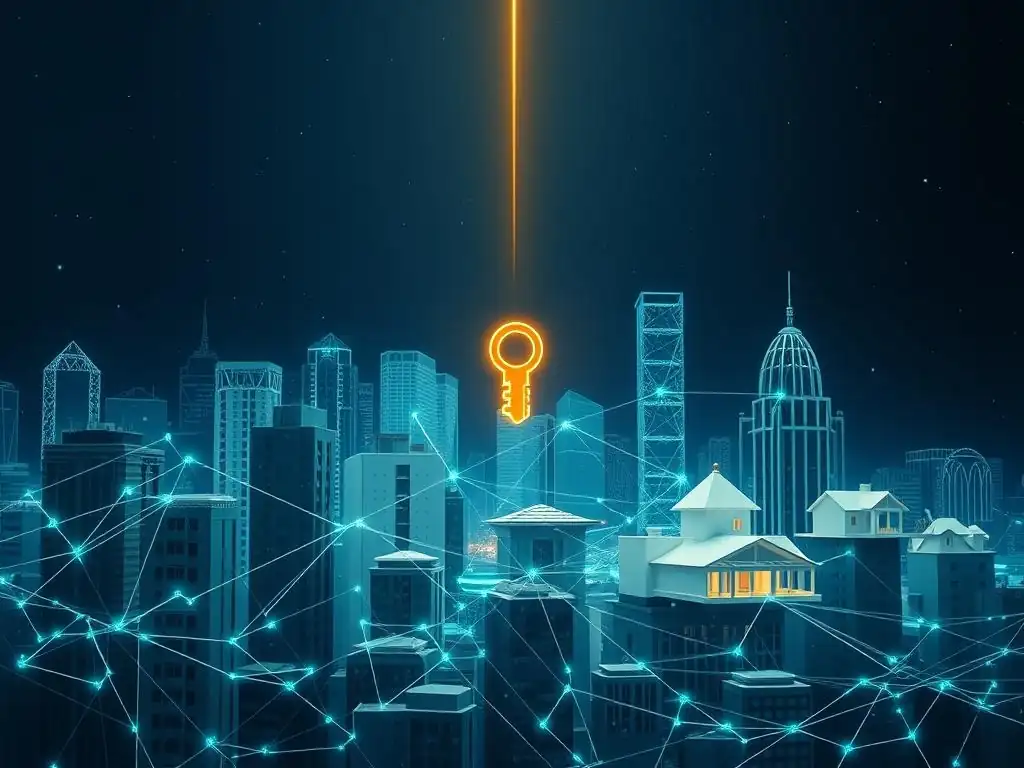
Welcome to Blockchain Trends, your compass in the rapidly evolving world of decentralized technology. Dive in to discover how blockchain is reshaping industries far beyond cryptocurrency. Are you ready to explore how blockchain can solve blockchain real estate trust issues? This is just the beginning – uncover the potential of decentralized solutions to build a more transparent and secure future!
- Understanding Blockchain Real Estate Trust Issues in Online Property Transactions
- The Role of Decentralization in Addressing Blockchain Real Estate Trust Issues
- Key Decentralized Technologies Tackling Trust Barriers in Online Real Estate
- Case Studies Demonstrating Decentralization Solving Trust Issues in Blockchain Real Estate
- Challenges and Limitations of Decentralization in Resolving Real Estate Trust Concerns
- Future Outlook: Enhancing Trust in Online Real Estate Through Advanced Decentralized Systems
- Conclusion: Decentralization as a Sustainable Solution for Blockchain Real Estate Trust Issues
-
Frequently Asked Questions
- How can blockchain technology address the lack of transparency in online real estate transactions?
- What role does DeFi (Decentralized Finance) play in making real estate investments more accessible?
- How can smart contracts automate and streamline real estate processes, like escrow and title transfer?
- What are the key regulatory challenges facing the adoption of blockchain in the real estate industry?
- How does decentralization contribute to resolving "Blockchain real estate trust issues" in online real estate platforms?
- Final Reflection: Rebuilding Trust in the Digital Landscape
- Empower Yourself: Shape the Future of Real Estate!
Understanding Blockchain Real Estate Trust Issues in Online Property Transactions
Common Trust Challenges in Traditional Online Real Estate Platforms
Traditional online real estate platforms, while offering convenience and broad access, are frequently plagued by significant trust challenges. A primary concern is the lack of transparency regarding property ownership and transaction history. Buyers often rely on third-party intermediaries like brokers, lawyers, and title companies, introducing multiple points of potential failure or manipulation.
The information presented online might not always be up-to-date or fully accurate, leading to discrepancies during the due diligence phase. Furthermore, the process of verifying seller identity and the legitimacy of listings can be cumbersome and prone to fraud, contributing directly to blockchain real estate trust issues that deter potential participants.
Another substantial challenge is the security of sensitive data exchanged during a property transaction. Online platforms handle significant personal and financial information, making them attractive targets for cyberattacks. Data breaches can compromise user privacy and lead to financial losses.
The reliance on centralized databases means a single point of failure could expose vast amounts of user data. Additionally, the lack of standardized, verifiable digital records for property deeds and transaction logs across different jurisdictions exacerbates the difficulty in building trust. This fragmented landscape makes it hard for participants to independently verify information, highlighting the inherent blockchain real estate trust issues present in current systems.
How Trust Deficits Impact Buyer and Seller Confidence in Digital Real Estate Markets
Trust deficits have a profound impact on both buyer and seller confidence within digital real estate markets, directly contributing to blockchain real estate trust issues. For buyers, uncertainty about the accuracy of property information, the legitimacy of the seller, or potential hidden issues with the title can lead to hesitation and delays. The fear of scams, such as fraudulent listings or non-existent properties, is a significant barrier. This lack of confidence often necessitates lengthy and costly due diligence processes involving multiple parties, increasing transaction time and expense, and ultimately dampening enthusiasm for purely online transactions.
Sellers also face challenges stemming from trust deficits. They may worry about the security of their property details and personal information online. Concerns about receiving fraudulent payments or buyers backing out of deals due to verification issues are prevalent.
The opaque nature of traditional processes means sellers often lack real-time visibility into the buyer's financing status or true intent until late in the process. This mutual lack of trust slows down market velocity, increases transaction costs, and limits the full potential of online platforms to facilitate seamless and efficient property exchanges, underscoring the pervasive nature of blockchain real estate trust issues that require innovative solutions.
The Role of Decentralization in Addressing Blockchain Real Estate Trust Issues
Fundamentals of Decentralized Systems in Real Estate Marketplaces
Decentralized systems, powered primarily by blockchain technology, fundamentally alter the architecture of online real estate marketplaces by distributing data and control across a network of participants rather than relying on a single central authority. In this model, property records, transaction histories, and participant identities are not stored in one vulnerable database but are replicated and synchronized across numerous nodes.
This inherent distribution makes the system far more resilient to attacks and manipulation, as altering data would require compromising a majority of the network participants simultaneously, a computationally infeasible task. This foundational shift directly targets the root causes of blockchain real estate trust issues by removing reliance on fallible intermediaries.
The decentralized nature also promotes transparency and immutability. Once data is recorded on a blockchain, it is extremely difficult, if not impossible, to alter or delete it without the consensus of the network. Every participant can potentially verify the history of a property and its associated transactions.
This shared, tamper-proof ledger creates a single source of truth accessible to all authorized parties, drastically reducing the potential for fraud or discrepancies in property information. By providing verifiable and transparent records, decentralized systems build a foundation of trust that is often lacking in traditional, siloed real estate databases, directly addressing persistent blockchain real estate trust issues.
How Blockchain Ensures Transparency and Security for Real Estate Transactions
Blockchain technology significantly enhances transparency and security in real estate transactions, offering a robust solution to blockchain real estate trust issues. Transparency is achieved through the distributed ledger, which records every transaction and change of ownership in a verifiable and open manner (depending on the specific blockchain's privacy settings, though the fact of the transaction is recorded).
This means the history of a property, from its initial sale to all subsequent transfers and encumbrances, is immutably logged and publicly auditable by network participants. This unprecedented level of visibility minimizes the risk of hidden liens, fraudulent claims, or disputes over ownership history that are common sources of distrust in traditional systems.
Security is a core feature of blockchain, provided through cryptographic hashing and the decentralized consensus mechanism. Each block of transactions is cryptographically linked to the previous one, forming a chain that is incredibly difficult to break or alter. Any attempt to tamper with a record would invalidate the subsequent blocks and be immediately detectable by the network.
Furthermore, participants' identities and transactions are secured using private and public keys, ensuring that only authorized parties can initiate transfers while maintaining an audit trail. This cryptographic security, combined with the distributed nature, makes blockchain a highly secure platform for recording sensitive real estate data, directly combating the security-related blockchain real estate trust issues.
Smart Contracts as Trust Enablers in Decentralized Property Deals
Smart contracts are self-executing contracts with the terms of the agreement directly written into code. They run on a blockchain, automatically executing actions when predefined conditions are met, without the need for intermediaries. In real estate, smart contracts act as powerful trust enablers by automating and enforcing the terms of a property transaction.
For instance, a smart contract can be programmed to automatically release funds from an escrow account to the seller only when the digital deed transfer is recorded on the blockchain, and vice versa. This removes the need to trust a third-party escrow agent to hold funds and documents, as the logic is transparently coded and executed by the network.
The use of smart contracts minimizes counterparty risk, a major contributor to blockchain real estate trust issues. Since the contract's execution is automated and governed by code on the blockchain, there is no risk of one party failing to uphold their end of the bargain or an intermediary mishandling funds or documentation. All parties can verify the contract's code and track its execution status on the ledger.
This automation streamlines complex processes like payments, deed transfers, and even fractional ownership distributions, making transactions faster, cheaper, and significantly more trustworthy. Smart contracts transform the traditional, paper-based, intermediary-heavy process into a secure, automated, and trust-minimized digital workflow.
// Pseudo-code example of a simple real estate smart contract function
function transferProperty(buyer, seller, propertyToken, escrowAmount) public {
    require(msg.sender == escrowAgent, "Only escrow agent can initiate transfer");
    require(propertyToken.ownerOf() == seller, "Seller must own the property token");

    // Assume escrowAmount is held in contract balance
    // Check conditions: e.g., inspection passed, financing secured (could be external oracle)
    bool conditionsMet = checkConditions(); // Placeholder function

    if (conditionsMet) {
        propertyToken.transfer(buyer); // Transfer ownership token
        payable(seller).transfer(escrowAmount); // Release funds to seller
        emit PropertyTransferred(propertyToken, seller, buyer, escrowAmount);
    } else {
        // Handle conditions not met, e.g., refund buyer
        payable(buyer).transfer(escrowAmount);
        emit TransactionFailed(propertyToken, "Conditions not met");
    }
}
This simplified example illustrates how conditions can be encoded, and actions (like transferring a tokenized property and releasing funds) are automatically executed based on those conditions, reducing reliance on human intermediaries and enhancing trust.
Key Decentralized Technologies Tackling Trust Barriers in Online Real Estate
Distributed Ledger Technology (DLT) for Immutable Property Records
Distributed Ledger Technology (DLT), of which blockchain is a type, is foundational in creating immutable property records, directly combating blockchain real estate trust issues stemming from unreliable data. Instead of a single land registry database controlled by a government body or title company, DLT allows property ownership information, historical deeds, liens, and survey data to be recorded across a distributed network of computers.
Each update to a property's record is time-stamped, cryptographically secured, and linked to previous records, creating an unbroken, tamper-evident chain. This distributed nature means no single entity can unilaterally alter or delete records without consensus from the network, ensuring the integrity and immutability of the data.
The immutability provided by DLT significantly reduces the risk of title fraud, disputes over ownership history, and errors in property records that are common in paper-based or centralized digital systems. Participants can trust that the information they see on the ledger is accurate and has not been secretly altered.
For example, a buyer can verify the complete ownership history of a property directly on the ledger, reducing the need for extensive and potentially error-prone title searches. This transparency and data integrity build a high level of trust among all parties involved in a transaction, streamlining the process and mitigating key blockchain real estate trust issues.
Tokenization of Real Estate Assets to Enhance Ownership Verification
Tokenization involves representing ownership rights of a real estate asset as digital tokens on a blockchain. These tokens can represent full ownership or fractional ownership (e.g., shares in a property). This process significantly enhances ownership verification and liquidity, addressing several blockchain real estate trust issues.
Each token contains metadata linked to the underlying physical asset and its associated rights. Ownership of the token on the blockchain serves as verifiable proof of ownership or partial ownership of the real asset. This digital representation is transparently recorded and tracked on the distributed ledger, making it easy for anyone to verify who owns the tokens associated with a specific property.
Tokenization simplifies the transfer of ownership. Instead of a complex, multi-step legal process involving paper deeds and numerous intermediaries, transferring property ownership can potentially involve simply transferring tokens between digital wallets on the blockchain. This process is faster, cheaper, and inherently more transparent, as the transfer is recorded immutably on the ledger.
Furthermore, fractional ownership through tokenization allows multiple investors to jointly own a property, opening up real estate investment to a wider audience. The blockchain ensures that each token represents a legitimate, verified share, eliminating the trust required in a central entity to manage complex cap tables and distributions, thereby building confidence and overcoming blockchain real estate trust issues in shared ownership models.
Decentralized Identity Solutions to Authenticate Participants in Real Estate Deals
Decentralized Identity (DID) solutions are crucial for authenticating participants in real estate transactions in a trust-minimized way, tackling blockchain real estate trust issues related to identity verification. Traditional systems rely on centralized identity providers or manual verification processes, which can be prone to fraud, data breaches, and are often cumbersome.
DID systems allow individuals and entities to control their own digital identities, verified through cryptographic proofs on a blockchain or other DLT. Instead of sharing sensitive personal documents with every platform or counterparty, a user can present verifiable credentials issued by trusted sources (like government agencies or financial institutions) without revealing underlying private information.
In a decentralized real estate marketplace, DID enables secure and verifiable authentication of buyers, sellers, brokers, and other parties. For example, a potential buyer could prove they have been verified as having sufficient funds for a purchase or have a valid identity without directly sharing bank statements or ID documents with the seller or platform. The verification is cryptographically confirmed on the ledger.
This reduces the risk of dealing with fraudulent or unverified participants, a significant source of blockchain real estate trust issues. It also enhances privacy, as users share only the necessary proofs of identity or qualifications rather than raw data, creating a more secure and trustworthy environment for online real estate interactions.
Case Studies Demonstrating Decentralization Solving Trust Issues in Blockchain Real Estate
Successful Implementations of Decentralized Marketplaces Reducing Fraud
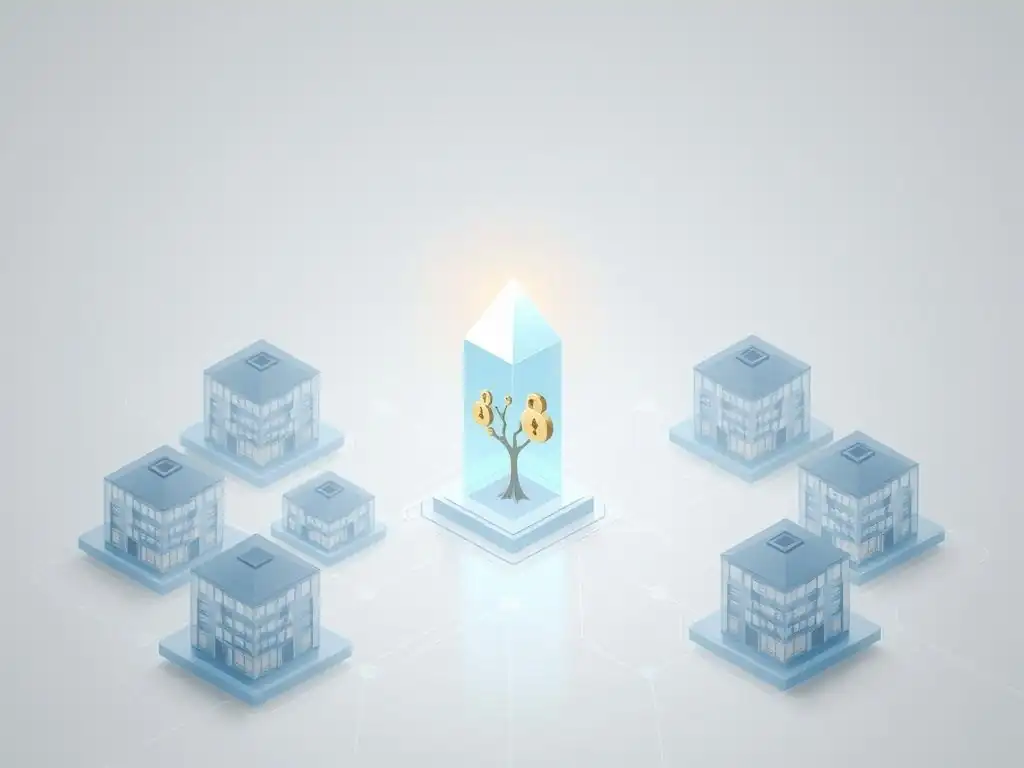
While the decentralized real estate market is still evolving, several projects and platforms have demonstrated the potential of blockchain to reduce fraud and address blockchain real estate trust issues. One area of success is in platforms facilitating fractional ownership of properties through tokenization. These platforms often use smart contracts and DLT to manage ownership shares transparently. For instance, a platform might tokenize a commercial building, allowing hundreds of investors to buy digital tokens representing equity. The platform uses a blockchain ledger to immutably record every token transfer and ownership stake.
Real-world examples, though sometimes pilots or smaller-scale transactions, have shown how this reduces potential fraud. In a traditional fractional ownership scheme, investors must trust the managing entity to accurately track ownership and distribute income.
With tokenization, the immutable ledger provides a single, verifiable source of truth for who owns how many shares, and smart contracts can automate dividend payouts based on pre-defined rules and verified income data. Reports from some early tokenized real estate transactions suggest a significant reduction in the time and cost associated with verifying ownership stakes compared to traditional methods, directly mitigating fraud risks and building confidence among investors who previously faced substantial blockchain real estate trust issues in pooled investments.
Impact of Decentralized Verification on Speed and Trust in Property Sales
Decentralized verification processes, often involving DLT for title and identity, have shown promise in accelerating property sales while simultaneously boosting trust. Traditional property verification can take weeks or even months, involving manual checks, title searches, and coordination between multiple parties. This lengthy process is a major source of frustration and potential failure points, contributing to blockchain real estate trust issues. By placing verifiable property records and participant identities on a distributed ledger, much of this process can be streamlined.
Consider a scenario where property deeds are recorded on a DLT. A buyer's identity and proof of funds are verified using a decentralized identity system. When a sale occurs, the transfer of the property token (representing the deed) and the release of funds via a smart contract can happen near-instantaneously once all pre-conditions are met and verified on the ledger.
While full governmental land registries on blockchain are still nascent, pilot projects in locations like Sweden and Georgia have explored using DLT to record land titles, demonstrating the potential for significantly faster verification and transfer processes. Early reports from these pilots indicated the possibility of reducing verification times from weeks to days or even hours, inherently building trust through speed and transparency, directly tackling long-standing blockchain real estate trust issues related to process efficiency and reliability.
Challenges and Limitations of Decentralization in Resolving Real Estate Trust Concerns
Technical and Regulatory Hurdles Affecting Decentralized Real Estate Platforms
Despite the significant potential, decentralized real estate platforms face substantial technical and regulatory hurdles that impact their ability to fully resolve blockchain real estate trust issues. Technically, ensuring the scalability of blockchain networks to handle the potentially massive volume of real estate transactions globally remains a challenge. Current transaction speeds and costs on some public blockchains can be prohibitive for widespread adoption.
Integrating complex real-world data, such as property surveys or inspection reports, onto the blockchain in a verifiable manner also requires robust oracles and data standards. The user experience for non-technical users can also be complex, hindering mass adoption and requiring a certain level of technical literacy that can be a barrier to trust.
Regulatory uncertainty is perhaps the most significant hurdle. Real estate transactions are heavily regulated at local, national, and international levels. Integrating decentralized systems requires navigating complex legal frameworks around property law, contract law, securities law (for tokenized assets), and data privacy regulations (like GDPR).
Clarifying the legal status of tokenized property, smart contracts as legally binding agreements, and decentralized identity remains an ongoing process. Without clear regulatory guidance and acceptance, widespread implementation is difficult, leaving users uncertain about the legal validity and recourse available, which paradoxically can create new forms of blockchain real estate trust issues related to legal enforceability.
Potential Risks and How They Are Mitigated Through Blockchain Solutions
While blockchain addresses many traditional trust issues, it introduces new potential risks, although many can be mitigated through thoughtful implementation. One risk is the immutability of data; while beneficial for preventing tampering, errors recorded on the blockchain are difficult to correct. If incorrect property data or a faulty transaction is immutably recorded, rectifying it can be complex. This risk is mitigated by rigorous verification processes before data is written to the blockchain, perhaps involving multiple layers of digital signatures and attestations from trusted parties.
Another risk relates to smart contract vulnerabilities. Errors or bugs in the code can lead to unintended outcomes or exploits, potentially causing financial loss. This is mitigated by thorough auditing of smart contract code by independent security experts before deployment, using formal verification methods, and designing contracts with upgradeability features where appropriate (though this can introduce centralization risks).
The security of private keys is also paramount; losing a private key means losing access to assets (like property tokens). Mitigation involves robust wallet security practices, multi-signature wallets, and potentially decentralized key recovery mechanisms. While risks exist, ongoing development in blockchain technology and best practices are continuously improving mitigation strategies to enhance trust and reduce blockchain real estate trust issues in decentralized systems.
Future Outlook: Enhancing Trust in Online Real Estate Through Advanced Decentralized Systems
Emerging Innovations in Blockchain for Real Estate Trust Improvement
The future of enhancing trust in online real estate hinges on several emerging innovations within the blockchain space. One key area is the development of more sophisticated and scalable blockchain protocols (e.g., Layer 2 solutions, sharding) that can handle high transaction throughput at lower costs, making widespread real estate adoption feasible.
Another is the advancement of privacy-preserving technologies like zero-knowledge proofs (ZKPs). ZKPs could allow parties to prove they meet certain criteria (e.g., financial qualifications) without revealing the underlying sensitive data on the public ledger, balancing transparency with necessary privacy and further addressing blockchain real estate trust issues related to data exposure.
Improved oracle networks are also crucial. Oracles connect blockchain smart contracts with real-world data (like property inspection results, market valuations, or regulatory approvals). More reliable and decentralized oracle solutions will enable smart contracts to execute based on accurate, verified external information, increasing the trustworthiness and reliability of automated property transactions.
Furthermore, advancements in decentralized identity and reputation systems will make it easier to verify the authenticity and trustworthiness of participants beyond simple KYC/AML checks, building a layer of social or transactional trust on top of the technical trust provided by the blockchain. These innovations collectively promise to create a more robust and trustworthy digital real estate ecosystem, directly tackling persistent blockchain real estate trust issues.
Integration of DeFi and Decentralized Marketplaces to Foster Greater Transparency
The integration of Decentralized Finance (DeFi) protocols with decentralized real estate marketplaces is poised to foster unprecedented transparency and efficiency, significantly reducing blockchain real estate trust issues related to financing and liquidity. DeFi platforms offer decentralized lending, borrowing, and stablecoin solutions. By integrating these with tokenized real estate marketplaces, buyers could potentially access financing directly on-chain, using crypto assets or even tokenized real estate equity as collateral, all recorded transparently on the ledger. This removes the opacity and reliance on traditional financial intermediaries, where loan approval processes and terms can be less transparent.
Furthermore, the ability to trade tokenized real estate assets on decentralized exchanges (DEXs) increases liquidity and price transparency. Instead of relying on opaque, illiquid private markets or slow, centralized exchanges, investors can potentially buy and sell fractional ownership tokens on open, transparent platforms with verifiable transaction histories and publicly visible order books. This level of transparency in both financing and trading mechanisms builds immense confidence among participants, knowing that processes are governed by open code and verifiable ledger entries rather than centralized decisions or hidden fees. This integration directly tackles financial aspects contributing to blockchain real estate trust issues.
Predictions for the Evolution of Trust Mechanisms in Blockchain-Powered Real Estate
Predictions for the evolution of trust mechanisms in blockchain-powered real estate point towards a future where trust is increasingly inherent in the system architecture rather than reliant on intermediaries. We can expect to see a shift from trusting individual entities (brokers, banks, registrars) to trusting the underlying decentralized protocol and the verifiable data it contains. This will be driven by wider adoption of DLT for land registries by governmental bodies, increasing the foundational trustworthiness of property records.
Smart contracts will become more sophisticated, handling complex transaction logic, escrows, and even property management tasks automatically and transparently. Decentralized identity will evolve to provide more nuanced and verifiable proofs of identity, financial standing, and even reputation within the real estate ecosystem. As these technologies mature and regulations adapt, the need for traditional trust-building mechanisms, often slow and costly, will diminish. The future suggests a real estate market where trust is established through cryptographic proof, transparent ledgers, and automated processes, fundamentally transforming how parties interact and overcome blockchain real estate trust issues.
Conclusion: Decentralization as a Sustainable Solution for Blockchain Real Estate Trust Issues
Summary of How Decentralized Technologies Restore Confidence in Online Real Estate
Decentralized technologies, primarily blockchain, offer a sustainable and robust solution for the pervasive blockchain real estate trust issues that hinder online property transactions. By replacing centralized databases and intermediaries with distributed ledgers, they ensure data immutability and transparency, making property records verifiable and resistant to fraud. Tokenization transforms illiquid assets into tradable digital tokens, enhancing ownership verification and enabling fractional ownership with inherent transparency. Smart contracts automate transaction execution based on verifiable conditions, removing the need to trust third parties for escrow and deal enforcement.
Furthermore, decentralized identity solutions provide a secure and privacy-preserving way to authenticate participants, reducing the risk of fraudulent actors. Collectively, these technologies create an environment where trust is not placed in a single point of authority but is distributed and verifiable through cryptographic proofs and open ledgers. This fundamental shift restores confidence among buyers, sellers, and investors by providing unparalleled transparency, security, and efficiency, directly addressing the core blockchain real estate trust issues.
Final Thoughts on the Transformative Potential of Blockchain in Overcoming Trust Barriers
The transformative potential of blockchain in overcoming trust barriers in real estate cannot be overstated. While challenges related to regulation, scalability, and user adoption remain, the inherent properties of decentralization offer a compelling vision for a future where property transactions are faster, cheaper, more accessible, and significantly more trustworthy. As the technology matures and adoption grows, we can anticipate a paradigm shift in how real estate is owned, bought, sold, and managed online.
This evolution promises to unlock new levels of liquidity through tokenization, streamline complex processes through smart contracts, and empower individuals with greater control and verification capabilities over their assets and transactions. Ultimately, by providing a foundation of verifiable truth and automated execution, blockchain and decentralized systems are poised to fundamentally rebuild trust in the online real estate market, turning it into a truly global, efficient, and secure ecosystem for all participants, thereby permanently mitigating blockchain real estate trust issues.
Frequently Asked Questions
How can blockchain technology address the lack of transparency in online real estate transactions?
Blockchain's immutable ledger offers a transparent and verifiable record of all transactions, reducing the risk of fraudulent activities and providing greater confidence to buyers and sellers. This creates a trustless environment.
What role does DeFi (Decentralized Finance) play in making real estate investments more accessible?
DeFi protocols allow for fractional ownership of properties, enabling smaller investors to participate in the real estate market. This democratizes access and reduces the barrier to entry.
How can smart contracts automate and streamline real estate processes, like escrow and title transfer?
Smart contracts automatically execute pre-defined agreements when certain conditions are met, eliminating the need for intermediaries in escrow and title transfer processes. This leads to faster and more efficient transactions.
What are the key regulatory challenges facing the adoption of blockchain in the real estate industry?
Regulatory uncertainty surrounding digital assets and tokenized real estate remains a significant hurdle. Clearer legal frameworks are needed to foster wider adoption and protect investors.
How does decentralization contribute to resolving "Blockchain real estate trust issues" in online real estate platforms?
Decentralization removes the reliance on a central authority, distributing control and reducing the potential for manipulation or bias. This fosters greater trust and security within the platform.
Final Reflection: Rebuilding Trust in the Digital Landscape
The exploration of blockchain's potential to address blockchain real estate trust issues highlights a critical need in today's increasingly digital world. The inherent transparency and security offered by decentralized technologies are not merely theoretical advantages; they represent a tangible pathway towards restoring confidence in online real estate transactions, a sector often plagued by opacity and vulnerability.
The impact of trust, or the lack thereof, resonates deeply within our society. The ability to confidently engage in transactions, especially those as significant as real estate, fundamentally shapes our economic and social well-being. This is why the promise of decentralization is so compelling. Trust is the glue of life. It's the most essential ingredient in effective communication. It's the foundational principle that holds all relationships together.
- Stephen Covey. This quote underscores the vital role trust plays, and blockchain offers a mechanism to rebuild it in the digital realm.
Now, as you consider the possibilities presented by blockchain in real estate, I invite you to reflect on your own experiences with trust in online interactions. How can you, in your own sphere of influence, advocate for greater transparency and security? Embrace the potential of decentralized technologies, not just as a solution to blockchain real estate trust issues, but as a catalyst for a more equitable and trustworthy digital future for all.
Okay, here's a Call to Action (CTA) tailored for the end of an article on "Overcoming Trust Issues in Online Real Estate: Decentralization as a Solution" for Blockchain Trends:
Empower Yourself: Shape the Future of Real Estate!
Thank you for exploring how blockchain is revolutionizing trust in online real estate. Now that you're equipped with this knowledge, it's time to take control and become part of the solution. Here are a few impactful actions you can take today:
- Dive Deeper: Explore blockchain-based real estate platforms and research how they verify property ownership and streamline transactions. Understand the practical benefits firsthand.
- Engage with the Blockchain Trends community. Share this article with your network to spread awareness and foster a collaborative discussion.
- Take a leap into research and write an article about a local land registry challenges and how blockchain can solve it. Send it to us at Blockchain Trends for publication consideration.
What steps will you take today to help build a more transparent and trustworthy online real estate landscape? Share your thoughts in the comments below!
Leave a Reply