
Real Estate Tokenization and the Future of Property Rights: Decentralized Ownership

Welcome to Blockchain Trends, where we dive deep into the transformative potential of blockchain technology beyond the realm of cryptocurrencies. As we explore the fascinating world of real estate tokenization, you'll discover the myriad benefits this innovative approach brings to property rights and ownership. What does decentralized ownership mean for the future of real estate? Join us as we unravel the complexities and opportunities that lie ahead, igniting your curiosity and inspiring you to rethink the possibilities of blockchain in the property market. Don't miss out on uncovering how this technology is reshaping the landscape of real estate!
- Introduction to Blockchain Real Estate Tokenization Benefits and Decentralized Property Rights
- How Blockchain Technology is Revolutionizing Real Estate Tokenization
- Primary Benefits of Blockchain Real Estate Tokenization
- The Future of Property Rights Enabled by Decentralized Ownership Models
- Real-World Applications and Case Studies of Decentralized Real Estate Tokenization
- Challenges and Limitations in Implementing Blockchain Real Estate Tokenization
- Integrating Blockchain Real Estate Tokenization with Broader Decentralized Finance (DeFi) Ecosystems
- Conclusion: Unlocking the Full Potential of Blockchain Real Estate Tokenization Benefits
-
Frequently Asked Questions
- What is real estate tokenization, and why is it gaining traction?
- What are some key Blockchain real estate tokenization benefits for property owners?
- How does blockchain technology enhance transparency in real estate transactions?
- What are some potential challenges or risks associated with real estate tokenization?
- Beyond individual investors, how can Blockchain real estate tokenization benefits impact the overall real estate market?
- Final Reflection: Embracing Decentralized Ownership
- Unlock Your Piece of the Future: Dive into Tokenized Real Estate!
Introduction to Blockchain Real Estate Tokenization Benefits and Decentralized Property Rights
Blockchain technology is poised to fundamentally reshape numerous industries, and real estate is emerging as a prime candidate for disruption. The traditional real estate market is often characterized by illiquidity, high transaction costs, lack of transparency, and complex legal processes. These inherent inefficiencies create barriers to entry for many potential investors and slow down market velocity.
Blockchain real estate tokenization benefits directly address these challenges by transforming physical property assets into digital tokens on a blockchain ledger. This process not only simplifies ownership transfer but also unlocks unprecedented opportunities for fractional ownership and global market participation. Exploring the advantages of tokenizing real estate is crucial for understanding the future of property rights and the move towards decentralized ownership models.
The shift towards decentralized property rights, enabled by blockchain, signifies a potential paradigm change in how assets are owned, managed, and exchanged. By leveraging the distributed and immutable nature of blockchain, ownership records can become more secure, transparent, and accessible than traditional title registries. This move goes beyond simply digitizing paper processes; it re-architects the underlying system of trust and verification. The long-term vision involves a future where property rights are represented by digital tokens, allowing for peer-to-peer transactions without relying solely on intermediaries. This evolution promises to democratize real estate investment and create more dynamic, efficient markets.
Understanding Real Estate Tokenization in the Blockchain Era
Real estate tokenization involves issuing digital tokens on a blockchain, where each token represents a fractional or full ownership stake in a specific property asset. This could be a residential building, commercial complex, land parcel, or even real estate investment trusts (REITs). The tokens are typically created following established blockchain standards, such as ERC-20 or ERC-721 on the Ethereum network, or similar standards on other blockchains like Binance Smart Chain or Polygon.
Each token carries specific rights and obligations tied to the underlying asset, which can include rights to rental income, appreciation, or voting on property management decisions. The total number of tokens issued represents 100% of the property's value, allowing investors to buy tokens representing small percentages, effectively owning a fraction of the property.
This process fundamentally changes the nature of real estate investment. Instead of requiring significant capital to purchase an entire property or large shares in a fund, investors can acquire tokens representing much smaller increments of value. For example, a $10 million property could be tokenized into 10 million tokens, each valued at $1.
An investor could then purchase tokens worth just a few hundred or thousand dollars, gaining exposure to the real estate market at a significantly lower entry point. This fractionalization is a core component of the blockchain real estate tokenization benefits, making previously inaccessible assets available to a broader range of investors globally. The underlying legal framework ensures that token holders have legitimate claims to the asset, often through a special purpose vehicle (SPV) that legally owns the property, with token holders owning shares in the SPV.
The Evolution of Property Rights Toward Decentralized Ownership
Historically, property rights have been centralized, recorded, and managed by government entities through complex and often opaque registry systems. Transferring property involves multiple intermediaries, extensive paperwork, and significant time delays, sometimes taking weeks or even months to complete. This centralized model, while providing a sense of legal security, is prone to inefficiencies, potential for fraud (though rare in well-regulated systems), and limited accessibility. The concept of decentralized property ownership, facilitated by blockchain, proposes a shift where ownership records are distributed across a network of computers, making them immutable and verifiable by anyone with access to the ledger.
The evolution towards decentralized property rights leverages blockchain's inherent features to create a more resilient and transparent system. In a decentralized model, the property title or claim is linked to a digital token on a blockchain. Any transaction or transfer of ownership is recorded on this distributed ledger, creating a permanent and verifiable history.
This contrasts sharply with traditional systems where records might be stored in a single database or physical location. While full decentralization of official government land registries is a long-term prospect facing significant legal and regulatory hurdles, the tokenization of equity or debt in real estate assets via blockchain represents a significant step towards more decentralized investment and management of property rights. This token-based approach offers the potential for faster, cheaper, and more transparent transactions compared to traditional methods like transferring physical deeds or shares in private companies.
How Blockchain Technology is Revolutionizing Real Estate Tokenization
Blockchain technology provides the foundational infrastructure necessary for effective and secure real estate tokenization. Its core principles of decentralization, transparency, immutability, and cryptographic security are uniquely suited to address the long-standing challenges within the real estate sector. By replacing or augmenting traditional record-keeping and transaction processes, blockchain introduces efficiencies and capabilities that were previously unattainable.
The distributed ledger acts as a single source of truth for ownership, transaction history, and asset details, reducing reliance on multiple, disparate databases and intermediaries. This transformation is not merely cosmetic; it alters the fundamental mechanics of how real estate assets are held and traded.
The revolutionary aspect lies in how blockchain digitizes and fractionalizes illiquid assets. Real estate, by its nature, is lumpy and difficult to divide. Tokenization, powered by blockchain, overcomes this by creating divisible digital units representing ownership.
This allows a diverse range of investors, regardless of geographical location or wealth level, to participate in real estate markets. Furthermore, the programmable nature of blockchain, through smart contracts, automates many aspects of property management and transaction execution, from distributing rental income to enforcing transfer restrictions. This level of automation and transparency is unprecedented in traditional real estate, paving the way for more dynamic and accessible markets.
Key Features of Blockchain that Enhance Real Estate Tokenization
Several core features of blockchain technology are particularly beneficial for real estate tokenization. Immutability ensures that once a transaction or ownership record is added to the blockchain, it cannot be altered or deleted, providing a high degree of security against fraud and disputes over ownership history. Transparency (for public blockchains) allows all participants to view transaction records, fostering trust and reducing the need for third-party verification services for basic information.
While specific ownership details might be kept private or permissioned on enterprise blockchains, the transaction trails remain transparent. Decentralization distributes the ledger across a network, removing a single point of failure and making the system more robust and resistant to censorship or manipulation.
Furthermore, programmability through smart contracts is a critical feature. Smart contracts are self-executing contracts with the terms of the agreement directly written into code. For real estate tokenization, smart contracts can automate processes such as dividend distribution (rental income), voting rights for property decisions, automated transfer of tokens upon payment, and compliance checks (e.g., verifying investor accreditation).
This automation reduces administrative overhead and speeds up processes that are traditionally manual and time-consuming. The cryptographic security inherent in blockchain technology ensures that tokens and transactions are secure, verifiable, and resistant to counterfeiting, adding another layer of trust to the tokenized asset.
Smart Contracts and Their Role in Decentralized Property Transactions
Smart contracts are foundational to enabling decentralized property transactions and managing the lifecycle of tokenized real estate. These digital agreements automatically execute predefined actions when specific conditions are met, without the need for intermediaries like lawyers or escrow agents for basic transaction logic.
For instance, a smart contract can be programmed to automatically transfer ownership tokens from a buyer's wallet to a seller's wallet once the full payment in cryptocurrency or stablecoins is received and verified on the blockchain. This significantly streamlines the transaction process, reducing settlement times from weeks or months to potentially minutes or hours, depending on network congestion.
Beyond simple transfers, smart contracts handle complex aspects of tokenized property ownership. They can manage the distribution of rental income to token holders based on their proportional ownership, automate the execution of property management votes, or enforce lock-up periods or transfer restrictions mandated by regulatory requirements. Consider a commercial property generating $100,000 in monthly net rental income, tokenized into 1 million tokens.
A smart contract can automatically calculate and distribute $0.10 per token to all token holders' wallets each month, provided the income is deposited into a linked account or a designated smart contract address. This level of automated, transparent distribution is a significant benefit of blockchain real estate tokenization, improving efficiency and investor confidence.
Security and Transparency Improvements Through Blockchain in Real Estate
Blockchain technology offers substantial improvements in security and transparency for real estate transactions compared to traditional methods. Security is enhanced through cryptography, which secures each block of data and links it cryptographically to the previous one, creating a tamper-evident chain. Once a transaction is recorded, altering it would require re-computing the proof-of-work (or equivalent) for that block and all subsequent blocks across a majority of the network, a computationally infeasible task for public blockchains. This immutability drastically reduces the risk of fraudulent title changes or hidden encumbrances that can plague traditional systems.
Transparency is another major advantage, particularly with public or permissioned blockchains designed for real estate. While sensitive personal data might be hashed or stored off-chain, the transaction history, ownership changes, and potentially details about the tokenized asset itself (like its unique identifier) can be openly accessible on the ledger. This provides an auditable trail of ownership and transactions that is difficult to dispute.
For example, an investor considering buying tokens can verify the entire transaction history of those specific tokens and the underlying asset on the blockchain, gaining confidence in the legitimacy of the asset and its ownership chain. This level of transparency helps to build trust among participants and can reduce the need for extensive due diligence on ownership history, streamlining processes and mitigating risks associated with opaque record-keeping.
Primary Benefits of Blockchain Real Estate Tokenization
The adoption of blockchain for real estate tokenization presents a compelling suite of benefits that address key limitations of the traditional market. These advantages span increased market accessibility, enhanced liquidity, reduced costs, and improved security and transparency. By transforming illiquid physical assets into divisible digital tokens, tokenization unlocks new possibilities for investors and property owners alike. The combination of blockchain's inherent features with the fractional nature of tokens creates a more efficient, inclusive, and dynamic real estate ecosystem. Understanding these primary blockchain real estate tokenization benefits is crucial for appreciating the transformative potential of this technology.
The traditional real estate market is often seen as slow, expensive, and exclusive. Tokenization directly attacks these pain points. Properties that might take months to sell traditionally could potentially see their tokens traded on secondary markets relatively quickly.
Transaction costs, which can run into the high single-digit percentages or even double digits when including various fees, taxes, and intermediary charges, can be significantly reduced by automating processes via smart contracts and removing some intermediaries. Furthermore, by lowering the minimum investment threshold, tokenization opens up real estate investment to a much larger pool of potential investors globally, fostering greater market participation and potentially increasing demand for tokenized assets.
Increased Liquidity and Fractional Ownership Opportunities
One of the most significant blockchain real estate tokenization benefits is the dramatic increase in liquidity it brings to a historically illiquid asset class. Selling an entire property can take a long time, involving marketing, negotiations, inspections, financing, and legal processes. Tokenization allows owners to sell parts of their property's value quickly by selling a portion of the issued tokens.
For investors, fractional ownership means they are not locked into owning an entire property; they can buy or sell smaller token amounts, making it easier to enter and exit positions. This fractionalization is a key driver of liquidity, enabling investors to diversify their real estate holdings across multiple properties with smaller capital outlays.
Consider a high-value commercial building worth $50 million. Traditionally, only institutional investors or very wealthy individuals could afford to acquire such an asset or significant shares in a fund owning it. Through tokenization, this building could be divided into 50 million tokens, each representing $1 of value.
An average investor could purchase, say, 5,000 tokens for $5,000, gaining proportional ownership rights. These tokens can then be traded on secondary tokenized asset platforms, offering a potential exit strategy that is far more flexible and rapid than selling a stake in a private real estate deal or selling a physical property. While secondary markets for real estate tokens are still developing, the underlying technology enables 24/7 trading globally, vastly increasing the potential for liquidity compared to traditional real estate transactions.
Cost Reduction and Efficiency Gains in Property Transactions
Blockchain real estate tokenization benefits include substantial potential for cost reduction and efficiency gains throughout the property transaction lifecycle. Traditional real estate deals involve numerous intermediaries, including brokers, lawyers, escrow agents, title companies, and registrars, each adding fees and complexity. By automating parts of the process through smart contracts and providing a transparent, immutable ledger, tokenization can streamline or eliminate some of these steps and associated costs.
For example, title verification can be simpler if the property's ownership history is immutably recorded on a blockchain. Escrow functions can be partially automated via smart contracts holding funds until transaction conditions are met.
Estimates vary, but some reports suggest that tokenization could reduce transaction costs by approximately 2-5% of the property value compared to traditional methods, depending on the specific process and jurisdiction. Legal fees related to ownership transfer might be reduced as smart contracts handle standard clauses and execution. The time saved by eliminating manual processes and reducing reliance on third-party coordination also translates into significant efficiency gains.
A transaction that might take 45-60 days to close traditionally could potentially be settled in a matter of days or even hours on a blockchain platform once legal and regulatory prerequisites are met. While initial setup costs for tokenization can be significant, the long-term benefits in terms of reduced transaction friction and ongoing management efficiency are compelling for high-value or frequently traded assets.
Enhanced Accessibility for Global Investors in Real Estate Markets
Tokenizing real estate on the blockchain significantly enhances accessibility for investors worldwide, breaking down geographical barriers. Traditional cross-border real estate investment is notoriously complex, involving international wire transfers, currency exchange risks, differing legal systems, and often requiring investors to be physically present or navigate complex local regulations. Tokenization simplifies this process by allowing investors to purchase tokens representing ownership in properties located anywhere in the world, using cryptocurrencies or stablecoins that can be easily transferred across borders. This opens up previously inaccessible markets to a global pool of investors.
For example, an investor in Asia can easily purchase tokens representing a stake in a property in Europe or the Americas without needing to open local bank accounts or navigate intricate foreign investment regulations to the same extent as a direct property purchase. The minimum investment amounts are also drastically lower, as discussed, enabling individuals with modest capital to invest in prime real estate assets that were previously reserved for the wealthy.
This democratization of access expands the potential investor base for real estate assets, potentially increasing demand and contributing to market efficiency. The global nature of blockchain networks facilitates 24/7 trading, allowing investors in different time zones to participate whenever they choose, further enhancing market dynamism.
Improving Trust and Reducing Fraud with Immutable Ledgers
The immutable nature of blockchain technology is a powerful tool for improving trust and significantly reducing the potential for fraud in real estate transactions and ownership records. In traditional systems, paper deeds or centralized digital databases can theoretically be subject to alteration, errors, or malicious manipulation, leading to ownership disputes or hidden liens. The distributed ledger of a blockchain, however, records every transaction in a way that is nearly impossible to tamper with once confirmed. Each new transaction is linked cryptographically to the previous one, forming a chain that is transparent and verifiable by all participants on the network.
This creates a single, unalterable source of truth for the history of ownership and any associated encumbrances (if recorded on-chain). For instance, if a property's tokenized deed is on a blockchain, any transfer of ownership is permanently recorded and publicly visible (on a public chain). This makes it extremely difficult for someone to fraudulently claim ownership or hide existing mortgages or liens, as the history is transparently available.
While the initial linking of the physical asset to its digital token requires legal processes and verification to prevent fraud at the point of token creation, the subsequent management and transfer of the tokenized asset benefit immensely from blockchain's inherent security features. This enhanced trust and reduced risk of fraud are fundamental blockchain real estate tokenization benefits, building confidence among investors and participants.
The Future of Property Rights Enabled by Decentralized Ownership Models
The trajectory of blockchain real estate tokenization points towards a future where property rights are increasingly represented and managed through decentralized models. While a complete overhaul of global land registries is a long-term prospect, the tokenization of property equity, debt, and even usage rights is paving the way for a more flexible, efficient, and accessible framework for owning and interacting with real estate.
This shift moves beyond simply digitizing existing processes to fundamentally rethinking the nature of ownership in the digital age. The future envisions a landscape where fractional ownership is commonplace, transactions are near-instantaneous, and property rights are verifiable on a global, distributed ledger.
This evolution is not without its complexities, particularly concerning legal recognition and integration with existing legal systems. However, ongoing pilot projects and increasing regulatory clarity in certain jurisdictions suggest a gradual but persistent move towards incorporating blockchain-based property rights into the mainstream. The potential impact on market dynamics, from valuation methodologies to investment strategies and urban development, is significant. Decentralized ownership models could foster greater community participation in local development projects, enable new forms of shared ownership, and facilitate more dynamic pricing based on real-time market activity on token exchanges.
Transition from Traditional Titles to Tokenized Property Rights
The transition from traditional paper-based or centralized digital titles to tokenized property rights is a complex but potentially transformative shift. Currently, property ownership is primarily proven through entries in government-maintained land registries and physical or digital deed documents. Tokenization proposes representing this ownership as a digital token on a blockchain.
This token would serve as the verifiable proof of ownership, with the blockchain acting as the distributed, immutable registry. The legal bridge between the physical asset and the digital token is crucial, often involving a legal structure like an SPV that holds the physical deed, while investors own tokens representing shares in the SPV.
This transition offers several advantages. A tokenized title, recorded on a blockchain, could theoretically allow for near-instantaneous verification of ownership history and status, eliminating the delays associated with manual title searches. It could also facilitate faster transfers; instead of waiting weeks for a deed to be processed by a government office, ownership could change hands on the blockchain in minutes, pending legal confirmations tied to the smart contract.
While fully replacing government registries requires significant legislative and infrastructure changes, the tokenization of beneficial ownership or equity in real estate assets is already happening, demonstrating a viable path for this transition. Projects have tokenized assets ranging from luxury apartments in New York to commercial buildings in Germany, illustrating the practical steps being taken towards this tokenized future.
Legal and Regulatory Considerations for Tokenized Real Estate Assets
Navigating the legal and regulatory landscape is one of the most significant challenges for the widespread adoption of blockchain real estate tokenization. Real estate law is deeply rooted in centuries of tradition and varies significantly across jurisdictions. Integrating a novel technology like blockchain requires clarity on how existing laws apply to tokenized assets and, in many cases, new regulations specifically addressing digital property rights. Key considerations include:
- Legal Status of Tokens: Are real estate tokens considered securities, commodities, or a new class of asset? This classification impacts how they are regulated, offered, and traded. Most jurisdictions currently view tokens representing fractional ownership or rights to income as securities, subjecting them to stringent financial regulations (e.g., SEC rules in the US, MiFID II in Europe).
- Ownership Recognition: How do traditional legal systems recognize blockchain-based ownership? The legal link between the physical property and the digital token must be robust, often requiring the property to be held in a legal entity (like an SPV) with tokens representing ownership in that entity.
- Jurisdictional Issues: Real estate is inherently tied to a specific location and its laws. Tokenization allows global investment, but disputes would still likely fall under the jurisdiction where the physical property is located, creating complex legal scenarios.
- Consumer Protection: Regulations are needed to protect investors from fraud, ensure transparency in the tokenization process, and provide recourse in case of disputes.
Different countries and regions are approaching this challenge with varying speeds and frameworks. Some, like the UAE or parts of the US (e.g., Wyoming), have taken steps to provide clearer legal frameworks for digital assets and blockchain in real estate. Others are still evaluating how to fit tokenization into existing laws. Clarity and harmonization of these regulations are essential for scaling blockchain real estate tokenization globally and unlocking its full potential.
Potential Impact on Real Estate Market Dynamics and Ownership Structures
The widespread adoption of blockchain real estate tokenization could profoundly impact market dynamics and traditional ownership structures. Increased liquidity and fractionalization could lead to more efficient price discovery, as assets are traded more frequently on transparent platforms. This might reduce the historical discrepancy between property valuations and actual transaction prices. The lower entry barrier could attract a new wave of investors, potentially increasing overall market capitalization and demand for certain asset classes. This democratizing effect could shift investment patterns, potentially directing capital towards assets or locations that were previously overlooked by large-scale investors.
Ownership structures could evolve beyond traditional single-owner or large-fund models. Fractional ownership could become the norm for many types of properties, enabling diverse groups of investors to collectively own and manage assets. This could foster new models of community ownership for local projects or enable smaller investors to build highly diversified portfolios across different property types and geographies.
Furthermore, tokenization could facilitate innovative financing models, such as issuing debt tokens secured by real estate assets or using property tokens as collateral in decentralized finance (DeFi) protocols. The market could become more dynamic, with faster transaction speeds and potentially lower volatility as liquidity increases, fundamentally altering how real estate is viewed and traded as an asset class.
Real-World Applications and Case Studies of Decentralized Real Estate Tokenization
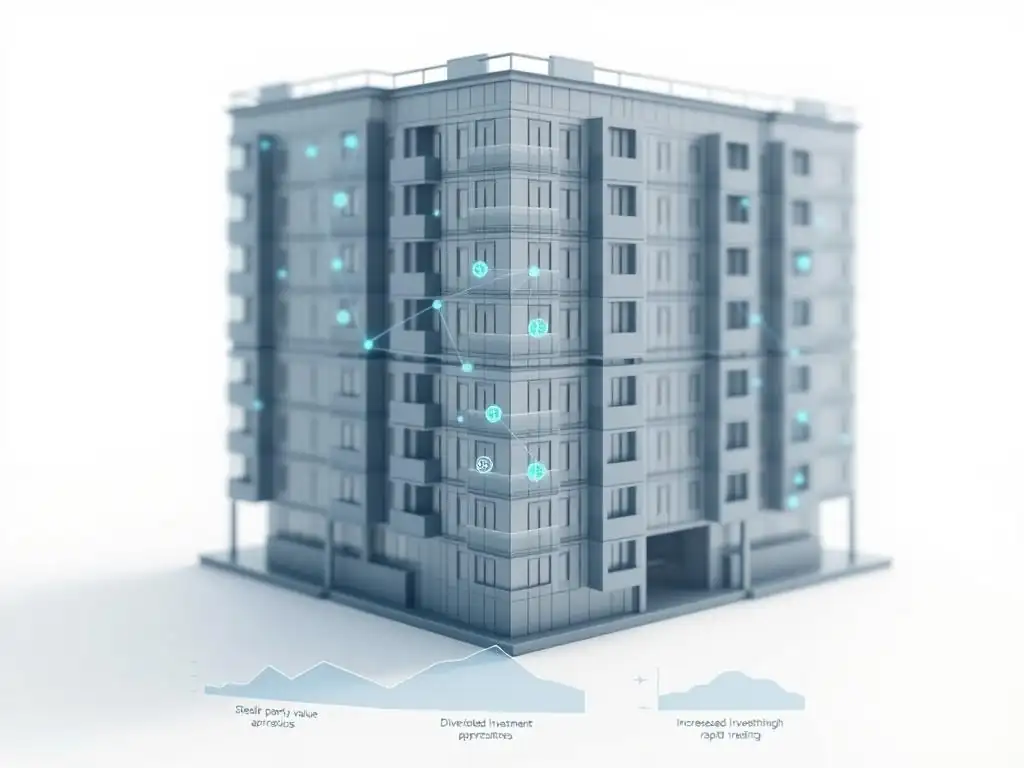
While still in its relatively early stages compared to traditional real estate markets, blockchain real estate tokenization has moved beyond theoretical discussions into tangible real-world applications. Numerous projects and platforms have successfully tokenized properties across different asset classes and geographies, demonstrating the practical viability of decentralized ownership models. These early case studies provide valuable insights into the process, challenges, and actual blockchain real estate tokenization benefits realized in practice. They showcase how tokenization is being applied to everything from luxury residential units and commercial buildings to development projects and real estate funds, proving the technology's versatility.
These pioneering efforts serve as crucial examples for future adoption. They highlight the steps involved in legally structuring tokenized assets, the technological infrastructure required, and the strategies for attracting investors to novel digital asset classes. While some early projects faced hurdles related to regulation or market adoption, the lessons learned are invaluable for refining processes and building more robust platforms. Examining these real-world applications provides a clearer picture of the current state of decentralized real estate tokenization and its potential trajectory.
Successful Blockchain Real Estate Tokenization Projects and Platforms
Several platforms and projects have achieved notable success in tokenizing real estate assets. For example, platforms like Securitize, Polymath, and Harbor (which later pivoted) were early movers in developing the infrastructure for security token offerings (STOs), including real estate. Specific projects have tokenized high-profile assets. In 2019, a luxury apartment worth approximately $18 million in New York City was tokenized on the Ethereum blockchain, allowing investors to purchase fractional ownership starting from relatively low amounts. Similarly, a commercial property in Germany was tokenized on the Stellar blockchain, demonstrating cross-border application.
Another example is the tokenization of a share in the St. Regis Aspen Resort in Colorado, valued at around $18 million, which was completed in 2018. This project allowed investors to buy digital tokens representing equity in the limited partnership that owned the hotel interest. These examples showcase that tokenization can be applied to high-value, institutional-grade assets, making them accessible to a broader investor base.
While the total value of tokenized real estate remains a tiny fraction of the global real estate market (estimated to be over $300 trillion), these successful projects demonstrate the technical feasibility and market interest in blockchain real estate tokenization benefits. They provide a blueprint for future, larger-scale initiatives.
Lessons Learned from Early Adopters in Tokenized Property Markets
Early adopters and pioneers in the tokenized real estate market have faced significant challenges, providing crucial lessons for the industry's maturation. One major lesson is the critical importance of the legal and regulatory framework. Projects that launched without clear regulatory guidance or failed to comply with securities laws in target jurisdictions faced significant hurdles or were forced to restructure. Ensuring that the token represents a legally sound claim to the underlying asset, often through a robust SPV structure, is paramount. The legal bridge between the physical world and the digital token must be solid.
Another key lesson is the need for robust investor onboarding and education. Tokenized real estate is a new asset class, and potential investors, especially traditional real estate investors, require clear explanations of how it works, the associated risks, and the technology involved. Building trust and providing transparency throughout the process, from asset due diligence to token issuance and secondary trading, is essential.
Furthermore, the development of liquid secondary markets for real estate tokens has been slower than initially hoped for some projects. Establishing regulated and functional trading platforms is crucial for delivering on the promise of increased liquidity, which is one of the major blockchain real estate tokenization benefits. These lessons underscore that successful tokenization requires not just technological innovation but also careful attention to legal compliance, investor relations, and market infrastructure development.
Challenges and Limitations in Implementing Blockchain Real Estate Tokenization
Despite the compelling blockchain real estate tokenization benefits, the widespread implementation of this technology faces significant challenges and limitations. These hurdles are not purely technical; they involve complex interactions with existing legal systems, regulatory bodies, market dynamics, and the inherent nature of real estate itself. Overcoming these challenges is crucial for tokenization to move from niche applications to mainstream adoption. The path forward requires collaboration between technologists, legal experts, regulators, and real estate professionals to build frameworks that are both innovative and compliant.
Key limitations include the fragmented and location-specific nature of real estate law, the need for clear regulatory guidance on digital assets, technical considerations like scalability and interoperability, and the fundamental challenge of bridging the physical world (the property) with the digital world (the token) in a legally binding and secure manner. Building trust among traditional market participants and achieving broad market adoption also require significant effort and time. Addressing these challenges systematically is essential for unlocking the full potential of tokenized, decentralized property ownership.
Regulatory Hurdles and Compliance Issues
The most significant barrier to scaling blockchain real estate tokenization globally is the complex and often uncertain regulatory environment. Real estate is heavily regulated at local, regional, and national levels, and these regulations were not designed with decentralized digital assets in mind. Determining whether a real estate token constitutes a security is a primary challenge. If classified as a security, it becomes subject to stringent regulations regarding issuance, trading, and investor eligibility (e.g., requiring investors to be accredited). Navigating these rules across multiple jurisdictions for properties and potential global investors is complex and costly.
Compliance involves adhering to Know Your Customer (KYC) and Anti-Money Laundering (AML) regulations, ensuring that only eligible investors participate, and meeting reporting requirements. For example, in the US, issuing tokens that are deemed securities requires registration with the SEC or qualifying for an exemption (like Regulation D or Regulation A), which involves significant legal work and disclosure.
Varying international regulations add layers of complexity for platforms aiming for global reach. Until clearer, perhaps more harmonized, regulatory frameworks emerge that specifically address tokenized real estate and provide legal certainty, navigating compliance will remain a major hurdle for projects seeking to leverage blockchain real estate tokenization benefits at scale.
Technical Barriers and Scalability Concerns
While blockchain technology offers many advantages, it also presents technical barriers and scalability concerns that need to be addressed for widespread real estate tokenization. Public blockchains like Ethereum, while offering high decentralization and transparency, can face scalability issues, leading to slow transaction speeds and high gas fees, particularly during periods of high network congestion. While Layer 2 solutions and alternative blockchains are improving scalability, handling a high volume of real estate transactions, potentially involving large amounts of data related to property details and legal documentation, still poses technical challenges.
Integrating the physical property information with the digital token on the blockchain requires robust data management and verification processes. Ensuring that the data linked to the token (e.g., property address, size, ownership rights) is accurate and remains synchronized with the physical reality and legal status is critical. This often involves reliance on trusted oracles or centralized entities to feed real-world data onto the chain, which can introduce points of centralization.
Furthermore, ensuring interoperability between different blockchain platforms and with traditional financial systems is necessary for real estate tokens to be easily traded and integrated into broader financial ecosystems. Developing user-friendly interfaces and secure digital wallets capable of holding regulated security tokens is also essential for mainstream adoption.
Market Adoption and Trust Building in Decentralized Ownership
Achieving broad market adoption and building trust among traditional real estate investors and institutions is a significant challenge for decentralized ownership models. The real estate industry is historically slow to adopt new technologies, often preferring established, proven methods. Investors, particularly large institutions, are accustomed to existing legal frameworks, due diligence processes, and liquidity mechanisms (like REITs or private equity funds). Convincing them to invest in a new, tokenized asset class requires significant education and demonstrated success.
Building trust involves proving the security, reliability, and legal enforceability of tokenized property rights. Potential investors need assurance that their ownership is legally recognized, that the platform is secure against hacks, and that there will be a liquid secondary market to exit their investment if needed. The lack of widely recognized standards for tokenized real estate and the nascency of secondary trading platforms contribute to market hesitation.
Overcoming this requires successful, high-profile projects, clear regulatory backing, and platforms that prioritize security, compliance, and investor protection. The market needs to see tangible evidence of the promised blockchain real estate tokenization benefits before fully embracing decentralized ownership models.
Integrating Blockchain Real Estate Tokenization with Broader Decentralized Finance (DeFi) Ecosystems
One of the most exciting prospects for blockchain real estate tokenization is its potential integration with the rapidly evolving Decentralized Finance (DeFi) ecosystem. DeFi aims to recreate traditional financial services like lending, borrowing, and trading using decentralized protocols on blockchains, primarily Ethereum. By tokenizing real estate assets, they can potentially become programmable digital assets that can interact with DeFi protocols, unlocking new financial opportunities and increasing the utility and liquidity of property tokens. This integration could bridge the gap between the massive, illiquid real estate market and the dynamic, innovative world of decentralized finance.
Integrating real estate tokens into DeFi could enable property owners to use their tokenized assets as collateral for decentralized loans, access liquidity without selling their property, or participate in decentralized exchanges for trading property stakes. This synergy could create new financial products and services built upon real estate assets, further enhancing the blockchain real estate tokenization benefits beyond simple ownership transfer. It represents a significant step towards creating a truly integrated digital asset economy where real-world assets seamlessly interact with decentralized financial protocols.
Synergies Between Real Estate Tokens and DeFi Lending or Trading Platforms
The integration of real estate tokens with DeFi lending and trading platforms offers compelling synergies. Tokenized properties, representing valuable, tangible assets, could serve as robust collateral within decentralized lending protocols.
Instead of obtaining a traditional mortgage or home equity loan, a property owner could potentially deposit their real estate tokens into a DeFi protocol and borrow stablecoins or other cryptocurrencies against the value of their tokenized asset. This could provide faster access to liquidity and potentially offer more flexible terms compared to traditional finance, although significant challenges around valuation, liquidation, and legal enforceability of collateral across different jurisdictions need to be addressed.
Furthermore, real estate tokens can be traded on decentralized exchanges (DEXs), enabling peer-to-peer trading without a centralized intermediary. This could significantly increase the liquidity of real estate tokens and provide 24/7 trading opportunities globally. Automated Market Makers (AMMs) on DEXs could potentially provide continuous liquidity pools for popular real estate tokens.
While regulatory hurdles exist regarding trading securities on decentralized platforms, the potential for increased market efficiency, transparent pricing, and global access to trading is immense. For example, a token representing a share in a commercial property could be traded on a DEX alongside other digital assets, expanding its market reach beyond traditional real estate investment channels.
Future Innovations Combining Tokenization and Enterprise Blockchain Solutions
The future of blockchain real estate tokenization will likely see further innovations combining asset tokenization with broader enterprise blockchain solutions. Beyond simple ownership tokens, blockchain can be used to manage various aspects of a property's lifecycle, from supply chain tracking for construction materials to managing leases, service contracts, and energy consumption data. Integrating these operational aspects onto a blockchain alongside ownership tokens could create a comprehensive digital twin of a property, with all relevant data and rights managed on a secure, transparent ledger.
Enterprise blockchain platforms, which offer permissioned access and enhanced privacy features, are well-suited for managing sensitive property data and complex contractual relationships between multiple stakeholders (owners, tenants, managers, service providers). Future innovations might involve tokenizing not just equity but also rental income streams, development rights, or even specific usage rights (e.g., timeshares represented as NFTs). Combining these different types of tokens and data streams on integrated blockchain platforms could create highly efficient property management ecosystems.
For instance, smart contracts could automatically collect rent (in stablecoins), distribute income to equity token holders, pay service providers, and even trigger maintenance requests based on data feeds, all managed transparently on a blockchain. This holistic approach leverages the full potential of blockchain beyond just ownership records, promising significant operational efficiencies and new business models in real estate.
Conclusion: Unlocking the Full Potential of Blockchain Real Estate Tokenization Benefits
Blockchain real estate tokenization represents a transformative opportunity to modernize a historically slow and illiquid industry. By leveraging the core features of blockchain technology – immutability, transparency, decentralization, and programmability – tokenization offers compelling blockchain real estate tokenization benefits. These include enhanced liquidity through fractional ownership, significant reductions in transaction costs and time, increased accessibility for a global pool of investors, and improved trust and security by using immutable ledgers to record ownership. The move towards decentralized ownership models, while facing legal and regulatory challenges, promises a future where property rights are more flexible, transparent, and easily tradable.
While challenges remain, particularly in navigating regulation and achieving widespread market adoption, the successful real-world applications and the potential for integration with the burgeoning DeFi ecosystem underscore the immense potential. The evolution from traditional titles to tokenized property rights is underway, albeit gradually, driven by the clear advantages offered by blockchain. As regulatory clarity improves and technology matures, the blockchain real estate tokenization benefits will become accessible to a wider audience, reshaping how we invest in, manage, and perceive property ownership.
Summary of Decentralized Ownership Advantages for the Future of Property Rights
Decentralized ownership, facilitated by blockchain real estate tokenization, offers a multitude of advantages that point towards a more efficient and inclusive future for property rights. The ability to fractionalize ownership allows investors to enter the market with smaller capital, diversifying their portfolios across various assets and geographies. This fractionalization, combined with the potential for 24/7 trading on digital platforms, dramatically increases the liquidity of real estate assets, making them easier to buy and sell compared to traditional methods.
Key advantages include:
- Increased Market Accessibility: Lower investment minimums open doors for retail and international investors.
- Enhanced Liquidity: Fractionalization and digital trading platforms facilitate easier buying and selling of property stakes.
- Reduced Costs: Automation via smart contracts and streamlined processes can lower transaction fees and administrative overhead.
- Improved Transparency: Immutable on-chain records provide a verifiable history of ownership and transactions.
- Greater Security: Cryptographic security and distributed ledgers reduce the risk of fraud and tampering with ownership records.
- Potential for Automation: Smart contracts can automate income distribution, voting, and compliance checks.
These benefits collectively contribute to a vision of property ownership that is more democratic, efficient, and aligned with the capabilities of the digital economy.
Outlook on Emerging Trends and the Continued Evolution of Blockchain in Real Estate
The outlook for blockchain in real estate is one of continued evolution and innovation. Emerging trends include the increasing focus on regulatory compliance and the development of security token offering (STO) platforms specifically designed for real assets. We are likely to see more sophisticated legal structures that bridge the gap between physical property rights and digital tokens. The integration with DeFi is expected to deepen, with real estate tokens becoming more widely accepted as collateral and tradable assets within decentralized protocols.
Furthermore, there will be a growing emphasis on using blockchain for other aspects of real estate management, such as supply chain transparency in construction, efficient property management through smart contracts, and even tokenizing rental agreements or short-term usage rights (like vacation rentals). As blockchain technology matures and becomes more energy-efficient (e.g., with the shift to Proof-of-Stake), its environmental footprint concerns will also diminish, aiding adoption.
The development of interoperability standards will allow real estate tokens to move more freely between different blockchain networks and traditional financial systems. While the complete tokenization of the global real estate market is still decades away, the foundational blockchain real estate tokenization benefits are driving steady progress, promising a future where decentralized ownership fundamentally reshapes the industry.
Frequently Asked Questions
What is real estate tokenization, and why is it gaining traction?
Real estate tokenization is the process of converting ownership rights in a property into digital tokens on a blockchain. It's gaining traction because it offers increased liquidity and accessibility to a broader range of investors.
What are some key Blockchain real estate tokenization benefits for property owners?
Key benefits include fractional ownership, allowing owners to sell portions of their property more easily. This also improves access to capital and reduces the administrative burden associated with traditional real estate transactions.
How does blockchain technology enhance transparency in real estate transactions?
Blockchain provides a transparent and immutable ledger of ownership and transaction history. This creates trust and reduces the potential for fraud by making all records publicly verifiable (though not necessarily identifying specific individuals).
What are some potential challenges or risks associated with real estate tokenization?
Challenges include regulatory uncertainty surrounding the legal status of tokens and potential security risks associated with blockchain technology itself. Market volatility can also affect the value of the tokens.
Beyond individual investors, how can Blockchain real estate tokenization benefits impact the overall real estate market?
Tokenization can lead to a more efficient and liquid real estate market, allowing for faster transactions and lower transaction costs. It also enables greater diversification of investment portfolios for both individuals and institutions.
Final Reflection: Embracing Decentralized Ownership
The promise of democratizing real estate investment through blockchain tokenization is no longer a distant dream, but a rapidly approaching reality. The benefits outlined throughout this article, from increased liquidity and fractional ownership to reduced barriers to entry and enhanced transparency, are poised to reshape the landscape of property rights and investment opportunities for individuals worldwide. This shift isn't just about technology; it's about empowering individuals and fostering a more inclusive and equitable financial system.
This transformative potential deeply resonates within the broader context of societal evolution. The ability to participate in real estate ownership, regardless of geographical location or financial standing, represents a fundamental shift in how we perceive and interact with property. The future of real estate is not just about bricks and mortar; it's about access, transparency, and community.
This quote perfectly encapsulates the spirit of blockchain real estate tokenization, highlighting its potential to foster a more connected and accessible world for all.
As we stand on the cusp of this new era, let us embrace the possibilities that blockchain real estate tokenization offers. Consider how these advancements can empower you, your community, and future generations. Explore the opportunities, educate yourself on the risks, and actively participate in shaping a future where property ownership is truly decentralized and accessible to all. The future of real estate is in our hands; let's build it together.
Here's a Call to Action (CTA) tailored for the end of an article titled "Real Estate Tokenization and the Future of Property Rights: Decentralized Ownership" on the website "Blockchain Trends" (blockchaintrends.org):
Unlock Your Piece of the Future: Dive into Tokenized Real Estate!
Thank you for exploring the exciting potential of real estate tokenization with us. We hope you now have a clearer vision of how decentralized ownership is reshaping the future of property rights. Now, let's turn that knowledge into action:
- Explore the world of tokenized real estate: Start by researching existing platforms like RealT or BlockSquare and look at fractional ownership opportunities in properties you find interesting.:
- Delve deeper into the regulatory landscape of tokenized assets in your country. Understanding the legal frameworks will ensure you invest responsibly.
- Share this article with fellow investors and tech enthusiasts. Let's spark a conversation about the future of property ownership!
What exciting real estate projects do you think would benefit most from tokenization, and why? Share your thoughts below!
Leave a Reply