
The Role of Blockchain in Property Financing: Streamlining Mortgages and Lending Processes

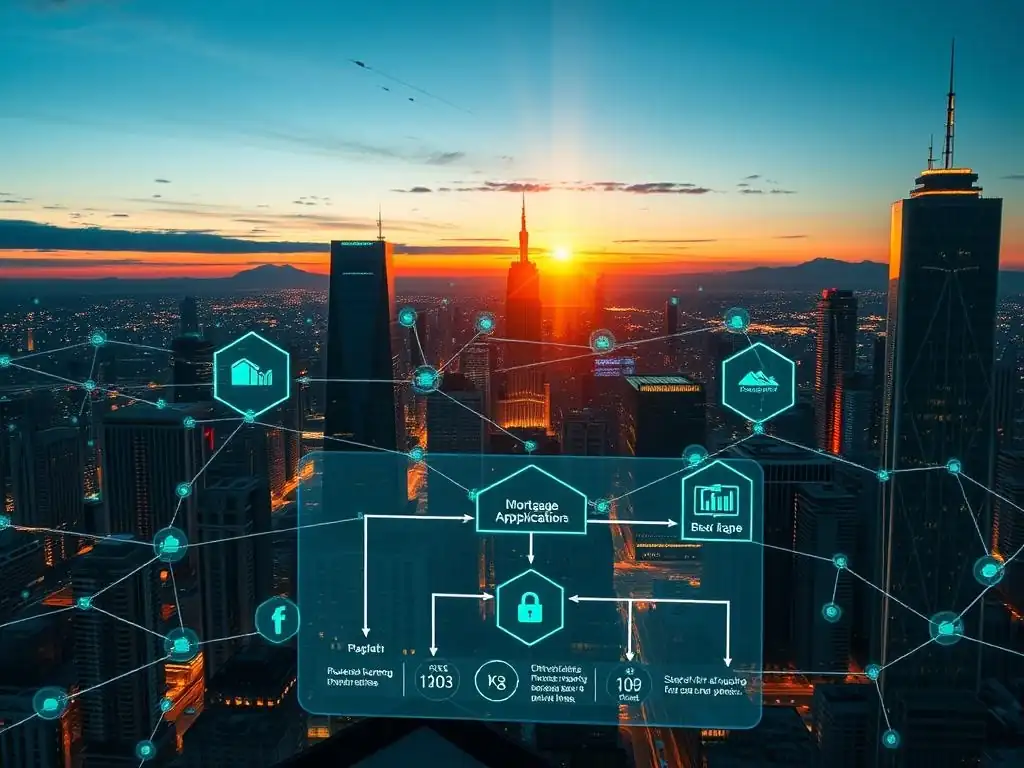
Welcome to Blockchain Trends, your gateway to understanding the profound impact of blockchain technology beyond the headlines. Curious about how blockchain is revolutionizing industries beyond cryptocurrency? Dive into our latest exploration of " Blockchain property financing streamlining process" and discover how this innovative technology is poised to reshape the future of mortgages and lending, creating a more efficient and transparent real estate landscape. Explore the possibilities and uncover the potential of decentralized systems today!
The Role of Blockchain in Property Financing: Streamlining Mortgages and Lending Processes
- Introduction: Blockchain Revolutionizing Real Estate Finance
- The Current Landscape of Property Financing: Challenges and Inefficiencies
- Blockchain Solutions for Streamlining Property Financing
- Enhancing Transparency and Security in Property Lending with Blockchain
- Reducing Costs and Time in Property Financing Using Blockchain Technology
- Case Studies: Real-World Applications of Blockchain in Property Finance
- Overcoming Challenges and Addressing Concerns in Blockchain Property Financing
- The Future of Blockchain in Property Financing: Trends and Predictions
- Conclusion: Embracing Blockchain for a More Efficient and Transparent Property Financing Ecosystem
-
Frequently Asked Questions
- How can blockchain technology specifically improve the property financing process?
- What are the potential benefits of using blockchain for mortgage approvals?
- What are some current challenges hindering the widespread adoption of blockchain in property financing?
- How does blockchain enhance security in property transactions, and why is this important?
- Beyond mortgages, what other property financing applications can benefit from blockchain technology?
- Final Reflection: Embracing Trust and Transparency in Property Financing
- Embrace the Future: Transform Property Financing Today!
Introduction: Blockchain Revolutionizing Real Estate Finance
The Promise of Blockchain in Property Financing: Beyond Traditional Methods
The traditional property financing landscape, encompassing mortgages and lending, is often characterized by complexity, inefficiency, and a lack of transparency. These challenges arise from multi-party involvement, manual processes, and fragmented data systems. Blockchain technology presents a compelling opportunity to move beyond these traditional methods, offering a decentralized, immutable, and highly transparent ledger that can fundamentally reshape how properties are financed and transacted. The promise lies in creating a more efficient, secure, and accessible ecosystem for borrowers, lenders, and investors alike.
By leveraging blockchain's core capabilities, stakeholders can potentially reduce reliance on numerous intermediaries, automate cumbersome steps, and establish a single source of truth for property and loan data. This shift could lead to significant cost savings, faster transaction times, and enhanced trust among participants. The potential for blockchain property financing streamlining process improvements is vast, addressing pain points that have long plagued the industry, from loan origination to servicing and securitization.
Understanding Blockchain's Core Benefits for Real Estate Lending
Blockchain technology offers several key benefits that are particularly relevant to the real estate lending sector. Foremost among these is its ability to create immutable and tamper-proof records. Every transaction or data point recorded on a blockchain is timestamped and linked to previous entries, making it virtually impossible to alter historical data without consensus from the network. This inherent security and integrity are crucial for sensitive financial and ownership information involved in property financing.
Another significant benefit is enhanced transparency. While privacy is maintained through cryptographic hashes, the underlying transaction data (or a reference to it) can be made accessible to authorized parties on the distributed ledger. This shared, transparent view reduces information asymmetry and fosters trust.
Furthermore, blockchain enables the use of smart contracts – self-executing contracts with the terms of the agreement directly written into code. These contracts can automate processes like payment disbursements, collateral management, and lien releases, significantly streamlining the property financing workflow and reducing manual errors and delays. This collective potential highlights why blockchain property financing streamlining process is a key area of focus for innovation.
The Current Landscape of Property Financing: Challenges and Inefficiencies
Traditional Mortgage Processes: A Look at the Bottlenecks
The traditional mortgage origination process is notorious for its complexity and duration. It typically involves numerous steps, starting with application and extending through underwriting, appraisal, title search, legal review, and finally, closing. Each step often requires manual data entry, document handling, and communication between disparate parties, including borrowers, brokers, lenders, appraisers, title companies, and lawyers. This multi-stakeholder environment, combined with paper-based or siloed digital systems, creates significant bottlenecks.
Borrowers often face lengthy approval times, sometimes extending to 30-60 days or even longer, depending on the complexity of the application and market conditions. Lenders incur substantial operational costs associated with processing, verifying, and managing vast amounts of paperwork and data across multiple systems. For example, industry estimates often place the average cost to originate a mortgage in the US at several thousand dollars, a figure heavily influenced by the manual nature of many tasks. The lack of a single, shared, verifiable record across all parties contributes to delays, errors, and the potential for fraud.
Inefficiencies in Property Title Transfers and Verification
Verifying and transferring property titles within the traditional system is another area ripe with inefficiencies. The process typically relies on a complex chain of historical records, often stored in disparate, sometimes analog, formats across various local government offices. Title companies play a crucial role in searching these records, identifying liens, encumbrances, or other claims against the property, and ultimately issuing title insurance. This search process can be time-consuming and prone to errors due to the fragmented nature of the data.
Furthermore, the actual transfer of title involves recording deeds and other legal documents with the relevant authorities. This process can also be slow, taking days or weeks to officially update public records. The lack of a single, universally accessible, and instantly verifiable digital record of ownership and related encumbrances creates uncertainty and adds significant time and cost to property transactions, including those involving financing. The potential for errors in searching or recording can lead to costly disputes or title defects later on, underscoring the need for a more robust and efficient system.
The Need for Streamlined and Transparent Property Financing Solutions
The cumulative effect of these challenges in traditional property financing is a system that is slow, expensive, opaque, and burdensome for all participants. Borrowers experience frustration and delays, lenders face high operational costs and risks, and the overall market suffers from reduced liquidity and accessibility. The current environment necessitates a fundamental shift towards more streamlined and transparent solutions.
There is a clear demand for technologies that can automate repetitive tasks, reduce the reliance on intermediaries, improve data accuracy and accessibility, and provide a single, immutable record of truth for property and loan information. Solutions that can enhance transparency throughout the financing lifecycle, from initial application to loan servicing and potential securitization, are highly sought after. This is where the promise of blockchain property financing streamlining process improvements becomes particularly relevant, offering a path towards a more efficient, secure, and user-friendly real estate finance ecosystem.
Blockchain Solutions for Streamlining Property Financing
Blockchain-Based Mortgage Origination: A Faster and More Efficient Process
Implementing blockchain technology in the mortgage origination process can significantly reduce complexity and accelerate timelines. Instead of relying on fragmented systems and manual data transfer, all relevant parties – the borrower, lender, appraiser, title company, and legal counsel – can interact with a shared, distributed ledger. Key documents and data, such as identity verification, credit reports (hashed for privacy), appraisal reports, and property details, can be recorded on the blockchain, creating an immutable and instantly accessible audit trail for authorized participants.
Using smart contracts, many steps in the origination workflow can be automated. For instance, once all required documents are submitted and verified on the blockchain, a smart contract can automatically trigger the next stage, such as initiating the appraisal or title search. Conditions for loan approval can be coded into a smart contract, allowing for near-instantaneous verification once all criteria are met. This reduces the need for manual checks and approvals, potentially cutting down the origination time from weeks to a matter of days or even hours in some cases, demonstrating a tangible blockchain property financing streamlining process improvement.
Smart Contracts for Automated Loan Agreements and Disbursement
Smart contracts are a cornerstone of blockchain-based property financing, enabling the automation of complex agreements and financial flows. The terms and conditions of a mortgage loan, including interest rates, payment schedules, late fee penalties, and default clauses, can be embedded directly into a smart contract code. Once the loan is approved and the smart contract is executed, it can automatically manage the disbursement of funds from the lender to the seller or escrow agent upon the successful recording of the new title and lien on the blockchain.
Furthermore, smart contracts can automate ongoing loan servicing tasks. For example, scheduled monthly payments can be automatically debited from the borrower's digital wallet (with appropriate authorization) and credited to the lender. In the event of predefined conditions being met, such as a missed payment, the smart contract can automatically trigger predefined actions, like sending a notification or initiating default procedures, all transparently recorded on the ledger. This automation reduces administrative overhead for lenders and provides borrowers with clear visibility into the loan's status and payment history.
Tokenization of Real Estate Assets: Opening New Avenues for Investment
One of the most transformative applications of blockchain in property financing is the tokenization of real estate assets. Tokenization involves representing ownership rights or fractional interests in a property as digital tokens on a blockchain. These security tokens can represent equity in a property, debt tied to a mortgage, or even rights to rental income. This breaks down large, illiquid real estate assets into smaller, more manageable units, similar to shares in a company.
Tokenization significantly lowers the barriers to entry for real estate investment. Instead of needing large capital sums to purchase an entire property, investors can buy tokens representing a fraction of its value. This opens up real estate investment to a much wider pool of investors, potentially increasing liquidity in the market.
Furthermore, these tokens can be traded on secondary markets built on blockchain, allowing investors to buy and sell their interests more easily than with traditional property ownership. This innovation not only impacts investment but also influences financing by potentially allowing mortgages to be secured by tokenized assets or by enabling the issuance of debt tokens backed by property, further showcasing the versatility of blockchain property financing streamlining process applications.
Enhancing Transparency and Security in Property Lending with Blockchain
Immutable Records: Ensuring Data Integrity and Reducing Fraud
The immutable nature of blockchain records is a powerful tool for enhancing security and combating fraud in property lending. Once data related to a property, its ownership history, or a loan agreement is recorded on a blockchain, it is extremely difficult to alter or delete without the consensus of the network participants. Each block of transactions is cryptographically linked to the previous one, creating a chain that is highly resistant to tampering.
This means that the risk of forged documents, fraudulent title claims, or unauthorized changes to loan terms is significantly reduced. Lenders, borrowers, and regulators can have high confidence in the accuracy and integrity of the data stored on the ledger. For example, a complete history of property ownership, liens, and encumbrances can be immutably recorded, providing a single, verifiable source of truth during the title search process. This drastically improves the reliability of information compared to fragmented, paper-based, or easily alterable digital records, making blockchain property financing streamlining process more secure.
Secure and Transparent Title Transfers on the Blockchain
Blockchain technology offers a mechanism for conducting secure and transparent property title transfers. By representing property ownership as a digital asset or token on a blockchain, the transfer of ownership can be executed directly on the ledger. When a property is sold or transferred, the associated token or record of ownership is cryptographically transferred from the seller's digital wallet or identity to the buyer's, contingent upon the fulfillment of predefined conditions, often managed by a smart contract (e.g., payment confirmation).
This process provides an immediate, verifiable, and immutable record of the title transfer on the public or permissioned ledger. Unlike traditional systems where recording a deed can take days or weeks, a blockchain transfer can be near-instantaneous. All authorized parties can view the transaction history, providing unprecedented transparency into the chain of title. This not only speeds up the closing process but also significantly reduces the risk of title fraud or competing claims on the property, a major concern in traditional real estate transactions.
Improved Due Diligence and Risk Assessment through Blockchain Data
Blockchain can significantly improve due diligence and risk assessment processes for lenders in property financing. With key property and borrower data recorded on a shared, immutable ledger, lenders can access verified information more easily and reliably. A lender could, for instance, instantly verify the complete ownership history of a property, check for existing liens or encumbrances recorded on the blockchain, and verify the authenticity of associated documents like appraisal reports or survey data.
This enhanced access to trustworthy data allows lenders to conduct more thorough and efficient risk assessments. They can gain a clearer picture of the property's status and the borrower's history (with appropriate privacy safeguards), leading to more informed lending decisions. The availability of standardized, verifiable data on the blockchain can also facilitate automated underwriting processes, allowing lenders to assess risk factors more quickly and consistently. This streamlines the due diligence phase, reduces manual effort, and ultimately contributes to a more efficient and secure blockchain property financing streamlining process.
Reducing Costs and Time in Property Financing Using Blockchain Technology

Lower Transaction Fees and Reduced Intermediary Costs
A significant advantage of adopting blockchain in property financing is the potential for substantial cost reductions. The traditional process involves numerous intermediaries, each adding their own fees: mortgage brokers, title companies, escrow agents, lawyers, and record keepers. By creating a shared, trustless ledger and automating processes via smart contracts, blockchain can reduce the reliance on some of these intermediaries or streamline their roles.
For example, the need for extensive, manual title searches can be reduced if a property's ownership history is immutably recorded on a blockchain. Similarly, smart contracts can automate escrow functions, releasing funds only when predefined conditions (like title transfer confirmation) are met, potentially reducing or eliminating the need for a separate escrow agent fee. While precise figures vary, industry reports and pilot programs suggest that blockchain could potentially reduce overall transaction costs in real estate by 1-2% of the property value or more, directly impacting the economics of blockchain property financing streamlining process.
Accelerated Closing Times and Faster Access to Capital
Beyond cost savings, blockchain technology dramatically accelerates the property financing and closing process. As highlighted earlier, traditional mortgage closings can take anywhere from 30 to 60 days or longer. Much of this time is spent on verifying information, transferring documents between parties, waiting for third-party reports (like appraisals or title searches), and coordinating the final signing and recording.
Blockchain addresses these delays by providing instant access to verified data, automating workflows with smart contracts, and enabling near-instantaneous recording of ownership and lien information. A pilot program conducted by a major bank exploring blockchain for mortgage servicing, for example, reported reducing the time taken for certain post-closing processes from days to minutes. While a full end-to-end blockchain mortgage is still evolving, the potential exists to cut the closing time significantly, potentially reducing it to just a few days or even hours in the future, thereby providing borrowers with much faster access to capital.
The Impact of Blockchain on Overall Property Financing Costs
The combined effect of reduced intermediary fees, lower operational overhead from automation, and accelerated transaction times leads to a significant impact on the overall cost of property financing for both lenders and borrowers. Lenders benefit from lower processing costs, reduced risk of fraud, and faster capital turnover. These efficiencies can potentially translate into more competitive interest rates or lower fees for borrowers.
For borrowers, the benefits include lower closing costs and the value of time saved due to a faster process. While the full extent of cost savings will depend on the level of blockchain adoption and regulatory frameworks, the inherent efficiencies of a decentralized, automated, and transparent system point towards a future where securing a mortgage is a less expensive and less burdensome undertaking. This cost reduction is a key outcome of the blockchain property financing streamlining process improvements.
Case Studies: Real-World Applications of Blockchain in Property Finance
Propy: Blockchain-Based Real Estate Transaction Platform
Propy is a prominent example of a platform leveraging blockchain to facilitate real estate transactions, including aspects of financing. Propy aims to streamline the entire process, from listing to closing, by using blockchain for recording transaction data and smart contracts for automating steps. While not solely focused on mortgages, their platform demonstrates how a blockchain layer can coordinate the complex interactions between buyers, sellers, agents, and potentially lenders.
Propy gained notable attention for facilitating some of the first reported end-to-end blockchain-based property transfers in the US and internationally. For instance, they reported facilitating the sale of a property in Ukraine using blockchain and cryptocurrency. While the integration with traditional mortgage lending is still developing, platforms like Propy lay the groundwork by establishing a digital, blockchain-based framework for property data and transaction execution, which can then be integrated with financing mechanisms, illustrating real-world efforts in blockchain property financing streamlining process.
tZERO: Tokenizing Real Estate Securities
tZERO, a subsidiary of Overstock.com, is a security token platform that has been involved in tokenizing real estate assets. Instead of tokenizing the property itself, tZERO has focused on tokenizing equity or debt instruments related to real estate projects or funds. A notable example is the tokenization of preferred equity in a luxury resort development in Aspen, Colorado. This allowed investors to buy and sell fractional ownership interests in the project via security tokens traded on the tZERO platform.
While this differs from a traditional mortgage on a residential property, it directly impacts property financing by creating new avenues for raising capital for real estate projects and providing liquidity for investors. By tokenizing real estate-backed securities on a regulated platform, tZERO demonstrates how blockchain can be used to finance large-scale property developments and offer investment opportunities that were previously only available to institutional investors, showcasing a specific application within the broader scope of blockchain property financing streamlining process.
Ubitquity: Blockchain for Secure Title Management
Ubitquity is a company focused specifically on leveraging blockchain technology for secure record-keeping of property titles and land records. Their Software-as-a-Service (SaaS) platform, called Hereditas, allows title companies, governments, and financial institutions to record property ownership information and transaction history on a blockchain. The goal is to create an immutable, transparent, and easily verifiable chain of title, addressing the inefficiencies and security risks associated with traditional paper-based or fragmented digital title record systems.
Ubitquity has engaged with various jurisdictions and entities globally to explore and implement blockchain solutions for land registration and title management. While not directly a mortgage lender, their work is foundational to blockchain property financing. A secure and universally verifiable digital title record is a critical prerequisite for streamlining the mortgage process, reducing title insurance costs, and mitigating fraud risks. By providing a reliable source of truth for property ownership, Ubitquity's platform enables the underlying trust layer necessary for blockchain-based lending and investment, supporting the overall blockchain property financing streamlining process goal.
Overcoming Challenges and Addressing Concerns in Blockchain Property Financing
Regulatory Hurdles and Compliance Requirements
One of the most significant challenges facing the widespread adoption of blockchain in property financing is navigating the complex and often outdated regulatory landscape. Real estate and financial services are highly regulated industries, with specific laws governing property ownership, title transfers, lending practices, and securities. Integrating a disruptive technology like blockchain requires careful consideration of how it fits within existing legal frameworks, or whether new regulations are needed.
Issues include determining the legal status of blockchain-based titles or tokenized real estate, ensuring compliance with anti-money laundering (AML) and know-your-customer (KYC) regulations, and addressing consumer protection laws. Regulatory bodies are still in the process of understanding and developing guidelines for blockchain applications in finance and real estate. Overcoming these hurdles requires collaboration between technology providers, financial institutions, legal experts, and regulators to establish clear guidelines and potentially adapt existing laws to accommodate blockchain-based processes, which is crucial for the widespread adoption of blockchain property financing streamlining process.
Scalability and Interoperability Issues
While blockchain technology offers significant advantages, current implementations can face challenges related to scalability and interoperability. Public blockchains, while highly decentralized, can sometimes have limitations on the number of transactions they can process per second, which could be a concern for high-volume financial activities like mortgage processing. Private or permissioned blockchains offer better scalability but may raise questions about decentralization and access.
Interoperability is another key concern. The real estate ecosystem involves numerous parties using diverse systems (databases, software platforms, etc.). For blockchain to truly streamline property financing, it needs to seamlessly integrate with these existing systems and potentially interoperate with other blockchains or distributed ledgers. Developing standards and protocols for data exchange and communication between different platforms is essential to create a cohesive blockchain property financing streamlining process ecosystem.
Educating Stakeholders and Promoting Adoption of Blockchain Solutions
A major non-technical challenge is the need to educate and gain the trust of all stakeholders involved in the property financing process. Many participants, including borrowers, lenders, real estate agents, lawyers, and government officials, may have limited understanding of blockchain technology or may be hesitant to adopt new processes that deviate significantly from established norms. Building confidence requires demonstrating the tangible benefits – security, efficiency, cost savings – through successful pilot programs and clear communication.
Promoting widespread adoption requires addressing inertia and resistance to change within established industries. It involves training professionals on how to use new blockchain-based platforms, ensuring user-friendly interfaces, and providing clear legal and technical support. Overcoming this challenge is critical for moving blockchain property financing streamlining process from niche applications to mainstream adoption across the industry.
The Future of Blockchain in Property Financing: Trends and Predictions
The Rise of Decentralized Finance (DeFi) in Real Estate Lending
Decentralized Finance (DeFi) is an emerging area within blockchain that is poised to significantly impact real estate lending. DeFi protocols aim to recreate traditional financial services, including lending and borrowing, using decentralized networks and smart contracts, removing central intermediaries like banks. In the context of real estate, DeFi could enable peer-to-peer lending platforms where individuals or pools of investors can directly fund property loans, potentially using tokenized real estate assets as collateral.
This could democratize access to capital for borrowers and create new investment opportunities for lenders, potentially offering more flexible terms and competitive rates than traditional institutions. While DeFi in real estate is still nascent and faces significant regulatory and technical challenges, the trend towards decentralized lending models built on blockchain infrastructure suggests a future where alternative, more accessible financing options become available, further evolving the blockchain property financing streamlining process landscape.
Blockchain-Enabled Fractional Ownership and Investment Opportunities
The trend of tokenizing real estate assets, discussed earlier, is expected to grow, leading to a significant increase in blockchain-enabled fractional ownership and investment opportunities. As regulatory clarity improves and platforms mature, it will become easier and more common for investors to buy and sell small stakes in a wide range of properties, from residential homes to commercial buildings and development projects.
This will transform real estate from a highly illiquid asset class requiring significant upfront capital into a more accessible and liquid investment. Fractional ownership models enabled by blockchain can attract a broader investor base, potentially increasing capital flow into the real estate market. This trend is intrinsically linked to property financing, as it creates new types of assets that can be financed, traded, and used as collateral within a blockchain ecosystem.
The Integration of Blockchain with Other Emerging Technologies in Real Estate
The future of blockchain in property financing will likely involve its integration with other emerging technologies to create more sophisticated and efficient systems. Technologies like Artificial Intelligence (AI) can be used to analyze the vast amounts of data recorded on a blockchain for improved risk assessment, property valuation, and market trend prediction. The Internet of Things (IoT) can provide real-time data about a property's condition or usage, which could be recorded on the blockchain and influence financing terms or property management.
Furthermore, the development of digital identity solutions built on blockchain can enhance the KYC/AML processes in lending. The convergence of these technologies promises to create a highly integrated, automated, and intelligent real estate ecosystem. Blockchain will serve as the foundational layer for secure data sharing and transaction execution, while AI, IoT, and digital identity solutions will add layers of analysis, real-time data, and secure verification, leading to even more advanced blockchain property financing streamlining process solutions.
Conclusion: Embracing Blockchain for a More Efficient and Transparent Property Financing Ecosystem
The Transformative Potential of Blockchain in Reshaping the Mortgage Industry
Blockchain technology holds immense transformative potential for reshaping the mortgage and property financing industry. By providing a decentralized, immutable, and transparent ledger, it addresses fundamental inefficiencies and security risks inherent in traditional systems. From accelerating the loan origination process and automating agreements with smart contracts to creating secure and verifiable title records and enabling fractional ownership through tokenization, blockchain offers solutions that can lead to significant cost savings, reduced timelines, and enhanced security for all participants.
The move towards blockchain-based property financing represents a paradigm shift from fragmented, paper-intensive processes reliant on multiple intermediaries to a streamlined, digital-first ecosystem built on trust and transparency. While challenges related to regulation, scalability, and adoption remain, the benefits demonstrated in pilot programs and early implementations underscore the technology's capability to modernize this critical sector of the economy.
Blockchain: A Key Enabler for the Future of Real Estate Finance
Ultimately, blockchain is poised to become a key enabler for the future of real estate finance. It provides the foundational infrastructure necessary for creating a more efficient, accessible, and transparent market. As the technology matures, regulatory frameworks adapt, and industry adoption grows, we can expect to see blockchain play an increasingly central role in how properties are financed, managed, and invested in.
The ongoing efforts to achieve blockchain property financing streamlining process improvements are not just about incremental gains; they represent a fundamental rethinking of the underlying processes and structures. By embracing blockchain, the real estate finance industry can unlock new levels of efficiency, reduce costs for consumers and businesses alike, mitigate risks, and open up new opportunities for investment and capital formation, paving the way for a more dynamic and equitable market.
Frequently Asked Questions
How can blockchain technology specifically improve the property financing process?
Blockchain offers enhanced transparency and security in property transactions, reducing fraud. It also automates processes like title searches and escrow, leading to faster closings.
What are the potential benefits of using blockchain for mortgage approvals?
Blockchain can streamline mortgage approvals by providing a secure and verifiable record of a borrower's financial history. This reduces paperwork and speeds up the underwriting process.
What are some current challenges hindering the widespread adoption of blockchain in property financing?
Regulatory uncertainty and the lack of standardized protocols are key challenges. Also, scalability concerns and integration with existing systems need to be addressed.
How does blockchain enhance security in property transactions, and why is this important?
Blockchain's immutable ledger ensures data integrity and prevents tampering, reducing the risk of fraud. This builds trust and protects all parties involved in the transaction.
Beyond mortgages, what other property financing applications can benefit from blockchain technology?
Blockchain can revolutionize title insurance, property tokenization for fractional ownership, and smart contracts for automated rent collection and property management.
Final Reflection: Embracing Trust and Transparency in Property Financing
The exploration of blockchain's potential to revolutionize property financing underscores a critical need for enhanced trust and efficiency in an industry often plagued by complexity and opacity. The promise of streamlined mortgages and lending processes, powered by blockchain technology, isn't just a futuristic fantasy; it's a tangible solution poised to reshape how we access and manage property ownership in the modern era.
The impact of blockchain on property financing extends far beyond mere technological advancement. It represents a fundamental shift towards democratization and accessibility within the real estate market. Witnessing the potential for reduced costs, faster transactions, and increased transparency fuels a sense of optimism for a future where property ownership is more attainable for all. The future of real estate is about creating a more transparent, efficient, and accessible market for everyone, and blockchain is a key enabler of that vision.
As we stand on the cusp of this transformative era, let us embrace the potential of blockchain to unlock new possibilities in property financing. Consider how you, as a consumer, investor, or industry professional, can contribute to the adoption and development of this groundbreaking technology. Let's work together to build a future where property ownership is not just a dream, but a reality, facilitated by the power of blockchain.
Embrace the Future: Transform Property Financing Today!
Thank you for exploring how blockchain technology can revolutionize property financing by making mortgages and lending processes more efficient. Now is the time to take action and be part of this exciting change.
Here are some ways you can get involved:
- Learn more: Reach out to your local representatives and advocate for clear regulations around blockchain in real estate.: Supporting regulatory clarity will help foster innovation and wider adoption.
- Investigate blockchain-based lending platforms and consider potential investment opportunities. Be sure to research thoroughly and consult financial experts before making any investment decisions.
- Share this article with friends and colleagues in real estate and finance to spark conversations and raise awareness about blockchain's potential.
Are you ready to support the integration of blockchain in property financing and help create a more transparent and efficient future? What steps will you take this week to explore or promote this technology?
Leave a Reply