
The Role of NFTs in Real Estate: Beyond Digital Collectibles

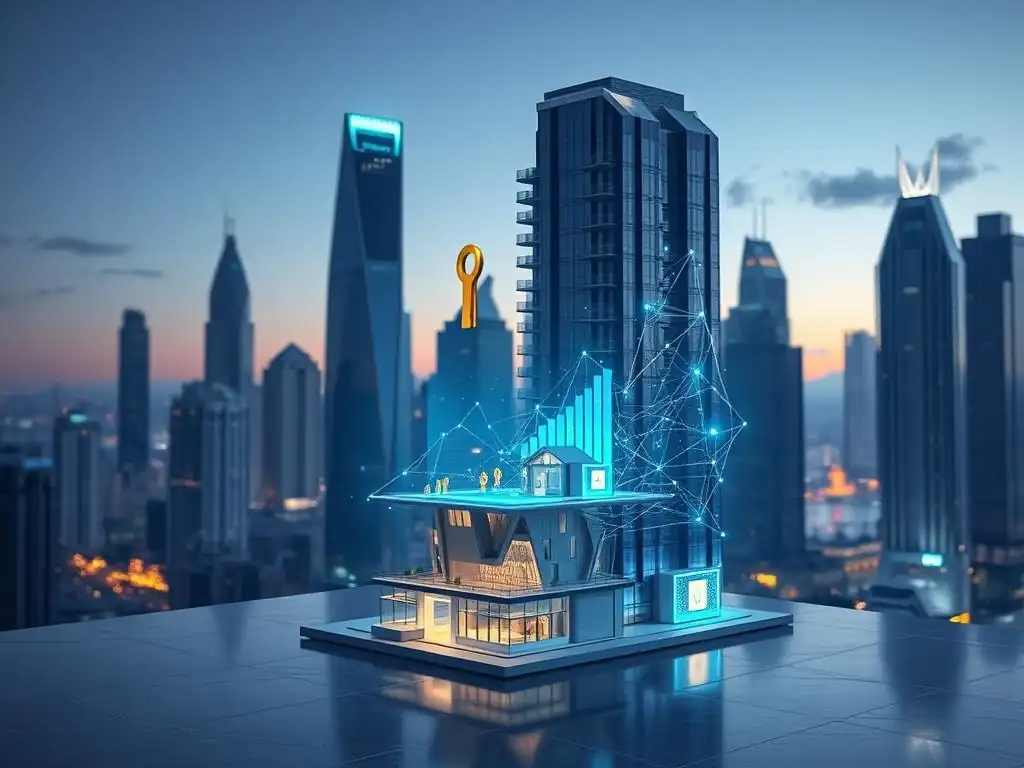
Welcome to Blockchain Trends, your premier source for understanding the revolutionary impact of blockchain technology!
Ever wondered how blockchain is reshaping industries beyond cryptocurrency? Dive into our latest exploration of how NFTs are pioneering a groundbreaking real estate investment strategy. Discover the potential of tokenized assets, fractional ownership, and the future of property investment within the decentralized world. Uncover the opportunities and challenges that lie ahead – what if owning a piece of a skyscraper was as simple as buying a digital token? Read on to learn more!
- Understanding NFTs and Their Potential in Real Estate
- NFTs as a Real Estate Investment Strategy: Key Use Cases
- The Legal and Regulatory Landscape of NFTs in Real Estate
- Risks and Challenges of Investing in Real Estate NFTs
- Case Studies: Real-World Examples of NFTs in Real Estate
- The Future of NFTs in Real Estate: Predictions and Trends
-
Frequently Asked Questions
- What are NFTs, and how are they being used in real estate beyond simple digital art?
- How can NFTs facilitate fractional real estate ownership?
- What are the potential benefits of using NFTs for real estate transactions?
- What are the main risks and challenges associated with investing in real estate NFTs?
- How does regulation impact the use of NFTs in real estate transactions?
- Final Reflection: Building the Future of Real Estate with NFTs
- Unveil Your Real Estate Future: Explore NFT Opportunities!
Understanding NFTs and Their Potential in Real Estate
What are NFTs and How Do They Work?
Non-Fungible Tokens, or NFTs, are unique digital assets recorded on a blockchain. Unlike cryptocurrencies like Bitcoin or Ethereum, which are fungible (meaning each unit is interchangeable with another), each NFT possesses distinct characteristics and metadata that make it one-of-a-kind. This uniqueness is what allows NFTs to represent ownership of specific items, whether digital art, collectibles, or, increasingly, real-world assets like property. The blockchain acts as a transparent and immutable ledger, verifying the authenticity and ownership history of the NFT.
The core mechanism of an NFT involves linking a specific digital token on the blockchain to an asset, granting the token holder verified ownership or rights associated with that asset. This is typically achieved through smart contracts – self-executing contracts with the terms of the agreement directly written into code.
When applied to real estate, an NFT can represent the title, a share of ownership, or specific rights (like rental income) linked to a physical or virtual property. The transaction of the NFT on the blockchain effectively transfers these associated rights or ownership stakes, providing a novel framework for managing and investing in real estate assets.
Benefits of Using NFTs in Real Estate Transactions
The application of NFTs to real estate transactions introduces several potential benefits, addressing long-standing challenges in the traditional property market. These advantages range from enhancing liquidity to simplifying complex ownership structures and streamlining transactional processes. Exploring NFTs as a real estate investment strategy leverages these inherent benefits to unlock new possibilities for investors and property owners alike.
Increased Liquidity for Real Estate Assets
One of the most significant hurdles in traditional real estate is its illiquidity. Selling a property typically involves lengthy processes, substantial transaction costs, and reliance on market conditions. Tokenizing real estate into NFTs, however, allows property interests to be bought and sold on digital marketplaces, potentially reducing transaction times from months to days or even hours. This increased ease of transfer makes real estate assets more liquid, similar to trading stocks or other digital assets, which can be particularly attractive for those considering an NFTs real estate investment strategy for portfolio diversification.
This enhanced liquidity means investors can enter or exit positions in real estate more readily. Imagine a scenario where a property valued at several million dollars is represented by thousands of NFTs. Instead of selling the entire property, an owner can sell a portion of their tokens as needed. Similarly, an investor can acquire a small number of tokens without needing the substantial capital required for a full property purchase. This mechanism significantly lowers the barrier to entry and exit, fundamentally changing the dynamics of real estate investment.
Fractional Ownership Opportunities with Real Estate NFTs
NFTs are uniquely suited to enable fractional ownership of high-value assets like real estate. By dividing the ownership rights of a property into multiple tokens, each NFT can represent a specific percentage or share of the underlying asset. This allows multiple individuals to collectively own a single property, democratizing access to real estate investment which has historically been restricted to wealthy individuals or institutions due to high capital requirements.
This model allows investors to purchase fractions of properties they might otherwise not be able to afford, such as luxury homes in prime locations or large commercial buildings. For example, a multi-million dollar property could be tokenized into 10,000 NFTs, each representing 0.01% ownership.
An investor could purchase just one or a few of these tokens, gaining exposure to the real estate market with a much smaller initial outlay, making an NFTs real estate investment strategy accessible to a broader range of individuals. This also allows investors to diversify their real estate holdings across multiple properties with a limited budget.
Streamlined and Secure Real Estate Transactions
Leveraging blockchain technology through NFTs can significantly streamline and secure real estate transactions. Traditionally, property transfers involve extensive paperwork, numerous intermediaries (lawyers, escrow agents, title companies), and can be prone to errors or fraud. By representing ownership on an immutable blockchain ledger, the provenance and transfer history of a property NFT are transparent and verifiable.
Smart contracts embedded within the NFT transaction process can automate various stages, such as payment release upon verification of ownership transfer, distribution of rental income, or management of voting rights for fractional owners. This automation reduces reliance on manual processes and intermediaries, potentially lowering transaction costs and accelerating the closing process. The inherent security features of blockchain technology, including cryptographic encryption and distributed consensus, also enhance the security and trustworthiness of the transaction, mitigating risks of title disputes or fraudulent transfers when pursuing an NFTs real estate investment strategy.
NFTs as a Real Estate Investment Strategy: Key Use Cases
Tokenizing Real Estate Assets: A New Approach to Investment
Tokenization is the process of converting rights to an asset into a digital token on a blockchain. When applied to real estate, this means representing ownership, equity, or debt related to a property as a set of tokens, often NFTs for unique properties or security tokens for fractional shares. This transformation from a physical or paper-based asset into a digital one opens up new avenues for investment, trading, and management that were previously impractical or impossible in the traditional market.
This innovative approach allows for greater flexibility in how real estate is packaged and traded. Instead of selling an entire building, an owner can issue tokens representing shares in the property's future rental income or appreciation. These tokens can then be offered to investors globally, bypassing geographical limitations and traditional real estate market gatekeepers. Implementing an NFTs real estate investment strategy through tokenization enables investors to participate in previously inaccessible markets and asset classes with potentially lower entry points and greater ease of transfer.
Converting Physical Properties into Digital Tokens (NFTs)
The process of converting a physical property into digital tokens involves several steps. First, the legal entity owning the property must be established and the property's value appraised. Then, the ownership rights or economic interests to be tokenized are defined – this could be full ownership, equity shares, or income streams. A smart contract is created on a blockchain platform (like Ethereum, Solana, or others supporting token standards like ERC-721 for NFTs or ERC-20/ERC-1155 for fractional/security tokens) to represent these defined rights.
These smart contracts govern the rules of the tokens, including how they are issued, transferred, and managed. The tokens are minted and linked cryptographically to the legal framework and the physical asset. Legal documentation is crucial to connect the digital tokens to the real-world asset and ensure the token holder's rights are legally enforceable. For example, a property valued at $10 million might be tokenized into 100,000 tokens, each representing a specific share of ownership and rights, available for purchase by investors globally interested in an NFTs real estate investment strategy.
Examples of Real Estate Tokenization Projects
While still an emerging field, several projects have begun exploring real estate tokenization. In 2021, a luxury apartment in Miami was reportedly fractionalized and sold as an NFT, allowing multiple buyers to collectively own a share of the property. Though the legal framework is still evolving, this demonstrated the technical feasibility of using NFTs for fractional property ownership. Another example involved the tokenization of a commercial property in the US, allowing investors to buy tokens representing equity in the building and receive proportional rental income distributed automatically via smart contracts.
These early examples, though sometimes facing regulatory uncertainties, highlight the potential for tokenization to unlock value and liquidity in real estate. Projects are also exploring tokenizing debt secured by real estate, creating new forms of real estate financing and investment opportunities. While specific figures vary by project and market, these initiatives collectively pave the way for a future where an NFTs real estate investment strategy is a common part of diversified portfolios.
Fractional Ownership: Democratizing Real Estate Investment with NFTs
Fractional ownership, facilitated by NFTs and other tokens, is arguably the most impactful use case for democratizing real estate investment. Historically, participating in the real estate market required significant capital, often hundreds of thousands or millions of dollars, effectively excluding most of the population from owning investment properties, especially in prime locations. Tokenization breaks down this barrier by allowing individuals to purchase small, manageable units of ownership.
This model allows investors with limited capital to access high-value real estate assets that were previously out of reach. Instead of needing $500,000 for a down payment on a single property, an investor might purchase $5,000 worth of tokens representing a fraction of a multi-million dollar commercial building or a portfolio of residential properties. This significantly lowers the entry barrier and makes participating in an NFTs real estate investment strategy viable for a much broader audience, including younger investors or those in regions with high property values.
How NFTs Enable Shared Ownership of Properties
NFTs facilitate shared ownership by serving as verifiable digital certificates representing a specific share or percentage of a property. A property is legally owned by a Special Purpose Vehicle (SPV), and the equity of this SPV is then tokenized into multiple NFTs or fungible tokens. Each token holder effectively owns a share in the SPV, which in turn owns the physical property. The smart contract linked to the tokens outlines the rights of the token holders, such as their percentage of ownership, rights to receive rental income, or voting rights on property management decisions.
When an investor buys a property NFT representing a fraction, the ownership change is recorded on the blockchain, providing a transparent and immutable record. This simplifies the process of tracking who owns what percentage of a property compared to traditional methods of managing shared ownership, which can involve complex legal agreements and manual record-keeping. This clear, on-chain record is fundamental to enabling a liquid market for these fractional shares, which is key to a successful NFTs real estate investment strategy.
Benefits of Fractional Ownership for Investors
The benefits of fractional ownership for investors are manifold. Firstly, it drastically reduces the required capital outlay, making real estate investment accessible to individuals who might not otherwise be able to participate. This allows for greater portfolio diversification, as investors can spread their capital across multiple tokenized properties in different locations or asset classes (residential, commercial, industrial) rather than being tied to a single large investment.
Secondly, fractional ownership through NFTs offers increased liquidity compared to traditional co-ownership models. Selling a fraction of a property is typically much faster and easier than finding a buyer for an entire asset or navigating complex legal agreements to exit a co-ownership structure. Tokens can be traded on secondary marketplaces, offering investors more flexibility to enter or exit their positions based on market conditions, which is a crucial aspect of an effective NFTs real estate investment strategy.
Smart Contracts and Automated Real Estate Management
Smart contracts are self-executing pieces of code on the blockchain that automatically enforce the terms of an agreement. In the context of real estate NFTs, smart contracts can automate various management tasks and financial flows associated with the property, adding efficiency and transparency to the investment process. This automation is a key component in leveraging NFTs as a real estate investment strategy, reducing the need for manual intervention and minimizing potential disputes.
These coded agreements can handle complex logic based on predefined conditions. For instance, a smart contract can be programmed to distribute rental income proportionally to token holders at set intervals, trigger maintenance fund contributions when certain conditions are met, or even manage voting processes for fractional owners regarding property decisions. This level of automation streamlines property management, making passive real estate investment more feasible for token holders.
Using NFTs and Smart Contracts for Rent Collection
Smart contracts can automate the collection and distribution of rental income generated by a tokenized property. Once a rental agreement is in place (which could itself be represented or linked via a smart contract), the income is received into a designated digital wallet. The smart contract, linked to the property NFTs, is programmed to automatically calculate each token holder's proportional share based on their ownership percentage.
At the scheduled time (e.g., monthly), the smart contract executes, distributing the calculated amount of cryptocurrency or stablecoins directly to the digital wallets of the token holders. This eliminates the need for a property manager or administrator to manually collect and distribute funds, reducing administrative costs and potential for delays or errors. This automated income stream is a significant advantage for investors adopting an NFTs real estate investment strategy focused on passive income.
Automating Property Management Tasks with Blockchain
Beyond rent collection, smart contracts can automate other property management tasks. For properties with multiple fractional owners, smart contracts can facilitate decentralized governance. For example, decisions about major repairs, renovations, or selling the property could be put to a vote among token holders, with the smart contract automatically tallying votes and executing the decision if a predefined consensus threshold is met.
Smart contracts can also manage reserve funds for maintenance, automatically collecting contributions from token holders or allocating a percentage of rental income. While physical maintenance still requires human intervention, the financial and governance aspects can be significantly automated. This level of automation, powered by blockchain and smart contracts, makes an NFTs real estate investment strategy more efficient and less labor-intensive for investors, particularly in fractional ownership scenarios.
The Legal and Regulatory Landscape of NFTs in Real Estate
Current Regulations and Compliance Challenges for Real Estate NFTs
The legal and regulatory environment surrounding real estate NFTs is currently complex and evolving. Traditional real estate laws are jurisdiction-specific and often involve centuries-old concepts of property ownership and transfer, typically requiring physical deeds and government registries. Integrating digital tokens representing ownership or equity into this framework presents significant challenges. Many jurisdictions lack clear guidelines on how to classify or regulate real estate NFTs.
One major challenge is determining whether a real estate NFT constitutes a security. If an NFT represents a share in a property with the expectation of profit derived from the efforts of others (e.g., a property management company), it may be deemed an investment contract and thus a security under tests like the Howey Test in the US. This classification would subject real estate NFT offerings to stringent securities regulations, including registration requirements and investor protection laws, which can be costly and complex to navigate for those pursuing an NFTs real estate investment strategy.
Navigating the legal complexities requires careful structuring of real estate tokenization projects. Most projects utilize a legal wrapper, such as an SPV (Special Purpose Vehicle), to own the physical property. The tokens then represent shares or equity in this legal entity, rather than direct ownership of the physical asset itself. This structure helps bridge the gap between traditional property law and blockchain technology, but it adds layers of complexity.
Ensuring that the rights granted to token holders via the smart contract are legally enforceable in the physical world is paramount. This involves robust legal documentation that clearly links the tokens to the SPV and the underlying property, outlining the rights and obligations of token holders.
Compliance with anti-money laundering (AML) and know-your-customer (KYC) regulations is also essential, as token sales must often verify the identity of investors, similar to traditional financial transactions. Legal frameworks are still being tested and developed to accommodate this new form of asset ownership and transfer, making the legal aspect a critical consideration for any NFTs real estate investment strategy.
Future Regulatory Trends for NFTs in the Real Estate Market
Regulatory trends are leaning towards greater clarity, though the pace varies globally. Financial regulators in various countries are examining how to classify and oversee crypto assets, including NFTs, particularly those that resemble investment products. It is likely that future regulations will focus on investor protection, market integrity, and preventing illicit activities. This could involve requiring platforms facilitating real estate NFT sales to register as securities exchanges or crowdfunding portals.
There is also a growing recognition of the need for specific legal frameworks for digital asset ownership and transfer that interface with traditional property registries. Some jurisdictions are exploring blockchain-based land registries or legal recognition of tokenized ownership structures. While a unified global approach is unlikely in the short term, increasing regulatory clarity, though potentially adding compliance burdens, is ultimately beneficial for the growth and legitimacy of an NFTs real estate investment strategy, providing a more stable environment for investors and developers.
Risks and Challenges of Investing in Real Estate NFTs

Volatility and Market Risks Associated with NFTs
While real estate itself is often considered a relatively stable asset class, investing through NFTs introduces new layers of market risk and volatility. The value of an NFT real estate token is not solely tied to the underlying property's market value; it can also be influenced by the broader crypto market sentiment, the specific platform or blockchain it's issued on, and the perceived liquidity of the token itself. This means that the price of a real estate NFT could potentially fluctuate more wildly than the price of the physical property it represents.
Furthermore, the NFT market is still relatively young and can be subject to speculative bubbles and rapid price corrections. While real estate NFTs are linked to tangible assets, their trading value on secondary markets can be influenced by trends and investor sentiment within the digital asset space, which may not always align with the fundamentals of the property market. Investors considering an NFTs real estate investment strategy must be prepared for potential price volatility that exceeds that typically seen in traditional real estate investments.
Security Concerns and Potential for Fraud
Security is another significant challenge in the NFT space. While blockchain technology itself is highly secure, vulnerabilities can exist in the smart contracts, the platforms where NFTs are traded, or the digital wallets used to store them. Smart contract bugs can lead to loss of funds or unintended execution of terms. Centralized platforms can be targets for hacking, potentially compromising user accounts and assets.
Fraud is also a concern. This could range from outright scams where NFTs are minted for properties that the issuer does not legitimately own or control, to misleading representations about the property or the terms of the investment. Due diligence is critical for investors considering an NFTs real estate investment strategy; verifying the legitimacy of the issuer, the legal structure linking the token to the property, and the security audits of the smart contracts is essential to mitigate these risks.
Liquidity Issues in the Emerging NFT Real Estate Market
Although tokenization promises increased liquidity compared to traditional real estate, the actual liquidity of real estate NFTs is still an open question in the current market. The secondary market for real estate NFTs is nascent and significantly less developed than markets for other types of NFTs (like digital art) or traditional real estate markets. Finding a buyer for a specific real estate NFT or fractional token might still be challenging, especially for less prominent properties or projects.
The volume of trading for real estate tokens is currently low compared to traditional real estate transaction volumes or even crypto trading volumes. This limited liquidity means that while it might be technically easier to transfer the token, finding a willing buyer at a desired price point might be difficult, leading to potential discounts compared to the token's theoretical value based on the underlying asset. Investors must assess the potential liquidity of the specific tokens they are considering as part of their NFTs real estate investment strategy.
Case Studies: Real-World Examples of NFTs in Real Estate
Fractionalized Ownership Case Study
One notable instance of fractionalized real estate ownership via NFTs involved a property located in St. Louis, Missouri. In 2021, a company tokenized a residential property, intending to sell fractions of its equity through NFTs. The property, a single-family home, was valued at a specific amount (details vary by report, but typically in the low six figures). Investors could purchase tokens representing a percentage of ownership in the legal entity that owned the home. This allowed individuals to become co-owners by investing sums significantly lower than the property's total value.
The project aimed to provide investors with a share of the rental income generated by the property, distributed automatically via smart contracts. While facing the evolving legal landscape, this case study demonstrated the technical feasibility of using NFTs to enable fractional, income-generating real estate investment. It illustrated how an NFTs real estate investment strategy could open up access to specific property types and locations for a global investor base, bypassing the complexities of traditional cross-border real estate transactions.
Property Management Automation Case Study
While direct, large-scale examples of full property management automation purely via NFTs and smart contracts are still in early stages, pilot projects and platforms are emerging. Consider a scenario where a commercial building in a major city, say New York, is tokenized. The smart contract associated with the building's tokens is programmed to receive rental payments from tenants (potentially in cryptocurrency or fiat converted via an oracle). Upon receipt, the smart contract automatically calculates the proportion of rent due to each token holder based on their token count.
This automated distribution occurs on a scheduled basis (e.g., the 5th of each month), directly transferring funds to the token holders' wallets. Furthermore, the smart contract might manage a portion of the income allocated to a maintenance fund, automatically holding or transferring funds to a designated account when triggered by a predefined event (e.g., reaching a certain balance). While human oversight for physical maintenance remains necessary, the financial flows and record-keeping for income distribution are automated, showcasing a practical application of smart contracts in an NFTs real estate investment strategy for efficiency.
Lessons Learned from Early Adopters of NFTs in Real Estate
Early adopters in the real estate NFT space have provided valuable insights. A key lesson is the critical importance of the legal framework. Simply tokenizing a picture of a deed is not enough; the tokens must be legally linked to enforceable rights in the underlying physical property. Projects that failed to establish clear legal structures faced significant hurdles and investor skepticism.
Another lesson is the challenge of liquidity. While tokens can be traded, building a robust secondary market requires significant effort, platform development, and regulatory clarity. Early tokens often faced low trading volumes, making it difficult for investors to exit their positions quickly.
Furthermore, investor education is crucial; explaining the complexities of blockchain, NFTs, smart contracts, and the specific legal structure of the tokenized asset is necessary to build trust and attract participants to an NFTs real estate investment strategy. These early cases highlight that success requires not just technical innovation but also strong legal foundation, market building, and clear communication.
The Future of NFTs in Real Estate: Predictions and Trends
The Potential for Decentralized Real Estate Marketplaces
The evolution of NFTs in real estate points towards the potential for decentralized real estate marketplaces. Instead of relying on traditional listing services and brokers, future platforms could allow property owners or SPVs holding tokenized properties to list their tokens directly on a blockchain-based marketplace. Potential buyers could browse listings, review associated legal documentation and property data (potentially stored on decentralized file systems like IPFS), and purchase tokens directly peer-to-peer via smart contracts.
These decentralized platforms could reduce transaction costs by cutting out intermediaries and offer greater transparency by having all transaction history recorded on the blockchain. They could also facilitate global access to real estate investments, allowing anyone with an internet connection and a crypto wallet to participate in an NFTs real estate investment strategy regardless of their geographical location. While regulatory hurdles remain significant, the technical foundation for such marketplaces is being built, promising a more open and efficient way to buy and sell property interests.
The Role of NFTs in the Metaverse and Virtual Real Estate
Beyond physical property, NFTs are already the primary means of establishing ownership in virtual real estate within metaverse platforms. In virtual worlds like Decentraland, The Sandbox, or others, plots of digital land and virtual properties are represented as NFTs. Users can buy, sell, develop, and rent out this virtual land, creating a parallel real estate market operating entirely on the blockchain.
The value of virtual real estate NFTs is driven by factors like platform popularity, location within the virtual world, potential for development, and utility (e.g., hosting events, building experiences). As the metaverse concept grows, the market for virtual real estate NFTs is expected to expand, offering a distinct, purely digital form of real estate investment. An NFTs real estate investment strategy can thus encompass both tangible property interests and entirely virtual assets, presenting unique opportunities and challenges.
How NFTs Will Shape the Future of Real Estate Investment
NFTs have the potential to fundamentally reshape the future of real estate investment by increasing accessibility, liquidity, and efficiency. Fractional ownership models enabled by tokenization will continue to democratize access, allowing more people to participate in the market. The ability to trade property interests on digital marketplaces could significantly improve liquidity compared to traditional sales processes.
Furthermore, the integration of smart contracts can automate income distribution and management tasks, making real estate investment more passive and streamlined. While challenges related to regulation, legal frameworks, and market maturity persist, the trajectory suggests that NFTs and tokenization will become increasingly relevant in the real estate sector. They offer a powerful toolset for creating new investment products, enhancing transparency, and potentially lowering the costs associated with buying, selling, and managing property, making an NFTs real estate investment strategy a significant area for future growth.
Frequently Asked Questions
What are NFTs, and how are they being used in real estate beyond simple digital art?
NFTs, or Non-Fungible Tokens, are unique digital assets. In real estate, they can represent property ownership, fractionalized investments, or even access rights, going beyond just collecting digital art.
How can NFTs facilitate fractional real estate ownership?
NFTs allow a property to be divided into smaller, tradable units. This makes real estate investments more accessible to a wider range of investors who can't afford an entire property.
What are the potential benefits of using NFTs for real estate transactions?
NFTs can streamline processes like title transfer and escrow. They can also increase transparency and security by leveraging the immutable nature of the blockchain.
What are the main risks and challenges associated with investing in real estate NFTs?
Risks include regulatory uncertainty around NFTs, the volatile nature of the NFT market, and potential scams or fraudulent projects that investors should be wary of.
How does regulation impact the use of NFTs in real estate transactions?
Current regulations are still evolving, creating legal ambiguity around property rights represented by NFTs. Compliance with existing real estate laws and securities regulations is crucial.
Okay, here's a final reflection designed to close your article, "The Role of NFTs in Real Estate: Beyond Digital Collectibles," while keeping your target keyword, "NFTs real estate investment strategy," in mind and adhering to the structure you provided:
Final Reflection: Building the Future of Real Estate with NFTs
The exploration of NFTs in real estate reveals a landscape far beyond mere digital collectibles; it unveils a transformative potential for investment and ownership. The strategies discussed throughout this article highlight the nascent, yet powerful, ways NFTs are reshaping how we think about property, transactions, and the very concept of real estate investment. This is not just a fleeting trend; it's a fundamental shift in how assets are managed and traded.
The integration of NFTs into real estate is not without its challenges, but the opportunities it presents are undeniable. Witnessing this evolution firsthand underscores the importance of understanding and adapting to these technological advancements. The future belongs to those who believe in the beauty of their dreams,
Eleanor Roosevelt's words resonate profoundly as we consider the innovative possibilities NFTs unlock for democratizing real estate investment and creating more transparent, efficient markets.
As we stand at the cusp of this digital revolution, let us not be passive observers. Consider how you can leverage the insights shared in this article to explore the potential of NFTs in real estate. Reflect on the strategies discussed, research the emerging platforms, and contemplate how you can contribute to shaping the future of property ownership. The future of real estate is being built now, and your understanding and engagement can play a vital role in its development.
Unveil Your Real Estate Future: Explore NFT Opportunities!
Thank you for exploring the exciting potential of NFTs in the real estate industry. Now that you understand how blockchain technology is transforming property ownership, it's time to take the next step and delve deeper into this innovative field.
Here are some ways to get started:
- Research current NFT real estate listings to understand market trends, pricing, and the types of properties being tokenized.
- Join blockchain communities and platforms focused on real estate NFTs to share insights, learn from others, and discover investment opportunities.
- Attend blockchain or real estate conferences, whether in person or virtually, to network with industry professionals and stay updated on the latest developments.
Are you ready to begin your journey into leveraging NFTs in real estate? What type of property are you most interested in seeing tokenized, and why?
Leave a Reply