
The Role of NFTs in the Real Estate Tokenization Ecosystem


Welcome to Blockchain Trends, your go-to source for understanding the revolutionary impact of blockchain technology!
Imagine a world where real estate transactions are streamlined, transparent, and accessible to everyone. Our latest article delves into exactly that, uncovering the fascinating ways NFTs are unlocking unprecedented real estate tokenization benefits. Curious how these digital assets are poised to reshape property ownership and investment? Read on to discover the transformative potential of blockchain in the realm of real estate.
The Role of NFTs in Real Estate Tokenization
- Understanding Real Estate Tokenization
- NFTs in Real Estate Tokenization
- Benefits of NFT Real Estate Tokenization
- Use Cases of NFTs in Real Estate
- Challenges and Risks
- The Future of NFTs and Real Estate
- Conclusion: NFTs as a Catalyst
-
Frequently Asked Questions
- What exactly are NFTs and how do they relate to real estate tokenization?
- What are the key NFTs real estate tokenization benefits for investors?
- How does blockchain technology underpin the use of NFTs in real estate?
- What are some of the regulatory challenges associated with using NFTs for real estate tokenization?
- What is the future outlook for the integration of NFTs and real estate tokenization?
- Final Reflection: Unlocking the Future of Real Estate
- Unlock Your Real Estate Future!
Understanding Real Estate Tokenization
Real Estate Tokenization: A Blockchain Overview
Real estate tokenization represents a groundbreaking application of blockchain technology, transforming traditional property ownership into digital tokens stored on a distributed ledger. This process involves representing a fractional or full ownership stake in a property as a digital asset. These tokens can then be bought, sold, and traded on blockchain-based platforms, significantly enhancing the efficiency and accessibility of the real estate market. The underlying blockchain provides transparency, immutability, and security for all transactions, creating a verifiable and tamper-proof record of ownership and transfers.
The technical foundation often relies on established token standards, such as ERC-20 on the Ethereum blockchain for fungible tokens representing fractional shares, or increasingly, non-fungible token standards like ERC-721 or ERC-1155 for unique property representations or specific rights. This digital representation simplifies complex legal and administrative processes typically associated with property transfers. By moving these processes onto a blockchain, the need for extensive paperwork and intermediaries is reduced, paving the way for faster and potentially less expensive transactions.
Benefits of Tokenizing Real Estate
Tokenizing real estate unlocks several significant advantages over traditional methods. One primary benefit is the potential for increased liquidity. Historically, real estate is considered a highly illiquid asset class, with transactions taking months to complete. Tokenization allows smaller portions of a property to be bought and sold more easily, akin to trading shares in a company, thereby improving market velocity. This enhanced liquidity can attract a wider pool of investors, including those who previously found traditional real estate investment too cumbersome or capital-intensive.
Furthermore, tokenization facilitates fractional ownership, making high-value properties accessible to investors with smaller capital. Instead of needing millions to buy a commercial building, an investor could potentially buy tokens representing a fraction of that property for a much lower entry point. This democratization of access lowers the barrier to entry, enabling diversification across various property types and locations without requiring substantial individual investments. Other benefits include greater transparency through the public ledger, reduced transaction costs by cutting out intermediaries, and faster settlement times compared to traditional processes that can take weeks or months.
Real Estate Tokenization Platforms
A growing ecosystem of platforms is emerging to facilitate real estate tokenization. These platforms act as intermediaries between property owners and investors, handling the technical and legal complexities of creating and managing property tokens. They typically involve processes such as property valuation, legal structuring to ensure compliance with securities regulations (as many real estate tokens represent securities), token creation on a chosen blockchain, and providing a marketplace or infrastructure for trading these tokens. Examples of such platforms include those focusing on commercial real estate, residential properties, or even specific niche assets like development projects.
These platforms often offer integrated services, which may include investor onboarding (including Know Your Customer/Anti-Money Laundering checks), token management dashboards, and sometimes even dividend distribution mechanisms directly linked to rental income or property appreciation. Some platforms specialize in security tokens, which represent equity or debt in the property or owning entity, while others explore the use of NFTs for representing unique property rights or fractional ownership interests. The choice of platform and token structure depends heavily on the regulatory environment and the specific goals of the tokenization project, aiming to provide a secure and compliant investment vehicle for participants.
NFTs in Real Estate Tokenization
Non-Fungible Tokens (NFTs): Definition and Properties
Non-Fungible Tokens, or NFTs, are unique digital assets that represent ownership or proof of authenticity of a specific item or piece of data, whether digital or physical. Unlike cryptocurrencies like Bitcoin or traditional fiat currency, where each unit is interchangeable with another (fungible), each NFT possesses distinct characteristics and value.
This non-fungibility is recorded on a blockchain, ensuring transparency and verifiable ownership. The metadata embedded within an NFT typically links it to the asset it represents, which could be anything from digital art or music to, in the context of real estate, a specific property deed, a fractional share, or unique access rights.
The key properties of NFTs that make them relevant to real estate include their uniqueness, indivisibility (though some standards like ERC-1155 allow for semi-fungibility or fractionalization), and immutability on the blockchain. Once an NFT is created and recorded, its history, ownership, and associated data are permanently stored and publicly verifiable. This inherent transparency and security are powerful tools when dealing with high-value assets like real estate. While initially popular for digital collectibles, the application of NFTs is expanding rapidly, finding utility in representing diverse assets and rights in various industries, including the complex world of property ownership and investment.
NFTs vs. Security Tokens in Real Estate
When discussing real estate tokenization, it's crucial to distinguish between NFTs and security tokens, although their roles can sometimes overlap or complement each other. Security tokens are digital assets that represent an investment contract in an underlying asset, such as equity in a company, debt, or shares in a real estate property or portfolio. They are typically regulated as securities and are designed to comply with financial regulations, requiring accredited investors or specific exemptions depending on the jurisdiction. Security tokens are often fungible, allowing investors to own multiple identical tokens representing equal shares.
NFTs, on the other hand, traditionally represent unique assets or specific rights. While a security token might represent a fungible 1% ownership share in a building, an NFT could represent the entire building deed digitally, or a specific unique fractional share with distinct rights (e.g., voting rights for a specific decision).
More recently, NFTs are being used to represent fractional ownership by linking multiple identical NFTs to a single asset, or by using standards that allow for fractionalization of a single NFT. The primary distinction lies in their nature (unique vs. fungible) and regulatory treatment, although the lines are blurring as innovative structures emerge, potentially using NFTs to represent regulated securities or unique real estate interests that fall under securities law.
Benefits of NFT Real Estate Tokenization
The application of NFTs specifically within the real estate tokenization framework introduces several compelling advantages, contributing significantly to the overall NFTs real estate tokenization benefits.
Increased Liquidity in Real Estate Investments
One of the most touted NFTs real estate tokenization benefits is the dramatic increase in liquidity. Traditional real estate is notoriously illiquid; selling a property can take months, involving complex negotiations, legal processes, and significant transaction costs. By representing property ownership or fractional shares as NFTs, these assets can be traded on digital marketplaces with much greater ease and speed. An investor looking to divest a portion of their real estate holdings might list their property-backed NFT on a platform, potentially finding a buyer in days or hours, rather than waiting months through traditional channels.
This enhanced liquidity is particularly beneficial for fractional ownership structures enabled by NFTs. Owning a small percentage of a building through a traditional partnership or REIT might still involve lengthy redemption processes. However, if that fractional share is represented by an NFT, the investor can simply sell their NFT on a secondary market, transferring ownership almost instantly on the blockchain. This ability to quickly enter and exit positions makes real estate a more attractive asset class for a wider range of investors, including those who require faster access to their capital.
Fractional Ownership via NFTs
NFTs are proving to be a powerful tool for enabling and managing fractional ownership in real estate, a core component of NFTs real estate tokenization benefits. While fungible tokens can represent fractional shares, NFTs can represent unique fractions or even the underlying asset itself, which is then fractionalized into multiple NFTs or linked to fungible tokens.
For instance, a single high-value property could be legally owned by a Special Purpose Vehicle (SPV), and shares in that SPV are then represented by a set number of NFTs. Each NFT could represent an equal fractional stake, or perhaps unique stakes with varying rights.
This model allows investors to buy into properties that would otherwise be financially out of reach. Consider a luxury property valued at $10 million. Through fractionalization via NFTs, that property could be divided into 10,000 NFTs, each representing a 0.01% ownership stake.
An investor could then purchase one or more of these NFTs for a relatively small amount, say $1,000 per NFT (plus platform fees). This dramatically lowers the entry barrier, allowing individuals to build diversified portfolios of real estate assets across different types (residential, commercial, industrial) and geographies, which was previously only feasible for institutional investors or high-net-worth individuals.
Reduced Transaction Costs
Another significant advantage contributing to the NFTs real estate tokenization benefits is the potential for substantially reduced transaction costs. Traditional real estate transactions involve numerous intermediaries, each adding layers of fees: real estate agents, lawyers, escrow companies, title insurers, and recording offices. These costs can easily amount to 5% to 10% or more of the property's value. By leveraging blockchain and NFTs, many of these steps and intermediaries can be streamlined or eliminated.
When property ownership or fractional shares are represented as NFTs on a blockchain, the transfer of ownership becomes a peer-to-peer transaction executed via smart contracts. The smart contract automates the exchange of the NFT for payment, conditional on predefined terms. While legal oversight is still necessary, particularly for the initial tokenization and compliance, the subsequent trading of the NFT can bypass many traditional fee structures. Marketplace fees for trading NFTs are typically a small percentage, often around 1-3%, significantly lower than traditional real estate commissions and closing costs, making both buying and selling more cost-effective.
Democratized Real Estate Investment
Democratization of investment is a key outcome and one of the most impactful NFTs real estate tokenization benefits. Historically, real estate investment has been largely exclusive, requiring substantial capital, deep market knowledge, and connections to access opportunities. Tokenization, particularly when utilizing the fractionalization capabilities enabled by NFTs, fundamentally changes this dynamic. It opens up the market to a much broader base of investors globally.
Individuals who previously could not afford a down payment on even a modest property can now own a fraction of a major commercial building or a portfolio of rental properties by purchasing low-cost NFTs. This access is not limited by geographic location; an investor in Asia could easily purchase an NFT representing a share in a property in Europe, overcoming international investment barriers and complexities. This democratization allows for greater financial inclusion and provides ordinary investors with access to wealth-building opportunities previously reserved for the affluent, fostering a more equitable investment landscape.
Use Cases of NFTs in Real Estate
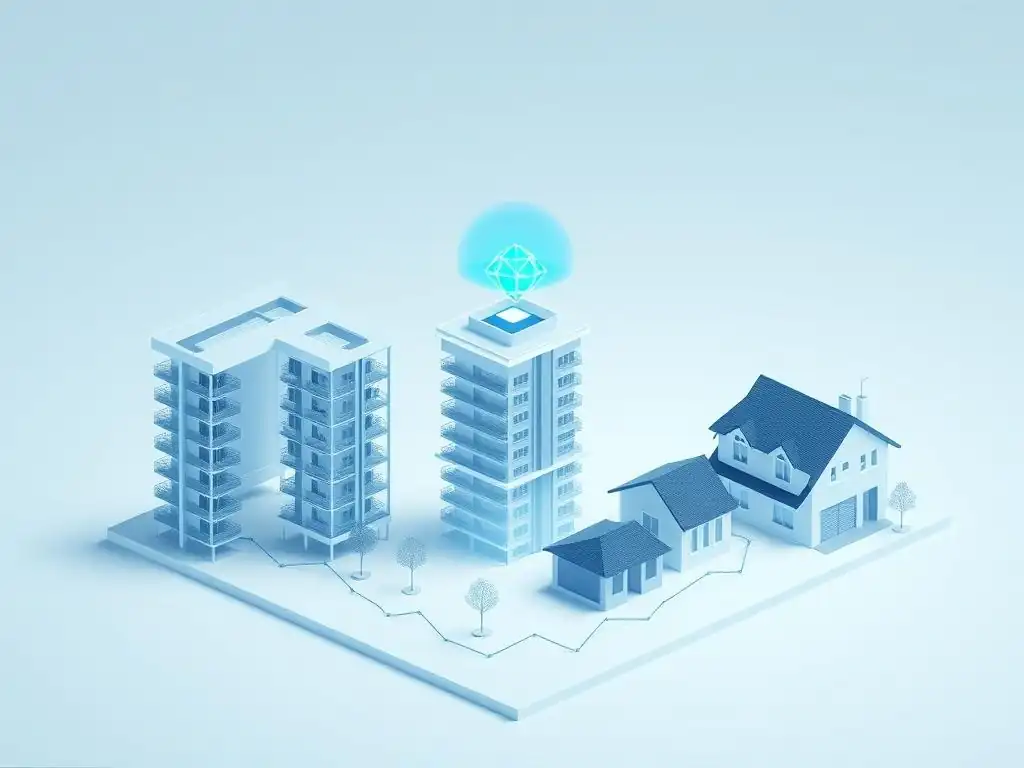
Beyond simple ownership, NFTs are being explored for various innovative applications within the real estate sector, leveraging their unique properties.
NFTs as Digital Deeds
A compelling use case for NFTs in real estate is their potential to serve as digital deeds or titles. Traditionally, property ownership is recorded and proven through physical or digital documents maintained by government land registries. This system can be slow, prone to errors, and susceptible to fraud. By representing the legal deed of a property as a unique NFT on a blockchain, ownership transfer could become significantly more secure, transparent, and efficient.
When a property is sold, the associated NFT deed would be transferred from the seller's digital wallet to the buyer's, with the transaction immutably recorded on the blockchain. This process could drastically reduce the time and cost associated with title searches, escrow, and registration. While significant legal and regulatory hurdles remain to integrate blockchain-based deeds into existing legal frameworks, pilot projects and discussions are ongoing in various jurisdictions exploring the feasibility of using NFTs as verifiable, digital proof of real property ownership, complementing or eventually replacing traditional paper deeds.
Streamlined Rental Agreements and Property Management
NFTs can also play a role in streamlining rental agreements and property management processes. A rental contract for a specific property unit could be tokenized as an NFT, representing the tenant's right to occupy the property under specified terms. This NFT could potentially incorporate smart contract functionalities for automated rent payments, security deposit management, and even clauses related to maintenance requests or lease renewals.
For property managers, NFTs could represent unique aspects of a property or rental portfolio, such as access rights, maintenance schedules, or even tokenized income streams from specific units. Managing a portfolio of properties could involve managing a collection of associated NFTs, providing a transparent and auditable record of leases, payments, and property-specific data on the blockchain. This tokenization could reduce administrative overhead, minimize disputes through automated contract execution, and provide greater transparency for both landlords and tenants.
NFT-Based Real Estate Crowdfunding
NFTs are well-suited for facilitating real estate crowdfunding initiatives. Instead of issuing traditional shares or limited partnership units, a real estate development or acquisition project can issue a collection of NFTs, each representing a specific stake or set of rights in the project. This allows project developers to raise capital from a large pool of investors globally, leveraging the liquidity and accessibility benefits of NFTs.
For example, a developer building a new apartment complex might issue NFTs representing fractional ownership of the future rental income or a percentage of the profits upon sale. Investors can purchase these NFTs, becoming stakeholders in the project with a clear, verifiable record of their investment on the blockchain. This approach can simplify the fundraising process, reduce reliance on traditional financial institutions, and provide investors with a more direct and potentially more liquid way to invest in specific real estate projects compared to traditional crowdfunding models or REITs.
Metaverse Real Estate: Virtual Land
While distinct from physical property, the burgeoning market for virtual land in metaverses provides a relevant parallel and use case for NFTs in 'real estate'. In virtual worlds like Decentraland or The Sandbox, parcels of digital land are represented as unique NFTs. Users can buy, sell, develop, and monetize this virtual land, treating it much like real-world property in terms of investment and utility.
The experiences and challenges in the metaverse land market offer insights into how NFTs function as ownership titles for scarce digital assets. The infrastructure for buying, selling, and even fractionalizing virtual land NFTs is rapidly developing, providing a testing ground for similar applications in the physical real estate market. The speculative nature and rapid value fluctuations seen in some metaverse real estate markets also highlight potential challenges, such as valuation difficulty and market volatility, which could translate to physical property tokenization using NFTs.
Challenges and Risks
Despite the numerous NFTs real estate tokenization benefits, several challenges and risks must be addressed for widespread adoption.
Regulatory and Legal Considerations
One of the most significant hurdles for NFTs in real estate tokenization is navigating the complex and often ambiguous regulatory landscape. In many jurisdictions, tokens representing ownership or investment in real property are likely to be classified as securities, subjecting them to stringent financial regulations. This requires compliance with securities laws regarding issuance, trading, investor accreditation, and disclosure requirements. The legal frameworks governing the use of NFTs specifically for representing physical assets like deeds are still nascent or non-existent in most places.
Determining how existing property laws, contract laws, and securities regulations apply to NFT-based real estate transactions requires careful legal structuring. Ensuring that the NFT legally conveys the intended rights or ownership interest in the underlying physical property is paramount and often involves complex legal wrappers, such as SPVs. The lack of clear, harmonized international regulations creates uncertainty for both issuers and investors, potentially slowing down innovation and adoption until legal clarity is established.
Security and Smart Contract Risks
While blockchain technology is inherently secure due to its cryptographic nature and distributed ledger, the implementation of real estate tokenization relies heavily on smart contracts and platform security, introducing potential risks. Smart contracts are code, and like any code, they can contain bugs or vulnerabilities that could be exploited by malicious actors. A flawed smart contract governing the transfer of an NFT deed or the distribution of rental income could lead to significant financial losses or ownership disputes.
Furthermore, the platforms hosting these NFTs and managing the tokenization process are potential targets for cyberattacks. If a platform's security is compromised, private keys could be stolen, leading to the loss of valuable NFT assets. Ensuring robust smart contract auditing, platform security measures, and secure key management practices is critical. Investors must also be aware of the risks associated with phishing scams and wallet security, as the loss of access to their digital wallet means the loss of their NFT-represented property stake.
Valuation Challenges
Valuing real estate represented by NFTs presents unique challenges. While the underlying physical property can be valued using traditional appraisal methods, the value of the NFT itself can be influenced by additional factors related to the tokenization structure, platform liquidity, and market sentiment towards tokenized assets. For fractionalized properties represented by NFTs, determining the fair market value for individual tokens can be complex, especially in the absence of deep and active secondary markets.
The novelty of using NFTs for real estate means there is limited historical data or standardized methodologies for NFT-specific real estate valuation. Market fluctuations in the broader crypto or NFT market could also introduce volatility to the value of real estate NFTs, even if the underlying physical asset's value remains relatively stable. Establishing transparent and reliable valuation mechanisms, potentially involving independent appraisals and clear market data reporting, is essential for investor confidence and market stability.
Market Volatility and Investor Education
The broader cryptocurrency and NFT markets are known for their significant volatility, which can spill over into the market for real estate NFTs. While the value of the physical property might provide some floor, the trading price of its tokenized representation on a digital marketplace can fluctuate based on supply and demand dynamics within the token market, independent of the physical asset's short-term performance. This volatility can be a risk for investors, particularly those with short-term investment horizons.
Moreover, the concept of investing in real estate through NFTs is still new and complex for many potential investors. A lack of understanding regarding blockchain technology, smart contracts, token ownership, and the specific legal structure underpinning the NFT can lead to misinformation and poor investment decisions. Significant effort is required to educate investors about the technology, the associated risks, the regulatory landscape, and the specific terms and conditions of each tokenized property offering to ensure informed participation.
The Future of NFTs and Real Estate
Looking ahead, the role of NFTs in real estate is poised for significant evolution and growth, building on the foundational NFTs real estate tokenization benefits already demonstrated.
Predicted Market Growth
The market for tokenized real estate, including that utilizing NFTs, is projected to experience substantial growth in the coming years. While precise figures vary between market reports, estimates often place the potential market size in the trillions of dollars over the next decade. For instance, some reports suggest the tokenized real estate market could reach \$4 trillion to \$5 trillion by 2030, though the specific share attributable to NFT-based models is still emerging. This growth will be driven by increasing institutional adoption, clearer regulatory frameworks, and the development of more mature and liquid secondary markets for tokenized assets.
As the technology becomes more accessible and understood, and as successful use cases demonstrate the efficiency and benefits of tokenization, more property owners and developers are expected to explore this method for fundraising and asset management. The increasing sophistication of platforms and the potential for global investor reach will further fuel this expansion. While the market is still in its early stages, the underlying potential for unlocking value and increasing efficiency in a massive asset class suggests a strong growth trajectory.
DeFi and NFT Real Estate Convergence
A significant future trend is the convergence of Decentralized Finance (DeFi) protocols with NFT real estate. DeFi offers a suite of financial services – lending, borrowing, yield farming, insurance – built on blockchain without traditional intermediaries. Integrating real estate NFTs into DeFi opens up possibilities for using tokenized properties as collateral for loans, borrowing stablecoins against the value of an NFT-represented property share, or even participating in decentralized real estate investment pools.
For example, an owner of a tokenized property or fractional NFT could lock their NFT into a DeFi lending protocol to borrow funds, without needing to sell the underlying asset. This creates new avenues for liquidity and financial leverage within the real estate market. Similarly, rental income streams tokenized via NFTs or associated tokens could be directed into DeFi protocols for automated distribution or reinvestment. This convergence has the potential to create a more dynamic, interconnected, and efficient real estate financial ecosystem.
Impact on the Traditional Real Estate Industry
The rise of NFTs and tokenization is expected to have a profound impact on the traditional real estate industry. While not an overnight replacement, it is likely to force traditional players – brokers, lawyers, title companies, investment firms – to adapt. Intermediaries who provide value beyond simply facilitating transactions may thrive, offering expertise in legal structuring, compliance, or property management within the tokenized ecosystem.
The industry may see a shift towards hybrid models where traditional processes are combined with blockchain technology. For example, traditional brokerages might start listing tokenized properties, or legal firms might develop specializations in blockchain-based property law. The increased transparency and efficiency offered by tokenization could also put pressure on traditional fee structures, potentially leading to more competitive pricing for real estate services. Ultimately, tokenization, including the use of NFTs, is set to disrupt existing business models and create new opportunities for innovation within the sector.
Conclusion: NFTs as a Catalyst
Summarizing the Benefits
The integration of NFTs into the real estate tokenization ecosystem offers a range of compelling NFTs real estate tokenization benefits. These include significantly enhancing the liquidity of a historically illiquid asset class by enabling easier trading of fractional or full property ownership represented by unique tokens. The fractional ownership facilitated by NFTs lowers the barrier to entry for investors, allowing participation in high-value properties with smaller capital outlays and democratizing access to real estate investment opportunities globally.
Furthermore, NFTs contribute to reducing the high transaction costs associated with traditional property transfers by streamlining processes through blockchain and smart contracts. They also offer innovative use cases such as serving as digital deeds, streamlining rental agreements, and enabling new forms of real estate crowdfunding. While challenges related to regulation, security, and market understanding persist, the core benefits of increased accessibility, efficiency, and potential liquidity underscore the transformative potential of NFTs in this sector.
Transformative Potential of NFTs
The transformative potential of NFTs in real estate extends beyond simply digitizing ownership. They act as a catalyst for fundamental shifts in how properties are owned, managed, and traded. By providing a secure, transparent, and immutable record of unique assets and rights on a blockchain, NFTs enable entirely new business models and investment structures. They pave the way for greater integration with decentralized finance, unlocking new financial applications for real estate assets.
As regulatory clarity improves and technology evolves, NFTs could become a standard component of real estate transactions, making the market more accessible, efficient, and globally interconnected. While the journey involves overcoming significant technical, legal, and educational hurdles, the foundational NFTs real estate tokenization benefits suggest that these unique digital assets are poised to play a crucial role in shaping the future of property investment and ownership in the digital age.
Frequently Asked Questions
What exactly are NFTs and how do they relate to real estate tokenization?
NFTs, or Non-Fungible Tokens, are unique digital assets representing ownership. In real estate tokenization, they can represent fractional ownership of a property, making it easier to buy, sell, and trade real estate assets.
What are the key NFTs real estate tokenization benefits for investors?
The primary NFTs real estate tokenization benefits include increased liquidity, lower barriers to entry (fractional ownership), and enhanced transparency in real estate transactions. This allows smaller investors to participate.
How does blockchain technology underpin the use of NFTs in real estate?
Blockchain provides a secure and transparent ledger for recording ownership of NFTs. This immutable record ensures the authenticity and provenance of the real estate asset represented by the NFT.
What are some of the regulatory challenges associated with using NFTs for real estate tokenization?
Regulatory uncertainty surrounding digital assets and security laws is a significant challenge. Legal frameworks need to adapt to address the unique characteristics of tokenized real estate.
What is the future outlook for the integration of NFTs and real estate tokenization?
The future looks promising, with potential for increased adoption as technology matures and regulatory clarity emerges. This could lead to a more democratized and efficient real estate market.
Okay, here's a final reflection designed to close your article on the role of NFTs in the real estate tokenization ecosystem, optimized for the keyword "NFTs real estate tokenization benefits":
Final Reflection: Unlocking the Future of Real Estate
The exploration of NFTs within the real estate tokenization ecosystem reveals a landscape brimming with potential, and its current relevance is undeniable. The convergence of these technologies promises to democratize real estate investment and revolutionize traditional property ownership. This isn't just a theoretical exercise; it's a glimpse into a future where accessibility and liquidity redefine the real estate market.
The impact of NFTs on real estate tokenization extends far beyond mere technological innovation. It's about empowering individuals and fostering a more inclusive financial ecosystem. The ability to fractionalize ownership and trade real estate assets with unprecedented ease is a paradigm shift. The future of real estate is not about owning property, but about accessing its value.
This quote encapsulates the transformative power of NFTs in unlocking the inherent value within real estate for a wider audience.
As we stand on the cusp of this new era, it's time to consider the profound implications of NFTs in real estate tokenization. How can you, as an investor, developer, or simply an interested observer, leverage these advancements to shape a more equitable and efficient future? Embrace the possibilities, explore the benefits, and become a part of the revolution that is reshaping the world of real estate.
Unlock Your Real Estate Future!
Thank you for exploring the exciting intersection of NFTs and real estate tokenization. You've gained a deeper understanding of how blockchain technology is transforming property ownership. Are you ready to take the next step?
Here are some ways to explore this innovative space further:
- Research platforms that offer fractionalized real estate NFTs. Compare their fees, liquidity, and features to find the best fit for your investment goals. This is a great starting point to get involved.
- Share this article on social media to spark conversations and help others learn about the potential of tokenized real estate. Together, we can build a more informed community!
- Consider attending local real estate investment meetings and casually introduce the topic of NFTs. You might discover new opportunities and partnerships through these discussions.
What excites you most about the possibilities of real estate NFTs, and what challenges do you think need to be addressed for broader adoption? Share your thoughts in the comments below!
Leave a Reply